I guess this is a kind of Solstice card – although it’s been a gloomy, cold and wet day; the kind you’re happiest to see the back of. I woke up at 4.00am with a dream in which the only thing I remember is someone or something saying “you can’t argue with a blackthorn”. I have no idea what that was about except that it’s impossible to force your way through a thicket of them because they’re so horribly spiny. Equally the fruits are completely unapproachable unless steeped in sugar and gin. The other notable thing about the blackthorn is the folk name “blackthorn winter” which according to Geoffrey Grigson in “The Englishman’s Flora” (other genders are available), expresses an ancient association of plants with seasons. The links are more often to do with the medicinal properties or with the supernatural which often overlap. Mistletoe is listed in the same book with countless properties including aphrodisiac and as a “heal all” from the time of the earliest herbals, but Grigson takes a very dim view of the druidic movement as it freely invented folklore, irrevocably clouding the real history.
Actually a Lenten rose
There are others of course – outside the flat today we had winter jasmine, cyclamen and even a few hardy geraniums on the window ledge. Grigson’s pick included the Christmas Rose and of course holly and ivy, traditionally brought indoors in winter to protect the woodlands for spring. I haven’t got a picture of a Christmas rose, which is the white flowered variety but in the same family the Lenten rose was in flower on the allotments today and is a member of the buttercup family; traditionally grown next to the front door to ward off evil spirits.
The solstice manages to condense astronomy, folklore and pagan religion in a single moment of time which, today, was 15.03 so apologies for the late arrival of this greeting. Let’s hunker down now until the blackthorn appears.
We walk into the supermarket or log on to Amazon and it’s all there; the cornucopia, the works – everything the contented human being could possibly want. Except in times of scarcity, after snow or flood or during an epidemic when the shelves are empty and then we’re angry.
Yesterday we had a light frost. We walked down the steep slope to the allotment and the sun – we are almost at the winter solstice – transits behind a row of trees low in the sky – was unable to warm the soil on any of our plot. The overnight temperature according to the trailcam was 2C.
Our culture directs our instincts to want to take control. We have come to believe that each of us – apart from losers who don’t count – is some kind of tabula rasa on which we are free to inscribe whatever we want; fulfillment, creativity, success; even new and more attractive silicone lips. If you can be bothered you can easily test my hypothesis by counting how many times the word control crops up in an evening’s TV ads. Without adequate control, we are all smelly, leaky and horribly unattractive, betrayed by our unforgivable lack of the Big C which is always available – at a price – from a retailer near you.
The sad truth of course is that by the time you’ve been programmed to aspire harder and show the world who you really are it’s too late. You’ve already lost who you really are to the expensively curated simulacrum who gloats back at you in the mirror and demands more, more, and yet more.
If allotmenteering is even remotely therapeutic, as is universally claimed but rarely actually tested; it’s closer to psychoanalytic psychotherapy than that it is to happy days in the sunshine. We are not blank canvases and neither is the earth. Just as we have no retrospective agency with our appearance or with our childhood and past history, neither has the earth. The question we have to take to each session is – “why am I as I am?” “Why do I need to take control all the time?” and for any allotmenteer, and I know this may sound ridiculous, “why do I have such a complicated relationship with this patch of earth?” Why do weeds upset me so much? Why do I have this boundless fear of rats but not – let’s say – hedgehogs? Why did I feel I had to destroy anything that occupied my [?] allotment when I moved on to it. Why am I so obsessively protective of its boundaries? Why do I want so much to kill pests. What is it about badgers that I like most of the time, until they eat my sweetcorn?
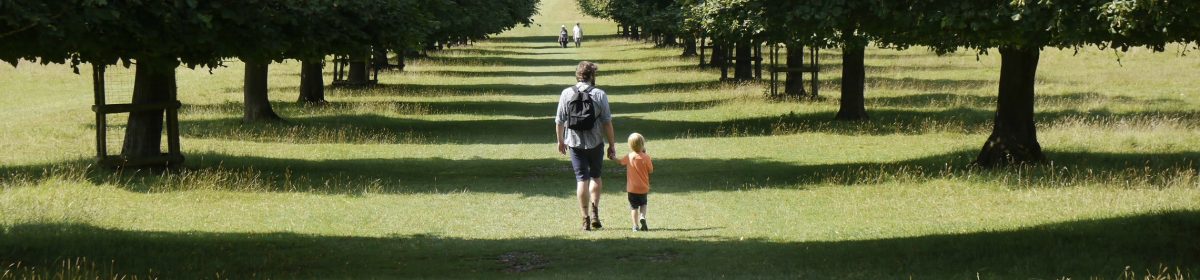
If you look at the photograph at the top of this post, you may recognise one of the the tracks up the Blackdown ridge on Mendip. If by some mischance you were to inherit this lovely patch of earth you could decide to grow almost anything. You could decide but you wouldn’t succeed because this land has history; millions of years of it. Once upon a time it was at the bottom of the sea but now it’s at the top of a range of hills. The point where I stood when I took the photograph is above a deep layer of carboniferous limestone, and likely way under your feet there are still undiscovered cave systems. Rod’s pot, Read’s cavern are entered just beyond and below the horizon. Walk on half a mile and (unless you know your plants) you’d never know that you are standing on a cap of acidic sandstone. What will grow on one substrate won’t grow on the other so none of your controlling instincts will prevail. You’ll just have to go with the soil.
Our allotment is on the kind of soil called “clay loam” – we easily checked that with open source maps. This soil – when it’s in its natural state – will bind together in a ball due to its clay content. It’s naturally quite fertile but it can be hard to work when it’s dried out and you shouldn’t trample all over it when it’s wet. This immediately suggests working the allotment in beds, sufficiently narrow to reach from both sides. We also built deep paths filled with wood chip to drain away surplus water. We even tested the soil for pH – it was somewhere near the middle between acid and alkaline. Vegetables have strong preferences regarding soil types and where they prefer to grow. It sounds complicated but the point is that you can’t raze it flat and then flip through the seed catalogues hoping to grow anything you fancy. You have to negotiate if you don’t want to fail. We’re in a frost pocket at the bottom of a steep slope; that’s a problem. On the other hand we’re sheltered from the prevailing South-westerly winds by a row of trees. The plots at the top get a lot more sunshine but their sheds regularly blow down. We have to carry everything down a narrow path to our plot, but we’re pretty well out of sight from the main track which makes it so much easier for compost deliveries and thieves. Control is a fantasy when it comes to growing on an allotment. We can’t order the weather, put up notices to forbid allium leaf miner or asparagus beetle, or plan surpluses of apples which might, like this season, bless us and in others fail to appear or suffer from codling moth.
What goes on invisibly and under the surface of the soil is almost miraculous. Some thuggish plants will even resort to subterranean poisoning to get their own way while tiny nematodes and the smallest slugs can chomp away at the roots of your vegetables: …. “And little fleas have lesser fleas and so ad infinitum!” 95% of plants apparently have fungal relationships; none of these are visible to us, but their invisibility can’t make them invulnerable to the onslaught of chemicals we use to assert our control over pests and diseases, and I saw in the newspaper today that climate change and global heating are dramatically increasing the spread of pests and diseases, not to mention extreme weather events; storms and heatwaves. Fungicides and pesticides with artificial fertilisers have wrought havoc with the soil structure and depth. The earth is not a blank canvas and we can’t do as we please to it without compromising our own existence.
I recall a couple of farming proverbs that we’d do well to pay attention to:
Live as if you’re going to die tomorrow, farm as if you’re going to live forever
The farmer’s boot is the best fertilizer
If allotmenteering is therapeutic at all it’s in the way that it teaches us a kind of humility – the root of the word refers to humus the condition of the earth, the soil. Don’t try to control; accept, even embrace failure and success as two sides of the same coin. The urge to subdue, to dominate and to control isn’t new, it goes back to the creation myths of the Old Testament as does the subjugation of Eve to Adam. We reject the second of those myths and we should equally turn away from the first.
Have you ever noticed that gardeners are often really nice people? Is it the therapy of crumbling the earth between your fingers, watching a robin feed on grubs you’ve just exposed and watching the clouds for rain ? or is it perhaps the botox injections? Hmm – that’s a tough one!
It’s the month, if not the day of reckoning on the allotment and two days before the solstice marks the turning of the seasons. After a terrible summer and regular visits to the hospital we almost gave it up, but we’re both so glad now we are both miles better that we didn’t. If you’re new to allotmenteering you need to know that as well as all the close to nature / mother earth stuff there are times when you would just like to walk away. Gardening – as I’ve often said – is a dialogue with the crops, the earth, the weather, the pests and the weeds and sometimes we can hardly get a word in edgeways. Lesson number one in allotmenteering is that you’ll never win them all. The price of fresh air and fresh veg is that you have to accept occasional failures and even (thankfully rarely) vandalism. The boards that edged our beds ten years ago have gone rotten in many places and would cost a lot of money to replace. The couch grass and bindweed that we vanquished by deep digging when we took the plots on have crept back because their rhizomes laughed at drought and just went deeper. So this autumn we’ve had to repeat some of the jobs we thought we put behind us for good.
Going organic is relatively easy if you just mean no chemicals, but no-dig can be hard if you’re dealing with weed infestations. We don’t let the perfect drive out the good and so this autumn we declared war on the weeds even if it meant digging some of them out. Fortunately, couch grass and bindweed – our biggest problem – are quite lazy and they’ve tended to use our wood chip paths as highways; making them very easy to pull out. However they also creep in from the edges and on to the beds and then we dig every few years. Yes of course the structure of the upper layer is precious, but the couch in particular produces chemical substances called allelochemicals which inhibit competition from nearby crop plants. Paths – it turns out – are great vectors of weed infestations and deserve as much attention as crop beds. Our paths were dug 18″ deep in the first place to provide drainage for the beds when filled with wood chips. They need topping up every year because the chips gradually rot down into rich black soil. Our soil is clay loam – we’re in a river valley so it’s alluvial and inclined to poach in wet weather. We’ve also got a spring running beneath several of the beds which can be as difficult as drought in the winter, especially for tree roots. One of my resolutions for the coming year is to have a go at water divining and see where they actually run.
As we refurbish the paths we use a heavy mattock – pictured on the left in the photo – to break up the surface and loosen the weed roots so they can be removed and burnt. Then we top up with wood chips and occasionally we go the whole hog and lay weed control mat on the cleared ground with wood chip on top. It’s one of those occasions when attention to detail is crucial and we try to remove every tiny fragment of rhizome.
The area in front of the greenhouse is getting the gold star treatment this year with a triple layer of cleared soil, cardboard, weed control mat and finally wood chip. The new autumn raspberry bed next to it has been given a thick layer of Jacob’s fleece from our friends in Brecon covered with yet more wood chip – we use many barrow loads of the stuff. Raspberries like warm feet. Last night we filmed the badger on the trailcam; digging away at the raspberry bed, presumably looking for the dead sheep. Apparently they will eat carrion if they’re really hungry, but this badger is as fat as we’ve ever seen. We’ve also recorded two cats, loads of rats and a pair of foxes. The rats are a constant nuisance but they’re creatures of habit and tomorrow, if the weather holds, I’ll be digging the narrow gap between the compost bins and the polytunnel to locate their nest and block it off.
The Mattock mattock design is as old as the hills and it’s used around the world for breaking up the earth before sowing. You might be tempted to get a lightweight version but the solid cast steel heavyweight is the one to go for, and don’t be afraid to give it some welly. As my grandfather always said, let the saw do the work and that applies to any tool equally well. Never economise on buying the best tools you can afford because they’ll more than pay for themselves in saved time, energy and painkillers.
We finally repaired the window of the vandalised shed a few weeks ago. We went to a specialist glass company and I asked the price of a single sheet of the wired toughened glass. The man on the desk said “before I cut it I’ll tell you how much it will cost” – it would have been well over £100 and I said I could buy a new shed for not much more. So we settled for a different type of toughened glass at a third of the price. Isn’t it a shame that we have to resort to such precautions against vandalism? Anyway it looks miles better than it did with an old compost bag flapping away in the wind.
Going back to the subject of digging, I’d really recommend getting hold of the two tools in the photo above if you’ve got very heavy or stony soil. The spade is quite expensive – around £50 and known as a groundbreaker. It’s very strong with a pointed, heavy and polished stainless steel blade and it was a revelation as we cleared the allotment. It really does make digging easier. It’s based on the traditional Cornish spade design which has a long straight shaft and no handle and is universally used by gravediggers who know a thing or two about digging deep holes in stony ground!
All the other tools will come with time, and you’ll learn how important it is to buy the tools and use the techniques that suit you and your own patch of earth. I’d suggest a wheelbarrow with foam filled tyres and a large capacity will be useful and then, as need arises you can buy all sorts of other useful tools – not just the hideously expensive, hand made, damascus steel Japanese trowels without which some gardening celebrities wouldn’t plant a broad bean.
And possibly the most important lesson is that plant breeders know a thing or two about pests and diseases and use their knowledge to produce blight resistant, disease resistant, pest resistant, and now drought resistant strains of all manner of vegetables. Don’t be sucked into the heritage vegetable trap as an automatic first choice. Don’t rush out and buy a Cox’s Orange Pippin just because it’s a heritage variety when there are much better yielding and better tasting varieties out there with greater disease resistance. Look around and take some advice because there are lovely old apples and pears out there that don’t need spraying every five minutes and won’t fall over in a dead faint when they get a bit of frost. And good luck – you can throw away those vitamin D tablets and get some of the hard stuff straight out of the sky.
Warning. This post includes a discussion of grooming and abuse
We binge-watched a whole four part thriller last night on TV. It was my fault. I fancied something like an Agatha Christie without the drawing room scene and just for fun I used Google Gemini to search for something suitable. There followed a typical AI dialogue where I refined my choice on the basis of a few questions and finally I settled on “near the sea” “cosy whodunnit” “wet weather allowed” and one series dropped into the the slot. It was “The Long Call”, based on an Ann Cleeves novel, set in Devon near the sea (I suspected Braunton Burrows but I couldn’t be sure), complete with rain – oh and one last detail that grabbed my attention – set around a religious community.
And off it went with some great actors and even accurate Devon accents. There was a body on the beach and it all looked very promising until we were introduced to the religious community which was very strict, inward looking and eerily familiar to me. It quickly became clear that everyone was lying and that there was enough passive aggression going on to freeze a small lake. My position as a viewer was so completely compromised that I even imagined myself sitting in one of the chairs in the midst of a Brethren style prayer meeting, listening to the endlessly repetitive petitions of a charismatic leader. I’d been there, worn the T shirt and carried the same alienated feelings as the investigating detective who’d been shunned (that’s a technical term with huge menace) by that same community after he came out as gay when a teenager. It was tremendously well researched in the way that vulnerable people were love bombed and befriended, groomed; then became the victims of passive aggression until they were demoralised, subdued and controlled. The next step, because this pattern isn’t confined to religious groups, is violence, abuse and in the worst case murder.
I was pre-teen, pre-puberty, but nonetheless awash with guilt at sins I didn’t think I’d ever committed – and didn’t have the vaguest idea how to commit – and that I could be certain that I was destined, or predestined for hell. Unconditional love, forgiveness and diversity were as underused in the congregation as a Bishop’s bible, although we all knew that bishops were a bad thing and the torments of hell were always good for a spittle infused, red-lipped sermon. Years later I found an antique copy of the hymn book they used which was so full of sado masochistic imagery it would probably be banned today. If I learned anything at Sunday School it was that I was a wrong un and no-one would answer the question “why?” because that was the sin of disobedience.
I left Sunday School as soon as I was able to defy my parents and took nothing away with me except that diffuse sense of guilt into the future. I caught a glimpse of a better looking god in the local anglican church, but that was more to do with fancying a girl in the choir. I got confirmed, took communion once and never went back. Around that time I was groomed by a much older teenager and introduced to a number of dodgy men but fortunately he was arrested before anything too terrible happened. After that I joined a Wesleyan methodist youth club whose saintly leaders kept me safe. We had a fancy dress party once and Mrs Round said “I suppose you’ll be coming as the devil, Dave” . Finally I discovered the meaning of fornication (Oh happy day!/ what happened there?) and after getting chucked out of school over a provocative samizdat magazine which I wrote, published and distributed I met Madame at a CND meeting and we fell unfashionably but hopelessly in love. I was 18 and she was 15. On reflection I was unbelievably lucky to get off the escalator when I did although that didn’t stop the police, and much later the church authorities from treating me as a risk, mainly to their reputation as worthy chaplains to the status quo.
I was about 12 years old when they interviewed me with the utmost hostility at the police station. My Dad was there, but sat silently throughout and when they let me go he never subsequently mentioned the way they had shamed me. Much later on I was a member of a support group for clergy which was supposed to be completely confidential; a safe space led by two skilled therapists. I finally managed to describe what had happened to me then, and also the occasion when I’d unexpectedly encountered one of the paedophiles I had been introduced to during a visit to his mother. This was very upsetting. Even decades later I recognised him instantly. One of the members of the group took it upon themselves to report what I’d said to the church authorities without even warning me. As a result I was telephoned by a church appointed social worker who quizzed me on what seemed to be the prior assumption that the abused were likely to become abusers themselves. In reality both the police and the church authorities became the abusers, forcing me to recall the events without offering a shred of support afterwards. Any trust in the group disappeared and I was on my own again. Completely innocent and yet groomed to blame myself.
As a consequence of all this inside experience of religious communities and controlling behaviour, a large part of my time has been devoted to patching people up; many of them had been horribly abused and robbed of all self-respect. Many of them drifted right back into abusive relationships, but I think I may have made a difference to a few. After the film last night I went to bed feeling thoroughly churned up.
What is it about religion that makes it so dangerous? so corrosive to young minds? I suspect that living without certainties is hard going so shortcutting from judgements of virtue to the ‘either/or’ rules of us and them is an easy way out of difficult thoughts. Madame and I were down in Southern Ireland once, during the Troubles, and we were in a remote bar way south when a group of IRA supporters came in. It was a terrifying hour whilst we sat and they sang anti British songs, us not daring to speak or get another drink for fear of being recognised by our accents. The next day I went back to apologise to the owner for causing a lot of stress and she said it was no problem. I replied “well, we are English” and she said “No but you’re tourists“. I’m still working that one out.
But there is the real reason for the danger of religion. It’s not theology, it’s the binary culture it generates – with its inside/outside, lost/saved, stranger/friend, infidel and faithful. In a world full of anger and hatred it’s all too easy to fall into camps which become gangs – each with its own flags and banners and then guns and bombs.
This morning we were having a cup of tea with our friend Charlie who managed to combine both creativity and science into his life. We were having a conversation about slime moulds – yes you read that right – and we agreed that the earth is so prodigiously beautiful whether you’re looking at an ocean, a mountain or a microscopic cell; and when we consider the almost infinite adaptations and evolutionary steps involved in getting to where we are – then there really is no need to suppose that some kind of kindly, interfering or even malevolent being, could add anything to the picture. By all means use an obvious metaphor, like Mother Nature for instance but I remember saying to someone once about a girlfriend known by everyone as “Peach” – that her name didn’t imply that she lived in a fruit bowl. The sea of faith seemed to be retreating for me. Much later I discovered that the tide comes in twice a day.
The melancholy soft, withdrawing roar– not, in this instance on Dover beach.
We want change but we want nothing altered – William Cobbett
Three Cornish pasties
I was shocked today to discover that I have a bit of an obsession with food. My shock was brought about by the sheer number of food photographs I’ve taken while I was looking for pictures to illustrate this post on the subject of what’s come to be known as Regional Food after reading a piece in the Guardian about a recently published book by the Italian academic Alberto Grandi called La Cucina Italiana Non Esiste (Italian Cuisine Doesn’t Exist). He argues that in reality there was no substantial Italian cuisine (the choice of the French term ‘cuisine’ rather gives the game away). What we know as the rather mythic pasta + nonna idea came into existence when so many utterly impoverished migrants left italy and arrived in America where they experienced an abundance of food for the first time. I’ve seen that happen myself. Back in the eighties I was on a course with students from all over the world and one of them was from Eastern Europe. He kept going missing but we could always find him gazing into the window of a local butcher – he’d never seen anything like it. He was so overwhelmed with the abundance of our food that we would take extra each meal and pass it to him. Grandi describes that cultural collision as you might describe an F1 hybrid. Two less productive strains interbreeding can bring about fantastically productive offspring. He’s not saying that there is no Italian food tradition, but that – real as it may be today – it’s not very old. It got me thinking about other so-called traditions that you would never have found in their alleged countries of origin – Balti and Korma owe more to Birmingham than to India; most French haute cuisine can be attributed to the unemployed chefs of the post revolutionary vanquished rich. Fusion cooking to the collision of Australia with Japan; Chinese cooking which came to be known and popularised by waves of immigrant chefs in chip shops but which barely scratched the surface of the diverse cultures of such a huge nation. And then there’s the great unwashed – the tradition of english cooking.
My mind travelled back almost immediately to William Cobbett, radical, grumpy and outrageously opinionated pamphleteer as well as hilariously funny writer. In Cottage Economy he tried to set out the proper diet for an Englishman and got very indignant about potatoes which he thought made farm labourers weak and lazy, and the drinking of tea which he said made women into gossips and made men become effeminate. For Cobbett, the only proper diet was based on bread, bacon and beer; grown, fattened and brewed by the happy labourer. The two books, “Cottage Economy” and “Rural Rides“; written in the shadow of poverty and starvation after years of war are still worth reading if only for a glimpse of his burning indignation. Bacon and eggs, Sunday Roast, good bread and plenty of meat became the iconic staples of the English diet, especially in the wake of wartime rationing. Meat and two veg was at least factually accurate even when it became a snide insult. It was the diet I grew up on.
Heaven forfend – chillies, borlotti, passata – what’s the world coming to?
Madame had more contact with an alternative tradition because one of her aunts had married into money, and she spent holidays as a companion for a cousin. It was whilst staying there (just the once) that I read Mrs Beeton and wondered at the extravagance of some of the recipes – “take a dozen eggs and three pints of best cream” – that kind of thing. I didn’t laugh at it – I wanted some of it for us too. After we got married and realized that neither of us could cook, a friend gave us some Elizabeth David and so now my list of inspirational writers extends to dozens, and they fill bookcases in the flat.
As for English cuisine; looking through the photos I’d say there is still a very diverse history of English cooking. After Mrs Beeton; Eliza Acton, Jane Grigson, Dorothy Hartley are among many more food writers who kept the tradition alive and many others have carried on to the present day. Even if there never was a properly understood traditional cuisine, there was always an uncollated mass of good recipes made excellent with fresh vegetables, meat and fish. As ever, cooking and eating what’s to hand and affordable – fish or lamb, pork or beef depends on a wealth of non-culinary variables and the lazy journalistic trick of listing the best of everything from trifles to testicles is just silly. Even a bucket of offal, like the one below, when respectfully and creatively prepared and cooked, can be a feast. (It can also be terrible – trust me).
But food – like every other aspect of culture in the UK – is deeply influenced by social class. Back in the 80’s we were living (as ever) in a block of flats and upstairs there was another tenant who came from a profoundly different and bourgeois background. We got on pretty well in general but one day she came down to see us about something just as we were making some food for my parents. Later her husband came down in fits of laughter and told us that she’d rushed upstairs and said “R – You have to go down and see Dave and his wife, they’re making a real working class tea! It was the tinned salmon sandwiches that did for us, I think. Major class signifier!
The problem today is not so much which recipes people cook, but that so many people don’t cook at all. The traditional meat and two veg diet was pretty boring, but properly cooked it’s still a nutritious meal, unlike the ultra processed foods that are slowly poisoning a whole generation and inexorably lowering the quality and life-expectancy of the life of the poor but also the well paid but chronically overworked people in the middle . The challenge is that when you’re struggling to pay the rent there just isn’t time to bone a breast of lamb, let alone grow an allotment and when you’re working 12 hours a day and six days a week like many professionals have to do; then time, not money is the limiting factor.
But eating out can be a far more dispiriting experience even than a takeaway – what with the virtual extinction of properly trained chefs. Two of our sons are chefs and they tell us that many young people looking for jobs have never eaten good food, and are unaware that kitchens are dangerous places in which hot fat, slippery floors and sharp knives can cause serious injury.
So I’m not saying that regional cuisines don’t exist, but that in the hands of skilled and well read cooks and chefs, a miracle can happen in which local English foods, like lamb, bacon, thyme, potatoes and carrots with the addition of a glass of wine and some garlic , can be inflected with the flavours of Provence and become carbonnade nimoise. Regional food is a dance performed by a skilled and knowledgeable cook, a selection of local fresh produce and a well equipped kitchen informed with wisdom and love.
Sherry trifle – one sponge, one bottle of sherry? The glacÄ— angelica took a bit of finding!
There are two questions here that I’m trying to answer. The first is the title of this post, and the second is an attempt at explaining why I call myself Severnsider – and I’ll tackle that one first.
I think these photos were taken some time around 2007, although I’d known the place for years prior to that. If you live nearby, or know the river Severn on the Gloucestershire side you’ll probably know where they were taken on the Gloucestershire riverside and along the Sharpness canal at Frampton on Severn. The Severn is, as you can see, a very wide river but dangerous for larger ships to navigate above Sharpness due to the ferocious tides, winds and sandbanks. There was also a problem in sailing around a sharp bend in Arlingham which is a good place to watch the Severn bore but a very bad place for a sailing ship. The canal, opened in 1827, could carry ships up to 600 tons and was once the largest and deepest (18 feet) canal in the world . It was a safe, non-tidal shortcut to Gloucester docks. Over the decades we’ve fished in the canal, walked its towpath and paddled up it in our kayak. There are many places I love and visit but in a strange way, the river Severn has my soul. One of my parishes bordered the bank and it’s always been a place of solace on difficult days – lonely, quite remote in places with huge skies and a tide so fierce you can hear it above the mournful cries of wintering curlew.
As the tide from the Bristol channel meets the river there’s the meeting of two distinct modes of being – each with its own smell; earthy, mountainous river and salt tide. Twice a day, the inbreathing and outbreathing flows change places and command the landscape. Springs and neaps cover and reveal the mudflats
The Severn has wonderful sunsets, and on special evenings you can hear migrating geese and swans flying noisily towards the tidal marshes at Slimbridge. It’s a sound so haunting that it will freeze your blood. On one occasion I was walking on the bank at Shepperdine when a hare raced up the field to my right, leaped over a broken wooden fence and crossed, feet in front of me in mid-air. I don’t know which of us was more surprised. It was there, at high tide in the middle of the river and just inside our parish, that I scattered the ashes of a Severn pilot, a man with a lifetime of experience of the twists and turns and shifting sandbanks of the river who would take charge of ships travelling upstream . One of the crew opened a steel door in the side of the Balmoral and to the accompaniment of long blasts on the steam whistle, we poured his ashes into the water just as the tide turned and the river stood still. The trippers on the deck above us had no idea what was happening below them. The two waterways, canal and river, run side by side; the contained and dredged canal -an industrial relic of a past age and its wild and untamable neighbour. A watery Cain and Abel in perpetual conflict like the two sides of a human soul.
Inevitably, as a parish priest, I became a kind of story keeper; privy to many secrets and at ease with the history of the landscape and the people who lived in it because – in a very important sense – they were one. I may well have seen the last ever trailer load of salmon putchers being taken down to the river. The village baker’s wife and her husband had roots in both sides of the river, and would often talk about elver fishing and elver omelette where the freshly caught baby eels were tipped alive into the egg mixture in the pan. He remembered delivering bread by horse and cart. The orchards along the river were protected from frosts by the thermal mass of the water and thousands of gallons of cider were once made on local farms to slake the thirst of the labourers. I got to know one or two of the surviving cider makers pretty well. I once asked one of them why he liked cider so much and he answered “because it gets I pissed!”. The local funeral director was another hefted man who began life as a builder and joiner and made coffins according to the custom of the day; graduating to funeral directing as a natural progression. The gravedigger would always discreetly press a jelly baby or some other sweet into my hand as we processed to the graveside. It was a surviving custom from when everyone was rewarded in cash after a funeral. We referred to one another as gentlemen and bowed as if we were born to it.
I was the story keeper because I took many of the village funerals, weddings and baptisms. I have never felt able to write about those years in any detail because so much of what I knew was told to me in confidence, but I learned the skill of discreet storytelling over three decades, slipping in a coded morsel known only to the closest friends when I could. Most of the old ways and those who followed them are gone now and the suburban villages empty of commuters and refill again in the evenings. The salmon have all-but disappeared and the churches are shrinking and falling into disuse.
Oh yes; the Severn is a very special place and having lived next to it for 25 years it’s the reason I use the name Severnsider. Although these days we live in Bath, the campervan is stored near the banks of the Severn, and the river Avon on whose bank we now live, is a tributary to the mother river which it joins at Avonmouth.
Anyway enough history, because I want to move on to the more interesting question of storytelling with pictures, and the impact of computer technology enabling us to do things we could not have contemplated thirty years ago when I stood on the riverbank, looking at the long row of apparently abandoned barges, hauled up and left to rot. I know, of course that there was a story shouting to come out of the landscape. The melancholic look of rusting hulks and concrete tow barges sinking inexorably into the estuary mud suggested a catastrophic collapse in the market of some commodity. That was a wrong assumption as it turned out because they were deliberately scuttled there in an attempt to protect the river bank from erosion. The pictures haunted me.
I knew I had the raw materials of a new way of understanding landscape but there seemed to be no way of making it work. I wanted to find a way of telling stories with pictures and text but which you could enter at any point, and so read in any order – which is much closer to the way we actually apprehend landscape in real life. Then I discovered HTML but not being very computer literate, the learning curve defeated me. It was the arrival of journaling software and later blogging software that finally opened the door for me. I could utilise the thousands of photographs I’d taken over the years and write accompanying text that could illuminate any topic I was writing about. The photos weren’t eye catching snapshots but little visual haiku, working with the text to say what couldn’t easily be said in words. They became little essays, often exploring a single idea with no attempt for them to be amalgamated into a theory of everything. By now there are over a thousand of them, rapidly approaching a million words in a form that can be searched by date, by topic, by keyword or even just with a single search term.
All this because a single photograph can conjure up a whole habitat or environment; a whole history of the people who live and work in it and occasionally amount to a funeral sermon for something or someone lost forever. This photograph, for instance, taken on Thursday at Big Pit above Blaenavon suggests to me something that’s not telling the whole story; that needs unpacking. The bright red paint and hand lettering suggest that this truck does not, any longer, contain explosives at all. It’s there for effect, as part of an experience – which is what it is, of course. Possibly a film set.
But this one, taken moments later, is telling a more subtle story; of abandonment and dereliction. Present and past are expressed in the course of a few words on a screen. Now we know that something infinitely less fun is going on. There are two steam engines there, each of them deserving restoration but lacking the funds to do it. In a supreme irony, the high quality steam coal which was mined here and which is needed by every steam restoration project in the UK can no longer be mined because of the environmental damage caused by burning coal. We were told that the last two shipments of steam coal came by boat from Chile and Australia. So coal will still be burned but also thousands of tons of oil burned added to the total environmental cost. A third photograph has an entirely more melancholy feel because behind the abandoned winch gear, and in the distance, lies a town that feels as abandoned as the headworks of the pit. With the end of coal mining, thousands of jobs were lost and never replaced with skilled work. Coal was King and now unemployment drains the eviscerated community below. The museum is a marvellous and pointed reminder of yet another lost community.
Oh how miserable this is sounding! Let’s turn to nature. Many of the thousands of photographs I’ve taken are of plants, fungi and even insects. They’re the other part of landscape – the micro features that make it what it is. You’ll know if you’ve read this blog for any length of time, that I’m pretty passionate about the waifs and strays of the plant world which find a place to settle in precisely the abandoned post industrial sites, marginal environments and polluted earth that – like the human communities that once lived and worked in them – have fallen silent as the dreams of the industrial revolution; of easy lives and plentiful housing and food for all come to dust. Things are unravelling and we all know it, in spite of the performative idiocy of politicians who think that having your photo taken with a hi-viz jacket, hard hat and sleeves rolled up is a substitute for having any idea or plan for the future.
Is it even possible to love a despoiled landscape and yet hate what caused it? I think I’m able to address that paradox in a way that might offer a way forward. Firstly the earth doesn’t need us nearly as much as we need the earth, and so in recording what’s there needn’t be a source of anger is much as an encouragement and inspiration to do better. To do better for human communities, to do better for the plants and insects and animals share the earth with us. On our walk in the Bannau Brycheiniog on Thursday we were looking at some slime moulds – a subject which I know almost nothing about. But I did a quick search in Merlin Sheldrake’s book “Entangled Life” and discovered that the humble slime mould can help to make a map to escape from an Ikea store with no more encouragement than a few bright lights and some oatmeal. We dismiss the strange intelligence of nature at our peril. We shall need to review, and experiment and rethink the way we do things around here – I mean our whole culture – in a way that no-one in living memory has had to do because the crisis is here. Even our short journey across the Severn was delayed by 24 hours by an unprecedented storm. Our memories of the past need not fall into the trap of sentimentality and nostalgia. We can be grown-up enough to see that the communities built up by mining had costs as well as benefits and we need not return to the whole package of riches extracted and suffering exacted. What nature demonstrates is the persistence that comes from environmental stability, and so to finish here’s a photograph taken on our friends’ smallholding of a small patch of ancient woodland which has been protected by the steepness of the field in which it stands.
Today we were supposed to be in the Bannau Brycheiniog (Brecon Beacons in old money), but sadly the weather had other ideas. Storm Bram managed to virtually shut down the road and rail links between England and Wales. The Prince of Wales bridge was reduced to one lane each way because the lamp posts were discovered to be liable to collapse on to the carriageway, and the M48 bridge was just closed, along with some of the railway services. There were two hour traffic jams in both directions so, having packed ready to go we unpacked again, hoping we can set out early tomorrow. I hesitate to bang on about climate change, but really our long neglected infrastructure is in such a bad way that even normal weather, let alone the extremes we now expect are enough to shut us down.
So rather than a report from Wales, here are some videos from the allotment, taken on the trailcam. The opener is, of course, the rat. Rats are everywhere, they carry diseases and love to live in poorly made compost bins. Given a choice of anything to eat on an allotment they invariably seem to prefer our crops, and we’ve watched a rat clinging to a swaying sweetcorn cob and chewing away at our lunch. Badgers also like sweetcorn in the same way that bears like honey, but badgers have other virtues and it’s relatively easy to keep them away from the maize. But rats seem to have few virtues and although tidiness is an overrated virtue on allotments it’s certainly the case that we need to pick up fallen fruit and any other rubbish that would attract them. Sadly, a poorly made compost heap – especially if kitchen waste and cooked food are added to it – and if access is easy (and rats are great at digging tunnels) they’re going to move in and breed as rats like to do. Of the night time videos from the trailcam, rats outnumber all the other animals we see.
We also entertain a couple of cats who, we assume patrol at night in search of prey like small mammals. It would be a brave cat, though, that would tackle some of the clonking great rats we’ve filmed. Foxes and badgers are in a different league. Firstly they are (foxes) fast and (badgers) powerful and they both eat rats. Judging by the size of one of our badgers, they eat a lot of rats!
We like to do our bit to control the rat population and we use heavy duty spring traps baited with peanut butter. The traps are in strong boxes and although they’re not attracting many visitors the badgers just love peanuts and so they will worry the boxes to try to get at the bait, and shake them until you hear them spring. We don’t use poison because there’s always a danger of secondary poisoning to other carrion eaters. Mostly the badgers eat slugs and worms but they’re such lovely creatures we let them take friends and foes – (just not sweetcorn). As I look through dozens of videos I also notice that the rats make themselves scarce whenever there’s a fox or a badger in the vicinity so they also have a deterrent effect.
Foxes too eat rats, and if they mark their territory – which we can easily smell for ourselves – this acts as a deterrent as well. We’ve seen foxes with mange in the past but fortunately our local ones seem fine and healthy. Here’s a magnificent shot of a dog fox prowling one of the rat runs. Isn’t he beautiful? especially right at the end of the video when he pokes his head out behind the tayberry.
So there’s always a lot going on at night on the allotment – in fact it’s quite busy. Yes, of course, we get visited by two legged rats as well and like many of our neighbouring allotmenteers we get things stolen, but as long as we take home any power tools and fix double locks on the shed, greenhouse and polytunnel, then we’re mostly troubled by casual vandalism which is upsetting and annoying but – like collapsing bridges and floods – has its history and causes and won’t be ended by sloganising politicians. Don’t build prisons, build youth clubs! We’d love to teach some apprentice allotmenteers the basics!
Other than that we’re almost ready for winter. Yesterday we mixed a couple of barrow loads of topsoil and compost, filled some leftover feed buckets and planted strawberry runners to give us an early polytunnel crop. I love strawberries and they’re expensive in the shops, so it’s a joy to grow them for ourselves. Growing at least some of our own food gives us so much pleasure, but it’s good to bear in mind that good gardening involves a four way conversation between the crop, the soil, the weather and the pests. There’s no room for a control freak on the allotment. We have to accept – as an astrologer once told me of the stars – that these four dispose but can’t compel. The biggest and best lessons in gardening are as likely to come from failure as from success. I love the fact that the night watch is busy while we rest. Sometimes we turn up in the morning to find the wood chip paths turned over, sometimes obviously by badgers with their strong claws but often by thrushes and blackbirds who delight in eating pests so that we don’t have to persecute them.
Our greatest regret is that we have never – in ten years – seen a hedgehog. They really should be there and I’m afraid that badgers are a major predator, so perhaps that’s just an unwanted outcome of the eternal balancing act of nature. But now the weather will improve and the bridges will open and early tomorrow we’ll drive up to the Bannau to meet our friends for a shared birthday and maybe find some new plants or fungi to photograph. The season is nearly over now but there’s always something to capture our interest. And finally – badger versus rat trap – keep looking on the left hand side of the frame and listen out for the trap springing. The trap didn’t get the badger (as if!) and the badger didn’t get the peanut butter. Nil nil draw, then.
Above is a photograph of a fungus known as Lawyer’s wig; Shaggy cap or – in the full cream version Coprinus comatus. I only mention this because we’ve been reading this week that the Home Secretary is considering abolishing jury trials for many crimes which would previously have been put before twelve randomly selected humans. A more suspicious and cynical person like me might wonder if the real motivation is that too many jury trials of pensioners concerned about the environment or about genocides abroad are being acquitted by juries who refuse to send such obvious terrorists to prison, thereby annoying the Home Secretary greatly. Not just lawyers but many perfectly sane people would argue that it blows a hole below the waterline in the justice system if the determination of guilt and innocence is not assisted by ordinary people using their common sense experience of life and evidence.
I will call in evidence for my point of view, a 10.00 am Wednesday prayer book communion at St Mary Redcliffe church in Bristol where I was a curate many years ago. A Wednesday prayer book communion is not a service which normally draws a crowd. A scattering of enthusiasts maybe, a couple of tourists too embarrassed to get up and leave; leaving a total of eight at the most. It always took place in the small Lady Chapel which saved me from bellowing the obscure 17th century text down the nave like the skipper of a sailing boat in a storm. The other reason for corralling the congregation in a small space is that some communicants like to sit at the back. They come early to sit at the back, and so the distribution of communion can take an eternity as they shuffle achingly slowly towards the altar.
Except on this particular day I arrived from the vestry to find the Lady Chapel bursting with eager but silent communicants. That was the first surprise. The second surprise was that they were all almost identically dressed. They looked as if they’d come off a production line. So I took the service, preached an ad hoc homily with no idea how to pitch it and went to the back of the chapel at the end of the service. I thanked them individually for coming and they were polite and thanked me for my time in voices that seemed as identical as their tweed jackets, polished shoes and pressed trousers. After the tenth or eleventh handshake I plucked up my courage and asked one of them – “Where have you all come from?” – “Oh we’re all high court judges and we’re at the hotel next door on a course.” I said a brief silent prayer that they might be studying diversity.
This photo above is of some clumping fungi which I didn’t identify on the day but which describe the cultural and social uniformity of those judges rather better than I could do in words, and in any case could represent the rear view of my congregation as I walked into the chapel. I was amused when I saw today that I took the picture at Browne’s Folly south of Bath.
So to draw the threads together in case you’re wondering what two sorts of fungi, a congregation of High Court judges and the removal of Jury trials have, it’s the word lawyer. I could add a side dish of folly too. What shocked me that day in Redcliffe was that our senior judiciary could be drawn from such a limited social, cultural and let’s be honest – class – group. That’s without mentioning women or people of colour. In a perfect world we could expect our lawyers, politicians and clergy to understand something of the world of a teenage shoplifter, a single mum who can’t afford a TV license or a rough sleeper who consoles themselves with cheap alcohol or drugs – but we know that’s not the case. Our underfunded judicial system and the prison service which oversees its sanctions are not fit for purpose. The answer is investment, long term planning and far greater diversity; not foolish cuts in an already unjust system that describes peaceful and legal protest as terrorism.
So there’s my yoking together without violence several seemingly unconnected ideas – courtesy of Samuel Johnson’s stupid comment on the metaphysical poets. All because we’re off to the Bannau Brycheiniog and tomorrow night we’ll be looking down the valley towards Tretower Court which has strong familial connections with George Herbert. I love the Metaphysicals!
This photograph is not of a twig but a moth; the Buff-tip moth, Phalera bucephala. I’m not showing it because I’d want anyone to think me an expert of any kind, but because its camouflage is so perfect at the same time as being very lovely. It’s eye-watering to think how many evolutionary twists and turns it’s gone through to arrive at this perfect twigness in order that it can rest up safely during the day. Our friend Kate uses a moth trap to identify record and release any number of moth species high up in the Bannau Brycheiniog; the Brecon Beacons in old money, and we took this photo, along with many others, early one morning when we were staying up there.
I’m often struck by the lack of attention we pay to the very small when we talk about the beauty of nature. We tend to look for swathes of flowers; forests; endless mountains and the most grandiose hills when we speak of beauty, but if we take a magnifying glass to, let’s say a weed like a dandelion, it’s like crossing a boundary into another world. A single seed under a low powered microscope can reveal such a complexity of pattern and structure that we’d be hard pressed to capture it in a drawing. Nature presents herself as an artist and many artists would admit to gaining inspiration from the almost reckless generosity of living forms. Moths are just one example. From the aerial view of a river basin or wetland marsh down to the double helix of DNA and the complex fibonacci sequence of seeds on a sunflower head or the seed flask of a poppy, there’s inspiration to be found. Speaking through my artist’s hat, as you might say, I’ve shared a lifetime exploring the colours and forms of living things through the medium of drawing, botanical illustration and ceramics. I’ve needed to embrace some of the science as well, but the wellspring of my explorations has been aesthetic rather than scientific. I’m far more excited by the earthy colours of rust and ochre than by shouty primaries, and a multitude of green hues relieved by occasional touches of scarlet can turn a humble lichen into an aesthetic feast.
Nature is beautiful, but not in the guide book sense. You can’t measure beauty by counting oohs and aaahs and you couldn’t propose a unit like the Milli-Helen which would be the amount of beauty required to launch one ship. It’s expressed perfectly in my mother’s distinction between perfume and scent. I should mention here that I’ve been trying out a new phone app to help identify moths – in anticipation of a Christmas present from our son. In fact it’s good with all kinds of UK insects and designed and promoted by the UK Wildlife Trusts. The app is called ID UK Insects and it’s good for bees, hoverflies, spiders, wasps – in fact for pretty well any insect you might encounter on a slow walk and is free for a basic 500 species or £18 a year for the full version. Well worth a free go! It won’t excuse you from any of the hard book work when you get home to identify your find, but like all the best AI it will save the horror of flicking through hundreds of pages in the vain hope you might run across it! For those old hands who would assert that it’s cheating I’d say – “so’s a cake mixer!”
It would be wrong to settle on the moth as a sole exemplar. As I suggested at the beginning of this post, nature should be regarded as everything on earth including us, and my friend Chris would make a strong claim for the whole universe to be included as well. In fact – and this would be a bold and almost spiritual claim – I’d argue that the default condition of a fully functioning human mind would be wonder.
I’ve never forgotten an exercise I did on a retreat years ago. We were a group of a dozen or so, all strangers to one another. We were divided into couples and asked to grasp both hands of our partners. Then we were invited not just to look at one another or chat about our journey there but silently to explore the possibilities of beholding. As you might expect, it was a deeply challenging thing to do but it was also very powerful; an intuitive exchange of our deep selves and a letting go of embarrassment and ego. I’d suggest that the default position of wonder at natural beauty is facilitated by its twin faculty, beholding.
With such a mindset even the destructive powers of nature which, for the most part are recycling the elements of existence, can lead to the sense of wonder. Nothing is ever wasted by the woodland rotters like the Sulphur-tuft fungus above. I can contemplate my own vulnerability and transience without being afraid.
Around 1970/71 I had a long period of what was diagnosed as phobic anxiety, and not being able to face going into art school, they put me on probation for a couple of terms. I took to visiting the valley behind our cottage through which By Brook flowed, and drawing there. My memory ever since is that I only made one drawing – very laborious and forensic pencil rendering of a twisted tree trunk growing at the edge of the river. The drawing went into a folder and it’s travelled around from house to house ever since. I’ve looked for it from time to time but never found it among the hoardings; until last night I dreamed that I was able to thank all the people who loved me over the years – beginning of course with Madame – even when I didn’t love myself at all. I was awake at 5.00am and got up after a couple of hours musing on what Robin, my one time psychoanalytic psychotherapist would have called a significantdream and went into my study and found the drawing almost immediately in a heap of unsorted papers.
But it wasn’t just the one drawing; I found four of them – and each of them would have taken several days. Here they are seeing the light of day for over five decades.
I’m not suggesting for a moment that these are great drawings, but rather that they articulate a theme that had been at the back of my mind for going on twenty years after I walked to primary school through a lane bordered on one side by a hawthorn hedge which, in hindsight must have been laid in previous years. I was enchanted, almost literally, by the twisted and intertwined branches and it became a treasured part of my walk to school, a memory which returns joyfully whenever I see a similar hedge today. After I’d photographed the drawings this morning I realised that there was another subconscious link in the twisting and curling water of the brook and which I’d tried unsuccessfully to capture in drawings of the sea when we lived in Cornwall. Drawing – to pack a huge proposition into a very short sentence – has been a way back into a transient moment. A mill-race; the Devonshire leat on Dartmoor; any kind of fast flowing water especially if, like a canal, it was the outcome of human intervention. No surprise then, to recall that my favourite winter job as a groundsperson was hedge laying. The spot where I drew By Brook was downstream from a paper mill where the mill race joined the brook. The mill is now disused and abandoned, and the brook itself is milky and eutrophic; quite unsuitable for papermaking.
If there is any kind of takeaway from this biographical fragment it’s that I didn’t get this ecstatic, aesthetic response to nature from a guru or a book. It was always there and all I had to do was channel it into tangible form. So the next great adventure was in ceramics. I’ve already written about this and I won’t go over it again, except to say that the making of ceramics feels like participation in creation itself. All the essential elements; earth, air, fire and water are there. The transformation of clay into fired ware is a geological process, The colours are made with elemental minerals and ores – cobalt, iron, lead, melted and rendered transparent in the kiln and transformed by the control of the available oxygen. English iron-based slipware glazes, mixed with lead rich galena and fired in an abundance of oxygen emerged the colour of honey and in China, a similar iron based glazed fluxed with wood ash and and starved of oxygen in the final stage of firing emerged as celedon, a muted and lovely green the colour of lichen.. The making of ceramics is an exhausting creative process which is affected by so many variables that if the potter doesn’t learn both intense focus and how to survive failure they will soon give up.
Nowadays I use photography to try to capture nature. I don’t edit or enhance anything and if it doesn’t work I delete it and try again. I remember once having a battle with my art school Head of Department over the characteristic form of an apple tree. I contended that trees are hard to draw well because by forensically rendering their internal structure and the form of the whole tree, its colours and its leaves it would be easier to identify its species. To prove my point I’d knocked up a black and white sketch of an apple tree on a piece of cardboard with a wide brush and some house paint. He dismissed the drawing and the idea with a lofty wave of the hand. It was rubbish and all trees looked pretty much the same. This week I’ve mentioned an apple tree called Arkansas Black several times already and today I returned to that discussion by photographing the tree on the allotment. I hope I won’t offend anyone by saying that the form of the tree is completely distinctive. Pears plums and (at the time) English elms are incontestably different.
My old music teacher A F Woodman used to to shout at me if I was particularly inattentive and say “I know you can hear it Pole, but are you listening?”
Wonder; the capacity to behold and not just gawp; inexhaustible curiosity; focus; listening; some measure of humility; the capacity to fail, try again as Samuel Beckett said, and fail better – all these are the portals through which we must pass. To adopt a religious idea, we must approach nature as penitents – not least because we, collectively, have done so much damage. The technical understanding, the skills, the science need essentially to be led by the revelatory moment. Most truly great scientists and mathematicians would agree that the revelatory moment is the beginning of the process of understanding rather than the end.
Which brings me to a penultimate point. If there is ever to be a real green spirituality it will need to begin in the same place. I remember Ken Leach preaching that orthodoxy is closer to its Greek roots when translated as “right glory” and certainly not the slavish following of some ancient canonical text. I’m not sure what we could call theology without Theos, but I treasure Wittgenstein’s joke that “wherof we cannot speak thereof we must remain silent” except that it’s never yet stopped a daft or cruel idea from being broadcast.
So to conclude this rather long post, I have to write briefly about education because it seems that these core skills – “Wonder; the capacity to behold and not just gawp; inexhaustible curiosity; focus; listening; some measure of humility; the capacity to fail, try again as Samuel Beckett said, and fail better” all these are being expunged from the curriculum of both school and university. If we don’t bring our children up to allow wonder and curiosity into their lives they will be stunted like wind deformed trees .
South Riverside development – not what the PR goons want you to see.
Bath, of course, thrives by stoking a whole cruise liner full of hype. This year it’s Jane Austen but the Georgian builders also get roped in to set the scene (please don’t mention the slave trade) and otherwise we have to make do with the Romans who turned a boggy hot spring into a R&R destination for grubby and probably smelly legionnaires who needed a soak after marching around subduing the natives. We do not talk about the brothels on London Road, the extra marital uses of the Sidney Gardens or, indeed the drinking dens and brothels of Kingsmead. We don’t talk about Bath’s industrial past; the pong of the dyeworks, the pioneering engineering, the digging of the Kennet and Avon canal which – when joined to the Somerset coal canal – provided an easy route for transporting coal from the North Somerset to what William Cobbett called the great wen (London). We don’t talk about the pollution of the river which was probably as bad then as it is today, or the Great Western railway which most of us can’t afford to travel on. We don’t talk about the Somerset and Dorset line (known as the S&D i.e. slow and dirty) or the twin tunnels which were so small in girth that engine drivers and firemen expected to pass out regularly in the carbon monoxide and smoke, praying that they didn’t do it at the same time.
Perhaps I’m being unfair. If you drive into any major European city; in France for example, it’s almost obligatory to pass a few cement works. Drive north from Barcelona and you’ll see an industrial landscape comparable with the finest of Middlesbrough or Wolverhampton – and they don’t brag about it either. But personally I’m glad that I can still walk along the riverside and the canal and find hundreds of interesting plants without the danger (apart from some cyclists) of meeting anyone wearing a voluminous dress and bonnet or a soldier sporting a skirt, hobnailed sandals and shaved legs. Bath is divided by the river into two utterly different psychogeographical regions. North of the river is the posh, Georgian architectural bit where the visitors come, and to the south where the industry used to be, we have student accommodation and the uncontrolled growth of hideously expensive retirement properties which are a very profitable way of extracting value from pension savings – and for anyone contemplating buying one I’d advise that finding a GP, an NHS dentist or an appointment with the NHS Hospital may be the quickest way to lose the rest of your savings. Private care is booming here.
But a quiet, early morning stroll along the riverside path reminds me that nature always manages to make an appearance regardless of the noise and dust of building sites and traffic. I’m a creature of habit and so my walks tend to concentrate on a few areas. If I was trying to impress I suppose I could call the walks transects – which is a natural history word for repeating a walk along a particular route and recording everything I see. When this is done over a period of years, it yields invaluable scientific information about climate change and its effect on wildlife. I can begin to see which unusual plants are the chancers with no chance of setting up home. I could see (but haven’t yet) both otters and beavers in the river and we have filmed mice, rats, deer, badgers, foxes squirrels and cats on our allotment; and I can also see newcomers settling down having found a new niche for themselves. Slow walking could be a thing just as slow cooking has, because everything becomes richer and more engaging as I learn more about the area. The wildlife of an area has a certain “thusness” and directness about it that the muddy pond of mediated experience – (can you see the word media barely hiding in there?) – just can’t match. Mediated Bath is like the worst of takeaway food – it always leaves you malnourished and hungry – but wild Bath is always at hand; in the pavement cracks, in basement walls, in unkempt verges and building sites and instead of scuttling along my walks like a rat, I can walk slowly and savour every moment as a kind of epiphany. So build on – you rubbish architects, greedy developers and landlords. You and your buildings as ephemeral as a hatching mosquito and less deserving of our deference.
As you may have noticed, I’ve been reading a lot about fungi, and it seems to me that if we’re taking the latest science at all seriously, we have to accept that a serious amount of mutuality goes on in nature. Plants and fungi almost universally exchange nutrients to their mutual benefit. Lichens have evolved an even closer togetherness by uniting bacteria and/or algae into an apparently singular life form. Plants rely on insects and larger animals for pollination and seed distribution; swapping pollen for nectar and taking seeds away in paws and fur and droppings. Even apex predators normally tend only to kill and eat when they’re hungry. In fact Nature seems to prefer a situation where every life form gets something out of the arrangement: all of nature except we humans who think we’ve got the right to take it all without regard to the needs of any other creature.
I have a correction – or perhaps an addition to my piece yesterday which mentioned a black apple which I was told was French in origin and called L’Abri. The apple tree on the allotment site matched the description of an American apple called Arkansas Black very closely especially in its perfumed flavour of apple and custard; but today in a bit of further exploration on the National Fruit Collection website – which is brilliant – I came up with a Belgian apple called Abi Noir which looks almost identical to the American is much cheaper – £14 as opposed to a greedy £350 for the bare root tree.
This morning we worked in frost and sunshine on the allotment and it was lovely to be outside in the winter weather. Our son phoned to ask about presents at Christmas and said he’d be happy to buy us a portable moth trap if we’d like it. Well yes we would, rather!! trying not to sound too excited. There’s more wildlife around in city centres than you’d ever imagine. Below are a few photos of bits of the wild that caught my eye as I walked back from the garage, all within sight and sound of the building site across the river. They are, clockwise, an abandoned bird’s nest, the riverside path, the last bloom on a dog rose and the river bathed in mist. If you look carefully at the nest it includes bits of wool, bindweed, insulation mat, grass and twigs. You see, nature is even better than we are at recycling. The nest, by the way, was right next door to the recycling depot.