The good life myths that hide the reality

We want change but we want nothing altered – William Cobbett

Three Cornish pasties

I was shocked today to discover that I have a bit of an obsession with food. My shock was brought about by the sheer number of food photographs I’ve taken while I was looking for pictures to illustrate this post on the subject of what’s come to be known as Regional Food after reading a piece in the Guardian about a recently published book by the Italian academic Alberto Grandi called La Cucina Italiana Non Esiste (Italian Cuisine Doesn’t Exist). He argues that in reality there was no substantial Italian cuisine (the choice of the French term ‘cuisine’ rather gives the game away). What we know as the rather mythic pasta + nonna idea came into existence when so many utterly impoverished migrants left italy and arrived in America where they experienced an abundance of food for the first time. I’ve seen that happen myself. Back in the eighties I was on a course with students from all over the world and one of them was from Eastern Europe. He kept going missing but we could always find him gazing into the window of a local butcher – he’d never seen anything like it. He was so overwhelmed with the abundance of our food that we would take extra each meal and pass it to him. Grandi describes that cultural collision as you might describe an F1 hybrid. Two less productive strains interbreeding can bring about fantastically productive offspring. He’s not saying that there is no Italian food tradition, but that – real as it may be today – it’s not very old. It got me thinking about other so-called traditions that you would never have found in their alleged countries of origin – Balti and Korma owe more to Birmingham than to India; most French haute cuisine can be attributed to the unemployed chefs of the post revolutionary vanquished rich. Fusion cooking to the collision of Australia with Japan; Chinese cooking which came to be known and popularised by waves of immigrant chefs in chip shops but which barely scratched the surface of the diverse cultures of such a huge nation. And then there’s the great unwashed – the tradition of english cooking.

My mind travelled back almost immediately to William Cobbett, radical, grumpy and outrageously opinionated pamphleteer as well as hilariously funny writer. In Cottage Economy he tried to set out the proper diet for an Englishman and got very indignant about potatoes which he thought made farm labourers weak and lazy, and the drinking of tea which he said made women into gossips and made men become effeminate. For Cobbett, the only proper diet was based on bread, bacon and beer; grown, fattened and brewed by the happy labourer. The two books, “Cottage Economy” and “Rural Rides“; written in the shadow of poverty and starvation after years of war are still worth reading if only for a glimpse of his burning indignation. Bacon and eggs, Sunday Roast, good bread and plenty of meat became the iconic staples of the English diet, especially in the wake of wartime rationing. Meat and two veg was at least factually accurate even when it became a snide insult. It was the diet I grew up on.

Heaven forfend – chillies, borlotti, passata – what’s the world coming to?

Madame had more contact with an alternative tradition because one of her aunts had married into money, and she spent holidays as a companion for a cousin. It was whilst staying there (just the once) that I read Mrs Beeton and wondered at the extravagance of some of the recipes – “take a dozen eggs and three pints of best cream” – that kind of thing. I didn’t laugh at it – I wanted some of it for us too. After we got married and realized that neither of us could cook, a friend gave us some Elizabeth David and so now my list of inspirational writers extends to dozens, and they fill bookcases in the flat.

As for English cuisine; looking through the photos I’d say there is still a very diverse history of English cooking. After Mrs Beeton; Eliza Acton, Jane Grigson, Dorothy Hartley are among many more food writers who kept the tradition alive and many others have carried on to the present day. Even if there never was a properly understood traditional cuisine, there was always an uncollated mass of good recipes made excellent with fresh vegetables, meat and fish. As ever, cooking and eating what’s to hand and affordable – fish or lamb, pork or beef depends on a wealth of non-culinary variables and the lazy journalistic trick of listing the best of everything from trifles to testicles is just silly. Even a bucket of offal, like the one below, when respectfully and creatively prepared and cooked, can be a feast. (It can also be terrible – trust me).

PatĂ©s, cakes, puddings, toad in the hole, cheeses, faggots and bread with all manner of vegetables are still on the Potwell Inn menu. In the last three days we had Sunday roast; liver and onions and then – classical leftover food- cold chicken with bubble and squeak and home made chutney. Shopping and cooking, then sharing a meal with friends and family is one of the great creative joys of being alive. Slow food needs to be accompanied by slow eating.

But food – like every other aspect of culture in the UK – is deeply influenced by social class. Back in the 80’s we were living (as ever) in a block of flats and upstairs there was another tenant who came from a profoundly different and bourgeois background. We got on pretty well in general but one day she came down to see us about something just as we were making some food for my parents. Later her husband came down in fits of laughter and told us that she’d rushed upstairs and said “R – You have to go down and see Dave and his wife, they’re making a real working class tea! It was the tinned salmon sandwiches that did for us, I think. Major class signifier!

The problem today is not so much which recipes people cook, but that so many people don’t cook at all. The traditional meat and two veg diet was pretty boring, but properly cooked it’s still a nutritious meal, unlike the ultra processed foods that are slowly poisoning a whole generation and inexorably lowering the quality and life-expectancy of the life of the poor but also the well paid but chronically overworked people in the middle . The challenge is that when you’re struggling to pay the rent there just isn’t time to bone a breast of lamb, let alone grow an allotment and when you’re working 12 hours a day and six days a week like many professionals have to do; then time, not money is the limiting factor.

But eating out can be a far more dispiriting experience even than a takeaway – what with the virtual extinction of properly trained chefs. Two of our sons are chefs and they tell us that many young people looking for jobs have never eaten good food, and are unaware that kitchens are dangerous places in which hot fat, slippery floors and sharp knives can cause serious injury.

So I’m not saying that regional cuisines don’t exist, but that in the hands of skilled and well read cooks and chefs, a miracle can happen in which local English foods, like lamb, bacon, thyme, potatoes and carrots with the addition of a glass of wine and some garlic , can be inflected with the flavours of Provence and become carbonnade nimoise. Regional food is a dance performed by a skilled and knowledgeable cook, a selection of local fresh produce and a well equipped kitchen informed with wisdom and love.

Sherry trifle – one sponge, one bottle of sherry? The glacÄ— angelica took a bit of finding!

A gentle reproach from Wales

October 2022. An absolute whopper from the Marcher Apple Network orchard in Cwmdu – no idea what it’s called.

I should open my Severnsider mailbox more often, I know, but mostly it’s full of technical stuff that I don’t understand – which is why I only found a polite note concerning the proper Welsh spelling of an author I’d written about – it ran – “Not a massive typo – you have Carwyn down as ‘Carwen’ on this post which is the female rendition of the name.” The post, from many months ago was titled “This is beginning to look like my mother’s siege larder” – and I’ve just amended the spelling by placing Carwyn in the correct gender.

Blog posts are ephemeral of course, but books last forever so I thought I’d give Carwyn Graves another plug for his two books; the first was (I think) published in both Welsh and English and it was called “The Apples of Wales”. If you’re at all interested in the innumerable local varieties of apple which result from its promiscuous cross pollinations, then this is a really interesting book offering marvellous insights into the local histories of some of these varieties. And if you’re really interested there’s a whole orchard of Welsh apple varieties behind Plan yn Rhiw on the Lleyn peninsula, and we were also able to visit an orchard at Cwmdu in the Brecon Beacons which was planted by the Marcher Apple Network – a society for reviving old varieties of apples and pears. We’ve planted a number of traditional varieties on the allotment, and our friends in the Beacons have planted many more.

Carwyn Graves’ excellent new book “Welsh Food Stories” is equally engaging and informative, so much so that I was tempted into following up on some of the books he mentions and I’ve managed to buy two or three of them secondhand. So I hope this mention makes up for my inadequate knowledge of the Welsh language; long may it prosper!

Anyway, while I’m in the mood I’ll also mention a piece I stumbled on yesterday called “Failing nature on Dartmoor – why its protected areas are in such poor condition and what needs to be done” by Tony Whitehead, analysing the heated debate on successes and failures in preserving Sites of Special Scientific Interest on farmed land on Dartmoor. It’s a subject that I’ve written about before and it’s been much clouded by misreporting and exaggerated accusations. I won’t attempt to paraphrase it but if you’re interested in getting a better grasp of what’s at stake it’s a really useful summary.

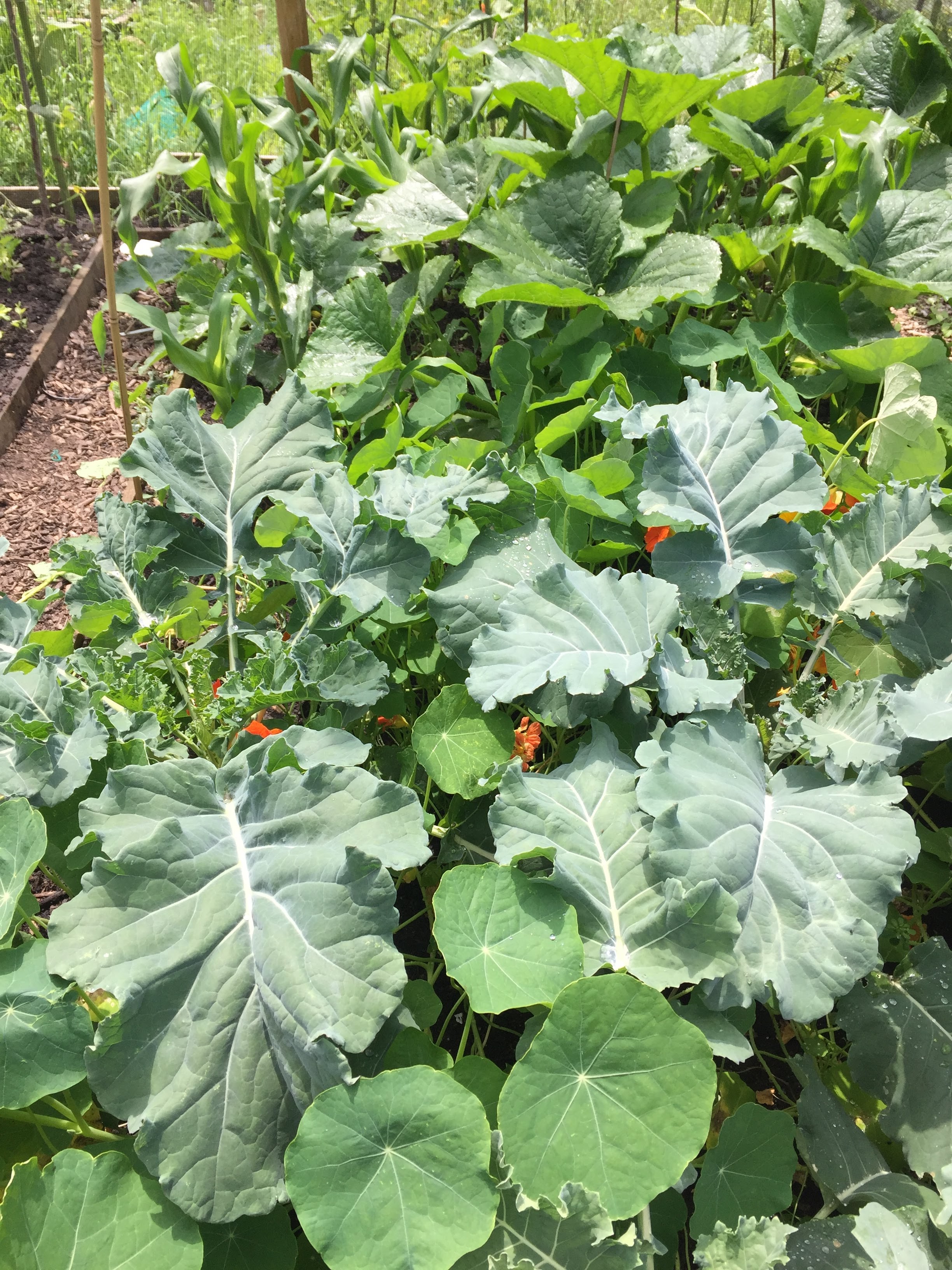
Back on the allotment an instinctive starting pistol was fired over the Easter holiday and the site was swarming with allotmenteers. For once it seemed sensible to be planting the potatoes on Good Friday, and the intoxicating smell of the wet but warming earth – known as petrichor – carried the subliminal message of the season. Is there some kind of spirituality here? – something to do with being held by an embracing framework? Nonetheless, not everyone is as engaged with nature as we are. We were expecting a delivery of plants which eventually turned up yesterday, three parts dead, after sitting in a courier’s warehouse for six days. The boxes were festooned with notices that warned they contained live material.

Now we’re sitting indoors waiting for Storm Noa to pass over while Madame sorts the wheat from the chaff in the seed box. This is such typical spring weather. Southwesterlies laden with moist air bring pulse after pulse of rain and sunshine to us in the west country, gifted by the Atlantic. The warmer the sea gets the more extreme the weather gets.

A quiet start to the day in the kitchen does more for the soul than a week of mattins

I was padding around the kitchen until a moment ago, rehearsing a kind of ritual. It’s enormously comforting – especially when the nights are dark and long – to spend a while in a fixed routine as the day cranks into life. I’m always up early, long before Madame surfaces. Those two hours in the kitchen are the anchor; the point of departure and the landing stage for everything that happens later. I make builder’s tea for both of us before I start and take a mug in to Madame who may or may not wake up. Later I’ll make strong coffee, empty the dishwasher, make up muesli or sometimes a smoothie, strain the kefir, add the second batch of flour to the overnight starter if it’s an everyday bread day, sort out a pile of tablets, capsules and supplements ready for breakfast. Every day I wonder if I really need to be taking them all but when I asked our GP neighbour if I could stop taking them he replied “only if you want to die” – OK point taken. Although most of me is extremely healthy but there are parts that need propping up; so I swallow the pills so I can pretend to myself that I’m still 35. Madame reads while I shuffle things around in the kitchen – at this time of the day it’s my kitchen – occasionally she’ll call me and we’ll talk about the book she’s reading, or the latest covid figures, or today a recipe for arancini that evoked memories of hot summers and cicadas and we stopped talking and were quiet for a while, remembering. Sometimes in a burst of energy I’ll start a stock on the stove or prep something for lunch. There’s something comforting about wrestling the uncertainties of the day in the dark; clearing a space and a structure – a palisade against the phone, the post and emails.

A kitchen is more than a small room with a cooker in it. It’s a place of contemplation, a laboratory, a library, a scene of triumph and disaster. It’s the tap root of the household conjuring nourishment from cupboards, fridges, baskets, boxes and shelves. It’s an alchemist’s den and in our case an indoor greenhouse. The pots, pans and tools were accumulated over decades but they’re not merely functional because I can remember exactly where and when I bought each piece of kit – like the day I winced when I saw the price of the chinois I’d unhooked from the display above the stairs in Kitchens; the blue cast iron patÄ— mould I bought one Christmas for the big family meal. The cazuelas I found in the remotest corner of a shop in Bath – cheap as chips. There’s nothing extravagant in the kitchen but everything is the best quality we could afford at that moment – not that there’s ever any danger of saying “I’ve got everything I need”. Having the right tools is the difference between easy success and a failed struggle against the ingredients. I’ve even got a barding needle for goodness sake! -how outrÄ— is that?

Cooking is a kind of ascetic discipline. I mentioned a couple of days ago that we were holding the prevailing covid gloom at bay by watching cookery programmes. There’s a particularly good series on Netflix called “The Chef’s Table” – we binge watched three of them last week and like all the best programmes it made me want to cook. Coincidentally I’m reading the second of two biographies of Elizabeth David at the moment – when I read the first I had to entirely recast my image of her, and this newer volume has done little to change my mind. There is almost no point of contact or similarity between our two lives, so I am profoundly grateful for her books which introduced me to an integrated understanding of cooking within its cultures; but I know that if we’d ever met we would have hated one another.

the soft underbelly of fine dining is its complete dependence on wealthy patrons

But the TV documentaries, while they were inspirational in the way they presented the work of the chefs, drove home the point that the soft underbelly of fine dining is its complete dependence on wealthy patrons. We could never in our wildest imaginings have been able to afford to eat in their restaurants. Later, after watching Michel Troisgros at work I searched for the cost of a meal in his restaurant and it was just over ÂŁ500 per person; part of which expense must be accounted for by the fact that at one point a dish of salmon and sorrel was being plated up by no less than four chefs working in choreographed harmony without tripping over one another.

When our son was looking for a commis chef’s job after catering college, his head of department said to us – “He should go to Stephen Markwick – he puts all his profit on the plate.” Cooking at that level is inherently expensive but my goodness it was in another league from anything I’d ever managed. I’ve never dared to make Markwick’s lovely fish soup, although the recipe is there in one of his books; mainly because I’d almost certainly be disappointed with my efforts. So much of cooking is instinctive, built into the fingers and the reward of constant practice. Our son spent a couple of years in that kitchen and he’s shared a great deal of what he learned there with me – little things like how to push a tomato puree through a chinois with the back of a spoon. There are techniques in the kitchen that it’s all but impossible to learn without being shown – then they’re often blindingly obvious.

Now our youngest son too is a chef who’s worked all over Europe and occasionally we cook together as well. It’s always a joyful experience, especially when he calls me ‘chef’. We often land up cooking Italian because it’s so much fun, and it gives us the chance to let the allotment vegetables shine. Cooking makes me feel human, and yet professional kitchens can be the most dehumanising places on earth. Bullying, shouting and intimidation, tantrums, low pay and impossible hours are all too common; and don’t even mention the drinking and drugs. Our youngest was shouted at so much by one well known chef that he shaved his hair off and had “I’m the boss” tattooed on the back of his head. That didn’t go well.

And so, like our oldest son, I became a cook and not a chef. After many years of practice, and with the culinary gods behind me, I can put food on the table day by day that we could never afford to eat in restaurants. One of my favourite challenges is to try to recreate something we once ate on holiday. Occasionally I get a picture in my mind of something I’ve never tried to do. At the moment I’m trying to work out how I might make a single leaf of savoy cabbage into a wrap for a vegetable stuffing – like a vegetarian faggot. I mentioned this on the phone to my son earlier and he waved away my enthusiasm with “oh yes we used to do that at college”. I just love the way that Massimo Bottura made a whole dish out of the crunchy bits at the edges of a lasagne. I was inspired by his sense of fun – like a dish that looks exactly like a painting by Jackson Pollock.

– even a miss is something of a triumph

So doesn’t that make me presumptuous – to put myself and the three star greats in the same sentence? Well who cares? you might as well aim high and then – well – even a miss is something of a triumph; after all I’m not expecting anyone to pay for my food, and too much of the emphasis in mid level restaurants is on presentation rather than substance. Not only that, it seems that almost all of the great chefs learned their love of cooking from their mothers or grandmothers – who didn’t learn their skills from Escoffier!

We diminish cooking by dismissing it as a domestic art, and anyone who disdainfully uses the term amateur to describe those of us who cook for love has entirely missed the point. Baking bread, making preserves and pickles, putting good food on the table using produce from the allotment has a kind of earthy completeness. It can be life affirming; a way of caring for the people you love – but it can also be dreadful. I remember someone who mistook a grim attachment to peasant food for style, by boiling a sheep’s head with a bayleaf and presenting it to us unadorned on a plate as an hommage to simple values. Her partner begged us to eat as much as we could to save him from a week of sheep’s head sandwiches. When she’d picked off all the bits that wouldn’t make you gag she smoked a cigarette and flicked the ash on to her plate as if she’d somehow penetrated the heart of regional cooking. Not so easy I fear!

Sitting here now as the sounds of the day intensify, car doors slam down in the car park; cyclists and pedestrians pass the flat and we can hear the house waking up through the resonant concrete floors; I reflect that quiet start in the kitchen does more for the soul than a week of mattins – is that some kind of secular proverb?

asparagus autumn Camino campervan repairs climate change climate emergency composting covid 19 deep ecology economic collapse environment environmental catastrophe environmental crisis field botany foraging Fungi garden pests global climate crisis global heating green spirituality herbal medicine intensive farming locally sourcing lockdown macro photography meditation no-dig pickling and preserving pilgrimage polytunnels preserving raised beds rats regenerative farming rewilding Sourdough species extinctions spring technology urban ecology urban wildlife walking water storage weeds wildflower meadows