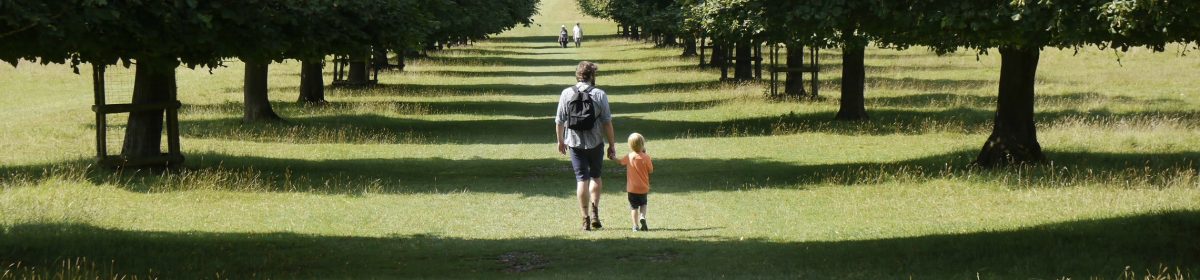
We think – more of an informed guess, really, that this is an Arkansas Black apple tree. Very small but highly perfumed fruits.
In his famous 1961 book Weeds & AliensSir Edward Salisbury (1886–1978), an eminent British ecologist and a former director of the Royal Botanic Gardens, Kew, described an informal experiment after returning home from a walk through the countryside. He noticed that the turn-ups of his woollen trousers were full of mud and burrs.
Instead of brushing the debris away, he scraped out the dirt from his trouser cuffs and planted it. Salisbury was surprised when the tiny amount of soil yielded over 300 individual plants representing more than 20 different species.
The answer to my question “who was it” – an AI question on Google Gemini
I thought I’d better own up to that bit of AI because it seems that some saddos enjoy knocking down writers because they’ve sailed too close to someone else’s writing. It seems that for that kind of tiny mind, every semicolon needs to be the sole unaided work of a single creative mind. Give me a break! the logosphere is one huge whirlpool of language forged and forgotten over millennia. I’ve been reading Alice Oswald’s new book “Rhapsody – a manifesto” and you would probably love it as much as me if you’re sick of the tired old clichés about solitary bohemians and geniuses and their entourages of critics, editors, gallerists and curators.
So I picked that story about Sir Edward Sainsbury’s trouser bottoms because it’s such a good illustration of the way in which creative minds really work. I go for a walk on the allotment with my mind open and alert while my metaphorical turn-ups fill with seeds for new posts. My botanical mind asks “who, what, where and when” but my creative mind asks “why”. Why has this Peruvian Apple landed on our plot and how did it get here? What does it mean? what’s it for?
We have robins which just love it when we break open the soil and expose grubs for them to feed their families. They’re very tame, and come to our feet unafraid even singing their minor key songs to us. Yes they’re highly territorial -we once had to evict a couple of fighting males from the fruit cage before they really damaged one another. There are many other birds on the allotment site and I speak to them all and clap my hands to scare off the pigeons from our cabbages. Occasionally a magpie will attempt to rag a nest nearby and the sky is full of spite and venom and alarm calls. One day I saw something moving in a hedge and I stopped to look closer. After a while a wren cautiously came to the edge and immediately hurried back into the shelter. I was taken aback by my unexpected love for it. I stop and consider that word, “love” – but enjoy; like; admire, don’t come close in intensity. It seems to me that most of those relationship terms demand reciprocation but it didn’t matter that my burst of love for the wren needed no response or even recognition on its part
Apples, on the other hand are a bit difficult because they’re so hard to give names to. Madame’s old boss, George Gilbert, could name the variety with ease – he’d lived and breathed them for a lifetime. For us, it means long searches in databases and through books written fifty or more years ago. The apple at the top was – we were told – a French variety called L’Abri Noir. We were never convinced, especially when I discovered that “abri” could be used for a carport. The romance rather drained out of that one . It was Belgian in any case. But the American Arkansas Black is a closer fit – and now we know its likely name it’s easier to treasure.
Apple trees have a distinctive shape. You wouldn’t think this could conceivably be contentious but I once had a bit of a row with a lecturer who scoffed at any thought that they had a distinctive form and rejected my black and white painting in house paint on a piece of cardboard. But he was wrong. There’s a distinctive downward curve in the branches that could be caused by the weight of apples season by season, or might be a genetically determined feature. Whatever the cause, it’s easy to pick out an apple tree by its shape – and a world in which creatures and plants are known and loved by name is a better place.
All of which comes back to Sir Edward Sainsbury’s trouser turn-ups. Of course we can take a walk; enjoy the sunshine and breathe the fresh air, return home and think”that was nice”. But a walk with the senses screwed up to eleven never returns home empty handed. Half the fun of writing a blog like this is opening the box of remembered treasures and stringing them together into some form of story. Narrative; the spinning of yarns, poems, songs, prayers and laments is fundamental to our humanity. Overheard remarks, captured glances, rich gossip, all contribute to our sense of who we are and occasionally comfort and hold us safe in times of crisis
The point of all this is that the creative imagination doesn’t work with rules, templates and footnotes. The creative mind is shamelessly jackdaw-ish. Always happy to take someone else’s insight and work it into something new. I always try my best to give credit to the originator of a borrowed phrase or idea, but sometimes they just come out of the flow. I’m pretty sure that some of my pieces have taken on a second existence on someone else’s site and I know for sure that the entire million plus words and thousand plus postings have been scraped into the large language AI models. It would be nice to have some acknowledgement as a source but I’d love it if it was shared with a credit and link to the Potwell Inn.
I don’t seem to take many happy families photos or snapshots of the pier at Weston Super Mare – in fact I think I’m a bit of an old stick in the mud or, perhaps, all those church teachings about it being sinful to enjoy anything threw some switches in my DNA and I just can’t help myself. Of the thousands of photos on my computer the vast majority concern plants, flowers and locations. They’re all catalogued and recorded and tidy – although anyone who’s seen my workspace will insist that’s a barefaced lie but it’s not – it’s industrial strength masking!
Anyway, personal reflections aside, there’s another photographic category that’s extremely important to me because of the way I work. Almost every piece I write begins with a photograph. I can’t do the ‘eyes meeting across a crowded room, stuff; I’m an intensely visual kind of person. I can remember in complete detail the appearance of a woman in a summer dress that was no match for the cold wind across the churchyard as we buried her dad. I remember the goose pimples on her exposed arms and how they seemed to express her lostness at that moment. I can’t imagine making written notes about the things I see – I just take photos, thousands of them. and they are my aides memoir. Over many years the technology has come to my rescue and now I can make notes with a very small Olympus camera and also with my phone. I remember standing on the bank of the Gloucester Sharpness canal one day alongside the collection of scuttled barges there and thinking how wonderful it would be to be able to unite pictures and words in a computerised internet form with powerful search capacities so readers could create their own path through the pieces. When I first had the idea it would have required technical expertise I just didn’t possess and technology that didn’t yet exist, but nowadays it’s easier. I take my photos, recall the moment and write the story of it. The photo is the starting point for the story that sits at the centre of a human mind at a particular place and time.
So when I sat down to write today we’d just finished packing away the emergency stores we’d bought at the behest of the (UK) government in case of shortages. It’s a sensible enough policy for a very temporary fix but whilst we filled the boxes with tinned food and pasta I wondered where were the signs of government policy concerning the risk of disruption through climate collapse, oil wars, organised crime and hostile governments . You’d have to be quite old to remember the government “Protect and Survive” campaign during the Cold War which urged us to whitewash the windows and sit under the kitchen table eating tins of corned beef as the nuclear bombs fell. A perfect example of the reliance of politicians on our gullibility to get them off the hook.
But we didn’t just pack the stores today; we also discussed seed orders and what we’ll try to grow next season in the light of inevitable shortages in the supermarkets. We discussed water storage again to help during the droughts which are now inevitable. We investigated getting a fitted mesh cover to the polytunnel to reduce sunlight by 47% and keep the temperature down. We talked about our diet and how we could be more self sufficient . We ordered bread flour in bulk and we sorted through our own stored food – this year’s tomato crop was severely affected so do we have enough of last year’s tomato passata and sauces to see us through until next summer? We need to revise the plan for the allotment and attempt to develop more shade through some judiciously planted taller trees, and we need to keep pressing the Council to improve security on the site because the amount of thieving has greatly increased. Food disappears from our plots, and even disappears from the charity veg boxes that we support, whilst the Government maintains a Trappist silence on the global climate issues and the chickens come home to roost.
Inevitably then, I searched the Photos library for inspiration and it brought to mind all those choppings and simmerings, crankings of the passata machine and other evidence of our semi peasant life at the Potwell Inn. I also remember how the head of ceramics at Farnham College got into terrible trouble for asking a female student if she was strong enough to lift a bag of clay during an interview. It was certainly tactless, but not on the scale of the question Madame was asked when we were interviewed together at Falmouth. “What if you get pregnant?” We need to expect governments to find ways of tackling the hard questions, formulating the right policies and acting urgently on them. We need the courage to evaluate whether they actually work rather than looking good on the headlines; but what all of us seem to do is dance around the mulberry bush, stick our fingers in our ears and sing “la la la” while the politicians throw elderly peaceful protesters into prison for daring to question their cowardice. The point of the metaphorical photo at the top of this piece is – as the proverb suggests – that you can only make pigs’ ears out of pigs’ ears!
Miniature waterproof camera with macro lens capacity, knackered Pixel Phone 6a,;cheapest available GPS (phone GPS is very inaccurate and unreliable and field microphone with “dead cat” windshield and receiver. In the other pocket and not photographed, hand lens, 6″ mm ruler and extending carpenter’s tape.
Sitting in bed reading during the week, Madame emitted a noise somewhere between a screech and a hoot and waved her Pixelbook at me. “Look at this!” she said, with a great grin. I leaned over and with the wrong glasses on completely failed to interpret the page or draw any conclusions from it. Then she said “I just typed in a question about Mexican Marigolds – Tagetes minuta and up came the Potwell Inn alongside the RHS and Sarah Raven. I felt like the little child at the pantomime who gets chosen to go up on the stage and help Buttons find his hat. Such is the indiscriminate nature of AI bots that I was swept to prominence simply writing something about it recently. The RHS will have warned about its aggressive nature, and Sarah Raven sells the seed so she thinks it’s alright. All I wrote was that it’s certainly not a miniature it’s a six foot monster that will leave thousands of seeds in your soil if you let it flower. However it has a reputation for deterring pests and even (and I’m crossing myself here) – deters bindweed. In this drought we’ve had a badger digging up our wood chip paths in search of food every night and even he leaves those devil’s guts behind. So when it comes to organic pest control, we’re staging the battle of the giants on our allotment!
Thank goodness this drought is slowly losing its grip and we’ll soon be released from the chore of endless watering. Given the season we’ve been keeping dozens of seedlings and transplants alive under temperatures in excess of 30C, and I’ve still got to join four more 250 litre tanks together to store water when, (not if), we’re plunged into another one. Sorry about that dreadful pun. One of my favourite occupations on the allotment is a bit of civil engineering.
So things are going reasonably well tand we’ve been getting the work done very early in the mornings while its still cool. Our family seem to have come out on top of all their crises with one having the best weather ever for a family seaside holiday, another being promoted to the kind of job he’s always dreamed of after a period of great uncertainty, and the third finding a lovely flat after being evicted in the rush of Section 21 orders. If there is a hell, it’s going to be crowded with greedy landlords.
Meanwhile I’ve been focusing on developing a completely new way of recording plants, combining new technologies of lightweight cameras, GPS systems and a tiny field speech microphone and transmitter to organise all my plant data into one place – rather than spread over half a dozen notebooks (mixed up with shopping lists and telephone numbers) and constantly lost pens; photos that have to be searched for individually among the thousands and a persistent failure on my part, to record half of the details I need to make a proper record.
Typically, on my first dress rehearsal on the allotment yesterday, I talked too quickly for the recorder to transcribe, the lanyard of the camera kept banging against the microphone, I didn’t follow my own procedure and jumbled up the notes and never even thought of establishing a temporary ID using an image recognition app because I ran out of hands. You might call it a learning opportunity but I’d have to hit you because I knew a glorious and hilarious cock-up when I read the transcript back. Notebook LM (AI) – which was supposed to do the heavy lifting simply shrugged and walked away claiming that without more contextual information there was nothing it could do.
Ah well, I’ve been through this before. Computers are very single minded and can’t make silk purses from sows’ ears, but like all new technology, they demand practice. Luddites, and there are many, dismiss the whole idea of machine learning and artificial intelligence without understanding that it requires the user to formulate exquisitely focused questions; and these can only arise out of a deep understanding both of the subject and the way the computer “thinks”.
This is anything but taking the lazy option, because every plant observation that’s properly recorded, then has to be thoroughly tested against the standard texts i.e. the old way because we’re not yet at the stage where the new technology is 100% reliable. In fact it probably never will be. It’s all very exciting, but it all begins with catching a glimpse of an unfamiliar plant, or of a familiar plant with an unfamiliar detail and knowing that it’s worth investigating.
We’ll soon be off to West Cornwall where I can test and practice the new methodology, hopefully without annoying Madame too much. It reminds me of a story about a famous pianist who was once praised by a fan who said “you’re lucky to be so talented.”-his reply was “- and the more I practice the luckier I get!” Amen to that.
So basking in my quite undeserved online reputation I’ve abandoned the pointless attempt to win the approval of the magisterium and grown my hair almost as long as when I was young and annoying my Dad. To my great surprise it came out curly – and white – and distinctly mad looking. This final thought comes from a much used catechism in church circles.
Question – what are the last six words always spoken in a church that closes down?
Answer – we always do it this way.
Back in the day there was an Anglo Catholic theological college (now closed down) whose motto was “Guard the good deposit” a quotation from St Paul, which was emblazoned on all of their china; including the chamber pots. Change really is in the air, and it’s always helpful to examine the good deposits – we all have funny habits – but really we should be prepared to replace them when they’re wrong and before they start to smell.
Finally some photos from yesterday’s disastrous rehearsal with part of its its unedited transcript. Beta minus I think – could do better.
Cut these cranesville then. This. Oh yeah, it’s got a huge leaky one really long six millimetres. So this one is Rough Meadow cross.
Choices, choices. Should I illustrate the beginning of a new era with a sunrise, or the end of an old one with a sunset? And what should the photograph express? Should it be triumphal? a resolution achieved; or should it be a lamentation for the passing of the moment? In the end I opted for a misty sunrise over the river in spate, with the architectural vacuity of the Crest Nicholson development, the Dredge Bridge and a solitary seagull – because every adventure has to begin where you are. In any case I’m only meeting a personal target. Nothing will change and I’ll stagger over the finishing line wondering what all the fuss was about. The stars and planets will not align in any special manner; no flowers will bloom as I walk to the shops. It will be a perfectly ordinary winter day; grey, drizzly and cold enough to wear my favourite Shackleton jumper – scratchy, warm and smelling of the Welsh mountain sheep who gifted their woolly coats for my benefit. This blog, and my life will continue in much the same way as a celebration of the ordinary because ordinary becomes the capitalised “Ordinary” when you see through the distractions.
And what of it? ten years of trying to make sense of a stolen world that’s lost the will to live. Ten years of being governed by the clueless and the sociopathic, the narcissistic, the spineless and their goons – kept in power by the infinitely malleable consciences of Pavlov’s voters who’d kill their mothers for a Greggs sausage roll. I think I’ve explained that enough. I’m off to a quieter place where I can breathe.
Keeping a journal is one thing. Publishing it day by day is another altogether because there’s so little happening. No juicy confessions of sins committed or even intended because my life is straightforwardly dull. Got up; looked at my watch; made tea; ate five biscuits which I dunked; got up again and made coffee; counted out the day’s medications; emptied the dishwasher; went back to bed and read an interesting book on fungi. There’s nothing there to attract the attention because the real interest is always in the interaction between the mundane and the mind. Who was that rough sleeper outside Sainsbury’s? How did he get there? what were the crucial choices in his life that led him to the pavement and a life of begging? How did those two shoplifters teach themselves their routine of violent quarreling to escape investigation by the two police who stopped them and then backed away? Does this charity shop smell of old clothes? Is the man in that couple over there being attentive or controlling? Why is my plate cold?
The romance of life is always there but sometimes you have to look for it. The unusual plant growing in a crack in the pavement isn’t going to shout out to you; you just have to be interested enough to look. The otter swimming in the river, the little shoal of Dace glittering in the shallows, the Fumitory on the allotment that – aside from being an invasive pest – is just different enough to warrant further investigation.
When our first child was just old enough we would walk up Granby Hill in Clifton which still had its cobbled gutters and it could take an eternity because he was so fascinated by the discarded litter trapped in the cracks between the setts. Cigarette buts, silver foil, broken glass, bits of shiny metal and twigs all seemed to bewitch him. He would slowly walk on, head down, savouring each and every object as if it were a treasure waiting to be discovered. I was always happy when he was engaged in this way. It’s a fundamental human act to weave stories, myths and legends around the ordinary and everyday.
I’ve been around a long time, and worked in many places that were rich with stories. I suppose that’s where I learned how to value them. People, it turned out, rarely wear their experiences on their sleeves, but with a bit of prompting and some patience, the most unpromising lives can suddenly blaze, flame out like a reignited log on a fire. The Severn Pilot who would walk the banks of the river on his days off in order to memorise the shifting of the safe passages who was walking one day in thick fog when a small tanker heading for Sharpness came slowly past and a voice called out “Is that you, Peter?” The cider maker known by everyone as “Doughnut” whose name was bestowed on his first day at primary school when he wore a white shirt with a red band around it and whose drinking had put him into a hostel and who grew a lovely garden there and told me some of the unexpected tricks of his trade. The nickname persisted as long as the community that attached it. Another old man who told me how they hid barrels of cider from the Customs and Excise under the hedges to avoid exceeding their permitted limit. The oldest man I’d ever buried; 103 years old who moved in with his son who was in his 70’s when he was 90 and told him that the garden was a disgrace and then dug it from end to end. The electrical engineer who had saved a fellow worker’s life with his first aid training and told me it was one of the most powerful experiences of his life. You could easily pass any one of them on the street and not notice them, but give them some time and you’ll discover for yourself the power of the Ordinary.
I’ve never forgotten a visit to an old man to arrange his wife’s funeral. Back in the day he’d been an old Redcliffe boy and played rugby for the Old Reds. He was in a wheelchair with both legs amputated. As we chatted he asked if I’d like to see a photograph of his wife. Of course I said yes – I’m always a sucker for a photograph – and he pulled out a photo that had been taken on his honeymoon which only amounted to a single night in a Weymouth hotel. They were both standing on the promenade, he in his casuals; white open necked shirt and pressed trousers that, true to the fashions of the day, looked loose and baggy but you could see he was something of a catch. She – standing next to him – was just so stunningly beautiful I’ve never forgotten her. A faded and rather crumpled black and white photo came to me in a blaze of light and I learned something about the fragility of life and the way that love blesses everything it comes into contact with.
So yes, the Ordinary is anything but ordinary and – as the saying goes – for a hero the harbour is the place you set out from, although it’s good to get back to it when the sea’s rough and the wind is blowing a gale. I’ve had ten years of retirement and ten years of typing away at this blog and it’s been the most tremendous fun; learning entirely new skills, taking up field botany and doing some serious photography. I’m still struggling to get my head around an intellectually satisfying account of how the concepts green and spirituality could be linked into some way of fending off our collective descent into a hell of our own making and I fully intend to keep going with this blog and my love affair with the Ordinary as long as I can. Madame and I are very happy living in our virtual pub, even if outsiders might see it as a small flat in a concrete building. I knew this moment would be lacking in drama but there we are. I’ve just completed one million and thirteen words about the Potwell Inn.
There are two questions here that I’m trying to answer. The first is the title of this post, and the second is an attempt at explaining why I call myself Severnsider – and I’ll tackle that one first.
I think these photos were taken some time around 2007, although I’d known the place for years prior to that. If you live nearby, or know the river Severn on the Gloucestershire side you’ll probably know where they were taken on the Gloucestershire riverside and along the Sharpness canal at Frampton on Severn. The Severn is, as you can see, a very wide river but dangerous for larger ships to navigate above Sharpness due to the ferocious tides, winds and sandbanks. There was also a problem in sailing around a sharp bend in Arlingham which is a good place to watch the Severn bore but a very bad place for a sailing ship. The canal, opened in 1827, could carry ships up to 600 tons and was once the largest and deepest (18 feet) canal in the world . It was a safe, non-tidal shortcut to Gloucester docks. Over the decades we’ve fished in the canal, walked its towpath and paddled up it in our kayak. There are many places I love and visit but in a strange way, the river Severn has my soul. One of my parishes bordered the bank and it’s always been a place of solace on difficult days – lonely, quite remote in places with huge skies and a tide so fierce you can hear it above the mournful cries of wintering curlew.
As the tide from the Bristol channel meets the river there’s the meeting of two distinct modes of being – each with its own smell; earthy, mountainous river and salt tide. Twice a day, the inbreathing and outbreathing flows change places and command the landscape. Springs and neaps cover and reveal the mudflats
The Severn has wonderful sunsets, and on special evenings you can hear migrating geese and swans flying noisily towards the tidal marshes at Slimbridge. It’s a sound so haunting that it will freeze your blood. On one occasion I was walking on the bank at Shepperdine when a hare raced up the field to my right, leaped over a broken wooden fence and crossed, feet in front of me in mid-air. I don’t know which of us was more surprised. It was there, at high tide in the middle of the river and just inside our parish, that I scattered the ashes of a Severn pilot, a man with a lifetime of experience of the twists and turns and shifting sandbanks of the river who would take charge of ships travelling upstream . One of the crew opened a steel door in the side of the Balmoral and to the accompaniment of long blasts on the steam whistle, we poured his ashes into the water just as the tide turned and the river stood still. The trippers on the deck above us had no idea what was happening below them. The two waterways, canal and river, run side by side; the contained and dredged canal -an industrial relic of a past age and its wild and untamable neighbour. A watery Cain and Abel in perpetual conflict like the two sides of a human soul.
Inevitably, as a parish priest, I became a kind of story keeper; privy to many secrets and at ease with the history of the landscape and the people who lived in it because – in a very important sense – they were one. I may well have seen the last ever trailer load of salmon putchers being taken down to the river. The village baker’s wife and her husband had roots in both sides of the river, and would often talk about elver fishing and elver omelette where the freshly caught baby eels were tipped alive into the egg mixture in the pan. He remembered delivering bread by horse and cart. The orchards along the river were protected from frosts by the thermal mass of the water and thousands of gallons of cider were once made on local farms to slake the thirst of the labourers. I got to know one or two of the surviving cider makers pretty well. I once asked one of them why he liked cider so much and he answered “because it gets I pissed!”. The local funeral director was another hefted man who began life as a builder and joiner and made coffins according to the custom of the day; graduating to funeral directing as a natural progression. The gravedigger would always discreetly press a jelly baby or some other sweet into my hand as we processed to the graveside. It was a surviving custom from when everyone was rewarded in cash after a funeral. We referred to one another as gentlemen and bowed as if we were born to it.
I was the story keeper because I took many of the village funerals, weddings and baptisms. I have never felt able to write about those years in any detail because so much of what I knew was told to me in confidence, but I learned the skill of discreet storytelling over three decades, slipping in a coded morsel known only to the closest friends when I could. Most of the old ways and those who followed them are gone now and the suburban villages empty of commuters and refill again in the evenings. The salmon have all-but disappeared and the churches are shrinking and falling into disuse.
Oh yes; the Severn is a very special place and having lived next to it for 25 years it’s the reason I use the name Severnsider. Although these days we live in Bath, the campervan is stored near the banks of the Severn, and the river Avon on whose bank we now live, is a tributary to the mother river which it joins at Avonmouth.
Anyway enough history, because I want to move on to the more interesting question of storytelling with pictures, and the impact of computer technology enabling us to do things we could not have contemplated thirty years ago when I stood on the riverbank, looking at the long row of apparently abandoned barges, hauled up and left to rot. I know, of course that there was a story shouting to come out of the landscape. The melancholic look of rusting hulks and concrete tow barges sinking inexorably into the estuary mud suggested a catastrophic collapse in the market of some commodity. That was a wrong assumption as it turned out because they were deliberately scuttled there in an attempt to protect the river bank from erosion. The pictures haunted me.
I knew I had the raw materials of a new way of understanding landscape but there seemed to be no way of making it work. I wanted to find a way of telling stories with pictures and text but which you could enter at any point, and so read in any order – which is much closer to the way we actually apprehend landscape in real life. Then I discovered HTML but not being very computer literate, the learning curve defeated me. It was the arrival of journaling software and later blogging software that finally opened the door for me. I could utilise the thousands of photographs I’d taken over the years and write accompanying text that could illuminate any topic I was writing about. The photos weren’t eye catching snapshots but little visual haiku, working with the text to say what couldn’t easily be said in words. They became little essays, often exploring a single idea with no attempt for them to be amalgamated into a theory of everything. By now there are over a thousand of them, rapidly approaching a million words in a form that can be searched by date, by topic, by keyword or even just with a single search term.
All this because a single photograph can conjure up a whole habitat or environment; a whole history of the people who live and work in it and occasionally amount to a funeral sermon for something or someone lost forever. This photograph, for instance, taken on Thursday at Big Pit above Blaenavon suggests to me something that’s not telling the whole story; that needs unpacking. The bright red paint and hand lettering suggest that this truck does not, any longer, contain explosives at all. It’s there for effect, as part of an experience – which is what it is, of course. Possibly a film set.
But this one, taken moments later, is telling a more subtle story; of abandonment and dereliction. Present and past are expressed in the course of a few words on a screen. Now we know that something infinitely less fun is going on. There are two steam engines there, each of them deserving restoration but lacking the funds to do it. In a supreme irony, the high quality steam coal which was mined here and which is needed by every steam restoration project in the UK can no longer be mined because of the environmental damage caused by burning coal. We were told that the last two shipments of steam coal came by boat from Chile and Australia. So coal will still be burned but also thousands of tons of oil burned added to the total environmental cost. A third photograph has an entirely more melancholy feel because behind the abandoned winch gear, and in the distance, lies a town that feels as abandoned as the headworks of the pit. With the end of coal mining, thousands of jobs were lost and never replaced with skilled work. Coal was King and now unemployment drains the eviscerated community below. The museum is a marvellous and pointed reminder of yet another lost community.
Oh how miserable this is sounding! Let’s turn to nature. Many of the thousands of photographs I’ve taken are of plants, fungi and even insects. They’re the other part of landscape – the micro features that make it what it is. You’ll know if you’ve read this blog for any length of time, that I’m pretty passionate about the waifs and strays of the plant world which find a place to settle in precisely the abandoned post industrial sites, marginal environments and polluted earth that – like the human communities that once lived and worked in them – have fallen silent as the dreams of the industrial revolution; of easy lives and plentiful housing and food for all come to dust. Things are unravelling and we all know it, in spite of the performative idiocy of politicians who think that having your photo taken with a hi-viz jacket, hard hat and sleeves rolled up is a substitute for having any idea or plan for the future.
Is it even possible to love a despoiled landscape and yet hate what caused it? I think I’m able to address that paradox in a way that might offer a way forward. Firstly the earth doesn’t need us nearly as much as we need the earth, and so in recording what’s there needn’t be a source of anger is much as an encouragement and inspiration to do better. To do better for human communities, to do better for the plants and insects and animals share the earth with us. On our walk in the Bannau Brycheiniog on Thursday we were looking at some slime moulds – a subject which I know almost nothing about. But I did a quick search in Merlin Sheldrake’s book “Entangled Life” and discovered that the humble slime mould can help to make a map to escape from an Ikea store with no more encouragement than a few bright lights and some oatmeal. We dismiss the strange intelligence of nature at our peril. We shall need to review, and experiment and rethink the way we do things around here – I mean our whole culture – in a way that no-one in living memory has had to do because the crisis is here. Even our short journey across the Severn was delayed by 24 hours by an unprecedented storm. Our memories of the past need not fall into the trap of sentimentality and nostalgia. We can be grown-up enough to see that the communities built up by mining had costs as well as benefits and we need not return to the whole package of riches extracted and suffering exacted. What nature demonstrates is the persistence that comes from environmental stability, and so to finish here’s a photograph taken on our friends’ smallholding of a small patch of ancient woodland which has been protected by the steepness of the field in which it stands.
It’s our friend Charlie’s birthday today so yesterday he came round for coffee and chocolate eclairs – a birthday treat. We’re the same age bar a month, so we’ve shared lifetimes but lived them out entirely differently; he is a distinguished botanist and I was – or rather am – an undistinguished amateur. But our conversation yesterday led us to share a problem we both have with writing; because he was brought up in South Africa during the apartheid era but as a committed anti-apartheid citizen who, by force of circumstances, shared many of the material advantages of the white colonial population. How should he write about such a childhood? I have a similar problem when I write about the deprivations and occasional criminality of some of our neighbours here. Any kind of nuanced and rounded account of living in Bath has to go deeper than gushing about Roman baths, Georgian buildings and Jane Austin. Sometimes I feel that dissing the place does it a disservice, but it’s not just the local businesses that benefit from crowds of visitors; it’s a boon to the street beggars as well, and I’d bet that some of the visitors take advantage of the freely available drugs.
A few days ago I wrote a piece called “The Night Bus” which tried to capture some of the edginess and sense of threat that accompanies late night bus riders. Obviously it would be lovely and possibly earth saving if more of us left the cars at home and caught buses, but until unreliable services and antisocial behaviour get fixed, taxis and cars are a rational choice for some people who don’t share my tolerant attitude. Writing honestly about these problems is an attempt to get people – especially councillors – to do something about it.
Last year I wrote a piece about rats for the Allotment Association. It didn’t get published, probably because the editor would prefer to promote the fantasy allotments of endless pest free summer days. Sadly, in real life, winter comes along and the mice move into our polytunnel. This year they managed to nip off sixteen growing broad bean plants. Even if it’s bad Karma to set traps I’m still willing to take a chance with fate if it gets a crop in April. Gardening and allotmenteering are often challenging; with infestations and infections as well as the joyful harvest.
We’ve just had the first real frost of winter with the temperature down to -4C last night. We fleeced all of the vulnerable plants so hopefully they’ll live to grow another day; but troubles – as the small print on finance forms always mentions – “can go up as well as down”. Writing honestly about it doesn’t create problems, it brings them to the fore. If William Cobbett had confined himself to singing the praises of the beautiful Vale of Pewsey instead of writing Rural Rides, the Reform Acts might never have seen the light of day. If Charles Kingsley had not written the Water Babies, or if Charles Dickens had self censored Hard Times the cruelties of the industrial revolution might not have been exposed. If more people had wondered where the money that built Georgian Bath was coming from, maybe the slave trade would have ended that bit earlier.
Telling it how it is is radical, of course. Why do governments – particularly our own malignant bunch – spend so much time and effort prosecuting people who’ve done nothing worse than tell the truth? But telling it straight doesn’t have to be the fierce radicalism of the stereotypical demonstrator. I’ll just give one example of a conversation I overheard one Easter many years ago. We were in Regents Park Zoo standing in front of an Orangutan enclosure. A woman and her husband were there just in front of us looking at these wonderful apes with rapt attention. She turned to him and said – “Oh look George ………… they’re so realistic!” I’d be thrilled to receive any postcard sized explanations of the meaning of the word realistic in that sentence. The memory of it burrowed into my brain that day and I’ve never forgotten it. There’s a whole philosophy waiting to be unpicked when thinking about zoos and what they mean; the hole in the dam, waiting for the little boy to pull his finger out and go home for tea.
Even while we’re still battling with low temperatures and arctic winds, the earth’s changing track around the sun brings longer days and more sunshine. Now it’s not a question of ‘if?’ but‘when?’. In the photo, the last days of the purple sprouting broccoli are almost here, while the beansticks are ready for summer. Setting up the bean sticks seems to be a form of benign displacement activity – it’ll be weeks until they’re needed but yesterday as I set them in, it felt like I was planting a flag in the diminishing skirmishes with winter. Yesterday too I set up a wigwam for the Alderman peas to climb and transplanted the autumn brassicas while Madame sowed seeds. We’re clearly in phase three of the sowing season. The first courgette shoot peeped out of its pot in the propagator, which is actually in use throughout the year. First to go in were the chillies and peppers in January, with successional waves until now when (aside from successional direct sowings) everything is sown except the autumn bulb fennel which goes in after the longest day. Then, during the rest of the year we grow basil for the kitchen.
The tomatoes are pretty much hardened off in their pots in the polytunnel now and we’re wondering when we should plant them into the soil. That will mean moving the container potatoes out into the wind and weather, so it’s a bit of a juggling act, but the forecast shows three more cold nights and then gradually rising night time temperatures. That’s a relief because the temperature in the polytunnel can go lower than the general air temperature – quite why I don’t know. Last night, for instance, the air temperature on the window ledge didn’t go below +6C but the polytunnel went down to +1C. The effect of moving the tomato plants from the flat to the tunnel has been to stop them growing altogether as they acclimatise to the bigger temperature range. For now they’re double wrapped in a fleece cloche inside the tunnel. The other most noticeable casualty of the cold nights has been the asparagus which is later this year by at least three weeks. It is producing, just about, but really it’s just ticking over even under a fleece cloche.
Needless to say, we sit light to the plans we drew up during the winter. Small plots are something of a nightmare when it it comes to rotations because some crops – potatoes especially take up a lot of space and some occupy their space for over a year. We just do the best we can, especially with the potato/tomatoes group but because the solanaceae comprise our largest rotation group we just improvise; sometimes rotating from one part of a bed to the opposite end; but even with all our best efforts the actual decision as to where each group goes is a last minute choice according to the space available. Yesterday we were lucky to have an empty bed about the right size, which had never seen any brassicas. The price was a second season of legumes on another bed further along which is the lesser evil (we hope!).
This year we’ve covered all the carrots and alliums (leeks, onions and garlic) with fine insect netting from the off, and grown them all in new soil and raised beds in the hope we’ll shake off the curse of allium leaf miner. This is nothing more brilliant than a bet. Anyone who imagines that we’re experts is mistaken. Mercifully, writers and bloggers don’t have to account for ourselves to our readers. My son was telling me today that a friend of his has written five quite successful books on a mind-bogglingly wide range of subjects from sourdough to gardening. All I can say is that if I ever need brain surgery I hope he doesn’t show up and supervise. It reminds me that when I was training to conduct interviews for the radio we were told that asking an actual expert a question on their chosen subject was always likely to result in a long and opaque dissertation accompanied by a power surge as people resorted to boiling the kettle. What you need is an amiable sounding bluffer …… hmmm – like me?
Chatting to our allotment neighbour today, he was lamenting that he’d followed exactly the instructions for growing shallots given by a massively famous TV expert – only to watch them sit in the ground sulking. That’ll teach him! Gardening is full of mysteries and turning a lucky coincidence into a canonical truth and then blogging about it doesn’t help anyone to be a better gardener. That’s why The Potwell Inn blog confines itself to the tricky business of being human, using examples that might include gardening and cooking but mostly avoids cruelty to animals! However today I was lugging a bag of compost across a narrow border and Madame upbraided me for snapping off one of the two Monarda plants we’d only set out two days ago. I bowed to the frosty storm but a few moments later I had a closer look and discovered that the slug which had sawn it off was still hiding under a leaf. Revenge was swift and terrible, but the Monarda is still dead.
It seems slightly odd that today I finished planting out the purple sprouting broccoli that we’ll be eating this time next year. I always find having to juggle the many sowing dates and times to maturity quite challenging. A quick taste of the polytunnel spinach was a revelation. Far from bitter even the largest outside leaves and stalks were good enough to eat raw in a salad. I do think the quality of our bewilderment is improving with time. Earlier our son and his partner came to visit us in the flat for the first time in over a year. Life creaks slowly back into the familiar patterns but going into a shop still feels odd – like a dangerous celebration. We bought some aubergines, peppers and courgettes from the veg stall in Kingsmead square and Madame is cooking ratatouille in the kitchen as I’m writing this . The smell is wonderful and – like putting up beansticks – it feels like a promissory note from the summer.
These are a bit close, I know, but we’re only growing for two so we don’t need huge vegetables – and it’s much nicer to eat them garden fresh.
These were grown on a piece of the allotment that the previous tenant said nothing could be grown on and demonstrates two points at once. Firstly, there’s no saying what a piece of ground will grow once you’ve removed not just one, but two layers of carpet and weed control mat separated by a four inch layer of soil and weed roots; and secondly that the old tale that parsnips fork when they’re grown in recently manured ground may be a bit more complicated than it seems. There’s some evidence, apparently, that parsnips and other roots fork as a result of eelworm infestation, so it may be that the forking eelworms (dare I say?) like manure. Who can tell? This ground was absolutely inundated with well-rotted horse manure after we discovered what the problem was, and then uncovered and removed it- well, sort of rolled up!.
So that’s the parsnips almost dealt with except to say that roasted with carrots, one of our ukichi kuri squashes and some of our potatoes and rainbow chard made the most lovely treat. The difference in quality and flavour between shop bought veg and our own is beyond dispute.
So that leaves butter and fine words. A couple of days ago I ran out of olive oil when I was baking, so I substituted the same weight of butter in my everyday sourdough and it worked perfectly well. However there’s a difference in the texture that I can’t quite put my finger on, so I probably won’t do it again unless I run out of oil.
And finally, fine words. LIke all bloggers I pay attention to the stats, and like everyone else I love it when they go up and I wonder what I’ve done wrong when they go down. When a whole continent disappears for three days I do worry a bit – and if anyone says they don’t care about things like that, they’re telling fat porkies. The Potwell Inn would be simpler to describe in terms of what it isn’t than what it is. In particular it isn’t a feelgood site, a natural history site, a life coaching site, a spirituality site or a cookery site although, confusingly, I write about all these things. So I have to expect that sometimes when people follow the Potwell Inn because they have an allotment, they might be disappointed when – especially in the winter – there’s not much to write. “Went to allotment to take up the kitchen waste, very muddy” is not going to butter any parsnips or, indeed, crack any pots in Warrington.
In fact, yesterday we took the kitchen waste up to the allotment and dug a few parsnips. I uncovered the compost heap, which I’ve been turning frequently to bury the rat attracting food under the older stuff. I don’t mean cooked food scraps – they go into general waste because the council won’t collect food waste from our block of flats; but rats also love to chew a lump of raw cauliflower trimming or a sprouted potato. As I turned the waste in, a sleek brown rat jumped out from somewhere near the bottom and scuttled around looking for a way of escaping. I was holding a murderous looking four pronged stable fork but the sight of the rat’s rather lovely shiny fur softened my heart and I stood back while it went on its way.
The winter heap is very different from the summer heap. Apart from the rats, the worms love a winter heap and multiply in their thousands if you keep it aerated and warm. You can almost hear them chomping away at the kitchen waste, and as long as I keep the heap from going anaerobic and smelly it consumes kitchen waste, shredded paper and cardboard faster than we can put it in.
Winter compost and summer compost are very different. Winter words and summer words are very different too. Life at the Potwell Inn has its seasons, and as it moves on, my interests, experiences and outlook change as well. At the moment there are over 250,000 words in this blog. Sometimes – it’s lovely when it happens – someone will come on to the site and read fifteen or twenty pages at one sitting. Many readers seem to dip in and out and as the blog has grown I’ve realized that people access it in different ways and for different reasons. I’m looking to change and re-index the categories and tags to make it easier for readers to access the bits they’re interested in. But the core purpose of the Potwell Inn blog is to reflect on the whole tricky business of being human and staying human in whatever ways catch my attention from day to day.
I’d like to reach more people. The Potwell Inn is, hopefully, a sanctuary for the alternative, the bewildered, the joyful and the curious – against the onslaught of the free market vultures. If you’ve read H G Well’s novel you’ll know that the Potwell Inn has a river running through its grounds. There were once fish in it and a ferry to make the crossing. The brewers are desperate to close it down and sell it for redevelopment as a gated housing development. I’d love it if you passed the link to the site on to your friends – I’m confident that if you like the site I’d like your friends too, so do press the button. Small is beautiful but a bit bigger would carry more weight in the fight against all that diminishes our humanity.
I’m still not completely sure I’m doing the right thing by passing so many of my books on, but the decision stands and the total I’ve disposed of is in excess of 350 – or nearer 750 if you count the ones I got rid of when we moved here. But they were the easiest ones, and now it feels like I’m eating ino my own history as box after box goes into the car boot. The ‘disposed of’ group includes a surprise hoard of college library books that I’d completely forgotten I ever had, but felt obliged to return to their rightful owner – which I did yesterday, and then discovered another four stowaways.
It’s feels like a rather revealing thing to do, as I hand them over a box at a time to the woman in the Oxfam shop. She was kind enough to say what interesting books they were, and inadvertently threw me into a bit of a tail spin because I felt I’d handed over something immensely personal – like a secret diary – to a complete stranger who would be listing them in some kind of inventory. No different than Google or Amazon and every other internet company who steals my most revealing information and then sells it on, but this was more personal and almost intimate. When I was an early teenager and because I was incredibly shy, buying books or clothes became an absolute torment because I couldn’t shake off the feeling that I’d be judged by what I was buying. It was only through the kindness of a bookseller called John- he was a bit of a legend – that I was given permission to browse all day if I wanted and buy whatever I wanted, but I never realized that disposing of my books would land me in the same place.
So now each book that goes into the boxes leaves me second guessing what the reaction will be – goodness knows what today’s four boxes of rather arid theology will have done to my street cred – especially after four similar ones on Monday. So not for the first time I blurted out the first thing that came into my head, and I wondered aloud why on earth I’d kept them all, and postulated that it was in case I forgot who I was. I could almost see her thinking I was trying to tell her I’d got some sort of dementia, not least because on Monday I’d said (in another moment of brain fade) that I was doing this so our children wouldn’t have to “when I popped my clogs”. I’m half expecting a letter of condolence from Oxfam and then my pointless shyness will turn into a clusterblurt.
So four more boxes of books and two guitars gone today, and my oldest son has contacted a removal company to take the piano to his house, while enquiring anxiously about the philosophy books which I promised I wouldn’t get rid of because I know that (eventually) he’ll give them good home. Meanwhile Madame has jokingly accused me of fancying the woman in the Oxfam shop, but I think I’m suffering a bit from some weird variant of Stockholm syndrome.
So the reason for the reference to log rafting in the title is that the raging flume of my unconscious has also to allow for the fact that this is busy busy time on the allotment. Now the crops are coming in earnest, and we’re struggling to cope with the pace of things. The overwintered broad beans have, at last, all been harvested and so we’ve had two sessions in which the Potwell Inn kitchen is transformed into a freezer production line. The three experimental plantings of garlic have now also been taken up and it’s clear that of the three varieties we tried the early purple bulbs were far and away the most successful. The batch of five elephant garlic yielded four real lunkers.
As the beds are emptied and become clear, our aim is to hoe the weeds off, give the beds a covering of composted manure and a handful of chicken pellets or fish blood and bone and get them back into production as soon as we can. This year we’re able to try the no-dig idea more easily because after three seasons of hand weeding we’re pretty much on top of most unwanted perennials, and the annuals are hoed off as they germinate. Today while I prepped the beds, Madame planted more runner beans raised in root trainers and also some modules of celery. After a bit of a wobble with the weather last week, the sun shone and after a few hours we were able to celebrate the solstice with the allotment looking at its most productive. “Blimey” – said Madame – “this feels more like a market garden”.
And as I type the title ‘Madame’ once again, I’m reminded that a friend said recently that she didn’t like me calling her by that name because it made her sound like a brothel keeper. Although nothing would delight me more than the thought of the Daily Mail reporting something like “retired priest found dead in Bath brothel” I’m afraid the explanation is much simpler. Madame prefers not to have her name published in the blog because she doesn’t want to lend her implicit imprimatur to the words I publish before she’s seen them, any more than I would suggest improvements to her drawings before they’re finished. There are certain subjects over which we do allow forceful dissenting views – not least the planting, disposition and maintenance of the allotments because we are both very srong willed and neither of us wants to assign agency to the other. It must work pretty well beause so far I’ve never had to remove a sharpened fork from my back, and it’s never got beyond the withering look and toss of the head stage.
And so we’re in ‘second crop” mode while we’re feasting on the first, almost at the stage of being able to choose what to eat off the allotment and then taking it home, while the autumn harvest is beginning to take shape in the ground. When I built the line of compost bins I was convinced they were far too big and we’d never fill them – but as you see the first bin is now pretty much full and in a couple of weeks it will be ready to turn.
There used to be – may well still be – a building supply company down near the fruit and veg market in Bristol. The company was run by the friend of a friend, and they were very particular that they were “a specialist building supplier” That’s to say although you could buy all manner of obscure and popular things on the builder’s mind, you could not buy sand and cement and other bulk supplies. This led to a good deal of good-humoured banter with customers who would deliberately request these unavailable items just for the fun of a firm but polite refusal – “I’m sorry sir, but we are a specialist building supplier”.
The reason I recall this is that this morning I’m pondering how best to avoid disappointing people who come to the Potwell Inn looking for something we don’t, (or can’t) supply. I suppose in the great Wild West of the blogosphere pretty well anything goes and, after all, a like is a like and a visitor is a visitor so why worry? But I do worry.
At the top of the page is a carefully considered statement – it says: “A sceptic’s take on being human” . So it’s not a guide to being human in any sense not least because I’m a sceptic and I can’t buy into big systems and I’d be pretty crap at guiding anyone anywhere. But it also suggests that being human is a deeply puzzling business that isn’t just a given, like breathing. The Potwell Inn isn’t the destination but a place I can go to and feel a bit human. It’s a left luggage office for memories, ideas, experiences and overheard conversations that people can come to to search for something they think they might have lost even though they can’t exactly name it.
And so in this restless business of being or becoming human there are some things I’ve discovered that seem to help. Firstly and above all there’s people, there’s eating and cooking, there’s growing things on the allotment and are books and poetry and the visual arts and there’s French Nouvelle Vague films and botany – and so the list goes on. But this isn’t a blog about any of those things on the list although it includes them all. So I don’t do recipes or advocate any one particular way of running an allotment I don’t promote vegetarianism, veganism, paleo diets or anything lke that. I just ramble on about stuff I’ve found that I like and stuff that makes me wonder why I don’t like.
I once worked for a tree man, a forester called Pat McGlyn. Knowing next to nothing about forestry I would help him out in all sorts of totally unskilled ways like directing traffic and dragging tree limbs around. He was a pretty terrifying character -he had lost an eye blowing up tree roots, and in extremis when he was collecting a bad debt he would remove the glass one leaving a deep and horrifying hole there. He usually got his money! We lost touch for couple of decades and then one day he unexpectedly turned up at the door, obviously suffering from some sort of dementia. He said – “I know I know you but I can’t remember your name”. He’d parked his old Volvo outside and he was very proud of the fact that it was full from floor to ceiling with discarded artificial limbs which he was going to send to some war-torn corner of the Balkans where he thought they would be useful. We had several cups of coffee and talked about the various friendship groups he’d set up in troubled parts of the world. He drove away and I never saw him again. Being human comes in all sorts, shapes and sizes and Pat was uncompromisingly human.
On my last day working with him we stopped off for a pint on the way home somewhere near Castle Combe. The pub was closing down for good that night, and he looked at the long mahogany bar and stroked it and pondered aloud about its beauty, the trees that had provided the timber for it and the history and all the conversations it had been a silent party to over the years. That old bar has become the bar at the Potwell Inn. We serve anybody here – fancy today’s special? Game terrine, piccallili and sourdough bread and butter, every bit of it prepared in our kitchen and grown on the allotment.