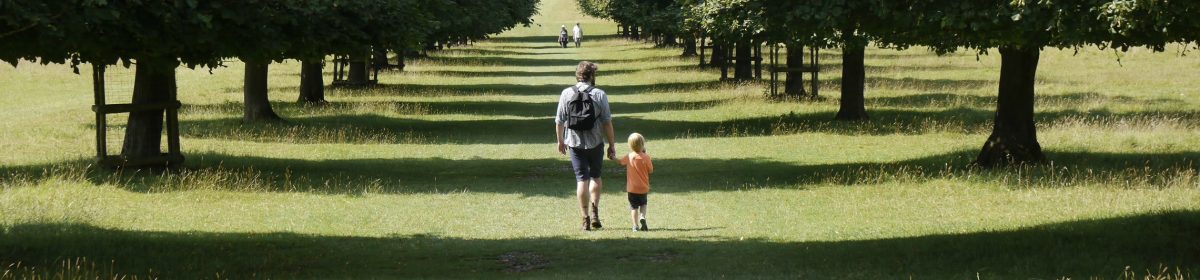
Once again, walking down to Percuil, our hearts are lifted.

Potwell Inn regulars will know that I get a bit grumpy when people take the therapeutic powers of nature as the fixed and immutable reward for stepping outside the door. Hand on heart I suspect I’m a victim of the protestant work ethic that guarantees there’s no gain without plenty of pain. I lay the blame for that disposition squarely on the Primitive Methodists who were rather keen on rewards but much more on punishments. Then, like today, we occasionally go for a gentle stroll with no particular quarry in mind, and we return almost breathless with joy.

Cornish lanes are never lovelier than they are in Spring and the footpath down to Percuil from Gerrans was as lovely as any lane ever has been.

We walked this way six weeks ago and the change has been astonishing. One of the most intriguing features of our walks is to see the successional drifts of flowers following one after another. You can no more hold back the emergence of the next wave of plants than you can hold an eel in your bare hands. I took this photograph because the combination of colours: the pink of the Campions, the white of the Stitchworts and the blue of the bluebells looked so beautiful in the sunshine against the green vegetation. You don’t even have to know the names of the plants to appreciate their beauty. Looking more closely you can spot Navelwort, Dock, Herb Robert and Hogweed. Further down the path we spotted a patch of Early Purple orchids – some with spotted leaves and others without; plants don’t read textbooks.

As we went down the path we could see the successions working out. Six weeks ago there was a mass of Winter Heliotrope, mostly finished flowering. with Alexanders emerging through them. Today the Alexanders were almost finished and the Cow Parsley has thrust through them, closely followed by Hogweed. Already the Cleavers (Goosegrass if you prefer) is threading up through the competition and even showing some tiny white flowers. There’s something wildly, needlessly extravagant about nature – like a Sufi dance – that can lead, (I say grudgingly), into direct awareness of the Power, the Spirit, the Tao; whatever you want to call it.

Percuil harbour

Down at the harbour we perched on the concrete wall of the chandlery come boatyard and laughed about the time we got beaten by the tide and the wind as we paddled back in our kayak and had to be towed in by the instructor. One of the boatyard workers drove past us on a tractor and as he walked back I asked if they were busy. “Yes,” he said, “The season always takes you by surprise”, and he graced us with a friendly smile. Behind the wall an invisible woman was having a loud conversation on a mobile and a hundred yards away the sound of a conversation on the verandah of a holiday let, skimmed across the hard sand towards us. We’d hoped for the sounds of Curlew or Cuckoo but today we were content to listen to a whole choir of other species. Upstream on the creek, a Heron and an Egret eyed each other cautiously over a patch of territory.

We walked back up the road with Madame’s rucksack stuffed with Corsican Pine cones for her to draw. I think she’d scaled the fence of a rather grand house to snaffle them under the gaze of a dog walker who she’d confused with me. That’s the joy of a meandering stroll with no particular purpose in mind.

On the other hand there’s serious work to be done and I’d spotted a couple of plants of what I think is Smith’s Pepperwort – Lepidium heterophyllum on a footpath. I checked on the BSBI database and although it’s been recorded all around us on the map, it’s not been seen here. Distribution maps can sometimes tell you more about the distribution of field botanists than they can about the private life of plants. Anyway, with the prospect of filling the last missing square in the jigsaw I was like a dog with a bone and sent a preliminary enquiry with a couple of poor photos to the local Vice County Recorder. That cost me ÂŁ35 because in all conscience I couldn’t continue relying on the BSBI, (Botanical Society of Britain and Ireland), for help without at least joining. And so I proudly present the evidence below with very little expectation that anyone else will be interested. Little things please little minds.

This little lot cost me four visits, one of which was to sniff a crushed leaf. The fact that it didn’t smell foetid or of garlic turned out to be important. So were the hairy leaves and the tough old perennial rhizome, not forgetting the purple stamens.

Culture war on the allotments

After an exhausting couple of busy weeks on the Potwell Inn allotment we’ve come down to Cornwall for a break. Luckily we were blessed with some decent rain as we left and although it made for unpleasant driving on the motorway it was a joy to think that the allotment was getting a thorough soak. Happily too, we’ve got brilliant neighbours who are always willing to lend a hand with watering the greenhouse and the polytunnel. Although the greenhouse has an automatic watering system, it’s very difficult to calibrate because the pressure goes down as the water level in the tank decreases, and occasionally a bit of gunk jams the inlet valve open so it floods the plants and does as much harm as drought does. There’s no doubt that personal attention is the least foolproof way of going on, but we all need a break occasionally and so we help each other out.

In fact, half the joy of allotmenteering is the community of interest that it builds. The gardeners on our site are a pretty fair representation of the hugely diverse and polyglot population of Bath. When we talk of culture we need to remember that the root of the concept comes from the uniqueness of our highly local ways of living, growing, talking and celebrating. You can either treat diversity as a threat, or (so far as I’m concerned) a marvellous melting pot in which everyone becomes both teacher and student. To use a slightly academic phrase, what diversity offers is the prospect of emergent properties; insights and techniques of the utmost importance in a time of huge threat.

So it came as something of a surprise when, after a hiatus of two years, the council announced that plot inspections would take place in early May and, rather than acknowledging that the site has never looked better with so many newcomers taking on empty and neglected plots; started to send out letters threatening eviction for quite trivial and, in one case, quite imaginary infringements of the rules. Sheds, one allotmenteer was informed, were not permitted to have windows. No trace of any such regulation can be seen in the 27 pages of mostly sensible rules but suddenly we are all in danger of being evicted as a result of rogue windows. The Potwell Inn allotment will probably get away with it because since the vandalism on Christmas Eve our shed hasn’t had one and the void has been covered with an empty manure bag, tacked on. We may, I suppose, still be turned off under a newly invented rule that advertising is not permitted. Another member was threatened because they were using an old cast iron fireplace as a firepit.

We were, however, warned that “non fruit bearing trees” with a trunk diameter of more than 3/4″ are not permitted. This is an (unwritten) extension of the sensible rule that standard fruit trees are prone to shading neighbours’ allotments. All of our trees are on highly dwarfing rootstocks, but Madame stuck a small piece of pruning from a bay tree in the ground in the hope it might preserve the leaves better than hanging it in the kitchen. We got an email detailing the ferocious and land grabbing propensities of bay and were “advised” to remove it. Our experience of bay trees is that they can get out of hand, but over pruning will often kill them.

So what on earth is going on? It seems to me that there’s an intriguing allotment culture war going on between an official with a very rigid historical view of what constitutes a proper allotment and a bunch of new gardeners who are entirely free of any preconceptions about double digging, National Growmore fertilizer and finely calibrated straight rows. On the one hand there is the stereotypical Mr Digwell with his trilby hat and pipe and on the other a new culture of recycling, upcycling and acute environmental awareness. The 25% of land on which we are allowed to grow flowers is more likely to be occupied by more recently sanctified “weeds” than cut flowers destined for the church porch.

I propose a test case with the lovely Echium pininana (photo above) which fails the regulations in every way being way more than three inches in girth, as much as ten feet tall, but which dies at the sniff of a frost and in summer is always alive with bees and other pollinating insects including armies of ants. And in any case, what on earth constitutes a non fruit-bearing tree. Without winter berries many of our overwintering birds would simply die and so – are cotoneaster bushes (in sensible numbers) friend or foe? Whose idea of fruit or food are we meant to be protecting?

Ironically the Council has announced a whole raft (I like that word because it implies imminent flooding, which is all too true), so a whole raft of green measures including green corridors which, truth to tell, is exactly what we need since Crest Nicholson were allowed to build houses for the wealthy on the southern riverbank which, before the construction of flats which resembled Russian bonded warehouses, was a post industrial urban wildlife haven. Of course we need houses, but not just for the wealthy!

So there we are – away in the wilds of Cornwall with the campervan; hunting for plants and – to be strictly accurate – guzzling wine and snoozing in the sunshine too. Will there be a menacing letter waiting for us when we get home? Time will tell I suppose, but this battle isn’t really about windows or trees it’s about dreams, it’s about saving the planet, it’s about listening to new ideas and new ways of doing things and it’s about widening the slit in the sentry post of petty regulations to see the wider picture.

There’s a huge difference between looking and beholding

My old music teacher AF Woodman had an assortment of names for me. Sometimes he would address me as “rod, pole or perch“, and on others he would extend my name by stressing every letter into a strangulated “poe-ill”. I didn’t care what he called me because he gave me a lifelong love of music. One of his pet phrases was – “I know you heard it Poe-ill; but were you listening?“

Much later in life I was on a retreat at the La Retraite convent in Clifton, and we were invited to take the hands of a complete stranger but rather than something easy like telling them what we had for breakfast, we were instructed to behold one another. This turned out to be incredibly hard for me because it involved letting my guard down. It was, in its own small way, a life changing experience, because it uncovered a complexity and depth of possibility in an encounter with a stranger that eventually became the key to my pastoral work. Dangerous, messy and (in a very limited sense) erotic beholding, enabled a form of listening which involved all of the senses.

It took its toll, of course, and eventually I just ran out of steam. Too many bereavements; too much grief. I needed to get out before I burned out.

Anyway, that was then and as I’ve written here before, the key to surviving crises is a capacity to reinvent yourself using the strengths that are left after the broken bits have been laid up; all of which maunderings lead to a further look at the alleged healing powers of nature. The italicized “alleged” is not there to knock the idea but it’s just asserting that the healing powers of nature are a hypothesis not a natural law.

On Monday last we went back up to Velvet Bottom in a further search for Spring Sandwort – Minuartia verna. Our recovery from Covid – which we caught a month ago – has been very slow. The acute phase was pretty horrible, but that was followed by all sorts of symptoms that seemed more psychological than physical. Combined with a really busy time on the allotment it was as much as we could do to keep up with the routine work because any physical effort seemed to drain us both completely. So our trip to Mendip was compromised by my incapacity to focus, or draw any inspiration at all from what would normally excite and engage me. Madame was kind enough to keep her counsel, but I must have been a miserable companion. All I could think of was to lie down on the grass and sleep. Fortunately, a week on, we both feel almost normal again.

The urge to lie down on the warm grass, though, was inspired by an experience in my early teens when I lay on the grass on Rodway Hill and had what Romain Rolland described to Freud as the oceanic feeling. I’ve no idea how long it lasted but I seemed to be completely absorbed into the earth and her processes. From my point of view it was a completely passive experience and even though I was very young I just gave myself up to it. It was a completely unasked for healing that I’ve never forgotten. I lay there looking up at the blue sky, dappled with summer clouds and listened to the wind riffling through the drifts of grass. Now, with hindsight, I would include this in a description of the healing powers of nature only with the proviso that it can never be sought – it’s an experience of undeserved grace that can’t be guaranteed in any particular place, and which only fell to me a couple of times despite many attempts to force its hand.

But there’s another way of engaging with nature that’s quite different and is capable of and responsive to being sought; and it involves a kind of beholding, directed at natural rather than human subjects. Yes of course it’s possible to reduce field botany to a kind of trainspotting, and I’m certain that there are people out there who ask nothing more of nature than a new record. But when I go out on a field trip with some people, I sense that their engagement with the tiniest of nature’s gifts is far deeper; a two way engagement that both speaks and listens. To walk with such a person is – to quote a favourite heretic

To see a World in a Grain of Sand And a Heaven in a Wild Flower, Hold Infinity in the palm of your hand, And Eternity in an hour

From Auguries of Innocence – William Blake

For them a tiny rope of mycelium tracking across a dead tree; the elaborate hieroglyphic of Graphis scripta lichen a couple of inches in diameter on a tree trunk , the little Moschatel with its cubic flower head giving it the name Town Hall Clock; these are not ticks in a box but true encounters – beholdings, if you like – engagements with nature that have spiritual power and maybe even (if the seeing becomes a true beholding) an offer of healing. So in this sense too, it means something more than wishful thinking to speak of the healing powers of nature.

I hesitate to introduce terms like dangerous, messy and erotic to the pursuit of field botany, but if they have any use, it’s to move the heart of the enterprise away from the rational calculations of the identification key, spreadsheet and grid reference towards something more akin to wonder. Perhaps the healing powers of nature could be more easily embraced after her re-enchantment.

How to change the world

If only it were so easy. I was originally going to call this post “The morning after”, if only because, having done a fair bit of research and finding several target species I wanted to emphasise the fact that as sure as night follows day, there’s always a stack of work to do. I was feeling mightily pleased with myself and I envisaged myself cantering towards the finishing line and pressing the send button on the reporting software. Pleased, that is, until I started to look more closely at the photos.

I’m very used to the dead hand of confirmation bias when I’m out and about looking for a particular plant. I find something that looks a bit like it and instantly every nerve strains towards putting the tick in the box; even – or perhaps especially when there’s something that doesn’t quite fit the frame. As I was writing that sentence I thought of one of my most forensic, and therefore valuable tutors at theological college who would seize on the slightest mention of any hard work that had gone into the draft sermon I’d just delivered and say – “really Dave; no-one wants to listen to you pissing from the pulpit!”

Bugle – Ajuga reptans

Indeed not, but I hope I’m making a point of general interest here. Point one is that there are an awful lot of little white flowers around at this time of the year. They’re often quite tiny and inconspicuous and I usually have to prostrate myself with a hand lens and take a closer look. Point two is that a phone camera with a decent zoom capability is the most useful gadget in the world for recording a pile of information you didn’t notice at the time you were squinting at the specimen, but discover you desperately need when you start leafing through the 1266 pages of Stace 4 (no pictures) at home. Macro photos are so immensely useful for identification that I even bought a little clip-on macro lens which makes life even easier.

Nonetheless, the morning after feeling creeps in like mental wet rot as you stare at the photos and realize that in the cold light of day, Hairy Bittercress; Alpine Pennycress, Dwarf Mouse Ear, Common Whitlow Grass and even Barren Strawberry look like – how shall I put this delicately? – cousins, and my report if I ever send it will be seasoned with doubts. Today at a Bath Nats meeting I shared some of those doubts with a really ace botanist; so good he can enlarge at any length you like on the 275 plus subspecies of Blackberry. I say I shared, but as soon as he discerned the drift of the conversation he paled visibly and offered to look at my emails in the same tone of voice you might use to say ‘you must come round for supper some time’ – with not the least intention of specifying an actual date.

So maybe it would be better to have walked on by and enjoyed the lovely skies last week; but here’s the point. After you’ve sat and struggled with an ID for a while, the world becomes an infinitely richer place. Instead of noticing the little white flower and passing by, you now understand that it could be one of … who knows; it could be hundreds! Suddenly the world needs to expand to accommodate this new piece of knowledge because now there are five new friends where there was once only one.

Changing the world, especially at the moment, seems like a fruitless and depressing waste of emotional energy but changing it just by making it bigger, more diverse and more beautiful than it was before, is achievable. These little white flowers aren’t especially rare, although they can sometimes survive in a place that no other living thing could survive in. However they are under threat and whilst I’ve no pretensions about my own modest abilities, we footsoldiers; the botanical infantry if you like, can record them so that they can’t become rare or even extinct without someone noticing.

You’ll know where we are if you’ve been following!

Yes – of course we’re back on Mendip but this time just above Velvet Bottom because today we thought we’d explore the Ubley Warren and Blackmoor nature reserves. This is such a unique environment that it comprises getting on for ten nature reserves, some of them SSSI’s (sites of special scientific interest) and all of them with a handful of rare and nationally rare plants.

You’ll see that the ground well and truly deserves the local description of “gruffy” – that’s to say thoroughly worked over by lead (and possibly silver) miners since Roman times. These deep cuttings are known as rakes and the spoil heaps, although mostly no longer bare, are a specialized environment for plants tolerant of heavy metal contamination.

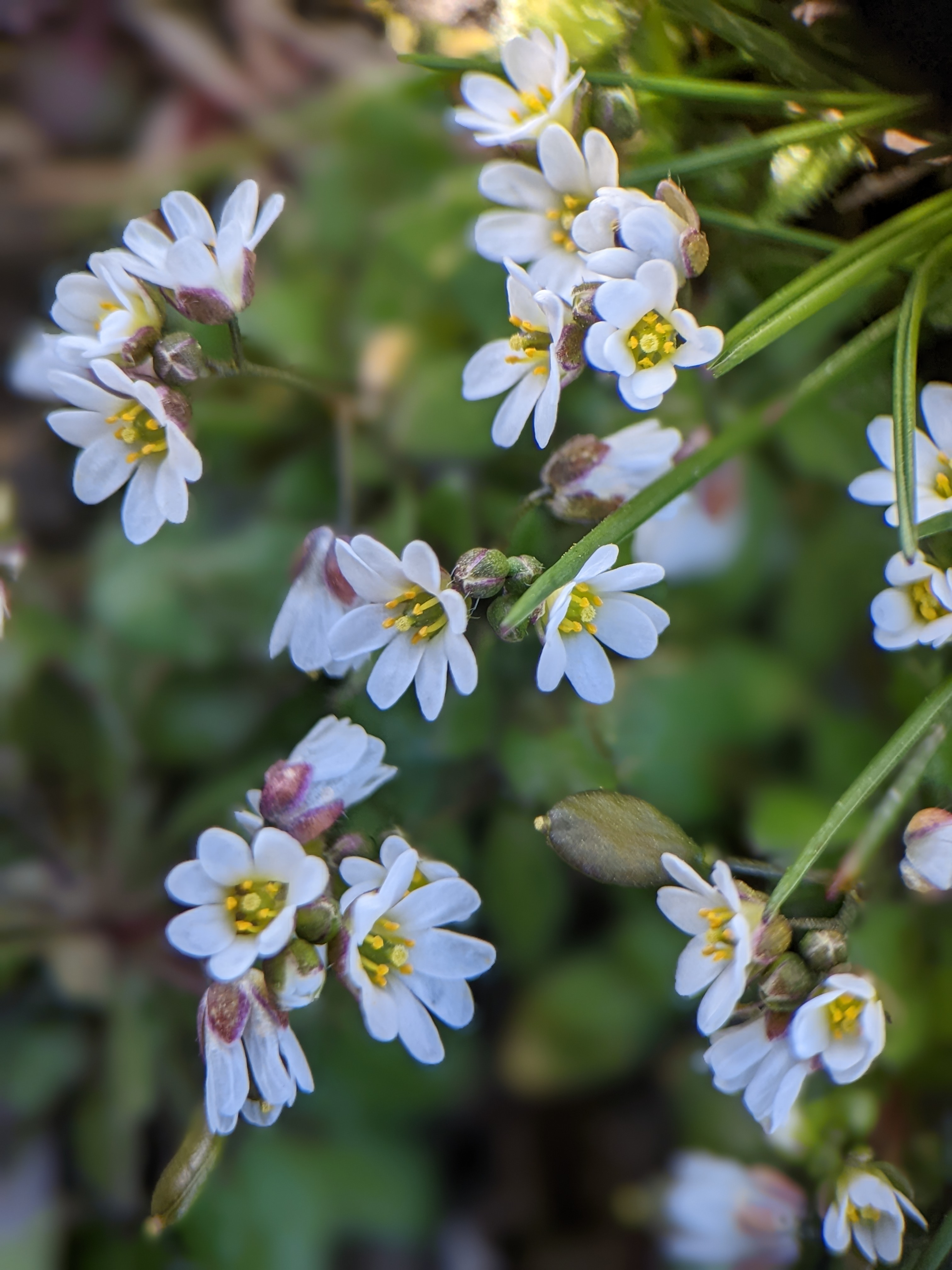
Having found the Spring Whitlow grass – Erophila verna in Velvet Bottom a couple of weeks ago I was keen to see if we could find another specialist called Spring Sandwort and so we concentrated on likely looking ground – all to no avail because I think we were a bit too early.

Anyway, we did find a rather knackered Early Purple orchid (Orchis mascula) snapped off at the bottom of the stalk – possibly by a marauding dog – and then as we carried on looking through the list of likely/possible rarities we came across Dwarf Mouse Ear – Cerastium pumilum – which is nationally scarce, and also Alpine Pennycress – Noccaea caerulescens which is similarly rare. And if that sounds either lucky or clever I’m reminded of a story I heard about a very well known local drystone waller who was asked how much he charged. He answered that it was ÂŁ100 a yard – at which his questioner backed away, saying it was a lot to pay for a load of stones. Well, he said, it’s a pound for the stone and ninety nine for knowing what to do with it! My luck today owed everything to the research I was able to do before we even left the flat, and I contributed nothing at all to the incredible databases and local floras that showed me exactly where to look. As per Mark Twain; it’s 99% perspiration and 1% inspiration.

The only downside to a delightful morning were the bags of dogshit abandoned almost everywhere we went – come on you retards – you’ve already picked the disgusting, slimy (and warm) mess, up. Just take it home for goodness sake!!!

All of which ranting brings me back to an often visited question – “does the Potwell Inn really exist?” Well yes it does – in one sense only; because its only physical manifestation is the campervan (called Polly) in which we can close the door against the Idiocy. But it principally exists in the form of a conceptual framework that gives me just about enough head space to survive. The Potwell Inn is the place in my head where poetry and art jostle with spirituality, green politics and where walking and botanizing or looking out for living things are not merely allowed, but encouraged. The Potwell Inn is a space in which the gentle domestic arts of growing and cooking and eating together and building community are not treated as a bunch of hippy idealism or even communist infestation.

So the Potwell Inn hereby permanently bars the cretinous bunch of sociopaths, adulterers, drug abusers, liars, fantasists and thieves in the government, along with all their media supporters, lobbyists, climate change deniers and Russian backers who abuse our intelligence day by day. They should not enter the premises because they will not be served, and if they persist they will be sent to the end of the nearest pier where they can parade their meagre comic talents before an audience of stuffed weasels. This is the only way I can stay sane; by carving out a small space where I can grow to be as human as is possible for me and the people I care about, by creating an alternative to our etiolated spiritual and moral environment which sucks all possibility of creativity out of the air we breathe.

The Potwell Inn is a challenge; a one fingered salute to polluters, poisoners and to the entitled. The Potwell Inn is a refuge; a retreat house and a portal. Everything that happens here is true; but “here” can pop up anywhere – wherever the Potwell Inn sets its foot on the ground. Even if that ground happens to be an old slag heap, buddle pit or mine tip.

Of course we talk to the allotment – how else would we know how to keep it happy?

It’s Good Friday today and English tradition demands that we plant potatoes. Of course traditions can be very local or just plain wrong. With Easter tied to the phases of the moon, Good Friday wanders about a fair bit because Easter Day is calculated by the first full moon after the equinox which – this year – falls on Sunday 17th April; making Good Friday the 15th. The obvious explanation underlying the tradition is that the Easter weekend has always constituted a four day public holiday in this country and so for working people it was the ideal opportunity to get the new season’s crops underway. Jetting off to Spain wasn’t even on the cultural horizon and so my childhood memories of Good Friday are always triggered by the smell of freshly turned earth – scientific name, petrichor; the queues at Palmers seed store and at Flook’s the fishmonger, the owner of which had been working with fish so long he closely resembled a tall cod in his wellingtons and oilskin apron.

Here at the Potwell Inn, the latest frost (since we’ve been living here) was on May 6th so it’s clear that although potatoes, being planted below the surface, would be OK; there are many frost tender plants that wouldn’t. In the real world of allotmenteering, potato planting demands warm earth, no sudden cold or frosty spells on the horizon and time to get the job done and, as far as we’re concerned that means tomorrow because the potatoes are all chitted and ready.

As we were busy setting up nets and prepping beds yesterday I was mulling over the perplexing reason that allotmenteering is so good for the soul, and I think the answer (if there is one) has changed greatly over time, for me. Our first allotments and gardens – if I’m honest – were a bit of a struggle. Weeds and pests demanded constant hand-to- hand combat and any successful crops were snatched from the jaws of death. I can remember once losing an entire crop of beautiful Marmande style beef tomatoes to blight and watching potatoes turn to black slime for the same reason. It was hard to feel any kinship with the earth when it seemed to push back so harshly. We were always opposed to using chemicals, and so our options seemed limited. Sometimes we just gave up and walked away; disappointed and resentful.

But yesterday I realized it all felt very different. We’ve learned the hard way that birds and caterpillars will decimate brassica crops if we don’t protect them with nets. Allium leaf miner and asparagus beetle too are endemic on the site but we use a lot of fine insect mesh to keep the bugs out. We grow blight resistant tomatoes and maincrop potatoes (Crimson Crush Sarpo Mira), and we clear up any dead leaves; minimise the places slugs like to lay eggs and let the blackbirds take the rest. We net the fruit trees until the buds have set and so-on. Finally we don’t plant out tiny fragile little slug takeaways but grow them on until they can take a nibble or two. Badgers need something approaching the Maginot line to keep them off the sweetcorn – and so it goes on.

We also do a lot of companion planting and in the last two years we’ve doubled the number of perennials; increasing hugely the number of insect attractors and pollinators. We don’t dig and we make over a ton of compost every year; the net result being that our allotment can look a bit scruffy but the food plants grow well and we just accept that in a sane world, we simply have to share with all the other creatures. Gardening has become a silent dialogue with the plants, small; mammals, birds and insects who share the space with us. There are no weeds and no pests because we all have a right to exist.

Of course the non-polarized world of the allotment comes up against the binary world of allotment bureaucracy pretty regularly. Recently we had an epistle from on high regarding “non fruiting shrubs” which the writer wanted us to other and promptly remove. What’s a non-fruiting shrub? I wondered. What about cotoneaster for instance? – much loved and needed by birds in the winter. What about our Achillea plants: they have no humanly useful food – although the stalks are useful for casting the I Ching – and they provide pollen for insects – isn’t that fruit in a broader sense? Does our Borage fail the food test? What about Good King Henry? which side of the friend/enemy dichotomy does that fall?

Perhaps the Bible really is to blame in this one respect; (it’s a wonderful collection of texts with some really duff bits!) -maybe the idea of sovereignty over the earth has been really bad for the human race and we’ve got ourselves addicted to smiting anything that’s not directly useful. My own view of the Kingdom was formed more by my Grandfather’s huge row of sheds where anything and everything that ‘might come in handy one day, boy’, was piled high. He was a great rescuer of broken things, and among the finest of the remains were two or three old paper roll pianos (nickelodeons). He would give me and my sister a few pennies and we could bring them to life again. Is that a resurrection story? It’s a bit late for me to be called a heretic now!

Growing things is the silent dialogue between the gardener and the earth and it has to be a life of constant thanksgiving. We learn the proper names of all our plants, including the invasive grasses and the bindweeds that pierce through the soil out of sight and where they’re becoming a nuisance we remove them by hand and say ‘thanks but not here‘. Many of them are very beautiful in any case and to divide the earth into good (food for humans) and bad (food for everything else) – is a corrosive state of mind. The little annuals that take their chances early in the year; the Dandelions, the Rosebay Willowherbs that drift in clouds, the chancers that drop by for a year and then disappear; all full partners in the earth.

So will we be spending any time in church this Easter – (Oestre – work it out) – weekend? Well no, thanks but no thanks. We’ll be planting potatoes and if it seems right I might even sing the exsultet to the apples.

Good hunting!

Sweet Vernal Grass – Anthoxanthum odoratum

And for all this, nature is never spent;

There lives the dearest freshness deep down things ….

Gerard Manley Hopkins; “God’s Grandeur”.

Yesterday I set out with the target of finding one single grass species, and we were on a 270 acre site where there’s an awful lot of the green stuff, so it was a test of patience mixed with good luck and Madame’s extraordinary eye. She was the first to spot the tiny flowers amongst the ruffians, not knowing at all what it was. Our minds converged and I had my plant.

It’s not that it’s the least uncommon – just that it’s very small; flowers very early in the year before the other grasses and then lingers as a dried skeleton for the rest of the season. I don’t suppose anyone in the UK could justly say that they’d never seen it but it’s also true that very few indeed would have noticed or known what it was. It’s all in the name; or very nearly all. It’s probably known as sweet more for its perfume than its taste. The thing about it is that it really is the smell of fresh hay; and that’s down to the alkaloid coumarin that gives the same perfume to Meadowsweet: a kind of delicious and evocative vanilla fragrance. The second part of the name, verna, comes from being one of the earliest grasses to flower. Most of the perfume resides in the roots and, as is so often the case, smelt close-up, to me it’s more like Dettol than vanilla. It’s also true that although it was once sown in meadows, Coope and Gray say that it’s neither very productive nor palatable to cattle and so it’s out there on its own.

We also went back to the dark rings in the grass to see if we could find any St George’s mushrooms – Calocybe gambosa and we were lucky that overnight a clump had emerged. They’re the easiest of fungi to identify as long as it’s spring. The white gills and the strong mealy smell are vanishingly unlikely to be anything else. Later on in the season, however you need to be very careful indeed because there are some truly dangerous nasties out there. Here’s an unexpectedly atypical Death Cap we photographed in September 2019 in Cumbria. As always, the devil’s in the detail and – just like all the other plants – you have to consider tiny details of shape and form; smell; season and habitat. That single death cap would certainly be enough to kill you!

Later on we trudged back to the Meadow Foxtails to see what other successional grasses might be on their way and found Yorkshire Fog in leaf there. I really should go back and do a full inventory but my grass I/D skills are still quite rudimentary and I fear it would be a slow job. It occurred to me while we were looking that I may not have noticed the Meadow Foxtail growing there before because until recently there was a free ranging herd of deer that would have eaten the tops off as soon as they emerged. Sadly they became infected with Bovine TB and had to be slaughtered, and so the grazing has had a two year rest. Preparations are obviously being made to reinstate the herd with hundreds of yards of new deer proof fencing going in. Hopefully they’ll soon restore the grass to its previous state.

One brilliant little find was a quantity of Flattened Meadow Grass; the same species that I found in Cornwall recently and which I’m still waiting to get signed off for the record. A double check on the BSBI database later confirmed that it’s known in that 10K OS square, and that’s good enough for me. Once you’ve sweated for hours over a plant you tend to remember it in the future!

The best laid schemes o’ Mice an’ Men

All too often this quotation from Robert Burn’s poem “To a mouse” is trotted out as bleak comfort offered to someone who probably had it coming. In fact it comes some way into the poem which includes this thought provoking phrase:

I’m truly sorry Man’s dominion

Has broken Nature’s social union

An’ justifies that ill opinion

Which makes thee startle,

Robert Burns – To a Mouse.

The poet (and farmer) has just disturbed the mouse in its nest whilst ploughing and pauses to reflect on the cost to the wild world of our illicitly claimed sovereignty over the earth.

In the photograph above the poem, the third year of an expensively and poorly conceived piece of planners’ greenwashing in the centre of Bath. Nature – some daft city-born architect must have thought – can be bought by the metre, just as books can be bought by the metre by the illiterate rich, to dignify a patch of bare land. If I could land one blow for common sense amongst town planners it would be to teach them that meadows and their flowers are quite different from arable wildflowers. They’re highly specific habitats and attempting to transplant either group into an alluvial spoil heap by way of a seed impregnated membrane is just about as magical as magical thinking gets. Of course the developers didn’t give a flying fish about the wildlife, but a bit of greening always plays well with planning committees.

The first year the poor things germinated they were almost immediately suffocated by their thuggish neighbours. I was pleased to photograph some corncockles there a couple of years ago but now there are nettles and rough grasses which would have grown anyway. These meadow specialists would never be grazed, and neither would the arable weeds enjoy their brief moment in the sun at harvest or in spring; but grossly overfed by the alluvial soil on the riverside would succumb to their sturdier neighbours. The only survivors were some Comfrey and some rather lovely Vipers Bugloss which will be lucky to survive the redevelopment about to be unleashed upon them.

But not to exempt ourselves and the Potwell Inn from the possibility of hubris -I have to confess that the very day our illustrious leader, the Smirking Codpiece, announced that he had personally abolished Covid in fierce hand to hand combat; Madame and me caught it good and proper and had to shut the Potwell Inn down for ten days while we coughed, sneezed, sweated, wept and dribbled in ways too terrible to describe. We too – our son was quick to point out – had it coming because we went up to London to see the Who in the Albert Hall, and everybody knows that pensioners are the principal vectors of infection and five thousand of them croaking and puffing on their ventolin inhalers whilst singing Pinball Wizard in weird old peoples’ voices was bound to lead to trouble. I felt one step away from being compelled to sign an enduring power of attorney agreement!

The photograph was taken today while we went out for a long therapeutic walk along the river and the canal. It was great to be out again after our negative tests, until – that is – we were caught in the most tremendous winter storm. The sky turned to Paynes Grey and a clap of thunder preceded a truly magnificent hailstorm that went on for ages. We managed to find a bit of shelter behind a wall and under an Elder tree with no leaves, on the canal side. But while Madame had a rather posh hydrophilic fleece on, mine was filled with old hens feathers and collapsed into a soggy heap after a couple of minutes.

I had hoped by now to have done at least one more trip to Velvet Bottom, having got hold of some fascinating geological maps to sort out what’s going on under the surface and in the soil. In the process of gazing at the maps I had one of those moments of sudden intuition that illuminated to me the reason I’m so in love with these places. It’s because I’ve spent most of my life living in them and the plants are childhood friends. I never knew their names and my mother couldn’t really help because she’d been born on the Chilterns and her foundational plants were quite different, but a bare field of fescues shimmering in the wind can reduce me to near tears. Everywhere I’ve loved has been post industrial; mostly post mining. The house I was born in was in what was once a mining area; part of the South Gloucestershire Coalfield. Opposite my primary school was the Cossham Hall – a community centre and once a library, founded by Handel Cossham. Cossham Hospital which we all made use of was also paid for by him. He was everywhere. A few weeks ago we visited Greyfield Wood with the Bath Nats, and again it was a strange meeting that I couldn’t put a name to – until we got home and I discovered it was the site of a huge coal mine which, in the nineteenth century, produced hundreds of thousands of tons of coal. Only the subtle traces remained but they were sufficient to make the neural connections that constitute a kind of cultural memory. Lizard, Pembrokeshire, Dartmoor, South Wales, Mid Wales and Snowdonia all bear the same scars and carry their unique heritage of half recognised plants.

So as soon as we get over the post-covid exhaustion we’ll go back to Mendip armed with a list of heavy metal loving plants that appear on the BSBI maps of the area. I’ve already found one and I can remember several more from pre-recording days which I can’t claim until I’ve found them again. I’m slowly turning into a trainspotter – heaven help me!

Buddle pits, settling ponds and slag will give you a Velvet Bottom and very beautiful it will be!

This is a dam wall for a settling pond

Need I say a word about my emotional attachment to Velvet Bottom? This post, by the way, refers to lead mining rather than some kind of cosmetic procedure sold by Gwyneth Paltrow. You would be very disappointed in what follows if you were in search of that kind of amusement. The good people of Shipham may not be as enthusiastic about these old mine workings as me because some years ago they were ordered to stop growing and eating their own garden vegetables on account of the dangerous levels of cadmium in the soil -some of it, without doubt, washed down from here. The ponds are the industrial remains of a previous technical solution to a pollution problem caused when inefficient settling of the crushed ore in the buddle pits resulted in lead finding its way into the waters of the several underground rivers that spring from the limestone rock further down the Mendip escarpment; killing the fish quickly and (probably) the residents slowly. The mines have been worked and reworked since Roman times so there’s been ample time for havoc to accumulate, and this should be a salutary reminder to those who think there’s always a technical solution to every environmental problem. The effluent still contained lead, cadmium and goodness knows what other heavy metals. Just to be clear, most of this came from Victorian workings. In earlier times, back to the Romans, there was almost certainly still pollution, because mining and smelting are intrinsically polluting activities. It’s just that when they’re scaled up as they were during the industrial revolution, that they become truly dangerous. With coal from the nearby North Somerset coalfield, and probably in earlier days abundant wood, mining and smelting came together like the Kray twins of industrial growth.

But now there is peace and silence. Where lead ore was once settled in ponds, now adders warm their blood in the sun. Underground a very large system of caves was first exposed in modern times by the 1968 floods; but pioneering cavers like Willie Stanton soon found that in some places the miners had preceded them, leaving their footprints in the mud. Here and there as you walk down the valley you’ll see trial pits and occasionally swallets, gated to keep out reckless and ill equipped explorers.

However, parts of the soil here are so polluted that the whole flora has had to adapt. While we create clean air zones and fight environmental battles that may yet save us from our own historic folly, there was no-one here for the flowers and plants and when you look closely you can soon see the glittering lead slag from which some of the tracks have been made. There are places where almost nothing grows now, or ever will grow in the future. It’s so rare a habitat that it’s even got its own name – Calaminarian grassland – and there are only 450 hectares of it in the whole of the UK. The name comes from a continental violet – Viola calaminaria – that doesn’t even grow here but has the gift of thriving on soil, highly polluted with heavy metals in the parts of Europe from which the UK has detached itself; i.e. the rest of it! The calaminaria part of the name comes from the zinc containing ore, calamine with/from which calamine lotion is somehow made which is very good for calming itchy chicken pox.

So am I telling too bleak a tale about one of my favourite landscapes in the world? I really hope not, because there is an extraordinary beauty in the way that ecosystems can heal themselves. It takes time, sometimes it takes centuries; but slowly nature reclaims what we have damaged because that’s what nature does best, and bare soil is sick, unbalanced soil.

I’ve been walking up and down Velvet Bottom for something like sixty years and every time, it seems to embrace me in its remote quietness. Occasionally the trail runners and dogs owners can be a bit much. The leftovers from picnics and barbecues can be an eyesore but as landscapes go, the high Mendips – never that high – remains off the beaten track if you avoid the hotspots. But close attention to the flora there makes every walk a treat. Here’s a single example. The edges of the buddle pits and settling ponds are particularly heavily polluted but there are a handful of species that have carved out a living there. Last week we got lucky because the flower in the photos below is a very short lived annual, the flowers only open in full sun and by the time its more glamorous and eye catching cousins come along there’s nothing to see. Unless the flowers are open it’s all but invisible, but miraculously it makes a living on the bare slag, helped along I imagine by plentiful rabbit poo. It’s called Common Whitlowgrass – Erophila verna, and is found locally in these bare patches of gravel, pavements and neglected ground across the UK, mainly in the South. The flowers are barely 2-3mm across if they’re open so these photos show them greatly enlarged. You’ve probably got it growing unnoticed on your allotment or in your garden; but here in this hostile environment it’s a token of the healing power of nature.

The name Whitlowgrass comes from the fact that it was apparently used in the past as a treatment – most likely a poultice – for the infected fingernail bed that bears the same name. But not these specimens – please! They’ve got a much more important healing function; they take up heavy metals into the leaves and are potentially poisonous, and in any case it’s illegal – however common they may be. After I’d posted this I did a bit of searching and came up with this quotation from Culpeper’s Complete Herbal . Modern herbals probably don’t mention it because whitlows are a viral infection caused by the herpes virus. As an astringent it may have helped to clean any resulting bacterial infection. Any port in a storm!

“Culpeper’s Complete Herbal gives this plant an alternative name of Nailwort and tells us that ‘it is held to be exceedingly good for those imposthumes* in the joints and under the nails, which they call Whitlows, Felons, Andicorns and Nail-wheals’. The plant was carried to North America by the first British settlers where it was found to be a most useful plant in herbal medicine. “

‘Wildflowers of Ireland’ website

* Archaic term for abscesses.”

Blue skies thinking?

Looking up towards Blackdown from Charterhouse

Yes I know I’ve been quiet lately and it wasn’t because I had nothing to say; quite the reverse. Having too much to say is a far worse problem – especially when it’s all whirling incoherently around in my head. In a perfectly ordered world I’d have been pupating quietly and then suddenly emerge in a splendour of coherent thoughts. But I wasn’t and I didn’t. Our emergence from the lockdowns was gradual and then very sudden. We’ve spent almost as much time away in Cornwall and on Mendip in the campervan as we have at home; we’ve been on our first outdoor meeting of the Bath Nats; been wildflower hunting several times around Velvet bottom; gone to our first proper party and our first concert for years – in the Royal Albert Hall, no less. We’ve caught up with many of our friends, sown our vegetable seeds for the coming season, and I’ve come to the unsettling conclusion that it’s time for another iteration of myself. I believe that the capacity to reinvent yourself is fundamental to growing old happily (if not gracefully!)

Italian 6/7th century uncials – from “Writing, Illuminating and Lettering”

So rather than too much boring detail we were on our way to a Who concert at the Albert Hall when we stopped off for a pub lunch. Strictly speaking the concert turned out to be more of a spiritual love-in between the surviving members of the band and their adoring fans, but I’ll get back to the music in a moment. It happened that we were walking along Hammersmith Terrace and then Black Lion Lane towards the Black Lion, alongside the river, when I noticed a blue plaque dedicated to Edward Johnston. These 18th century riverside house now cost millions but they’re essentially rather modest terraced houses. Edward Johnston wrote possibly the most inspiring book of my teenage years called “Writing, Illuminating and Lettering” – from which I taught myself to write uncials, the most beautiful of the 7th and 8th century scripts; and I’ll bet I’m the first person in History to to get the Who and Edward Johnston into the same paragraph. Anyway it was a blast to see the house in which he’d lived and also a salutary lesson that we should always treasure our personal histories but never allow ourselves to be trapped by them. To pinch a remark by James Callaghan, it’s not just politicians but all of us who need a big hinterland if we want to thrive.

The concert was a fundraiser for the Teenage Cancer Trust – Roger Daltrey is a patron. It was a big, blowsy and often hilarious night that occasionally felt like more of a rehearsal than a performance; a rehearsal that we felt privileged to watch. I first came across the Who when I was working in one of the old style mental hospitals where the residents were frequently abused and caged like beasts. Someone gave me a bootleg cassette copy of the Who Live at Leeds and I wore it out. However neither of us ever saw them perform live, until this Friday where a much diminished lineup was supported in an all acoustic set. I think, for some of the super-fans there, it was more like worship when occasionally mobile phone flashlights were waved like candles in a procession. Sometimes I wonder if my scepticism is more of a hindrance than a gift.After the concert we downed a bottle of wine with our friends, (you have to be rich to buy a drink at the Albert Hall), back at the hotel and grabbed all of five hours sleep before Saturday morning.

Chinese grave figures

Since we thought ÂŁ25 each was a bit steep for breakfast, we settled for some pains au raisin and ate them in the sun next to the Albert Memorial which manages to be both hideous and memorable at the same time. I had much the same feeling about the V & A which (for me) is a tableau of insupportable wealth and misappropriation but which is full of mind-blowingly lovely objects, most of which probably belong somewhere else. We’ve been often enough to know that the only mentally sustainable way of visiting is to limit yourself to a couple of rooms. The rooms housing some of the Chinese and Japanese collection is a go-to for me, not least because I’ve never been able to find again the Chinese silk robe that once stopped me in my tracks while we were on our way somewhere else. That day, the hand woven silk and the exquisite embroidery seemed to come from another world. In the same room was a very old carved wooden Buddha that seemed almost reproachful; condemned to be passed by in favour of flashier, more approachable artifacts. It would be wonderful if they could find him a quiet space somewhere nearby, where he could become again a focus for quiet meditation. In the Japanese room a young Japanese woman -possibly a bride to be – was minutely scrutinising some kimonos. There’s a paradox that gets to me every time I imagine the cultural loss if the collections were broken up and repatriated.

But there was something more personal for me to celebrate because earlier in the week I’d been fitted with a new pair of (NHS) hearing aids that are so much better than the old ones I almost went into shock when I left the hospital and experienced for the first time the awesome noise of a building site. When I talked to the audiologist I’d casually bragged that I’d put the last pair on and they’d been perfect from the off. She said that I’d probably take a few days to adjust to the new ones, and she wasn’t wrong. For the first time in years I can locate where sounds are coming from, I can hear birds singing and today the sound of Pulteney Weir was so disturbing I had to cross the road and see where it was coming from. For the first couple of days I was absurdly emotional about the simplest sounds, and the Who concert was so loud I had to turn them off altogether!

My workroom is now ablaze with propagator lights and we’re ready for the new season on the allotment, but we’ve resolved to make the most of the campervan so we’re going to minimise the growing of the kind of crops that need constant care and attention. There’s so much else on the field botany front that I’ll share later but for now it’s time to start making supper.