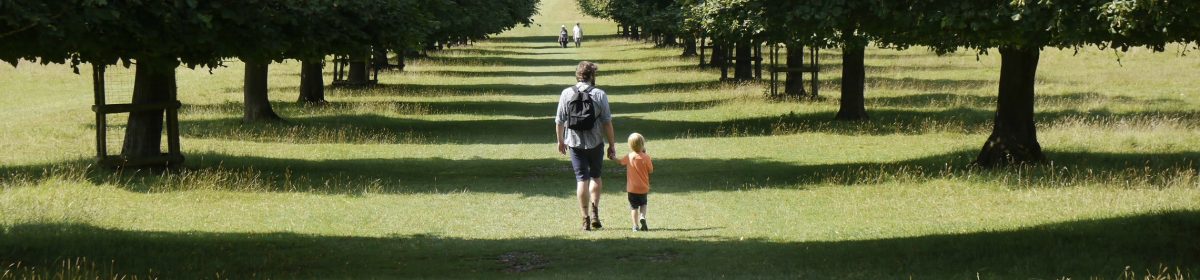
The stream of consciousness – a creative affliction.

Whitchurch Common, Dartmoor. March 2016

I said to Madame yesterday while we were walking through Bath – “I think I’m living in the 1940’s and 50’s”. She, being an avid reader of history and biographies, knew exactly what I was saying. She’s presently finishing the last of C J Sansom’s Shardlake novels and living in the Tudor period. Not having to explain things is one of the great blessings of our long relationship. Of course the imagination can play tricks and too lax an attitude towards truth telling could lead all the way to prison or even to 10 Downing Street; but in the manner of a psychoanalytic session – by allowing the mind to range freely and without comment, connections of the utmost significance can be forged.

So, if you’re a Potwell Inn regular you’ll know I’ve been thinking about and researching Geoffrey Grigson – author of “An Englishman’s Flora” and husband of Jane Grigson the great food writer. Chains of thought often take us on a journey and in this case it involved reconnecting with the village above By Brook where we lived for two and a half years while we were at art school; and a hairy drive over to Slaughterford in search of a pub that was actually one village further upstream on the little trout river which runs for around twenty miles between Castle Combe and the Avon at Bathampton . In the course of our day and in subsequent reading we discovered that Slaughterford is probably not the site of a famous battle between Alfred the Great and a small army of Danish raiders. and that the name probably derives from the Anglo Saxon term for the crossing near the place where the Blackthorns grow.

But this turned out to be much more than an antiquarian story. Immersing ourselves in a landscape in which we’d lived the early years of our relationship stirred up the strata of many memories. The melodious sound of the small river, for instance became the river that runs through the Potwell Inn garden in HG Wells’ novel – “A History of Mr Polly” as well as being the real place where we’d attempted unsuccessfully to poach brown trout and where I’d spent days drawing a tangle of tree roots. Being an artist or a writer seems to involve a huge struggle to lay hold of something significant. That laying hold rarely seems to work and we are left empty handed. The poet RS Thomas brilliantly describes it as being like placing your hand in the warmth of a hare form which a hare has recently fled. The creative life is full of almost and not quite.

Standing next to the river, memories resurfaced of moments in galleries and museums when suddenly, as if a flare has gone off in the mind, you can see clearly for the first time. Once, unexpectedly bursting into tears in front of a Renoir painting I’d only ever seen poorly reproduced less than the size of a postcard. Being young, passionate and raw the memories never leave you. The paintings that had given us a whole expressive language floated through my head and so in a wild yomp through the unconscious I remembered John Minton and, the imagination being capable of leaping over impossible fences, suddenly brought a roomful of associations – Elizabeth David, Jane Grigson, MFK Fisher, Patrick Leigh Fermor, Alan Davidson; who would all have known one another. Geoffrey Grigson would probably not have figured in too many Christmas card lists having been rude to, or about, so many people.

I’ve got a proof/review copy of Francis Spalding’s biography of John Minton “Dance ’til the stars come down” * which I bought quite cheaply because I couldn’t afford the original. It has no illustrations but in searching the secondhand booksellers today the book came up with his familiar self-portrait on the cover. Completely unexpectedly I almost welled up with grief as I recalled his melancholia, alcoholism and eventual suicide. A man I never met evoked a sense of loss that took me completely by surprise and the terrible thought came to me that this, perhaps, was the beginning of the end. The moment when the dark forces of conservatism began their fight back against post-war optimism and freedom. Since then they’ve synthesised joy and sold it back to us by subscription – one trivial experience at a time. We seem to have lost touch with the ordinary, everyday moments that used to make us dance ’till the stars came down. Art’s now a business, patrolled by curators and gallerists, and art schools run courses on keeping accounts, tax returns, building a website, networking effectively and staying in touch with the fashion of the moment.

I’m filled with the need to go and sit quietly on the bank next to the river once more to listen to what the spirits of the place still have to say to me. They, at least, have not been silenced by the self appointed magistrates of taste!

Postscript

The title of the Minton biography is a borrowing from W H Auden’s poem, which is itself a representation of the medieval “Danse Macabre” and equally a working of Stravinsky’s 1910 Firebird. The idea was very much in the air and was echoed in all sorts of media, not least in Bernard Leach’s rediscovery of 17th century English slipware. I’m thinking of the pelican in her piety. With two world wars in mind, there’s less hope in Auden’s poem – “not to be born is best for man”. A kind of mad defiance in the face of an overwhelming threat is his prescription.

Dance, dance for the figure is easy,
    The tune is catching and will not stop;
    Dance till the stars come down from the rafters;
    Dance, dance, dance till you drop.

W H Auden – Death’s Echo

Bloodstained Juggling with six balls

By Brook seen from the lawn of the White Hart in Ford

I’m wrestling with half a dozen recalcitrant strands of an idea that just might make a story. Of course it might also just make a WTF? mess – only time and a patient reader will tell.

So the first strand is this. I mentioned last week in The Potwell Inn blog that my copy of Geoffrey Grigson’s marvellously useful book “An Englishman’s Flora” is falling apart and I’d have to buy another copy. My clapped out paperback is a 1975 reprint of the original hardback published in 1958 and the pages are now turning brown and are foxed. The glue binding is breaking down and it’s just at the point where the pages start dropping out. I bought it for next to nothing in an Oxfam shop and I see that the cover price was less than ÂŁ2 when it was new. Anyway, prompted by my resolution it went into our very small bathroom where I rediscovered what a magnificent resource it is and immediately searched out a hardback secondhand version for ÂŁ17, presently on it way from another OXFAM shop in Harrogate. That’s thread one.

Thread two emerged when I was browsing through the book and randomly came across the entry for Dwarf Elder which is given no less than seven pages by the gloriously erudite Grigson. Married three times, his last wife was Jane Grigson the food writer who – I discovered today during my flurry of research – believed that food is such an important component of being human flourishing that it deserves the same high standard of writing as any other form of literature. Of course she was absolutely spot on which is why I’ve got a shelf full of her books. That’s a side issue, though for the purposes of this piece of weaving, but what a family they must have been!

The main thread concerns the Dwarf Elder because I only saw the plant for the first time this year on the footpath to the north of the lakes at Woodchester Mansion. According to the BSBI Plant Atlas 2020 it’s in steep decline across the country; probably partly due to the fact that it’s no longer planted as a medicinal herb often in churchyards in order, they believed, to improve its health giving qualities.

So threads three and four join the river at this point because Grigson points out that it’s a stronger version of the Common Elder, the roots and leaves of which can yield a blue dye and a powerful purgative. We should bear in mind that for many centuries (this plant gets mentioned by Dioscorides in his first century pharmacopeia ) – plants were prized more for their medicinal usefulness more than for their aesthetic qualities. However the more intriguing point is that its local name is Danewort and it was believed – perhaps due to the colour of the berries and leaves – that it sprang from the bodies, or more specifically the blood, of Danish invaders. The bloody colour and the doctrine of signatures gave the game away – it was thought. So far, so fascinating I thought, but then I (metaphorically) sat up straight because he wrote that the plant could still be found in 1974 in the village of Slaughterford which straddles By Brook. Hold on to that thought because I’ll come back to it for another thread. As it happens, and as you’ll know already if you’re a Potwell Inn regular, we drove over to Slaughterford only a few weeks ago in search of a pub which turned out to be in the next village of Ford. If you were even considering duplicating our trip I’d strongly advise approaching the pub from the A420 because the connection between Slaughterford and Ford is not much better than a muddy track.

But why Slaughterford? You have to ask don’t you? Grigson quotes the 17th century Wiltshire historian John Aubrey and then dismisses his assertion that Dwarf Elder aka Danewort or even Danesblood which still apparently grows in Slaughterford is the sign that a battle between King Alfred and the Danish invaders was fought in the village and resulted in the rout of the Danes with much slaughter. A quick scamper around Wikipedia establishes that the consensus today is that the battle was actually fought some miles away in Edington.

But in the early hours of this morning, I was mulling over what I’d discovered about Grigson, and another fact that came up was that he’d lived in “North Wiltshire”. Might he have lived in Slaughterford? was the tantalizing thought which kept me awake. The answer, after an early start on the laptop, was no he didn’t. But he did live quite nearby on the other side of Chippenham.

Gradually the picture was emerging that Slaughterford was not the scene of a famous battle fought by King Alfred and so how on earth did it come by such a gory name? The truth turns out to be that the name is a contraction from the Saxon of Sloe Thorn – and so the village name really means the river crossing where the sloes trees (Blackthorn) grows.

There must have been many crossing points on By Brook. At one time there were over twenty mills working there and we actually walked up the river past the last functioning paper mill in around 1970. Coming upon it while walking the banks from Corsham was quite a surprise – a semi derelict industrial site in the midst of the most beautiful valley. I’m waiting for my newer and more durable copy of the book to arrive, but what a fascinating journey from a Greek botanist to a 20th century poet. The Slaughterford myth gets repeated even in quite recent herbals – Mrs Grieve’s 1920’s book “A Modern Herbal” quotes it without comment.

There are two further points about By Brook I could make. Firstly the photos I took from the pub garden strongly suggest that the water is far more polluted and eutrophic than it was when we first encountered it in 1970. You’d probably find it impossible to make paper there now, and the brown trout also need clean and unpolluted water. But secondly, there is strong enough evidence to make it to the Natural History Museum website, that there is at least one family of beavers living on the brook. Thank goodness the beavers are vegetarian and therefore no threat to the local trout. In fact the fly fishers commissioned a report on the condition of the brook which recommended some modifications to the river bed to improve flows and slacks to help with breeding the native brown trout. Maybe they’ll get their wish granted free of charge by nature. I’m sure beavers and brown trout have lived in harmony in previous centuries before the beavers were hunted to extinction.

Postscript

My secondhand book arrived today – big thanks to OXFAM in Harrogate. It’s wonderful – in excellent condition and properly bound to lie flat. I absolutely love it! The paperback version can go back for an honourable retirement in the bookcase.

Natural Music

Seed head of Jack go to bed at noon aka Goat’s Beard – Tragopogon pratensis

I was pondering the other night concerning our instinct to describe nature in terms of quietness, peacefulness , meditative tranquility – none of which (for me at least) even begin to express its dynamism, ceaseless movement, busyness and fantastic, inexpressible diversity. Not the disconnected series of aesthetic ooh’s and aahs of the kind that so many TV natural history programmes seem to promote, but something more connected. When we got rid of the idea of god creating everything, we somehow lost the matrix that held everything together. In any case the old idea was redundant and too useful to the wrong kind of people but at least there was a coherent story about where we fitted in. Now the prevailing ideology has exploded us into a billion monads. One attempt at a remedy is to reduce nature to an aesthetic experience. I completely understand where nature as art gallery is coming from and I’ve got many thousands of photographs to prove it, but when we’re out walking together searching hedgerows and marshes; muddy tracks and field edges for flowering plants and suchlike, the overwhelming feeling I carry is of rhythm and flow, of complexity, timbre and key; of pace and time signature; of dissonance and assonance and the larger divisions of …….. spit it out! of music.

I don’t want to inflate this metaphor like a party balloon until it bursts; but I want to hold it there while I write about being here in West Wales and about being human – but most of all being human in nature. I want to put aside any thoughts of saving the earth or restoring lost species and any long lists of rarities in favour of that hoary old retreat favourite – of being in nature. Being in the moment is all the rage, but for me that’s like trying to listen to Bach one note at a time.

Small Scabious Scabiosa columbaria
Sheep’s Bit – Jasioni montana
Devil’s Bit Scabious – Succisa pratensis

Do these three look the same? They certainly do if you’re walking too fast; but don’t worry because these three photographs were taken in three different places over a period of seven years, and you’d be vanishingly unlikely to see all three side by side in one place. If you’re curious to know, it’s all in the stamens. Learning the plants takes years and is full of blind alleys and wrong ID’s, but what that teaches us is that being in nature is a process in which no single place is better, cleverer or more virtuous than any other and also that every place is full of possibilities even if you could count the plants you could name on the fingers of one hand. Where I was today at a field edge and finding a Bugloss plant, I was flooded with endorphins, a runners’ high. This was the place – to pinch a line from TS Elliot – that

“You are here to kneel
Where prayer has been valid”

There are thousands of plants I’ve never seen and probably never will; but we mustn’t differentiate between the rare and the common as if rarity bestowed some kind of patina of significance. I’ve been out botanizing with some folks who fire Latin names at one another like paintballs and boast of their thousands of records. Each to their own, I say. Since we can only attend to the Great Symphony of nature with all our senses; of sound and touch and taste and sight and smell – and here I’d add memory and imagination because nature works so slowly that some of her works are beyond the reach of the conventional senses; then it follows that every part of our mind is engaged. It’s the complete opposite of emptying the mind, it’s allowing it to fill with something other than ourselves. Embracing the Great Symphony is the work of a lifetime; many lifetimes.

Sea Carrot

Take a typical hedgerow, for instance. Those weeds at the front – the ones with heads comprising many small flowers sitting at the ends of umbrella spokes. Unsurprisingly they’re not always the same plant, they’re a procession of cousins from early in the year; each one pushing past its senescent relative in glorious green livery – one of them has the English name Queen Anne’s Lace -flowering and then setting seed, signalling its own disappearance until the next year. Depending where you live you might see Alexanders first, and then Cow Parsley, Hogweed and then (a bit trickier) Rough Chervil or Wild Carrot – there are dozens of them – some exceptionally rare and subtly different but each one challenging the false idea of the a solitary moment in an unchanging natural world. Searching for a musical comparison I came up with Bach’s Goldberg Variations. One aria to begin with – that’s the family, the genus if you prefer – and then the thirty variations each using exactly the same notes but changing the tempo and key whilst maintaining the theme. Listening to the Goldbergs right through is something akin to following the life of a hedgerow through a season. But then there are the grace notes – like the Stitchworts’ little shining highlights; Bluebells, Campions, Dog Roses and Honeysuckle. Later there are berries and some of them are delicious whilst others might kill you. There’s a restlessness and dynamism in nature. Tides and seasons; the length of days and the rising and setting of the moon can never be stilled by putting a pin through them and mounting them in a cabinet, and neither can we step out of that fierce river because

The force that through the green fuse drives the flower
Drives my green age; that blasts the roots of trees
Is my destroyer.
And I am dumb to tell the crooked rose
My youth is bent by the same wintry fever.

Dylan Thomas

If the aim of meditation is to back out of the flow of life, then I can’t see the point of it. If the initial premise is that we are always prey to living a shadowy half life working all day and satisfying our delinquent desires at night in front of the television, then I completely agree that something urgently needs doing. But the cure isn’t to hide but to embrace the flow, to step out into earth life and add our own bit of the song to the natural music that birthed us and will take us back again when we reach our own senescence. So seeking, identifying but above all enjoying the plants, the birds and insects; the mammals and the fish for themselves and as part of our own nature, is – quite apart from making lists and showing off to your companions – a form of fully engaged meditation which leads us gently away from seeing nature as a business opportunity.

That’s what I mean by Natural Music.

Dancing in the bog!

Ragged Robin – Silene flos-cuculi

Ragged Robin is one of my favourite wildflowers; it’s so exuberant, so punky and so unnecessarily lacking in any evolutionary credentials for the disorganised petals of its flower that seems to be a message from nature to remind us that plants have never been there to massage our aesthetic sensibilities. Close-up like this, the petals suggest the dancing fingers of a group of witches. I’m reminded of Matisse’s Dancers but perhaps more by Roger Hilton’s famous 1964 painting “Oi Yoi Yoi”; so in-your-face and so Dionysian in its darker sense. This one was growing on the far side of a ditch and I was so keen to get the photo that I had to be rescued by Madame when I lost my balance and feared a muddy, and probably smelly, dive. I’ve fallen in a few rhynes (that’s a Somerset word for a drainage ditch, pronounced reen) in my time and wouldn’t recommend it for the faint hearted.

Anyway that was all a slow intro to the theme of this campervan trip to the far west of Wales overlooking Ramsey Island. I’ve brought a new camera with me – it’s an Olympus TG-7, the latest of six previous iterations, the first of which I took on the Camino. This isn’t a review; I paid for the camera myself and bought it on the back of many other reviews by people who know what they’re doing. It’s shockproof, waterproof to about 30 feet, and fully featured when it comes to aperture, shutter speed and ISO setting so very much a technical step up from the Pixel 6A phone I’ve been using for nearly everything on this blog. In fact it’s only 50g heavier than the phone so it’s supercompact, with built in geotag and GPS unit and for me the most important feature of all, it has inbuilt macro facility and offers in-camera focus stacking. On paper this is a serious piece of kit for a very clumsy person who falls into ditches trying to photograph perfectly common wildflowers and fungi. Of course other cameras are available – I’ve got a Panasonic G2 with a Leica macro lens but it weighs a ton, doesn’t do muddy ditches and takes ages to set up for a shot.

My first discovery on trying out the macro/focus stacking is that it really does need a tripod, but mine – a Manfrotto carbon fibre job with a magnesium ball head looks impressive but is just too heavy and vulnerable to life outside a studio so I’m looking around for something light and bombproof that can get the camera down to 1 cm above the ground facing directly downwards. I took this photograph of the seed head of a Rough Chervil plant in the van with the big tripod and it gives some indication of what macro + focus stacking will bring to the table.

We’re camping at the far end of the peninsula and the weather has been – let’s say – very Welsh; but when the sun shines all day, as it did yesterday and the sky is China blue, as you might see on the best porcelain; and the wind gives a brief respite from the storm the previous night (which pretty much emptied the campsite) then this place is as close to heaven as we’ll ever get. Yesterday we did one of our favourite walks across the fields to Whitesands Bay and dropped in on many of the plants which specialize in this kind of environment because we now know where to find them after many visits. There are numerous bogs and marshes hereabouts and one of the most important botanical lessons I ever learned centred on the importance of understanding the ecology of the place we were searching. We find Ragged Robin and Yellow Bartsia here because of the wet ground. Bogs and dunes – our cup was full! Yesterday we found Dwarf Mallow, thriving on a dry and sandy footpath along with Sand Spurry, both in their happy place. There were Southern Marsh and Pyramidal Orchids – although it was difficult to be sure of the first without entering the marsh; Purple Loosestrife, Kidney Vetch, Lady’s Bedstraw, Sea Carrot, Navelwort and the ever elusive Scarlet Pimpernel which has changed its family name from Anagallis to Lysimachia to avoid detection – but we were ahead of that knavish game.

But perhaps the most exciting find was the Stoat that crossed the patch immediately in front of us. Madame didn’t see it, and just as I was getting excited and pointing to where it disappeared, to my great surprise it came out and crossed the path again; a tiny cigar sized assassin – not about to be deterred from its business by two huge inedible shadows with the sun at their backs.

Is that the reason we love nature so much? Its capacity to redefine beauty? Like a beetle flying past, flashing iridescent green like a flying emerald, or the powder blue abdomen of a Broad Bodied Chaser dragonfly – hunting the shallows of a pond? or a Stoat in pursuit of its prey?

As we waited for the bus home, we watched groups of long limbed teenagers learning to surf and playing football; falling in and out of love thirty times a day and trying to figure out what exactly being a grown-up entails. My heart says “it’s not what you think!” but I’m ill-inclined to march along the beach spoiling their best ever day with my old-man truths. When the bus finally arrived our driver took a minute interest in our various destinations and ignoring such minor inconveniences as bus stops he dropped us all off exactly where we wanted to go, (anyone for the supermarket?) He stopped for a pee in one of the caravan sites – because the council have closed all the public toilets in the town – a major problem for drivers on a ten hour shift – and then made an unscheduled diversion to pick up some passengers at St Non’s Well, whilst passing a free dog sweet to some walkers on the side of the road.

Goodness knows we have our own human parasites, predators and Dionysians; controllers and exploiters – many of them wolves pretending to be grannies – Red Riding Hood is, after all a story about humans not wolves; and the present election has been sheer torture as they strut their stuff – it’s been good to escape for a while.

Down the AI rabbit hole part 2. Dandelion Days

Dandelion – Taraxacum agg. Harder to identify fully than you’d ever think possible

Late yesterday evening my son emailed with a far more comprehensive list of the wildlife mentioned by Henry Williamson in the novel Dandelion Days – grabbed up with his pro version of Google Gemini which is much better than my basic version when it comes to extracting text from the photographed PDF I found online. Far longer and more comprehensive but still nowhere near complete. It looks like the only reliable way of achieving a good result will be manually, which raises an interesting question. How important are lists anyway?

The point of trying to create a word cloud was to use it as a tool for unpacking Williamson’s relationship with the world of nature. I might think of it as a kind of Venn diagram where the two fields of interest – human and natural – overlap rather than glower at one another across a chasm of difference.

Lists are important to science of course, but plants have a good deal more interest than placing them in abstract and endlessly changing families. Plants can bring us almost to tears with their extravagant beauty; they can feed us, heal or poison us with equanimity. They can calm us or make us hallucinate; they can signal a whole culture (think leek or thistle), and signal the beginnings and ends of seasons, furnish feasts and famine, promote cooperation and strengthen community; signify the beginning and the end of life; bring us clothing dyes and shelter. Plants – and animals too – are among the most complex signifiers we have; from the scent of a madeleine to the smell of boiled cabbage in an evangelical theological college. To return to my imaginary Venn diagram, we humans are so deeply mutually inscribed with nature that the two circles meld into one seamless interdependence. Our history, geography and environment are mutual – The force that through the green fuse drives the flower / drives my green age (Dylan Thomas)

The Plough Monday that’s still celebrated in Elberton – one of my old parishes – is very different from the one below. It takes place in the parish church and the Ransomes plough (which had to be shortened to get it through the door) is carried in to be blessed by the Young Farmers. Some years ago I asked a local farmer if I could have a small quantity of corn to bless on the night, but when it turned up I was advised not to touch the bright blue grains because they were coated in a powerful systemic insecticide. Nonetheless the sense of community was always there – even on a freezing cold January night, as we celebrated the beginning of the farming year – more notional these days since many spring crops are sown in the autumn.

PLOUGH MONDAY was celebrated in the village in the third week of the new year, and Phillip on his last afternoon was able to see the strange procession. This rite had been held in Rookhurst ever since the walls of the first cottage had been raised from a mixture of straw, cowdung, mud and stones.The Ploughing Matches were held in the morning. At the far end of the field away from the spectators, behind the teams with their straw braided manes and tails bound with coloured ribbons, many birds screamed and wheeled; the gulls graceful and soaring, alighting with grey pinions upheld on a glistening furrow suddenly to seize a worm or a beetle-case; the rooks jostling and flapping sable wings, the starlings chittering and running with eagerness. Sweet chirrupings in the wake of the turmoil were made by the dishwashers, some of them winter visitants with slender breasts of daffodil, and all joying in the food turned up in the gleaming furrows. Bill Nye the crowstarver, and Samuel Caw his mate, a still smaller boy, were enjoying themselves during the Ploughing Matches, for repeatedly from the spinney in the Big Wheat-field, where with other boys they had a roaring fire, the clappers sounded with the clang of the rail, and the beating of tins and sometimes the hollow voices floating in the air.

Rookhurst rejoiced in the afternoon. It was a half holiday, and all made merry. The crowstarvers left their fire and turfed hut and clappers, and joined the revellers. Dressed in the skins of donkeys, and harnessed to an old plough with an applewood-share, they started off for the annual round of the cottage thresholds. Big Will’um, the bailiff, tall and gaunt and heavy- booted, guided the barefooted pair. He himself took long, loose strides; a boyhood in the heavy winter fields, dragging feet from the sticky clods, had given him a slouch. Every aged cottager, clad in best clothes, hobbled to his doorway. ‘Whoa, now, growled Big Will’um. The pair pattered to a then wheeled several times before the cottage, drawing the plough after them. The old people beamed, and nodded, and their gratitude when the corn-spirit had given its blessing. Now the garden would be in good heart for the year’s potatoes, beans, onions, cabbages, lettuces, the roots of rhubarb in the sun-warmed corner. The long black pig not get fever, but fatten well and perhaps reach a weight of twenty score. [400 lbs]

From cottage to cottage they passed, making as to furrow the ground before each one. George Davidson carried a blown-up pig’s bladder on the end of a stick, with which he belaboured grinning labourers and the padding donkeys alike. Ribbons were wound round his body, and a red paper cap was on his head. About a hundred children, men and women, many with cameras, followed the procession, accompanied by dogs of all sizes and breeds. Everyone was happy. Bill Nye had never grinned so much before, enwrapped as he was in the ass’s skin. He knew that a big good meal was at the end of it, and, with luck, a packet of fags and a pair of boots.

Willie felt proud that this was his village, so impressed was Phillip, who declared that he had never heard of such a glorious idea before. Neither Jack nor his cousin was able to tell him why the asses’ skins were always used by the boys who drew the plough. ‘It’s only done in this village, having died out elsewhere,’ said Jack.

‘It’s a jolly old custom too,’ remarked Willie. ‘At least as old as Doomsday Book.’

It was a survival of the rites of the corn-spirit practised since the first thought of man was to put the idea of a god into stone and food. Likewise at the harvest to eat the first-fruits was to have within the body the power of the corn; a survival, possibly, of instinct combined with early human reasoning: the practice of eating the conquered and, therefore, possessing his strength and cunning. 

From Chapter 20 of Dandelion Days by Henry Williamson, first published in 1930

April 2019 at the Lost Gardens of Heligan

Down the AI rabbit hole

asparagus autumn Camino campervan repairs climate change climate emergency composting covid 19 deep ecology economic collapse environment environmental catastrophe environmental crisis field botany foraging Fungi garden pests global climate crisis global heating green spirituality herbal medicine intensive farming locally sourcing lockdown macro photography meditation no-dig pickling and preserving pilgrimage polytunnels preserving raised beds rats regenerative farming rewilding Sourdough species extinctions spring technology urban ecology urban wildlife walking water storage weeds wildflower meadows

What I really wanted to do here was to produce a word cloud, similar to the tag cloud above; but using the names of all the wildflowers mentioned in “Dandelion Days”, the first of four novels comprising Henry Williamson’s sequence “The Flax of Dream” first published in 1930; rapidly approaching 100 years ago.

Now I know that some readers will be aware that Williamson’s reputation has been tarnished by his (brief) association with fascist ideology, but the four volumes of “The Flax of Dream” and the huge sequence of seventeen novels comprising “The Chronicle of Ancient Sunlight” were an inspiration to me when I first read them 50 years ago; especially for their uncanny connection with nature. The writer of “Tarka the Otter” and all those other wildlife books seemed to understand -like a man outside his own time – that he was a part of nature rather than the evolutionary telos and heroic conqueror of it all. And, after all, Williamson wasn’t the only writer or artist to disappear into the dark rabbit hole of fascism. Ezra Pound; Wyndham Lewis; even the saintly TS Eliot and numerous members of the Royal Family and the nobility flirted with it too. Oswald Moseley spent time in prison for it and his wife, Diana, one of the Mitford sisters was an enthusiastic fascist.

I was once standing on the old bridge below Damery Lake in Gloucestershire when I had an extraordinary daytime vision. I was suddenly possessed by the spirit of a young army officer who, in the midst of some terrible First World War battle, had imagined himself standing in exactly the place I was, and longing for home. The stone bridge – which could once have been a narrower pack bridge over the Little Avon, flows north west without much enthusiasm towards Berkeley Pill where my old friend Dick England milled flour. Along its course are several reedy and tree lined ponds and lakes containing – they say – brown trout. A paradise of hunting, shooting and fishing for an Edwardian gentleman. That soldier could, in my imagination, have been the young Henry Williamson whose WW1 role was to drive teams of horses back and forth towards the lines with supplies of food and weapons; perhaps returning with the casualties. His whole subsequent life was troubled by those fond memories of childhood wrestling with the destructive madness of war.

And so, with that bit of background, off to the AI rabbit hole. My memories of the book were of it being packed with the names of plants, birds, insects and small mammals, and so it occurred to me that I could recover those names in some kind of list by using the awesome power of AI. With a lot of help from my son I worked out how, theoretically to do it and set to locating and downloading a PDF file of the whole book into my laptop. So far so simple. Next came the tricky matter of the question. How exactly should I phrase my end to what Gemini likes to call a conversation. The opener as it were.

  • Q. List the plants in “Dandelion Days ……” etc
  • A. “Dandelion”
  • Q. List the plants in the whole text of the novel in my file ###. pdf
  • A. There are no plants mentioned in ####.pdf
  • Q. Make a list of plants in Devon in the early 20th century
  • A. 3 trees and 4 plants and the enthusiastic claim that there were lots more of them.

It was becoming clear that AI couldn’t distinguish a plant from all the other strings of letters that comprise the novel and so I took myself and the original knackered paperback Faber book back to a quiet corner and discovered what I’d known all along ; that Dandelion Days is a botanical handbook of early 20th century wildlife as well as being an affecting account of a middle class childhood lived at one with the natural world.

So there will be no word cloud – not even a long list, unless I do it manually; but my memory is vindicated and I’ve found once again one of the wellsprings of my own imagination. In the near-century since publication the natural world has been irreparably scarred and impoverished and would have become unrecognisable by Williamson himself, by G M Hopkins, George Ewart Evans, Richard Jefferies and all the others; poets and painters of the old landscape that now lingers in the background of our imagination in the etiolated form of a vague love of nature.

Whether or not some kind of spirituality could be woven out of the dry remains of books like the Flax of Dream; a nest into which new life could be born, depends on whether we could reset our understanding of our place on the earth. Whether some understanding of natural grace could drive out the squat gods of greed with their fundamentalist credo, remains an open challenge to us.

But three things at least are clear – we won’t find it through politicians but by poets, musicians and artists; we won’t need a high priesthood of retired oil executives to keep us in our place and finally we sure as hell won’t get any help from AI!

Hemlock Water Dropwort – Oenanthe crocata. Step away from the poison!

The hungry gap slowly closes

Most non – gardeners would probably imagine that a hungry gap in the allotment year would come some time in the darkest part of winter; but it doesn’t. It comes around now -late spring and early summer when seeds are sown, plants raised and pricked out, but when there’s nothing much to eat. The potatoes were planted a month ago and are growing well; the tomatoes, aubergines and peppers in the polytunnel are all growing strongly but it’ll be some time before we can taste the fruits of our labours. Apart from overwintered Swiss Chard and a bit of spinach which are both looking a bit knackered by now but still taste good; and a few stored Crown Prince squashes, the first signs of the food year where we live is an early picking of strawberries and some broad beans from the polytunnel.

I wrote about growing broad beans in the tunnel a few years ago, and was a bit put off by a friend’s letter saying that if the flowering plants get too hot they would not set pods. That’s a good point, particularly after a succession of very hot early spring weather in previous years; but on the other hand, there’s a large element of gambling in gardening and this year we decided to risk a couple of dozen plants to the global climate emergency, and it looks as if our gamble has paid off, after a cool and wet spring. To be sure we planted successional broad beans outside, beginning with a November sowing, and they are all thriving obligingly and at different stages of growth but we had our first picking of tunnel grown beans today.

Our polytunnel container strawberries were doing well when we left to go to Cornwall for two weeks, but the watering arrangements seem to have broken down and we lost a few plants to drought; so we’ve been busy weeding and watering to try to rescue as many as we can.

Two weeks away has also given the bindweed a good start in the annual battle, but we’re as stubborn as hell, and although we never beat it, we certainly give it a headache. We’ve a half decent fruit set; the transplanted Blackberry is slowly recovering and the Tayberry is a mass of green fruit. Tayberry jelly is even more fragrant and beautiful than bramble jelly, but I didn’t boil last year’s batch quite long enough to set it well. Possibly it needs a bit of pectin. I think it would make a splendid ice cream – just as damson does.

Yesterday we took ourselves off to Bradford on Avon to meet some old friends for lunch. We always catch the train to our lunches so we can have a glass (or two) of wine. They took us to see a beautifully restored Saxon church dedicated to St Laurence. I suspect if you look at the photo below you’ll notice that there may have been a much bigger church there at some point – you can still see an old roof line and the imprint of what may once have been a clerestory. It’s a glorious jumble of original, later and restored stonework that offered the traditional steel offertory box set into the wall as well as a bank card reader for 21st century visitors. In places the stone floor and steps were polished by centuries of pilgrim feet. There was also what looked like an original Saxon font and possibly the faint remains of medieval painting. As we crossed back over the old bridge, now being hammered by continuous traffic, we were looking to see if the otters which had been spotted recently by our friends would put in an appearance, but I should think they are largely nocturnal. I absolutely love trains. My dad was a railwayman and we lived next to the railway line which once ran almost past our current front door. The river Avon which runs past our flat and also through the middle of Bradford on Avon flows through Melksham and then mysteriously turns north in the direction of Malmesbury. See how nature makes its own mind up about where rivers should flow.

Lunch was good, and the twelve minute train journey back home flew past twice as quickly as a boring and congested car journey.

St Laurence church in Bradford on Avon.

Is a hedgerow really the site of an endless struggle.

Druce Cranesbill, Geranium X Oxonianum. The markings remind me of Henbane – another (poisonous) stunner.

I don’t really get the idea that nature is an unending struggle for survival – red in tooth and claw – and all that violent guff which gets pressed into service to provide an ideological scaffolding for behaving in greedy and vile ways – as if Tennyson were a fan of the dark satanic mills. This isn’t a sudden insight brought on by a dose of Cornish spring (although life feels a lot better when the sun shines). We’ve had five days wandering the footpaths and hedgerows of the Roseland peninsula; photographing and recording plants as we go, and this time I was paying particular attention to the succession of plants; especially the carrot family, the Apiaceae, as they emerge one by one in the spring.

I remember the first time I tried to get to grips with this family of lookalikes. I’d noticed the plant known as Alexanders – almost always the first to emerge with its shiny celery-like leaves and an umbrella-like flower head of creamy yellow-white. I’d just bought my very first flower book, published by Warnes, and I went about finding my plant in the traditional beginners’ mode; turning the pages one by one until I found an illustration that looked right. So far so good, but fired with enthusiasm I went on to look at the others in the same family and when I came across some fine drawings of the seeds (alarmingly similar) which were the ultimate key to naming them all; I sighed, shut the book and didn’t open those pages again for years.

Six decades later I know a little bit more (not that much!) and it’s all very interesting, because there’s a distinct succession of these plants every year. Alexanders is usually first to appear as a handsome plant, but soon starts to yellow off and look very tatty. Then comes Cow Parsley – an unfortunate name for such a dazzlingly white and beautiful plant with lace-like leaves; shortly followed by Hogweed and all the others, and yes – it’s quite hard to tell some of them apart because they rarely grow side by side simultaneously. They go on mucking me about, popping out for their brief lives one by one until October and then there’s only the seeds to identify, and they are so beautiful when you look at them through a hand lens; ridged and horned as if carved by a miniaturist sculptor. They emerge, flourish, flower and die but I’ve never ever heard a Hogweed beating up a Cow parsley plant in the dead of night while no-one’s supposed to be about. I’ve never seen a Pignut abuse a Wild Carrot or cheat a Sanicle of its inheritance nor a Hemlock Water Dropwort leave its stream to poison some Rock Samphire and spoil a forager’s day. I just can’t see any evidence that there’s a battle for survival going on out there unless it’s to develop some resistance to chemicals.

The plants – not just the Carrot family – seem to have evolved a scheme to allow all of them to flourish and complete their life cycle in relative peace apart from the predation of cows, hogs and numerous small bites from insects. They grow to different heights; the later ones being generally taller than the early ones and pop their clogs before they become a burden to their neighbours – and I’ve never heard any moaning about the brevity of life from the depths of a hedge or a ditch. By and large they seem enviably contented, if that’s not a category error. We humans like to whinge about the way our happiness has been stolen (always someone else’s fault) when in fact we’ve hidden it because we don’t want to own it. Before long, the safe place where we concealed it is forgotten and we can relish the tragedy of our lives over a couple of bottles of cheap wine. Plants don’t do that.

I have the great fortune of meeting a teacher who’s thought deeply about this and whose work crosses many borders that are patrolled by legions of gatekeepers – a brave soul. He explains the fruits of his labours as “Natural Inclusion” – as against Natural Selection in its purest and darkest form. You can Google the phrase and you’ll see who he is in much more detail, his name’s Alan and he’s a great teacher. He uses scientific conceptual language, but he also uses poetry and painting to express his ideas.

Basically, and dangerously simplifying, with a little help from Google Gemini here’s a very concise summary of an important antidote to lazy evolutionary thinking that plonks us down in the middle of a merciless battle. If ever we needed to visualize ourselves as a working and living part of nature it’s now. There are many threads that have joined together to create our bondage to greed and exploitation as if it were something natural, and we have a few decades at best to cut through them and set ourselves and the ecosystem free before it’s too late.

Alan Rayner proposes a new concept called natural inclusion which challenges some aspects of traditional evolutionary theory. Here are the key points of his ideas:

  • Natural Inclusion (NI): This is Rayner’s core concept. He argues that nature fundamentally works through inclusion, not separation. Boundaries between things are seen as dynamic interactions, not fixed lines. Imagine the difference between walking through a doorway (inclusion) versus hitting a brick wall (exclusion).
  • Questioning Natural Selection: Rayner believes natural selection isn’t the whole story of evolution. He proposes that the process of change is more about the flow of energy and the dynamic interplay between organisms and their environment.
  • Nature as a Guide: Rayner suggests looking to nature for moral guidance. He proposes honesty, reasonableness, and kindness as core values because they reflect natural processes.

Rayner uses art, alongside writing, to explore these ideas. His paintings serve as a way to connect with people who might not be drawn to scientific explanations.

St Francis talked about the sun, the moon and the stars; the animals and the earth as our brothers and sisters. I found the Geranium in the photo on the footpath leaving Portscatho. It probably escaped from a garden somewhere nearby and I instantly fell in love with it. If our current worldview doesn’t allow us to fall in love with a plant, we need to get another world view!

Common Vetch

What do you mean – what does it mean? Botany as a sensual pursuit.

The narrow road down to Percuil harbour with the hedgerow in in full flower.

I know there’s a process underlying the transformation of a spring walk in the sunshine into a list such as the one in my notebook yesterday. There’s another page for Wednesday with different plants on it and together they total 50 plants identified, recorded and sent off to the national database. The process must look hilarious to passers-by – old bloke on his knees, ferreting through the bottom of a hedge and talking loudly to himself as his partner walks on, oblivious to the one-sided conversation. A bonkers display of eccentricity. “Is he alright there?” I can imagine someone asking. “Is he lost?”

Well, in a manner of speaking I am lost. Ecstatic. Taken out of myself to another level of consciousness. I’m perfectly prepared to accept that I’m a bit of an outlier when it comes to plants. I know plenty of able bodied and perfectly sane (they might say) academics whose interest in plants can only be expressed in the incomprehensible private language of a Magisterium which exists to defend the McGuffin, or at least its McGuffin; plenty of others are available. It’s easier to learn Icelandic than discern the subtleties of polyploidy, or find the exact term to describe the shape of a leaf. I wish them no ill, I just wish they’d drag themselves away from their scanning electron microscopes and get out there amongst the plebs, (the) hoipolloi; the thugs, weeds and escapees; the abandoned pre-industrial feedstocks, the temporary residents doomed to rapid extinction, the ones threatened by foragers, collectors and developers and the ones that can give users visions, paranoia and even end your life in grisly ways.

My grandfather, who was both well educated and self-taught (they’re not mutually exclusive) had a set of encyclopedias; and one photograph has affected my whole life. It’s a photo of a bloke in a brown warehouse coat – ie working class; the properly educated scientist would have had a white lab coat – standing next to a pile of buckets, jars, beakers and test tubes each containing the correct quantity of some element or compound thought at the time to be essential to life. You might call it Frankenstein’s larder. The caption assured us that this was everything necessary to make a human being , except that the great mystery of the animating principle that drew them all together in the form of a living, breathing – let’s say – poet was not even hinted at. Although I never knew it at the time, this is a form of reductionism, which can be helpful if used properly as a metaphor for understanding complex phenomena; but lethal when used as a slam dunk proof that nothing is greater than the refuse from the pathologist’s table.

Yes to DNA if it helps us to understand the mysteries of relatedness in living things; yes to scanning electron microscopy when it helps us to visualise the pollen grain, the fungal spore and the bacterium; but plants embody so much more. Forgive me for mentioning my earlier life but to worship the partial and ignore the ineffable mystery of the whole is the classic definition of idolatry. We need to take that kind of science out into the world, on to the streets of a ne’er do well culture where it can have some sense knocked into it and its sense of wonder restored.

The supreme irony of all this is that so many people – insultingly known as ordinary – already get it. They go for walks in the sunshine and pause to look at the plants and flowers and absorb something important, as if there were an invisible energy there, flowing back and forth between the hedgerow and the walker. When I first began to encounter flowers and plants as a child I valued their immediate impact – bright as a Daffodil, blowsy as a Gladiolus, tarty as a Dahlia. The plants our Mum grew in the garden. Wild plants often lack that degree of egotism. These days as I learn more about them, I have come to love their complexity. The humble Buttercup has at least nine closely related forms; the Dandelion approaching 300 and don’t even mention the Blackberry . I don’t understand and can’t unravel a fraction of it, but that cloud of unknowing does nothing to diminish my joyful wonder at finding the most common plant hiding amongst its taller neighbours on the side of the footpath. Madame walks on the moment she hears me say HELLOOO in my best botanical voice, and carries on alone, while I’m chatting to my new friend.

I love the way that the plant world can even finesse a colour. This week the Stitchwort and the Cow Parsley (Queen Anne’s Lace is a much nicer name), are shining out from the hedge with an intense white that reproaches the very slightly creamy Hogweed and the distinctly yellowish Alexanders. As a not very accomplished botanical artist I really struggle to find a way of expressing the dynamic range of the hedgerows and meadows. The intense blue of the Germander Speedwell is not better than the pale blue of the Pale Flax; just another note in the huge overarching colour cloud. The colour, shape and pattern of plants are as much an inspiration to the artist as they are data to the taxonomist – look no further than William Morris, Claude Monet and Ivon Hitchens among hundreds of others. And the colours go beyond what we can see into the ultra violet. The honey bee may be seeing something very different than we do.

Taste and flavour are a whole new botanical delight. Let’s put gin aside for a moment; but even poets get in on the act. Here’s William Carlos Williams poem “This is just to say

I have eaten
the plums
that were in
the icebox

and which
you were probably
saving
for breakfast

Forgive me
they were delicious
so sweet
and so cold

William Carlos Williams

It’s a fair bet that the plums in the fridge weren’t just large sloes. Which of us hasn’t tried to convince one of our children that the sloe is as delicious as any plum in order to teach them a memorable lesson in plant identification. There are occasions when the taste of a plant – like the real plums in William’s poem can transport you. As children we used to nibble the young leaves of Hawthorn – we called them bread and cheese. Yesterday I found some Scurvy Grass and I nibbled it. It tasted like fiery horseradish and I was immediately filled with the thought of a barrel of the filthy tasting pickled plant being served to sailors as a preventative for scurvy. With care, and above dog pissing height I often take a bite but never forage except for field mushrooms, oh and sloes which transform gin into something lovely if you’ve got the patience to wait – or sloe vodka which is just as nice but does it a bit .quicker

Smell and taste being closely related, the obvious candidate for this category would be Ramsons (wild Garlic) or Three Cornered Garlic but yesterday offered an altogether quieter but deeper pleasure. As we emerged from the footpath through the woods where we’d feasted our senses on Early Purple Orchids and bluebells, we stepped into a field beside the Percuil river that was full of Sweet Vernal Grass in flower. The books will tell you that the scent of Sweet Vernal Grass is “new mown hay” – and it is; except for the fact that 97% of the wildflower meadows that would once have been cut for hay have now disappeared in favour of Ryegrass and Clover leys. Hardly anyone makes hay in any case so to most young people the “new mown hay” smell is about as meaningful as the smell of moon dust. I’m lucky not to be in that unfortunate group because putting up with knackered knees and all the other indignities of age is the price of knowing that intoxicating perfume, described by the reductivists as Coumarin, because as a child my sister and me onced helped our grandfather make proper hay on his smallholding in the Chilterns. You could spray Coumarin on silage, haylage or concentrated cattle feed and it would still smell horrible. Sweet Vernal grass is the intoxicating perfume of Spring and on Wednesday it swept across us in sweet waves, evoking haunting memories of the lost sensuality of the historic countryside.

Perfumed field near Percuil

All of which brings me to sounds. When I was a teenager I used to cycle over to Dyrham Park, climb over the wall and just lie in the long grass of what’s still called Whitefield. If you want to know what a real wildflower meadow looks like you won’t find a better example this close to Bath. The sound of the wind in the grass and trees is one of the great pleasures of solitude.

So here’s to the benighted idiots of the past. The ploughmen and apothecaries, the wise women, the monks in the infirmaries and the witches; the alchemists, dyers and weavers, the poets and artists who loved plants and flowers but allowed them to be so much more than the sum of their parts. I’ve been filling in the records for all these plants, but apart from the obvious questions like what’s your name? how dare you record this plant you peasant? what’s it called? where was it? was it in flower? ……. I can’t find anywhere the most important question of all – what does it mean? – to you? to the earth?

Early Purple Orchid – smells of Lily of the Valley when young but then of blackcurrant (cats’ pee!) later on.

Aaaargh! Spring – please slow down, just a bit!

Clockwise from top left- the canalside view with Pen y Fan in the background; then Common Dog Violet, Wood Sorrel, Maidenhair Spleenwort, Ramsons, Greater Stitchwort, Reflexed Stonecrop and what I think must be bracken growing very close to the water. There were many more – too many to list without annoying Madame!

The rewards of Spring are everywhere at the moment, notwithstanding the cold nights which are keeping our tender plants blocking the hallway as they harden off. There’s so much going on I hardly know where to begin. On the allotment – after the usual despairing survey of the weeds, the waterlogged ground and the mounting sense that nothing good will ever come of it; we got our heads down two or three weeks ago and felt instantly better. I’m a bit suspicious of the received wisdom that gardening is good for the soul. Couch grass and Bindweed could test the patience of a saint and I’m certainly not one of them. At the weekend while Madame sowed, I finally cleared the asparagus bed which had been on probation for ages and we knew it had to go because it was too far down in the frost pocket on our sloping site plus the asparagus had been weakened by repeated invasions of Asparagus beetle and couch grass from the unattended plot next door. Four barrow loads of weeds and feeble/floppy/extinct roots later I had a backache worthy of a third rate wrestler but a decent empty raised bed much enriched by previous additions of seaweed, compost and sand and with around 18″ depth of topsoil. We’ll grow carrots there this season. We’ve thrown so much money at the asparagus bed over the years, we could probably afford to buy fifty bundles of Chinn’s finest English and still be in pocket.

I was greatly assisted by two almost hand tame Robins who were obviously feeding chicks. Between them they took away many dozens of larvae, centipedes and other insects. Interestingly they weren’t very interested in worms; certainly not as keen as a blackbird would be. I was dazzled by their capacity to hold two wriggling bugs in their beaks and still pick up a third without dropping the first two; they were far better pest controllers than any chemical insecticide.

Inside the polytunnel the experimental crop of broad beans is thriving in the absence of any really hot weather, and the strawberries, all taken from runners in late summer, are flowering and setting fruit. Of course this means we’re already watering inside the tunnel; but the 12V water pump we bought last summer has already showed its worth and helped us avoid carrying heavy watering cans back and forth.

The photos above were all taken on a short trip to the Monmouth and Brecon canal near Brecon during the week. It was here, many years ago, that I saw my first Kingfisher – so beautiful in the sunshine that I thought I was hallucinating. We had hoped to go for a pub lunch with our friends who keep a smallholding almost 100o feet up on the hill, but they were in the middle of lambing so we had a picnic lunch there while they went outside every twenty minutes or so to keep an eye on a ewe in the midst of a long and difficult lambing. Fortunately the ewe and her twin lambs all made it through, although I think that will be her last time. Farming can be heartbreaking as well as hard work.

“A difficulty is a light, an insurmountable difficulty is a sun” – Paul ValĂ©ry

Is it too perverse to say that I love naming plants? and the harder they are the greater the reward when I finally get there. I’m exhilarated by the explosion of plants in the spring and early summer, and it’s agony having go forego plant hunting for allotment duties, but there’s no alternative so we just get on with it. I was pondering where this love of plants came from, and during one of my regular 2.00am wakeful sessions – it happens a lot – it occurred to me that I owe a huge amount to Henry Williamson (I’ll come to the reservations in a moment). Of course I read Tarka the Otter and the other nature books, but I also ploughed my way through four volumes of “The Flax of Dream” and fifteen volumes of “The Chronicle of Ancient Sunlight”. I was probably the only person who ever ordered them all up from Bristol Central Library in many years. Above all, I loved Williamson’s ability to describe wild plants in their landscapes; their names – English names – embedded themselves in my imagination and make the discovery of a plant in a hedgerow into a celebratory event, even fifty years later. Latin names and taxonomical exactitude; whilst essential for research, are feeble by comparison with the poetry of use and history.

But one of the greatest sadnesses of my life has been the discovery that so many of my literary and artistic heroes dabbled with and even collaborated in extreme right politics during the nineteen thirties and forties. TS Eliot, Ezra Pound, Wyndham Lewis were all seduced by the big lie. Discovering that Williamson was an admirer of Adolph Hitler irrevocably shut down my relationship with him, and I’ve never read a page written by him since; but the influence of his natural history writing still remains – it’s just forever tainted by the association.

Anyway, turning with relief to spring again, some flowers that you’d think were easy to identify – are more than a bit fiendish; not least the violet which comes with seven close cousins six of which you could easily bump into in the South West. No alternative, then, but to turn to the books or the apps. But when it comes to fiendishness, nothing comes close to ferns and for me, at the very beginning of this love affair, a chance encounter across a crowded room can lead to hours of agonising – just like the real thing (I’m told!).

As you’ll know if you’re a regular reader, I’m exploring the dizzy world of Artificial Intelligence in wildlife apps, and particularly in identifying plants. If you’re fortunate enough to know what a data point is – I wasn’t – it’s a single unit/dollop of data. If you’re still attached to pencils and paper, your notebook might contain a few hundred data points. A field guide could hold tens of thousands, but AI robots, though are voracious readers and can consume and store billions of them. Not only that, they can index and arrange them in pretty much any way you like.

So before we all get carried away by the idea of wildlife AI apps remember that the whole industry is based on text. I’ve been playing with Google Gemini but other flavours are available. These text engines can be based on anything up to (I believe) 8 billion data points – that’s a lot of text and a huge fund of examples to work from. The existing wildlife apps are still wallowing in the relative shallows and so they can be unreliable at the moment. I had three obviously wrong fern identifications (back to the books) while we were up on the Mon and Brec. They’ll get better very soon I’m sure. The Botanical Society of Britain and Ireland have access to over 50 million full records, and Kew Gardens are digitizing their entire herbarium records. iNaturalist also has something huge like 50 million although not all of them are verified, but even if all these records are verified and scanned in – which would be a huge volunteer operation – they would still be far fewer in number than the mighty text warehouses. Machine learning can achieve seemingly miraculous results but I don’t think we’ll be making human identification redundant any time soon, so don’t throw those field guides away!

Just to finish, though, I thought I’d wile away an hour asking Google Gemini to do some silly things for me. Question one – what are the distinguishing features of Dryopteris ferns? after ten seconds a very sensible answer. Then I asked it to write a sonnet on the subject of dust and once again a technically perfect but aesthetically clunky, sub Tennysonian sonnet emerged. Then finally I asked if it would re-write one of these posts in the style of Phillip Marlowe. The result was hilariously funny but quite unprintable here, being vulgar, deeply sexist and full of bad language.

Thank your lucky stars it’s just me writing this one!