Immersive plant hunting

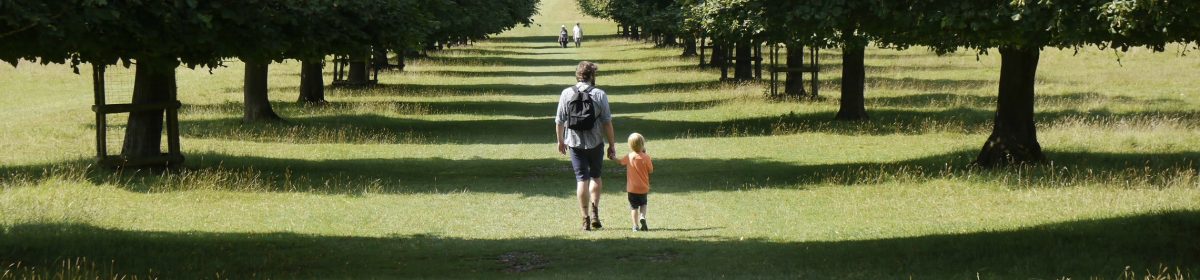
Two of our grandchildren playing in Dyrham Park

There was a moment on Tuesday’s fern hunt when a troubling thought occurred to me. “Why” – I wondered – “do I get so emotional about finding plants?” I think it’s a good question and a useful one. I remember we were once walking on Black Down (Burrington Combe) up at the top where the carboniferous limestone has been eroded away exposing the Old Red Sandstone underneath which is more acidic than the limestone everywhere else, and has an altogether different mix of plants. I was confused about this eccentric outcrop in the Mendips for years until it was explained to me how different the geology of that little area is. So there we were wandering along one of the tracks when suddenly a tiny flower caught my attention and I saw at once that it was an Eyebright, Euphrasia. As usual for me it’s not tremendously rare although it’s difficult to identify fully because it hybridises so readily. But what ran through my mind wasn’t the rational sequence of questions such as a professional field botanist might ask, as much as an explosion of joy; an anschauung, the intuitive understanding that comes with something discovered or revealed. No-one loves a list more than me, but that encounter involved a beholding such as might inspire a poet or artist; but when it comes to describing it, it’s just like trying to hold a writhing eel – trust me on that one, I’ve done it and failed on both counts!

The troubling moment on Tuesday came when I wondered if this emotional response might be no more than a form of sentimentality.

‘Bitzer,’ said Thomas Gradgrind. ‘Your definition of a horse.’
    ‘Quadruped. Graminivorous. Forty teeth, namely twenty-four grinders, four eye-teeth, and twelve incisive. Sheds coat in the spring; in marshy countries, sheds hoofs, too. Hoofs hard, but requiring to be shod with iron. Age known by marks in mouth.’ Thus (and much more) Bitzer.
    ‘Now girl number twenty,’ said Mr. Gradgrind. ‘You know what a horse is.’

Charles Dickens, Hard Times.

Obviously you can take a fact and wrap it in sentimental drivel but it will always lie dead and cold on the page. On Tuesday the first fern we found was an almost perfect Rustyback; a textbook example if you really must but I’d prefer to think of it as an expression, an outpouring of natural energy which, when you give it its name, connects itself to you. The plants become my sisters and brothers – hence all the emotion – love, gratitude, respect not to mention aesthetic pleasure. The naming doesn’t create the plant; but it gives it an address, a point of reference to which I can return – named, and therefore capable of being found and greeted again in a way that makes the earth a bigger, more relatable place.

The Rustyback fern

What is undoubtedly the case is that my childhood was full of such moments because – especially during the long holidays – I wandered (unsupervised) for miles through the countryside with my friend Eddie; laid in the grass on Rodway hill and watched the wind as it swayed the harebells, swung on the trees in the big woods, fished for Sticklebacks in the Oldbury Court ponds and picked bunches of wildflowers for my Mum who always placed them reverentially in jam jars. I suppose we all have that sense of a lost Arcadia. If there were any clouds in the sky we would rarely notice. My Mum was a country girl and she knew the names of plants and taught me and my sister how to love them too as we learned their names.

So yes of course plant hunting takes me back into my happy place, not because I want to be ten years old again, but because it was my ten year old mind in which I first experienced what I came to know later as the “oceanic feeling” and which seems to occur more and more as we search for the ferns, plants and fungi out in what’s left of nature after Thomas Gradgrind has had his filthy way with it.

In a 1927 letter to Sigmund Freud, Romain Rolland coined the phrase “oceanic feeling” to refer to “a sensation of ‘eternity'”, a feeling of “being one with the external world as a whole”, inspired by the example of Ramakrishna, among other mystics.

Romain Rolland (From Wikipedia)

The kind of earth we need to aspire to rediscover is not just a rewinding of the calendar to the nasty 1930’s; of Janet and John books, Ladybird and iSpy. More than anything else I’d just like to create the opportunities for our grandchildren to walk in the woods at night; count the stars and name the constellations; find and name plants and know some of their uses and qualities; feed the hens as my sister and me used to do in Stoke Row, and understand and practice the art of growing and harvesting. We need to rediscover and celebrate our relatedness to the earth, not in empty, sentimental, bound-to-fail aspirations but fully and deeply; surrendering any thoughts of domination. It is religion, you might say – but not as we know it!

You know the one – where the princess kisses a frog ….

Coltsfoot again – in the centre of Bath

It’s been a while, I know, but following the demolition of the Avon Street car park, many of us have wondered which building will take its place as the ugliest and most ill-advised building in Bath, and I’m delighted to announce that the top place (of my long list) goes to the old telephone exchange on the corner of Monmouth Street and Princes Street, built in the days when Crown buildings were not subject to planning permission. It’s always been a bit of a shady place as to its purposes, and it’s about to be anointed as Bath’s new police station – plus ĉa change etc.

Anyway, we were in the centre of town yesterday and as we passed the building I noticed this redemptive clump of Coltsfoot growing through the cracks in the neglected paving. As ever, Nature is quick to reclaim any neglected spot and I suppose we should record and enjoy this brief moment before it’s designated as a weed and summarily removed. Bath deserves its John Clare and I’m holding the place open until somebody better qualified turns up to celebrate the invisible residents of the city. In 2020, during the lockdown, I listed 26 wild plants growing in and around our car park – once a builders yard – and there are probably as many again waiting for someone to notice.

I know I write a lot about Cornwall and Wales and their wildflowers; but when push comes to shove there’s plenty going on in our own backyard – it’s just that the sunsets aren’t as good! As it happens it’s been a bumper year for Coltsfoot now I’ve got my eye in for likely spots. Their technical name is “ruderal” which means, well …… rude I suppose, in the sense of unkempt rather than wild; neglected rather than protected, and scarred rather than ploughed or dug. It’s the botanical equivalent of the favela or the refugee camp and it’s a great environment for dodgy characters to melt into the background. We even had a Sea Spleenwort hiding on the basement wall of the Guildhall – all washed up I suppose.

We’ve got a few guerilla gardeners in our neighbourhood too. Last summer we put some large compost filled pots outside the block and planted them up. This spring we see that invisible hands have planted tulip bulbs and even a bay cutting which seems to tolerate the extreme environment. The same invisible hands watered the pots when we were away in the campervan. Every year a solitary council employee hacks off the pavement squatters and sprinkles rock salt over the remains. Every year they return undiminished and sing their colourful madrigals to those with ears to hear and eyes to see them. It’s a dog eat dog existence for the rough sleepers of the plant world, but they seem miraculously to get by, and until you learn to distinguish one from t’other you won’t be able to understand their colorful histories. Railway trucks loaded with grain, bird seed imports, wool, and poorly tended compost heaps; even winter salted roads and lorry tyres all add their pennyworth to the diversity of the neglected environment. Old factories, mills and dyeworks cast off their workforce and their raw materials. These plants are evolutionary heroes, rapidly adapting to the new, often tricky places, where their better heeled cousins deign to set up home; on slag heaps, coal tips and mineworks; quarries, gasworks, docksides and railway sidings not to mention empty buildings like the old telephone exchange. Sadly, no-one is going to block the road marching for Whitlowgrass or Wall Barley, but they’re all part of the vast interconnected network of living things we call Nature – capitalizing the word although we have no idea if it really is a thing at all.

Still, we felt blessed by the Coltsfoot yesterday and celebrated with a pint at the Grapes; two old people drawing energy and hope from the crowd of young bar staff beginning their shift. We wish them the greatest happiness knowing, (as they have yet to discover), that in the end we’re all pavement dwellers.

Rue Leaved Saxifrage growing on the telephone exchange wall

” Try again. Fail again and fail better” (Samuel Beckett)

“Blanche” on the Ffestiniog and Welsh Highland Railway

I had the great misfortune to waste a lot of time at art school having to battle against one of the great 20th century myths about creativity. This was the idea that creativity could somehow shape the material world and could manifest itself without the mediation of any discernible skills at all. Creativity was thought to be an epiphenomenon of being, and being was definitely the thing. If you could get enough being on board you were set up as an artist. Later on I encountered much the same mindset in some of the more gimlet eyed evangelicals who had an unshakeable belief in the inerrancy of their obscure beliefs. Nowadays it’s conspiracy theorists, climate deniers, brexiters and anti vaxxers but it’s all rooted in the same problem; the refusal to examine, to question, to test and to modify your own practices and beliefs in the light of the evidence. Put simply; how can you possibly get better at what you’re trying to do – whether it’s running a country, making a pot or identifying a flower if you start with the assumption that anything you do is beyond critical reach because it just is!

I’ve heard apparently sensible writers say that they won’t read other peoples’ writing in case it influences them. They’re often the ones who make Vogon sonnets look like literature. I’ve spent most of this rainy week in North Wales grappling with computer programmes associated with the identification mainly of plants and it’s been a revelation to discover some of the benefits of Artificial Intelligence (AI) and Machine Learning (ML). You might think it would have been a better use of my time crawling around in the pouring rain with water running down my neck, looking for Wilson’s Filmy Fern – (I know where it’s supposed to be but it’s up a mountain wreathed in rain and mist) – but there’s nothing virtuous about unnecessary suffering and a bit of study pays better in the end.

Yesterday we went to see an exhibition at the Oriel, Glyn y Weddw in Llanbedrog involving the gathering, dying, spinning and weaving of wool – this is Wales after all. Here there was an abundance of art, technique and skill on show. Of course, all works of art begin with an idea – often very vague – but the real creative work is preserving and developing the initial vision through the processes that render it visible and never sacrificing the initial idea to showy skills. Great creative art is self-effacing about its means whilst being utterly dependent upon them. It’s not just musicians who have to spend so much time doing their scales. I couldn’t stop myself from getting down to nose-to-nose contact with one blanket just to see how the warp and weft was so skilfully woven that bright colours of the wools blended into the colours of autumn on the hills and mountains.

Upstairs in the same gallery is a permanent exhibition of porcelain, some of which was made at Nantgarw. My first degree was in Ceramics and I became fascinated by porcelain, and got to know and love the work of Thomas Pardoe – a decorator (I’d rather call him artist) of genius and William Billingsley a potter and decorator himself who ran huge legal risks by leaving Royal Worcester having signed the equivalent of a non-disclosure agreement by successfully arguing that the agreement didn’t cover the activity of making and decorating porcelain himself because he wasn’t disclosing any secrets. The technical expertise these and other working class potters displayed is awe inspiring. The process of manufacturing what was known as soft paste porcelain was wasteful, expensive and heartbreaking and neither man was a stranger to hardship and bankruptcy. The different styles of the two artists, though different, were so lovely I instinctively connected with them, and if they were alive today they would stand equal with the best natural history painters around. Pardoe produced some amazing botanical series, and Billingsley was so good at roses that Royal Worcester begged him to stay for fear of any competitor getting hold of him.

John Llewellyn, foreman – by William Jones Chapman, painter – in the National Museum of Wales, Cardiff

The 1800’s was an era when Wales was being stripped of the mineral wealth which was mined, forged and cast by men and women of real moral stature and turned into grand estates by their employers who often had none; or otherwise offshored the loot in English banks.

At art school, once again, we had a technician called Jack Pearce; a retired plasterer who could make plaster sing – he could speed the set or retard it and could feel the state of things in the bucket with his bare hands. Later on we moved to Stoke on Trent for a few months and saw the skills which were being discarded as the work was moved increasingly to China. Our mould maker Stuart, when he wasn’t recovering from a wild weekend, could cast anything – no matter how complex – and he helped to unload the last functioning bottle kiln in Stoke for the very last time as the industry died. As a child our next door neighbour Jim French was a glaze dipper at Pountney’s the Bristol Pottery where Pardoe worked for a while, and below our house was a marvellous allotment kept by Mr King – a fully Edwardian coal miner whose daily work involved walking to Parkfield Colliery in Pucklechurch and then walking back home hundreds of feet underground; only to repeat the walk in reverse at the end of his shift. I’d like to think that the Bristol Pottery kilns, pots glazed by Jim French, were fired with coal dug by Mr King’s forebears. My Dad was a GWR railwayman; I’m proud of my working class background

But what I’m doing here is not to promote hard work as a freestanding virtue, but to link it to the astounding creative achievements of these people; often poorly educated but who worked tirelessly to develop the skills which released and realized their creative abilities. At art school I was heavily penalized for spending too much time investigating glazes, clays and working techniques; but he who laughs last etc. If you want to be creative – I mean really creative – you’ll only ever be as good as your technique allows.

Falling in love again!

John Hoyland – “Voyage to Now”

If I were to create a soundscape of me walking through most of the exhibitions we go to it would go something like this:

  • Hmm
  • OK? (rising note on the K)
  • Yes but
  • Why?
  • WTF?
  • Hmm

The silences are usually punctuated by the sound of shoes on wooden floors and the rustle of prayer books, or should I say catalogues? Darkened rooms and silent introspection could suggest some sort of meditative process going on but (aside from the Rothko room in the Tate) it seems more often to occupy the empty space between two coffees.

Yesterday we went to the Royal West of England Academy with our friends Tony and Glen to see a couple of shows which were untypically given space to breathe. Madame was especially taken by some drawings by Denny Long. I wandered among some very late sculptural works by John Hoyland which seemed to me to be 3D maquettes for paintings. Then Madame disappeared for a minute and came back through the glass door of a darkened room which I’d concluded led to nowhere in particular. “You’ve got to come and see this!”

The four of us have been friends for more than 50 years. We met on what might have been known as a happening back in the day, and nowadays – in the era of curators and gallerists who, like half assed bodhisattvas sacrifice their own meagre creative gifts to help the rest of us to understand stuff properly – would be known possibly as an intervention; you know – the kind of thing where a scouring pad is accompanied by a three page artist’s statement. When we get together we all too easily slip into geriatric misbehaviour. Yesterday we found a box of dressing up clothes in the gallery and felt obliged to try the tiaras out.

Me, Glen and Tony – photographed by Madame

One of the great benefits of being old is getting away with misbehaviour that would have you thrown out if you were thirty. Anyway, we went through the glass door into the darkened room and there it was; a large painting by John Hoyland called “Voyage to now”.

It’s very hard to describe what’s happening when you fall in love with a painting. I’ve seen John Hoyland’s work over the years and found it interesting, bright, colourful and all the other lukewarm adjectives you could apply to a painting. But this was very different. This one spoke, or rather sang! – and the song was full of joy as well as full of echoes. The first thought that came into my mind was of lying on a real Freudian style couch with my psychoanalytic psychotherapist, Robin, sitting silently behind me as I spoke and re-arranged the furniture in my house of memories. Robin was the master of silences which were never in the least hostile, but warm and safe silences that seemed to be saying “go on, don’t be scared”. Then came echoes of more paintings remembered from previous encounters. These resonances, of Van Gogh’s Starry Night; Samuel Palmer; the 20th century British ruralist movement; Paul Nash; Turner – the list of artists goes on; all of them lyrical.

I must have encountered the phrase “music of the spheres” when I was very young, and having no idea of its mathematical connotations I thought that if, at night, I listened intently enough I’d be able to hear it. I had unconsciously turned a theory into a physical manifestation. Many years later I discovered that this is what artists do; gifted ones at any rate. There’s no crime or failing in references and quotations. One of the great gifts of modernism was to set artists free from the doctrine of absolute hardcore originality. I’m thinking of poets like T.S. Eliot and Ezra Pound and others like Basil Bunting. Full of quotations and remembrances of half sung ancient rhymes and mysteries. I’m thinking of musicians and weavers and potters. The untalented have their theories and then illustrate them, but the greatest artists think with their fingers and eyes and bring the intangible showings within their minds into plastic, tangible life. If any piece of art needs an artist’s statement to work, it’s a wrong’un!

And so I couldn’t tear myself away from this painting. I jokingly asked the attendant if he’d mind if I nicked it. I even offered him the ÂŁ2 coin in my pocket if he’d just look away. He thought this was vastly amusing but said his lowest price was more than ÂŁ2 – so I got Madame to take a photo instead, and now it’s in my head glowing with life and inspiring connections and thoughts as a fruiting fungus might shed spores.

Maybe, just maybe, this was just the beginning of the Chinese Year of the Dragon for me too. As we walked up to the Gallery we passed the most enormous queue outside the Museum. It snaked up the road and around the corner, some of its members in fancy dress – we saw at least one panda. In total around 4,500 people apparently went to celebrate the festival yesterday and they were by no means all Chinese. This year is said to be highly auspicious for births and standing in front of John Hoyland’s painting, being infused with its joyful light I could faintly understand what it was saying. Maybe I’d never really got Hoyland’s painting before because I just wasn’t ready. There’s an ancient Chinese proverb that goes like this:

To teach someone who is not ready is a waste of breath

not to teach someone who is ready is the waste of a person.

Maybe it was just my time.

The three graces – a rainy day job

Left to right –

  • Devil’s-bit Scabious, Succisa pratensis, Porthor beach, Lleyn.
  • Sheep’s-bit, Jasione montana, Martin’s Haven, Pembrokeshire.
  • Small Scabious, Scabiosa columbaria, Bannerdown Common. Bath.
  • At least I think so!

This little botanical odyssey began for me in July 2017, approaching seven years ago. I suppose a flora written by an extremely inexperienced botanist would find very few buyers, and sorting this group out has been a long job for me, foxed -as I’ve always been – by the similarity in colour. They all look a bit like the Scabious my mother loved and grew in the garden. Now; looking at them side by side on the page it’s obvious that they’re different but I’ve never seen even two, let alone three of them side by side in the same place. They were all separated by years and distance across a line between Bath and Snowdonia; each to its own preferred habitat.

Anyway it’s been raining for two days, limiting any outdoor attractions, and three big ideas came along like buses. The first idea was that I’m probably not going to die – at least not yet. This idea – call it the Black Dog if you like – has been haunting me for more than fifty years. The first and worst occasion nearly got me thrown out of art school for not showing up. We were living in an idyllic cottage above Bybrook and doing the things we were most passionate about, and yet I was tormented by the spectre of death – winter trees became veins and lungs, I felt permanently exhausted and without any hold on the future, no vision; no comfort at all in nature. In the end, and under threat of being expelled, I went to the doctor and, refusing to give me antidepressants, he prescribed regular trips to the pub.”You need people, not pills” he said. He was right, and soon afterwards a wonderful revelation was given to me. “Yes you are going to die, but not yet!” So bus number one came back this week and I realised that the phobic anxiety I was diagnosed with all those years ago had returned and then gone away again.

Bus number two was the annual discussion with Madame about whether we should sell the campervan. When she suggested it would be better to get it repaired and perhaps even take ourselves away for a whole month of walking, drawing, writing and botanising I felt my heart leap – for once in a good way.

Bus number three was the impulse buy I mentioned in my last post – “Frustrating Flowers and Puzzling Plants” by John M Warren and published by Pelagic Press. After a couple of months of being unable to do any serious botanical study, the book lit me up and I suddenly felt that spring and summer were truly on the way and calling me outside to meet all those precious plants again. Even better was the fact that the illustrations in the book were not only excellent but also looked very like a series of studies I once did of Hyacinth flowers. It suddenly occurred to me that what this little group of three – but could be half a dozen pale blue Scabious like flowers - needed, was a highly detailed set of drawings of their heads, including blowups of their reproductive bits, to help me – and perhaps others as well – get our heads around identifying them apart. I knew I could do it. A hand-holding guide to avoid being made to feel small by an expert. I once said to a very experienced botanist that I found grasses difficult. They simply said “Oh grasses are easy!” I was so incensed I spent months crawling around in fields trying to sort them out and three years later I’m nowhere near good, but improving.

So the oppressive cloud suddenly lifted and I felt a happy place opening up between now and the unavoidable fact that one day the wheels will fall off – but not yet! Sufficient unto the day is the evil thereof.

All this led to a deep dive into my photos. My usual practice is to photograph plants – which is a skill in itself; knowing what you’ll most wish you’d noted when you’re back home with the books. However my enthusiasm for pressing the shutter – which takes moments – is countered by the time it takes to put names to the plants. It can take hours, days or even years to make a secure identification, and the more you practice the harder it seems to get. The photos are just the beginning of the process. The three graces at the top of the post involved a fascinating excursus around the sex life of the Devil’s-bit scabious when I realized that my photos were nowhere near good enough to make any visual sense of the meaning of gynodioecious, thrown at me by the Book of Stace (IV). That knowledge will go forward with me because I now have a plan to revisit all three plants, and any more cousins I can find – in order to become a bit of an expert at some perfectly ordinary and common plants. Naming things is the most tremendous fun. It turns nature into an old friend and makes every walk and adventure; and if I make a mistake – well, nobody dies and the worst that can happen is that I feel a bit silly for a moment: but then field botanists are some of the kindest and most helpful people you could hope to meet. Mostly.

I don’t joke about my old enemy the black dog. It can really mess you up, but if that’s you too, take heart in the truth of the moment. The beauty at hand will always drive out the dog on the horizon.

Ghostly presences

Ghost sign on a wall in Bladud’s Buildings, Bath

It would be nice to be able to believe that the story of Bladud – the mythical king who founded Bath after noticing his rather scabby pigs liked to roll in the black mud of the heated swamp that was once all that existed of the Georgian/Roman/1960’s redevelopment horror – was so fanciful that no-one, not even a PR consultant, would ever come up with such a fanciful story again. Such people still exist in droves as hack journalists and are only too happy to use Geoffrey of Monmouth’s 11th century yarn to attract visitors/shoppers to the City. Naturally they’re not coming for the black mud any more, and leprosy has dropped off the radar for the well-to-do; but they are coming to experience the rather confusing melange of Roman Bath and Jane Austin’s Bath alongside a bit of shopping and more chain restaurants than you could shake a stick at. We don’t mention slavery except perhaps to mention the brave attempts to abolish it. Kingsmead doesn’t feature much in the story because it was heavily bombed in error by enemy pilots during the war who were using an old version of Google Maps and missed the Abbey and the Admiralty offices by a quarter of a mile. Kingsmead has always had a bit of a reputation which it clings to even after the loss of the medieval brothels, stinking dye works and unruly drinking dens. We’ve had two stabbings, and a drugs arrest since we got back from Cornwall on Monday. Bladud, just to clarify things, was not a Georgian builder and had no hand in building the rather lovely terrace that bears his name. But hey! truth is whatever you want it to be and if you’d like to believe that the Bell Inn on Walcot Street was landlorded in the sixth century BCE by King Lear (Bladud’s Son) be my guest. You’ll be working for the Conservative government in no time.

Sorry, honestly, for that little eruption of bile, but living in the gulf between what we experience every day and how the media chooses to report it is depressing and debilitating in every way. However back to ghost signs, and the one in the photo was only uncovered in July of last year, and all credit to the owners who understood that historical relics like this are a marvellous reminder of the real life of the City in the past. Actually there are two signs, and the one underneath can be dated to around 1847. You can check it out on the Akeman Press website run by Andrew Swift, the author of some of the best historical guides to Bath. We ordered one of his books online and they delivered it by hand!

These ghostly remains are a powerful reminder that we don’t live exclusively in the present, whatever the therapists may tell us; we really can be in two places, or two centuries at once, and that experience can be profoundly important. Seeing and touching the insignificant artifacts of the past stretches the imagination and informs a kind of empathy with the challenging and different cultures of the past. I was once asked if I was a member of the “Somerset Poles”. I assumed that the question referred to the direct descendants of Margaret Pole, 15th Century Countess of Salisbury, and for all I know I could be. What I didn’t realize until last year, was that there are many more people with my surname living in places like South Stoke than I’d ever known about. There are family stories about my dad going to visit to old aunts “somewhere near Cheddar” who were part of my great grandmother’s family; so yes I probably am a Somerset Pole but I harbour no delusional thoughts about living in one of those grand Georgian houses. My first thought on seeing those ghostly signs was to imagine myself driving a small cart down the street, collecting urine for the dye works. I’m really not gentleman material.

The signs also remind me that I won’t be here forever. Andrew Swift suggests that an early owner of the building would have been the surgeon and apothecary William John Church. Where is he buried? who knows? There are no surviving grateful patients or litigious failures to ask and in any case he moved on when the eye infirmary set up shop. I can close my eyes and imagine well heeled patients entering and leaving through that very door. People began coming to Bath in Georgian times because they were often sick and believed that the sulphurous waters could make them well. Later, when it became fashionable, there’s no doubt that some of the visitors could have been found in the brothels of Kingsmead and up the London Road.

Bath has an incredible abundance of ghost signs and most visitors hurry past without looking up at them but for me they’re better than all the carefully curated signage. Dog food, engine oil, eye infirmaries, dairies, cafes; in fact all the everyday stuff tells us more about Bath than the glossiest shop window. When I was a child and we caught the bus into Bristol, I was always intrigued by a sign above a fairly grubbly looking shop front in Old Market. It announced “Ace Erections” by way of a curly neon tube in red. I always thought it was a building company!

The Wassail – here’s one I blessed earlier!

Photographed in one of the Marcher Apple Network orchards last year; saucy little vixens eh?

I thought I’d been quietly retired from my role at the Littleton on Severn Wassail. Last year no invitation arrived and I thought to myself ‘that’s it then’. As soon as my successor arrived in the parish I’d offered him the job and he’d said that he’d just watch me next time round to get the hang of it. I could sense after the first time that he thought it was a bit pagan. He was wrong of course; wassailing is thoroughly, indubitably and cheerfully pagan. Over the years it grew to include the election of a king and queen for the night, memorably won one evening by a gay couple after a totally rigged vote. There was a huge bonfire, a mummers play, a folk song group and a great deal of cider. My job was to stand on a picnic bench and bless the trees while shotguns primed with black powder were fired at the sky by green men and women hidden in the trees. Smoke and flames from the shotguns and much shouting and banging of saucepans followed in order – I insist – to drive the devil out. The 2024 event will also feature a ukulele band which may well do a better job of devil driving. My new colleague was pretty shocked by all this boozy revelry and cross dressing and, I think – being a good evangelical, took the job on last year in order to reign in the revelry and anoint the event with brief talk about Jesus. Needless to say it played badly with a press ganged congregation. 

There’s a skill to rural ministry that takes a while to learn, and because I believe that all God talk is utterly inadequate and therefore heretical I’m not remotely fazed by anyone else’s attempt to express the mystery in a different way; so harvest festivals, Plough Monday blessings, and carol singing are all as powerful in their way as weddings, funerals and baptisms. A lifetime of talking and listening to people in extremis and in everyday situations has taught me that most of them had always thought very deeply about the great mysteries – more than many bishops, I might say, and that to interrupt them and try to correct their theological grammar is grossly impertinent and insulting. I’ve never met a more lucid natural theologian than the late Bob Talbot who, with his wife Rene ran a fishing tackle shop in Bedminster. I sat fishing with him on a river bank one morning and listened entranced by and envious of his spiritual connection with nature.

Anyway, the invitation arrived yesterday asking if I might think about blessing the orchard once more at the next Wassail. The letter from the Secretary of the Cider Club popped up on the laptop and I asked Madame what she thought. We’ve both got longstanding connections with the parish, the pub and for Madame the cider orchard too. She beat me to it because she was working for Long Ashton Research Station soon after we married, and was a part of the team of horticulturalists and scientists who planted and maintained it as an experimental plot behind the pub in the 1970’s. Later we would drink in the White Hart on Jazz nights, and later still I became vicar of the parish.

Littleton has always been a cider producing area. One local farm would make several thousand gallons of cider every year for the farm labourers as part of their pay. Even as late as the 1970’s the labourers at the research station orchards were entitled to a daily allowance of it. If you bite into a real cider apple the bitter flavour of the tannins will pucker your mouth and it will feel dry; but they contain a surprising amount of juice. Stories abound of throwing rats or bacon into the barrels to improve fermentation and although no-one has ever actually owned up to doing it in my presence, I’ve no doubt that any meat and bones would be quickly dissolved in the acidity of the ferment. On some farms, women were not allowed into the cider houses because it was feared they would stop the fermentation. This was a regular occurrence for Madame and me when I bought cider and she was asked to wait in the car while I went in for a wet. I learned fast that a wet was never less than a pint and sometimes two so I said no.

The Wassail is on and I’m happy about it. The Cider Club these days has many more incomers than original born and bred members but the village still has the capacity to replicate its historical culture through the pub, the cider club and even the church. As long as those fateful words “we always do it this way” are never uttered, cultures can adapt and embrace new ideas. This year the Winter Solstice comes at 3.27am on Friday morning and for me it can’t come too soon. There will be bonfires and songs no doubt and I’d feel completely free to join in the celebration except I’ll hopefully be asleep and in bed trying to get over a lousy cold.

The end of the wild is nigh!

Do I think that apples would fail to pollinate without prayers, or crops never grow without ploughs being blessed? Do I think that without the Yule celebrations the days would get ever darker? No, not a bit. But I do believe that these celebrations are the way we manifest our connection with and dependence upon the earth, her tides and seasons but even more importantly our dependence on one another; on human community and shared values. 

I used to be a bit scared by the sandwich board men in Bristol and their gloomy message that the end of the world was just around the corner. To my infant eyes, immediately after the war, looking across the bombed buildings and burnt out churches it seemed as if we were halfway there already. Nowadays the earth is in greater peril than ever but we’re choking and drowning in the terrible conjunction of affluence, indifference and effluents. The celebration of the seasons puts us back in the right relationship with the earth without which we’ll find it hard to motivate ourselves to change.

In case I don’t get to write for a little while – It’s going to be very busy for the next couple of weeks – Happy Whatever!

Hope in a hopeless world

Winter Heliotrope, Petasites fragrans

My school career ended ignominiously when I was manhandled out of the building by the Headmaster for being a bit challenging…. by even being there! My closest friend Eddie had left voluntarily a month before me and was now working for the Port of Bristol Authority, getting rides on tugboats, and being paid for it! I was about leave my photographic technician’s job at the University and get a labouring job with a welding and fabricating company where I learned to weld and saw up big lengths of rolled steel joist; an occupation that has made me prematurely deaf. One of the jolly tricks the old hands would play on newcomers was to lock you inside a metal tank and then sledgehammer the sides so that your ears rang for days. The hydraulic saw that I used, threw fountains of white hot molten metal at me and sounded like the gates of hell. It was exciting and well paid but exhausting, hot and dangerous. The men I worked with were a bunch of highly skilled desperados who knew their worth to the company and taught me a number of insults so utterly disgusting I’ve had to ration myself. That phase lasted around three years and any number of jobs during which time any glamour attached to industrial life wore off. In the nick of time, aged 18, I met Madame, who was 15 and she got me a place at Tech College where I felt alive again apart, that is, from having to work nights alone in a factory cutting up sheets of polyurethane foam for the workers in the morning and with nothing but rats for company.

The reason for this background stuff is that I took A Level Sociology at college, and in my group was another student called Peter who appeared to be a different life-form from anyone else I’d ever met. It was impossible to tell whether his pronouncements were attributable to stupidity or bigotry; probably both. I write this because I often read journalists lamenting the rise of populist politics as if it started in the UK about ten years ago. In fact during the 1930’s King Edward 111 was a known nazi sympathiser. Half the aristocracy were with him and Oswald Mosley was injecting his venomous ideas into society.

By the mid 1960’s Peter was a fully formed racist, homophobic and sexist pain in the backside who had never been troubled by a moment’s reflection. How our wonderful Jewish lecturer put up with him was a mystery – but now? ……… Well we are where we are I suppose. Every way we turn, we see newly minted clones of Peter in positions of power; the fact that you couldn’t fabricate a half decent brain from a room full of them (although even a failed experiment might benefit the world), is a clue as to precisely why we are where we are.

And so to COP 28 where a non enforceable agreement to do precisely nothing has been trumpeted as a triumph by its only beneficiaries. And so, also, to Gaza and Ukraine; to Rwanda and to a prison ship in Portland Dorset, and to the homeless beggars and the hungry and impoverished children; and to the sufferers of preventable and treatable disease …… do I need to go on? Should I mention the endless waiting lists for affordable housing or the empty second homes and flats given over to Airbnb to enrich their owners? Should I mention the untreated shit flowing past our flat in the polluted river?

Even as I read these paragraphs I know in my heart that Charles Dickens could have written these words and that they would have been equally true. Homo homini lupus est – perhaps better translated people are wolves towards other people is one classical quotation you’re unlikely to hear Boris, sorry, Alexander Boris de Pfeffel Johnson, using – although my sensitivity to sexist language seems a bit out of place in this context.

Truthfully, we’ve been drifting apart for years, like elves and dwarves, with the elves believing against all the evidence that decency and democracy will always win, and that the dwarves are really decent people who’ve just taken a wrong turn and to whom we should be kind in order to effect their transformation. Hm!

Am I distressed by all this? Hell yes! Distressed, angry and heartbroken. Yesterday there was a brief moment of hope that the Government might complete the task of euthanizing itself, but somehow the corpse overcame its apnoea and took another terrible gasp. My/our only solace is in the same Nature that’s threatened by them. Goodness knows I’ve preached often enough that without our mortality, love would become meaningless. But I’ve never really taken on board the fact that the more threatened the earth is, the more precious it becomes, and, for instance, the Winter Heliotrope in the photograph taken in Cornwall last January and back on the canal bank yesterday, becomes a pledge, a token of continuity in the depths of winter. We planted bulbs a few weeks ago in the little garden we’ve created outside the flats and now they’re pushing through the soil. I’m busy identifying old photographs of plants and fungi and recording them. I can already imagine the perfume of the soil in spring as it heats in the sun, and the prospect of another plant hunting season. I’ve got plans for new trips and for exploring new ideas – none of which will change the world but which are, cumulatively, a way of taking up pitchforks and cudgels against the enemies of joy and flourishing.

I absolutely refuse to be taken in by the imaginary world of dark caverns and darker threats where fear is normalized as a tool of control. We’ll fight them with carnivals, punish them with songs and drill into their little minds with poetry and drama letting in some purgative light. Oh and Peter – if you haven’t already gone to the great dictator in the skies; mind how you go eh?

COPOUT 28

The dog’s – well you know!

After a certain amount of unsubtle lobbying, Madame bought the final two volumes of Geoffrey Kibby’s magnum opus for my birthday but wouldn’t let me open the package until Sunday morning. She is a strict traditionalist in such matters, but then we were swept away to a family gathering before I had time to settle down and look at them. The gathering was fun but only highlighted the growing generational gulf between those who play computer games and the rest of us who treat mobiles and laptops as useful tools and prefer talking to each other. It was early evening before I was alone with the books and they are very good indeed. All I need now is a good microscope and some dangerous chemicals.

However I should point out that Geoffrey Kibby took four years to produce volume one because all the illustrations were hand drawn and painted. The subsequent three volumes were illustrated with the help of an iPad and a very good computer programme in less than two years. Sadly I left the Apple ecosystem some years ago after a contemptuous young sales assistant held up my old Macbook by one corner and declared it not repairable because it was too old. At least I think it was the laptop he was talking about! With a good deal of help from my son I moved over to a Chromebook at half the price and rather quicker to begin work.

The revelation that the illustrations were done on a tablet came as a bit of a shock because they’re so good, so I’ve bought a stylus and downloaded a free programme on to Madame’s Pixel Tablet. Work has now ground to a halt because the allegedly intuitive programme looks as if it needs a degree in computer illustration before I find it remotely intuitive. Madame thinks it would be better to keep on with pencils and watercolours.

Over the last few weeks I’ve fallen in with a bunch of Natural History desperados for whom spiders are the most beautiful creatures on earth. Their Facebook group which I was invited to join outpaces the British Mycological Society postings by two to one. So a decently obscure specimen can flatten the battery on my phone in half a day. Madame suspects me either of having an affair in code or being completely mad.

I find that the fierce concentration on identifying specimens creates a wonderful quiet space in my head at a time when what’s going on all around is feeling like living in a psychotic vision. We’ve reached the point where I have to leave the room during news bulletins and I’ve come to think that COP 28 – in fact most of the ideas being circulated about heading off a climate catastrophe is nothing more that the usual hubristic nonsense that sees us as owners of the Earth. The Earth doesn’t need us and we can’t own it -we’re just noisy, wicked and destructive tenants and although I came to understand that – generally – the bereaved don’t follow Elizabeth Kubler Ross’s stages of grieving to the letter, I can see elements of denial, anger, bargaining, depression and acceptance in abundance at the COP meetings and in most of the planning for our (very short) future. The good news – if there is any – is that all parties could be on the same trajectory; just at different places on it. In all my experience of bereavement – and there’s a lot of it – the worst thing you could say to anyone is “time to move on”. However; that doesn’t excuse wilful and deliberately destructive bad behaviour. If the Earth is our parent – and I can’t see it any other way – then the plagues we are enduring are admonitions for our bad behaviour. I’m not turning this into a religious argument because so far as I’m concerned any chatter about God is heretical because it’s (by definition) inadequate. What’s wrong with reverential silence?

Singing it like it is

This image has an empty alt attribute; its file name is P1070146.jpg
Big Sky – a lovely local South Wales Band

So yesterday I wrote about telling it like it is and today I want to extend part of that argument to the practice of song. The photo was taken in our garden in 2015 and I asked for the band – Big Sky – in the faint hope they might turn up for my leaving party …. and they did! When I said in the caption that they’re local – there’s no sense in which that could be described as damning with faint praise. They often played for our events and they were always brilliant fun; doing covers crossing decades and whole genres. People loved them and – when they knew the words – sang along with gusto.

I thought of them last night when we went to a concert at the Bath Forum. ‘Show of hands’ is doing a farewell tour for their present lineup because Miranda Sykes is leaving to work with ‘Daphne’s Flight’. The other two members, Phil Beer and Steve Knightley are going to concentrate on solo projects (they say – but don’t bet on it!). You’ll have to forgive a bit of bragging here because all three of them played separately and together in St Helen’s Church (my old gig) where we hosted a mean folk evening. Our idea of a full house was about 120, but last night the Forum was stuffed with 1000 fans. It was, Steve Knightley said, their biggest audience since they played the Albert Hall! We had some fabulous but much smaller events in the church; another supergroup, ‘Gigspanner’ did a memorable show for us. It was a special pleasure for me last night because I didn’t have to turn the building back into a church and act as general help after the concert finished. We were in bed by 1.00.

Music is just about the most life enhancing activity I know. I wore out my joke about the government banning it altogether if they knew how much fun it was – from constant repetition – and it was true every time. From carol services which were always sung in the noisiest pub style, to musicals; we lowered the religious tone to the point where anyone could connect.

Last night – if you’d looked around – you’d have seen around 1000 people and the average age must have been well over 60. Retired middle class people many of whom – like us – would have been touched by the folk revival of the 1960’s, diverse as it was, went from Bob Dylan, Joan Baez through to Sydney Carter (whose son was there last night) and the Watersons who could blast the back wall off the Bathurst Hotel (as it then was) with a single acapella chord. Show of Hands have spent decades weaving these and many other threads into pure cloth of gold.

But there was something else in the air last night. For a start, the majority of people there seemed to be superfans who knew all of the words of most of the songs and who joined in the choruses and occasionally verses of many of the songs once permission was granted (we’re talking polite middle classes here). Many of the songs and much of the linking intros had strongly political undertones. There were heaving shanties, songs of press-ganged soldiers; Cousin Jack is a powerful evocation of the toil of miners. There were several excellent jokes at the expense of the government which were noisily and rapturously cheered. The choruses were sung with such ringing audience commitment it began to feel like a revivalist meeting. One or two of the songs morphed into hymns that carried the audience into a rather different headspace but it wasn’t a religious space at all. There was a tangible longing for a temporal release from this political and economic place of suffering. I’d love to see them play at Gwennap Pit! And running through the audience was an obviously radicalized thread that you never have thought possible, looking at us all, and yet should terrify the wits out of anyone hoping to win an election.

Is there ever a moment at which you can say with certainty that change is in the air? This could have been a small portent, just as Mark Jenkins’ film ‘Bait’ is another. The point here is that creative arts can change the world by working through the imagination and the emotion. When we sing a song in a community of shared values we all derive strength and determination from it. Questions about economics and politics, housing or unemployment can be answered through Royal Commissions and legal enquiries, but mostly we don’t change our minds about the way things are around here by reading reports. Most economic and political questions turn out – on closer examination – to be cultural questions. Last night there were songs forged out of meetings with Chilean refugees from General Pinochet’s military dictatorship. Migrants always bring songs with them and we could learn so much from singing them. Folk music occupies a very distinct and happy place in our culture because it’s not high art and neither is it vacuous pop, but songs about lived experience in a world of poverty, inequality and injustice. True enough the young are more likely to find love on a dating app than wandering beside a river waiting for a tall sailor, but the challenges of trust or the tragedy of abandonment don’t change. Singing it like it is – even if the words have survived from the eighteenth century – gives us historical and geographical anchorage, and provides a fulcrum for action. In a culture that lives in a perpetual state of chaos, one point of anchorage can be the beginning of the end for a whole deranged way of life. That, I’m sure, was the elephant in the concert hall last night.