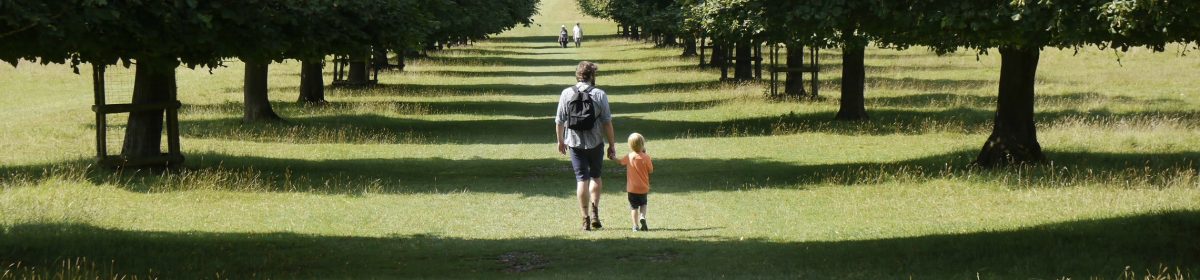
Over the hill – I think this is where my Dad drank too much cider and fell off his motor bike!

I’ve never had the opportunity to take a photo of this view before, although we’ve driven along the route and caught buses many times. For reasons too dull to repeat, the nurse that used to keep my ears free of wax – moved from the end of the road where we live and went to Fairfield Park where I took the pictures today. Being a creature of habit I started going to her new clinic which is 250 feet higher up on the side of Lansdown and three miles up a steep hill.

I left an abundance of time to catch the bus this morning but the bus company must have seen it was a fine sunny day and so (without any warning) they cancelled two buses in succession and gave me the ‘opportunity’ to keep my appointment by walking there as fast as I could. At the top of Walcot street, before I’d begun to warm up I began to wonder. Imagine the humiliation of lying on the pavement waiting to be carted off in an ambulance. But as always, when in doubt, I slow down a bit and I can’t begin to say how pleased I was when I arrived with 1 minute to spare and without having to stop and clutch a handrail whilst turning blue. It was such an unexpected achievement I also walked home later and stopped off at the allotment to collect Madame who’d been pruning apple trees.

Anyway, enough of this misery lit stuff. I noticed the distant hill in the photo as I hurried along the road and I knew that Madame and I had explored the wildlife up there as well as the canal at its foot but aside from that, my geographical understanding of the countryside around Bath is still at the separate places stage. So back home after a cup of tea I put the OS map up on the screen to make sense of the wonderful view.

Jump back say 15 years and I’ve never forgotten a funeral visit I made to an elderly woman who unexpectedly told me she thought we were distantly related. I had no idea how that could be, but she mentioned the village of South Stoke and said there had been Poles (my surname) living there for many generations in the past. The village of South Stoke lies behind the hill in the photo and it is very beautiful. I was inspired to do a bit of research and I discovered that she had been quite right and that little story tied up in my mind with a fleeting conversation I’d had at the back of St Mary Redcliffe church where I was a curate, when a very tweedy lady demanded to know if I was one of the “Somerset Poles”

Meanwhile, and in a previous generation my Dad liked to tell a tale about visiting two old aunts as a young man on a motorcycle “down Cheddar way” who made – as he soon discovered – ferociously strong cider. As he drove home to Hotwells, he said that he lost all feeling in his legs and had to drive into a hedge and sleep until the alcohol (not hemlock in this case) wore off. Here were three very short fragments of an unknown family history. The one troubling detail is that my parishes were in prime cider-making territory, and I couldn’t think of any women who made it. There were such strong folktales about women and their effect on fermentation that even in the early 21st century one old boy I went to to buy cider from refused to let Madame anywhere near his shed. His cider was life threateningly bad anyway and so I never went back with or without Madame – who, by the way – worked for several years in cider research and grew many now rare varieties of tree; which is why she was pruning the apple trees this morning.

By complete coincidence, an apple tree we’ve spent years trying to identify on the allotment site has grown a tremendous crop of small, almost black apples. We picked a couple of fruits today to try to name them. We were told it was a French apple and its name was “l’abris” which could – apart from a whole cloud of further meanings, mean shelter or car-port. I’d never have thought of naming an apple after a car-port. However Madame got to work on the internet this afternoon and has come up with a more likely American candidate known as Arkansas Black. We tried one, and it is delicious and very unusual because for me, at least, it tasted like apples and custard growing on a tree!

So there you go. Apart from the earwax, the thread that may or may not hold this entire post together for you as a reader is trees; family trees, cider apple trees, rare apple trees and the fruits of all of them – cider – a glorious drink as long as you don’t overdo it.

But to return to the question as to whether I am a Somerset Pole, I’ve never experienced the smallest stirrings of nobility in my DNA and so in response to the tweedy lady’s question I answered that so far as I knew I was a Staple Hill Pole which, I accept, was a pretty testy reply. I assumed that she was referring to Lady Margaret Pole whose house, on the Close in Salisbury, we once visited. Her Son, Reginald was the last Catholic Archbishop and got himself into trouble for trying to reintroduce Catholic ritual against the Protestant tide, claiming – in the manner of the overpromoted everywhere – that the people would soon get used to it. They didn’t. Nothing would please me more than to inherit a windfall couple of manor houses from the estate of Lady Margaret, but I wonder whether the tweedy lady was more likely referring to the yeomanry of South Stoke where, for all I know, her deceased husband made a fortune from building motorcycles of the very kind that my Dad fell off. False hopes, I fear, but I love a yarn that begins and ends in the same place. And I’d love to move up a notch from peasant to yeoman.

“UK genetics project looks for lost apple varieties to protect fruit in climate crisis.” George would have known what to do!

Here’s a fascinating and chastening story from the Guardian newspaper at the weekend. It’s all there above, but you’d need to have sharp eyes and plenty of patience to join the dots. The common factor that joins the threads together is a name you’ll probably never have heard before. I always feel I knew him well because he was Madame’s boss for the four years that she worked at Long Ashton as an Assistant Scientific Officer helping to record experimental field trials of apples and pears; especially for their cider making properties but also as eating and dessert apples. If ever there was a man who knew his apple varieties inside out it was George Gilbert. After he retired he had a considerable hand in designing the orchards at RHS Rosemoor and for the Lost Gardens of Heligan. He could name many varieties simply by closely examining them; the markings, the shape and structure of the flower end and the stem end, and no doubt that word beloved by field botanists and birders – the jizz.

It was George’s great misfortune to live through an era where the brewing of cider shrank to a vestige of its former self, and the justly mocked Golden Delicious apple, grown mainly in Europe was feted as the apple of the future flavourless, unattractive but capable of being used in a cricket game without bruising and easy to grow. The Cox’s Orange Pippin – one of the few apples to come true from seed – always was, and still is liable to disease and difficult to grow. Hybrids galore have been bred from the Cox, but the emphasis was always on yield at the expense of flavour, and they have to be sprayed with a cocktail of fungicides and insecticides every ten days from fruit set until just before harvest.

Tens of thousands – if not millions of apple trees were grubbed out on government subsidies, many of them irreplaceable local varieties naturalised within their unique microclimates. Our son helped grub up an orchard on Severnside until the farmer discovered that he was only thirteen years old and not allowed to drive the tractor. Apples for the most part don’t come true from seed and so resurrecting these lost varieties can almost never come from seed banks, they have to be grown from grafted budwood. Back in the day if the question “which variety of apple is best adapted – let’s say – to growing on a windswept island, battered by the salt winds of the Irish Sea, a hundred people would have shouted out – “The Bardsey you idiot!” The good thing about the Bardsey apple is that it survives in specialist nurseries and orchards and could form part of a grafted apple renaissance in the midst of a climate catastrophe. The real challenge is that there must be hundreds, even thousands of micro-adapted apple varieties which were grubbed out and burned; so the scientists in the study cited by the Guardian are taking samples in Rosemoor Orchard – planted up by George Gilbert who must have had an eye to their future usefulness. The key point is that these are just a tiny proportion of the varieties that once grew in gardens and orchards over the previous centuries. Stripping out and comparing DNA samples is not the best way of discovering their unique properties, but the only way that’s available to the researchers – post orchard-apocalypse. As Joni Mitchell sang so beautifully – “you don’t know what you’ve got ’till it’s gone!”

The battle to save the lost varieties takes on a much more than antiquarian significance as the search to find apple varieties for a very different climate future gets more intense. Many important insects have a mutually important role to play; they pollinate all kinds of fruit but many have evolved to emerge at exactly the time the apple blossom appears. They gather nectar and pollen for food, and the trees get pollinated. If that partnership fails we get a catastrophic failure of biodiversity and we lose a valuable crop. Just to take one example, most allotmenteers like us, no longer have any clear idea of when to sow and plant. Spring weather is so unpredictable now that we’re always trying to second guess the date of the last frost, or those destructive easterly gales. Will April this year bring showers of soft refreshing rain or portend the beginning of a prolonged drought?

I very much hope that the scientists can make rapid progress towards a DNA database and find ways of combining the growing and eating qualities of even a very few traditional varieties. This, surely is just the beginning – there are lovely collections of Welsh apple varieties (some of them in the photo above) in orchards run by the Marcher Network in the Welsh Borders. There’s another lovely collection at Plas yn Rhiw on the Lleyn peninsula in North Wales; and the National Botanical Garden of Wales also has an extensive collection of Welsh apple varieties planted by our friend Charlie Stirton, the first Director and now close neighbour. There are the Lost Gardens of Heligan and probably hundreds of other unknown collections nurtured for their qualities in remote farmsteads across the Western side of the UK. The writer and singer Raynor Winn and her husband are custodians of one of these. Cider has become a big business now, and so-called varietal ciders – Katy, Kingston Black and probably somewhere in a Dartmoor village even such melodious relics as Slack ma girdle fetch premium prices, although a now-passed cidermaker universally known on Severnside as ‘Doughnut’ – once told be that he always blended his cider and always included a few Cox’s.

My grandfather, a carpenter by trade, had a huge collection of tools, many of which he’d made himself. The point about them wasn’t that he used them very often; there must have been some that he never used – but if he’d ever needed it for the once in a lifetime job it would have been there waiting for its moment in the sun. Biodiversity is crucially important to us because when we move into unpredictable times is when we most often discover the irreplaceable usefulness of a single species. The apples are teaching us a lesson we simply can’t afford to ignore because – to quote a memorable sermon I once heard preached by Bishop David Jenkins “if we don’t act now there may be hell to pay!”

The Wassail – here’s one I blessed earlier!

Photographed in one of the Marcher Apple Network orchards last year; saucy little vixens eh?

I thought I’d been quietly retired from my role at the Littleton on Severn Wassail. Last year no invitation arrived and I thought to myself ‘that’s it then’. As soon as my successor arrived in the parish I’d offered him the job and he’d said that he’d just watch me next time round to get the hang of it. I could sense after the first time that he thought it was a bit pagan. He was wrong of course; wassailing is thoroughly, indubitably and cheerfully pagan. Over the years it grew to include the election of a king and queen for the night, memorably won one evening by a gay couple after a totally rigged vote. There was a huge bonfire, a mummers play, a folk song group and a great deal of cider. My job was to stand on a picnic bench and bless the trees while shotguns primed with black powder were fired at the sky by green men and women hidden in the trees. Smoke and flames from the shotguns and much shouting and banging of saucepans followed in order – I insist – to drive the devil out. The 2024 event will also feature a ukulele band which may well do a better job of devil driving. My new colleague was pretty shocked by all this boozy revelry and cross dressing and, I think – being a good evangelical, took the job on last year in order to reign in the revelry and anoint the event with brief talk about Jesus. Needless to say it played badly with a press ganged congregation. 

There’s a skill to rural ministry that takes a while to learn, and because I believe that all God talk is utterly inadequate and therefore heretical I’m not remotely fazed by anyone else’s attempt to express the mystery in a different way; so harvest festivals, Plough Monday blessings, and carol singing are all as powerful in their way as weddings, funerals and baptisms. A lifetime of talking and listening to people in extremis and in everyday situations has taught me that most of them had always thought very deeply about the great mysteries – more than many bishops, I might say, and that to interrupt them and try to correct their theological grammar is grossly impertinent and insulting. I’ve never met a more lucid natural theologian than the late Bob Talbot who, with his wife Rene ran a fishing tackle shop in Bedminster. I sat fishing with him on a river bank one morning and listened entranced by and envious of his spiritual connection with nature.

Anyway, the invitation arrived yesterday asking if I might think about blessing the orchard once more at the next Wassail. The letter from the Secretary of the Cider Club popped up on the laptop and I asked Madame what she thought. We’ve both got longstanding connections with the parish, the pub and for Madame the cider orchard too. She beat me to it because she was working for Long Ashton Research Station soon after we married, and was a part of the team of horticulturalists and scientists who planted and maintained it as an experimental plot behind the pub in the 1970’s. Later we would drink in the White Hart on Jazz nights, and later still I became vicar of the parish.

Littleton has always been a cider producing area. One local farm would make several thousand gallons of cider every year for the farm labourers as part of their pay. Even as late as the 1970’s the labourers at the research station orchards were entitled to a daily allowance of it. If you bite into a real cider apple the bitter flavour of the tannins will pucker your mouth and it will feel dry; but they contain a surprising amount of juice. Stories abound of throwing rats or bacon into the barrels to improve fermentation and although no-one has ever actually owned up to doing it in my presence, I’ve no doubt that any meat and bones would be quickly dissolved in the acidity of the ferment. On some farms, women were not allowed into the cider houses because it was feared they would stop the fermentation. This was a regular occurrence for Madame and me when I bought cider and she was asked to wait in the car while I went in for a wet. I learned fast that a wet was never less than a pint and sometimes two so I said no.

The Wassail is on and I’m happy about it. The Cider Club these days has many more incomers than original born and bred members but the village still has the capacity to replicate its historical culture through the pub, the cider club and even the church. As long as those fateful words “we always do it this way” are never uttered, cultures can adapt and embrace new ideas. This year the Winter Solstice comes at 3.27am on Friday morning and for me it can’t come too soon. There will be bonfires and songs no doubt and I’d feel completely free to join in the celebration except I’ll hopefully be asleep and in bed trying to get over a lousy cold.

The end of the wild is nigh!

Do I think that apples would fail to pollinate without prayers, or crops never grow without ploughs being blessed? Do I think that without the Yule celebrations the days would get ever darker? No, not a bit. But I do believe that these celebrations are the way we manifest our connection with and dependence upon the earth, her tides and seasons but even more importantly our dependence on one another; on human community and shared values. 

I used to be a bit scared by the sandwich board men in Bristol and their gloomy message that the end of the world was just around the corner. To my infant eyes, immediately after the war, looking across the bombed buildings and burnt out churches it seemed as if we were halfway there already. Nowadays the earth is in greater peril than ever but we’re choking and drowning in the terrible conjunction of affluence, indifference and effluents. The celebration of the seasons puts us back in the right relationship with the earth without which we’ll find it hard to motivate ourselves to change.

In case I don’t get to write for a little while – It’s going to be very busy for the next couple of weeks – Happy Whatever!

Johnny Appleseed’s true identity revealed

According to Michael Pollan in “The Botany of Desire” – a book I’m always quoting from and referring to (I’ve got it on Kindle and I liked it so much I bought the hard copy!) – planting an apple tree had more than the usual significance for some early settlers in the US, because, for instance in northern Ohio it was a requirement for a settler to establish fifty apple trees on their land in order to establish a claim. Apart from everything else, for most european settlers apples were a reminder of home and John Chapman – AKA Johnny Appleseed saw that need and seized the opportunity. Later, according to Pollan, the legend that developed around Johnny Appleseed was bowdlerized by the puritans and later by prohibitionists, because he refused to have anything to do with grafting which ensured that his apples were all grown from seed and, (given the apple’s extraordinary promiscuity), were more miss than hit in the taste department so they would mostly have been be turned into cider. I’ve been in evangelical households where Johnny Appleseed was sung reverentially as a form of grace; the true significance of his life’s work having been completely erased. Ironically, Vic (Doughnut) Jones who was a considerable cider maker I knew in his later years, always said that his father would add a few Cox’s to a pressing. He would have nothing to do with single variety ciders which he dismissed as a fad.

Anyway, to get back to the point; yesterday I planted another four fruit trees – one Bramley, a Victoria plum, a Shropshire damson and a Conference pear; and for me the event embraced a seriousness of purpose that doesn’t happen when I sow a line of lettuces. Adding four more permanent dwellers to the allotment is a sign of commitment because even with good health they’ll probably outlive me, and in view of the importance of the occasion labeled them all by hand and added their places to the plans. They arrived in the nick of time – bare root trees need to be in by the end of March, and the flower buds are already opening on the established trees.

Aside from the fact that it felt good, there are other reasons for planting fruit trees. They’re perennials, they’re excellent windbreaks – slowing the wind down – they attract pollinators early in the year before the annuals get going, and they provide a reliable source of food for surprisingly little work. Of course there are skills to be learned but Madame has got the RHS qualifications and is a whizz with the secateurs.

The other thing that fruit trees do is provide structure. Now the two half plots feel more united than they’ve ever done before. Five years of pondering and experimentation have given us the confidence and the experience to understand the underlying dynamics of the allotment: its microclimates – the warm spots, frost traps, the places where water drains quickly and where it lingers into spring. We have tadpoles in the pond I dug over the winter and everything seems more settled down. At last we can see the allotment as a living and breathing unity and instead of struggling to make it do what we want to do we can assist it to do what it wants to do. That’s permaculture design in a nutshell.

Yesterday the temperature reached 20C/70F but by Monday the night temperature will have dropped below zero once again. Today the benign wind from the south had swung round into the northeast, and we replaced all the fleece covers once more. As with any other skill it’s complete attention to details that makes the difference between success and failure and trust me we often get it wrong. Slugs have woken up and made an unwelcome appearance and so I set four beer traps on the asparagus bed in order – hopefully – to give them a happy but very short season. The potatoes in the polytunnel are just loving the warm conditions, and the new strawberry bed has been repurposed because the strawberries we’d ordered failed to arrive.

It’s been a real struggle to get trees this year. The nurseries nearly all sold out of bare root trees early in the season and the more expensive container trees have been going fast. Yesterday I had a chat to a tree surveyor who works for the local authority and he told me that they’ve planted 4000 trees this year and would have planted more if they could have got hold of them. With covid raging, many of the nurseries have had to furlough skilled staff, and the addition of a terribly wet autumn has left some of them struggling to meet their orders.

If allotments were like cars, I’d say we’ve moved into third gear now but the transition into flat out always takes us by surprise. Most often it’s a kind of regretful realization that we’ve forgotten to sow something. Every year we have a surplus of early sown plants because we know that a late frost will call for some gaps to be filled; but failing to sow melons or corn in time is less easy to remedy because they need a long season to ripen and it’s always hard to source the range of plants that you can easily buy as seeds. But never mind, we’ll enjoy them all the more the next year when we get it right!