Gert lush

I’m not sure if the phrase gert lush ever properly existed as Bristol slang. Lush certainly did, and meant really good; and gert did too, meaning big. But the combination seems to have come into existence as a bit of a joke when non Bristolians tried to speak like us. However the Bristol accent is not to be trifled with and the dialects tied you down to a single parish sixty years ago; so adding an ‘ul’ to China and saying Chinul or Africul wouldn’t get you very far into my affections. I say I’m a Bristolian because it’s an easy way of describing a complicated situation. If I was being pedantic I’d say that I come from Gloucestershire, but that opens a whole can of worms because the boundaries have changed so frequently over the years that for my first twenty years I lived in three counties without moving an inch. I now live in a fourth newly minted county but I could walk in a few hours to the place I was born. Where I was brought up we still used thee and thou when we thought no-one was listening; and when strangers or teachers were around we could lapse into impenetrability very easily. I love my accent even though once, in a restaurant in Birmingham, the waiter leaned across confidentially as we were leaving and asked “are you a farmer?” I thought it was very funny, but I’m not sure she saw the joke. Nonetheless I have needed to remind one or two people that having a local accent – even a very mild one like mine – doesn’t mean I’m stupid.

Anyway, after that long excursus, we were on the allotment last evening and a hot air balloon took off from Victoria Park a couple of hundred yards away. It’s always a lovely sight, and I once had a balloon ride from the exact same spot on a similar summer’s evening some years ago. The launch site is surrounded by tall trees and buildings and so it’s necessary to gain height very quickly; therefore the technique seems to be to fill the balloon with hot air to the point it’s straining at the leash, and then release it like a cork from a bottle. A pretty thrilling experience. In my case we flew south and east, following the course of the river Avon until we swung north and landed somewhere around Marshfield. When the burner was silent we glided noiselessly above the fields and at one point followed a fox which was apparently unaware of our presence above him. All this was thirty years before we moved here and tracking the flight from memory on a map today, I can see that we would have passed exactly over Bannerdown where we spent the day yesterday.

It was – to use the phrase I started with – lush – and I’ve only just remembered that the owners of the balloon were our new next-door neighbours when we first moved here. Lush, then and a bit weirdly prophetic too. The pilot on my flight was a police inspector and I probably found a way of thanking him without using the dialect word to avoid evidencing any potential criminality on my part.

“Lush” – such a rich word; made for a couplet like “lush grass” … Lush, flush, blush; all wonderfully suggestive of fullness, of flow, of generosity or suddenness.

Odd then, to think that what encourages the immensely rich flora of meadows and limestone grassland is a kind of poverty. We’re planning to make a pond on the allotment this autumn, and we’re also going to create a small area for grasses and wildflowers, and that’s led us to an interesting conundrum. We’ve spent four years increasing the fertility of our ground and now, the bed we intend to convert is far too rich to support much more than the rankest of rank grasses and weeds. So the rather complicated plan is to remove most of the topsoil on the proposed “meadow” bed and move it to some new raised beds where it will be just what we need and better than any soil we could buy in. Next we’re going to do the same with the topsoil where the pond is going, and then while digging out the pond, move the less fertile soil and subsoil to the meadow bed to bring it back to level. The exact composition of the surface layer will need to be worked out, but to reduce fertility any other way would mean cutting and disposing of plant matter for years and growing something like yellow rattle to discourage the rank grasses. It’s my favourite occupation – making experiments. For wildflowers and their associated invertebrates, less is most certainly more. We couldn’t resist another trip to Bannerdown yesterday and I went armed with a notebook and a couple of plant cribs. So while Madame hunted butterflies I did a quick survey and in a couple of hours I’d listed fifty species and increased the grass total to fifteen and all of this on very thin limestone soil with rocks poking through in places.

And what struck us most was the heavenly smell of wildflowers. Madame said it was like being a child again. If there was a downside – and it wasn’t a big one – we were accompanied by a land rover towing a seed collecting box behind it. This was part of a project (with input from the Cotswolds Conservation Board), to create a wildflower corridor through Bath and yesterday’s seeds were on their way to Swainswick to re-seed a piece of land there. As we were leaving we passed the fruits of the day’s collection on a large tarpaulin on the ground, and we talked to the recipients and owners of the about to be reseeded field, who were tremendously excited about the project. We can only presume that our little allotment patch of a few square feet will form a tiny part of the whole in years to come.

It sounds counterintuitive to think that to regain lost species we need to make the ground less fertile, less lush; but one of the principal causes of our ecological crisis is the current agricultural policy of driving the land harder and harder using chemicals and artificial fertilizers, and if you’d been able to stand with us yesterday and enjoy the ridiculous numbers of wildflowers and grasses, you’d see why it’s so important to change our whole attitude to farming. But of course the takeaway point is that we can’t avert the coming destruction by writing new rules just for farmers, although that needs to happen. None of us will escape the coming moment of truth unless we all of us change our ways.

I’ve been reading Ann Pettifor’s book “The Case for the Green New Deal” and I think it’s the clearest summary I’ve seen yet on what needs to be done. Better than that, it seems really do-able if we can just knock the idea of continual growth off its perch and stop worshipping the economy as if it were some kind of abstract God, demanding constant obedience to the “Market” – a set of concepts I find almost as difficult as systematic theology. Today, as I write this we’re sheltering in the flat with the temperature approaching 30C. At what point do we start noticing that the king has no clothes?

What was the date of the last time you heard a cuckoo?

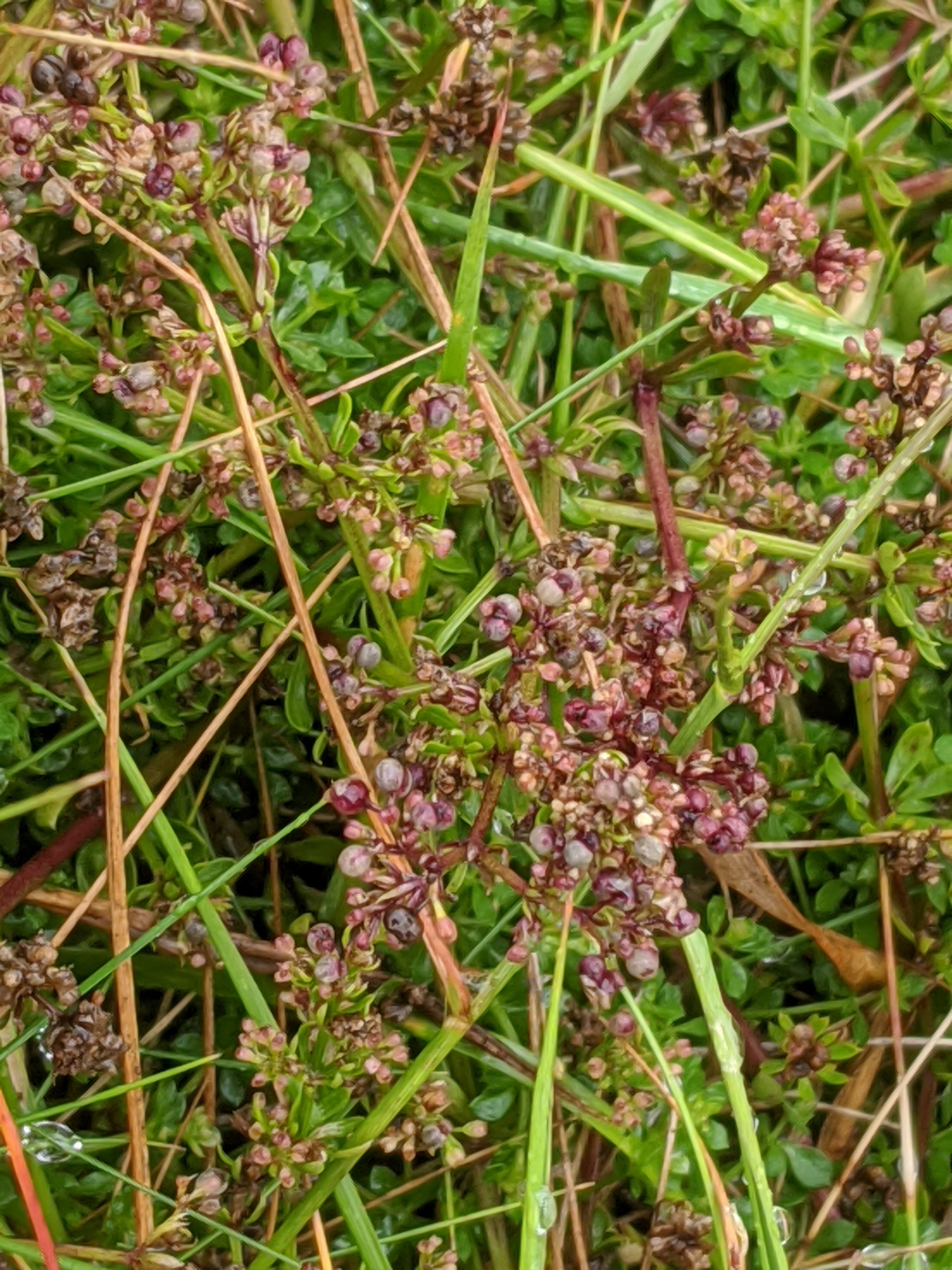
Arrhenatherum elatius ssp bulbosum otherwise known as a bit of dead grass

To be able to answer that question you’d need to have heard the cuckoo, recognised it and made a note of where it was that you’d heard it. I know where I heard the last one – it was with friends whose smallholding is near Crickhowell in Wales and I could find the date by looking for the photos I took on that day. That was getting on for two years ago and sadly I haven’t heard one since which gives me a little pang of sadness. What if that was it? – no more cuckoo ever …..

So maybe there is a point in being a bit of a list nerd, even if becoming one means you have to irritate the hell out of all your nearest and dearest while you read (buy) incomprehensible and expensive books, spend hours with pencil and notebook writing in secret code and develop a pronounced bend in the spine as you spend days on end looking at the ground, and enthuse about tiny bits of plants that no-one in their right mind cares a hoot about …. except – I should stop there! But if you’ve done all those things and write the event up and even send an account of it to someone who also records these things but on a grand scientific scale; then it’s just possible that something could be done in time to stop the cuckoo becoming a footnote in an annotated student’s Shakespeare crib.

On Tuesday I gathered 10 samples of grass from Bannerdown and as I mentioned earlier, I was up early yesterday morning and after some pretty intense work I managed to identify nine species; and I even managed to match them with all the other plants we saw yesterday and come up with my first ever NVC (National Vegetation Classification) code. More than a year after my resolution to “do the grasses” I’ve finally reached the point where I’m pretty confident with identifying them, and half a dozen I can recognise from twenty paces. A red letter day for me and possibly of no interest to anyone else, unless like me you’ve embarked on a stupidly difficult quest without much by the way of experience.

So why bother then? Why not leave it to the professionals? Well the answer is that there aren’t nearly enough professionals to do what’s needed. There are now hardly any opportunities to study botany at degree level in this country. We’re in the midst of an environmental catastrophe that will lead to the disappearance or even extinction of a huge number of species from environments that no one has ever recorded – and I don’t just mean Amazonian jungle and Arctic tundra, I mean the derelict site next door, the unappetising urban stream with the supermarket trolleys in it, and the allotment sites that hard up local authorities would love to sell off. The article from today’s Guardian newspaper that I cited above is concerned with UK mammals, and just like the mountain gorillas and snow leopards, our wild mammals live on wild plants, insects and other wild mammals and they are disappearing because their environmental niches are disappearing. As meadows, hedgerows and streams disappear along with all their specialised plants, their larger and more glamorous inhabitants disappear too; so saving the hedgehog means saving the hedgehog’s environment and the multitude of invertebrates that it lives on – which means saving the plants on which those invertebrates feed in turn. The earth is a joined-up ecosystem – with the emphasis on system and it can’t work even if small parts fail. Just as when the hinge on my laptop breaks it becomes a pile of junk. During my grass binge I have spent a lot of time on the internet looking for answers and I promise you I found a website (run by a agrochemical business) headed “How to identify grasses and eradicate them. “Attaboy – lets civilise the lawns and fields of this great country!”. Letting the nettles and the couch grass flower around the edges of your allotment shows you’re a part of the resistance movement.

Natural history has always had its share of amateurs. There are few other disciplines where we can make such a significant contribution. It’s true we don’t have the knowledge or the equipment to study plant DNA at home, but increasingly we’re becoming the infantry in the battle to save nature, (with saving ourselves as a side-order). There’s a place for everyone at every level and the amateur recorders are the intelligence corps, helping to collate the evidence. I first got involved in this kind of thing when I was a schoolboy and sent postcards (remember them?) back to a science project investigating thunderstorms. I remember I had to record the number of seconds that elapsed between seeing the lightning and hearing the thunder, and add a few details about the storm. I think I had to buy my own postage stamps.

However, the reasons for getting stuck in aren’t just about saving our skin. To lift a phrase from a well known naturalist:

“The philosophers have only interpreted the world, in various ways. The point, however, is to change it.

Karl Marx – “Eleven theses on Feuerbach” – (and inscribed on his grave)

So let’s hear it for the sheer beauty of nature, for the way it frames us and sets us within our proper place, for the way it inspires the sense of the numinous, the “mysterium tremendum et fascinans“, the terrible and compelling face of nature that draws worshippers and list makers alike to record what might be the last great moments of a collapsing civilisation. “Glory be to God for dappled things” said Gerard Manley Hopkins in his poem “Pied beauty” and although these days I find the whole idea of God – especially the great gammon in the sky version promoted by most churches – impossible to understand, I know well enough what glory feels like!

Another day, another heap of species

If you choose to see it that way, you might say that one of the upsides of the Covid 19 pandemic has been that it’s obliged us to cancel our usual travels and find places much nearer home. With all our favourite walking spots effectively out of bounds, we’ve responded by scouring the area around Bath for wildlife hotspots, the SSSI’s, reserves, and commons – often not much bigger than a few acres but which (we’ve discovered) are incredibly rich and full of things we’ve never seen before. All the while I’ve been lamenting the fact we can’t get into Wales or Cornwall to go plant hunting we’ve been neglecting the local riches. Today was no exception, and we found a few acres of calciferous grassland that hasn’t seen any fertilizer or chemical for best part of 300 years.

But first we had to go to the surgery for our annual MOT’s in which Madame fared better than me because for some reason I had an AF attack as I walked through the door and so – after three goes on one blood pressure monitor and a trip next door to see if a different type of machine would tell a better story, we agreed that the numbers on the dial didn’t look at all right and we would ignore them. That’s the first time I’ve ever suffered from white coat syndrome in my life, and within an hour my pulse and blood pressure were back to normal. I always suspected doctors made you ill and now I’m sure. The poor nurse got quite flustered and this meant her every attempt to calm me down made things much worse. I don’t know which of us felt most exhausted when I walked (carefully) out of the door. Anyway, enough of my cheating heart. Old age doesn’t come alone as my granny used to say, and she was right – there are thousands of us.

So after tea and Dundee cake, which is a sovereign cure for all ills, we drove about 4 miles to Bannerdown Common ostensibly for me to grab a few grass samples to sharpen up my I/D skills, and for Madame to seek out butterflies. Tonight I had to choose between writing and identifying my bag of grasses and I went for writing tonight and identifying tomorrow morning very early before Madame wakes up. There’s something so special about unimproved meadows that once I’d collected a dozen grass species we moved on to wildflowers, butterflies and just revelling in the beauty of it all. Madame came face to face with a roe deer stag and after exchanging surprised looks he darted back into the woodland – it was that kind of place, full of surprises.

I’m sure that there are ecologists who go about their work in methodical silence, but I’m a bit of a noisy so and so, and I’m inclined to do a little excited dance when I spot something interesting. Madame finds this dismaying as a cloud of departing butterflies sometimes accompanies my joyful exclamations. Botany is exciting – no argument! I’m ashamed to admit that I could have learned more plants three times as quickly if we’d taken our bicycles out instead of driving hundreds of miles in the campervan. On the other hand, although I’d kill for an hour at the seaside, I’m certainly not prepared to die for it so we’ll postpone murders and premature deaths until September at the earliest and stay local.

There are a long list of nature reserves within easy distance and with all our field trips cancelled at least until the autumn we’ll do it alone. Meanwhile the allotment has reached overproduction levels and we’ve realized that the intuition in April that three rows of runner beans was too many – was right, and we’re feeding anyone that can light a stove. I’ve made a shopping list of timber to repair and strengthen the water butt stands, and the temperatures look set to reach 30C later this week which will mean we’ll soon be processing tomatoes. Unfortunately a labelling mix-up has put several varieties into a glorious muddle, and today I noticed some wild aubergines growing amongst the cavolo nero. That’s what I love about allotments; for all the planning in the winter, by the time it gets to July the plot has its own momentum and we become followers, curious to know what will show up next.

It’s not all turtle soup and silver spoons!

With thanks to Charles Dickens and Thomas Gradgrind for the reference – and we’ve no plans ever to serve or eat turtle soup at the Potwell Inn, with or without the silver spoons.

One of the abiding challenges of writing a blog about being human is the temptation to create a sunny and carefree parallel world in which my ever competent and cheerful alter ego glides effortlessly through life untouched by troubles of any kind. Of course it’s not like that at all and things go wrong all the time – like yesterday when the pride of my civil engineering efforts on the allotment collapsed under the weight of water we’d gathered from some intense rain. I’ve written so often about the water storage project that I should have known it would all come back and bite me and now it has. I could see something was amiss when we came down the path and I saw that the three 250 litre water barrels, instead of standing in a perfect and level line, were leaning over drunkenly against the shed which, having distorted significantly, resisted any attempt to open it. One of the supports had collapsed under the strain of 750Kg of water and the horrible result was all too clear.

It was the crowning glory, or perhaps more honestly the last straw, because the black dog had already been following me around all day. I don’t know why -perhaps it was something to do with revisiting my past; but the mud and silt at the bottom of my inner pond had been stirred up by going to Rodway Common, and I couldn’t quite find the way out of my thoughts. The sight of the water butts moved me into a silence.

Melancholy isn’t just a middle class word for depression, tarted up to make it sound a bit poetic. Melancholy is a mind frame through which all the impermanence and fragility of the world is magnified, and these last months have carried the risk of loss so gravely that there can’t be many of us who haven’t been touched by it. Some will have fallen into depression, which is far, far worse. For the Potwell Inn, of course, the prospect of the landlord sunk in a grey mist did not inspire the landlady, and the lounge bar was as quiet as a funeral director’s waiting room. The television, leaking its poison into the room, drove me to my desk where I got stuck in the mud, wheels spinning and going nowhere. Then, after a disturbed night in which dreamed of being able to fly, I woke up feeling better and in possession of my lyrical mind once more, and also an easy way of rebuilding the water butt structure.

The last six words of any dying organisation are – “we always do it this way

What is it about the television at the moment? Endless costume dramas reinvent the past; we’ve got Jane Austin and Downton Abbey (was there ever a more unctuously dishonest series?) – coming out of our ears; and last night Countryfile – welly telly at its middle England finest – tried to present the argument that the gene editing of food crops was not the same as genetic modification. I screamed at the screen fruitlessly – “ask the question you moron!” – knowing that no serious question would be asked. The NFU will get its five minutes as the trades union of intensive farming, and there will be no mention of the adaptability of so-called pests. As Darwin said, when the merde hits the fan, it’s the most adaptable that survive (I paraphrase slightly) and that suggests that the odds are stacked against the farmers who will still be waiting for the Seventh Cavalry to come and rescue them when the better adapted blackfly have eaten their wellingtons. Just to put it simply, gene editing is the same game as genetic modification and carries many of the same dangers; and the thought of negotiating around a supermarket between rows of genetically edited carrots and chlorinated chicken does not fill me with joy.

On the allotment we concentrate on building up the soil and we know that stronger plants resist pests and diseases better than intensively farmed weak ones. Yes we get pea moth still, but we get around that by cropping them earlier. Blackfly and ladybirds sometimes take a week or two to move into synchronisation but they always do in the end, and there are a multitude of healthy ways of controlling pests -companion planting, for instance – that can work at scale as well. We often used to joke that the last six words of any dying organisation are – “we always do it this way“. If there’s a lesson to be learned from this Covid 19 pandemic, it’s that always doing it this way is the problem, and doing more of it can never provide a solution.

In my darkest moments I wonder whether the human race even deserves to survive, but we have children and grandchildren and there are millions of poor people around the world who will suffer even more than they do already, if we cling to the old ways which – in truth – are barely a couple of hundred years old in any case.

So there we are- no longer Mr Sad but definitely Mr Grumpy – and when it stops raining and I fix the water storage it will be Mr Sunny all over again; and the regulars will ask “what’s he on?” as I pull pints and sing “round and round the mulberry bush” .

This isn’t just a landscape

Had the strangest experience last night as I settled down to identify a grass that I’d gathered on our walk to Sham Castle (yesterday’s posting). There must have been something about it that caught my eye, because when I opened the polythene bag that I carry around with me – just in case – there was another identical sample inside that I’d forgotten about. So why was this particular species of grass- which turned out to be (I’m pretty sure) common bent – Agrostis capillaris – speaking to me so loudly?

If you’ll allow me a tiny digression, the microscope has been a wonderful help with grasses, but also with random bits of unspeakable things like earwax which turn out to be pretty interesting as well! Anyway, the bent grass, to get back to the point. The thing about it was that it seemed to be carrying an inordinate amount of emotional freight with it. The pursuit of grasses has been as much an intellectual challenge as anything else. I’m trying to know them well enough to identify them confidently, simply because I was challenged by someone I respect greatly and I love a challenge.

So on the microscope I went through the increasingly familiar routine, much helped by the BSBI webinar material, and then keyed the sample out and there it was; one of two possibilities and in the end I plumped for common bent. And that might have been the end of the story if I hadn’t been mulling it all over in the early hours of this morning during that half awake, half asleep time that’s so full of lateral thoughts and unexpected revelations, and it became clear to me that I needed to go to Rodway hill.

If it weren’t for Rodway Hill, or Rodway Common as it’s also known my life would have been radically different. It was a place of powerfully charged moments. I had a strange, almost religious experience there as a young teenager when I once laid down on the grass and moments turned into infinite time. It was the first, but not the last of my experiences of what came to be known as the oceanic state. At a much more mundane level it was the place that Rogers’ Fair set up one warm summer evening and I first heard the Everly Brothers in a moment charged with eroticism, generators and diesel fumes. It was there with Madame that we once gathered 40lbs of blackberries with which we made dreadful chutney. It was where I went to school and it was the view from the window that sustained me through hours of tedium. It was the territory of my adolescence and so everything about it must have become charged with significance. And the common bent had something to do with it and so I dragged Madame over there in torrential rain this morning to get some photographs and to track down the ghostly presence.

It was a pretty scary experience – I felt a bit silly chasing down the bizarre idea that I am somehow connected to that landscape. Even as we set out I was wondering if the landscape was acting as an immaterial hard drive; if it could be possible that some of my memories were held there waiting for me to reclaim them. But however mawkish and stupid it might sound, the moment we set foot on the common they were there waiting for me.

I’d already done a bit of research into the surface geology of the area and I couldn’t find any real connection between the calcareous soil up on the Skyline walk and the mildly acidic soil on Rodway common, but either plants don’t read textbooks or they’re far more adaptable than we think, because there was the grass, the grass I once laid down next to and lost myself; the grass through which the wind would flow with a silvery kind of sound if you listened carefully enough. But there was more, because the harebells were still there and then in a proper flow moment I found woodruff – Galium odoratum one of the bedstraws and what I think was blinks – Montia fontana which I can’t remember ever noticing before. The gorse and the bracken were all there in abundance too; despite being surrounded now by a six lane circular road and thousands of new houses but the school and the common have survived. It was an extraordinary moment – to be there in the rain, reconnecting with my very young self and being able to name at least some of the plants that had lodged in my unconscious mind.

Of course the downside of the avalanche of feelings and memories was the thought that I might have been a complete weirdo as well, but there we are – Madame must have found something tolerable in me, (although she occasionally reminds me about her patience and forbearance in staying put!).

But if anything comes out of this strange day, it’s the extension of the notion of hefting that I’ve written about before. As I looked across the common, which is smaller than I’d remembered, I could see in an instant that the landscape is marked by what the Mendip people call gruffy ground. For whatever reason, whether surface mining took place there? – since it’s within the South Gloucestershire coalfield and there are records of a coal mine in Mangotsfield; or perhaps quarrying for stone? – all the local walls are built with that kind of sandstone, or whatever other reason. It doesn’t matter. The poor soil, delicate grasses, the pockmarked ground have become a sort of default in my mind and in the most peculiar way they hold me and I still seek them out like a sheep turned out on to the hill in the summer. Everything changes and nothing changes.

On the way home we took a detour past my old home which, ironically, is at the other end of the Bristol Bath cycle path; the other end of the same old railway line that still passes today. It looked much the same with new windows. Mr King’s allotment which was at the bottom of the garden over the tunnel entrance is now completely overgrown but can never be built on. No-one will ever re-create what he did, an old retired miner who would walk five or six miles to Parkfield in the morning and walk halfway home underground; his allotment was the paradisiacal vision that drives the Potwell Inn.

Going green – ish

Back on the Potwell Inn allotment, we’ve reached peak runner bean and courgette mountain time; not that I particularly mind because there’s no finer meal than a bowl of runner beans with a bit of grated cheese on top – Gruyere turns it into a gourmet meal but Cheddar works perfectly well. The courgette mountain can be very challenging because they have the gift of hiding under the foliage until they’re a foot long and almost unusable. We have several of them and I’m trying to figure out a suitable stuffing – vegetarian for preference because I’ve never seen what the point of putting sausage meat into a marrow might be. A strongly flavoured herby rice would work I think. But it’s miles better to harvest them young and full of flavour, before the seeds develop. I love them sautéd with a splash of lemon juice instead of salt. I’ve never liked the sprinkle of chopped parsley on top, it’s a herb and its place is in a side salad. Neither do I bother with all that salting and washing lark. Clearly there was a time (in the olden days?) when courgettes and aubergines were inclined to be bitter but not now, they’re much too well bred. If you want to stop them from turning into a mush, sauté them fast in blazingly hot oil and you get the brown edges as well as the full flavour and texture plus the excitement of setting off the smoke alarms – it’s a win-win.

So we are slowly turning green in several senses of the word. This is the time to become a vegetarian because you can eat a huge range of fresh, locally sourced and organically grown fruit and veg, and a lot less industrially produced meat. Good for us and good for the environment too. We’re not doctrinaire vegetarians here at all, but we eat less and less meat, and I can see a day coming soon when the minuses add up to a tipping point, but going a step further into veganism would be a much greater challenge, and intensive vegetable farming has its own ethical and ecological difficulties of a different kind and so we’re plodding down a middle path and hoping that sustainable, organic, high welfare mixed farming can provide milk, eggs and cheese alongside arable crops. But if the environmental crisis continues unabated then we may not have the luxury of that option any more and then my biggest fear is that the industrial food processing industry will seize the opportunity to flood the market with more expensive junk food.

Also on the allotment we’ve had loads of invertebrate visitors, two of them were butterflies, a gatekeeper and a speckled wood, that flew by yesterday and posed for me along with the whites, the red admirals and a tiny little shy one that flew away every time I got close – which didn’t. Previously I’d written about the suspected Jersey tiger (moth) that took a break on the kitchen window. I posted it on the Bath Natural History Society Facebook (Nature Watch) site and attracted a cluster of comments about whether I’d got the i/d right. It’s a bit rare in this part of the world, but it seems that as global heating increases it’s moving northwards.

However I’d underestimated the competitive instincts of (some) lepidopterists and was quite surprised at how hard I had to fight for my record. In the end, after a couple of heavyweights took my part it was allowed – or at least I’ll feel brave enough to send it to the County Recorder for verification and a puff of smoke up the gabled chimney. There’s no moral virtue in accidentally bumping into a rarity but somehow I felt as if I didn’t deserve to spot it! In the end, though, it was a very beautiful moth and after our discussion of minute details I reckon if it ever comes across my path again I’ll be able to identify it at twenty paces, and since I thoroughly enjoyed the scrap too, a good time was had by all.

Today we added another part of the Skyline walk, which involved yet another stiff climb up the hill to the south of us. As ever the access to the route allowed us to shortcut along the canal, avoiding the city centre which is more crowded than it has been for months. We spotted the resident heron perched opposite – too far away for a decent picture but I took one anyway. Later we dropped in at Sham Castle, with fabulous views over the City and then looped around the top of the hill, through the University and down Widcombe hill – about seven and a half miles in all; a decent walk.

On hot nights and secret lives

It’s been as hot and sticky as a short story these last few nights. If I look at the sunrise time on my phone in the evening it’s a fatal invitation to be wide awake by 4.30am, and if – on top of that – I feel guilty because I haven’t posted for a couple of days, I’ll inevitably spend half an hour trying to go back to sleep before I get up and face the creative music. Trying to go to sleep is, of course, an oxymoronic concept like trying to fall in love. Then there’s the microscope, sitting on the desk next to the laptop in the most distracting possible way. I give it a half hearted stroke as if to placate it, but putting a new and important object on the desk demands something like the traditional way of training a hawk; you have to stay awake for whole nights, locked in a shed together until the resistance is broken and you can begin to work together.

During the past two unrecorded days we’ve been busy with our family. Babysitting duties were joyfully revived after a four month break – Zoom meetings might be OK for the office, but children don’t do them. Somehow, and without planning it at all, we took a break from constant work at the allotment and spent a good deal of time researching and seeking out new parts of the city and its surroundings. The sunshine has allowed us to explore further down the river than ever. There’s real joy in building up our understanding of our new home (of five years) by exploring all the interconnecting footpaths and roads that express its deeper history as much as they provide convenient short cuts. Behind the showy Georgian architecture – more closely connected to slaving wealth than we like to admit – there are visible remains of stone mining and coal mining. The canal was the trading motorway of its brief period, supplanted by the railway and now by the motorway that runs to the north of the city; and the Bristol/Bath cycle path which runs past our flat completes a wildlife corridor that runs almost uninterrupted from East to West. The upshot of all this is that you can see otters and peregrine falcons (if you’re lucky and persistent) in the middle of the city.

The tourists flocked to the Roman baths and the Jane Austin Disneyland experience (and of course the shops); and missed much of what’s most fascinating about our adopted home. Now they’ve gone, the shops pubs and restaurants are really struggling; unemployment is soaring in the occupations that onced serviced them and we can walk through a largely quiet town on sunny evenings and enjoy it in a way that’s become increasingly difficult over the past decades.

If you include humans in the wildlife of the city it becomes even richer. A couple of days ago we found a whole new north/south crossing of canal, railway line and river. On the river we watched a solitary wild swimmer making her way gracefully against the flow, but in the background we could hear the hoots and screams of young people having great fun tombstoning off the bridge and into the Avon. I think we’re supposed to disapprove of all this and remind them that this kind of mating behaviour is expressly forbidden by the notice. Yes it’s dangerous, and yes they might get into all sorts of trouble, and yes, I knew a child when I was young myself who drowned near here and yet ….. I think we both said a silent prayer for them and left them to their fun. These days of sunshine shot through with erotic desires and the certainty of living for ever don’t last. Tempus fugit and before we know where we are, we know where we are.

But don’t run away with the idea that only the young get themselves inflamed by a summer’s day. As we walked along the canal last night a middle aged couple met at the middle of the footbridge above the Widcombe flight – each coming from the different direction; and kissed one another with ferocious intensity. Well well, we thought, putting aside for a moment thoughts of the deceptions and misery that lurk in the hinterland of an affair. People watching is almost as engaging as spotting the cormorant preening itself on one of the chimney pots of the old granary, opposite the bus station or seeking out the fledgling gulls that make the most terrible screeching during those weeks when they’re just about capable of flying but still depend on a parent for food. Last night we spotted a couple of young peregrines touching base for a moment at their nest before soaring off again.

Thoughts of grass (not that sort!) have also been occupying me, and I discovered four and a half hours of a webinar on grass identification run recently by the BSBI and now on YouTube. They’re pretty chewy sessions but well worth the time if you’re at all interested in identifying these tricky subjects. The greatest challenge in combining botanising with walking is the need to identify things very fast. Too much kneeling down, rooting around, note making and photography can lead to friction in our perfectly harmonious (ho ho) relationship; and so the art of snatching a bit of material and identifying it without stopping needs to be backed up with a great deal of reading and study so that, for instance, I can finally nail the ragworts without actually getting caught botanizing – slightly less dangerous, I have to say, than kissing strangers on bridges, especially at my age!

The secret life of the City can be compelling, and a welcome antidote to the tide of lunacy that besets our politics at the moment. Whether we shall emerge from all this with a new understanding of how badly (and quickly) we need to reshape our relationship with the earth remains to be seen, but the parallels with Weimar Germany and the memory of the way that whole civilizations can perish under the weight of their own contradictions, is just another of the things that keeps me awake at night. Being human has never seemed so challenging.

Often the wildlife just comes to us

After a pretty intense posting yesterday I thought I’d kick off with these two visitors who just turned up. On the left a hoverfly – Hyathropa florea sunning itself on the allotment. It’s a stocky creature that’s probably one of the fruits of the rush to build ponds on the site. It emerges from a rat tailed maggot – not a pretty sight! – which lives in the dank and smelly shallows of untended ponds and wet places. The other slightly more glamorous visitor is a Jersey Tiger moth that settled on our window this morning. One of its favourite food plants is hemp agrimony which we have large drifts of, growing on the river bank.

I wish those two observations made me as clever as I possibly sounded. In truth the combination of the Pixel 3 phone and a wifi connection for the Google Lens app does a lot of the heavy lifting for me. It’s by no means infallible, so I need to check nearly everything against the print guides but it often leads me to the correct page, and the more it’s used the more accurate it becomes. The database must now be absolutely gigantic, and that should make plant id’s available and less daunting – which can only be a good thing for citizen science. Let’s not be sniffy about it people!

Yesterday, at last, we made our way up to Alexandra Park, a tremendous viewpoint overlooking Bath

We’d been woken early in the morning by a tremendous thumping bass note that sounded as if it was emerging from a car parked outside. Sadly the truth is that an illegal rave had put 3000 people on to a very quiet and very species rich disused airfield to the north and east, just about four miles on from the top right hand of the photo. The police were unable safely to intervene until mid-day yesterday. Quite aside from the damage to the site, these huge gatherings can become centres of infection – superspreaders, and I’m sure that many young people think they’re immune. They’re not of course.

But from the top of Alexandra Park, we also has a lovely view looking down on to Bathampton Fields – the grassy triangle at the centre. We are so lucky to live in the midst of this environment. It’s easy to slp into the lazy assumption that all the good things are somewhere else – usually somewhere exotic – and yet the little patch of land in the photo has everything to offer and it’s barely fifteen minutes walk from home. There are more natural riches within walking distance than you could shake a stick at, and certainly enough to discover and learn an impressive number of plants, invertebrates and birds.

And finally, to cap a lovely day, my borrowed microscope arrived, along with an invitation to try my hand at making a video about botany on the wrong side of the tracks – a sort of ‘really rough guide to the botanical thugs, chancers and parasites that share our habitat here’. (How’s that for a working title J – ?) The microscope came from the same person that asked me to make the video – oh my goodness now I’m indebted over my head! I can’t begin to express how much difference a stereo microscope makes to plant identification. I have a strange relationship with new technology and often I have to leave it on the desk untouched for a week or so until I’ve rubbed some of my scent on to it and it doesn’t feel strange any more. Not so this time . It’s a thing of beauty and it works. The sense of three dimensionality, the ability to look around the subject is really wonderful, I’m quite besotted; and – I’ve been thinking about adding some videos to the blog for ages so this has given me just the shove I needed.

A bit of wonder

So this isn’t anything special, as photos go – it was a bit of a studio set-up (if my desk counts as a studio) with a lightbox background and a bit of fill from a lamp and taken on a Pixel 3 phone camera.

Warts and all, then, this picture of a couple of globe artichokes from the allotment, with a fair bit of insect frass and whitefly remains thrown in to add gritty realism. These plants were among our first imports to the allotment but we value them far more for their architectural beauty than for their food content, Sure they taste good, but you’d need to harvest a whole row for a decent feed, and the wastage would be truly shocking. For us they’re a great boundary plant, being horribly prickly and tremendous insect attractors in addition to being stunning to look at. The true harvest is in Madame’s room where they have been the subject of many drawings and paintings over the years.

I’m really interested in the rather messy conjunction between the natural, the aesthetic and the spiritual ‘frames’ within which we try to understand the sense of wonder which grips us, if we’re lucky enough, when we pause to contemplate something as simple as an artichoke, or a dragonfly or even the tiniest detail of a plant. I remember one memorable walk I shared during a pilgrimage with a friend who’d spent most of his life buying and selling grain. It was the day I learned the way to identify cereal crops early in the year, simply by examining their leaves. The day that I first heard the terms ‘ligule’ and ‘auricle’ not from a naturalist but a salesman, and I remember the sense of excitement, approaching awe, at the way the natural world somehow makes sense if you know, or are taught, how to look.

That sense of awe transforms our inner lives in a way that little else can. We can read disturbing stories illustrated with statistics about the state of the earth and push them to the back of our minds, and yet when we try to describe matters of the most profound importance to us we instinctively reach for the imagery of nature.

Our days are like the grass;

We flourish like a flower of the field;

when the wind goes over it, it is gone

and its place will know it no more.

Psalm 103

I’ve long since lost my copy of Raymond Williams’ book “Keywords” but I can remember that he wrote at length on the complexity and ambiguity that surrounds the word natural. I can understand perfectly well – intellectually – that we are a part of nature and I could write at length about the way that changing our understanding of our place as a part of the whole creation is a prerequisite for our return to wholeness, but nothing quite expresses the fragility of life than to observe the brief life of a flower. Nothing quite expresses our grief better than the memory of the wind passing over moorland grass in winter. Our lives are measured in seasons, our passions in roses, our personalities in creatures – we are tigers and sloths, owls and larks, rats and cats. So much of our interior lives is furnished with natural imagery it’s amazing that we treat the natural world as badly as we do; but without being the least religious about it I can understand the way that the fictional story of Adam and Eve embraces the profound sense that we have, through our perverse belief that we are the sole purpose of creation, been cast out from paradise. The story isn’t about sex – it never was – it was about getting too big for our boots. But that’s not a soapbox I want to climb on right now. Religion has done so much damage to the creation myths they’re no longer useable.

Natural history stands as a kind of bridge between nature and science. It’s driven to science by wonder and fascination. But human language is also saturated with natural history and, as I’ve already said, furnishes our sense of the numinous with images from the natural world. So the inner language we use when we think about the global environmental crisis is bound to be expressed in ways that some scientists and almost all economists and politicians would rather dismiss. Talk of God or Gaia or even nature can’t be measured in degrees centigrade or gross domestic product; you can’t quantify wonder and it would be difficult to bring paintings, drawings, poems and drama; music and all the variety of human artifacts as evidence because in thinking about the global crisis we are both the accusers and the accused. Francis Schaeffer, the founder of L’Abri Fellowship in Switzerland, described human beings as “glorious ruins”

A recent piece in The Ecologist magazine takes a well known paper by Jem Bendell to task for using bad science to back up a cataclysmic view of climate change which, the authors say, is more likely to lead to fear and paralysis than action to stem catastrophic climate change. Within the article there’s a section that deserves repeating –

One reason for its popularity is that Deep Adaptation does a couple of things effectively that other works do not. First, it talks in stark emotional terms about something that is undoubtedly very scary. It does not shy away from describing feelings that all people concerned with the climate crisis feel on a regular basis.

This emotional expression is something that scientific writing and reporting rarely employs, as scientists strive for detached objectivity in presenting facts. While frank discussion of the psychological and emotional impacts of the climate crisis is sorely needed, it must still be a discussion grounded in reality. “

Thomas Nicholas
 Galen Hall
 Colleen Schmidt
 | 15th July 2020

I absolutely agree with that whole sentiment – bad science is a curse , but as long as science, creative language and spirituality continue to eye each other suspiciously and refuse to engage seriously with each others strengths, we’ll never be able to muster the forces we really need to change the world. All great paradigm changes need their novelists and poets and their spiritual leaders as well as their chemists, engineers and sociologists.

The mid nineteenth century was fortunate to have Joseph Rowntree to highlight the horrors of the industrial revolution, Charles Dickens to bring them to the attention of a huge public, Joseph Bazalgette to build the sewers that ended cholera epidemics, Charles Booth to take Christian spirituality to the poorest areas in the country and Charles Darwin finally to put us in our place, not as the purpose, the telos of creation but as a rather gloriously interesting part of it. I could add many more; what about Marx for instance? We’d have to have a space for write-ins, and I can’t imagine them getting on very well, but that’s not the point.

There’s a lovely interview with James Lovelock in the Guardian today in which he speaks about the divisions between scientific orthodoxies as being every bit as damaging to science (and the earth) as sectarian religious disputes.

I realize my argument could easily be parodied as a kind of hippy dippy “why can’t we all be nice to each other?” indulgence, but I’m totally serious. Couldn’t our headlong rush into environmental catastrophe be said to be in need of redemption without invoking the whole ghastly apparatus of religious belief? It makes perfect sense to me that if you want someone to end their self-destructive behaviour you have to present a more powerful image of a possible future for them (that’s the bit that artists and writers are best at) and you also have to embrace some means of relieving the burden of guilt about past behaviour (that’s the spiritual) before you can help them over the threshold into a new lifestyle, that must necessarily be guided by the best science we have. Why try to invent an entirely new way of leading that process when we have all the tools we need at hand?

We have met the enemy, and they are us.”

The updated version was first used in the comic strip “Pogo,” by Walt Kelly, in the 1960s and referred to the turmoil caused by the Vietnam War.

Surviving in a hostile environment

I realized a while ago that I was going to have to get much closer to some of my botanical subjects in order to identify them properly and study them in more depth, and I’ve invested in a very useful 20x LED hand lens. Then a friend – out of the blue – offered to lend me a microscope, which will be a tremendous help. My desk is getting pretty full at the moment, not least because I’ve been experimenting with my Panasonic camera with a Leica 45mm macro lens photographing against a lightbox background.

I was casting around for something to practice with yesterday, and I spotted a piece of stonecrop – Sedum acre – that I’d collected while I was doing the plant survey of the car park. My desk is a mess at the best of times, and at the moment it’s also dotted with bits of drying and dying plant material that I seem to have a resistance to throwing away. So amongst the dead and dying this piece of stonecrop caught my eye and I set up the camera on a tripod (it’s almost impossible to take macro photos without one) got the flash unit going and after a few duds, got the picture.

The contrast between set-ups and the phone camera is absolute. I’ve said before that they each have their place and I wouldn’t be without either, but there’s nothing spontaneous about the set-up photograph. You’re forced to think what do I really want to see in this shot? and so I can use a small lab clamp, studio lamp, wireless flash and anything else that helps to capture the principal details. On a good day the aesthetic and the observational combine and you get a cracker, but most of the time they’re reference material for the future. I only wish my cataloguing skills could keep up but my tiggerish instincts are always racing on to the next excitement.

Anyway, enough of the technical stuff because what blew me away when I looked at this sample was that it is clearly alive and waiting patiently for the good times to roll again. They don’t put Sedums on wildflower roofs for nothing. Plants have their survival strategies and these can seem very smart indeed. The rue leaved saxifrage that lives on the wilderness of the fire escape survives by flowering and setting seed before the summer sun bakes its remains to a crisp. One of the abiding challenges of amateur botany is the brief lives of many species. Finding some plants is like getting six numbers up in the National Lottery – right place, right time, right weather ….. and so it goes on.

This gift of resilience is a marvellous thing, but I don’t at all underestimate our capacity to chemically outstrip the most resourceful life form – ourselves included. I’m reading Mark Avery’s book “Fighting for Birds” at the moment and he shows the way that extinctions are brought about so often by changes in farming practices which are not just to do with chemicals but also times of harvesting and sowing. But when the going gets tough …. and the real survivors are the kind of plant species – now totalling 26 – that can survive in the hostile environment of our car park.

But is that the kind of world we want to live in? Although I sing the praises of the sturdy beggars below my window, is that all I want? Of course not, but desperation drives us all. Yesterday as I looked out on the Green I saw a previous Director of the National Botanical Garden of Wales kneeling down with his phone to photograph some wall barley. Good for him – perhaps I’ve won him over at last, or perhaps he’s doing a survey of the Green where we’re making small progress on preserving an un-mown strip around the edge.

And if this was simply about preserving some hobby examples for grumpy old botanists and birdwatchers then you could maybe concede the point that it’s an unbalanced and unsustainable view of the world. But if we regard the reduction of our ecosystems to a few super resilient survivors, if we treat the symptoms like the canary in the mine – then it’s horribly clear that we may be the next species to disappear.

I’ve spent the greater part of my life thinking that our self-destructive way of life would end with a bomb and a nuclear winter. In many ways a sudden end to everything would be a more comforting vision than the possibility of a relentless decline into anarchy with terrible flooding, mass migrations from areas no longer capable of sustaining life and the desperate search for food, water, and ultimately air to breathe. I don’t want my grandchildren or their descendants to end impoverished lives like fish writhing on the deck of a boat, gasping for air.

I’ve written before about denial being one of Elizabeth Kubler Ross’s symptoms of grieving. But there has to come a moment when denial is overcome and a new life – with all its difficulties and disappointments – has to begin; and this is the moment. Right now.