
The ubiquity of the unnoticed
In an idle moment this morning I did a search of my photos using the search term “fern” – really just to see how much Artificial Intelligence the Google Pictures search engine uses. I was expecting to see all the ferns I’d identified, of course, although the indexing of my pictures sometimes takes quite a while; but what I didn’t expect was page after page of thumbnails of the ones I’d photographed intentionally but never identified – or photographs where ferns just happened to be in the frame. Nowadays, of course, I am consciously interested but two possible explanations come to mind. Firstly (and I know this is true) I’ve always loved ferns for their architecture but was never brave enough to even try to identify them. The second thought is that they’re ubiquitous, absolutely everywhere. If you’re in almost any landscape from mountain to mineshaft, you’re likely to find ferns, but of course you often don’t see them because they all look more or less like bracken, they’re not interesting to birds and insects and they don’t have colourful flowers.
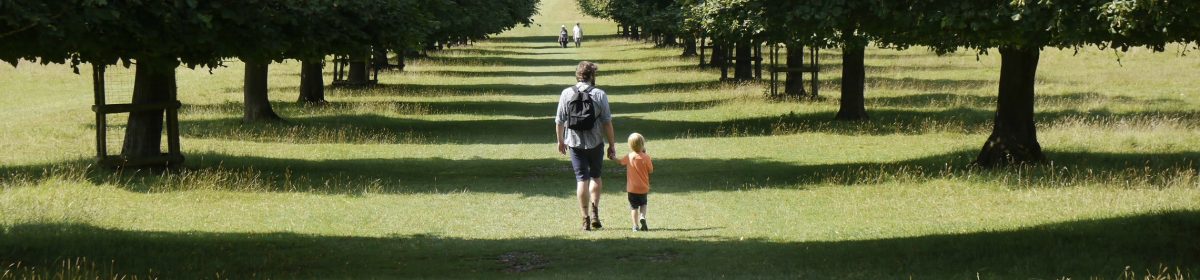
However this isn’t going to be either a dissertation or an evangelistic tract on ferns. What I want to think about in this post is the underrated spiritual practice of attentiveness. When our first two children were toddlers we lived in Hotwells in Bristol, at the bottom of Hope Chapel Hill. We had no car, and bicycles were no use at the bottom of one of the steepest hills in the city, and so we walked up to Clifton to do most of our shopping. The walk would often take twice as long as it needed because the boys were absolutely fascinated by the flotsam that collected in the deep cracks between the cobbled gutters. Theirs was a wonderful non-discriminatory curiosity and included the whole compass of litter from dog-ends to bottle tops, twigs, stones, feathers, ring-pulls from cans, broken bits of plastic, mirrors, bits of string and soggy ink-run love letters and final demands. I always admired them for the joy they were able to derive from simple ordinary things and let them get on with it. My intervention moment came somewhere between dogs turds and dead pigeons and we always had a packet of wet wipes somewhere about us, just in case.
The point of that excursus on why our children should probably have been taken into care is that the process of instilling discipline, obedience and so-called grown up distinctions between right and wrong; clean and dirty; appropriate and inappropriate, interesting and unimportant, are the prison chains of our culture. We all know about the blowhard critic of so-called modern art, shaking their purple wattles and declaring that “any child could have done that!” and it makes me want to weep for the loss of my own innocent eye; the paralysis I used to experience in the face of a sheet of empty paper; the toleration of my subconscious prison warder who said no to every intuition. For years, in my late teens and early twenties I could only write with a cheap fountain pen on sheets of kitchen paper, torn into approximate A4 sheets. The paper sucked the ink off the pen and trapped the thought before it could be crushed by the censor.

Attentiveness isn’t – to my mind – the exact equivalent to mindfulness because although it focuses equally on the moment, it goes further than merely noting the present without judgement but includes a strongly purposive engagement with it. Imagine taking a walk in the woods and purposefully engaging with nature; glimpsing the sky through the trees and reading the clouds for rain; keeping a sharp eye on the plants you pass and looking for anything that’s the least bit unexpected or out of the ordinary – a patch of lighter green; a grass that’s taller than its companions and looks just a bit different; a fern gr,owing like a shuttlecock instead of randomly like bracken; a purple flower that looks like an orchid – but which orchid? a dandelion that turns out on closer inspection not to be a dandelion at all, but something different; the seed head of what turns out to be a Goatsbeard that blows your mind with its intricacy and mathematical exactitude; the little weed with no petals that lives in a gateway and smells like a pineapple when you squeeze it; the bright sulphur yellow butterfly in the early spring; the sound of an owl – but which owl? – at dusk; the heart stopping moment on the riverbank when a hare leaps a fence at great speed within feet of you; the bright red mushroom, flaked with white scales that looks like the ones that fairies sit on in children’s books.
In essence, attentiveness forces you to slow right down because you’re drinking in the sights and smells and sounds. There’s no element of inner struggle to calm the mind because it’s working at full stretch – just not on the stuff that keeps you awake at night. And of course the imagination is working in conjunction with the five senses – looks like; sounds like; smells like; feels like; although I’d give tastes like a miss in the absence of a skilled guide. Attentiveness can become an intellectual challenge too; demanding further study in order to unravel the mysteries.
But the practice of attentiveness also awakens a profound awareness of the sheer beauty of the natural world; so beautiful in fact that it sometimes seems gratuitous sometimes erotic in its sensuousness – and that’s occasionally reflected in the local names for plants. English names, for example of Cuckoo Pint- Arum maculatum are unashamedly vulgar. The ‘pint’ for instance refers not to the standard glass of beer, but to “pintle” – the socket into which the rudder on a boat fits and a Scottish slang word for a penis. Put the two together and you get the reference to cuckoo in the nest and also the allusion to the pintle being – well, in someone else’s nest. Two other local names for the same plant are Preacher in the Pulpit and Lords and Ladies; I hope you won’t need me to explain!
Often when we’re walking slowly we get startled by runners busily breaking records; dog walkers chatting in groups who could walk past a small war and not notice and even botanists who – GPS in hand – rush to the next rarity, missing the beauty of the everyday and the ordinary. But the ordinary almost always turns out to be extraordinary when you take a closer look – especially if you’ve got a magnifying glass. Ubiquity doesn’t or shouldn’t imply not worth bothering with.
A couple of ideas worth holding on to, or better perhaps stealing back from religious orthodoxy are wonder and glory. I think we shy away from them because of their associations or perhaps they make us afraid our friends will think we are a bit mad. Slowing down and practicing attentiveness in nature will almost inevitably lead to that surging joy (which could still be surges of natural endorphins – but so what)? There’s nothing like a good surge of joy for lifting you out of despondency!
And as for the confusing plants …. vive la difference! Below, some finds for today. I recognised the Sea Plantain and the Rock Sea Spurry, living dangerously on a busy path, but as for the interesting brown lump exposed on the rocks at very low tide – who knows? ……. but it was completely fascinating.


