Captured by the spirit of a place

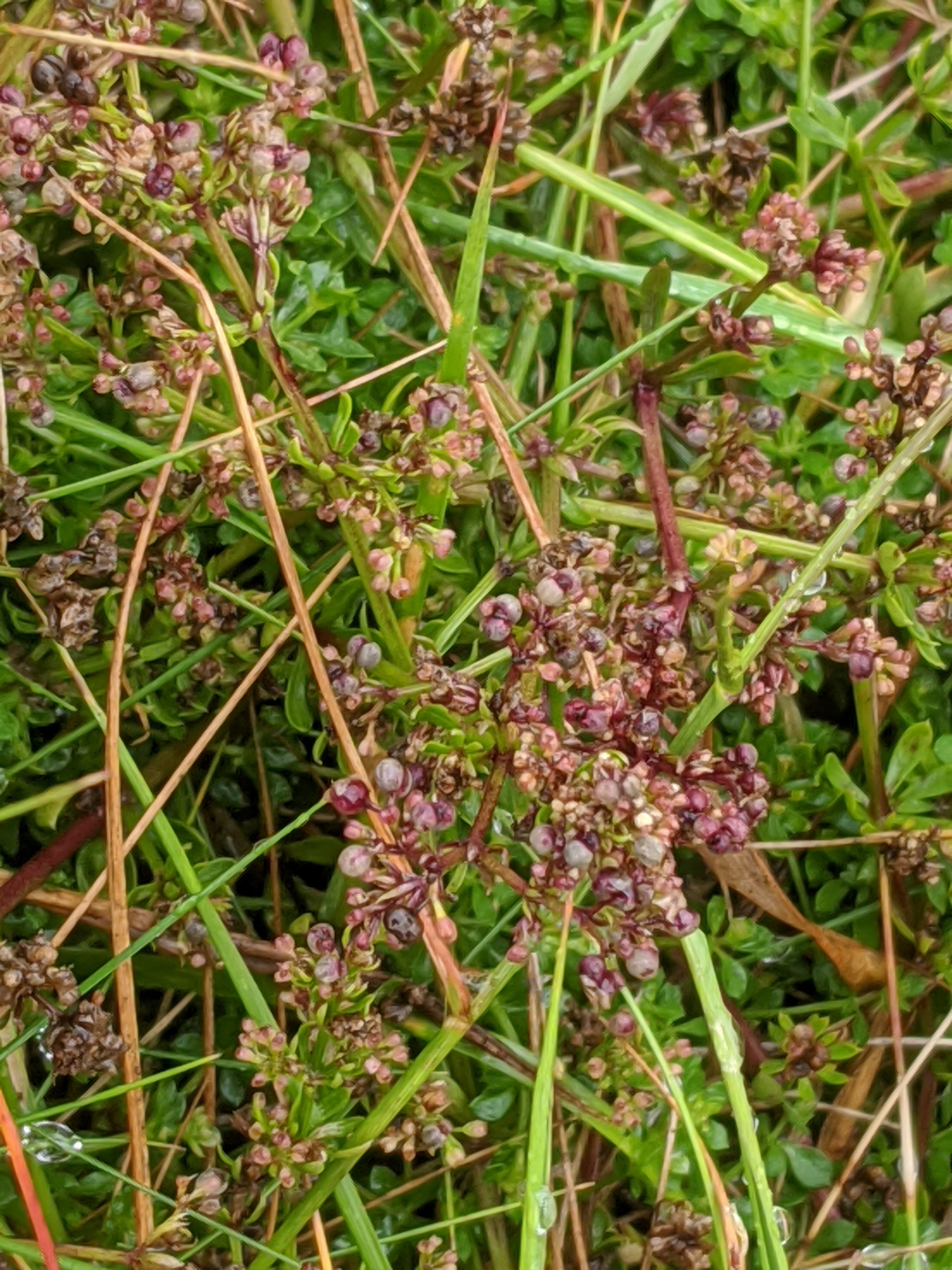
These lead mining rakes could go back to Roman times

Yesterday we drove back from Cornwall. It’s just over 200 miles to the most southerly point of the UK and with the help of a great deal of EU money it’s either a motorway or improved dual carriageway almost all the way down to Penzance. Even with the B road connections at both ends of the journey we can still do the trip – which used to be something of an adventure – in not much over four hours. I’m not a great fan of long journeys on motorways. They seem to lack any sense of where you actually are and for all their rapidity you can still sit in a traffic jam for half an hour while a couple of blokes dig out a flooded drain, negating any time saving. Anyway what’s so important about speed? To me, the feeling of boarding a plane in cold and rain and leaving three hours later it in fierce sunshine and blistering heat is a bit deranged. I once helped an old friend to move some beehives on to the heather on Exmoor and as we drove back we got stuck behind a tractor. “Oh good” he said, “I love it when we have to slow down”.

Anyway, as we came into Somerset yesterday the satnav chuntered away about delays on the M5 (there are always delays on the M5) and suggested an alternative route. I’ve never done it before but yesterday I thought – let’s give it a go and see what happens. So we followed the instructions and minutes later we entered the real world after three hours of tooth grinding boredom. The new route took us across the top of the Somerset levels by Brent Knoll which I’d never seen so close before, and onwards, passing a view of Cheddar Gorge which showed it off to perfection and then to the north of Blackdown passing Rickford Rising where the rain that falls on Blackdown emerges after travelling through the limestone rocks. Past the bottom of Burrington Combe, and into the villages of Blagdon, Compton Martin and West Harptree before crossing the reservoir and into Bishop Sutton. If we had any sadness at leaving Cornwall, this was a serendipitous reminder that many of our happiest memories are vested in the Mendip Hills.

I fell in love with the Mendips when I was seventeen and was introduced to caving by being taken down Swildon’s Hole. It was an awesome experience and emerging cold and wet after hours of scrambling through the cave the first breaths of Mendip air were always sweet. Madame never took to it and so my underground adventures were curtailed, but before we got together I would go up to Blackdown with my closest friend Eddie and explore the easy caves with – occasionally – reckless abandon. Our biggest problem was getting someone with an interest in getting cold wet and muddy who also had a car and was prepared to take us. It was rather like the inevitable compromises that aspiring bands have to make in seeking a half-decent bass player. Luckily, Madame liked walking up there and once we’d got an old Morris 1000 pickup she grew to enjoy hunting for plants and fungi; so we’ve thrived on Mendip air for many years.

I love Mendip, I love Cornwall, in fact I love almost anywhere with a complicated and even ancient industrial history that’s been overgrown by time. Although there’s almost no trace of it now, I was born on the edge of the Bristol coalfield. There was an elderly retired miner just up the street and I can remember passing the open cast mine at Harry Stoke when it was still open. Eddie and I used to play around the capped pithead of Parkfield colliery near Pucklechurch and the local hospital was named after Handel Cossham an unusually kindly mine owner, lay preacher and benefactor so, I suppose that laid the foundation for my inner landscape. My interest in plants that can survive in post industrial landscapes was born, like the passion for the old dramways (notice the soft mutation you linguists!) – in childhood. The moment I find one of these places I feel at home – whether here in Bath, or on Mendip or in Cornwall – I know where I am. Perhaps that’s why I love South Wales and its people.

I don’t know if all this explains how the Mendip Hills captured me, but the fascination wasn’t something I picked up late in life; it was there from the earliest days and I only had to stumble into it, almost by accident, to find myself there; to feel integrated (if that makes any sense at all). So here are some photos of the Mendips, of Velvet Bottom (who could resist that name?), Longwood valley, Black rock quarry, of high Mendip and Priddy above Swildon’s Hole across to Blackdown and Crook’s Peak which you’ll recognise as you blast down the M5 south of Bristol. Trust me – the walk up there beats arriving anywhere ten minutes quicker.

This isn’t just a landscape

Had the strangest experience last night as I settled down to identify a grass that I’d gathered on our walk to Sham Castle (yesterday’s posting). There must have been something about it that caught my eye, because when I opened the polythene bag that I carry around with me – just in case – there was another identical sample inside that I’d forgotten about. So why was this particular species of grass- which turned out to be (I’m pretty sure) common bent – Agrostis capillaris – speaking to me so loudly?

If you’ll allow me a tiny digression, the microscope has been a wonderful help with grasses, but also with random bits of unspeakable things like earwax which turn out to be pretty interesting as well! Anyway, the bent grass, to get back to the point. The thing about it was that it seemed to be carrying an inordinate amount of emotional freight with it. The pursuit of grasses has been as much an intellectual challenge as anything else. I’m trying to know them well enough to identify them confidently, simply because I was challenged by someone I respect greatly and I love a challenge.

So on the microscope I went through the increasingly familiar routine, much helped by the BSBI webinar material, and then keyed the sample out and there it was; one of two possibilities and in the end I plumped for common bent. And that might have been the end of the story if I hadn’t been mulling it all over in the early hours of this morning during that half awake, half asleep time that’s so full of lateral thoughts and unexpected revelations, and it became clear to me that I needed to go to Rodway hill.

If it weren’t for Rodway Hill, or Rodway Common as it’s also known my life would have been radically different. It was a place of powerfully charged moments. I had a strange, almost religious experience there as a young teenager when I once laid down on the grass and moments turned into infinite time. It was the first, but not the last of my experiences of what came to be known as the oceanic state. At a much more mundane level it was the place that Rogers’ Fair set up one warm summer evening and I first heard the Everly Brothers in a moment charged with eroticism, generators and diesel fumes. It was there with Madame that we once gathered 40lbs of blackberries with which we made dreadful chutney. It was where I went to school and it was the view from the window that sustained me through hours of tedium. It was the territory of my adolescence and so everything about it must have become charged with significance. And the common bent had something to do with it and so I dragged Madame over there in torrential rain this morning to get some photographs and to track down the ghostly presence.

It was a pretty scary experience – I felt a bit silly chasing down the bizarre idea that I am somehow connected to that landscape. Even as we set out I was wondering if the landscape was acting as an immaterial hard drive; if it could be possible that some of my memories were held there waiting for me to reclaim them. But however mawkish and stupid it might sound, the moment we set foot on the common they were there waiting for me.

I’d already done a bit of research into the surface geology of the area and I couldn’t find any real connection between the calcareous soil up on the Skyline walk and the mildly acidic soil on Rodway common, but either plants don’t read textbooks or they’re far more adaptable than we think, because there was the grass, the grass I once laid down next to and lost myself; the grass through which the wind would flow with a silvery kind of sound if you listened carefully enough. But there was more, because the harebells were still there and then in a proper flow moment I found woodruff – Galium odoratum one of the bedstraws and what I think was blinks – Montia fontana which I can’t remember ever noticing before. The gorse and the bracken were all there in abundance too; despite being surrounded now by a six lane circular road and thousands of new houses but the school and the common have survived. It was an extraordinary moment – to be there in the rain, reconnecting with my very young self and being able to name at least some of the plants that had lodged in my unconscious mind.

Of course the downside of the avalanche of feelings and memories was the thought that I might have been a complete weirdo as well, but there we are – Madame must have found something tolerable in me, (although she occasionally reminds me about her patience and forbearance in staying put!).

But if anything comes out of this strange day, it’s the extension of the notion of hefting that I’ve written about before. As I looked across the common, which is smaller than I’d remembered, I could see in an instant that the landscape is marked by what the Mendip people call gruffy ground. For whatever reason, whether surface mining took place there? – since it’s within the South Gloucestershire coalfield and there are records of a coal mine in Mangotsfield; or perhaps quarrying for stone? – all the local walls are built with that kind of sandstone, or whatever other reason. It doesn’t matter. The poor soil, delicate grasses, the pockmarked ground have become a sort of default in my mind and in the most peculiar way they hold me and I still seek them out like a sheep turned out on to the hill in the summer. Everything changes and nothing changes.

On the way home we took a detour past my old home which, ironically, is at the other end of the Bristol Bath cycle path; the other end of the same old railway line that still passes today. It looked much the same with new windows. Mr King’s allotment which was at the bottom of the garden over the tunnel entrance is now completely overgrown but can never be built on. No-one will ever re-create what he did, an old retired miner who would walk five or six miles to Parkfield in the morning and walk halfway home underground; his allotment was the paradisiacal vision that drives the Potwell Inn.

The thick history merry go round

IMG_20191220_161351
Roman, medieval, Georgian and modern in one picture

Since Willsbridge Mill (Saturday 25th, ‘Joining the dots’)  – I can’t get settled. I’ve been living on online searches, in books, photographs and maps of the hundred or so square miles in which I’ve lived the greater part of my life and it’s a truly immersive experience. The great thing about a blog is that no-one expects it to be great literature unless it’s a Joycean kind of stroll through the weather of life. Aside from taking out the odd word, turning it in my hand and either discarding it or giving it a bit of a polish and setting it back in the wall, I don’t anguish too much.  It’s obsessive, for sure but only in the sense that it sharpens my collector’s instinct, and so I carry a notebook and a phone camera to record the things that strike me. If there’s any sort of metaphysic behind the Potwell Inn it’s the fact that I believe there’s nothing more extraordinary than the ordinary, the old William Blake poem that urges us:

To see a world in a grain of sand. And a heaven in a wild flower, Hold infinity in the palm of your hand. And eternity in an hour.

That’s just about it.  I call it Muckyannydinny Lane, the place where everything and nothing happens.  Where the ordinary is suddenly but never more than momentarily revealed and sets up its home in the imagination. Not great thoughts but the pocket lint and bus tickets that accumulate on our journey. 

But sometimes, the ordinary of  “today, here, in this place”  is inflected by an intuition of the history.  The thin, linear description of the way things are around here suddenly thickens – as it did when I wrote about the South Gloucestershire Coalfield and mentioned Handel Cossham’s name.  As I typed it I remembered Brandy Bottom, the pit he owned, and which was joined underground to Parkfield, the pithead where I played and sometimes peered down the shaft to see hart’s tongue fern sprouting from the walls into the gathering darkness. Cossham built a hospital and endowed a community hall, but he employed children – small children – to drag the coal trucks to the bottom of the shaft in the confined spaces of the mine. I went looking for Brandy Bottom a few years ago and found the abandoned buildings almost covered with ivy.  It’s being restored now – “The most perfect remains of a Victorian mine in the UK” – they say, but I was haunted by the ghosts of those children. As I stood there, transfixed by the thickening of the air, I knew that in some dimension the old mine was still functioning, the children were still there, pale skinned and blackened with coal dust. Children were even cheaper than ponies in those days. The practice of using them wasn’t ended because it was wicked in itself, but because the Victorian moralists thought they might get up to things, wicked sexual things down there in the darkness. Seems like Victorian thick history was different from mine. 

And so the landscape here has suddenly deepened to include what’s beneath;  the coal measures and the wealth and cruelty they created, the surface farmland which has become the scene of another, later, despoliation under intensive farming, and during which – since my childhood – whole species have disappeared, and then above the fields the atmosphere which has become so polluted by the burning of hydrocarbons that in summer, during prolonged sunny periods, a yellowish photochromic haze forms. 

Here in my imagination today I might easily see a steam train running in to Green Park Station across the river.  I might encounter Mr King, the retired miner, walking back from Parkfield before it closed in the 1930’s, and making for his allotment above the railway tunnel at the end of our garden. I might see lapwing in the fields, or pass a horse and cart taking milk or cream down to the station incline.  And does this inflected, ‘thick’ sense of being human intuit the future as well? What’s going on there beneath the bright surface of the present? It’s like fishing. You have no idea what’s going on beyond the reflections on the water aside from experience of how it was before. You might see the float bob, or sense a tug on the line but it might be caught on a shopping trolley for all you know. 

Last time I fished here, in thick history, I think to myself –  humans were selfish, greedy, unfeeling creatures who found it hard to accept responsibility for their actions.  Is that the future? We were all raised on the idea that the industrial revolution had brought us into a new age of prosperity but it never occurred to us that we would suffocate in the fumes of its success. Handel Cossham lives on, but his mines were sold in 1900 and his money is probably invested in India or some other place where the state doesn’t take much interest in poverty or child labour; and the supreme gold-standard irony is that we came to believe that the industrialisation of the Southern hemisphere was a kind of human right.  That the poor people of India deserved the right to be evicted from their farmland so that more factories could be built, more wealth extracted from the earth – because it was better for them to live in megacities scratching a living on rubbish tips.  

We have seen the enemy – it is us