Going green – ish

Back on the Potwell Inn allotment, we’ve reached peak runner bean and courgette mountain time; not that I particularly mind because there’s no finer meal than a bowl of runner beans with a bit of grated cheese on top – Gruyere turns it into a gourmet meal but Cheddar works perfectly well. The courgette mountain can be very challenging because they have the gift of hiding under the foliage until they’re a foot long and almost unusable. We have several of them and I’m trying to figure out a suitable stuffing – vegetarian for preference because I’ve never seen what the point of putting sausage meat into a marrow might be. A strongly flavoured herby rice would work I think. But it’s miles better to harvest them young and full of flavour, before the seeds develop. I love them sautéd with a splash of lemon juice instead of salt. I’ve never liked the sprinkle of chopped parsley on top, it’s a herb and its place is in a side salad. Neither do I bother with all that salting and washing lark. Clearly there was a time (in the olden days?) when courgettes and aubergines were inclined to be bitter but not now, they’re much too well bred. If you want to stop them from turning into a mush, sauté them fast in blazingly hot oil and you get the brown edges as well as the full flavour and texture plus the excitement of setting off the smoke alarms – it’s a win-win.

So we are slowly turning green in several senses of the word. This is the time to become a vegetarian because you can eat a huge range of fresh, locally sourced and organically grown fruit and veg, and a lot less industrially produced meat. Good for us and good for the environment too. We’re not doctrinaire vegetarians here at all, but we eat less and less meat, and I can see a day coming soon when the minuses add up to a tipping point, but going a step further into veganism would be a much greater challenge, and intensive vegetable farming has its own ethical and ecological difficulties of a different kind and so we’re plodding down a middle path and hoping that sustainable, organic, high welfare mixed farming can provide milk, eggs and cheese alongside arable crops. But if the environmental crisis continues unabated then we may not have the luxury of that option any more and then my biggest fear is that the industrial food processing industry will seize the opportunity to flood the market with more expensive junk food.

Also on the allotment we’ve had loads of invertebrate visitors, two of them were butterflies, a gatekeeper and a speckled wood, that flew by yesterday and posed for me along with the whites, the red admirals and a tiny little shy one that flew away every time I got close – which didn’t. Previously I’d written about the suspected Jersey tiger (moth) that took a break on the kitchen window. I posted it on the Bath Natural History Society Facebook (Nature Watch) site and attracted a cluster of comments about whether I’d got the i/d right. It’s a bit rare in this part of the world, but it seems that as global heating increases it’s moving northwards.

However I’d underestimated the competitive instincts of (some) lepidopterists and was quite surprised at how hard I had to fight for my record. In the end, after a couple of heavyweights took my part it was allowed – or at least I’ll feel brave enough to send it to the County Recorder for verification and a puff of smoke up the gabled chimney. There’s no moral virtue in accidentally bumping into a rarity but somehow I felt as if I didn’t deserve to spot it! In the end, though, it was a very beautiful moth and after our discussion of minute details I reckon if it ever comes across my path again I’ll be able to identify it at twenty paces, and since I thoroughly enjoyed the scrap too, a good time was had by all.

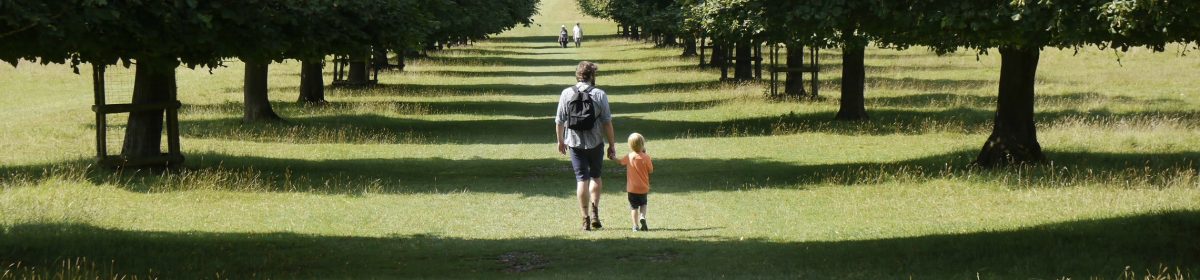
Today we added another part of the Skyline walk, which involved yet another stiff climb up the hill to the south of us. As ever the access to the route allowed us to shortcut along the canal, avoiding the city centre which is more crowded than it has been for months. We spotted the resident heron perched opposite – too far away for a decent picture but I took one anyway. Later we dropped in at Sham Castle, with fabulous views over the City and then looped around the top of the hill, through the University and down Widcombe hill – about seven and a half miles in all; a decent walk.

The hidden killer lurking on the allotment ….. ?

If I dare make a prediction, I’d say that very shortly seed merchants will be inundated with anxious emails about courgettes. Now I know that some regular readers will think this post is going to be about one of my dreams, but this is a totally genuine, ram-stamped fact, up there with all the other googlefacts we love to share with our friends. This one arrived on our allotment facebook page having been copied there from another allotment group facebook page and possibly copied there from somewhere else. It’s a friend of a friend story if ever there was one, but it’s got all of the basic constituents of a viral folk panic. The facts are sparse, but someone, somewhere ate a meal containing allotment grown courgettes. It was, they said, desperately, unbelievably bitter and so they didn’t finish the meal but threw the remains into the bin. Later that night they felt dreadful, suffered from sickness and diarrhea and got on to the dreaded internet where they self diagnosed poisoning by courgette. Unsurprisingly the diagnosis did not impress any of the emergency doctors they consulted by phone, but the last advised them to go to A&E where the doctor also said he’d never heard of it but he’d go and look it up. Having done so he advised the patient to go home and rest.

Anyway, this story has now reached Bath and I was curious, because it’s the first I’ve ever heard about killer courgettes. A quick search revealed one (yes one) verified death in Heidelberg, Germany – five years ago, when a 79 year old man polished off a plate of courgettes that his wife wisely refused to eat. The toxin in question is called cucurbitacin and it’s a natural constituent of cucurbits (there’s a surprise) – plants like cucumbers, gourds and courgettes – and its there because its bitterness repels herbivores and insects. In fact nearly all the useful chemicals we derive from plants are there for much the same reason, and there’s plenty of evidence that these bitter components are good for us, but only in very small doses! In Mediterranean peasant communities, the gathering and eating of bitter herbs in spring is a deeply rooted ritual.

I also recall that in the past we were advised to fertilize cucurbits in the garden by transferring pollen from the male flowers to the female ones with a paint brush “to avoid bitterness”. This is an important clue, since cucurbitacin is insanely bitter, and plant breeders have gone to enormous trouble to breed the cucurbitacin out of their plants because the customers won’t buy them and certainly won’t eat them. The danger is that many of the decorative gourds have been selected for appearance alone, because they are not eaten. So – for instance – if you grow fancy gourds in the same bed as your courgettes you may well get a hybrid and very bitter courgette. If then you are a seed saver as well, then your saved seeds will be of the hybrid type and will therefor produce more bitter offspring. You could probably go for several lifetimes and not be unlucky enough to encounter an intensely bitter courgette, but the sensible advice would be

  • Never to eat anything you’ve grown if it tastes terrible.
  • Don’t mix ornamental cucurbits with ones you’re going to eat.
  • Be especially careful only to pollinate plants for saved seed under controlled conditions in a greenhouse ( or under insect netting perhaps) to avoid random pollinations from elsewhere on the site..
  • Don’t re-post alarmist rumours, you’re in more danger of being struck by lightning.

Does that sound a bit bossy? Well it’s true, I think that substituting fears and rumours for hard evidence is one of the less attractive features of the internet culture. I’m not against science; I’m against bad science. I’m not against seed merchants but I am certainly cautious about genetic modification. Neither am I against farmers – just for the record – but I am decidedly against intensive chemically driven agriculture because the scientific evidence shows us how dangerous it is.

Enough! The low pressure that has depressed us all is moving off eastwards and the sun even shone for a couple of fitful minutes today. But the temperature definitely went up and the humidity went down and that’s just what our plants need. The last thing we want is an outbreak of blight. Madame is cooking ratatouille in the kitchen – and here’s a confession – until last year I loathed the very sight of courgettes. They always seemed to turn to some kind of primal gloop, and as for aubergines and what I came to speak of as “rat”, I would rather have eaten a dish of pure cucurbitacin. So when I came to writing this piece I couldn’t find a single photo of a courgette anywhere in my bloated collection of 17,000 photos – and I had to go and take one on the allotment. But last year I suddenly discovered that it’s not the vegetable but the way you cook it. I think I had been traumatised by a ratatouille that was cooked on a campsite by a friend, and which was infusd by the rich aroma of methylated spirits and reduced to the kind of texture and consistency we see on the fire escape steps when the students are here.

Anyway, and moving on. Madame paid me a great compliment today when she compared my writing with one of our favourite writers. The compliment was diminished slightly when I realized that being compared with a totally forgotten 1930’s writer had something of an edge to it, but it cheered me up nonetheless.

And the enforced extra visit to the allotment to visit the courgettes was made golden by stumbling on the basal rosette of a guaranteed (Poland and Clement – “Vegetative key to the British Flora”) – common ragwort which perfectly demonstrates what a lyrate-pinnatifid leaf looks like. A picture is worth a thousand words, and I’ve decided to make it my weed of the day. Even more gloriously, the process of finding all that out introduced me to the entirely new world of the white tipped hydathode. I probably should get out more. Madame would agree!