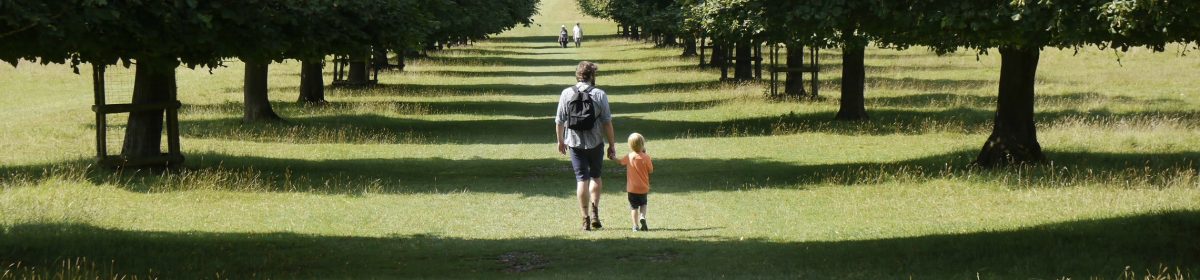
A bit of a Marienbad moment in Gloucestershire.

The floow deer herd is back out in the park

After all the drama of repeated heatwaves, the weather has finally returned to relative normality and we’ve been rejoicing in the rain. We’ve had a few big thunderstorms but surprisingly in spite of very heavy rain, only the top few inches of the allotment were wetted adequately. We’d prepared the ground by emptying the waterbutts at the end of the last hot spell, hoping they’d refill – but then, when it was too late, I discovered that the gutter on the shed had come adrift of its mountings, leaving the water to travel uphill. Looking more closely I could see that an inexpensive redesign would capture rain much more successfully. The two butts on the greenhouse were working better but again the gutters are pitifully small and don’t cope with precisely the kind of downpours we most need to store.

This summer we came very close to giving up the allotment together. The hard work is OK but this year with Madame’s knee replacement and me visiting just about every department in the local hospital we ran into a wall. Happily, with just a couple of minor procedures still to do, we’ll be back firing on all cylinders by next spring, which just leaves the results of several months of neglect to sort out. The battle is 90% mental but for the first time in months it feels like we’re winning. It hasn’t all been bad on the allotment. The soft fruit didn’t do well at all but the fruit trees – apples, pears, damsons and plums have all yielded record returns. Even the poor old potatoes managed to give us a half-decent crop after the dry conditions, and the newly planted raspberry canes are thriving. Last night we ate our own potatoes, runner (string) beans and chard with stewed plums for pudding. Allotments are very friendly places, and it’s rare not to exchange surpluses with our neighbours. It seems to me that the allotment looks after our bodily and spiritual needs while certainly my intellectual (mind) needs are well catered for by plant hunting and studying their habitats and habits.

Anyway we decided to give ourselves a day off on Monday and we took ourselves over to Dyrham Park which we haven’t visited over the summer because it gets so overcrowded. Actually that’s not quite true because we made a couple of early visits to White Field to search for the orchids. At this time of year the pasture is cut for hay and normally we’d turn our attention to fungi, but apart from one fairy ring (Marasmius oriades) there was nothing much to see.

Black Worcester pears on a southwest Facing Versailles espalier

Anyway we wandered down through the terraces and visited the formal gardens which (sorry no photo) have matured brilliantly. We were a bit dubious when they were first laid out but now they look lovely. On the outside wall of the big house there is a fabulous example of espalier pruning which we were lucky to have explained to us by the head gardener a couple of years ago. This Versaille method is based on very short fruiting spurs, but by doing this he explained that you could take the espalier to a larger number of tiers. He’d spent some time actually learning the method in Versailles.

Crataegus orientalis

Below the formal garden we walked around the large pond which was choked with blanket weed and then onwards to the small pond surrounded by mown grass with its own waterfall. It was crystal clear, and we bagged one of the seats and sat quietly watching the other visitors. Then, inexplicably, we both said exactly the same word – “Marienbad”. Couples standing still, casting shadows, nor speaking – a kind of freeze frame – and I thought how I’d first climbed over the wall to the park something like 65 years ago, long before it was turned over to the National Trust. We’ve ridden horses there in the 1970’s and spent many hours cycling back and forth between Bristol and Dyrham to visit friends.

There’s a question that often gets asked.“What would you say if you met yourself at the age of 14; what questions would you ask?, what advice could you give?” and sitting there in the warm sun, I felt that there was no need for any kind of meeting. We were, in the deepest possible sense both there! connected in an almost surreal sense every version of “me” over the years, sharing the same moment. It was very beautiful.

Later, after a glass of apple juice and a shared sandwich, we wandered up the quieter back route to the top alongside Sands Hill, passing at the very bottom a rotten tree trunk which had been left available to house and feed every kind of wood boring insect. The photo shows the human palace lurking behind the insect paradise.

I was going to shrink this one down, but changed my mind

As we climbed steeply upwards I stopped to record a couple of everyday trees and soak up the view of a small stand of very tall pines. Then. right at the top we met a couple of volunteers who said that there was a group of deer just beyond us. The whole herd had to be slaughtered due to TB three years ago, and although we knew they were being replaced we’d looked in vain for them in their paddock. Then suddenly there they were; four larger stags and a young one which we could hardly see. We looked at one another silently, deer and humans, without fear or hostility. I think two magic moments in one walk is more than any of us have the right to expect.

This bus is much shinier than it was when I drove it!

One of the odder reasons love Agatha Christie films and other 1950’s costume dramas is because there’s always a chance that they will feature my old bus, and after a bit of a hunt on the internet I found it restored, repainted and looking very fine indeed. I have a very strong connection with this exact bus (the little one in the picture), although when I drove it for three years it was hand painted in cream and brown and beginning to look a bit scruffy as it had already seen 25 years of service at Clifton College, transporting mud-caked boys from Clifton to Beggars Bush where the sports field was. After art school there was no prospect of any paid work and so I went to Clifton College and Madame went to Wills tobacco factory – which she hated – and then got herself the perfect job at Long Ashton Research Station; the horticultural department of the university in which she thrived. There’s a link here that gives a much fuller account with pictures of the original wooden slatted seats and the unbelievably rudimentary dashboard. Just click above and you’ll find it.

I went for the job and was interviewed by the Bursar to whom I lied about my qualifications, or at least told a half truth in that I did have some O Levels but failed to mention the honours degree bit. He asked me if I’d ever driven any larger vehicles and I said I’d driven a transit van and that was it. He shook my hand and said I’d be fine and off I went. On my first day I noticed an empty greenhouse and asked about it. Trev, the boss, said that my predecessor had filled the greenhouse with plants but just as they were coming into flower he’d come in one night and cut them all down and taken them away. Well well, I thought, this is going to be fun. I was to be a half time groundsperson in the mornings, tending the playing fields, marking out the pitches and helping out with the workshop where the brilliant but irascible mechanic, Geoff, would curse, hammer and repair our collection of old and worn out machinery. We once completely dismantled and rebuilt a Massey Ferguson 35 tractor; repaired a damaged Barford roller by replacing its piston rings with some taken from a Vespa motor scooter. The other half of my job was driving the school buses. They were beasts with crash gearboxes and frankly underpowered for dragging 25 schoolboys up from Avonbank on the river where they rowed, back to Clifton. I had never seen a crash gearbox before and so my first trip up Park Street from the river was conducted very slowly in second gear generating a huge traffic jam. The trick was to match the speed of the gearbox with the speed of the engine. If you failed to get it right the gearbox emitted fierce grinding noises and refused to engage – so when changing down from second to first there was a danger of rolling back and crushing the car behind. Changing up a gear was a bit easier because you declutched once, paused for a moment for the engine to slow down, declutched again and with a brief prayer the gear would engage like (as we used to say) greased weasel shit. This was the famous but these days unknown skill of double declutching which has gone the way of quill pens and longbows. There was a small team of retired Bristol Omnibus Company drivers who joined us in the afternoon because they knew how to change gear. I remember one, called George, with great affection.

My other workmates were the boss, Trev, who rum tum tummed and pom-pommed under his breath constantly; smoked his pipe and taught me the weeds which plagued us on the fields because he would never mix sprays to the recommended strength since he maintained that the manufacturers exaggerated the dose to make more money. Consequently we made our contribution to the development of weedkiller resistance among Speedwells and the infestation got worse and worse. In the summer I would mow the fields, pulling a gang mower behind the little Fergie and pausing frequently to acquire the beginnings of my field botany skills. In the winter we’d maintain the equipment and (favourite job) lay the boundary hedges and warm our hands on bonfires of prunings on frosty days.

Chubby was my other work friend. Indeterminately old and wily with withered skin over a foxy face, he would carry a brown paper bag in his pocket with as much as a couple of thousand pounds in it. He was notorious as a wheeler dealer and was reputed once to have bought a small herd of cattle off the field and resold them the same day without even moving them. Stories about Chubby included the time he sold his shoes at a dance, and I almost killed him once when we we felled a large tree. I was wielding the chainsaw and he was driving the tractor with a tensioning rope which I was convinced was too short. It was too short and when the tree came down Chubby was enveloped by the branches. Miraculously when I rushed across he was still sitting on the Fergie, laughing and completely unscathed. Chubby had a bit of a secret life, we all thought, but since the name of a well known Bristol criminal was attached we just included it in life’s rich tapestry.

Over the years I’ve worked with some proper characters and kept it all close but learned so much of great value. One of the best lessons I learned over the years is that real people stab you in the front when you get out of line. It’s the polite middle classes who stab you in the back!

Anyway, back on the allotment I’ve forsworn heavy exercise in theory at least, and today I cleared a bed of potatoes, with a few rests, panting and leaning over the refilled pond. It was a delight to discover that all our efforts at feeding the soil with compost has rewarded us with a smaller than usual but still useful crop of potatoes, and it’s true what they say; compost really does hold the moisture and after a three month drought there was still a perceptible trace of moisture in the earth. This season has focused all of our minds on water and as this is also the time for planning next year’s projects I’ve been wondering about taking out two of the compost bins which we don’t use properly and substituting one of those 1000 litre polythene water tanks to increase our stores to 2,250 litres – because it looks very much as if droughts are going to feature large in future.

And just to finish, we installed the trailcam again this week and captured a lovely image of a badger hunting sweetcorn in the night. He’s also done us the favour of digging over our wood chip paths in search of roots and grubs. Good luck to him, I say!

Badger on allotment

Hello stranger!

I think I must have some kind of aura that encourages complete strangers to come and engage with me. I’m not claiming any supernatural powers here, just the very ordinary skills of getting alongside people. I’ve spent hours on empty railway stations listening to very troubled people (more often than not, other men) who just want to unburden themselves. Maybe it’s my general scruffiness or perhaps because I seem not to have my head stuck up my arse and so I represent the unthreatening type. I’m short and a bit overweight and only Madame could see my gleaming virtues – and that’s not all the time! Funnily enough I was just typing that sentence and the doorbell rang. It was a young delivery driver and as he helped unload our groceries he opened up at length about his sadness that his army career hadn’t worked out as he hoped.

But this gift – if you can call it that – seems to be extending itself to plants. This year I’ve spent hours and hours searching for different species of fleabane. I’m ashamed to admit that I was provoked by the sheer competence of our County Recorder – call it the positive side of envy – and decided that I needed to get my head down for some serious plant hunting. So far I’ve found five of them, four of which I’ve found the jizz for – that’s a term birders use to explain how they can identify a peregrine falcon diving at 60mph without thinking about it. But having done all that work; photographing, measuring (size matters) and even buying a couple of second hand books, blow me if one of them didn’t pop up on the allotment next to ours. We’ve had Peruvian apples, rare fumitories, stone parsley and bullwort all dropping in to say hello and this week after an eighteen month stalking of a Hungarian mullein on the canal, two of them popped up on other allotments on the site and I’ve no idea why, except for the absence of herbicides and a general aversion to tidiness. It feels as if they’re coming to me for a friendly welcome.

Plants are surprisingly mobile and some – like my fleabanes betray something of that in their names; Canadian, Mexican, Argentine and Guernsey – usually referring to where they were first found. But some also are brought in by the plant trade and another one I saw this week – an Eastern Catnip – moved from Eastern America to a nursery near us and then strolled across the towpath to set up shop in a crack in the pavement. As I’ve recorded all these migrants it’s clear that words like “native” need to be taken with a large pinch of salt. Even the sycamore is a bit of a boat tree, brought in from overseas, and the Sweet Chestnuts here and in the mountainous parts of France and Corsica were probably brought there by the Romans and have now embedded themselves in the “local” cuisine. Those who carp on about strangers and foreigners should obviously get a life and stop prowling suspiciously around the subject like a goat meeting an unfamiliar food for the first time. Looking back to some arcadian ideal time forgets that Britain (or if you really must – “Ingelland” could as easily be described as a desert, a sea or an ice sheet and the original inhabitants coming from almost anywhere in the world, east of Greenwich. We’re all more or less foreigners here; on this “septic isle” as William Connor of the Daily Mirror once described it back in the days when the Mirror was a proper newspaper.

Anyway that’s enough nostalgia for a bank holiday weekend. Things have been happening on the allotment at the dog end of one of the worst growing years we can remember, and after Madame staged a major rebellion when the idea of packing it in was mooted, we’ve been back on the job non-stop, clearing the ground ready for autumn and winter. I was watering the borlotti beans this evening when I realised that one of the key arguments in favour of gardening for improving mood is that caring for just about anything seems to release a flood of endorphins into the blood. The feeling of warm satisfaction I get when I’ve given some time to listen to someone is almost identical to the feeling I got tonight watering the beans which were looking a bit sorry for themselves. Today we filled the pond, weeded the fruit bushes and I fed and mulched the summer raspberries after giving them a good soak. We rarely talk while we work, but it’s always good to be there. There’s a lovely biblical image about being at peace that goes

Everyone will sit under their own vine and under their own fig tree, and no one will make them afraid,

Micah 4:4

As it happens we have both a vine and a tall fig tree next to our plot and the heat this year has yielded a bumper crop. It’s been good and the good is invulnerable to the evil we see day by day on in the media.

Purple Loosestrife

It’s difficult to sort out the rogues: a rather abstract question.

28th July 2025

The Monmouth and Brecon canal today

We’re back next to the Monmouth and Brecon canal in the campervan and today, walking towards Brecon we noticed that the canal is a tad shallower than usual; so much so that boats passing in opposite directions need to take especial care not to ground themselves as they move to the side. This is the place where I saw my very first Kingfisher in the 1970’s and since then we’ve camped here, paddled up and down the canal in our kayak and walked the towpath in winter frost and summer heat. Spring is the most exciting time when the banks of the canal are alive with emerging wildflowers. It’s a truly inspiring landscape – rich and still diverse with flora and fauna. Last night, over the hedge, we heard a man exclaiming to his child “look up at the tree, there’s an eagle sitting there!” In all probably it was the Osprey that’s taken up residence nearby. Hearing the man’s excitement was almost as good as seeing it for myself.

There’s a reason for the low water level and it’s a dispute about water abstraction from the river Usk which runs almost alongside the canal, and it’s between four principal parties; Welsh Water, the custodians of the river Usk, and the Canals and Rivers Trust who are now obliged to pay ÂŁ1 million a year in what you might call ransom money to Natural Resources Wales whose explanation of what they actually do with the money boils down to “because we can – it’s really expensive collecting all these tithes!”.

The other litigants are the multitude of smaller environmental groups who love the river, love the canal, and the businesses which bring millions of pounds from tourism in the area and the farmers who can’t grow our food without either rain or irrigation. It isn’t a surprise that there’s a shortage of water; well not at least if you’ve read a newspaper since the middle of the last century or stepped outside your front door in the last three or four years. Droughts, heatwaves and then fierce storms are the symptoms of global heating and we’ve known for decades that this time was coming. Decades during which we could have prepared for an entirely new kind of climate.

It’s widely thought that much of the Usk water being abstracted from the river Usk is now being diverted to depleted reservoirs in order to maintain the water supply in South Wales. I did a quick Gemini search and came up with this answer about pollution incidents involving Welsh Water and here it is:

Natural Resources Wales (NRW) has recently reported that Dŵr Cymru Welsh Water was responsible for 155 pollution incidents in 2024.

This figure represents a significant increase, being the highest number of sewage pollution incidents in a decade, and a 42% increase in incidents over the last ten years. Of the total, 132 incidents were from sewerage assets and 23 related to water supply. Six of these were classified as serious (category one or two) incidents.

NRW has expressed serious concerns about the deterioration in Welsh Water’s performance since 2020 and is demanding urgent and fundamental changes to their operations. They have also pursued a number of prosecutions against the company for various pollution offences.

So the canal is being held to ransom and the river Usk is still being depleted by Welsh Water which – astonishingly – isn’t run by greedy venture capitalists but as a non-profit distributing community asset which is supposed to apply all of its surpluses to improving the environment and resources. Needless to say Welsh Water hasn’t done very well, not having built any reservoirs or, evidently improved its sewerage processing plants. The great and good appear to be standing around wringing their hands and whining that they’d like to get their hands on the people who did this. If they’d like to email me or any of the millions of fuming customers I think we could point them in the right direction. “We have seen the enemy; it is us!”

So inevitably someone will argue – it’s not the fault of the water companies if demand outstrips supply or if, as in the case of sewage supply exceeds capacity. Let’s be frank, there are a multitude of government agencies whose whole raison d’ĂŞtre is to plan, to supervise, to administer, to anticipate demand and to sanction the organisations under its supervision when they fall short. We, the great British public (I could have said unwashed), pay these agencies to do those jobs that can only be done at all at a large – macro – scale.

Any public body that fails to anticipate that increasing housing will require more schools, more water, more sewerage disposal, more doctors and schools whilst planning for thousands of new houses is a few sheep short in the top paddock. Any government that abolishes environmental regulations and then goes to all expenses paid conferences to boast its green credentials is asking for its collective dismissal.

Meanwhile we saw a large dead fish floating on its side in the canal today. If the water level drops too far the oxygen level will fall to the point where it doesn’t support life; the clay lining will dry out and when it’s wetted again it will break up and allow the water out. We saw it happen on the Sharpness canal several decades ago. The writing isn’t just on the wall like a piece of graffiti; it’s eaten into the mortar and the whole edifice is crumbling before our eyes. Parts of it have already collapsed on innocent victims. We grieve for the earth and feel utterly powerless whilst the politicians are still in the denial phase and we’ll be well into anger while they’re asking us all to go straight to acceptance and, by the way, would be kindly stop using so much toilet paper to save the earth. Some time. One day.

There are no winners, only losers in this sterile dispute. Large organisations cost money to run, but in return they really must do what they’re paid to do. We all need clean, unpolluted water and we all need to share in the solution even if it means making do with less. Our attitude to water is pretty depressing, wasting it without thinking and treating our sinks as somewhere which is directly joined to another world so it doesn’t matter what drug residues and chemicals go down them. We love rivers and canals and want to use them for leisure and renewal, we love wildlife, we like eating locally grown food and we like taking a shower and we can’t achieve any of these goods by setting one charity to bankrupt another.

I started this piece intending to write about some of the lesser known and interesting plants we found today. I’ll write that tomorrow – it’s predicted to be raining! Here’s a taster.

How old is old?

Madame and New King Street, Bath, 21st July 2025

Madame and me were sitting companionably on a bench in Henrietta Park when I suddenly blurted out “maybe this is what we’re meant to do“. I’m having real trouble adjusting to getting old and I think I must have been doing a bit of subconscious bargaining with the grim reaper – “Look I’ll just sit around staring at the wallpaper and shouting at the telly if you’ll leave me alone and go away!” Madame – not surprisingly – gave me a funny look and the subject was dropped. There is nothing more remote from my ambitions than giving up and staring at the wall, and yet it’s all too easy to accept the general view that old people should shut up, stop moaning and step aside from the industriously youthful as they go about their important business at 100mph. “Oh dear”- I’m inclined to brood – ” I’m getting progressively deaf and without nightly eyedrops I’d probably get irreversible glaucoma, my asthma’s getting worse and the medication maintains its iron grip on my heartrate; oh and there’s the skin cancer and the oesophageal problems waiting like hungry dogs on the threshold and my knees hurt. Actually that’s the core of another argument against assisted euthanasia viewed as a form of equity release by helpful relatives. The next morning, with nothing further said on the subject, we both woke up with the same plan. Let’s renew our gym subscriptions! And so we did.

Good ageing seems to be far more about what we think of ourselves than what other people think about us. I’ve got some big plans, all of which involve getting about and thinking straight. For instance I’ve written almost a million words on this blog without the slightest financial support of my loyal readers who have more sense than that. I’ve built a database approaching 1000 plant records and later this year I’ll have identified 500 species of wildflowers – all of which gives me immense joy. I recently read a newspaper article suggesting that age is just a number and – well – it is a number in one sense, but more importantly it’s a usefully predictive number whose predations can be ameliorated, softened and reduced when you realize they’re not a script. The key to a happy life is having some agency and the nerve to use it when the need arises. Most of the things I can’t do any more are also things that I’ve had the privilege of doing and enjoying in the past.

And so to the photograph and its five subjects which include four plants and a building. Even in a small patch of weeds there’s a question to be pondered and the question with this photo is “how old is old?” , and it turns out that I’m by far and away the youngest participant in this little tableau. Once upon a time I used to think of wildflowers as universally ancient species – like first nation people; pristine examples of the way things were intended – (not sure by whom or what!) – and to be the enduring model for the future and end-point of environmental restoration. But that turns out to be nonsense. Here’s the batting order for our arrival in this country, leaving aside the little brown clump of annual meadow-grass which has died of drought but will be back next year as sure as eggs is eggs, and pretty well anywhere in the world with a temperate climate.

  • Photographer (me) 1946
  • Mexican fleabane 1895
  • New King Street, Bath 1764 – 1770
  • Ivy-leaved toadflax 1617
  • Green bristle grass 1666
  • Sun Spurge pre-1500.

However there’s a huge flaw, a kind of category error in my reasoning here because my six objects are all (including me) both species – types – of plant, building, human – and at the same time instances; unique, one-off and temporary. However much I’d like to imagine that I’m the single permanence in a world of impressions in reality I’m just another fleeting instance . The great fire of London may have ravaged our distant ancestors but neither me or the green bristle grass were there to witness it; nor were we there in the 2nd World War to witness the bombing of the neighbourhood or the drunkenness, the brothels and the stinking dye-works of the Georgian period. All that happened was that we passed one another in a quiet and sunny street and I took a photograph because I didn’t quite understand what I was looking at. My greedy ego wants to erect a monument to perpetuate the big moment, but the street that day was a river of un-noticed instances in full spate and all I took to the party was my temporary existence and my momentary consciousness of an unrecognised plant that isn’t even particularly rare.

So it turns out that firstly I’m not really a spring chicken and secondly the idea of a consistent unchanging natural world is a load of cobblers. As Gerard Manley Hopkins put it more elegantly than I could ever manage – “Nature is a Heraclitian fire”; turning, evolving, climbing and coiling and occasionally flashing a blinding glimpse of an ungraspable truth. Even in my senescence I’m still a part of it; still in the dance albeit rather slower these days.

I’d never seen a specimen of Green bristle-grass, and I even thought for a moment it was some kind of meadow foxtail coming in from the cold. I just love the way that plants travel around the world, recognizing no borders and setting up home wherever they find a congenial place- even if that’s just a crack in the pavement. Looking at my little timeline I realize that we’re all boat people when push comes to shove. None of us have any right to puff out our chests and declare that we’re indigenous as if that carried some kind of mysterious moral weight. On my desk in front of me, four tiny (1mm) seeds have fallen out of the plant. I can take them and sprinkle them in the pots outside the door and see if they grow because they’re the plant’s message and investment in the future, although some would argue that would be an unwarranted interference in nature. I’ve had a couple of days of pure fun, photographing, measuring and recording something of a rare event.

The earth will get along with or without me and I’ve always hated self-pity in others, but meanwhile there’s work to be done. Every day’s an adventure if you get your head into the right space and stick to the things you can do rather than those you can’t.

Words really matter

Beautiful Demoiselle on the Monmouth and Brecon canal

I was inspired to write to the Guardian letters page many years ago to take issue with Waldemar Januszczak over a piece he’d written loftily dismissing the worker writer movement (in which I was locally active at the time). He’d dismissed the whole idea of working class writing with a contemptuous wave of his silk scarf. The Guardian is one of those media outlets that has never understood that its constituency largely comprises that group of people who are totally unaware of life outside their bubble, and I return again and again to an idea I’ve carried for decades which says that it’s what you say when you’re not thinking that betrays your true personality. Not thinking led a colleague of Madame to pronounce on the situation in Russia during the Yeltsin era, saying there was no poverty there and cited as evidence that the local Starbucks in Moscow was usually crowded.

Recently, a Guardian piece described the people who go out with electronic devices searching for treasure hoards as “Hobbyists”. Had the writer paused even for a moment to consider the inappropriateness of that word “hobbyist”? In the writer’s defence they might argue that they were saying there’s a place for the aforementioned hobbyists to make a (tiny and supervised) contribution to professional archaeology. “Oh gosh – anyone for coffee? mine’s a macchiato Tracey” . Forty years ago I worked as a part-time instructor in a prison. One of my class members was a little and very volatile Welshman who was doing nine years for an affray in which a TV went through a window and one of the protagonists was dangled through the same one. The thing about him was that he was one of the greatest experts on Roman British settlements I ever met. People can be much more complicated than the parodies we invent when we’re not thinking. I remember saying to one particularly nauseating man who’d found more Jesus than me (or could it have been the tea and biscuits?) – “don’t patronise me; I’ve been patronised by much better Christians than you.”

Hobbyist, then, and how about amateur? another word that the insiders use to put the outsiders in their place. Did you instantly recognise the damselfly at the top of this post? Bob Talbot would have known instantly – another man who would never make it to the church Oyster Supper, but who ran a fishing tackle shop in Bedminster, tied flies for pleasure and took me under his wing when I was struggling with my work. I would take the ten o’clock communion in the Lady Chapel wearing my fishing gear and wellies under a long cassock, and dash straight through the house discarding my clericals and out through the back garden gate where Bob would be waiting in his three wheeler to take us out to a river or a lake somewhere. He said to me once “you can keep your god, Dave; this is all I need to be at peace.” On tough days I would go round to the shop and sit with him drinking coffee and setting the world to rights.

And as a beginner field botanist, (my retirement dream) ; although I was fortunate to find a very few highly skilled people who were willing to share their expertise, there were all too many – often retired professional academics – who consistently undervalued the contribution of thousands of unpaid volunteers who had no formal qualifications but were happy to put the hard miles in to record the ordinary and everyday plants without which we’d have no idea what is going on with climate change. You’ll never understand what rare is until you’ve mastered the common to contextualize it.

We’ve become sensitised to personal pronouns, the he and she, his and her bear-traps for careless talkers and that’s a good thing even if it does lead to some hilariously mangled conversations at times. If we must hurt people’s feelings and diminish them as human beings then at least let’s do it deliberately; be proper bastards and own our stupidity. Let’s banish the class-based hierarchies and accept that when the shit hits the fan we need an engineer not a colorectal consultant.

Words can encourage, inspire and move us but they can also belittle and demotivate us. I’m a writer and words, to me, are precious so I get angry with people who use them carelessly, thoughtlessly or untruthfully. A crime against language is a crime against our humanity. So let’s be clear – the only appropriate use of the word “amateur” should be when someone isn’t paid for what they’re doing and regardless of their level of expertise. As for “hobbyist” I can’t see it in any sense except for the purpose of belittling someone. In truth, if it weren’t for unpaid volunteers we’d barely know the extent of environmental damage and species depletion we’re causing. Yes, of course, the number crunching is a bit specialised and the drawing of subsequent conclusions from the data needs keen scientific antennae, but even those more rarified tasks are often being carried out by unpaid volunteers because the government and its ministries know that the best way to solve a problem is never to investigate it – just so that some smarmy politician can say (hand on heart) “there’s no evidence”. “Of course there’s no evidence you clown!“- I might reply – “because you refuse to look for it“.

But we, the great unwashed, will look for the evidence and teach ourselves the skills to do it well because there isn’t any other way.

Even 9mm can be a diagnostic factor.

Sunset over the Monet and Brecon canal

Madame and I have exchanged words about whose idea it was to take this picture, but it was me that pressed the button. The resemblance to a Monet painting only occurred to us over breakfast this morning. The impressionist blobs of Hogweed and Nettles; the solitary clump of Reed canary grass and – if this were an ultra high definition photo – the little cloud of mating Mayflies; balanced by the streaks of cloud and the bright gaps between the leaves; even the composition leading your eye towards the horizon and the hills around Brecon.

If you look very carefully you might be able to see a low wall alongside the small road leading west towards Llanfrynach, and if you had walked up there last night you would certainly seen a farmer and tractor carrying large bales of hay back across the canal to his barn; he with a broad smile on his face as he sang (inwardly) a hymn of thanksgiving in Welsh for the harvest snatched from the jaws of global weather disruption. I gathered my watery eyes and snot soaked features into a smile as he passed, trailing clouds of pollen behind him. It’s been a tough week for plant hunting – hot, sweaty and malignantly pollen-rich, and necessitating my taking industrial quantities of asthma inhaler and paracetamol. This is the second time we’ve camped in Wales during haymaking, and the other one didn’t end well either!

Anyway, enough wheezing for now. I was particularly interested in the canalside wall because I’ve been reading the most marvellous book called “Urban Plants” by Trevor Dines, only published last week and I’m not on any kind of commission here! In it, there’s a chapter on walls and so my eye was drawn immediately to the one on the canal where to my great delight I found three more plants I’d not recorded before – by no means rare, but new to me – I’m not a twitcher. In addition to the grass I’ve already mentioned, there was a vetch and a couple of new stonecrops. Being a good (non-practising, lapsed) Protestant I still need to balance every moment of pleasure with a good deal of hard work which, yesterday, included several email conversations with other botanical friends who know a lot more about plants than I do. So welcome to my spreadsheet numbers 727-729, we all hope you’ll be very happy.

Anyway it was an idyllic and peaceful end to the day and a decent night’s sleep on top of the duvet. But this morning I celebrated the new day with the thickest, blackest, sweetest and bitterest cup of coffee ever made.

I’d forgotten, but we’ve been carrying this little mocha coffee maker in the campervan for so long that I only found it accidentally while I was clearing out the cupboard last week. Madame has always made fun of me because on one of our first ever camping trips to the Lizard, we struggled across the fields with a cafetiera and my portable typewriter. by now, sixty odd years later I can understand why the typewriter, but the coffee apparatus is some kind of transitional object. For goodness sake I don’t even like the life-threateningly sweet tar of its gurgling infusion, just the smell gives me palpitations – but that cup of coffee in the morning with its big spoonful of sugar somehow girds my loins (if you’ll forgive the imagery). A slice of toast and home-made bramble jelly, a very small cup of the distillate of hell and I’m ready to write. I feel like a writer.

Nine tenths of writing isn’t the perspiration bit, it seems to me, but in noticing. It’s an almost pathological interest in the tiniest things that cross your path – for instance …… what are those nettles and that hogweed doing there looking pretty in the photo? They’re both of them opportunist, thuggish colonisers of disturbed ground. At least half of the peaceful and lovely rural idyll probably looked like a mud-bath a year ago. Someone’s been doing some earth moving. Why does that plant on the wall look so like the rare one I found on a supermarket wall in St David’s several years ago? Because they’re closely related but not the same. What about this one with similar leaves but loads of dead stalks standing up? – same family, again different cousin. You have to be careful with cousins and families.

Anyway, we’ll be back home soon and then off to North Wales. Right now I’ll be putting on the kettle, filling the water tank and emptying the cludger – oh joy!

Tulip mania at Dyrham Park – but we beat the hordes and found the prize.

I can’t claim too much about the plant in the photo except to say that I’m almost certain it’s a wild Tulip, Tulipa sylvestris – hiding in plain sight among hosts of dandelions and what will soon be equal numbers of Oxeye daisies and Rough Hawksbeard. Talk about a needle in a haystack! I’ve sent off some more photos and measurements to the Magisterium for confirmation but I’m fairly sure of my ground.

Our discovery was purely accidental – we arrived back from our holiday on the Lizard and 24 hours later Madame was in hospital having a Knee replacement. It’s essential to exercise (sensibly) after the operation, so we took ourselves off for a very short walk in the Park and in the absence of any mown paths so early in the year I took the opportunity of scouting around for special plants. Later in the year we’re almost certain to find Bee orchids, Early purple and pyramidal orchids too, but this year has already been strange – climatically – so an early expedition made sense and almost immediately I noticed this plant which stuck out like a sore thumb amongst its neighbours.

Until I’d spent a few hours with the AI apps and then the field guides I had no idea either that a wild tulip even existed. However it escaped from a garden in the 17th century and has set up shop in a sparse set of locations across the south. I hesitate to use the word rare, but it’s certainly uncommon. However the bad news is that my specimen was badly infected by Pulcinella (probably) rust fungus and may well not flower this year. Richard Mabey says (In Flora Britannica) that it often fails to flower in any case so I’m not holding my breath. I’ve been visiting an equally unusual Mullein plant on the Canal for almost a year now waiting for it to flower, so although patience is not a virtue I possess much of, I’m used to waiting.

The supreme irony, of course is that the Park was overrun with visitors to the formal gardens which were hosting a Tulip Mania event. Dare I confess that I’m not overly fond of tulips but clearly thousands of people are, and the car park was completely rammed. However our favourite parking spot was empty as ever and we barely saw another human being as we discovered the ancestor of all those blowsy showoffs down in the formal gardens. It looked like a modest and rather sickly leek, but a single sniff confirmed that it wasn’t a member of the allium family.

So there it is – we await the verdict of the Magisterium whilst drifting spores have infected the most important non-exhibit in the show. I really hope it flowers because it’s very pretty in the modest way of wildflowers compared with their steroidal and silicone plumped offspring.

Today Madame and i went to have her dressings taken off, and we both received our Covid boosters. We should get the campervan back this week after the new engine has been fitted and then the summer stretches out before us like a magic carpet. Summer never felt so inviting!

St Georges’s Day – April 23rd; traditionally peak dandelion day.

Spring is sprung, the grass is riz!

While we didn’t exactly come down to Cornwall to search for spring – after all it’s barely January – what you certainly notice is that everything’s at least a couple of weeks ahead of Bath. I listed a few early starters yesterday; none of them in flower but all putting in an appearance. So, in the depths of this grey and dreary weather I thought it would be nice to show a couple of plants from today that cheered me up no end. On the left Allium triquetrum, three cornered garlic, and on the right Poa annua annual meadow grass; both cheap as chips, common as muck and mutton dressed as lamb if you like, but lovely. I must have a slut’s eye for the local weeds.

Sea Spleenwort in Bath city centre!

My mind was actually set on higher things because I set out with a grid reference that I hoped would lead me to some Sea Spleenwort. We’ve walked miles along this bit of coastline looking for it but if it’s there it’s no more than a millimetre tall (which I know isn’t true because I’ve seen it growing in Bath). I know it was here years ago because it was recorded by an impeccably qualified botanist, so I guess it may just have died out – like so many species in these times of climate and wildlife destruction.

It’s been freezing cold and wet here since we arrived and I was thinking that if the Atlantic Meridional Overturning Circulation (AMOC) should change direction (which is a real possibility with global climate change) we shall have to stop pretending we live in a warm and temperate climate and put up with living at the same latitude as St Petersburg. At the moment we’re in denial about the effects of climate change. We dream of uninvented, uninventable technologies coming over the hill to save us, like the Seventh Cavalry in an old cowboy movie but the bad news is that they’re not there.

Maybe we focus too much on the loss to science with species destruction. OK there are a million reasons why we might need to learn from life-forms we haven’t yet even discovered; powerful drugs to be discovered and so forth, but the sheer loss of beauty that comes with species destruction is a loss to our souls (and don’t ask what I mean by “soul” because even though I couldn’t say what it is, it’s still an important intangible something which raises our humanity above the instrumental.

The weather here, even in the far South West, has been pretty awful, although not as bad as it’s been further north, but those flowers (even grasses have flowers) are a kind of token that we know will be redeemed as February turns to March and our hearts begin to thaw.

The beach today

Modern peasant – part 2.

This photo was taken on the allotment back in 2018

Modern peasant – such a slick title, and I was really pleased with myself for dreaming it up and writing about it a couple of days ago. On the other hand I was a bit cautious about using it in case I was stealing the wind from someone else’s sails – so I Googled it and got back a string of academic references and a book title: “The Modern Peasant, Adventures in City Food” published in 2013 and written by Jojo Tulloh. I’m giving its full title for reasons which (I hope) will become clear and so you can get yourself a copy too.

As it happened neither author nor title meant anything to me but I was intrigued enough to order secondhand copies of two of her books which hadn’t arrived by the time I wrote my piece, and I wrote on, unaware of the resonances between her work and mine. When it arrived I started to read it and I’m now halfway through. It’s almost alarming to see the parallels and tremendously reassuring to think that a generation and 25+ years behind, our vision continues. I always look at the bibliography in every book I come across which has one, and anyone who can freely quote from Patience Gray, Jane and Geoffrey Grigson, John Berger, William Cobbett, Dorothy Hartley .. and so it goes on – someone whose roots are so deeply set within the same humus that inspires the Potwell Inn – I know I’m going to love.

There are books I’ve read which express something that so profoundly resonates with me I know I’ll read and re-read them. Patience Gray, for instance, is one such writer whose recipes express something much deeper; a philosophy of life. Bernard Leach’s book “A Potters’ Book” does the same thing. Hidden within the instructions and formulae is a whole way of being human that can move us on to a different track. I first read the Leach book in one session one summer day, leaning against the library shelf where I’d found it. I didn’t understand the half of it and even now, each time I re-read it I find something new that I never previously understood. That summer afternoon I knew I wanted to become a potter.

So this rather lovely book could be the manifesto for the way of being human that Madame and I dreamed of living out, getting on for 60 years ago. Bread making, fermenting, growing, rearing, foraging, pickling and preserving are the chapter headings beneath which lies a rich mother lode of personal memories. I spent this morning rescuing a batch of Tayberry jelly that refused to set. Tayberries lack pectin and it can make very sloppy jelly; good for rice puddings but not so good on a slice of bread and butter. My discovery today was that by increasing the boiling point to 105.5C – just one degree higher – the jelly (rather less of it) set perfectly.

It’s early winter and our storage cupboards are pretty full. Some crops went well and some not so well. Our weekend in the Brecon Beacons gave us the chance to share ideas, swap recipes and cook together with our oldest friends which is always an inspiring time and makes my creative juices flow. We tasted cheeses and helped to send pigs off for slaughter. Madame and I have brewed beer, grown crops, kept a goat, made terrible wine and maintained a flock of increasingly heterodox hens. Every page of “Modern Peasant” contained a reminder of our journeys in France, Portugal and Spain in search of food we’d read about but never actually eaten. The tripe sausages in a motorway service station near Lyon that tasted of shit were probably the worst thing we ever tried. In Portugal I had to almost fight a waiter to try Feijoada in the one restaurant that still produced it in its original peasant glory. The waiters were so amazed that they surrounded me and watched as I ate, and I swear I found a pig’s tooth nestling in it. In another restaurant a waiter refused point blank to sell me Stone Soup because, he said, I wouldn’t like it. I insisted and I didn’t – but at least I can speak from experience.

Ah yes, we watched handmade cheese being made in Wensleydale and we’ve now eaten our way through many of the artisanal products which have come back from virtual extinction. The Gloucester Services on the M5 have become a place of pilgrimage for foodies; unimaginable 50 years ago! The Potwell Inn kitchen has been assembled from all the recipes we’ve ever tried and loved. There are always two or three types of stock on the go, and the longer we go on the more likely it is that we will have the exact right tool for the job. Two or three times a week you’d see sourdough proving on the stove in a bowl that was given to us 67 years ago.

So yes I was excited, encouraged and inspired by Jojo Tulloh’s book, and if you live in a small flat in the middle of a city and long to discover your inner peasant, this lovely book will set you on the path for sure.