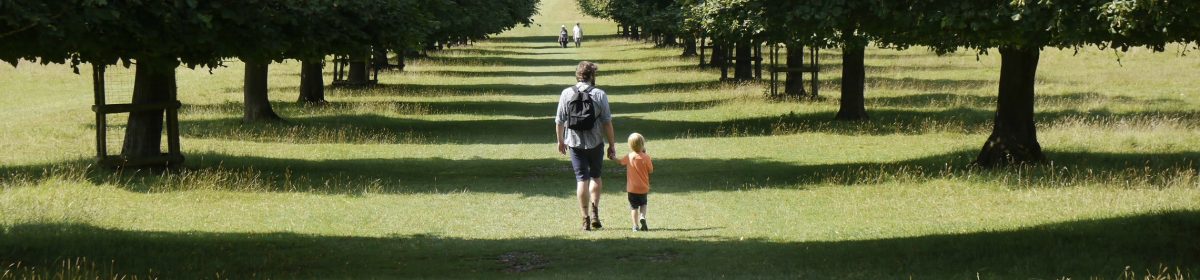

Madame and me were sitting companionably on a bench in Henrietta Park when I suddenly blurted out “maybe this is what we’re meant to do“. I’m having real trouble adjusting to getting old and I think I must have been doing a bit of subconscious bargaining with the grim reaper – “Look I’ll just sit around staring at the wallpaper and shouting at the telly if you’ll leave me alone and go away!” Madame – not surprisingly – gave me a funny look and the subject was dropped. There is nothing more remote from my ambitions than giving up and staring at the wall, and yet it’s all too easy to accept the general view that old people should shut up, stop moaning and step aside from the industriously youthful as they go about their important business at 100mph. “Oh dear”- I’m inclined to brood – ” I’m getting progressively deaf and without nightly eyedrops I’d probably get irreversible glaucoma, my asthma’s getting worse and the medication maintains its iron grip on my heartrate; oh and there’s the skin cancer and the oesophageal problems waiting like hungry dogs on the threshold and my knees hurt. Actually that’s the core of another argument against assisted euthanasia viewed as a form of equity release by helpful relatives. The next morning, with nothing further said on the subject, we both woke up with the same plan. Let’s renew our gym subscriptions! And so we did.
Good ageing seems to be far more about what we think of ourselves than what other people think about us. I’ve got some big plans, all of which involve getting about and thinking straight. For instance I’ve written almost a million words on this blog without the slightest financial support of my loyal readers who have more sense than that. I’ve built a database approaching 1000 plant records and later this year I’ll have identified 500 species of wildflowers – all of which gives me immense joy. I recently read a newspaper article suggesting that age is just a number and – well – it is a number in one sense, but more importantly it’s a usefully predictive number whose predations can be ameliorated, softened and reduced when you realize they’re not a script. The key to a happy life is having some agency and the nerve to use it when the need arises. Most of the things I can’t do any more are also things that I’ve had the privilege of doing and enjoying in the past.
And so to the photograph and its five subjects which include four plants and a building. Even in a small patch of weeds there’s a question to be pondered and the question with this photo is “how old is old?” , and it turns out that I’m by far and away the youngest participant in this little tableau. Once upon a time I used to think of wildflowers as universally ancient species – like first nation people; pristine examples of the way things were intended – (not sure by whom or what!) – and to be the enduring model for the future and end-point of environmental restoration. But that turns out to be nonsense. Here’s the batting order for our arrival in this country, leaving aside the little brown clump of annual meadow-grass which has died of drought but will be back next year as sure as eggs is eggs, and pretty well anywhere in the world with a temperate climate.
- Photographer (me) 1946
- Mexican fleabane 1895
- New King Street, Bath 1764 – 1770
- Ivy-leaved toadflax 1617
- Green bristle grass 1666
- Sun Spurge pre-1500.
However there’s a huge flaw, a kind of category error in my reasoning here because my six objects are all (including me) both species – types – of plant, building, human – and at the same time instances; unique, one-off and temporary. However much I’d like to imagine that I’m the single permanence in a world of impressions in reality I’m just another fleeting instance . The great fire of London may have ravaged our distant ancestors but neither me or the green bristle grass were there to witness it; nor were we there in the 2nd World War to witness the bombing of the neighbourhood or the drunkenness, the brothels and the stinking dye-works of the Georgian period. All that happened was that we passed one another in a quiet and sunny street and I took a photograph because I didn’t quite understand what I was looking at. My greedy ego wants to erect a monument to perpetuate the big moment, but the street that day was a river of un-noticed instances in full spate and all I took to the party was my temporary existence and my momentary consciousness of an unrecognised plant that isn’t even particularly rare.
So it turns out that firstly I’m not really a spring chicken and secondly the idea of a consistent unchanging natural world is a load of cobblers. As Gerard Manley Hopkins put it more elegantly than I could ever manage – “Nature is a Heraclitian fire”; turning, evolving, climbing and coiling and occasionally flashing a blinding glimpse of an ungraspable truth. Even in my senescence I’m still a part of it; still in the dance albeit rather slower these days.
I’d never seen a specimen of Green bristle-grass, and I even thought for a moment it was some kind of meadow foxtail coming in from the cold. I just love the way that plants travel around the world, recognizing no borders and setting up home wherever they find a congenial place- even if that’s just a crack in the pavement. Looking at my little timeline I realize that we’re all boat people when push comes to shove. None of us have any right to puff out our chests and declare that we’re indigenous as if that carried some kind of mysterious moral weight. On my desk in front of me, four tiny (1mm) seeds have fallen out of the plant. I can take them and sprinkle them in the pots outside the door and see if they grow because they’re the plant’s message and investment in the future, although some would argue that would be an unwarranted interference in nature. I’ve had a couple of days of pure fun, photographing, measuring and recording something of a rare event.
The earth will get along with or without me and I’ve always hated self-pity in others, but meanwhile there’s work to be done. Every day’s an adventure if you get your head into the right space and stick to the things you can do rather than those you can’t.


