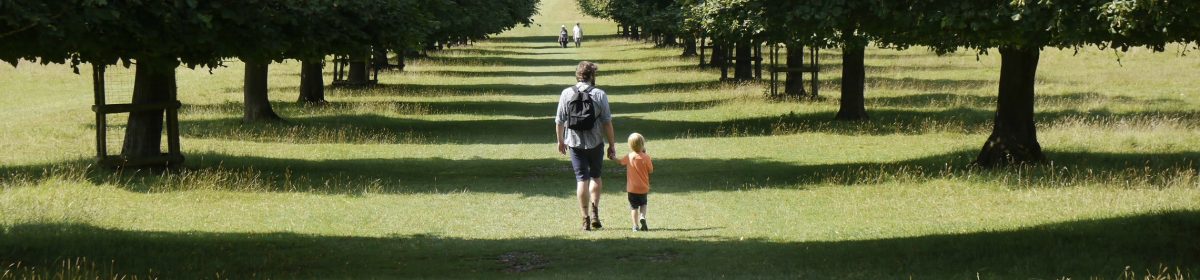
Set like a spinnaker in a south-westerly, here’s our drought-beating chard

From this autumnal end of the telescope, the past growing season – which we’d written off as disastrous – needs a more nuanced description. Yes the bindweed had a marvellous time, and the couch grass invaded from the abandoned allotment below us; the tomatoes in the polytunnel suffered in the unbearable heat and so it goes on. We were very discouraged and even considered packing it in; but Madame held firm and, in the light of our late harvests, things don’t look so bad after all. Once we’d decided to carry on, the obvious starting point was to clear the beds and prepare them for next spring. We made the decision to leave the borlotti and the runner beans on their teepees for a week or so to see if the scattered blossoms would bear any late fruit, and that was a wise choice because both crops came to life after the rain and gave us a smaller than usual but welcome crop. The late tomatoes set a big crop of unripened green fruits which we picked as we cleared the tunnel and stored in the warmth but covered in some black plastic. It seems they don’t need light as much as they need warmth and we’ve been able to replenish most of our stores of passata. When I came to clear the potato beds they too had bided their time and although the skins were a bit tough, (a common problem across the allotment this year), we’ll have plenty for the winter. Our apples, pears and plums gave us their biggest ever pickings – they were only planted in 2021 – and the strawberries which failed miserably have come back to life and are producing many strong runners which we’ll use to make a new bed over the winter. Today, fired up with energy, I set to repairing some rotting edgings and tending to a commercial blackberry that’s repaid a great deal of TLC with some new growth. The rhubarb too has thrived so – all in all – and supplemented by our stores of frozen, pickled and bottled food we shall look forward to the winter with confidence.

But every silver lining has its cloud and two days ago we had another break-in on the site and this time they came equipped with bolt-croppers and cut through the tension wires on the fence, making it easier to pass things into the lane. However they weren’t very bright, and neither were they very lucky it seems. None of us keeps anything except mostly old hand tools in our sheds and in our case they sheared off the padlock and then went away empty handed when they discovered a second mortice lock. They may, of course have noticed the trail-cam pointing in their direction and had a moment of enlightenment before they scarpered. Over the years we’ve lost hundreds of pounds worth of equipment, had the toughened glass in the greenhouse smashed and the polytunnel slashed. Our other problem is what we call ‘shopping’. Unknown people enter the site and steal fruit on an industrial scale. Trees are stripped bare. If we see people who shouldn’t be there we ask them to leave, but I caught a well dressed local restaurateur one sunday morning with several bags stuffed with stolen figs from our neighbour’s tree. Contrary to common sense – which is all too common but not in a nice way, and not the least sensible – there’s not a shred of evidence to support the idea that lawlessness is confined to hoodie wearers, rough sleepers and foreigners. How much carbon do they emit compared with the besuited occupants of huge child killing SUV’s which ignore the 20mph speed limit outside the allotments because rules, like taxes, are for the little people. Lawlessness is a societal and cultural problem, and so is homelessness, drug and alcohol abuse and it spreads its tentacles throughout the whole of society. The malignant spread of selfishness and greed has been given free reign for fifty years and it could take fifty years to repair the damage. Criminalising environmental protest, locking up pensioners for demonstrating against genocide and extracting millions of litres of water from the Thames and replacing it by pumping (poorly) treated sewage effluent back into the river is most certainly not the answer. Jobs, education, youth clubs, training for decent jobs, proper healthcare and housing for all, the fear and financial stress of the elderly taken seriously and adequate mental health provision for the casualties of blighted childhoods all these are the vital signs of effective governance, not more Big Brother nonsense from out of touch politicians. Do I sound cross ???

Q: Which of us would dream of letting our families starve because we wanted keep all our money for ourselves?

A: The kind of person who has utterly lost any moral sense of direction.

Mending the nets

Anyway, we bought a new padlock for the shed and spent a few hours in the sunshine working on the warm earth. It was lovely and as we worked I pondered the reason why so many of our crops survived the drought and heat waves. Last week Joe (our supplier) carried half a ton of manure down to our plot at the bottom. That’s been the minimum amount every year for ten years and my guess – what with all the other compost we’ve made and scrounged – is that approaching ten tons of organic matter has been added and worked into the beds which, when we took the plot on, were nothing but couch, bindweed, old carpets (don’t even think about it!!) clay and starved looking earth. Digging the potatoes before it rained, the earth was black and crumbly, smelt like earth should and was still a bit moist six inches down. Soil regeneration by increasing organic matter is slow, expensive and hard, but it works – and with climate change increasing its grip year on year (sorry, but think SUV’s again) it’s the only show in town if we hope to grow healthy crops to feed ourselves. I’ll finish with a photo of one of the cleared bed awaiting its food for the year, a layer of cardboard from our recycling area and a cover of weed-control mat. “Tomorrow shall be our dancing day”

The best of times and the worst of times

But first the blokey propellerhead stuff

I take back all I said about our trip train across Snowdonia. I thought we would be pulled by a diesel but to our (my) great delight the engine that hauled us over 25 miles and 600 feet in vertical gain at Rhyd Ddu was the strangest beast I’ve ever seen – an NG16 Garratt built in Manchester in 1935 for South African Railways and designed for working very similar routes there. It certainly isn’t beautiful in the conventional sense – a bit of a mule in fact, but as tough as old boots. What’s odd about it is that it’s really two engines spliced together and sharing a boiler. If you look at the photo you’ll see a completely unexpected set of pistons and connecting rods at the back, under the tender. The engine was actually in service until 1985. Predictably, when we pulled in to Caernarfon station a large gathering of faintly priapic men – including me – rushed to the front of the train to take photographs. For the truly lost, the engine is described as a 2-6-2+2-6-2T NGG16 Garratt Design, built by Beyer Peacock Ltd. The bit that I loved is that this arrangement – known as a double bogey setup, allows the engine to be twice the power of the more familiar single bogey and it also allows the engine to traverse sharp bends on the mountain terrain by sashaying around the corners. The front and rear bogeys both pivot around the boiler section allowing a snake-like movement

For the human bit, being towed 600 feet up a winding narrow gauge railway line, surrounded by mountains, rivers and lakes, and listening to the sound of the engine working hard and clattering over modern steel bridges; seeing smoke and steam flying past in streamers like shoals of translucent fish – was a profound blast of memories for me – my father was a railwayman for his whole working life.

Coming down from the highest point towards Caernarfon

Madame thinks the reflections of the window on the photo look like the ghostly outline of an industrial landscape. The line was commenced in 1832; just a year after the Bristol riots and at that time much of Snowdonia really was an industrial site. Reform was in the air as the aftershocks of the French revolution reverberated around Europe. The railway company bought its first steam engines in 1856, just three years before Charles Dickens published “A Tale of Two Cities”, whose opening lines popped into my head as I was writing:

“It was the best of times, it was the worst of times, it was the age of wisdom, it was the age of foolishness, it was the epoch of belief, it was the epoch of incredulity, it was the season of light, it was the season of darkness, it was the spring of hope, it was the winter of despair.”

Charles Dickens Tale of Two Cities

There’s a reason I love writing these cats cradles of association. Steam engines, railway companies, slate mines, coal and copper extraction and even – very near where we’re staying at the moment – one of the world’s largest manganese mines, back in the day – are all the visible inscription of our human impact on the landscape. The landscape and its artifacts – to put it in posh terms – is a palimpsest; written on, erased and re-used, sometimes over millennia. I was unable to shake off the difficult feeling that even the steam engine that pulled our train, was somehow implicated in our colonial rule over South Africa. Life is complicated – that’s what makes it so interesting and challenging.

The remains of a manganese mine on Rhiw

Anyway – to get back to the day-trip, It was raining in the way that only Wales rains when we arrived at Porthmadog station. The temperature had barely crept above 10C and it was sheeting down in curtains driven by the gale. The railway has a permanent staff, but many of the jobs are filled by volunteers who do a wonderful job, and whose absolute loyalty and commitment manifests itself in a slightly religious attitude; so perhaps I should explain that by saying that there were times when we were checking in, that we felt as if we were entering a much loved Anglican church with the average age of the congregation creeping towards threescore years and ten. I was asked half a dozen times whether we were travelling first class or standard class; a denomination that was confirmed when we climbed aboard and found that the heating wasn’t working. This oh-so British class distinction was amplified by the fact that our standard class carriage was embossed (in gold lettering) third class on the outside, and the bewildering choice of hampers that someone had filled with their idiosyncratic vision of what constituted luxury and what ordinary should be. The net result of all these references to class was to make everyone feel slightly uncomfortable – like a first date confronted by a ten page wine list.

On a mountain, the rain doesn’t hang about for long – and so everywhere we looked there were waterfalls and ad hoc spouts bursting from the hillsides and flowing down increasingly dangerous looking whitewater races. The track was shallowly underwater near the Aberglasyn tunnels and alongside, the Afon Glaslyn was raging. It was if an entire mountain range had sprung a leak. As we reached the top at Rhyd Ddu, the water ceased flowing towards Porthmadog and started afresh making for Caernarfon with equal ferocity. The peaks, of course, were obscured by the rain and mist and so we only caught the merest glimpse of the Snowdon summit. The journey last about two and a half hours each way and by the time we reached Caernarfon we were thoroughly cold. Some of our travelling companions had put their waterproof trousers on to keep warm.

If anything the rain was even worse in Caernarfon and, waterproofed to the teeth, we made a desultory tour of the town centre. Madame unhelpfully suggested I take off the broad brimmed hat I was wearing and use the hood from my waterproof jacket. It was good advice but imperfectly timed because when I pulled the hood over my head, the icy water it contained ran down my neck and inside my shirt. There wasn’t much going on in the town centre – a couple of drug dealers in the square; a solitary prostitute and a lot of tourists huddling in doorways. If charity shops or bookies were your thing you’d have been in heaven.

Does this sound like a bad Tripadvisor review? Well it’s not, because I love Wales and what’s happened in these once great towns and cities is an absolute scandal. Wales was one of the first English colonies and has, for centuries, had the marrow extracted and taken away by the wealthy. Everywhere there are signs in Welsh reading no more second homes – but I would say to the pamphleteers – what if the tourists stayed away? what if the profitable conversion work that keeps builders, electricians and plumbers in work – what if it all ended? what would that do to a local economy that’s on its knees already. What Wales needs is vision and freedom. Freedom for local councils to borrow money and build the thousands of low cost homes that are needed so the young and gifted don’t all have to leave the neighbourhoods they’ve grown up in. Then – by all means restrict second homes and end the tax breaks because there will still be abundant work for the tradespeople. Then give the councils powers and finance to support startups and to develop the kind of tourist related attractions that will bring visitors in.

Caernarfon is the depressing sign of a conservation approach to planning. Just like many of the local farms struggling to survive – what’s needed is not conservation but regeneration. A planning system that values wooden sash windows and slate roofs above apprenticeships and skilled work is on the slippery slope to extinction. Am I sounding like William Cobbett here. He was a rabid old pamphleteer whose book “Rural Rides” has always been a lodestone for me; telling it like it is , or rather was, when it was published in 1853 – there’s a coincidence!

After a fruitless hour in the rain we went back to the station cafe to get warm, and were gradually joined by a throng of sodden passengers all dreading the journey home. Madame overheard one person trying to arrange a taxi. We managed to get back onto the train half an hour before the off and found to our absolute delight that the heating was working – and so the journey home was doubly pleasurable despite the turkish bath atmosphere.

Sadly, though, on the return Madame overheard a depressing conversation between three young women in their twenties discussing their attitude towards the police following the murder of Sarah Everard. It really shows how constricted and intimidated women are in this deeply defective culture. Enough, though. We love these day trips and no matter how uncomfortable the transport and lousy the weather we always come back feeling challenged and energised; and enough material to draw and paint and write for a month.