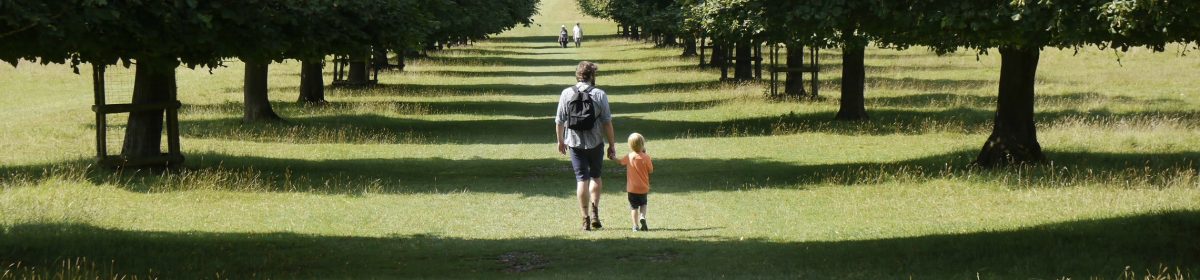
We both love this place – any time outside the holidays, when it gets impossibly crowded. After the weather we’ve been having there wasn’t much chance of seeing anyone beyond a few walkers but for once, apart from one brief heavy shower the sun even came out, the café was open and everyone was very happy. There were no more than a dozen or so cars in the car park, and it was blowing a hoolie as we set out, knowing that once we dropped into the valley we’d be a bit sheltered.
As we were packing the rucksack I thought I’d give myself a rest from plant hunting. Neither of us had slept well, in my case because I’d had an unexpected phone call from a very old friend with whom I thought I’d lost touch and heard some unexpected news about three others who’d died recently. I didn’t sleep beyond 3.00am as thoughts of mortality circled around my mind. So we travelled light even though I knew that the likelihood was that we’d find some rare plants, because the Lizard is an absolute hotspot, and true to form we found some lovely plants including two national rarities and two more flowering exceptionally early. Here are the rare ones – I won’t say exactly where they are growing because they could so easily disappear from too much contact with boots. I don’t know if there’s any research on these particular plants, but certainly orchids plus many other species, growing wild, absolutely depend on mycorrhizal relationships with fungi and if they’re dug up by hunters they’ll just die without the extensive fungal network that keeps them alive. That’s quite apart from a potential fine of up to £20,000 pounds because this is a site of national importance. The Lizard is an enormous lump of serpentine rock, which is rich in magnesium and poor in calcium. The soil lacks nitrogen and is very thin in places so without help from the fungi, the plants would starve to death. Anyway here are the rare two – there are others but they haven’t flowered yet so left to right – Cornish Heath and Land Quillwort which is tiny and I’ve been looking for it down here for maybe 4 years!
The best way of finding these plants as always, is to join a natural history society and get someone to show you. The Quillwort is almost identical to several other common plants that also grow in the area and as a relative beginner I’ve spent many hours trying to learn about them. Anyway, it was almost just as much fun to spot a couple of relatively common plants – Three-cornered Garlic and Kidney Vetch in flower rather early. It’s always difficult to blame global heating, but even after the wet winter we’ve suffered, there are a few more early risers each year
There were Dandelions, Daisies, Gorse and Hairy bittercress also in flower. All the other locals are there in leaf, and we spotted Sea Beet, Buck’s-horn Plantain, Sea Plantain, Thrift and Wild Madder amid the heather and plentiful blackthorn. Here are some of them:
So yes it was a lovely walk, and we sat on a bench outside the cafe where, nearly 60 years ago we’d emptied our pockets to see if we had enough money for a shared cucumber sandwich. We spent the first night of our first ever camping trip together that year with our tent pitched up on the headland. It’s a very special place which – just look at the photos – has remained pretty much unspoiled – helped by the long walk from the car park and the steep footpath you have to take.
But as well as the sunshine, the massive waves crashing on the rocks and rebounding with a wild roar; as well as the fine mist of sea spray that fell on us like a veil from the wavetops and rocks; as well as the glimpses of deep green water through the curling white horses; we heard first and then watched two Choughs playing in the wind above the steep sided valley. That and the hot chocolate so sweet it almost burnt our throats helped down with a toasted tea bun. It’s the very essence of being in nature
This photo was taken on the road to Kynance Cove. We originally intended to go to Lizard point to photograph the sea state but when I got out of the car to swipe our National Trust card I was very nearly blown off my feet by the fierce wind, and so we thought Kynance would be the better bet; but the same thing happened there. We’re between so-called named storms at the moment but you wouldn’t think so. I don’t think we’ve ever seen worse sea conditions here in half a century of visits; no wonder there’s a lighthouse down at the point. We’ve had occasional breaks in the low cloud today but for the most part it’s been a lowering slate grey, laden with Atlantic rain which its been releasing as steady drizzle when it’s not hammering down. The cloud layer was so low at times that the gulls were occasionally disappearing into it. Not quite the light rain in the Met Office forecast. The sea spray, seen from the Kynance road was topping the cliffs over 50 feet high, and you could almost feel the impact of the waves dumping on the shore, through your body. The sea itself was roiling; white and foam flecked to 100 yards out. There were just three cars in the car park when we arrived and within a few minute we were alone; the car rocking in the 50 mph gusts. As ever there were a few crows playing in the wind but they were too far away and too fast to identify. There are Choughs down at the point and they’re the greatest acrobats of all – they can even fly upside down.
So we made our way back and had a cup of tea before we went down the steep path to Cadgwith cove and took more photos there. Lizard looked like an abandoned village but there were a few people standing on the Todden in Cadgwith. They seemed quite happy but an exceptional wave could probably have taken them. John Betjeman, in one of his travel guides once described Lizard village as having all the charm of an army married quarters. It’s not pretty but it’s a very functional place where it seems entirely appropriate that one of the bar staff in the pub, was wearing an RNLI pager. There’s a primary school, a couple of pubs and a doctor’s surgery but over the years the grocery store, the big greasy spoon cafe and the post office have all gone; along with all bar a couple of the serpentine turners in their shacks.
So no moths, no plants and hardly any birds today – which gave us more time for reading. I brought some big natural history books down but I just can’t stop reading a paperback by Jason Roberts called “Every Living Thing” which won the 2025 Pulitzer prize for biography. It describes the parallel lives of two pioneering botanists with entirely different views. Linnaeus, inventor of the binomial system for naming living things and Buffon his French rival. One of the takeaway points from this book is that although Linnaeus’ fame grew and Buffon’s faded, the latter may have been on the better track, laying the foundations for later developments like the discovery of DNA. Their disputes revealed the extent to which they were both moulded and directed by the religious and societal culture of the time, and for me at least, reveals what an unpleasant man Linnaeus must have been.
Below are some pictures of the Kynance road and Cadgwith Cove today.
But in answer to a question I was asked during the week– “What was the actual millionth word?” – well you may think it was a bit of a disappointment because it was “much”. Feel free to develop any metaphorical significance you like; it’s Freedom Hall here at the Potwell Inn. The oldest existing version of St Mark’s gospel ends mysteriously with the Greek word “gar” – ‘because‘ and scholars have had a field day inventing possible reasons and even helpfully completing the book to their own tastes. In the case of the Potwell Inn, I like the word ‘much’ as much as any other but I finished the sentence in any case and after a short rest, here we are again.
Last Monday was alleged to be some novelty, named (by the media) “Blue Monday. We were all supposed to be fed-up by the endlessness of winter, the short hours of daylight and our January bank statements. I’m sorry to buck the trend but I had a lovely day which included feeling very pleased with myself for completing last year’s resolutions but also submitting 420 completed botanical records to the Vice County Recorder which, thinking about it, probably spoiled her day. But maybe the crowning moment was finding a Lesser Celandine in flower on one of the two main roads into Bath. Notwithstanding the pouring rain and wind it brought a touch of spring into our hearts. It was in a half-starved looking garden just opposite the derelict hotel where the police were busy removing 700 cannabis plants from an illegal factory. You see, in Bath there’s no need for a writer to make stuff up – it just comes along, barely 50m from where we live. The smell of cannabis was so strong nearby that we called the spot “Skunk Corner” and wondered how the residents managed to survive their habits. It may well turn out that they lived blameless lives, living next door to the extractor fans, which would be a great example of blaming the victim.
The Celandine wasn’t the first exciting plant of the year. That was the Greater Dodder that was found climbing up a riverside nettle on the New Year plant hunt by the same Vice County Recorder whose Monday I may have turned blue. Sorry about that. The Dodder was – if not rare, certainly very unusual which bears out my belief that the place to look for rarities begins as you step out of the door. The VCR, Helena, was kind enough to email back and say that some of my records were interesting. Chatting to our friend Charlie yesterday – he’s South African – he said that was a classic example of British understatement. On the other hand, they might be 90% wrong which is why we all have to hand in our homework for review. We don’t overdo praise here in the UK.
But if you were to ask me to say which find was the most important, then I’d say the Celandine was most important and exciting to me and the Greater Dodder was more important to science, with the rider that whilst Celandines may be ubiquitous, like House Sparrows, Starlings and Turtle Doves once were – if we don’t record them they might begin to disappear too. But the most important reason for my ranking the Celandine highest is that it’s one of the most noticeable markers for Spring. Ever reliable, easy to find and bright in colour so they show themselves in hedgerows, they always gladden the heart. However grey, cold and wet the weather the Celandines will announce the turbo-charged arrival of the new plant hunting season.
We’re off to the Lizard peninsula in Cornwall for a break but the weather outlook is pretty awful. Nonetheless we’ve been checking our plant hunting equipment – hand lenses, GPS unit, charging batteries, testing cameras and SD cards, packing bags and running tests on the new moth trap, choosing books and waterproofs. So we don’t expect too much from the weather and probably the moths will be hard to find but whatever happens we’ll have fun and if the worst comes to the worst I’ll finish reading three big books, two on fungi and a new one on hedgerows. The allotment is tucked up for the winter and the trail cam is busy with visits from fox, badger, squirrel, domestic cat and – of course – rats. We’ve filmed the fox predating rats which was a heartening sight and the soil is taking a well-earned rest, although from reading my fungus books I’m discovering just how busy it is just below the surface.
I’ve also been testing Googl Gemini AI to see if it can help with my work – mostly playing with it and asking difficult questions to see what happens. It’s immensely powerful – it digested ten years of my writing in a minute and came up with a summary that was more right than wrong but still needs a pile of editing. There seems to be an algorithm that favours the more recent over the older stuff and there are one or two WTF? moments including a word I’ve never used and had to look up. I’d like to teach it to do routine and boring jobs on the spreadsheets so that I can get on with the more interesting bits.
We seem to be living in what the Chinese call “interesting times” – with what used to be regarded as responsible politicians behaving like hooligans outside the pub on a summer Friday night. Madame has suggested that we don’t watch TV or read newspapers while we’re away. It’s an attractive proposition. When I was very young my friend Eddy and I used to go occasionally to a night club in Yate. We were almost always refused admission because we were deemed too scruffy. Every Friday the bouncers would clear the club at closing time as soon as the inevitable fight broke out, and if it didn’t they would start it anyway. I tried once to point out to the bouncers that the fights were always started by young men wearing suits and not looking scruffy. Like so many occasions in my life I got into trouble for pointing out the evidence. I was thinking about this last night and I realized that this is a pattern that’s been repeated since I was about twelve. Among my many talents is a capacity to enrage people who dislike being challenged. Ah well, I’m not apologising!
Books mentioned – I recommend them all:
Fungi – Collins New Naturalist series: Brian Spooner and Peter Roberts
The Fifth Kingdom -An introduction to Mycology Brice Kendrick
Hedges – Robert Wolton, Bloomsbury British Wildlife Collection.
Well, this is a new one! At last, yesterday I had my new hearing aids fitted after a six month wait. I mentioned the long wait to the audiologist at the hospital and she looked so troubled I immediately changed the subject. Poor things, they must have had a battering from angry patients. These new ones are a bit of a game changer because they’re bluetooth capable and they’ve also got some kind of wizardry built in that generates faint white noise which subdues the tinnitus noises. They’re caused by the brain which doesn’t like the silence of deafness so it generates some very unappealing whistling sounds to compensate. I think the hearing aids, by making sure that it’s never silent, stop the brain having to fill in the gap. Nature abhors a vacuum even when it’s between your ears.
Anyway, she also said that although it would be uncomfortable it was better to wear them continually so that the brain would get used to the change in sounds faster. I now know what she meant. We walked down Green Park road yesterday and the high frequency noise of passing car tyres was almost unbearable. By the evening I was completely exhausted by beeping kettles and roaring washing machine and so (as you do) I asked Google Gemini whether the tiredness was a known side effect of new hearing aids. And it seems that it’s well known enough to have a name – “listening fatigue” which results from the brain – which even on a quiet day burns 20% of your energy – desperately trying to catch up with this new sound environment. The upside is that I can now (with some help from my friend Kate) listen to music, take phone calls and turn off the subtitles on the telly while reducing the volume. Our neighbours will be rejoicing . My dad used to have the telly on so loud you could hear it halfway down the road.
When, last January I had a routine blood test I had no idea what a storm of hospital appointments and procedures would be unleashed. I am now grimly familiar with the Royal United Hospital and hope – in the nicest possible way – that after one last appointment with the glaucoma clinic in January and one more blood test, we’ll be able to go our separate ways; but I can’t leave without saying how great they’ve been and how grateful I am that the many overseas nurses and doctors who helped to find out what was really wrong were prepared to stay here and keep the NHS running in spite of the racist abuse they have to put up with. In the end it turned out to be a pretty non-lethal and treatable combination of troubles and I’m glad to say that the engine is now running smoothly again; my appetite is returning along with a lovely touch of optimism. Madame too is practically back to normal after her knee replacement and the campervan is back on the road with a reconditioned engine, new clutch, cambelt and alternator so 2026 is filled with the promise of new adventures. In a month’s time we’ll be back in Cornwall armed with the trailcam and moth trap. Can’t wait.
On an equally celebratory note, I managed to fulfil two of the three resolutions by going back through all the old jumble of photos, stored – shoe-box style and beyond reach. I managed to turn the 22,000 photos into 1000 records and I identified 500 species of plants growing in the places we visited. The only resolution I didn’t meet was to complete a million words on this blog – but I’m only 8000 words short and they’ll be written before we go down to Cornwall and start a new set of lists; this time including moths. I’ve started the fungus records as well, so there will be hours of head scratching to look forward to.
2025 was the year in which we decided to give up the allotment and then changed our minds when I was well enough to walk up to the track without stopping three times. So now we’re ready for whatever the climate crisis throws at us next season. As always the point of growth is the place of injury and we’ve learned a great deal about gardening through extreme weather and even managed some decent crops right at the end of September. The apple crop was magnificent and we’ve still got a few fresh allotment apples in store.
At home the Pensions Board have finally begun to plan how they’re going to deal with the black mould in our flat – it’s only ten years after all since we first complained, and the Church of England never rushes a decision when it can be kicked into the long grass for a decade.
So that’s it. The Potwell Inn is signing off for 2025 but the doors will probably be open again tomorrow. I suppose someone will call last orders at some point, but for now we seem to have escaped, Bon Voyage mes amis!
We walk into the supermarket or log on to Amazon and it’s all there; the cornucopia, the works – everything the contented human being could possibly want. Except in times of scarcity, after snow or flood or during an epidemic when the shelves are empty and then we’re angry.
Yesterday we had a light frost. We walked down the steep slope to the allotment and the sun – we are almost at the winter solstice – transits behind a row of trees low in the sky – was unable to warm the soil on any of our plot. The overnight temperature according to the trailcam was 2C.
Our culture directs our instincts to want to take control. We have come to believe that each of us – apart from losers who don’t count – is some kind of tabula rasa on which we are free to inscribe whatever we want; fulfillment, creativity, success; even new and more attractive silicone lips. If you can be bothered you can easily test my hypothesis by counting how many times the word control crops up in an evening’s TV ads. Without adequate control, we are all smelly, leaky and horribly unattractive, betrayed by our unforgivable lack of the Big C which is always available – at a price – from a retailer near you.
The sad truth of course is that by the time you’ve been programmed to aspire harder and show the world who you really are it’s too late. You’ve already lost who you really are to the expensively curated simulacrum who gloats back at you in the mirror and demands more, more, and yet more.
If allotmenteering is even remotely therapeutic, as is universally claimed but rarely actually tested; it’s closer to psychoanalytic psychotherapy than that it is to happy days in the sunshine. We are not blank canvases and neither is the earth. Just as we have no retrospective agency with our appearance or with our childhood and past history, neither has the earth. The question we have to take to each session is – “why am I as I am?” “Why do I need to take control all the time?” and for any allotmenteer, and I know this may sound ridiculous, “why do I have such a complicated relationship with this patch of earth?” Why do weeds upset me so much? Why do I have this boundless fear of rats but not – let’s say – hedgehogs? Why did I feel I had to destroy anything that occupied my [?] allotment when I moved on to it. Why am I so obsessively protective of its boundaries? Why do I want so much to kill pests. What is it about badgers that I like most of the time, until they eat my sweetcorn?
If you look at the photograph at the top of this post, you may recognise one of the the tracks up the Blackdown ridge on Mendip. If by some mischance you were to inherit this lovely patch of earth you could decide to grow almost anything. You could decide but you wouldn’t succeed because this land has history; millions of years of it. Once upon a time it was at the bottom of the sea but now it’s at the top of a range of hills. The point where I stood when I took the photograph is above a deep layer of carboniferous limestone, and likely way under your feet there are still undiscovered cave systems. Rod’s pot, Read’s cavern are entered just beyond and below the horizon. Walk on half a mile and (unless you know your plants) you’d never know that you are standing on a cap of acidic sandstone. What will grow on one substrate won’t grow on the other so none of your controlling instincts will prevail. You’ll just have to go with the soil.
Our allotment is on the kind of soil called “clay loam” – we easily checked that with open source maps. This soil – when it’s in its natural state – will bind together in a ball due to its clay content. It’s naturally quite fertile but it can be hard to work when it’s dried out and you shouldn’t trample all over it when it’s wet. This immediately suggests working the allotment in beds, sufficiently narrow to reach from both sides. We also built deep paths filled with wood chip to drain away surplus water. We even tested the soil for pH – it was somewhere near the middle between acid and alkaline. Vegetables have strong preferences regarding soil types and where they prefer to grow. It sounds complicated but the point is that you can’t raze it flat and then flip through the seed catalogues hoping to grow anything you fancy. You have to negotiate if you don’t want to fail. We’re in a frost pocket at the bottom of a steep slope; that’s a problem. On the other hand we’re sheltered from the prevailing South-westerly winds by a row of trees. The plots at the top get a lot more sunshine but their sheds regularly blow down. We have to carry everything down a narrow path to our plot, but we’re pretty well out of sight from the main track which makes it so much easier for compost deliveries and thieves. Control is a fantasy when it comes to growing on an allotment. We can’t order the weather, put up notices to forbid allium leaf miner or asparagus beetle, or plan surpluses of apples which might, like this season, bless us and in others fail to appear or suffer from codling moth.
What goes on invisibly and under the surface of the soil is almost miraculous. Some thuggish plants will even resort to subterranean poisoning to get their own way while tiny nematodes and the smallest slugs can chomp away at the roots of your vegetables: …. “And little fleas have lesser fleas and so ad infinitum!” 95% of plants apparently have fungal relationships; none of these are visible to us, but their invisibility can’t make them invulnerable to the onslaught of chemicals we use to assert our control over pests and diseases, and I saw in the newspaper today that climate change and global heating are dramatically increasing the spread of pests and diseases, not to mention extreme weather events; storms and heatwaves. Fungicides and pesticides with artificial fertilisers have wrought havoc with the soil structure and depth. The earth is not a blank canvas and we can’t do as we please to it without compromising our own existence.
I recall a couple of farming proverbs that we’d do well to pay attention to:
Live as if you’re going to die tomorrow, farm as if you’re going to live forever
The farmer’s boot is the best fertilizer
If allotmenteering is therapeutic at all it’s in the way that it teaches us a kind of humility – the root of the word refers to humus the condition of the earth, the soil. Don’t try to control; accept, even embrace failure and success as two sides of the same coin. The urge to subdue, to dominate and to control isn’t new, it goes back to the creation myths of the Old Testament as does the subjugation of Eve to Adam. We reject the second of those myths and we should equally turn away from the first.
Have you ever noticed that gardeners are often really nice people? Is it the therapy of crumbling the earth between your fingers, watching a robin feed on grubs you’ve just exposed and watching the clouds for rain ? or is it perhaps the botox injections? Hmm – that’s a tough one!
Today we were supposed to be in the Bannau Brycheiniog (Brecon Beacons in old money), but sadly the weather had other ideas. Storm Bram managed to virtually shut down the road and rail links between England and Wales. The Prince of Wales bridge was reduced to one lane each way because the lamp posts were discovered to be liable to collapse on to the carriageway, and the M48 bridge was just closed, along with some of the railway services. There were two hour traffic jams in both directions so, having packed ready to go we unpacked again, hoping we can set out early tomorrow. I hesitate to bang on about climate change, but really our long neglected infrastructure is in such a bad way that even normal weather, let alone the extremes we now expect are enough to shut us down.
So rather than a report from Wales, here are some videos from the allotment, taken on the trailcam. The opener is, of course, the rat. Rats are everywhere, they carry diseases and love to live in poorly made compost bins. Given a choice of anything to eat on an allotment they invariably seem to prefer our crops, and we’ve watched a rat clinging to a swaying sweetcorn cob and chewing away at our lunch. Badgers also like sweetcorn in the same way that bears like honey, but badgers have other virtues and it’s relatively easy to keep them away from the maize. But rats seem to have few virtues and although tidiness is an overrated virtue on allotments it’s certainly the case that we need to pick up fallen fruit and any other rubbish that would attract them. Sadly, a poorly made compost heap – especially if kitchen waste and cooked food are added to it – and if access is easy (and rats are great at digging tunnels) they’re going to move in and breed as rats like to do. Of the night time videos from the trailcam, rats outnumber all the other animals we see.
We also entertain a couple of cats who, we assume patrol at night in search of prey like small mammals. It would be a brave cat, though, that would tackle some of the clonking great rats we’ve filmed. Foxes and badgers are in a different league. Firstly they are (foxes) fast and (badgers) powerful and they both eat rats. Judging by the size of one of our badgers, they eat a lot of rats!
We like to do our bit to control the rat population and we use heavy duty spring traps baited with peanut butter. The traps are in strong boxes and although they’re not attracting many visitors the badgers just love peanuts and so they will worry the boxes to try to get at the bait, and shake them until you hear them spring. We don’t use poison because there’s always a danger of secondary poisoning to other carrion eaters. Mostly the badgers eat slugs and worms but they’re such lovely creatures we let them take friends and foes – (just not sweetcorn). As I look through dozens of videos I also notice that the rats make themselves scarce whenever there’s a fox or a badger in the vicinity so they also have a deterrent effect.
Foxes too eat rats, and if they mark their territory – which we can easily smell for ourselves – this acts as a deterrent as well. We’ve seen foxes with mange in the past but fortunately our local ones seem fine and healthy. Here’s a magnificent shot of a dog fox prowling one of the rat runs. Isn’t he beautiful? especially right at the end of the video when he pokes his head out behind the tayberry.
So there’s always a lot going on at night on the allotment – in fact it’s quite busy. Yes, of course, we get visited by two legged rats as well and like many of our neighbouring allotmenteers we get things stolen, but as long as we take home any power tools and fix double locks on the shed, greenhouse and polytunnel, then we’re mostly troubled by casual vandalism which is upsetting and annoying but – like collapsing bridges and floods – has its history and causes and won’t be ended by sloganising politicians. Don’t build prisons, build youth clubs! We’d love to teach some apprentice allotmenteers the basics!
Other than that we’re almost ready for winter. Yesterday we mixed a couple of barrow loads of topsoil and compost, filled some leftover feed buckets and planted strawberry runners to give us an early polytunnel crop. I love strawberries and they’re expensive in the shops, so it’s a joy to grow them for ourselves. Growing at least some of our own food gives us so much pleasure, but it’s good to bear in mind that good gardening involves a four way conversation between the crop, the soil, the weather and the pests. There’s no room for a control freak on the allotment. We have to accept – as an astrologer once told me of the stars – that these four dispose but can’t compel. The biggest and best lessons in gardening are as likely to come from failure as from success. I love the fact that the night watch is busy while we rest. Sometimes we turn up in the morning to find the wood chip paths turned over, sometimes obviously by badgers with their strong claws but often by thrushes and blackbirds who delight in eating pests so that we don’t have to persecute them.
Our greatest regret is that we have never – in ten years – seen a hedgehog. They really should be there and I’m afraid that badgers are a major predator, so perhaps that’s just an unwanted outcome of the eternal balancing act of nature. But now the weather will improve and the bridges will open and early tomorrow we’ll drive up to the Bannau to meet our friends for a shared birthday and maybe find some new plants or fungi to photograph. The season is nearly over now but there’s always something to capture our interest. And finally – badger versus rat trap – keep looking on the left hand side of the frame and listen out for the trap springing. The trap didn’t get the badger (as if!) and the badger didn’t get the peanut butter. Nil nil draw, then.
This photograph is not of a twig but a moth; the Buff-tip moth, Phalera bucephala. I’m not showing it because I’d want anyone to think me an expert of any kind, but because its camouflage is so perfect at the same time as being very lovely. It’s eye-watering to think how many evolutionary twists and turns it’s gone through to arrive at this perfect twigness in order that it can rest up safely during the day. Our friend Kate uses a moth trap to identify record and release any number of moth species high up in the Bannau Brycheiniog; the Brecon Beacons in old money, and we took this photo, along with many others, early one morning when we were staying up there.
I’m often struck by the lack of attention we pay to the very small when we talk about the beauty of nature. We tend to look for swathes of flowers; forests; endless mountains and the most grandiose hills when we speak of beauty, but if we take a magnifying glass to, let’s say a weed like a dandelion, it’s like crossing a boundary into another world. A single seed under a low powered microscope can reveal such a complexity of pattern and structure that we’d be hard pressed to capture it in a drawing. Nature presents herself as an artist and many artists would admit to gaining inspiration from the almost reckless generosity of living forms. Moths are just one example. From the aerial view of a river basin or wetland marsh down to the double helix of DNA and the complex fibonacci sequence of seeds on a sunflower head or the seed flask of a poppy, there’s inspiration to be found. Speaking through my artist’s hat, as you might say, I’ve shared a lifetime exploring the colours and forms of living things through the medium of drawing, botanical illustration and ceramics. I’ve needed to embrace some of the science as well, but the wellspring of my explorations has been aesthetic rather than scientific. I’m far more excited by the earthy colours of rust and ochre than by shouty primaries, and a multitude of green hues relieved by occasional touches of scarlet can turn a humble lichen into an aesthetic feast.
Nature is beautiful, but not in the guide book sense. You can’t measure beauty by counting oohs and aaahs and you couldn’t propose a unit like the Milli-Helen which would be the amount of beauty required to launch one ship. It’s expressed perfectly in my mother’s distinction between perfume and scent. I should mention here that I’ve been trying out a new phone app to help identify moths – in anticipation of a Christmas present from our son. In fact it’s good with all kinds of UK insects and designed and promoted by the UK Wildlife Trusts. The app is called ID UK Insects and it’s good for bees, hoverflies, spiders, wasps – in fact for pretty well any insect you might encounter on a slow walk and is free for a basic 500 species or £18 a year for the full version. Well worth a free go! It won’t excuse you from any of the hard book work when you get home to identify your find, but like all the best AI it will save the horror of flicking through hundreds of pages in the vain hope you might run across it! For those old hands who would assert that it’s cheating I’d say – “so’s a cake mixer!”
It would be wrong to settle on the moth as a sole exemplar. As I suggested at the beginning of this post, nature should be regarded as everything on earth including us, and my friend Chris would make a strong claim for the whole universe to be included as well. In fact – and this would be a bold and almost spiritual claim – I’d argue that the default condition of a fully functioning human mind would be wonder.
I’ve never forgotten an exercise I did on a retreat years ago. We were a group of a dozen or so, all strangers to one another. We were divided into couples and asked to grasp both hands of our partners. Then we were invited not just to look at one another or chat about our journey there but silently to explore the possibilities of beholding. As you might expect, it was a deeply challenging thing to do but it was also very powerful; an intuitive exchange of our deep selves and a letting go of embarrassment and ego. I’d suggest that the default position of wonder at natural beauty is facilitated by its twin faculty, beholding.
With such a mindset even the destructive powers of nature which, for the most part are recycling the elements of existence, can lead to the sense of wonder. Nothing is ever wasted by the woodland rotters like the Sulphur-tuft fungus above. I can contemplate my own vulnerability and transience without being afraid.
Around 1970/71 I had a long period of what was diagnosed as phobic anxiety, and not being able to face going into art school, they put me on probation for a couple of terms. I took to visiting the valley behind our cottage through which By Brook flowed, and drawing there. My memory ever since is that I only made one drawing – very laborious and forensic pencil rendering of a twisted tree trunk growing at the edge of the river. The drawing went into a folder and it’s travelled around from house to house ever since. I’ve looked for it from time to time but never found it among the hoardings; until last night I dreamed that I was able to thank all the people who loved me over the years – beginning of course with Madame – even when I didn’t love myself at all. I was awake at 5.00am and got up after a couple of hours musing on what Robin, my one time psychoanalytic psychotherapist would have called a significantdream and went into my study and found the drawing almost immediately in a heap of unsorted papers.
But it wasn’t just the one drawing; I found four of them – and each of them would have taken several days. Here they are seeing the light of day for over five decades.
I’m not suggesting for a moment that these are great drawings, but rather that they articulate a theme that had been at the back of my mind for going on twenty years after I walked to primary school through a lane bordered on one side by a hawthorn hedge which, in hindsight must have been laid in previous years. I was enchanted, almost literally, by the twisted and intertwined branches and it became a treasured part of my walk to school, a memory which returns joyfully whenever I see a similar hedge today. After I’d photographed the drawings this morning I realised that there was another subconscious link in the twisting and curling water of the brook and which I’d tried unsuccessfully to capture in drawings of the sea when we lived in Cornwall. Drawing – to pack a huge proposition into a very short sentence – has been a way back into a transient moment. A mill-race; the Devonshire leat on Dartmoor; any kind of fast flowing water especially if, like a canal, it was the outcome of human intervention. No surprise then, to recall that my favourite winter job as a groundsperson was hedge laying. The spot where I drew By Brook was downstream from a paper mill where the mill race joined the brook. The mill is now disused and abandoned, and the brook itself is milky and eutrophic; quite unsuitable for papermaking.
If there is any kind of takeaway from this biographical fragment it’s that I didn’t get this ecstatic, aesthetic response to nature from a guru or a book. It was always there and all I had to do was channel it into tangible form. So the next great adventure was in ceramics. I’ve already written about this and I won’t go over it again, except to say that the making of ceramics feels like participation in creation itself. All the essential elements; earth, air, fire and water are there. The transformation of clay into fired ware is a geological process, The colours are made with elemental minerals and ores – cobalt, iron, lead, melted and rendered transparent in the kiln and transformed by the control of the available oxygen. English iron-based slipware glazes, mixed with lead rich galena and fired in an abundance of oxygen emerged the colour of honey and in China, a similar iron based glazed fluxed with wood ash and and starved of oxygen in the final stage of firing emerged as celedon, a muted and lovely green the colour of lichen.. The making of ceramics is an exhausting creative process which is affected by so many variables that if the potter doesn’t learn both intense focus and how to survive failure they will soon give up.
Nowadays I use photography to try to capture nature. I don’t edit or enhance anything and if it doesn’t work I delete it and try again. I remember once having a battle with my art school Head of Department over the characteristic form of an apple tree. I contended that trees are hard to draw well because by forensically rendering their internal structure and the form of the whole tree, its colours and its leaves it would be easier to identify its species. To prove my point I’d knocked up a black and white sketch of an apple tree on a piece of cardboard with a wide brush and some house paint. He dismissed the drawing and the idea with a lofty wave of the hand. It was rubbish and all trees looked pretty much the same. This week I’ve mentioned an apple tree called Arkansas Black several times already and today I returned to that discussion by photographing the tree on the allotment. I hope I won’t offend anyone by saying that the form of the tree is completely distinctive. Pears plums and (at the time) English elms are incontestably different.
My old music teacher A F Woodman used to to shout at me if I was particularly inattentive and say “I know you can hear it Pole, but are you listening?”
Wonder; the capacity to behold and not just gawp; inexhaustible curiosity; focus; listening; some measure of humility; the capacity to fail, try again as Samuel Beckett said, and fail better – all these are the portals through which we must pass. To adopt a religious idea, we must approach nature as penitents – not least because we, collectively, have done so much damage. The technical understanding, the skills, the science need essentially to be led by the revelatory moment. Most truly great scientists and mathematicians would agree that the revelatory moment is the beginning of the process of understanding rather than the end.
Which brings me to a penultimate point. If there is ever to be a real green spirituality it will need to begin in the same place. I remember Ken Leach preaching that orthodoxy is closer to its Greek roots when translated as “right glory” and certainly not the slavish following of some ancient canonical text. I’m not sure what we could call theology without Theos, but I treasure Wittgenstein’s joke that “wherof we cannot speak thereof we must remain silent” except that it’s never yet stopped a daft or cruel idea from being broadcast.
So to conclude this rather long post, I have to write briefly about education because it seems that these core skills – “Wonder; the capacity to behold and not just gawp; inexhaustible curiosity; focus; listening; some measure of humility; the capacity to fail, try again as Samuel Beckett said, and fail better” all these are being expunged from the curriculum of both school and university. If we don’t bring our children up to allow wonder and curiosity into their lives they will be stunted like wind deformed trees .
Sadly my old pal the Hungarian Mullein has passed. You can still see it where it toppled head first into the canal where, it would be nice to think, its progeny will set up home in the coming years. It’s a bit of an unusual find here in Bath and I had to argue my case with the Vice County Recorder, Helena, who very properly demanded we wait until it flowered until it could be recorded. And did it flower! Its whole life story unwound over two years between germinating in 2023 and flowering this summer and Madame and I walked the riverbank to the canal many times to record its progress; always worried that some overzealous strimmer would take it out. But spared the strimmer, the casual act of vandalism or even a careless narrowboat tether rope, this magnificent showoff did its thing and then toppled, senescent, into the canal. It’s the way of things; we are all part of the same cycle, and a successor plant is already growing next to my left foot in the photo. As you can also, the deceased was a good foot taller than me ‘though that’s not much to brag about. Let’s just say it’s over six feet and not dwell on my height.
After our walk to the canal we came back by the usual riverside walk and recorded a lovely Winter Cherry in full blossom, a field Scabious and two Mallow species, plus a Welsh poppy and what’s called (I think) a confused Michaelmas daisy, so called not because it’s confused (I’m not sure if that’s possible for a flower) but those of us who try to name it are. Very confused. All these in flower as well as some Mugwort whose flowers are extremely dull and minimalist but whose leaves when brewed up are said to give you lucid dreams. I can’t vouch for that because my dreams are all too lucid already, and often hang over me all day. I wonder if a brew made from the Michaelmas Daisy might give you confusing dreams – all I’m sure of is that this group of plants is a bit dodgy and can damage your liver – so they all go into the category of temptations resisted (like incest and Morris dancing as Oscar Wilde might have said).
By complete coincidence we passed by the edge of Green Park and came across one of the parents of the difficult Common Lime tree in Dyrham Park. It’s unusual for me to stumble across a parent and its hybrid in a short enough period to remember the size of their respective leaves, but the much larger leaves of the (wait for it) Broad-leaved Lime, Tilia platyphyllos was a dead giveaway.
Trees are fun, and we’re blessed with a large number of champions here in Bath. Interestingly the two parents of the Common Lime are the Broad-leaved and the Small -leaved, both of which are extremely rare in the wild. But their hybrid is vigorous and easy to propagate which is why it became the Common-Lime several centuries ago. Does it matter if it’s a sort of alien invader? I’ve been reading a marvellous book titled “Alien Plants” by Clive Stace and Michael Crawley and if you’re at all bothered by what you might call boat plants you’re going to have a very bare garden indeed.
Here the larger problem of wild seed sowing is raising its head. Several years ago, as the riverside walk was being initiated, a neglected border which had an abundance of genuine native plants was dug up and re-seeded with wildflowers. I’d previously found a plant called Weld growing there in the shadow of what would have been a very smelly dyeworks where it’s likely Weld was used. Sadly the wildflowers grew for one season only and then disappeared. I’ve not seen any of the original plants again. Dyrham Park tried a similar thing but their plot was invaded by creeping thistle and the expensive wildflowers all disappeared. This week, going through my photos, I found Corn Marigolds, Field Marigolds and Cornflowers had all enjoyed a brief moment in the sun before being choked out by the thugs. It would be far better to learn to appreciate the plants that actually thrive here than to import a whole bunch of no-hopers, however beautiful!
If you’re up to speed with the latin names you won’t need me to tell you what they are. I’m using the common English names because they’re the place most of us start our journey as well as expressing the poetry of nature.
Actually (so far) one of these plants – the one at the top left – hasn’t yet joined the ranks of the disappearing but it’s still early days in the crisis of species extinction that’s barrelling down on us. So on the left, top to bottom there are the Small Scabious, The Sheeps-bit, often called Scabious as well, and the Devil’s Bit; ditto. The one on the right is a Common Restharrow – which was the initial impetus to write this post. I’m writing about these plants, and the reason I think you should be interested too is that seeing them is like looking at the prelude to a slow motion car crash.
I wonder if there was a smidgeon of irony in choosing bonfire night to launch the latest Red List – or to give its full name “A new vascular plant red list for Great Britain”. I can hardly imagine the great British public queueing around the block to get a copy before the ink dries, and it is very technical (but over the years I’ve already put in the hard miles); however it’s a duplicitous ten quid’s worth of ebook masquerading as a scientific survey when it’s really a requiem for a disappearing earth. Every paragraph is damp with tears – it’s the saddest list of names you’ll ever find in a book about plants.
Here’s a Google Gemini summary of the findings:
Increased Threat Level: The proportion of species assessed as threatened (Critically Endangered, Endangered, or Vulnerable) has increased 26% (434 species) are now classified as threatened, up from 20% in the previous 2005 list. A further 140 species are listed as Near Threatened, suggesting their conservation status is of concern.Widespread Declines: Many plants that were once common and widespread in the countryside have continued to decline and are now assessed as threatened.
So let’s start with the larger picture at the top of the page, in a way that’s also a defense of English plant names. The name Common Restharrow at least paints a picture. Having driven a little grey Massey Ferguson 35 and towed a chain harrow to aerate and tear out the thatch of dead grass whilst flattening molehills I get the joke. If I’d been doing the same job a century ago and leading a horse-drawn harrow I might have called the plant “rest horse”, because this little plant in a typically tangled mass can stop a harrow in its tracks. I’m thinking of the rain soaked agricultural labourers in Peter Brooks’ film of Ronald Blythe’s book “Akenfield”. Ononis repens defines the plant’s place on the spreadsheet down to ten decimal points, but fails to tell the story. Of course, unlike my Fergie, a giant turbo charged tractor would pass over without noticing – but it wouldn’t need to notice any more because Restharrow is disappearing altogether. It’s been moved up the parade of shame from “least concern” to “vulnerable” under the onslaught of intensive farming. I can still take you to see it, but it’s mostly on the coastal headlands in west Wales and Cornwall at the field edges, beyond the reach of sprays and ploughs.
And that’s where the sadness comes. The loss isn’t just technical – an entry on a spreadsheet – but a loss of memory, of relatedness, of history; it’s personal. Sun, wind and rain; strolling and rolling together with Madame; hours, days and weeks of searching followed by the moment of joy in finding. These are not the simple pleasures of an ice-cream at the end of the day’s plant hunting; they’re the joys of complete focus and engagement; of falling in love. This is a big deal.
In a recent posting I was writing about human grief in a very allusive way (which I hinted at in the title), and in parallel, I can’t stop wondering whether the loss of meaning when we lose someone close to us isn’t just damaging when what’s lost is a part of the physical world in which all our memories are embedded. In Stoke Row on, the edge of the Chilterns, my grandparents had a smallholding. More even than remembering what they looked like I can’t escape from associating them with the Beech trees that surrounded their cottage; from the sight and smell of the paraffin stoves on which granny cooked, and of the rich oily smell of chicken meal. I remember that the first squirrel I saw was a red squirrel, and I remember the line of trees at the back which my Mum would examine and proclaim that there was rain over Granny Perrin’s nest. My Mum’s favourite flower, she would say, was Lady’s Slipper – but which – of about ten alternatives did she mean? The orchid is now extinct so that leaves nine. When she died my sister and I were trying to decide where we could bury her ashes and we did a bit of research to see if we could return her to her childhood home. It was a powerful blow to discover that the Crest smallholding is now covered with an industrial estate. In fact it was even more of a bereavement to discover that I would never see the tarmac road dressed with flint pea-gravel again, nor gather primroses nor help to gather prickly and itchy hay to be stacked in stooks and ricks.
So let’s go back to the three Scabious, only one of which (top right) is really a Scabious. The other two, united by their similar appearance and vibrant pale blue-violet colour, kept me bewildered for several years although, once you know how, they’re worlds apart. I was always dazzled by the name Devil’s-bit. Such a plant must be special, I thought – like Viper’s Bugloss and Deadly Nightshade; it’s the names that draw me in like a moth to a flame. But Devil’s Bit and Sheep’s-bit never seem to grow side by side so the moment of revelation is more likely to happen in front of a decent macro-photograph or, in my case looking at the illustrations in Collins Wild Flower Guide and seeing – actually noticing – for the first time that the stamens on Devil’s-bit are like little mallets and on the sheep’s-bit they’re tiny little trumpets. Oh floods of joy! except what I recall more than anything else is where they grow, and they grow there because they are perfectly suited to their homes; to the weather and climate, to the soil, and to the grazing or cutting regime under which they can thrive. Change any one of those things and they’ll likely dwindle and disappear – not waving you might say – but drowning. One blisteringly hot day in the midst of a drought we shall go back and they won’t be there any more.
Maybe the flowering plants are nature’s way of smiling at us. I used the metaphor of the disappearing Cheshire cat’s smile at the top. Perhaps it’s the canary in the mine; whatever – it’s nature sending us a message that when the flowers go they take the joy with them.
Thrift growing on a clifftop in St David’s Pembrokeshire
And notwithstanding appearances I’m not saying them here either. What I am doing is attempting to photograph a very small fungus while holding a six inch ruler behind it. In plants and fungus spotting size really does matter. Here’s what I was trying to get a picture of – it’s a tiny clump of candlesnuff fungus on some dead wood up on the Mendip hills.
Two things coincided which I wanted to write something about; the first was a random comment by a young man a couple of weeks ago which rang some serious warning bells in my mind. The second reason was our first fungus hunting visit to Priddy this late autumn. As to the first challenge I should say at the start that although I’ve never consumed any kind of hallucinogenic substance I am very interested in such properties and I’m filled with wonder at the way plants and fungi can synthesize unimaginably complex molecules which have the effect of reversibly changing our brains. Anyway I was having a conversation about Psilocybin with this young man and he mentioned that Velvet Bottom was a good place to gather them. Now I know Velvet Bottom well; it’s one of my favourite places on Mendip – however I wouldn’t eat anything foraged from there because the whole site is heavily polluted with lead, zinc and even cadmium to the extent that in some patches of ground nothing will grow except a few heavy metal tolerant plant specialists. Grazing by sheep is only allowed for very short periods to maintain the habitat, and downstream in Shipham gardening has, at times, become severely restricted due to fears of cadmium poisoning. I’m sure that readers of the Potwell Inn would never dream of boiling up magic mushrooms or, for that matter Fly agarics to make tea but just in case any readers were planning post retirement breakouts, I’d advise that there are safer places than Velvet Bottom to begin a life of crime.
But I also wanted to write about the metaphorically fatal attractions of fungi which can get very obsessive. I’m just grateful it’s a relatively short season. Fungi are beautiful, strange, mysterious and fleeting visitors which spend most of their time invisible and underground. What we see are the fruiting bodies; the spore carrying parts which can carry their offspring many miles. To be fair, fungi can be very hard to identify and although there are now one or two phone apps that will have a go, they’re still nowhere near safe enough to pronounce any fungus edible. I was testing one new app while we were out and although it easily managed some simple tasks, it failed completely on quite a number. I got many warnings that such-and-so was potentially dangerous. I don’t forage theses days in any case but I have poisoned our cat – which luckily recovered, and come within a whisker of poisoning Madame and me. Even easily recognised and safe fungi – St George’s mushroom for instance has built up intolerance over any years with some real experts, and suddenly made them ill.
But there’s more than enough aesthetic and scientific interest in fungi to compensate for leaving them in the ground. I’ll just put a few pictures up below to show the huge variety of form, texture and colour that they can display – not to mention odour which can range across the whole spectrum from apricot to dead sheep. I love them, and look forward to meeting them again every autumn and then there are always lichens, mosses and liverworts to fill the dark days of winter with fascination. My suggestion would be to photograph anything you encounter that interests you and make a note of the location – you can usually do this on your phone. Then perhaps one day you’ll feel inclined to identify and organise them in a spreadsheet and make a contribution to proper science in this time of global species extinction and climate change. All these below were photographed in a short walk last Thursday.
On Saturday I mended the allotment shed window which had been smashed months ago by vandals. I thing by comparison with the fungi my handiwork lacks a certain architectural je ne sais quois !