

Who’d have thought it? Computer controlled automatic flood relief gates; plastic fishing lines; damming up valleys to flood them and secure water supplies; steam engines – even bicycles; each one of them a technological step forwards. What could possibly go wrong?
Sometimes asking the right question is harder than you’d think because common sense – as we like to describe it – gets in the way, and what ought to be a very simple question gets very difficult. “What direction does time move in?” – we’d mostly agree that it moves forwards, except on Friday afternoons. Our mobiles, wrist watches, TV and radio are perfectly clear that time moves forward in intervals that are measurable down to 10, 20, 1000 decimal places. Sub atomic particle physicists are a bit less dogmatic and would probably answer “it depends – but for all practical purposes it moves forwards in a straight line. ‘That’s progress’, we say, ‘moving: forwards into a better future’.
So let’s accept that for all practical purposes time moves forwards in a straight line; but does that mean that we who own watches and mobiles and watch TV are also moving in a straight line? and if it does – where’s the straight line heading? and this is where the argument gets a bit muddy because the commonsensical answer would be that we’re collectively moving forwards towards a better society and individually moving forwards to a better life. Except we’re not. As my old sociology lecturer Sid Harris would have said – “Where’s the evidence, David?” and, looking around at the present state of the earth I’d say that the evidence for a bigger, brighter and more prosperous future is pretty thin. When science, technology and politics wrapped themselves in evolutionary theory they made a fatal error. History has no telos, to borrow a Greek idea, it’s not bound by an invisible guiding hand, and Progress – in the grand rhetorical sense beloved of politicians, is just another package of merchandised snake oil.
The aha! moment
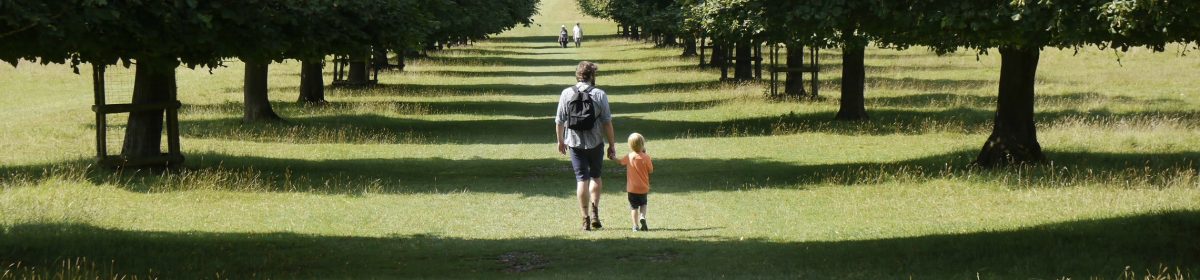
I was pondering this, here at my laptop, when my son phoned – as he often does on his way home from work, and so we had one of our conversations and he challenged me to set out my problem about time. “There’s a logical flaw” he said, and I’ll paraphrase the rest of his reply. The ancient Greeks knew that the future was always, must always be an unknowable fog of possibilities, and so when we take a walk we have to look forwards to avoid walking under a bus, but when we think about the future we necessarily walk into it backwards. All our knowledge; all our certainties and experiences are behind us in time. The Greeks and Mesopotamians understood this three thousand years ago and the present day Maori people know it now.
To describe a person or a movement as forward looking is assumed to be a compliment but all too often, so-called forward looking leaders combine a wilful march into the unknown with a blithe refusal to attend to the only real data we have – which is all in the past.
There’s a true story that I really love which illustrates this perfectly. An engineering worker lost a finger in an industrial accident and this precipitated an enquiry by a government inspector. When the man was interviewed at work after he had recovered, the inspector asked him to describe exactly what had happened. The man explained that he had put his finger into a hole in the machine and then – to demonstrate precisely what had happened, he stuck another finger through the same hole. Need I continue?
To cherish the hope that another – as yet uninvented slice of technology or science will rescue us from the unexpected consequences of the last lot, is – let’s be kind – rather silly!
Walking backwards into the future
If we were to accept the ancient Greek view of time, what would the implications be for the future of the earth? At the moment it feels as if we’re ploughing on heedlessly into chaos and disaster under the influence of a broken model of so-called progress. But we have thousands, tens of thousands of years of human experience to draw upon. The past isn’t just dry as dust history about people who weren’t as clever as us. It’s a laboratory , a library, a treasury of human insight; of ideas, of technologies, of spiritualities, of memories, of different modes of being fully human in story, drama, music and song.
Here at the Potwell Inn, when the wind blows from the north east we can hear the chimes of a church clock marking the quarters and hours. Time marches on but it doesn’t feel like a straight line. Our lived experience of time is mostly cyclical; of anniversaries and birthdays, lunar months, solstices, seasons and equinoxes. We live in a precious, never to be repeated and wholly unimagined moment that we share with the whole of creation. The meal we ate yesterday evening amounted to nothing more than the vegetables we’d harvested during the day. I baked bread. We worked quietly on the allotment, weeding, planting out, moving nets in drizzly rain. Walking backwards into the future we celebrated each moment.
The Tao is like a well:
Used but never used up.
It is like the eternal void:
filled with infinite possibilities.
It is hidden but always present.
I don’t know who gave birth to it.
It is older than God.
Tao Te Ching – Lao Tzu. Chapter 4, translated by Stephen Mitchell.


 With paths all completed for another season, Madame planted out potatoes (risky but worth the gamble when it pays off), planted seeds and harvested


 But today the farmers were out baling the straw, and with a couple of days left before the rain returns, they’ll be ready for the winter. The last peaks of the Snowdon range that form a natural boundary to the Lleyn peninsula were standing clear in the blue skies. We walked along the clifftop and below us an abundance of birds were sunning themselves on the rocks – it’s a little paradise here when the wind drops and the sun shines. Much of the time it can be pretty rough. Near to where we’re staying there are a number of coves you can climb down to, all empty of humans apart from us.


 I don’t care for ‘Misery Lit’ or – (sorry) – blogs that describe ‘battles against’ this or that horrible disease. I’m absolutely not prepared for going down that route anytime soon, and that’s that. However – and imagine me saying that ‘however’ slowly, stressing all three syllables and ending in an upspeak question mark …. Having had a bit of hand-to-hand combat wth the idea of mortality these last couple of months, I thought that getting all positive test results would pick me up and set me down exactly where I started. It didn’t!


 Being old often means being invisible. You get used to being walked off the pavement by much younger people so absorbed in their mobile phones and their busy lives that you feel you’re an obstacle. And yet yesterday I went into a local bookshop and was struck forcibly by the fact that Isabella Tree’s book “Wilding” was selling by the dozen to those selfsame people. ‘Wonderful’, I thought, ‘more allies’, and yet you couldn’t blame them for thinking that we baby boomers are at least a part of the problem, because it happened during our years of vitality. There was a vegan food fair at Green Park station yesterday and although I was a bit puzzled by ‘vegan fish and chips’ and vegan hot dogs’, I refuse to be scornful and dismissive because long after we’ve left the scene, these beautiful, idealistic young people will have their chance to roll back the damage of industrial food production. Meanwhile the best thing we can do is to supplement the TV natural history documentaries with real hands-on experience of the wild. Nature’s not a safari park, and we learn more about nature by squeezing a mint leaf from a plant we’ve grown on the windowsill than watching any number of films – and that mention of mint leads me to think about peas. The douce Provence peas we sowed in the autumn are coming into flower even though they’re barely six inches tall.
 And very nice it was too. Madame and me had gone for one of those most dangerous of things – a wander around town, passing by the lovely veg stall outside M & S where prices all seem to be negotiable. “Come on” shouts the barker with a voice so loud you can hear it across town. “Weeee-ve got rainy day reductions on fruit”……. “Weeee’ve got purple sprouting – which is what we call broccoli when it’s purple!” – You get the picture, he’s a comic with a dry sense of humour but for £10 you can fill two carrier bags with fresh veg. Six people working flat out on the stall. Our perambulation took us through several favourite shops and we arrived back at the Potwell Inn HQ with a bag of mussels, a bottle of Pecorino and a loaf of sourdough bread because I was feeling too lazy to start a loaf yesterday and anyway the oven door is falling off and creaks dreadfully when you open and close it. More expensive repairs I fear.


 So we’ve had a lovely week, the water troughs have been turned on, and everything seems to be growing merrily but one experiment seems to have reached a conclusion. The carrot on the left was part of an experiment to test two types of compost, a new carrot variety, and to see if the carrot roots would penetrate a soil pan. Just to take the last test first, it’s clear that this carrot at least has fattened up in the layer of compost but hasn’t penetrated the soil pan at all. I guess the root just wasn’t strong enough – so point taken (unintentional pun) – and this isn’t a refutation of the no-dig method at all, but it doesn’t work miracles. The soil structure will still need easing and improving before ‘no-dig’ will work properly, and yes I’m well aware of the dangers of confirmation bias!