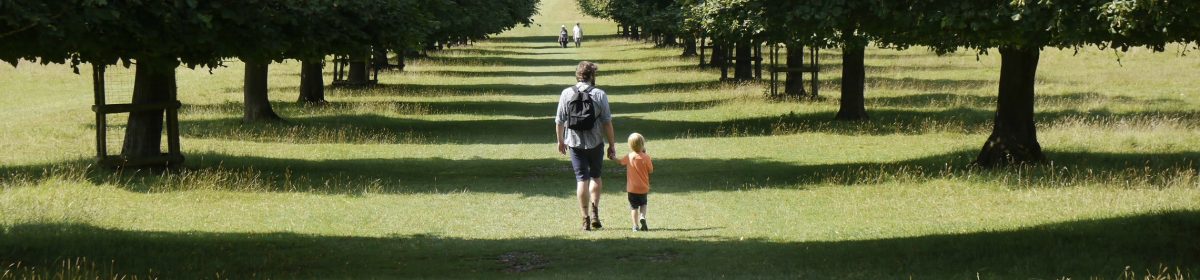
This is one of my favourite views of the allotment, looking west across the row of cordon fruit trees we planted five years ago. There’s a Victoria plum, a Bramley apple, a damson, a Conference pear and just out of frame a prolific apple that we’ve never identified. On the far side of the polytunnel are a dozen soft-fruit bushes and a further five apple varieties; oh and the lovely Tayberry growing alongside the tunnel. Perennials are such a gift. There are three rhubarb varieties next to the Tayberry; a Fulton’s Strawberry Surprise, A Timperley Early and a Victoria which all together keep us in fruit from early summer to late autumn. As you’ll see from the photograph, the paths have all been topped up with wood chips, and the raised beds with compost and leafmould. After a dire season last year and an arduously long winter we took the opportunity of a few days of sunshine to regain some kind of control – which led me into a chain of thought that led from our small plot of land to international economics.
It’s the word “control” that stopped me in my tracks. Understanding how dependent we are upon the weather and how vulnerable to all kinds of natural hazards and pests it would be all too easy to see nature as an opponent; a force that demands fierce and relentless vigilance – and so the temptation to resort to chemicals and traps to tilt the balance of power in our favour – and yes: faced with an outbreak of bindweed as we were last season; or asparagus beetle as we were for years, it would be easy to cave in and reach for the bottle. In fact we gave up and dug out the Asparagus bed which had never been productive; and took down the protective mesh surrounding the fruit cage, which the bindweed had treated like a climbing frame. Real gardening is like writing/genius (as described either by Mark Twain or Thomas Edison) – “one percent inspiration and ninety-nine percent perspiration”.
If we’ve learned anything at all about nature over the decades, it’s that good gardening (and running a country well) is an act of continuous and humble collaboration. Plants either like where you put them and how you tend them or they don’t – and if they’re not happy they display all sorts of aberrant behaviour or (and then) they die. Growing a garden is a conversation between us and our plants; it’s a contemplative occupation punctuated as it was this week by muscle busting activity after a long winter layoff. Just now; with all the beds prepped and ready and the tunnel filled with its first temporary seasonal residents – there’s a brief lull before the good storm begins.
Coffee table gardening is full of sunny days and idle afternoons strolling between the roses and sipping champagne. Real gardening features a self-extending list of jobs that may or may not get done this season or indeed ever! Such strolling as time permits is fully occupied with a conversation which could land you in trouble with your neighbours if they could hear you talking to your plants. The reward is found in the kitchen while the failures land up in the compost bin along with all your regrets and wasted opportunities. Change takes time and experience is gained very slowly, but the payback is a kind of loving tolerance. The slug, the snail and the Cabbage White butterfly are as surely our neighbours as the veg we grow and they are likely doing things that benefit us, even as we curse them under our breath. Once we resort to threats and violence we have lost our standing with nature and like Cain in the Bible we will be reduced to wandering half starved in a desert of our own making and with no neighbours to give us shelter.
Of course, being human, I’m always tempted by the idea of control – and as I was mulling over this post another question dropped into my mind. Is my endless list making a part of my being that wants to get a grip on a world that can seem chaotic? As my database grows and my knowledge of wild plants extends, I feel a kind of peace as I tick off each find – “well at least I’ve got that one where I want it; sorted, ordered, fixed”. And why do I write this journal? perhaps because many days pass when I’m so battered by randomness I need to write to make some kind of sense of it. My days are not sufficiently measured by traditions, customs and calendars which really represent our human need for times and seasons. What’s so cruel about climate change is not so much increased morbidity as much as the general feeling of being lost in the no longer predictable. For a gardener, climate destruction is personal. The inner and the outer worlds; the macro and the micro are not different things but the same thing seen through different perspectives. The deranged madness of politicians and capitalists could easily become my own symptoms of madness and violence like a pitbull released from its lead and out of control. Be careful what you wish for: wealth and power are the crystal meth of international politics.
I used to think a lot about my literary heroes and role models. Years ago I realized that they are all outsiders in some sense; many of them created by Charles Dickens. I wanted to be Ham Peggotty, never David Copperfield and yet – many decades later – the character that feels most like me is Mr Dick – (stop that sniggering in the back row!) the gentle neurodiverse protegé of Betsy Trotwood who struggled through writing to make sense of his life, tormented by what she (anticipating Freud) called transference; haunted by his incarceration in an asylum and that of his sister too, and by the execution of KIng Charles the First.
Anyway, that’s enough miserable maundering from me. There was a real moment of inspiration midweek when I was logging some old photos and came across a plant I’d spent hours looking for one hot day in mid Wales near the Dolaucothi gold mine. I knew it was likely to be there but couldn’t find it. Amazingly I discovered this week that I’d already seen it in 2016 at Woodchester Mansion in Gloucestershire where – thinking it was oddly beautiful I took some snapshots and never properly identified them as Sanicle, Sanicula europaea. I sometimes wonder if I should waste less time cataloguing and get out there in the wilds. This week I was given the answer – it’s 10% taking the photo and 90% figuring out what it is!
Actually this photo of a Lenten Rose taken in Royal Victoria park – as you’ll see from the timestamp – was taken on January 15th. There are a few others taken more recently, not least the daffodils in the window boxes, but we’ve been horribly conspired against by the weather but also another project that’s grown and grown. A splendid example of mission creep!
I mentioned several posts ago that I’m building a searchable database, pulling together the botanical parts of over 10,000 largely undocumented photos that I’ve taken over the years. Mission creep was inevitable once I’d discovered the incredible power of modern software to sort, list and interrogate thousands of data points in a few seconds. My original plan was to list all the plants I’d photographed and properly identified; hoping to reach 100 species. That number was soon exceeded and I realized that I was seeing the same plants more than once, so should I record every one or just the first time? My distressingly ill-ordered collection of random pictures was mostly filled with plants that took my eye for some reason. Consequently it’s very light on the ordinary everyday plants like Broad-leaved dock which I’d known since childhood for its capacity to cool nettle stings. But I’d actually never bothered to photograph either the nettles or the dock leaves which left a large hole in my database. This, and a problem with the EXIF data which recorded dates in an American format led to a thoroughly dodgy list when first sorted by date, and the incorrect dates which were added in bulk – had to be found and altered one at a time!
What’s an unrecorded photo called? -well completely lost is the best answer. When most professionals make a mistake, they solemnly intone the phrase “lessons will be learned” and take a quick look to make sure their pensions are still secure. When we amateurs mess up we have to start over and repair the damage with no pensions to lose. We even have to beat ourselves up for our own stupidity. It’s a tough call.
However in my case lessons really have been learned because every photo has to be checked and double checked for ID, date and location. I’ve discovered that phone grid references can be a bit wonky – some of my finds have been a mile out to sea. That too is occasionally my own fault for failing to type the correct numbers in, so now I use a suite of six separate programmes to check that I’ve got it all right. Then there’s the thorny issue of sorting the garden escapes from the ghost orchids and that means looking at the mighty databases run by the BSBI and several others to check that the plant in question grows where I’m recording it. The Book of Stace always has the last word on whether I should record or remain silent. Occasionally I find something that’s really original and there follows arm wrestling with the gate-keepers to get my record accepted. Peaceful?? you’re kidding!
Luckily I’ve got an excellent memory and so in front of me now is a database entry no 417 for Pencilled Cranesbill, Geranium versicolour. I can tell you exactly where I saw that plant because its beauty took my breath away.
So that’s all taken up hideous amounts of time and affected my postings severely. Then we’ve both had abundant hospital appointments trying to get our various ailments under control to free up the summer for fun stuff. The campervan has had an even worse year than us and we’ve had to spend a great deal on getting it back on the road. All this culminated a major service, new cam belt, new alternator and brake renewal. Our first trip away was supposed to be this weekend to celebrate the beginning of spring in the Bannau Brycheiniog – Brecon Beacons in old money; but the fates had other plans and we got less than five miles down the motorway when the speedo and then engine failed completely. Reversing downhill without power, brakes or steering back to the hard shoulder with cars and lorries passing at 70+mph was a bit hairy but we made it without causing any major problems – with the help of a friendly lorry driver and spent six hours waiting for help to arrive – during which we were clearly being seen as elderly and vulnerable because we were visited by every patrol car and traffic officer in South Wales, and phoned every half hour to make sure we were OK, Someone even offered us some space blankets! Eventually and in the dark, a recovery vehicle turned up and loaded us up for a very short journey back to where we’d set of in the springtime of our youth. We went to bed with a sandwich and slept fitfully as I planned the next stage of recovery getting the van back to the guilty garage. As the AA man said – he didn’t believe in coincidences either. Needless to say the garage took a more cautious view suggesting that the engine failure might not be anything to do with them. Harrumph says I!
Oh and just to redeem the shining hour I photographed a dock leaf today
Well, it’s been a fairly hellish winter and an effort of will to keep going but – finally – the Celandines are out; Imbolc festival has come and gone, along with wassailing – without many people noticing – and extensive counselling sessions have taken place to repair the emotional damage of the Christmas season when high expectations collide at speed with human nature. Time, then, for mending the nets which in my case has occupied many hours on the computer, preparing (and repairing) my little homebrewed wildflower database. I only thought yesterday how difficult it is to turn random and uncatalogued – let alone identified – photographs …….. to turn them and their associated EXIF information into proper data. Data that I can sort, filter, number and export to whom it may concern. It’s like a random collection of holiday snaps being transformed by the power of AI into a magnificent library. But we’re not there yet! AI isn’t half as clever as it pretends, and every single decision has to be interrogated and challenged, so my desk still groans under the weight of all those field guides and there are many sheets of scribbled-on paper surrounding me. I’ve made major and exciting discoveries about taking photos of plants but I can only wish that I’d known all this years ago. Today I’ve been “doing” violets; last week it was Fleabanes and I’m not even thinking about Dandelions; ‘sufficient unto the day is the evil thereof!‘
Throw all that into the mix with our long battle with the landlord concerning black mould in our concrete mock-Georgian block; two visits from surveyors hoping to prove that nothing can be done unless we open all the windows in the freezing weather and take it in turns to breathe (obviously it’s all our own fault) and by the end of the week Madame had built a temporary electric bender over the sofa and refused to engage for forty eight hours.
We managed to work in a couple of lectures, mind you. At the first talk the expert on Harvest Mice had obviously started hibernating in the cold and failed to turn up so the ever prepared secretary (who’s also the Vice County Botanical recorder) sorted through her bag and dug up a fascinating lecture previously delivered to the Somerset Rare Plants Group and which inspired me to even greater curatorial heights because we’d actually found about 20% of the plants already.
The second talk was given by the friend of a friend; an artist and teacher who’d worked with our oldest friend and also with some of the young people I’d worked with as well back in the day, not to mention his workshops at WOMAD. Our oldest friend Tony Eastman was given a wonderful welcome and tribute was paid to his still undervalued work. He deserved no less! Tony followed a similar course to me. My Dad wanted me to be an engineer and Tony was sent to the shipyard in Plymouth to do an apprenticeship. He applied to go to Art School as soon as he finished the apprenticeship, and I landed up working for a while in engineering before I swerved off towards real life. With Tony and Glen coming for tea before the lecture I baked some scones and bought clotted cream to go with home made bramble jelly – after all he’s a Devonian – and we gorged on home-made scones and jam before catching the bus down to the Art School. During the scoff he made the intriguing remark that in his childhood they used to eat the scones and clotted cream with black treacle and call it “Thunder and Lightning”. I could hardly wait to try it and so our youngest – who’s a chef – came and tasted them with me the following day. They were fabulous – if life threateningly sweet and fat!
The database that didn’t know when to stop. On the monitor Tinder fungus in Henrietta Park
Yesterday, as I was typing the latest batch of plants into the database, it suddenly dawned on me that the Potwell Inn isn’t the only journal I keep. This is a long and rather meandering story, but after we retired and after a particularly stressful family Christmas, we took ourselves down to Cornwall and were leaning over the sea wall in St Ives watching the waders and gulls when I realized that I didn’t have a clue what any of them were called. With the inscrutable emptiness of any retirement plans lapping around in my mind, Imade a ludicrous resolution that from then on I’d refuse to walk past anything I couldn’t name. Of course – like all resolutions – it was broken before we left the beach, but what followed was a trip to the local bookshop and our first bird book.
At that stage I’d been keeping a journal for some years but it was locked and private because much of it referred to my work and troubling family matters. Then technology intervened; my computer kit refused to communicate with the app I was using and in spite of a bit of helpline raging I was told that my kit was ancient rubbish and I should spend several thousand pounds on renewing it or piss off into outer darkness where there would be less gnashing of teeth. I’d reached the point in my church work where I could hardly cope with any more grief and felt my ability to empathise was slowly shrinking. With retirement imminent and following a great deal of group therapy and several years of one-to-one psychoanalytic psychotherapy I made the crucial decision to go public and start a blog in which I could pay more attention to celebrating life and being human. The Potwell Inn, the blog you’re reading now is approaching its tenth birthday. WordPress was more tolerant of heritage kit and in fact in the ensuing years I’ve moved across three platforms and four computers without a hitch. The pleasing irony is that WordPress eventually bought out the self-righteous and surly Day One and honour was satisfied.
The Potwell Inn was always intended to be a safe place for me to work in. After decades (my whole working life|) of negotiating dangerous places like public schools, prisons, youth centres and psychiatric hospitals to the Church of England (which was by far the most dangerous) I was pretty much burnt out and I needed to find somewhere to be truly myself without having to pretend I was the fearless and fun-loving extrovert I was generally taken to be. Here in the Potwell Inn, with a few notable exceptions, I have no idea who’s reading about me and for the most part I don’t need to mask or self-censor. I still need to guard against oversharing, and this is probably an appropriate moment to remind readers that the Potwell Inn is a virtual pub whose concept is borrowed from HG Wells’ comic novel “A history of Mr Polly” which was a set text from school but which provided me with an imaginary safe place as I day dreamed and gazed through the classroom window on airless summer days. Very few people I’ve known have really got past my armour so my cherished hope is that the customers – i.e. the readers of the Potwell Inn – find something in common here.
As a child my escape strategy was books. I became a completely promiscuous reader of biographies, the complete works of Dickens, Wells, later Henry Williamson, and up into much later writers. I consumed poetry, particularly the Black Mountain poets. My first involuntary tic involved moving the book past my eyes as opposed to moving my eyes across the page. I would begin a new line with the book held level with my ear. Mr Jablonski the ophthalmologist apparently thought it was just an odd habit and I’d soon get over it. Well I did and I didn’t, in that the tic just moved elsewhere; I lost the disturbing reading habit and started twisting my mouth and neck painfully. Much later I discovered that with an effort of will I could sometimes move it to less visible places, at about the same age- maybe ten or eleven, that I started to feel unable to breathe when things were sprung unexpectedly on me. My diaphragm would tighten like a drum and I could only partially fill my lungs. My Dad had a laudable thing about never making promises he couldn’t be sure of keeping but he sometimes applied it in upsetting ways, for instance by never telling my sister and I when we were going on holiday. We would go downstairs and see the suitcases standing near the door and I would be thrown into a panic – having no idea what was coming next.
The second thread of this post is a lifelong love of lists. The first book I remember was a picture dictionary, rapidly followed by i Spy books, Observer guides and a never ending sequence of obsessions that my Mother would disparage as “fads”. I became an expert on the rigging of sailing ships which led to a lifelong interest in knots – the cue for binge reading Patrick O’Brian. I could list the later (almost always non fiction) books that captured me – “The Foundations of Wireless” by M G Scroggie, way beyond my comfort zone; “Writing Illuminating and Lettering” by Edward Johnston – whose house in Putney we stumbled upon last year; and then after studying “A Potter’s Book” by Bernard Leach, I got into Parmelee on ceramic glazes and now over sixty years later I’m sitting next to the fourth edition of Clive Stace’s “New Flora of the British Isles”. Every one of these books involved the writing and testing of lists – endless lists which, all bar the last ten years or so, are lost forever. I even crack jokes about “feeling a list coming on”, which I think only Madame understands.
My first wildlife lists were handwritten in scruffy notebooks and also in about 17,000 photographs; many duplicated, two thirds of which didn’t even have basic EXIF data. The jumbled and unexamined sediment of a white knuckle life lived in fear of being “found out” – although I never knew what for. I’ve mentioned my melancholic temperament several times in this blog, but it occasionally tips over into what one doctor called “phobic anxiety” and even depression. In my twenties I knew I was ill when I started to see the winter trees as the bronchioles and alveoli of dead people. My mood was only lifted by absorbing, sinking myself in technical detail – the more complex the better and so I emerged from my ceramics degree with more knowledge of glazes and firing than was thought proper by the faculty members who believed that creativity did better when it was uncluttered by any technique at all. I recall a testy exchange with the Head of Department when he saw a drawing of an apple tree which I’d made which attempted to express its characteristic form. All living things have distinctive forms just as they have their individual variations. Close, even meditative attention is the prerequisite of all of art and science. He denied furiously that there was anything distinctive about tree forms and I may have given a sharp reply. That capacity to start fights also followed me through life. I never could defer to flawed or undeserved authority; neither could I tolerate pomposity, and in the end I got fairly used to being called ! “the rudest person I’ve ever met!” to which I would sometimes reply “Well you’ve been lucky then!” One of the best teachers who really stretched me – Sid Harris who taught Sociology – would challenge my flights of fancy by saying firmly “that’s all very well David – but where’s the evidence???” Evidence, honesty, clarity and truthfulness are foundational to civil society. Neglect them and you land up with fraudsters, liars, rapists insurrectionists and racists running the country. My principal defence at school became what must have seemed a frighteningly quick gift of sarcasm. By the end of first year sixth form I’d come within a whisker of getting myself into real trouble and left school with my collar being felt by the Head Teacher whose neurotypicality would have won awards, and my first job was as a junior photographic technician at the university where they handed me a Leica and a box of film; showed me where the darkroom was and said “go and learn to use them”. It didn’t last long but I managed to get a City and Guilds qualification. After that I tasted the joys of unskilled engineering work and welding before Madame and I met when she was 15 and I was 18 and she persuaded me to go back to college. I was astonished when they offered me a place.
I could go on but there’s no point except to say that at some point last year I decided to sort out my photos. I was interested to see whether I could recognize as many as 100 wild plants. I started off with a very elementary database but the more data I typed in, the more possibilities for extending my understanding popped into my mind and the more complex it became until it became a thing of beauty; a second Potwell Inn journal expressed in a different language. The photos, mostly taken on a phone over the past eleven years had enough attached EXIF data to reconstruct the past in diary form. I could find a photo and its date and location and it would evoke the whole complexity of the moment of discovery. Other details were embedded in my memory; of smells, of landscapes, of my companions (usually Madame). The database soon had over 350 entries, some of the plants I’d entirely forgotten ever encountering. The referencing and identification is quite intense work but after a few hours spending time – even with people I know and trust on, for instance, a field trip – I need a few hours of solitude to recover. I slip into my study, turn the computer on and open the Floras I’m using and an intense feeling of safety and relaxation floods through me. Memories of holidays, walks and random strolls along the river and canal banks can repair all those stressed out neurons.
There’s a deep historical, maybe spiritual significance in the naming of things. In the Old Testament as the creation is described (this isn’t a religious riff by the way, I’m just pointing out how fundamental the naming of things is). So in Genesis 1 – the first of 2 creation stories – and not many people notice that there are two – God creates and divides the higher orders – birds, sea monsters, every living creature that moves and then generalizes every green plant for food (does that make God 1 a vegetarian? a poisoner?) – and feels rather pleased. Then in chapter 2, a second and different account, God 2 makes everything in its higher order and then after a bit of dangerous cultural faladiddle in creating Eve, invites Adam to inspect and name all the living things – thereby making him the first taxonomist. Orders, families, genera, species and eventually sub-species. Put briefly, we’ve been naming and ordering things from the very beginnings of written culture.
A single flower is a single dollop of data – enjoy it while it lasts in a jam jar. A photograph with an added date and location makes it ten times as useful to our understanding. My 17,000 uncatalogued photos (not all of them flowers of course) is a personal scrap heap, of no use or interest to anyone except me and the ever patient Madame. But when I extract just half of a percent of them and tabulate them in a searchable database with “who, what, where and when” – all verified then they become seriously interesting and useful. But not only useful. I would insist that these living libraries of accumulated knowledge are beautiful.
At the New Year Madame and I went on our usual walk and found 22 plants in flower. Our Bath Natural History Society group went out a day later and recorded 66. A couple of days later again the lists were published nationally and I discovered that a plant which I’d recorded as Canadian Fleabane, which grew profusely outside our flat two years ago; was this year recorded as two different species – the Bilbao Fleabane and Guernsey Fleabane. I just had to go and check my apparent mistake and so I went out on Sunday in a freezing drizzle and gathered some samples of what looked like very dead material brought them home to take measurements and macro photographs and after a lot of head scratching and turning of pages came to the conclusion that they were right and I was wrong. Good news and bad news because I got an extra record. The trainspotter trap is never far from the surface.
There was more good news when we spotted (left – Right) the first Celandine of the year, Butcher’s Broom in flower and Cow Parsley in flower too as well as some Snowdrops. Spring is just around the corner.
But perhaps the tree walk we went to on Saturday yielded the nicest surprise, because we were shown something which was visually completely uninteresting and yet reminded me of a time when this part of the world was full of enormous Elm trees. On the left is an Elm sapling. It won’t get much bigger because it will soon be struck down by Dutch Elm disease, but I understand that resistant varieties are being sought out and grown on. I’d really love to see just one fully grown and magnificent Elm back in Wiltshire where we were students and fell in love with the landscape.
Dropping the mask has been quite a challenge – just as coming to terms with my own occasional oddness has been equally challenging. Possibly, my friends might say, the effort has been entirely theirs but diversity is the very essence of nature. Every living being, every plant, animal, insect or fungus is largely the same as every other of its kind – and yet different somewhere deep in its recesses. I wouldn’t swap with anyone else for the world. As a lesson from nature it’s irreplaceable and, for me, so are the lists which offer the safety in numbers that I mentioned in the title. Almost every wildlife programme we watch wants to suggest that nature is healing – that going for a walk in nature somehow fills us with an invisible miasma that makes us whole again. Well that may be partly true but I’d love to see it tested in some scientific way because my own thought is that it’s not just walking through it that does the trick but engaging deeply with it. It’s the engagement that makes us well – and the deeper the better!
A stacked focus macro photograph of the prickles on the cactus that lives on my desk
This is turning into something of a series. On January 5th I wrote about the plants being markers of the passing seasons after walking down a lane towards the beach here in Cornwall; none of them rare in any sense but all capable of lifting your heart as an avatar of spring. On 6th January I wrote about plants and their properties as irreplaceable sources of as-yet undiscovered drugs; but I warned that they’re also the canaries in the environmental coalmine warning us clearly about the danger of our extractive and instrumental abuse of nature. Then on the 7th January I turned towards the difficulties but also rewards of a meditative relationship with plants and nature as a whole. Notwithstanding the difficulties of talking about “soul” and “spirituality” I asked whether a loosely Taoist spirituality can build a deeper relationship with the earth and creation without resorting to religious fanaticism. Is there a way into a green spirituality that honours Wittgenstein’s wise aphorism – * “whereof one cannot speak, thereof one must be silent” ? or perhaps more simply, can we ever attempt to explain mysteries without distorting and diminishing them?
So today, in the fourth of these I want to address another gift that plants bring to us – their sheer beauty. Anyone who’s ever loved a William Morris wallpaper or fabric design will understand his debt to natural forms. Any ceramic artist must surely be especially inspired by the natural forms, textures and colours of fungi. Any painter could learn how to replicate the colours, and any sculptor the forms of these exquisite parts of creation that were growing here long before the first hominids evolved and will still be here and still evolving long after we’ve gone the way of the dinosaurs. I don’t write this as a knockdown stand-alone argument for preserving nature, but I believe that the aesthetic can’t be left out of the argument because it’s the aesthetic dimension that helps us to value those parts of life that can’t be reduced to money. If you ask the question “what is a Cowslip worth?” could anyone respond fully without mentioning its beauty, its history, its place in the scheme of things? The value of a wildflower meadow could never be expressed without including its aesthetic dimension except – I write this with a heavy heart – a property developer who might pay lip service to its “recreational value” by offering to build a playing field somewhere else – a promise that will be waived away by the local planning authority if the developer pleads that they can’t make a profit unless they build on the football field too!
And if I might sound off a little bit longer, if we all watched nature programmes on TV from dawn ’till dusk, seven days a week, we’d be in danger of being as ignorant of nature as we were when we were born. Television is inherently passive entertainment more or less presented as education. The real stuff is out there in the cold and rain or, with a bit of luck, on those warm summer evenings when once, in France, I grumbled because a churring Nightjar was keeping me awake in my tent. Real nature is sensual, tactile and mucky, and it demands patience and fierce concentration as well as some ultra rewarding book-work.
When I was learning to do botanical illustration (I never got very far but it taught me the value of close attention), I took dozens of close-up photographs of a Hyacinth so I could paint it using just three colours. This is a great exercise for anyone to try. I’ll never be a William Morris, but I’ll never again dismiss a Hyacinth from a supermarket as “just a Pot Plant”. As I went through my albums looking to pick some appropriate photographs for this post, it occurred to me that one other gift from the natural world to us is to inflame our curiosity. But that would demand a separate post.
*Tractatus Logico-Philosophicus
The Potwell Inn New Year quiz – answers below
First image – which kind of Wild Carrot is this?
Second image – what’s so fishy about this?
Third (Bindweed) what’s the significance of the little pointed bit between the two reddish leafy things?
Upper fourth – Which children’s’ book character shares a name with this plant?
Lower fifth – which word does this plant share with the one above?
Left upper sixth – What part of the body shares a name with this fern?
Left lower seventh – what’s wrong with this Strawberry?
Right eighth – where would you look for this plant?
Left ninth – What punctuation mark shares the name of this butterfly?
For the photo at bottom right, check out the tree label!
Answers – 1. Sea Carrot, 2. Oyster fungus, 3. !t’s the difference between Large Bindweed, where you can see it, and Hedge bindweed where you can’t. Gardeners hate both! 4. Marsh Woundwort. 5. Marsh thistle. 6. Hart’s tongue. 7. It’s yellow, still a strawberry but it’s inedible, 8 Sea radish. 9.Comma. 10. See nameplate.
I wrote, only a couple of days ago, about having to change all my saved database dates to the American standard – month/day/year – and here’s why. If you look at the picture, I set my new Olympus TG-7 to time and date stamp my photos so it would be easier to reference them. It’s no big deal really unless it happens to be the 11th September when the associations with 9/11 spread like a dark stain on the calendar. Converting the dates keeps taking me back to the twin towers.
But there’s another anomaly about date-stamping. It speaks of the seventh of January as if time were frozen at that moment – and in one limited sense it was. At exactly 12.51 GMT I was sitting on a very wet seat on the sea wall, looking at the waves rolling in, when I turned around and there, was a whole botanical life story. The roots, the leaves and the senescent remains of last season’s flowers couldn’t be sliced up like a supermarket cucumber; they were – they are indivisible. A little to the left I found another plant which was (improbably) flowering, out of season. Entirely out of time and out of season these plants would – if he’d had any sense at all, have thrown Thomas Gradgrind (See Dickens’ “Hard Times”) into a rage of doubt.
Later in our winter walk we found Gorse obeying the rules and Knapweed breaking them shamelessly. Plants, as I never tire of saying, don’t read textbooks and consequently don’t obey our imposed human attempts to regulate nature.
There’s a line in Peter Shaffer’s play Equus where Dr Dysart, a psychotherapist who is attempting to understand/treat an adolescent man who has blinded six horses says “Without worship you shrink, it’s as brutal as that. And when have I ever galloped?” Dysart, reflecting on his own timid suburban life is grappling with his envy. but also the cost to his 17 year old patient, Alan, of returning him to something that’s called normal but lacks all fervour and intensity.
That line, lament – if you like – “Without worship you shrink, it’s as brutal as that. And when have I ever galloped?” has lurked in the back of my mind for many years. Occasionally I mark these posts with the tag “Green spirituality”, and a couple of days ago I used the word “soul” which I never feel comfortable doing because I couldn’t say exactly what they mean. Alan, the adolescent in the play, has built up a whole theology around his passion for horses, and there’s the problem. Religion attracts dangerous pathologies like moths to a flame. Why would I want to risk adding to that number?
So I seem to occupy the somewhat purgatorial space between the instinct to worship and the urge to run a mile from anyone who claims to have the secret; but the plants can still (quite literally) bring me to my knees. I could have chosen any number of plants to illustrate this. Yesterday we found loads of extremely infant Wild Carrots and – because sometimes the youthful forms of plants can be very different from their grown up parents, they’re hard to identify. But their presence in all their life-stages, mirrors our own so marvelously that I can look at the senescent remains of the old rock samphire amid the fresh green leaves of the younger and feel a powerful sense of belonging. The gulf between me and what the Taoists call “the ten thousand things” is bridged by that sense of solidarity. The same wisdom teaches that “The Tao that can be spoken is not the Tao” Any kind of theology to try to explain that unity is destined to fail. Like all theologies it is no more than suffocating waffle, and I’ve heard a bit of that, believe me!
In a previous post I wrote about dialects and suggested that the plants which grow in particular environmental niches are a kind of dialect which we – as observers and often users of landscapes can learn and understand. So today I want to take a small step further and suggest that the philosophical distance between ourselves and the plants, indeed all of the ten thousand things which has created an epidemic of blindness, must be overturned if we are ever to become fully human. Nature speaks, mostly inscrutably. You might think of the spring flush as a song of outpouring joy but I should say that the predominant tone of most natural history programming falls into the pathetic fallacy trap. We don’t feel like plants and animals and neither do/could they feel like us. We meet as strangers and we can either lock them into our own conceptual prisons, or make the effort to learn their language. The earth speaks in her own way and we respond in ours – for good or ill. That’s a conversation
What I am sure about is that the shock of recognition that comes with stumbling upon a new plant is as close to worship as I need to experience. Botany is not at all like trainspotting!
While we didn’t exactly come down to Cornwall to search for spring – after all it’s barely January – what you certainly notice is that everything’s at least a couple of weeks ahead of Bath. I listed a few early starters yesterday; none of them in flower but all putting in an appearance. So, in the depths of this grey and dreary weather I thought it would be nice to show a couple of plants from today that cheered me up no end. On the left Allium triquetrum, three cornered garlic, and on the right Poa annua annual meadow grass; both cheap as chips, common as muck and mutton dressed as lamb if you like, but lovely. I must have a slut’s eye for the local weeds.
Sea Spleenwort in Bath city centre!
My mind was actually set on higher things because I set out with a grid reference that I hoped would lead me to some Sea Spleenwort. We’ve walked miles along this bit of coastline looking for it but if it’s there it’s no more than a millimetre tall (which I know isn’t true because I’ve seen it growing in Bath). I know it was here years ago because it was recorded by an impeccably qualified botanist, so I guess it may just have died out – like so many species in these times of climate and wildlife destruction.
It’s been freezing cold and wet here since we arrived and I was thinking that if the Atlantic Meridional Overturning Circulation (AMOC) should change direction (which is a real possibility with global climate change) we shall have to stop pretending we live in a warm and temperate climate and put up with living at the same latitude as St Petersburg. At the moment we’re in denial about the effects of climate change. We dream of uninvented, uninventable technologies coming over the hill to save us, like the Seventh Cavalry in an old cowboy movie but the bad news is that they’re not there.
Maybe we focus too much on the loss to science with species destruction. OK there are a million reasons why we might need to learn from life-forms we haven’t yet even discovered; powerful drugs to be discovered and so forth, but the sheer loss of beauty that comes with species destruction is a loss to our souls (and don’t ask what I mean by “soul” because even though I couldn’t say what it is, it’s still an important intangible something which raises our humanity above the instrumental.
The weather here, even in the far South West, has been pretty awful, although not as bad as it’s been further north, but those flowers (even grasses have flowers) are a kind of token that we know will be redeemed as February turns to March and our hearts begin to thaw.
It was, after all, slightly counterintuitive – to escape a yellow weather warning yesterday by driving towards the problem – but we figured that if we drove down to Cornwall early enough we’d arrive before the approaching warm front hit the coast and turned the cold air that’s been squatting like a toad over us for days, into snow and hail; giving us time to unload the car before the heavy stuff began. I was so excited about my plan that I woke up at 4.00am and couldn’t get back to sleep; so I got up at 4.30am and made tea. There was nothing we could do about the 7.00am grocery delivery except pack everything up and get the car ready to leave. It was -3C when we left and the temperature rose slowly as we headed towards Cornwall in the gathering dawn light.
And it should have worked if it weren’t for the caretaker at the cottage we were going to. The rules – she pointed out – were not to arrive before 4.00pm and we were far too early having almost beaten the storm’s landfall. It rained fairly hard for the last couple of miles and we had hoped for a less belligerent welcome. The temperature had collapsed again and Madame suggested (in the absence of anything resembling a warm fire) that we go for a walk.
Now we both love the Roseland peninsula – we’ve been coming here for decades – but yesterday didn’t feel like one of those old Great Western Railway posters; the blue skies, the seagulls and sandcastles on the beach. The sky was slate grey and mantled a freezing gale which carried sharpened slivers of ice that sliced away at our faces. Unbelievably there was a party of litter pickers working across the beach – I wondered if they were the Portscatho Bloods doing a bit of community payback. “What fun” said Madame as the rain ran down her trousers and into her boots – but I didn’t think she was being completely honest when I looked at the photo. The sea was – as they say around here just before the boat capsizes – “a bit lumpy!” and with a couple of hours to while away, I wandered off plant hunting and found the only thing on the beach with a smile on its face. In fact I couldn’t quite believe how healthy the Buckshorn Plantain looked, clinging to its crack in the shallow cliff. I had been hoping to find a Sea Spleenwort – I know they used to be here but after several years of hunting I’ve never found one, and nor has anyone else for the last 23 years according to the wonderful BSBI database, so I’m not going to beat myself up too much. By the time we got back I was so cold I couldn’t open the cottage door; we were both soaked to the skin and – if I’m completely honest – I was a tiny bit grumpy; warming my corpse fingers in a pair of heated gloves. When we finally got the kit inside we turned on so many heaters they probably had to start up a power station somewhere and ate ultra processed pizza (breaking several rules at once!). We don’t travel light when the Potwell Inn goes off on an expedition. Cameras, binoculars, books and computers; power units and leads and spare batteries, walking sticks and just the one tripod this time; oh and drawing equipment in case we run out of things to do.
We were in bed by 9.00pm and then this morning, Madame was reading aloud extracted best moments from the internet when she came across some excellent naughty bits which included a video interview with David Hockney where he was talking enthusiastically about spring – his favourite season. “It’s like an erection” he said. “Everything is upright, and primed to go – but it doesn’t last very long”. I couldn’t have put it better myself.
Outside in the lane we could see the beginnings of the spring erections. Alexanders, Cow parsley and even Hogweed were already shouldering one another aside in the great competition for growing space. Pennywort has sprinted away from the blocks, and the Sea-radishes have reached their moment of ravishing beauty before it all goes wrong and they leave their rosettes aside to go for broke in the dune margins. There were even a couple of impoverished looking Red Campions in flower, like ragged beggars waiting for a hot meal.
So today it’s still raining and we’re resting. Madame is reading and as soon as this is finished I’ll go back to the soul-destroying boredom of converting my database dates from English to American format so that the software can list accurately by date. I’m sure there’s a way of automating the process but it would probably take longer to learn how to do it than to amend each (of 350) dates manually. I’ve almost finished sorting the wheat from the chaff in Google Photos so that just leaves all the photos I took in 2022, 23 and 24 to be identified and catalogued. This path is not lined with primroses!
Looking across Gerrans Bay in May 2023 on a sunnier day. This time we’re on the far side of the bay on the right hand edge of the photo. Invisible, sadly, because of the sea mist!
u4, by the way, is the way that science now describes these photographs of a not very lovely patch of grassland on a wet July day in 2020, but before I get to that I want to talk about what a dialect usually means.
I was born in Gloucestershire and we’ve lived within twenty miles of Staple Hill for most of our lives – during which time the area has gone under three different county designations; whilst large industries, for instance shoe making and coal mining have disappeared leaving hardly a trace. Perhaps, for me, the saddest thing of all is that the local dialect has almost died as well. You could always tell where someone came from after you’d heard a couple of sentences. Bristol was particularly rich in local dialects so you could almost predict which parish people came from. All that “alright my lover” and “gert lush” nonsense that we hear when outsiders try to imitate Bristolian is fit only for second rate comedy programmes because if – fifty years ago – you’d walked up Two Mile Hill from the centre you’d have travelled through at least four distinct speech forms. The slum clearances and tower blocks mixed things up in the fifties and sixties but even as a child you could leave the hints of Somerset behind as you entered St Jude’s and Old Market and then uphill through Easton (incomprehensible to outsiders) , Barton Hill, St George, Speedwell and unmistakable Kingswood; beyond which Gloucestershire partially reasserted itself, and somewhere in altogether alien territory, there was Wiltshire. When I started going out with Madame, if I missed the last bus (which I did regularly), I would walk from the western boundary to beyond the eastern boundary of the City and stick my head around the bedroom door to say “alright?” to my Mum when I got home. My own voice was shaped by the rounder and softer vowels of the southern part of Gloucestershire and I’ve never tried or even wanted to disguise it. It’s the dialect of my childhood and it’s a thing of structured beauty, of arcades and landscapes and industries; of Methodism and mining and shoe making. I’ve always thought that to lose my accent would be to lose part of my essential being and if anyone has ever equated my accent with any kind of swede bashing stupidity I walk on by and leave them to their knuckle dragging idiocy. If I’m anything at all it’s one of Gramsci’s organic intellectuals whose roots lie in life and experience and whose reading and understanding is refracted through lived experience.
I suppose there is some kind of generic west country accent that will get you by in most places , but with the exception of one place I almost never hear the real thing. When I first visited the sawmill at Oldland Common – exactly halfway between where I was born and where we live now, I was served by a man who spoke the precise dialect of my childhood. I can’t begin to express how unsettlingly moving that was; like finding and losing something very precious that had no monetary value at all but meant the world to me; as if I were listening to a recording of my life starting in the distant past.
Rodway Hill was always a part of my childhood. We had picnics there and eventually I went to school there. On Rodway hill I had the first of many experiences of the oceanic as I laid in the grass watching the clouds and listening to the wind in the (as yet unnamed long grass). The flora were integrating themselves into my mind; becoming part of me. The hill itself is quite small but remains inexplicably protected from all the surrounding development. you can stand at the edge and look across to the dense post-war housing where I was brought up. When I was at school there I went out with a girl who (pre Beeching of course) caught the train back to Yate where she lived and I would walk down to the station with her and look at the sandstone cutting without much curiosity. But that landscape has structured my imagination and so every time I find myself in one of those strange and starved landscapes I feel as “at home” as I do in the sawmill ordering fence posts.
In July 2020 during lockdown I had the strongest urge to go back there and so Madame and I drove over in the rain and I took a series of photographs of the plants that caught my eye. That was the end of it until I made the madcap decision to catalogue all my random photos, name the plants and build a big database. Then last week I got to the Rodway photos and – because I know a bit more botany these days – I saw straight away that these plants were very different to a selection taken from, say, two miles down the road. It was as if the hill spoke in a kind of intangible dialect.
This discovery was provoked by the fact that there was a plant I couldn’t get my head around. All the phone apps told me with absolute certainty that it was Heath Bedstraw – Galium saxatile – Then, after a good deal of research I made the surprising discovery that Rodway hill is a small patch of what the scientists call acid heath, sitting on the cap of precisely the sandstone I’d seen but not understood, waiting for the train with my then girlfriend. Then after even more searching I discovered that my photographID’s were likely correct except for the fact that some of the flowers had five petals and not four, and some of the groups of leaves came in fours but not fives or sixes. After exchanging emails with our County Recorder I discovered that (yet again) plants don’t read textbooks and that my plants were within normal variation.
But there’s a kicker to this rather long-winded piece because it helped unravel the mystery of why I’m attracted to these particular landscapes. Why else would I feel so at home up on Mendip or down in Cornwall, on Dartmoor or on the Bannau if it weren’t for the fact that they speak with exactly the same botanical dialect that I learned on Rodway as a child. The top of Blackdown above Burrington is almost identical – with its sandstone cap above the carboniferous limestone. The reference to u4 in the title of this piece is merely the code for this specific habitat in the National Vegetation Classification (NVC) descriptors with all of the poetry, all of the memories, the longings and all the rest of the synaptic riches stripped out.
Maybe we would be able to grasp the meanings of landscapes and their flora by approaching them as dialects. The way things grow around here. Maybe we should occasionally take a break from Gradgrindian dogmatism of precise description and let u4 back into the sunshine like a pit pony released from darkness and sweated labour into meadows and heaths where lovely things grow in historic and vibrant cultural communities.
This photo was taken on the allotment back in 2018
Modern peasant – such a slick title, and I was really pleased with myself for dreaming it up and writing about it a couple of days ago. On the other hand I was a bit cautious about using it in case I was stealing the wind from someone else’s sails – so I Googled it and got back a string of academic references and a book title: “The Modern Peasant, Adventures in City Food” published in 2013 and written by Jojo Tulloh. I’m giving its full title for reasons which (I hope) will become clear and so you can get yourself a copy too.
As it happened neither author nor title meant anything to me but I was intrigued enough to order secondhand copies of two of her books which hadn’t arrived by the time I wrote my piece, and I wrote on, unaware of the resonances between her work and mine. When it arrived I started to read it and I’m now halfway through. It’s almost alarming to see the parallels and tremendously reassuring to think that a generation and 25+ years behind, our vision continues. I always look at the bibliography in every book I come across which has one, and anyone who can freely quote from Patience Gray, Jane and Geoffrey Grigson, John Berger, William Cobbett, Dorothy Hartley .. and so it goes on – someone whose roots are so deeply set within the same humus that inspires the Potwell Inn – I know I’m going to love.
There are books I’ve read which express something that so profoundly resonates with me I know I’ll read and re-read them. Patience Gray, for instance, is one such writer whose recipes express something much deeper; a philosophy of life. Bernard Leach’s book “A Potters’ Book” does the same thing. Hidden within the instructions and formulae is a whole way of being human that can move us on to a different track. I first read the Leach book in one session one summer day, leaning against the library shelf where I’d found it. I didn’t understand the half of it and even now, each time I re-read it I find something new that I never previously understood. That summer afternoon I knew I wanted to become a potter.
So this rather lovely book could be the manifesto for the way of being human that Madame and I dreamed of living out, getting on for 60 years ago. Bread making, fermenting, growing, rearing, foraging, pickling and preserving are the chapter headings beneath which lies a rich mother lode of personal memories. I spent this morning rescuing a batch of Tayberry jelly that refused to set. Tayberries lack pectin and it can make very sloppy jelly; good for rice puddings but not so good on a slice of bread and butter. My discovery today was that by increasing the boiling point to 105.5C – just one degree higher – the jelly (rather less of it) set perfectly.
It’s early winter and our storage cupboards are pretty full. Some crops went well and some not so well. Our weekend in the Brecon Beacons gave us the chance to share ideas, swap recipes and cook together with our oldest friends which is always an inspiring time and makes my creative juices flow. We tasted cheeses and helped to send pigs off for slaughter. Madame and I have brewed beer, grown crops, kept a goat, made terrible wine and maintained a flock of increasingly heterodox hens. Every page of “Modern Peasant” contained a reminder of our journeys in France, Portugal and Spain in search of food we’d read about but never actually eaten. The tripe sausages in a motorway service station near Lyon that tasted of shit were probably the worst thing we ever tried. In Portugal I had to almost fight a waiter to try Feijoada in the one restaurant that still produced it in its original peasant glory. The waiters were so amazed that they surrounded me and watched as I ate, and I swear I found a pig’s tooth nestling in it. In another restaurant a waiter refused point blank to sell me Stone Soup because, he said, I wouldn’t like it. I insisted and I didn’t – but at least I can speak from experience.
Ah yes, we watched handmade cheese being made in Wensleydale and we’ve now eaten our way through many of the artisanal products which have come back from virtual extinction. The Gloucester Services on the M5 have become a place of pilgrimage for foodies; unimaginable 50 years ago! The Potwell Inn kitchen has been assembled from all the recipes we’ve ever tried and loved. There are always two or three types of stock on the go, and the longer we go on the more likely it is that we will have the exact right tool for the job. Two or three times a week you’d see sourdough proving on the stove in a bowl that was given to us 67 years ago.
So yes I was excited, encouraged and inspired by Jojo Tulloh’s book, and if you live in a small flat in the middle of a city and long to discover your inner peasant, this lovely book will set you on the path for sure.