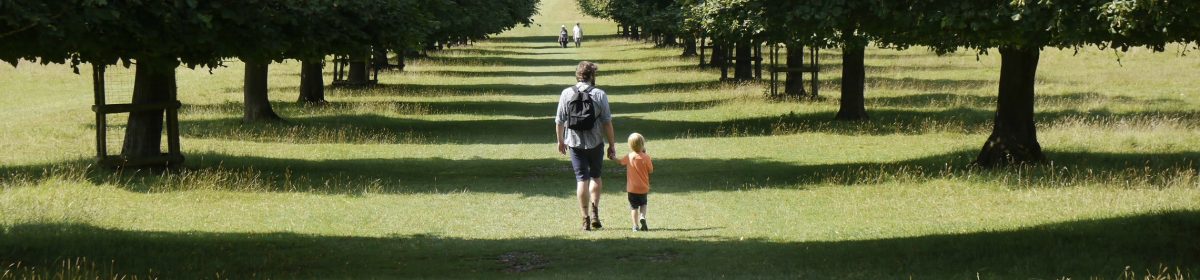
Back to Wales soon- third time lucky we hope!

Yesterday, after six weeks, we finally got the campervan back from the garage. We’d already cancelled the first trip to Wales because just as we were about to leave we discovered that the alternator had failed; and so we cancelled the trip and took the van to the garage on November 4th to get it replaced. There were no more opportunities to get away before winter set in, and so we arranged to have the van serviced in March and to have the cambelt replaced at the same time. I’ve written about this already, but to recap briefly – on the second attempt at crossing the M48 bridge to Wales, the engine failed after 8 miles and we were towed ignominiously back to the garage a couple of days later. It turned out that the brand new water pump had failed, causing a domino style collapse of the new cambelt and pretty well blowing the engine up altogether. Fortunately the garage accepted responsibility and shouldered the bill of several thousand pounds under their warranty. Yesterday after two engine replacements, new valves, fuel injectors, water pump and camshaft we picked the van up and drove cautiously back to the storage site. The van has become – in psychoanalytic terms – a transitional object – a term invented by DW Winnicott to explain the importance that children attach to soft toys, teddy bears and comfort blankets and, evidently, adults attach to campervans. Anyway, next week we’ll make our third attempt to cross the River Severn and go back to the Bannau Brycheiniog for a bit of R&R after Madame’s knee replacement 3 weeks ago.

Walking back to the flat afterwards I spotted a type of grass that I’ve never photographed despite knowing it since I was a child. False Oat-grass pretty much describes itself. I do have a picture of its first cousin known as “bulbosa” which rather like yesterday’s plant was growing right outside the van; not six feet from the door and prefers a seaside setting. The only difference between the two variations is the underground part. The great thing about them both is that it’s so easy to strip the seeds between your thumb and finger. It’s a very sensuous feeling. You can occasionally bend the lower part of the stalk (culm) across the upper part and make a rather feeble gun which, in a following wind, might spray the seeds a couple of feet. Its other use is to place one of the broader leaves between your two thumbs and make a kind of wheezy reed which makes a gratingly horrible noise which annoys grown-ups. This is a great example of ethnobotany which studies the uses to which plants are put in different cultures. Children learn these uses from an early age as long as their parents let them outside the door to learn the dangerously wild skills of being annoying. The best guns, for instance are made with ribwort plantain which on a good day might be fired a yard or so. The broader leaf of Plantago major can be teased apart to make a little harp. I could also mention daisy chains but they were a closely guarded girl-skill and we weren’t allowed to play. Other more annoying games could be played with Cleavers, and burdocks. At a higher level of aggression there were also stingers (nettles) with dock leaves as the preferred antidote although I’ve since learned that plantain leaves would have been a bit better.

If, during these games, we got hungry, in spring we could always chew a few fresh hawthorn leaves (bread and cheese). In the late summer we could find an old tin can and some puddle water and boil up elderberries for wine. Then there was our variation on pooh sticks which involved skewering hard dog turds on sticks and chasing one another around with them. We could make perfume from rose petals and cider from scrumped apples. Obviously conkers were played in the autumn and we could take a break and smoke bits of old mans’ beard like very thin cigarettes. Dandelions could be gathered for feeding the rabbits which, if we were lucky would sometimes disappear and re-emerge on a plate as stew. The upshot of all this unstructured ethnobotany was that we set out in life knowing large numbers of plants and what you could do with them even if you didn’t quite know their names. I’m afraid that’s no longer the case and is probably one of the reasons our culture is so painfully and dangerously divided from nature.

A couple of days ago I wrote a piece suggesting ways we could encourage a new generation of naturalists and fire them up to fight for the earth. This time I’m suggesting that the starting point needs to be in childhood. My greatest fear is that we’re doing them far more harm allowing them unlimited access to social media than we would by risking letting them out unsupervised to experience the uncurated wild.

Muckyannydinny Lane – or how to inspire, recruit and train an army of naturalists to save the earth.

I have no idea who mucky Anny was, although I can hazard a guess that she was not much loved by the godly wives of Seymour Road. I can vouch for the fact that the little cut-through alley was the scene of many a knee trembler; back in the days when a degree of broken glass and a few rusty cans were the inevitable setting for illicit cuddles before sex was invented.

Muckyannydinny lane peeled off from the more salubrious lane that led to the primary school and the little Methodist Chapel where Auntie Doreen and her extended family presided. She also presided over my school dinners where she could punish me for minor crimes by heaping extra swede on my plate. The end of the lane was guarded by a Mr Monks, a mortuary attendant (I’m really not kidding!) who would yarn to us about his macabre experiences whilst teaching us for our first aid badges with the Boy’s Brigade.

Muckyannydinny lane was a side turn for the bravest souls to take a difficult route to the bottom of Seymour road; a short-cut for which wellingtons and a machete would have been useful. Opposite Mr Monks’ cottage was a hedge of knotted and writhing branches much like the ones in the photograph. The hedge absolutely fascinated me. If that image conveys a certain eroticism it’s because the first time I ever saw two people making love (after a fashion) it was just a little further on, at the end of Muckyanny …….. you get the picture. They were teenagers, she was crying and he was pressed into her in what must have been a practical rather than delightful manner. Hence the knee trembler . Obviously at around eight years old I had no idea what was going on and I hurried past, avoiding the hostile glare of the young man and struggling not to look back for another intoxicating draught of forbidden fruit. I could feel the forbidding teachings of the Methodist chapel crumbling, but far from any sense of bewilderment and trauma the experience welded together the experience of nature (the lane with the knotted hedge) with the eroticism of the teenaged couple.

Years later I spent several days perched on the bank of By Brook attempting to capture the same kind of entangled mass of roots in a pencil drawing. The exact same feelings were flooding back; which would seem to indicate a fine example of a psychological complex. The associations of one powerful experience flooding the field of another. So if you were to ask me about my love of nature – and if I were being strictly honest – I’d have to cut all the anodyne explanations, clear away the smokescreen and to say that from a very early age the natural world was suffused with a kind of aesthetic eroticism. For me it was infused with a wild amalgam of spirituality, poetry, art, and contemplative joy. The natural world could lead to ecstasy – being lifted out of myself; out of my troubled, complicated family; out of anxious meals waiting for the inevitable row, away from steamy windows and threats of awful punishment for unspecified crimes at Sunday School.

Bring immersed in nature

So I was planting potatoes on the allotment a couple of days ago when I was joined by a couple of fearless Robins who came up to my feet and filled their beaks with pests I was glad to see the back of. Somewhere back in the bushes next to the road, there was a nest with young and our two universes overlapped for an hour while I planted spuds and they fed their brood. Obviously I talked to them but apart from a beady glance in my direction now and again, the conversation never really got off the ground. So I wondered “whose allotment was this anyway?” as I watched them, and I concluded that it was obviously a shared space. Later I spotted a clump of grass that I’d identified using an AI app a couple of days previously. It said it was Barren Brome but being a bit of a belt and braces kind of naturalist I got the books out – sooo many books! – and double triple checked. They weren’t much help as it turned out except for one book that said that if you looked at the ligule – technical term I know, but if you look carefully at the stem just where the leaf branches off – you would see that in Barren Brome the ligule is sort of shredded; shaggy. Imagine wearing a T shirt under a normal shirt and that your neck is the grass stalk. The ligule is the bit where your T shirt shows. It can be all sorts of shapes and appearances from pointed to shaggy and even just a line of bushy hairs. The other important bit is called the auricle and not all grasses have them but they’re the equivalent of your shirt collar – little pointed lapels that sometimes overlap and occasionally aren’t there a all. If you really want to impress your friends you can wander through a field of growing cereals and identify what’s growing there just by looking at the auricles. That’s a trick taught to me by a retired grain salesperson on a pilgrimage years ago.

Anyway, and sorry for that looping distraction, I rather distractedly pulled out a stalk of this grass and looked for the ligule (and now you know what that is), and there was exactly the minute shaggy, threadbare looking structure I was looking for, and there followed not just the inner nod and a resolution to record it – no! there was a burst of joy; real song-like joy at my discovery.

Robins, Barren Brome, the sun on my back and planting potatoes became a totally immersive occupation. Wild nature is like that. I talk mainly about plants but the moment I saw my first Heron take off (it froze my blood with its ancient magic); heard my first Curlew call or caught sight of a Kingfisher on the Monmouth and Brecon canal, they changed me, reorganised the inner workings of my mind. A group of Adders sunbathing at the bottom of a buddle-pit on Velvet Bottom provoked a tectonic mind-shift.

Nature isn’t there for our amusement, or for showing off how clever we are. There’s no future in objectifying nature with our beloved reductive thinking; making more and more of less and less, as if it’s (she’s) there so we can exploit her for personal gain, like a victim of slavery. Nature isn’t really there for any fathomable reason at all which is precisely why it’s so wonderful. You will probably know the slogan “We have seen the enemy, it is us” coined, decades ago, to help celebrate Earth Day. I’d like to reverse that slogan in the face of the terrible emergency we’re facing and imagine ourselves as foot soldiers whose only weapons are poetry, philosophy, religion (properly understood and not mangled by worship of the status quo); spirituality; music; drama; dance ; healing and multifaceted cultures working together in creative resistance.

But in order to achieve that we need both to to inspire but more important to equip and enable ordinary people like us to take on the Magisterium and demand to be taken seriously, to be allowed to learn and grow in confidence and stature without having to resort to hand-to-hand combat in the corridors of influence. There’s an old, but useful proverb that I came across during my parish priest days:

The people who keep the church open are the same as the ones who keep it empty!

I’ve lost count of the times I’ve been turned away demoralized and deflated by some self-styled expert whose instinctive response to new ideas is to destroy them in case they catch on. Being largely self-taught in botany, for instance, means that I have to start from nowhere every time; battling with the jargon, technical terms and latin that seem almost designed to lock out intruders. The plus side is that I’m extremely stubborn and I press on by building the conceptual framework that underpins the whole edifice. When I know something I really know it and so I push back, only to be labelled rude and aggressive. Someone once called me the rudest person they’d ever met. I thought at the time they’d been rather lucky.

How can we persist in a situation where millions, probably the majority of people know there’s an absolutely linked climate and financial crisis and would willingly do something to help, but feel intimidated by precisely the out-of-date ideas which got us into this mess in the first place. The current crisis is largely fuelled by fear, envy, greed and hatred. With all respect to the welly telly brigade, watching documentaries about nature is not a substitute for being in it; immersed in it, enraptured by it, possessed by it and – dare I say – guided by it.

There’s nothing like growing an allotment for teaching us how stupid is the idea of controlling nature for our own benefit. Nature is our mother, our lover, our spiritual guide and our friend.

Tulip mania at Dyrham Park – but we beat the hordes and found the prize.

I can’t claim too much about the plant in the photo except to say that I’m almost certain it’s a wild Tulip, Tulipa sylvestris – hiding in plain sight among hosts of dandelions and what will soon be equal numbers of Oxeye daisies and Rough Hawksbeard. Talk about a needle in a haystack! I’ve sent off some more photos and measurements to the Magisterium for confirmation but I’m fairly sure of my ground.

Our discovery was purely accidental – we arrived back from our holiday on the Lizard and 24 hours later Madame was in hospital having a Knee replacement. It’s essential to exercise (sensibly) after the operation, so we took ourselves off for a very short walk in the Park and in the absence of any mown paths so early in the year I took the opportunity of scouting around for special plants. Later in the year we’re almost certain to find Bee orchids, Early purple and pyramidal orchids too, but this year has already been strange – climatically – so an early expedition made sense and almost immediately I noticed this plant which stuck out like a sore thumb amongst its neighbours.

Until I’d spent a few hours with the AI apps and then the field guides I had no idea either that a wild tulip even existed. However it escaped from a garden in the 17th century and has set up shop in a sparse set of locations across the south. I hesitate to use the word rare, but it’s certainly uncommon. However the bad news is that my specimen was badly infected by Pulcinella (probably) rust fungus and may well not flower this year. Richard Mabey says (In Flora Britannica) that it often fails to flower in any case so I’m not holding my breath. I’ve been visiting an equally unusual Mullein plant on the Canal for almost a year now waiting for it to flower, so although patience is not a virtue I possess much of, I’m used to waiting.

The supreme irony, of course is that the Park was overrun with visitors to the formal gardens which were hosting a Tulip Mania event. Dare I confess that I’m not overly fond of tulips but clearly thousands of people are, and the car park was completely rammed. However our favourite parking spot was empty as ever and we barely saw another human being as we discovered the ancestor of all those blowsy showoffs down in the formal gardens. It looked like a modest and rather sickly leek, but a single sniff confirmed that it wasn’t a member of the allium family.

So there it is – we await the verdict of the Magisterium whilst drifting spores have infected the most important non-exhibit in the show. I really hope it flowers because it’s very pretty in the modest way of wildflowers compared with their steroidal and silicone plumped offspring.

Today Madame and i went to have her dressings taken off, and we both received our Covid boosters. We should get the campervan back this week after the new engine has been fitted and then the summer stretches out before us like a magic carpet. Summer never felt so inviting!

St Georges’s Day – April 23rd; traditionally peak dandelion day.

A very long wait rewarded!

Madame holding one of our faintly miraculous crop of cauliflowers

It’s been an extremely odd few weeks, what with the campervan van engine blowing up after a service error which was meant to keep it on the road. “All repairs will be under the warranty”, the nice mechanic said, after he realized that I wasn’t going to scream at him. Then there were the two weeks in Cornwall during which we identified over a hundred new-to-me- species and then, on Monday morning we bowed to the inevitable and shipped up to the local hospital for Madame’s second knee replacement. We reported at seven and by eight the same evening we were driving home again clutching sticks, an embarrassingly obvious commode and a bag of pills – most of which looked either dangerously addictive or dangerously laxative ……. who knew?

And so I straightened my nurse’s hat and buckled down to a routine that only fitted our quiet and orderly lives where it touched. It turns out there’s a very short distance between tired and tetchy and in pain and tetchy with a fuse that can be lit by the most innocent roll of the eyes. The drug routine was so complicated I had to make a spreadsheet to explain all the timings, and we soon abandoned a couple of the drugs which made Madame puke. We are model patients – eschewing the morphine in favour of a couple of paracetamols and a scant diet of pride and anxiety – chewed over fifty times and swallowed painfully. However progress has been good and today I appointed myself chief occupational therapist and we went to the allotment to see how things are going. And they are going very well indeed. Not least the cauliflowers which we’ve been growing for over fifty years and never really succeeded with. Today every plant carried a perfect small cauliflower – just right for the two of us. It was like a botanical Easter egg hunt except it was me crawling around and Madame directing the search from her comfortable chair.

So in between nursing duties I managed to complete the plants spreadsheet having trawled through 17,000 photos, most of which were useless – lacking useable data – and boiled it all down to 6oo verifiable records and 400 species; in terms of bang for buck I think it would be hard to justify! I was chatting late last year with a retired recorder who though he and his wife might complete 1,000,000 records this year. Awesome!

Getting old is a bit of a pain. Bits drop off and long relied upon faculties like hearing and sight start to deteriorate, but all the same it gives you time to think. And I think a lot about this current fashion for “being in nature”. It does seem to me that if 100,000 people passed Moses’s burning bush in tourist buses – in all probability not a single one of them would have seen what he saw that day. I’m more and more convinced that there’s some kind of hierarchy in the simple act of noticing something. As a first draft I’d venture – first passively looking; then noticing; then seeing (perhaps for the first time); then contemplating and finally beholding. The truly life-changing bit of being in nature doesn’t come without some real effort and concentration and to behold nature is to relinquish all control and become part of what some call The Tao. As any half decent artist will tell you, you don’t reach your best work by learning tricks, you reach it by stepping aside.

A hedgerow Elm in seed on the Lizard; a memory from living in Wiltshire more than 50 years ago jolted me into recognizing an old friend I thought had died.

Reaching for a century

You may call it a filed – I call it a pollen machine!

This is going to be a short one. With internet speeds in the dizzy 2Mb region, even with a good router and aerial; not to mention raging hayfever – see those trees above – it’s been a struggle to carry a chair down the garden. I’m wondering if searching for wildflowers in the open is the best occupation for me at the moment. Anyway, nothing daunted and looking like a man who’s just been told his dog has died – eyes and nose running with snot – we’ve ventured out each day in the warm sun and found a blessing in every verge. So far we’re up to 92 species with a couple more botanising days to go. This is paradise! Luckily the place we’re staying at on the Lizard is – as it were – at the hub of a series of wonderful spokes, each comprising a footpath, bridleway or hidden lane. We walk down one and come back up another. It’s more than enough for us since Madame is about to have knee replacement surgery next week in any case.

Botanising like this isn’t all about wandering through bosky dells in a tweed jacket and smoking a pipe. I photograph anything and then spend hours checking ID’s using AI apps, books and very very slow internet searches. If I’m on form I can securely name about ten species an hour. Then when we get home I’ll have to spend yet more time recording everything on the big spreadsheet/database – often even slower than stage two. Here’s my favourite find so far – a pencilled cranesbill- absolute stunner, growing with half a dozen other naturalized neophytes

As an occasional and not very good botanical artist I marvel at the subtlety and complexity of the flower and would struggle to paint it.

160 miles south and we drive from pork scratchings to a Spring Prom.

The “almost there” point in any Cornish journey

That’s very unfair to the plantlife of Bath – after all I’ve recorded 32 flowering plants so far – but at home you sometimes have to search hard at this time of the year; the needles are all in their haystacks. I’m not quite sure where it happened, but one minute Madame was noticing that the trees on the side of the motorway were barely in leaf and then, somewhere beyond Dartmoor and Bodmin moor the roadside was white with Blackthorn flowers. A kind of bliss settled over us as we left the boredom of the A30 and drilled down through the alphabet past Truro until we reached Helston, took the Lizard road and the narrow lanes where even passing a lone bicycle takes an age. The final stretch of the journey was what we come here for every year. Botanising and driving even a small car at the same time is a dangerous occupation – as Madame pointed out whilst I did an alarming bit of careening at ten miles an hour past the bridal lace of flowers on the verge.

Where else but here would you see Alexanders, Cow Parsley, Hogweed and Three-cornered garlic jostling with each under a snowfall of Blackthorn like brushed up sixth formers in a school prom? I slowed down to a crawl, opened the window and breathed in the air. Back again like a bad penny with sixty years of memories to share with Madame after we first came here to see the Art School and our first glimpse of the real sea after the brown waters of the Bristol Channel; and the first Dracaenas which we thought were palm trees; and we were on fire – apart from the fact that the landlady at the B&B refused to believe we were married (we were absurdly young) and put us into separate rooms. Bloody Methodists!

And so we’re here again with my pile of books and these days a laptop and mobile router and more unnecessary kit than you could shake a stick at. Slept like a log (do logs actually sleep, I wonder?) and we’re booked in at the pub for a Mothering Sunday lunch. Walking is going to be a bit limited this time but Madame is having a knee replacement in a couple of weeks and she’ll soon be skipping like a young Gazelle. The sun is shining and looks set to carry on doing its spring thing – so what’s not to like?

Faith begins where belief lies dead on the floor

Two figures from the tympanum at the abbey in Conques, above the river Lot

Sorry – this one’s a bit heavy, but it’s been burning away at me for many years and it needed to be written.

This is probably a sideways compliment to the Buddhist saying that if you meet the Buddha on the road you should kill him, but sadly, the Christian churches capitulated long ago to the temptations of systematic theology and mansplaining exactly what God was supposed to do to maintain their (his?) contract of employment. As for me and my heretical disposition, I stay committed to the idea that the Tao that can be spoken is not the Tao. I remember asking the librarian one day in the library at theological college where I’d find the works of Thomas Aquinas. She looked heavenwards towards the mezzanine and waved a languid arm around the lines of shelves. Being an evangelical college, the lines of books were untroubled by readers.

I’ve absolutely no desire to write at any length about the rather bracing day that left me standing under a bridge in Hay on Wye watching the flooding river and knowing that in a kind of reverse baptism it wasn’t my sins that had been washed away but my beliefs. All I felt was a kind of relief that at last things were clear; along with an aching sense of the loneliness of a life without the distractions and consolations of what we used to call “stamp and circumponce“. I could abandon the comfort of the old dictum ex opere operato that says as long as you get the ritual and the words right it doesn’t matter how mendacious, greedy, ambitious, stupid or corrupt you are; the sacrament is still valid. That was the bishops’ favourite defence in the promotional chess game.

When I was a curate I stood in occasionally as a chaplain at the Bristol Royal Infirmary. I was called on one day to perform an emergency baptism on a severely burned child who was not going to survive. When I got there I discovered that the child was so swathed in bandages there was nowhere it was safe to baptise conventionally, so I improvised with a couple of drops of water and a smear of oil on the bandages. The memory still haunts me. My boss; who was a stickler for the correct procedures – criticised me in front of the whole chapter at our next meeting and announced that the child had died unbaptised. Forty years later I cannot even begin to fathom the cruelty of valuing the blather of ritual over compassion for a child and his grieving parents. Things never really got better.

I treasure a talk I once attended, given by a very ordinary (that’s a compliment by the way) – man called Ian. He was neither wealthy nor clever and he’d saved up for ages to go on a pilgrimage to Jerusalem and Galilee. He told us how, on a blisteringly hot day he’d queued in the sun to visit the empty tomb in Jerusalem and when he eventually got to the front he noticed a sign that read (in several languages) “He is not here, He is risen”. In a completely artless way he described the sense of disappointment that swept over him as he realized that, in an experience he still hadn’t grasped huge depth of, he’d found exactly what he’d come for. Faith can only begin where belief lies dead on the floor

Equinox

The gated entrance to Swildon’s Hole, Priddy.

I’m sorry about the quality of that picture but in this instance it really was a snapshot from my phone – in spite of the fact that I was carrying a far more respectable Olympus. I was just feeling a bit lazy and pissed off because I had been struggling with the menus on the GPS unit and consequently feeling a bit technophobic. Yesterday was the day I was intending to give a first run to a new workflow plan, but even on the simplest and cheapest Etrex I could buy I was still getting banjaxed by the multiple choices I needed to go through to find a simple grid reference and speeding up my plant recording had failed its first test.

So to begin at the beginning, the weather forecast was perfect, it was the first day of astronomical spring – (less tidy but more meaningful than the meteorological version which favours tidiness over aeons of history) – and Madame suggested we should go for a walk on Mendip. The campervan trip we’d planned for a 2 day visit to Priddy was cancelled because the news from the garage was much worse than we feared and the engine is going to need a complete rebuild including valve replacements and resurfacing of the cylinder head. Everything you could fear from a cam belt failure was actually caused by getting the old one replaced before disaster could happen. Incompetence, neglectfulness or the failure of brand new components will probably all figure if there is ever a full accounting, and the only consolation is that the garage has accepted full responsibility and will carry out the repairs under warranty.

So we took the car up to Priddy and parked at the end of the old drove that leads down to Priddy Pool. I’ve spent weeks prepping and planning the new plant recording strategy and so I was eager to give it a dry run early in spring before the first flush of wildflowers really begins. This is probably going to be deadly dull to all but a handful of gimlet eyed enthusiasts so I’ll keep it short. The plan is to get a full record of each new find on the spot. Photo, followed by initial ID using Flora Incognita or one of the other AI apps (if I didn’t know it already), and then a full and reliable grid reference using the Etrex handheld and backup photos for later then, finally, all that gathered information typed into the phone above the EXIF data for the pictures. This should be a bombproof workflow that speeds up the whole process both in the field and back at home. After a frustrating rehearsal I’d say it will need a whole lot of practice before I’m fluent enough to speed up.

Anyway I landed up taking just one photograph using the new method and it’s a narrow Buckler-fern, Dryopteris carthusiana; very common around the Mendips (and everywhere else) and you could find it in Nine Barrows Lane Priddy at national grid ref ST 53469 51927 which is accurate to about three feet either way. This is not an earth shattering find of course but I double and triple checked all the components and the most gratifying thing is that the grid reference is really spot on. The deceptive offerings of the mobile phone look impressive but over the past seven months of data building I’ve discovered they’re anything but accurate. One record of a similar fern made about half a mile away had it growing in a car park in Wells!

Enough! My next quarry is a similar looking fern called a Borrer’s male fern which apart from its name would appear equally dull to the neurotypical. But coincidence had it that Madame was doing a bit of background Googling while I was chatting about a botanist called Borrer about whom I know absolutely nothing. This is how she defends herself against my more obsessive traits. Much to our joy we discovered that William Borrer FRS – ( Henfield, Sussex, 13 June 1781 – 10 January 1862) was not only one of the leading botanical lights of the eighteenth century but – wait for it – he lived in a house called Potwell . This, obviously, is a sign!

I wouldn’t bother going to Priddy just to look at a fern you could probably see a mile from almost anywhere in Britain, but Priddy is a very beautiful village with an extremely decent pub that does proper meals like liver and bacon – so not for the faint hearted. It’s also a very particular ecologically rich environment on carboniferous limestone and sits above some fantastic cave systems which – in my reckless years – I loved to explore. These days it’s a gentle stroll on the surface that floats our boat. There are abundant droves and footpaths across the whole area and if you’re lucky you can enjoy moments of absolutely peaceful silence. Yesterday there were a few wildflowers in bloom, but most strikingly the Lesser Celandines were huge; the flowers were easily twice the diameter of their townie cousins in Bath. The weather forecast held to its promise of wall-to-wall sunshine and we strolled so heedlessly that we got lost at one point so we had to retrace our steps, fetching up eventually just above the entrance to Swildons where we leaned against a drystone wall and ate our sandwiches – bread rolls filled with ham and mustard and topped up with crisps.

It’s less than twenty miles from Bath and yet, 1000 feet higher, it feels remote; detached from traffic jams and stress. When I was a community arts worker the youngsters would come up here to collect magic mushrooms. This wasn’t a problem usually unless they were drinking rough cider at the same time, when they often got a bit unpredictable. Only my memories and the almost continuous stream of aircraft passing above on their way to and from Bristol airport remind me that there’s no escape from our folly.

Up at Newton Park farm shop the other day I spotted this Massey Ferguson tractor – identical to the one I used to drive when I was a groundskeeper about 100 years ago. I think it was a model 35 but I didn’t check this one. They were absolute pigs to start and so if you were selling one it would more easily find a buyer on the Mendips where you could bump start them with the benefit of a steep hill to run down in the morning. I once – with the help of a genius mechanic called Geoff – dismantled our 35 down to the last nut and bolt and then rebuilt it as a kind of winter project.

Looking for fulfilment? get yourself one of my exclusive lifestyle podgers!

If I were an influencer, which – thank goodness I’m not, because it’s almost impossible to remember an occasion when I’ve ever influenced anyone – I might try to persuade you to buy an imaginary lifestyle aid from this imaginary pub in the countryside. Could one of my zircon encrusted (thanks Mr Zappa) podgers change your life?

This modestly brilliant idea came to me shortly after I typed the last few bits of data into the database of my plant finds which I started on August 21st last year and finished two days ago. It was always a pretty hubristic venture: to attempt to gather together all my random photos, notebooks and printed lists from the last fifteen years into one unified searchable database. It has been a huge deal; soaking up many hours and days checking and verifying all those years of misidentifications, absent locations and mystery plants in six thousand data chunks.

The idea of the lifestyle podger came into my head when I was trying to think of a way of harmonising all the things I (we) get up to. To name three, for instance, there’s botanising (looking for plants), allotmenteering and writing; any one of which could soak up every bit of energy I possess. An image from the past popped into my head which I thought might serve as a metaphor for juggling with half a dozen balls.

One of my first jobs was as a labourer in a steel erecting firm where I’d got in by lying about my ability to arc weld. I could write for days about that factory; the noise, the smells and the language – but I remembered a tool which I’m sure we called a bodger but which a bit of research reveals as a podger. So intense was the noise from the machinery we were using I was probably mishearing the ‘p’ for a ‘b’. My deafness and tinnitus now are in all likelihood the result of sawing up RSJ’s with a huge hydraulic saw and no ear protection. Anyway, when you reached the stage of putting the steel up with all its bolt holes correctly drilled you had to align the pieces which were heavy and difficult to manoeuvre into place, especially at height. The podger – a tool with a bent spike at one end and a spanner at the other – was how you did it. If you could get the podger through he corresponding holes in two lengths of rolled steel joist you could put the first and then a second bolt into place to align the pieces and then bolt them together securely.

My idea was to represent the airborne ballet of swinging lengths of heavy joist as we joined them together and made a structure from all the random pieces – as a metaphor for the way you might try to form all of the demanding activities of a life into a structure that makes some kind of sense. All I would need would be a form of invisible podger – and the nerve to believe that any kind of organisation is better than chaotically staggering from one demand to the next like someone with a huge credit card debt and just a few tenners to hold the bailiffs at bay.

And so – the Potwell Inn zircon encrusted lifestyle podger – on sale today at the heavily discounted price of tuppence – before the hostile reviews put me out of business!

I thought I’d be more pleased than I was when I finished bringing the database up to date. Seven months of work and I’d turned a heap of reminiscences into something sensational and powerfully useful, and yet the price had been to neglect writing on the blog – which slowed to a crawl, and to leave the allotment to its own devices for the whole of that time. When the unstoppable tide of spring started up a few weeks ago I was feeling completely demoralized; and months of sitting in front of a computer screen had wasted any physical strength and resilience I might have built up last season.

So it was time to wield the podger and align the elements in time for sowing, planting, writing and botanising while we waited for the campervan to be repaired after a botched cam-belt replacement had left us stranded on the motorway for hours. Words were exchanged with the garage owner who only slowly acknowledged his responsibility and offered to do all the repairs under warranty. The latest report on the blogging showed that the number of loyal readers (thank you all) is slowly increasing. Meanwhile we spent the time (planned for two missed adventures) on the allotment and the new season (at last) looks do- able. I suppose a time will come when our bodies will refuse to rise to the occasion but – it seems – not this year, praise be! Next year – with new knees installed, Madame will be dancing the tango once more.

A couple of days ago we were in a garden centre buying some new raspberry canes and a Malus for the container garden outside the flat when I ended up having a flirty conversation with a couple of women at the till. Madame thoughtfully stepped back and allowed me my moment in the sun; then later asked me if I was planning on bringing one of them home. Even the faintest miasma of possibility was further than I could stretch – and in any case we’re soon off to Cornwall for our first adventure of the season. I haven’t managed to bolt the bits of my life together yet, but my default melancholic disposition has slunk into the background.

Oh and a couple of discoveries that I made over the past seven months-

  1. Always identify a plant on the day you found it and while you can still see it and look at the bits you’ll wish (ten years on) that you’d paid more attention to.
  2. Don’t trust a mobile phone grid reference – they’ll sometimes leave you literally at sea. Those glorious lat and long numbers on the exif data will convert into a completely inaccurate National Grid reference that might have some poor soul in the future searching on the wrong side of the river.
  3. Don’t disdain the very ordinary common plants. They lead fascinating lives notwithstanding their roguish reputation as weeds.
  4. Notice everything. I’ve been seeing but not looking at the mistletoe plant above for ten years and never paid any attention to it. No idea why it suddenly popped into my mind.
The moon over the sea on the Lizard

On being inhabited by the past

The view up the Percuil river in Cornwall; March 2022. A place of peace.

Last night we streamed parts one and two of Martin Scorsese’s biopic of Bob Dylan – “No Direction Home”, and like so many veterans of our generation it triggered some complicated memories leading inexorably into that conversation about life changing moments. There’s never anything complicated or even related about these moments. For me, with “Hard Rain” – the song he was singing the first time I heard him – I was standing at the window of a house in Hartcliffe in a party where me and my best friend Eddy turned out to be the only guests of two girls we fancied. We were high up on a hill and I remember looking out across Bristol and knowing that after hearing Dylan nothing would ever be the same again. Notwithstanding our best efforts the night remained completely chaste and we all kept our jeans on, four in a bed. A couple of years later Madame and I found each other and the second great tsunami of our teenage years overwhelmed us.

Watching the film, many years later, I was completely captivated once more by Dylan’s capacity to own the song; to inhabit it (and I wasn’t one of those who hated his electrification). There was always that complete correspondence between the sung words and the experiences behind it, even when those experiences were not personal, but grown in the fibre of overlapping lives. That night I couldn’t sleep I was restless and troubled by another memory.

My route into Christianity (and out of it again!) was long, convoluted and often painful. I finally decided to throw my hat into the ring because living it out was the only way I could imagine ever finding out what it was about. (Madame finally said to me – “You’re not going to be a bloody vicar are you?”). Thirty years later I was increasingly dismayed by what so-called organized religion really stood for, and it’s a subject I don’t feel much need to enlarge on. However, concealed in the warp and weft of everyday unreflective religion are some practices of enormous heft and significance and singing was one of them.

There’s a song called the exultet (sometimes exsultet) which tradition demands is sung by the Deacon (a priest near the end of training in the Church of England). It’s a prolonged unaccompanied plainsong explosion of joy from some time between the fifth and the seventh centuries, and you really need to be taught it because the archaic notation passed out of common use centuries ago. So it fell to me to sing the exultet in the church to which I was sent on the first Easter eve after I arrived and I sang it for 25 years in the parish I took over; the last time being 10 years ago. The first time I sang it I’d been overworking (we all did) in the lead-up to Easter and on Good Friday morning I got out of the bath and slipped head first through the plate glass window of the bathroom. There was a great deal of blood, Our oldest child solemnly pronounced that I’d severed an artery and I would be dead within minutes; our next door neighbour came to help but after one glimpse of me naked and covered in blood she fainted. In the end I was saved by our other neighbour who, being a midwife, was used to that sort of thing and bound me up in towels and got me off to A&E. A waggish nurse asked if I wasn’t overdoing Good Friday, turning up there with wounds in my hands and feet and a huge sliver of glass in my side. Ha Ha I thought and then asked politely if it was OK to pass out. The next day was Easter Eve and I just had to sing the exultet. Some lovely gentle men came and cleared up the mess as I sat in the garden and contemplated my stitches. On Easter eve I swallowed a large glass of brandy on the advice of the choirmaster and organist and sang as if my life depended on it. Maybe it did.

The Easter vigil happens every year on the evening before Easter Day. It’s a long service of readings and psalms at the end of which all the lights are turned out and the first light of the new Christian year is brought into the church with great ceremony, prayers and responses. The big Paschal candle is lit and everyone in the congregation gets their small candle lit from the large one. When it reaches the stand where it normally lives, the exultet is sung into the candlelit darkness and silence. It’s an overwhelming experience to sing it – so overwhelming in fact that every year I had to lock myself in the church and sing it over and over again until I could stop myself crying as I sang. And here’s the link back to Bob Dylan. I was always possessed by the song. I never quite knew whether I was singing the song or the song was singing me. Thirteen hundred years of tradition, embracing billions of people and thousands of cultures I would never encounter, all seemed to be joining in the great song with me. I have never missed anything in my life as much as I miss singing the exultet.

When I retired from institutional responsibilities I also stopped singing; I stopped music altogether because I couldn’t bear it any more. George Bernard Shaw called it the brandy of the damned. I must be the world’s greatest sinner.