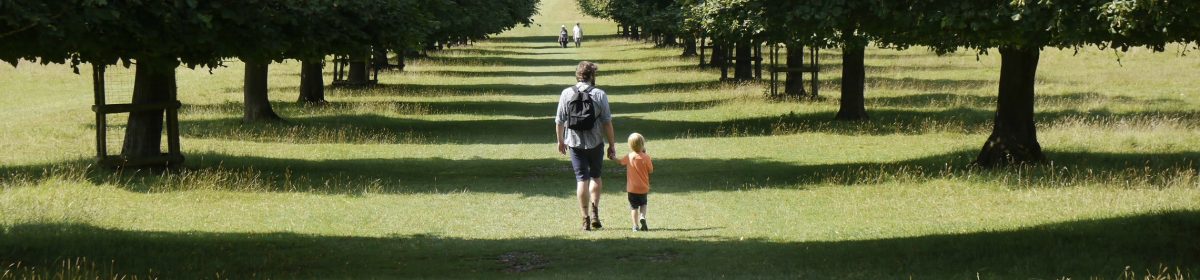

This is one of my favourite views of the allotment, looking west across the row of cordon fruit trees we planted five years ago. There’s a Victoria plum, a Bramley apple, a damson, a Conference pear and just out of frame a prolific apple that we’ve never identified. On the far side of the polytunnel are a dozen soft-fruit bushes and a further five apple varieties; oh and the lovely Tayberry growing alongside the tunnel. Perennials are such a gift. There are three rhubarb varieties next to the Tayberry; a Fulton’s Strawberry Surprise, A Timperley Early and a Victoria which all together keep us in fruit from early summer to late autumn. As you’ll see from the photograph, the paths have all been topped up with wood chips, and the raised beds with compost and leafmould. After a dire season last year and an arduously long winter we took the opportunity of a few days of sunshine to regain some kind of control – which led me into a chain of thought that led from our small plot of land to international economics.
It’s the word “control” that stopped me in my tracks. Understanding how dependent we are upon the weather and how vulnerable to all kinds of natural hazards and pests it would be all too easy to see nature as an opponent; a force that demands fierce and relentless vigilance – and so the temptation to resort to chemicals and traps to tilt the balance of power in our favour – and yes: faced with an outbreak of bindweed as we were last season; or asparagus beetle as we were for years, it would be easy to cave in and reach for the bottle. In fact we gave up and dug out the Asparagus bed which had never been productive; and took down the protective mesh surrounding the fruit cage, which the bindweed had treated like a climbing frame. Real gardening is like writing/genius (as described either by Mark Twain or Thomas Edison) – “one percent inspiration and ninety-nine percent perspiration”.
If we’ve learned anything at all about nature over the decades, it’s that good gardening (and running a country well) is an act of continuous and humble collaboration. Plants either like where you put them and how you tend them or they don’t – and if they’re not happy they display all sorts of aberrant behaviour or (and then) they die. Growing a garden is a conversation between us and our plants; it’s a contemplative occupation punctuated as it was this week by muscle busting activity after a long winter layoff. Just now; with all the beds prepped and ready and the tunnel filled with its first temporary seasonal residents – there’s a brief lull before the good storm begins.
Coffee table gardening is full of sunny days and idle afternoons strolling between the roses and sipping champagne. Real gardening features a self-extending list of jobs that may or may not get done this season or indeed ever! Such strolling as time permits is fully occupied with a conversation which could land you in trouble with your neighbours if they could hear you talking to your plants. The reward is found in the kitchen while the failures land up in the compost bin along with all your regrets and wasted opportunities. Change takes time and experience is gained very slowly, but the payback is a kind of loving tolerance. The slug, the snail and the Cabbage White butterfly are as surely our neighbours as the veg we grow and they are likely doing things that benefit us, even as we curse them under our breath. Once we resort to threats and violence we have lost our standing with nature and like Cain in the Bible we will be reduced to wandering half starved in a desert of our own making and with no neighbours to give us shelter.
Of course, being human, I’m always tempted by the idea of control – and as I was mulling over this post another question dropped into my mind. Is my endless list making a part of my being that wants to get a grip on a world that can seem chaotic? As my database grows and my knowledge of wild plants extends, I feel a kind of peace as I tick off each find – “well at least I’ve got that one where I want it; sorted, ordered, fixed”. And why do I write this journal? perhaps because many days pass when I’m so battered by randomness I need to write to make some kind of sense of it. My days are not sufficiently measured by traditions, customs and calendars which really represent our human need for times and seasons. What’s so cruel about climate change is not so much increased morbidity as much as the general feeling of being lost in the no longer predictable. For a gardener, climate destruction is personal. The inner and the outer worlds; the macro and the micro are not different things but the same thing seen through different perspectives. The deranged madness of politicians and capitalists could easily become my own symptoms of madness and violence like a pitbull released from its lead and out of control. Be careful what you wish for: wealth and power are the crystal meth of international politics.
I used to think a lot about my literary heroes and role models. Years ago I realized that they are all outsiders in some sense; many of them created by Charles Dickens. I wanted to be Ham Peggotty, never David Copperfield and yet – many decades later – the character that feels most like me is Mr Dick – (stop that sniggering in the back row!) the gentle neurodiverse protegé of Betsy Trotwood who struggled through writing to make sense of his life, tormented by what she (anticipating Freud) called transference; haunted by his incarceration in an asylum and that of his sister too, and by the execution of KIng Charles the First.
Anyway, that’s enough miserable maundering from me. There was a real moment of inspiration midweek when I was logging some old photos and came across a plant I’d spent hours looking for one hot day in mid Wales near the Dolaucothi gold mine. I knew it was likely to be there but couldn’t find it. Amazingly I discovered this week that I’d already seen it in 2016 at Woodchester Mansion in Gloucestershire where – thinking it was oddly beautiful I took some snapshots and never properly identified them as Sanicle, Sanicula europaea. I sometimes wonder if I should waste less time cataloguing and get out there in the wilds. This week I was given the answer – it’s 10% taking the photo and 90% figuring out what it is!


