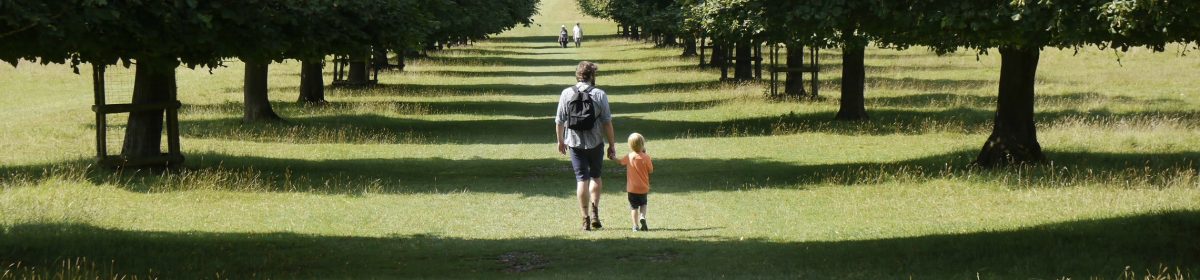


u4, by the way, is the way that science now describes these photographs of a not very lovely patch of grassland on a wet July day in 2020, but before I get to that I want to talk about what a dialect usually means.
I was born in Gloucestershire and we’ve lived within twenty miles of Staple Hill for most of our lives – during which time the area has gone under three different county designations; whilst large industries, for instance shoe making and coal mining have disappeared leaving hardly a trace. Perhaps, for me, the saddest thing of all is that the local dialect has almost died as well. You could always tell where someone came from after you’d heard a couple of sentences. Bristol was particularly rich in local dialects so you could almost predict which parish people came from. All that “alright my lover” and “gert lush” nonsense that we hear when outsiders try to imitate Bristolian is fit only for second rate comedy programmes because if – fifty years ago – you’d walked up Two Mile Hill from the centre you’d have travelled through at least four distinct speech forms. The slum clearances and tower blocks mixed things up in the fifties and sixties but even as a child you could leave the hints of Somerset behind as you entered St Jude’s and Old Market and then uphill through Easton (incomprehensible to outsiders) , Barton Hill, St George, Speedwell and unmistakable Kingswood; beyond which Gloucestershire partially reasserted itself, and somewhere in altogether alien territory, there was Wiltshire. When I started going out with Madame, if I missed the last bus (which I did regularly), I would walk from the western boundary to beyond the eastern boundary of the City and stick my head around the bedroom door to say “alright?” to my Mum when I got home. My own voice was shaped by the rounder and softer vowels of the southern part of Gloucestershire and I’ve never tried or even wanted to disguise it. It’s the dialect of my childhood and it’s a thing of structured beauty, of arcades and landscapes and industries; of Methodism and mining and shoe making. I’ve always thought that to lose my accent would be to lose part of my essential being and if anyone has ever equated my accent with any kind of swede bashing stupidity I walk on by and leave them to their knuckle dragging idiocy. If I’m anything at all it’s one of Gramsci’s organic intellectuals whose roots lie in life and experience and whose reading and understanding is refracted through lived experience.
I suppose there is some kind of generic west country accent that will get you by in most places , but with the exception of one place I almost never hear the real thing. When I first visited the sawmill at Oldland Common – exactly halfway between where I was born and where we live now, I was served by a man who spoke the precise dialect of my childhood. I can’t begin to express how unsettlingly moving that was; like finding and losing something very precious that had no monetary value at all but meant the world to me; as if I were listening to a recording of my life starting in the distant past.
Rodway Hill was always a part of my childhood. We had picnics there and eventually I went to school there. On Rodway hill I had the first of many experiences of the oceanic as I laid in the grass watching the clouds and listening to the wind in the (as yet unnamed long grass). The flora were integrating themselves into my mind; becoming part of me. The hill itself is quite small but remains inexplicably protected from all the surrounding development. you can stand at the edge and look across to the dense post-war housing where I was brought up. When I was at school there I went out with a girl who (pre Beeching of course) caught the train back to Yate where she lived and I would walk down to the station with her and look at the sandstone cutting without much curiosity. But that landscape has structured my imagination and so every time I find myself in one of those strange and starved landscapes I feel as “at home” as I do in the sawmill ordering fence posts.
In July 2020 during lockdown I had the strongest urge to go back there and so Madame and I drove over in the rain and I took a series of photographs of the plants that caught my eye. That was the end of it until I made the madcap decision to catalogue all my random photos, name the plants and build a big database. Then last week I got to the Rodway photos and – because I know a bit more botany these days – I saw straight away that these plants were very different to a selection taken from, say, two miles down the road. It was as if the hill spoke in a kind of intangible dialect.
This discovery was provoked by the fact that there was a plant I couldn’t get my head around. All the phone apps told me with absolute certainty that it was Heath Bedstraw – Galium saxatile – Then, after a good deal of research I made the surprising discovery that Rodway hill is a small patch of what the scientists call acid heath, sitting on the cap of precisely the sandstone I’d seen but not understood, waiting for the train with my then girlfriend. Then after even more searching I discovered that my photographID’s were likely correct except for the fact that some of the flowers had five petals and not four, and some of the groups of leaves came in fours but not fives or sixes. After exchanging emails with our County Recorder I discovered that (yet again) plants don’t read textbooks and that my plants were within normal variation.
But there’s a kicker to this rather long-winded piece because it helped unravel the mystery of why I’m attracted to these particular landscapes. Why else would I feel so at home up on Mendip or down in Cornwall, on Dartmoor or on the Bannau if it weren’t for the fact that they speak with exactly the same botanical dialect that I learned on Rodway as a child. The top of Blackdown above Burrington is almost identical – with its sandstone cap above the carboniferous limestone. The reference to u4 in the title of this piece is merely the code for this specific habitat in the National Vegetation Classification (NVC) descriptors with all of the poetry, all of the memories, the longings and all the rest of the synaptic riches stripped out.
Maybe we would be able to grasp the meanings of landscapes and their flora by approaching them as dialects. The way things grow around here. Maybe we should occasionally take a break from Gradgrindian dogmatism of precise description and let u4 back into the sunshine like a pit pony released from darkness and sweated labour into meadows and heaths where lovely things grow in historic and vibrant cultural communities.
A very happy new year to you from the Potwell Inn


