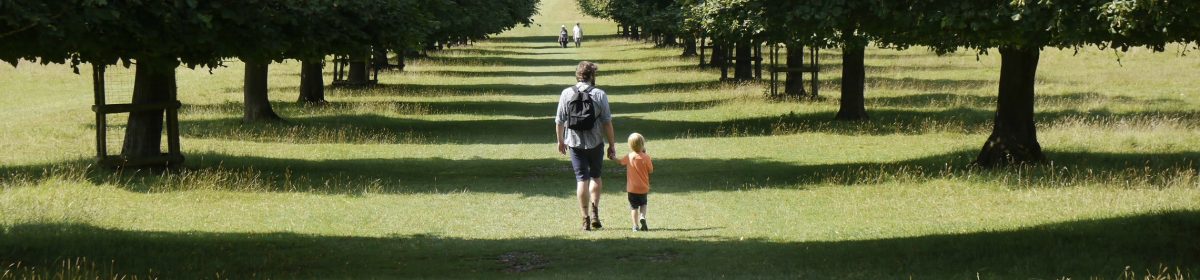
What happens when the lights go out?

Royal Crescent in a rare peaceful moment

To be honest – apart from the tourist guides – this is not a typical moment in Georgian Bath; or at least not during daylight hours. Half a mile East and you might imagine you’re in Oxford street, London; the same distance to the north and south would see you at the end of the Cotswolds or across the river, deep fingers of countryside and Georgiana separated by large estates of social housing. This particular place, Royal Crescent – and no-one can deny its grace and beauty – is normally crowded with tourists.

We live in a similarly divided cultural world. Beggars and Big Issue sellers rub shoulders with tourists whilst we locals practice arcane navigations to cross the tides of tourists and traverse the city. We hardly know who we are. Anyone who comes here probably has a better idea of their true identity, whether it be Roman legionnaire or Regency Buck; Hello magazine bride-to-be or Emma Woodhouse practicing lip pursing in case they meet someone they fancy. We have as much cultural stability as a seaside resort in August. On Friday afternoons the pavements tremble to the sounds of wheelie suitcases – we call it the Barcelona rumble, and on Sunday afternoons they depart. Mondays are quieter. Speed limits are for the little people who change the sheets, flip burgers on minimum wage and pick up the litter. Yet we locals only have to walk a few hundred yards and pick the right time to find peace. You could throw a stick from Royal Crescent as far as three allotment sites, and walk in ten minutes down Cow Lane – whose sign has been stolen by a Jane Austen trophy hunter – to Victoria park and the Botanical Gardens. And whilst the Kennet and Avon canal towpath is busy for the first mile eastwards from the bus station, walking west along the riverside walk, apart from commuting cyclists and runners. you’ll have abundant time and space to check out the local weeds: well at least I do, and many of them turn out to be gratifyingly rare!

One of the unique joys of Bath is the fact that you can stand almost anywhere and see the countryside up on the surrounding hills. Notwithstanding the worst efforts of the riverside property developers, once you climb upwards by about 75 feet you can look across the grim tenements of the future into North Somerset, Wiltshire and South Gloucestershire. From the riverside the developments look more like bonded warehouses; uniformly dull and bleak and battered by their own architectural whirlwinds.

So let’s turn our attention to the parts of the city centre where the wild has infiltrated, We have otters and even beavers in the river now. Herons, sparrowhawks, peregrines, tawny owls, swifts, swallows, housemartins and the whole gamut of garden birds – although you might have to walk a way to find sparrows and starlings which are scarce. In early summer you can see dace sparkling in the river, and in some of the tributary streams there are signal crayfish which have displaced the locals. On our allotment we have even filmed deer, but more commonly it’s squirrels, badgers, foxes, cats and rats; lots of rats.

Mostly we don’t see the night visitors but we have a trail cam running continuously and we also find lots of characteristic signs of their presence. Last night we got an incredibly lucky shot of one of our resident foxes emerging from behind the polytunnel with a large rat in its mouth. We’ve had three traps set in the same run for two weeks now and never got a sniff of a rat, but the fox knows where they are and can crouch silently until a warm takeaway supper comes along. We have read about foxes predating on rats but this hard evidence was really exciting. Other than the fox, the only other taker for the peanut butter bait was a badger who shook and bashed one of the heavy duty box traps until it sprang shut without yielding the peanut. This almost redeems the foxes from their countryside capers – raiding our chickens when we lived on Severnside.

Aside from mammals, we have dragonflies, damselflies, ivy bees, hoverflies, wasps, spiders, beetles and butterflies all sharing the plot with us and this year we’ll be trapping moths to add to our knowledge of the night shift. You’d never believe the diversity of our wildlife if your only experience of Bath was gained from a weekend shopping expedition on Milsom Street. Our allotment is in the middle of the city and yet we probably have more wild diversity than a chemical drenched arable field in the countryside. You just have to learn to be very quiet and watch.

Here’s a video link of fox v rat- it’s too big to attach here but I hope you enjoy it. Nature red in tooth and claw!

https://photos.app.goo.gl/Kudr5fY5JMB89RXz7

happy solstice!

I guess this is a kind of Solstice card – although it’s been a gloomy, cold and wet day; the kind you’re happiest to see the back of. I woke up at 4.00am with a dream in which the only thing I remember is someone or something saying “you can’t argue with a blackthorn”. I have no idea what that was about except that it’s impossible to force your way through a thicket of them because they’re so horribly spiny. Equally the fruits are completely unapproachable unless steeped in sugar and gin. The other notable thing about the blackthorn is the folk name “blackthorn winter” which according to Geoffrey Grigson in “The Englishman’s Flora” (other genders are available), expresses an ancient association of plants with seasons. The links are more often to do with the medicinal properties or with the supernatural which often overlap. Mistletoe is listed in the same book with countless properties including aphrodisiac and as a “heal all” from the time of the earliest herbals, but Grigson takes a very dim view of the druidic movement as it freely invented folklore, irrevocably clouding the real history.

Actually a Lenten rose

There are others of course – outside the flat today we had winter jasmine, cyclamen and even a few hardy geraniums on the window ledge. Grigson’s pick included the Christmas Rose and of course holly and ivy, traditionally brought indoors in winter to protect the woodlands for spring. I haven’t got a picture of a Christmas rose, which is the white flowered variety but in the same family the Lenten rose was in flower on the allotments today and is a member of the buttercup family; traditionally grown next to the front door to ward off evil spirits.

The solstice manages to condense astronomy, folklore and pagan religion in a single moment of time which, today, was 15.03 so apologies for the late arrival of this greeting. Let’s hunker down now until the blackthorn appears.

Turning a photo into a story and then into a post

There are two questions here that I’m trying to answer. The first is the title of this post, and the second is an attempt at explaining why I call myself Severnsider – and I’ll tackle that one first.

I think these photos were taken some time around 2007, although I’d known the place for years prior to that. If you live nearby, or know the river Severn on the Gloucestershire side you’ll probably know where they were taken on the Gloucestershire riverside and along the Sharpness canal at Frampton on Severn. The Severn is, as you can see, a very wide river but dangerous for larger ships to navigate above Sharpness due to the ferocious tides, winds and sandbanks. There was also a problem in sailing around a sharp bend in Arlingham which is a good place to watch the Severn bore but a very bad place for a sailing ship. The canal, opened in 1827, could carry ships up to 600 tons and was once the largest and deepest (18 feet) canal in the world . It was a safe, non-tidal shortcut to Gloucester docks. Over the decades we’ve fished in the canal, walked its towpath and paddled up it in our kayak. There are many places I love and visit but in a strange way, the river Severn has my soul. One of my parishes bordered the bank and it’s always been a place of solace on difficult days – lonely, quite remote in places with huge skies and a tide so fierce you can hear it above the mournful cries of wintering curlew.

As the tide from the Bristol channel meets the river there’s the meeting of two distinct modes of being – each with its own smell; earthy, mountainous river and salt tide. Twice a day, the inbreathing and outbreathing flows change places and command the landscape. Springs and neaps cover and reveal the mudflats

The Severn has wonderful sunsets, and on special evenings you can hear migrating geese and swans flying noisily towards the tidal marshes at Slimbridge. It’s a sound so haunting that it will freeze your blood. On one occasion I was walking on the bank at Shepperdine when a hare raced up the field to my right, leaped over a broken wooden fence and crossed, feet in front of me in mid-air. I don’t know which of us was more surprised. It was there, at high tide in the middle of the river and just inside our parish, that I scattered the ashes of a Severn pilot, a man with a lifetime of experience of the twists and turns and shifting sandbanks of the river who would take charge of ships travelling upstream . One of the crew opened a steel door in the side of the Balmoral and to the accompaniment of long blasts on the steam whistle, we poured his ashes into the water just as the tide turned and the river stood still. The trippers on the deck above us had no idea what was happening below them. The two waterways, canal and river, run side by side; the contained and dredged canal -an industrial relic of a past age and its wild and untamable neighbour. A watery Cain and Abel in perpetual conflict like the two sides of a human soul.

Inevitably, as a parish priest, I became a kind of story keeper; privy to many secrets and at ease with the history of the landscape and the people who lived in it because – in a very important sense – they were one. I may well have seen the last ever trailer load of salmon putchers being taken down to the river. The village baker’s wife and her husband had roots in both sides of the river, and would often talk about elver fishing and elver omelette where the freshly caught baby eels were tipped alive into the egg mixture in the pan. He remembered delivering bread by horse and cart. The orchards along the river were protected from frosts by the thermal mass of the water and thousands of gallons of cider were once made on local farms to slake the thirst of the labourers. I got to know one or two of the surviving cider makers pretty well. I once asked one of them why he liked cider so much and he answered “because it gets I pissed!”. The local funeral director was another hefted man who began life as a builder and joiner and made coffins according to the custom of the day; graduating to funeral directing as a natural progression. The gravedigger would always discreetly press a jelly baby or some other sweet into my hand as we processed to the graveside. It was a surviving custom from when everyone was rewarded in cash after a funeral. We referred to one another as gentlemen and bowed as if we were born to it.

I was the story keeper because I took many of the village funerals, weddings and baptisms. I have never felt able to write about those years in any detail because so much of what I knew was told to me in confidence, but I learned the skill of discreet storytelling over three decades, slipping in a coded morsel known only to the closest friends when I could. Most of the old ways and those who followed them are gone now and the suburban villages empty of commuters and refill again in the evenings. The salmon have all-but disappeared and the churches are shrinking and falling into disuse.

Oh yes; the Severn is a very special place and having lived next to it for 25 years it’s the reason I use the name Severnsider. Although these days we live in Bath, the campervan is stored near the banks of the Severn, and the river Avon on whose bank we now live, is a tributary to the mother river which it joins at Avonmouth.

Anyway enough history, because I want to move on to the more interesting question of storytelling with pictures, and the impact of computer technology enabling us to do things we could not have contemplated thirty years ago when I stood on the riverbank, looking at the long row of apparently abandoned barges, hauled up and left to rot. I know, of course that there was a story shouting to come out of the landscape. The melancholic look of rusting hulks and concrete tow barges sinking inexorably into the estuary mud suggested a catastrophic collapse in the market of some commodity. That was a wrong assumption as it turned out because they were deliberately scuttled there in an attempt to protect the river bank from erosion. The pictures haunted me.

I knew I had the raw materials of a new way of understanding landscape but there seemed to be no way of making it work. I wanted to find a way of telling stories with pictures and text but which you could enter at any point, and so read in any order – which is much closer to the way we actually apprehend landscape in real life. Then I discovered HTML but not being very computer literate, the learning curve defeated me. It was the arrival of journaling software and later blogging software that finally opened the door for me. I could utilise the thousands of photographs I’d taken over the years and write accompanying text that could illuminate any topic I was writing about. The photos weren’t eye catching snapshots but little visual haiku, working with the text to say what couldn’t easily be said in words. They became little essays, often exploring a single idea with no attempt for them to be amalgamated into a theory of everything. By now there are over a thousand of them, rapidly approaching a million words in a form that can be searched by date, by topic, by keyword or even just with a single search term.

All this because a single photograph can conjure up a whole habitat or environment; a whole history of the people who live and work in it and occasionally amount to a funeral sermon for something or someone lost forever. This photograph, for instance, taken on Thursday at Big Pit above Blaenavon suggests to me something that’s not telling the whole story; that needs unpacking. The bright red paint and hand lettering suggest that this truck does not, any longer, contain explosives at all. It’s there for effect, as part of an experience – which is what it is, of course. Possibly a film set.

But this one, taken moments later, is telling a more subtle story; of abandonment and dereliction. Present and past are expressed in the course of a few words on a screen. Now we know that something infinitely less fun is going on. There are two steam engines there, each of them deserving restoration but lacking the funds to do it. In a supreme irony, the high quality steam coal which was mined here and which is needed by every steam restoration project in the UK can no longer be mined because of the environmental damage caused by burning coal. We were told that the last two shipments of steam coal came by boat from Chile and Australia. So coal will still be burned but also thousands of tons of oil burned added to the total environmental cost. A third photograph has an entirely more melancholy feel because behind the abandoned winch gear, and in the distance, lies a town that feels as abandoned as the headworks of the pit. With the end of coal mining, thousands of jobs were lost and never replaced with skilled work. Coal was King and now unemployment drains the eviscerated community below. The museum is a marvellous and pointed reminder of yet another lost community.

Oh how miserable this is sounding! Let’s turn to nature. Many of the thousands of photographs I’ve taken are of plants, fungi and even insects. They’re the other part of landscape – the micro features that make it what it is. You’ll know if you’ve read this blog for any length of time, that I’m pretty passionate about the waifs and strays of the plant world which find a place to settle in precisely the abandoned post industrial sites, marginal environments and polluted earth that – like the human communities that once lived and worked in them – have fallen silent as the dreams of the industrial revolution; of easy lives and plentiful housing and food for all come to dust. Things are unravelling and we all know it, in spite of the performative idiocy of politicians who think that having your photo taken with a hi-viz jacket, hard hat and sleeves rolled up is a substitute for having any idea or plan for the future.

Is it even possible to love a despoiled landscape and yet hate what caused it? I think I’m able to address that paradox in a way that might offer a way forward. Firstly the earth doesn’t need us nearly as much as we need the earth, and so in recording what’s there needn’t be a source of anger is much as an encouragement and inspiration to do better. To do better for human communities, to do better for the plants and insects and animals share the earth with us. On our walk in the Bannau Brycheiniog on Thursday we were looking at some slime moulds – a subject which I know almost nothing about. But I did a quick search in Merlin Sheldrake’s book “Entangled Life” and discovered that the humble slime mould can help to make a map to escape from an Ikea store with no more encouragement than a few bright lights and some oatmeal. We dismiss the strange intelligence of nature at our peril. We shall need to review, and experiment and rethink the way we do things around here – I mean our whole culture – in a way that no-one in living memory has had to do because the crisis is here. Even our short journey across the Severn was delayed by 24 hours by an unprecedented storm. Our memories of the past need not fall into the trap of sentimentality and nostalgia. We can be grown-up enough to see that the communities built up by mining had costs as well as benefits and we need not return to the whole package of riches extracted and suffering exacted. What nature demonstrates is the persistence that comes from environmental stability, and so to finish here’s a photograph taken on our friends’ smallholding of a small patch of ancient woodland which has been protected by the steepness of the field in which it stands.

Small is beautiful – smaller still is ravishing.

This photograph is not of a twig but a moth; the Buff-tip moth, Phalera bucephala. I’m not showing it because I’d want anyone to think me an expert of any kind, but because its camouflage is so perfect at the same time as being very lovely. It’s eye-watering to think how many evolutionary twists and turns it’s gone through to arrive at this perfect twigness in order that it can rest up safely during the day. Our friend Kate uses a moth trap to identify record and release any number of moth species high up in the Bannau Brycheiniog; the Brecon Beacons in old money, and we took this photo, along with many others, early one morning when we were staying up there.

I’m often struck by the lack of attention we pay to the very small when we talk about the beauty of nature. We tend to look for swathes of flowers; forests; endless mountains and the most grandiose hills when we speak of beauty, but if we take a magnifying glass to, let’s say a weed like a dandelion, it’s like crossing a boundary into another world. A single seed under a low powered microscope can reveal such a complexity of pattern and structure that we’d be hard pressed to capture it in a drawing. Nature presents herself as an artist and many artists would admit to gaining inspiration from the almost reckless generosity of living forms. Moths are just one example. From the aerial view of a river basin or wetland marsh down to the double helix of DNA and the complex fibonacci sequence of seeds on a sunflower head or the seed flask of a poppy, there’s inspiration to be found. Speaking through my artist’s hat, as you might say, I’ve shared a lifetime exploring the colours and forms of living things through the medium of drawing, botanical illustration and ceramics. I’ve needed to embrace some of the science as well, but the wellspring of my explorations has been aesthetic rather than scientific. I’m far more excited by the earthy colours of rust and ochre than by shouty primaries, and a multitude of green hues relieved by occasional touches of scarlet can turn a humble lichen into an aesthetic feast.

Nature is beautiful, but not in the guide book sense. You can’t measure beauty by counting oohs and aaahs and you couldn’t propose a unit like the Milli-Helen which would be the amount of beauty required to launch one ship. It’s expressed perfectly in my mother’s distinction between perfume and scent. I should mention here that I’ve been trying out a new phone app to help identify moths – in anticipation of a Christmas present from our son. In fact it’s good with all kinds of UK insects and designed and promoted by the UK Wildlife Trusts. The app is called ID UK Insects and it’s good for bees, hoverflies, spiders, wasps – in fact for pretty well any insect you might encounter on a slow walk and is free for a basic 500 species or £18 a year for the full version. Well worth a free go! It won’t excuse you from any of the hard book work when you get home to identify your find, but like all the best AI it will save the horror of flicking through hundreds of pages in the vain hope you might run across it! For those old hands who would assert that it’s cheating I’d say – “so’s a cake mixer!”

It would be wrong to settle on the moth as a sole exemplar. As I suggested at the beginning of this post, nature should be regarded as everything on earth including us, and my friend Chris would make a strong claim for the whole universe to be included as well. In fact – and this would be a bold and almost spiritual claim – I’d argue that the default condition of a fully functioning human mind would be wonder.

I’ve never forgotten an exercise I did on a retreat years ago. We were a group of a dozen or so, all strangers to one another. We were divided into couples and asked to grasp both hands of our partners. Then we were invited not just to look at one another or chat about our journey there but silently to explore the possibilities of beholding. As you might expect, it was a deeply challenging thing to do but it was also very powerful; an intuitive exchange of our deep selves and a letting go of embarrassment and ego. I’d suggest that the default position of wonder at natural beauty is facilitated by its twin faculty, beholding.

With such a mindset even the destructive powers of nature which, for the most part are recycling the elements of existence, can lead to the sense of wonder. Nothing is ever wasted by the woodland rotters like the Sulphur-tuft fungus above. I can contemplate my own vulnerability and transience without being afraid.

Around 1970/71 I had a long period of what was diagnosed as phobic anxiety, and not being able to face going into art school, they put me on probation for a couple of terms. I took to visiting the valley behind our cottage through which By Brook flowed, and drawing there. My memory ever since is that I only made one drawing – very laborious and forensic pencil rendering of a twisted tree trunk growing at the edge of the river. The drawing went into a folder and it’s travelled around from house to house ever since. I’ve looked for it from time to time but never found it among the hoardings; until last night I dreamed that I was able to thank all the people who loved me over the years – beginning of course with Madame – even when I didn’t love myself at all. I was awake at 5.00am and got up after a couple of hours musing on what Robin, my one time psychoanalytic psychotherapist would have called a significant dream and went into my study and found the drawing almost immediately in a heap of unsorted papers.

But it wasn’t just the one drawing; I found four of them – and each of them would have taken several days. Here they are seeing the light of day for over five decades.

I’m not suggesting for a moment that these are great drawings, but rather that they articulate a theme that had been at the back of my mind for going on twenty years after I walked to primary school through a lane bordered on one side by a hawthorn hedge which, in hindsight must have been laid in previous years. I was enchanted, almost literally, by the twisted and intertwined branches and it became a treasured part of my walk to school, a memory which returns joyfully whenever I see a similar hedge today. After I’d photographed the drawings this morning I realised that there was another subconscious link in the twisting and curling water of the brook and which I’d tried unsuccessfully to capture in drawings of the sea when we lived in Cornwall. Drawing – to pack a huge proposition into a very short sentence – has been a way back into a transient moment. A mill-race; the Devonshire leat on Dartmoor; any kind of fast flowing water especially if, like a canal, it was the outcome of human intervention. No surprise then, to recall that my favourite winter job as a groundsperson was hedge laying. The spot where I drew By Brook was downstream from a paper mill where the mill race joined the brook. The mill is now disused and abandoned, and the brook itself is milky and eutrophic; quite unsuitable for papermaking.

If there is any kind of takeaway from this biographical fragment it’s that I didn’t get this ecstatic, aesthetic response to nature from a guru or a book. It was always there and all I had to do was channel it into tangible form. So the next great adventure was in ceramics. I’ve already written about this and I won’t go over it again, except to say that the making of ceramics feels like participation in creation itself. All the essential elements; earth, air, fire and water are there. The transformation of clay into fired ware is a geological process, The colours are made with elemental minerals and ores – cobalt, iron, lead, melted and rendered transparent in the kiln and transformed by the control of the available oxygen. English iron-based slipware glazes, mixed with lead rich galena and fired in an abundance of oxygen emerged the colour of honey and in China, a similar iron based glazed fluxed with wood ash and and starved of oxygen in the final stage of firing emerged as celedon, a muted and lovely green the colour of lichen.. The making of ceramics is an exhausting creative process which is affected by so many variables that if the potter doesn’t learn both intense focus and how to survive failure they will soon give up.

Nowadays I use photography to try to capture nature. I don’t edit or enhance anything and if it doesn’t work I delete it and try again. I remember once having a battle with my art school Head of Department over the characteristic form of an apple tree. I contended that trees are hard to draw well because by forensically rendering their internal structure and the form of the whole tree, its colours and its leaves it would be easier to identify its species. To prove my point I’d knocked up a black and white sketch of an apple tree on a piece of cardboard with a wide brush and some house paint. He dismissed the drawing and the idea with a lofty wave of the hand. It was rubbish and all trees looked pretty much the same. This week I’ve mentioned an apple tree called Arkansas Black several times already and today I returned to that discussion by photographing the tree on the allotment. I hope I won’t offend anyone by saying that the form of the tree is completely distinctive. Pears plums and (at the time) English elms are incontestably different.

My old music teacher A F Woodman used to to shout at me if I was particularly inattentive and say “I know you can hear it Pole, but are you listening?

Wonder; the capacity to behold and not just gawp; inexhaustible curiosity; focus; listening; some measure of humility; the capacity to fail, try again as Samuel Beckett said, and fail better – all these are the portals through which we must pass. To adopt a religious idea, we must approach nature as penitents – not least because we, collectively, have done so much damage. The technical understanding, the skills, the science need essentially to be led by the revelatory moment. Most truly great scientists and mathematicians would agree that the revelatory moment is the beginning of the process of understanding rather than the end.

Which brings me to a penultimate point. If there is ever to be a real green spirituality it will need to begin in the same place. I remember Ken Leach preaching that orthodoxy is closer to its Greek roots when translated as “right glory” and certainly not the slavish following of some ancient canonical text. I’m not sure what we could call theology without Theos, but I treasure Wittgenstein’s joke that “wherof we cannot speak thereof we must remain silent” except that it’s never yet stopped a daft or cruel idea from being broadcast.

So to conclude this rather long post, I have to write briefly about education because it seems that these core skills – “Wonder; the capacity to behold and not just gawp; inexhaustible curiosity; focus; listening; some measure of humility; the capacity to fail, try again as Samuel Beckett said, and fail better” all these are being expunged from the curriculum of both school and university. If we don’t bring our children up to allow wonder and curiosity into their lives they will be stunted like wind deformed trees .

Hell is heaven designed by venture capitalists

No finer view of Bath on a frosty December morning?

South Riverside development – not what the PR goons want you to see.

Bath, of course, thrives by stoking a whole cruise liner full of hype. This year it’s Jane Austen but the Georgian builders also get roped in to set the scene (please don’t mention the slave trade) and otherwise we have to make do with the Romans who turned a boggy hot spring into a R&R destination for grubby and probably smelly legionnaires who needed a soak after marching around subduing the natives. We do not talk about the brothels on London Road, the extra marital uses of the Sidney Gardens or, indeed the drinking dens and brothels of Kingsmead. We don’t talk about Bath’s industrial past; the pong of the dyeworks, the pioneering engineering, the digging of the Kennet and Avon canal which – when joined to the Somerset coal canal – provided an easy route for transporting coal from the North Somerset to what William Cobbett called the great wen (London). We don’t talk about the pollution of the river which was probably as bad then as it is today, or the Great Western railway which most of us can’t afford to travel on. We don’t talk about the Somerset and Dorset line (known as the S&D i.e. slow and dirty) or the twin tunnels which were so small in girth that engine drivers and firemen expected to pass out regularly in the carbon monoxide and smoke, praying that they didn’t do it at the same time.

Perhaps I’m being unfair. If you drive into any major European city; in France for example, it’s almost obligatory to pass a few cement works. Drive north from Barcelona and you’ll see an industrial landscape comparable with the finest of Middlesbrough or Wolverhampton – and they don’t brag about it either. But personally I’m glad that I can still walk along the riverside and the canal and find hundreds of interesting plants without the danger (apart from some cyclists) of meeting anyone wearing a voluminous dress and bonnet or a soldier sporting a skirt, hobnailed sandals and shaved legs. Bath is divided by the river into two utterly different psychogeographical regions. North of the river is the posh, Georgian architectural bit where the visitors come, and to the south where the industry used to be, we have student accommodation and the uncontrolled growth of hideously expensive retirement properties which are a very profitable way of extracting value from pension savings – and for anyone contemplating buying one I’d advise that finding a GP, an NHS dentist or an appointment with the NHS Hospital may be the quickest way to lose the rest of your savings. Private care is booming here.

But a quiet, early morning stroll along the riverside path reminds me that nature always manages to make an appearance regardless of the noise and dust of building sites and traffic. I’m a creature of habit and so my walks tend to concentrate on a few areas. If I was trying to impress I suppose I could call the walks transects – which is a natural history word for repeating a walk along a particular route and recording everything I see. When this is done over a period of years, it yields invaluable scientific information about climate change and its effect on wildlife. I can begin to see which unusual plants are the chancers with no chance of setting up home. I could see (but haven’t yet) both otters and beavers in the river and we have filmed mice, rats, deer, badgers, foxes squirrels and cats on our allotment; and I can also see newcomers settling down having found a new niche for themselves. Slow walking could be a thing just as slow cooking has, because everything becomes richer and more engaging as I learn more about the area. The wildlife of an area has a certain “thusness” and directness about it that the muddy pond of mediated experience – (can you see the word media barely hiding in there?) – just can’t match. Mediated Bath is like the worst of takeaway food – it always leaves you malnourished and hungry – but wild Bath is always at hand; in the pavement cracks, in basement walls, in unkempt verges and building sites and instead of scuttling along my walks like a rat, I can walk slowly and savour every moment as a kind of epiphany. So build on – you rubbish architects, greedy developers and landlords. You and your buildings as ephemeral as a hatching mosquito and less deserving of our deference.

As you may have noticed, I’ve been reading a lot about fungi, and it seems to me that if we’re taking the latest science at all seriously, we have to accept that a serious amount of mutuality goes on in nature. Plants and fungi almost universally exchange nutrients to their mutual benefit. Lichens have evolved an even closer togetherness by uniting bacteria and/or algae into an apparently singular life form. Plants rely on insects and larger animals for pollination and seed distribution; swapping pollen for nectar and taking seeds away in paws and fur and droppings. Even apex predators normally tend only to kill and eat when they’re hungry. In fact Nature seems to prefer a situation where every life form gets something out of the arrangement: all of nature except we humans who think we’ve got the right to take it all without regard to the needs of any other creature.

I have a correction – or perhaps an addition to my piece yesterday which mentioned a black apple which I was told was French in origin and called L’Abri. The apple tree on the allotment site matched the description of an American apple called Arkansas Black very closely especially in its perfumed flavour of apple and custard; but today in a bit of further exploration on the National Fruit Collection website – which is brilliant – I came up with a Belgian apple called Abi Noir which looks almost identical to the American is much cheaper – £14 as opposed to a greedy £350 for the bare root tree.

This morning we worked in frost and sunshine on the allotment and it was lovely to be outside in the winter weather. Our son phoned to ask about presents at Christmas and said he’d be happy to buy us a portable moth trap if we’d like it. Well yes we would, rather!! trying not to sound too excited. There’s more wildlife around in city centres than you’d ever imagine. Below are a few photos of bits of the wild that caught my eye as I walked back from the garage, all within sight and sound of the building site across the river. They are, clockwise, an abandoned bird’s nest, the riverside path, the last bloom on a dog rose and the river bathed in mist. If you look carefully at the nest it includes bits of wool, bindweed, insulation mat, grass and twigs. You see, nature is even better than we are at recycling. The nest, by the way, was right next door to the recycling depot.

Meet the other part of the iceberg.

Honey fungus mycelium on a tree stump. It’s called a rhizomorph because of its shape – like a rhizome.

Sometimes it seems – although I don’t believe a word of it really – sometimes the stars get themselves into a truly malignant alignment and the boils, frogs, flies and rain just keep coming without remission. This last year, what with the campervan constantly breaking down, the extreme weather and an onslaught of health problems has been an all-round shitter! Add to that the election of a malignant government whose big idea is to preserve everything that was wrong about the past 50 years and crush the best in order just to stay in power and ….. ? well, you decide.

I’ve written before about the challenge of accepting good news amidst a sea of effluent but this last few of weeks, having got rid of the polyps in my bowel which were causing iron deficiency anaemia; last week I finally got an appointment to fit my new hearing aids after waiting 8 months, and another appointment to sign off on the laser peripheral iridotomy so I can get some new glasses. Oh joy! and to cap it all I feel better – which is a non scientific way of saying that it’s marvellous to be able to wheelbarrow full loads of wood chip down to the allotment without having to keep stopping to catch my breath. I can see the end of the tunnel although it’s just a small disc of light at the moment. The campervan is fixed, we have a list of adventures planned for 2026, the allotment is all but ready for next season and –

  • – having met my targets for plant species and records, I’ve now turned to processing my fungus photos – and this is going to be an altogether harder task because until a couple of years ago I had no idea what, apart from field mushrooms and fly agarics, what most of them are called. Yes it’s true; I am a proper propellerhead. Anyway I thought I’d start with this image because the fungi – OK toadstools – we see are only a very small part of the actual fungus. Most of it comprises minute underground threads, collectively called mycelium, that can extend for many feet and occasionally miles around the part we see in the autumn. As instanced by the Honey fungus at the top of this piece, Honey fungus species actually weave their minute thread-like hyphae into ropes and so we can glimpse the underground world on a tree stump.

Getting ready for this festival of bafflement I’ve done what I always do and read a lot of books that are way beyond my understanding, in the hope that some of the research sticks . I won’t bore you with a list except to say that for the last year I’ve been gradually searching for second hand copies of the most important ones. I can never afford to buy new academic books – they’re ridiculously expensive and only for well-heeled university libraries. There’s also loads of good stuff available online; especially on the British Mycological Society Facebook page.

What I’ve learned has given me an entirely new perspective on the benefits of fungi not only to our ecosystem but to our health and wellbeing as well. These days we’re very familiar with the importance of pollinator plants at the beginning of the life process. We’re not so thoughtful about what happens at the end. At its simplest, without fungi we couldn’t survive because whatever lives also dies, at which point the fungi move in and reduce the senescent remains to their original constituents. Without fungi the earth would be covered with a layer of dead material of unfathomable depth. Sometimes, as any farmer or gardener could tell you, the fungi move in too soon and finish their lunch and our crops before we’ve been able to harvest them. The problem with drenching the field or the garden with fungicide is that without the silent work of fungi there would be no soil in which to grow the next crop because the overwhelming majority of plants and trees have what’s called mycorrhizal relationships with fungi; a constructive and complementary relationship in which the fungi supply essential nutrients to the plant in return for some of the photosynthesised sugars which its leaves produce. There is some evidence – because mycelial relationships are so important to the health and therefore the eventual crop; that fungicides can weaken the plant and make it even more vulnerable to fungal pathogens. The invisible work of fungi is immeasurably more important to us than merely filling a forager’s basket. Of course there are many more gifts from the fungi than I’m going to write about here but I want to concentrate next on the meaning of those beneficial relationships.

Porcelain fungus on beech tree

Let’s begin with Robin Wall Kimmerer whose books – as she describes them – focus on how “The factual, objective view of science can be enriched by the ancient knowledge of the indigenous people”. When we talk about ancient knowledge whether we’re embracing plants or religious, spiritual issues, it’s almost impossible to say anything without using metaphorical language. I’d argue that myth is the way that we try to tell some species of truth about mysteries. When Kimmerer writes about “mother trees” she’s using a metaphor to describe a positive relationship. “Mother trees” don’t breast feed their saplings or worry when they get home late from a night out. But it may be that there is a mycelial fungal connection between trees that allows the older trees with more resources to share those resources to nearby younger trees. What the metaphor achieves is to communicate in simple terms an important concept awaiting scientific verification. A wood or a forest is an unimaginably complex network of invisible connections which can sustain mortal damage if it’s damaged by thoughtless management. It’s a way of looking at trees which takes a broad, almost spiritual view of their meaning to us.

But just as I was about to write, I caught sight of a recent piece in the Guardian referencing fungi purely as a kind of industrial and scientific feedstock. It’s an interesting article about some possibilities of extending the use of fungi to produce building materials, packaging and even for biodegradable nappies (diapers). The science of using fungi to clean up industrial pollution is well advanced, so this is hardly big news. But what caught my attention was the way in which the article perfectly captures the contrast between two ways of looking at nature in general and fungi in particular. Kimmerer’s almost spiritual account, inflected by First Nation tradition and wisdom versus the highly instrumental scientific and rationalistic way of looking at nature as a free resource and a means of making money.

The question, or perhaps the takeaway from the two perspectives is that if we accept that climate catastrophe; species extinction; mass migration; global instability; pandemic and the degradation of the environment are all the result of our almost universally instrumental view of nature; wouldn’t it be better, rather than to join in the ugly scientific pile-on dismissing the ideas of Kimmerer and many others to allow that without a reset of our perspectives towards nature there can only be one result – and that’s the destruction of the earth.

It’s not so much the camera as knowing what to do with it.

Herbie was a drystone waller and he mainly built the regional styles from Gloucestershire – the ones in the photos above go from Cornwall to Cumbria and they’re often dependent on whatever local stone lay at the waller’s feet. The southern part of Gloucestershire provides several different kinds of stone; Brandon Hill Stone; Oolitic Limestone (a Bath and Cotswold speciality); Cornbrash, even some sandstone. The geology of the districts is written in drystone walls. I’d often see Herbie at work around the area, occasionally on churchyard walls – but for some reason he disliked going into churches and would never work inside them. As an amateur botanist I relish his work because drystone walls are a paradise for all manner of interesting plants, not to mention the invertebrates and vertebrates, the lichens the bacteria and fungi.

Someone told me a story about Herbie one day that not only made me laugh out loud, but also taught me an invaluable lesson. I’ll call it Herbie’s ratio and it applies in all manner of fields, not least hoping that a new, more expensive camera will always take better pictures. It seems that someone once pulled up in their expensive car and, after watching him work for a little while, asked how much he charged. “£100 a yard” he said. There was a pause and the man said “That’s a lot of money for a pile of stones”. Herbie also paused and then said – “well it’s £1 for the stone and £99 for knowing what to do with it”.

Single edged razor blade, steel ruler, ring flash adaptor, macro lens adaptor for phone, hand lens,TG-7 camera, Etrex GPX, Pixel 6a phone, waterproof notebook and space pen.

I use photographs – more than for any other purpose – for making notes. Mostly it’s my phone camera which is by no means state of the art because it’s a Google Pixel 6A which is rapidly approaching retirement (or obsolescence). But whenever we go for a walk I’ll take dozens of plant photos as a reminder of what we’ve seen. I recently found out I’d taken 22,000 photos over the past 10 years. For plants I know well, there’s no problem. But I’ve learned over that time that if you don’t identify, label them and get them on to a spreadsheet straight away, in a month you’ll have the photo of a plant that you can’t use to make an identification because it doesn’t have some key feature in focus or even visible at all.

The upside of phone pics is that there are some very good apps around which will suggest an identification with a percentage of certainty; but they’re by no means always right (the software designers claim upwards of 90%) and they can exude a false sense of certainty. The old manual way to ID plants is to narrow down the possibilities one question at a time with a list called a key. The difficulty for a beginner is that keys often use off-putting technical language – they have to of course; so there’s a steep learning curve. The great advantage of keys is that you can retrace your steps one at a time until you get back on to the right track. The great disadvantage of the AI apps is that you have no idea what steps they took to reach their conclusion; no idea which features of your photo were decisive and so you don’t accumulate the knowledge of what’s essential and what’s not. I should also mention that the more sophisticated phone cameras get, the more jiggery pokery goes on behind the scenes and I often land up fighting the phone over what it’s important to focus on or lamenting the brightening or colouration changes that it imposes.

The ideal compromise,then, is to use both apps and keys to hunt your plant down. I’d add one additional step which I find invaluable. The Botanical Society of Britain and Ireland (BSBI finds it on Google) have a public access database called the Plant Atlas 2020 which gives a huge amount of information including photos, flowering times and distribution (ie where they grow). So phone camera + app (Flora Incognita is one of the best, and free) + field guide ( Collins Wildflower Guide; Francis Rose’ Wildflower Key are both reliable illustrated guides but there are many others) + Atlas 2020 on the internet will get you closer and faster than flicking through 10,000 illustrations.

Monarch’s Way trail, Stockhill woods

There’s another advantage of the phone, and that’s the fact that you can look alongside the image and find the EXIF data which records where and when the photo was taken. However the “where” bit – usually a latitude and longitude reference – needs to be treated with caution because it can be wildly out so I always make a note on the photos app of where it was taken in real life – “Stockhill Plantation Priddy, on Monarch’s way” – so a whole heap of contributory local information is immediately available.

You’ll have noticed, of course, that I’ve barely mentioned cameras so far. That’s because of Herbie’s Ratio. As I look around my study I can see four or five cameras and half a dozen lenses in their cases. The most expensive lens cost £1000 in New York (thank goodness I’m not a birder!) and it’s a Leica macro lens that fits my Panasonic Lumix camera. However, the closer you get to the subject the longer the exposure gets and in many cases the plant or my hands are waving around a bit so blurred photos are a regular curse. Carting all that equipment – including a hideously expensive carbon fibre tripod and lightweight magnesium ball head + flash gun etc – slows things down to divorce point since Madame is always with me. Of course you can uproot the plant and take it home to photograph in the warm, but in many cases that would be illegal and in my view it’s almost always unethical. So how often do I take the full big camera kit out on a plant hunt? – almost never, because the phone is light, always in my pocket, and is a perfect notebook, although there’s the question of locations in the EXIF data and I carry the cheapest ETREX GPS in my pocket in case something exceptionally rare turns up. It’s one of my least used bits of kit.

But, as always, there’s an alternative. I’ve also got a little Olympus TG-7 that totally fits the bill as lightweight, portable, waterproof and shockproof and with some eye watering capabilities such as built in focus stacking, macro settings and decent zoom. There are ring flash accessories and blah blah extras including wireless connection to my phone so I can mount the camera on a small tripod and control it using my phone as a remote viewer and trigger. It even downloads pictures to my phone so I can wander off into the AI apps wherever I am as long as there’s some kind of phone signal.

So marvellous! but does it help to identify plants? No it doesn’t; because as Herbie the stone-waller knew perfectly well, however expensive the camera, it’s knowing what to do with it that really counts. One important fact to bear in mind is that plants display considerable plasticity of shape and colour, depending on where and how they came to be where we find them. They change as they grow, flower and die back so the best photographs, illustrations and keys will always accept that there’s limit to what any description can achieve and sometimes that mysterious intangible quality called jizz will be the only show in town. We take the photographs and then we have to prove that what we say it is, is what it really is and the devil – as always – is in the detail.

So when I’m photographing an unknown plant I have to try to imagine what the questions in a key might be asking. because even if the AI app is 100% certain I still need to stand it up, as it were, in court. And so leaf shape, veins absent or present, if hairy is it hairy on one side or both? are the leaves opposite or arranged up the stem singly? What shape is the stem? how tall is the plant? if there are flowers can you see how many petals there are? what colour are they and are there lines and patterns? Are they daisy like or hooded like a foxglove?Are they all along one side of the stalk? What shape and colour are the anthers (the pollen parts)? What’s the overall shape of the plant – is it scrambling along the ground or climbing up another plant? Is it growing in deep, fertile loam or in a crack in a wall? There are more questions but I’ll stop there because I don’t want to put anyone off.

The thing is, a thoughtful photo taking these questions into account is going to be a lot more useful next week than a hasty out of focus snapshot, whatever camera it’s taken on. More often than not the phone camera is fine, but sometimes the features you need to look at are tiny – these flowerheads from a Fleabane are only 3mm wide, but the anthers and the hairs are diagnostic. This photo was taken at home (there were thousands of them so taking one of them was not going to make them extinct). This photo has to be considered with several others taken on the river near where we live.

Taken on my Olympus TG-7 using a damped down flash ring and processed by focus stacking.

Some time ago I joined a botanical illustration class for a couple of years and apart from learning a great deal about watercolour painting I learned to look intensely at my subjects. That has been the most tremendous help as I struggled to understand plants. The practice of painting the same thing over and over gives insight into colour, texture and form, and rendering that into a different medium is invaluable for taking photographs.

Technique v creativity – a phony war?

At art school in the 1970’s there was a rather stupid fashion for fostering what was called creativity as opposed to technique, and I ran into trouble for insisting that creativity was strangled at birth without it. My obsessive experiments with glazes, firing technique and chemistry got me marked down when it came to the crunch, but as far as I was concerned, technique in any discipline, sets you creatively free. There is no battle between the two, not in ceramics or botanical illustration nor in photography. The more technique you’ve got, the more freedom you’ve got, regardless of how much your kit costs. Herbie was right all along. A trowel is a trowel and a stone is a stone but the bringing of the two together in a wall is a work of art rooted in technique.

An example of a photographic set with notes

Green Bristle Grass, Setaria Viridis, Found on pavement in New King Street Bath. Occasional, prob birdseed. Height 37 cm, panicle 5cm. Very loosely rooted in crack – came out entire when I tried to break off a seed head. Checked in Stace, Cope & Gray, Sell & Murrell + Ddb. Around in UK since mid 1666. It’s a theraphyte – completes its entire lifecycle in one season and survives through seeds. Perfect desert/pavement dweller. Listed p 579 in Stace & Crawley “Alien Plants”. Olympus TG-7

  • and an early attempt at rendering a grass in watercolour:

Touching the fullness

St Anne’s Well where the spring emerges

I’ve written about this special place before after I rediscovered it on a recce with some friends in Bath Natural History Society, and you can read a fuller version of the background there. What I didn’t explore in that piece was the much broader context which involves a brief encounter with psychogeography which is part of the explanation of my curious habit of walking about a mile to Downend to catch the number 18 bus into Bristol rather than catch the number 4 which would have been much less effort. Psychogeography examines the why of our relationship with places. However there are a few bear traps once you get beyond the material explanation of springs, sinkholes, clumps of trees and notable hilltops which can take you straight to Alfred Watkins and his leylines which I’m not going to write about.

The hard bit – freel free to skip to the next paragraph

The basic premise of these thoughts is that for me – and this is a highly subjective discussion – there are certain places which seem to be associated with raised mental energy; with a sense of connection which, after all the factors of memory, intellectual and aesthetic interest have been factored in, still leaves a surplus. I guess it’s hardly pushing beyond the boundaries to describe this in terms of energy because although the brain is only 2% of our total body weight it consumes 20% of our energy. The exact relationship between the brain and what we call the mind is a bit of a hot topic, the two are obviously closely related in an energetic process. The problem as always is that the laypersons’ language we use to describe these elevated senses is always metaphorical. ‘We feel inspired’, we say, and the scientist in us says ‘that’s all very well but what does it mean?do you mean that that we feel breathed on? ‘

Back to earth

Maybe this is a job for the poet and storyteller. There’s the Greek myth of the omphalos, the navel of the earth which in their case was in Delphi where they built a temple and where, for a fee, you could be told about the future in ambiguous terms which avoided any possibility of reprisals after a wrong answer. I was sent to a Primitive Methodist Sunday School as a child, and I somehow managed to take away from it the unexpected conviction that I needed no guide, priest, or guru to instruct or shape my imagination. There were abundant facts, certainties and structured thoughts in the municipal park of the ordinary where we were told to keep off the grass and respect the ranks of tulips and daffodils. I always wanted to walk on the grass. My imagination would not be contained by the iron gates and the cracked chime of the clock in the park. I was taught that God was an angry old man whose principal joy was smiting. There was a lot of smiting at Sunday school which was up a narrow lane that led to the back of the butcher’s shop, passing their small slaughterhouse where there were no windows but iron bars. There was never any doubt about the torments that awaited us since they were listed most weeks by preachers whose lips were flushed with the anticipation of the ruin of most of their neighbours. From the age of six I was planning my escape.

I think my first experience of the Fullness must have been on Rodway Hill when I was in my very early teens. I lay there amongst a drift of fine grass and Harebells that I now understand are only there because there’s a cap of old red sandstone whose acid soil suits them. It was there I first experienced what came to be known by Rolland and Freud as the Oceanic and I disappeared for I don’t recall how long. I became attached to a physical landscape – acid heath – which I can never visit without recalling that moment but hefted also within a different inner landscape that came and went as it pleased. The real of science and materialism had been compromised by a newcomer – the really real or perhaps the Fullness. The Fullness was not and could never be the vengeful god of smiting and retribution because he was an imposter, a fraud, a projection of thwarted dreams. It’s important that I explain this because in the next section I take this strange dimension as a “given” in writing about places.

So is this presence really tied to a particular place? Are we talking here about the old Roman idea of the “genius loci” – the spirit of a place – or is it even possible to use the term spirit in the context of place in the 21st century. Certainly some places have associated powers. St Anne’s well – the one in the photo at the top- was known for healing eye complaints. There was a St Arilda’s well in one of my parishes which was associated with a very similar legend to the one about St Winifred in Denbighshire, North Wales. Both were martyred , and in both legends the water was said to run red at times as a reminder of their death. Another well in St David’s is dedicated to his mother St Non.

Just creeping in at bottom right is a plant named Pellitory of the Wall, Parietaria judaica, which was once used as a treatment for urinary complaints. St Non’s would be, for me, the destination for any pilgrimage to St David’s. Away from all the tourists and gift shops it’s even missed by many walkers; but I’ve dangled my feet in it when they were sore from walking and it’s very refreshing indeed. It marks the place where the story says his mother gave birth to him alone on the clifftop in a thunderstorm. No pressure then Dewi!

I would call all these sites nodes. They’re all places where the membrane between the everyday and the Fullness is very thin. and they don’t move. Springs, wells, valleys, sinkholes, caves and promontaries; hills, outcrops and waterfalls; the confluences of rivers and streams – all of them can open occasionally to contemplative walkers and embrace them with the Fullness; but many other moments of transfiguration can happen in totally unexpected places at the times we feel least prepared. There’s no virtue to be claimed in it and no call for anyone to start a school; build a monument or set up a gift shop.

So yes, there are some sites,some places that are certainly filled with concentrations of whatever energy these healing, revelatory moments are fuelled with. Christian evangelicals tend to call it the holy spirit and then treat it/him? like an indentured servant, forever being prayerfully ordered around with pious hopes. But whatever the nature of the energy is; it has the capacity – provided we’re just ready to stop what we’re doing, to listen and to respond – the capacity to excite what you might metaphorically call our resonant frequency, which is the same frequency as the one that multiplies energy to the point where bridges collapse and windows shatter. Rudolph Otto called it the mysterium tremendum et fascinans; the numinous; the holy. But what it does, as it did for me, is set up a powerful, culture bending alternative to the way we do things round here.

So which is the more powerful would you say? is it the first photo of the mighty and beautiful cathedral, or the impoverished clifftop ruins? I know what I think.

When we were at art school in Wiltshire in the 1970’s I became very anxious and quite disturbed for about six months. I think it was a reaction to the first death I’d experienced of someone my own age; a friend of Madame’s. I couldn’t face college, was in danger of being thrown out, and I took to wandering in the By brook valley below Castle Combe. Sitting on the side of the brook which was really a small river, I made some drawings of a tree on the opposite bank, The roots were deeply entwined and knotted and I made (on reflection) the odd decision to draw with hard pencils. I was using a good paper which would take a great deal of punishment and although they were not masterpieces the enforced difficulty kept me there for a long time. Looking back, it was a similar kind of experience to the ones I’ve been describing except that it was slow and accumulative – so no fireworks or eureka moments but healing from the inside out. If ever I think of what the river outside the Potwell Inn might be like, I invariably think of By Brook, another place where I touched the fullness.

These experiences can’t be ordered up like a Deliveroo and so whilst our walks these days are often in search of plants and fungi, or we might be chatting about our children, I’m always on open channel just in case of a Visitation, and I don’t give a monkey’s whether it makes me sound crazy or if the magisterium could declare it heretical.

The view from the clifftop at St Non’s

Catch a bus – it could change your whole perspective on life.

Bath bus station – there are no pretty views!

I’m working up three posts at the moment and hopefully I’ll publish them all by the end of next week One of them is about what I’ve always called “nodes” – which is about places that seem to exude a lot of energy, hopefully without going full leyline over them. Secondly I’m researching a piece on the ways I’m trying to improve my photography to make it more helpful in identifying plants. The third, this one, is about buses and what travelling on then can teach us.

It’s a kind of in-joke among plant hunters that the maps we use to find and record plants are really maps of plant hunters. Cambridge, for instance, has a very high score when it comes to plant records, but it also has a very high score in terms of botanists. Statisticians have had to find some very smart mathematical models for removing the bias. I had a friend, now sadly dead, who was a prolific recorder of wildflowers. I’d describe him as brilliant and difficult, but he was always ready to help me out and taught me a great deal. The thing about him – Rob, his name was – was that he didn’t drive a car and so he travelled mostly by bus or by hitching lifts with other botanists. I’ve been watching a particular group of plants called Fleabanes for several years now. They can be quite tricky to identify and there are three very similar species, two of which grow in Bath and another which seems to be making a slow journey up the river from Avonmouth. So two possible reasons for the slow journey are firstly that the seeds float or blow up the river. Floating is highly unlikely because the Avon flows in the opposite direction. Wind dispersal is more likely because the prevailing wind direction is south westerly and the seeds are like miniature dandelion clocks. But looking at the maps, the records could as easily be explained by their position on bus routes. I’ve seen Rob on his hands and knees searching in the central reservation of a dual carriageway, so it’s entirely possible that the records really reflect bus journeys. I now feel obligated to search for the wandering Fleabane every year to continue his work.

These days I find doing the washing up infinitely more rewarding than listening to the recycled press releases which hide under the banner of journalism in these diminished days. But yesterday I caught several mentions of “the next war” being touted by almost all of them in a brain dissolving teaser for some kind of announcement about building more weapons factories. It reminds me that we all live in a particular cultural context from which we can never really escape. One of my radio producers once told me that she thought my best writing came when I was being lyrical. Well, it’s not a big stretch from being unable to sing the Lord’s song in a strange land (Babylon) to struggling to find the lyrical voice in a context like this, where lying, thieving from the vulnerable, accepting bribes and trading in weapons that dismember children is regarded as good business.

Rob was finding his lyrical on his hands and knees surrounded by the roar and fumes of fast traffic. Several people, Chris Packham for one, have mentioned hyper focus recently as one of the features of neuro divergence. Perhaps that’s it for some of us, although my own experience is that almost no amount of focus can get me past the feeling of despondency and gloom that this government promotes. If it has a vision at all it’s to spread passivity like a virus through the population.

Anyway, to get to the point – which is about travelling by bus – one of the major causes of passivity is isolation, and that isolation is enforced by illness, poverty, going everywhere by car, wearing headphones and creating your own impoverished environment by doomscrolling on the phone and listening only to your own curated soundscape. A bus, on the other hand is a tin box with six wheels and virtually no suspension which forces you into the company of people you’d never normally meet or speak to. At Bristol bus station a couple of days ago, paramedics were treating someone who’d collapsed on the floor. There were local and international travellers, shoppers and people going home from work looking grey; homeless people, students, schoolchildren and pensioners like us, taking advantage of the free bus pass. There were people of diverse colour and nationality, several slightly deranged people all jammed in, thigh to thigh and standing well inside my usual comfort zone. It’s a challenging and immersive environment in which anything could happen – and I love it. The late night bus is even more gripping. You always get one or two people the worse for wear. One one journey back to Bath there was one man who had no idea where he was; just got off the bus and wandered away in the dark. Another fell asleep with his kebab in is hand and it went all over the floor. Yet another man waved contentedly at his own reflection in the window, half recognizing a familiar face.

The point is – the people you meet on the bus aren’t your carefully curated version of reality but the real thing. Poverty and neglect of the elderly isn’t just a number on a spreadsheet, it’s the old man with his zimmer frame sitting in front of you who hasn’t had a bath or a shower in months and smells so bad that only the smell of a Mcdonalds being eaten by an overweight young person nearby manages to cover the crime like a cheap deodorant. These, dear Mr Starmer are the people you are supposed to be thinking about and working for, but you don’t travel on buses so you’ll never know about them. It’s no use blustering on about the deprivations of your own childhood. Your dad was a toolmaker, and many people will think he made tools like shovels and chisels. But that’s not what toolmakers do. They make the tools which are used in factories to manufacture aeroplanes and cars. Their work is immensely skilled and they have all done long apprenticeships – as long as many doctors. They work in tolerances of fractions of a thousandth of an inch on machines that cost more than a mansion and they are paid accordingly. I worked as a labourer in a tool making company in the 1960’s and they were paid more than double the average wage. They were and probably still are the creme de la creme among engineers because they could work for weeks on a press tool that, if it warped when it was sent off for hardening and cost thousands of pounds. Give it a rest, then, Starmer. All that carry-on about gathering around a single smouldering coal and eating stone soup doesn’t pass the Ernest Hemingway test for bullshit. You lived in a comfortable house and had a good education. Go ride buses for a week – I’d happily buy your pass for the good of the country – and meet the electorate. Get off the bus now and again and learn the names of some flowers; learn Welsh, (I slipped that one in – I never have, but I can pronounce Welsh place names properly; who needs vowels anyway? – work a day or two on a trawler; pick orders in an Amazon warehouse.

So how do I find the lyrical; find peace of mind in a culture of lies, failure and violence. Well, there is still beauty; beauty especially in nature. There is still love; there is still compassion that trickles out from the earth like a spring. It just isn’t coming from the Westminster goon show.

“Where’s the plan?” we ask; “What’s the strategy?”. But as anyone who’s done a management course will know. Culture eats strategy for breakfast. Our problems aren’t caused by lack of strategy but by a degraded culture.

Oh yes it was!

Sadly my old pal the Hungarian Mullein has passed. You can still see it where it toppled head first into the canal where, it would be nice to think, its progeny will set up home in the coming years. It’s a bit of an unusual find here in Bath and I had to argue my case with the Vice County Recorder, Helena, who very properly demanded we wait until it flowered until it could be recorded. And did it flower! Its whole life story unwound over two years between germinating in 2023 and flowering this summer and Madame and I walked the riverbank to the canal many times to record its progress; always worried that some overzealous strimmer would take it out. But spared the strimmer, the casual act of vandalism or even a careless narrowboat tether rope, this magnificent showoff did its thing and then toppled, senescent, into the canal. It’s the way of things; we are all part of the same cycle, and a successor plant is already growing next to my left foot in the photo. As you can also, the deceased was a good foot taller than me ‘though that’s not much to brag about. Let’s just say it’s over six feet and not dwell on my height.

After our walk to the canal we came back by the usual riverside walk and recorded a lovely Winter Cherry in full blossom, a field Scabious and two Mallow species, plus a Welsh poppy and what’s called (I think) a confused Michaelmas daisy, so called not because it’s confused (I’m not sure if that’s possible for a flower) but those of us who try to name it are. Very confused. All these in flower as well as some Mugwort whose flowers are extremely dull and minimalist but whose leaves when brewed up are said to give you lucid dreams. I can’t vouch for that because my dreams are all too lucid already, and often hang over me all day. I wonder if a brew made from the Michaelmas Daisy might give you confusing dreams – all I’m sure of is that this group of plants is a bit dodgy and can damage your liver – so they all go into the category of temptations resisted (like incest and Morris dancing as Oscar Wilde might have said).

By complete coincidence we passed by the edge of Green Park and came across one of the parents of the difficult Common Lime tree in Dyrham Park. It’s unusual for me to stumble across a parent and its hybrid in a short enough period to remember the size of their respective leaves, but the much larger leaves of the (wait for it) Broad-leaved Lime, Tilia platyphyllos was a dead giveaway.

Trees are fun, and we’re blessed with a large number of champions here in Bath. Interestingly the two parents of the Common Lime are the Broad-leaved and the Small -leaved, both of which are extremely rare in the wild. But their hybrid is vigorous and easy to propagate which is why it became the Common-Lime several centuries ago. Does it matter if it’s a sort of alien invader? I’ve been reading a marvellous book titled “Alien Plants” by Clive Stace and Michael Crawley and if you’re at all bothered by what you might call boat plants you’re going to have a very bare garden indeed.

Here the larger problem of wild seed sowing is raising its head. Several years ago, as the riverside walk was being initiated, a neglected border which had an abundance of genuine native plants was dug up and re-seeded with wildflowers. I’d previously found a plant called Weld growing there in the shadow of what would have been a very smelly dyeworks where it’s likely Weld was used. Sadly the wildflowers grew for one season only and then disappeared. I’ve not seen any of the original plants again. Dyrham Park tried a similar thing but their plot was invaded by creeping thistle and the expensive wildflowers all disappeared. This week, going through my photos, I found Corn Marigolds, Field Marigolds and Cornflowers had all enjoyed a brief moment in the sun before being choked out by the thugs. It would be far better to learn to appreciate the plants that actually thrive here than to import a whole bunch of no-hopers, however beautiful!