Spooky coincidences on our latest trip

A visit to Dyrham Park in Gloucestershire shows the National Trust deeply involved in conservation and wildlife – but with a sense of humour!

Black Nightshade in Dyrham Park formal gardenmy 1000th record, cue shark approaching music

Have I been droning on about targets recently? Well tough, because I’ve just met two of my three targets/resolutions by using storm Claudine as cover for a day at the computer – catching up with some plant data entry. And five minutes ago I got over the line and logged 500 species across 1000 records. It’s nothing much to brag about because not long ago I was chatting to the retired recorders for West Gloucestershire and this year they expect to submit their millionth record; but then I console myself with the knowledge that they started long before me – competitive – me??

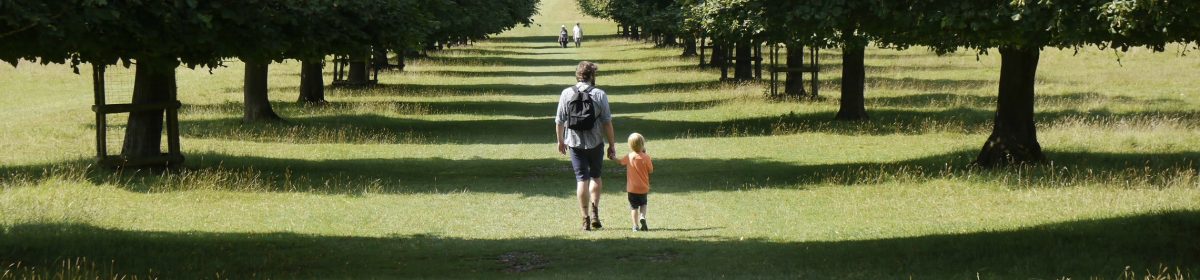
So Madame and I took advantage of the nice weather yesterday and drove over to Dyrham Park for a walk in the fresh air, having been kept indoors for days with the terrible weather. I knew I needed nine new records and got my first one as we left the car park and I realised that I’d never recorded the lovely avenue of trees that I’ve used as a banner for the last ten years. Of course I knew they were Limes but when I photographed them and turned to the books I discovered that they weren’t going to give up their precise identity without a struggle. Yes, they are Limes but no they’re not what I thought at all and turned out with a bit of forensics to be hybrid Limes, confusingly called “Common Lime” because they are – well – common. If you look again at the banner at the top of all these posts you’ll see our youngest son and our oldest grandson walking down the avenue together hand in hand. You’ll also see that the trees have all been given flat bottoms by the herd of grazing deer which were culled when they contracted TB a few years ago and have now returned with the perimeter of the park fortified with enormous fences to keep out any infected cousins. So that was good news and we await the restoration of the unnatural fringes by the deer when the leaves grow again next spring.

So that was one for the record and we wandered on down through the terraces where the National Trust team have done a great deal of forestry work, thinning and planting Yew, Bird Cherry and numerous other plants. The Rhododendrons, I imagine, are for the chop later when the newcomers have established. Most of the affected Ash trees have now been taken out so the park is going to look very different in a few years time. But everywhere we went, we could feel a real sense of direction and purpose in the plantings, it was very pleasing to see, and well done to all the volunteers who do most of the donkey work.

I guess it’s the time of year but of course the evergreens have the stage at the moment, and I always feel they’re a bit funereal. Yews and Laurels; well that’s churchyards and wreaths as far as I’m concerned! Down in the formal gardens you can see how the vision is working out. To be honest I’m not keen on straight rows and tulips but the head gardener has introduced a very subtle subversive note into the plantings and so we relished the long borders of espalier cider apples with all their local names, although we looked in vain for “slack ma girdle” which was the name we gave our quiz team when Madame worked on apple trees at the research station. Better still we found Soft Shield ferns and Black Nightshade growing on the banks and some of the healthiest looking Harts’ -tongue ferns we’d ever seen. A deft hand with the planting scheme has completely swerved any feeling of the Parks Department and created a garden that we’ll return to many times. The pruning of the apples and pears – under the guidance of the Head Gardener – who did some training at Versaille, (he told us), is unusually tight and looks almost daringly tight to the branches.

Then, for the first time ever, we ventured into the house itself – well, actually the servants’ area – because I’d spotted a very pretty Delftware tulip stand through the window in the old kitchen. It’s only the second one we’d ever seen and with the exception of two genuine antique earthenware pots, the kitchen and dairy have been equipped with some very nice freshly thrown scalding pans. There’s a photo below.

So it’s a red letter today. Two resolutions fulfilled and the third, of which this post is a part, is to complete a million words before New Year; just 34,000 to write which is going to be tough. Next year’s resolutions are going to be about boiling down the ten years of the blog to its essentials, and next week I’ll make a start on logging the fungi. Targets are good!

Before your very eyes – Cheshire cat plants are the lost smiles of nature.

If you’re up to speed with the latin names you won’t need me to tell you what they are. I’m using the common English names because they’re the place most of us start our journey as well as expressing the poetry of nature.

Actually (so far) one of these plants – the one at the top left – hasn’t yet joined the ranks of the disappearing but it’s still early days in the crisis of species extinction that’s barrelling down on us. So on the left, top to bottom there are the Small Scabious, The Sheeps-bit, often called Scabious as well, and the Devil’s Bit; ditto. The one on the right is a Common Restharrow – which was the initial impetus to write this post. I’m writing about these plants, and the reason I think you should be interested too is that seeing them is like looking at the prelude to a slow motion car crash.

I wonder if there was a smidgeon of irony in choosing bonfire night to launch the latest Red List – or to give its full name “A new vascular plant red list for Great Britain”. I can hardly imagine the great British public queueing around the block to get a copy before the ink dries, and it is very technical (but over the years I’ve already put in the hard miles); however it’s a duplicitous ten quid’s worth of ebook masquerading as a scientific survey when it’s really a requiem for a disappearing earth. Every paragraph is damp with tears – it’s the saddest list of names you’ll ever find in a book about plants.

Here’s a Google Gemini summary of the findings:

Increased Threat Level: The proportion of species assessed as threatened (Critically Endangered, Endangered, or Vulnerable) has increased 26% (434 species) are now classified as threatened, up from 20% in the previous 2005 list. A further 140 species are listed as Near Threatened, suggesting their conservation status is of concern.Widespread Declines: Many plants that were once common and widespread in the countryside have continued to decline and are now assessed as threatened.

So let’s start with the larger picture at the top of the page, in a way that’s also a defense of English plant names. The name Common Restharrow at least paints a picture. Having driven a little grey Massey Ferguson 35 and towed a chain harrow to aerate and tear out the thatch of dead grass whilst flattening molehills I get the joke. If I’d been doing the same job a century ago and leading a horse-drawn harrow I might have called the plant “rest horse”, because this little plant in a typically tangled mass can stop a harrow in its tracks. I’m thinking of the rain soaked agricultural labourers in Peter Brooks’ film of Ronald Blythe’s book “Akenfield”. Ononis repens defines the plant’s place on the spreadsheet down to ten decimal points, but fails to tell the story. Of course, unlike my Fergie, a giant turbo charged tractor would pass over without noticing – but it wouldn’t need to notice any more because Restharrow is disappearing altogether. It’s been moved up the parade of shame from “least concern” to “vulnerable” under the onslaught of intensive farming. I can still take you to see it, but it’s mostly on the coastal headlands in west Wales and Cornwall at the field edges, beyond the reach of sprays and ploughs.

And that’s where the sadness comes. The loss isn’t just technical – an entry on a spreadsheet – but a loss of memory, of relatedness, of history; it’s personal. Sun, wind and rain; strolling and rolling together with Madame; hours, days and weeks of searching followed by the moment of joy in finding. These are not the simple pleasures of an ice-cream at the end of the day’s plant hunting; they’re the joys of complete focus and engagement; of falling in love. This is a big deal.

In a recent posting I was writing about human grief in a very allusive way (which I hinted at in the title), and in parallel, I can’t stop wondering whether the loss of meaning when we lose someone close to us isn’t just damaging when what’s lost is a part of the physical world in which all our memories are embedded. In Stoke Row on, the edge of the Chilterns, my grandparents had a smallholding. More even than remembering what they looked like I can’t escape from associating them with the Beech trees that surrounded their cottage; from the sight and smell of the paraffin stoves on which granny cooked, and of the rich oily smell of chicken meal. I remember that the first squirrel I saw was a red squirrel, and I remember the line of trees at the back which my Mum would examine and proclaim that there was rain over Granny Perrin’s nest. My Mum’s favourite flower, she would say, was Lady’s Slipper – but which – of about ten alternatives did she mean? The orchid is now extinct so that leaves nine. When she died my sister and I were trying to decide where we could bury her ashes and we did a bit of research to see if we could return her to her childhood home. It was a powerful blow to discover that the Crest smallholding is now covered with an industrial estate. In fact it was even more of a bereavement to discover that I would never see the tarmac road dressed with flint pea-gravel again, nor gather primroses nor help to gather prickly and itchy hay to be stacked in stooks and ricks.

So let’s go back to the three Scabious, only one of which (top right) is really a Scabious. The other two, united by their similar appearance and vibrant pale blue-violet colour, kept me bewildered for several years although, once you know how, they’re worlds apart. I was always dazzled by the name Devil’s-bit. Such a plant must be special, I thought – like Viper’s Bugloss and Deadly Nightshade; it’s the names that draw me in like a moth to a flame. But Devil’s Bit and Sheep’s-bit never seem to grow side by side so the moment of revelation is more likely to happen in front of a decent macro-photograph or, in my case looking at the illustrations in Collins Wild Flower Guide and seeing – actually noticing – for the first time that the stamens on Devil’s-bit are like little mallets and on the sheep’s-bit they’re tiny little trumpets. Oh floods of joy! except what I recall more than anything else is where they grow, and they grow there because they are perfectly suited to their homes; to the weather and climate, to the soil, and to the grazing or cutting regime under which they can thrive. Change any one of those things and they’ll likely dwindle and disappear – not waving you might say – but drowning. One blisteringly hot day in the midst of a drought we shall go back and they won’t be there any more.

Maybe the flowering plants are nature’s way of smiling at us. I used the metaphor of the disappearing Cheshire cat’s smile at the top. Perhaps it’s the canary in the mine; whatever – it’s nature sending us a message that when the flowers go they take the joy with them.

Thrift growing on a clifftop in St David’s Pembrokeshire

Is this a bunch of photos or some kind of electronic reliquary?

Well it’s probably both, but for now I’ll go with the “Caucasian Wingnut” label on the tree. The other photos – in no particular order – are of my lightweight plant recording kit; the view from Dyrham Park in Gloucestershire which I’ve been going to since I was old enough to ride a pushbike and had to climb over a wall to trespass and where I’ve ridden horses, foraged St George’s mushrooms and recorded plants and fungi ever since. It’s also possible, if you walk to the edge of the escarpment, to see nearly all the places I’ve lived in since I was born. There are a pair of “then and now” photos of the cottage we lived in when we were at art school; one picture of our latest allotment; some stored dried and bottled food from it; some pots of tayberry jam and another of Priddy Pool on the Mendip hills and finally a Ragged Robin plant. They’re all extracted from the 20,000 photos I’ve spent 18 months processing down to 1000 botanical records and 500 species – which I’ll finish this week before I start on the fungi.

For the benefit of WordPress and Facebook followers who may be wondering why I’m writing this, I’m trying out a new link to Bluesky since the Facebook algorithm has blocked my posts because their computer has decided that “The Potwell Inn is a business” – no it’s not it’s the title of a comic novel by HG Wells. If the link works properly it should give present and future readers access to the whole nearly 1 million words and associated photos from the past decade. Press that follow button. You know you want to do it!!

@davepole.bsky.social

Somewhere between the recycling depot and the destructor bridge there’s a spirituality of hope – but I can’t find it.

The new Destructor Bridge

Bath is a city divided by the river. Walking west to east along the towpath between Windsor Bridge and Churchill Bridge you follow the northern half of the city which bears the postcode BA1. BA1 is posher than BA2 because it’s got most of the expensive and Georgian parts. Then, at Churchill Bridge – (I’m sensing a bit of a pattern here because you will already have passed beneath Victoria Bridge) – it all takes a bit of a dive on the northern side as you pass the bus station, the railway station and the Southgate shopping Mall and then Royal Mail sorting office before you approach the end of Pulteney bridge where (if you dare) you can pop into the public loos over Waitrose and change back into your Jane Austen inspired Emma costume or pretend you’re Knightly according to taste and preference.

In many cities they demolish the old and build the new on top but in Bath, given that the tourist money has come from the old, for several centuries, they built the heavy industry and the ugly/smelly bits across the river out of sight. The Destructor bridge linked the upper Bristol Road to a giant incinerator which was next door to the gasworks and just along from Stothert and Pitts where they specialized in heavy engineering; cranes; bridges and transport across the British Empire. As industry died, plans were hatched by friends of the developers to “improve” the city by demolishing older buildings in favour of concrete tower blocks. You can read about this in the excellent and angry book “The Sack of Bath” by Adam Fergusson. We bumped into his daughter once in a pub in Hay on Wye and immediately recognised one another as kindred spirits.

Sorghum? where the hell did that come from?

It just so happens that we live near the towpath – just far enough away to avoid the smell of sewage as long as you hurry past a couple of the outflows in the summer. The towpath is my plant hunting ground; the place which never fails to reward me with something new; often a squatter or a vagabond. I reckon I could easily account for 50 species in my records, probably more. On Friday I went for a walk along the path to clear my head. On the opposite bank they’re clearing the old gasworks site in order to build hundreds of new flats – the river view would increase the value of an old air-raid shelter into six figures. The noise was horrendous, with drilling, piling and lorries everywhere. The spirit of the old destructor bridge lives on with a twenty first century sound-track. On my side of the river I passed the recycling centre which is joined by the relatively new version of the destructor bridge which clung to its name but lived up to its reputation when they discovered it was a bit too long or maybe too short when they came to lift it into place and retreated bloody but unbowed for months as the designers licked their pencils and tried to find someone to blame. Fortunately it wasn’t called the Prince Andrew bridge because that would have taken nominative determinism to the level of farce.

But I was there clearing my head because the previous week we had attended the funeral of a young friend, just 40 years old from bowel cancer and I needed to find that kind of safety in numbers that lets me escape into a spreadsheet for a couple of hours. Walking past the destructor bridge and the recycling centre seemed to be hauntingly significant as I recorded and photographed the ordinary, everyday plants that most of us ignore as if they were strangers in the street. Ivy leaved toadflax, cocksfoot grass, alkanet, broad leaved dock, ribwort plantain, blackberry, ivy, herb robert, false oat grass, buddleia, marsh figwort, common ragwort; red valerian, groundsel, bilbao fleabane, gallant soldier, pellitory of the wall, mugwort, tansy, several kinds of dog rose and annual mercury. I fear I’m writing a book of remembrance for the weeds I pass in the street as the climate catastrophe intensifies.

We tend carelessly to describe grief as a kind of temporary and solvable disturbance of the mind. Time, we say, is the great healer. But it’s not, I want to scream. Bereavement. and the grief that explodes in us when it happens, more closely resembles a stroke. It destroys memory, reshapes the world in unfamiliar ways so we can’t recognise the places we once knew. The loss of a limb just as the loss of someone we love, can’t be mitigated by positive thinking and we don’t get over it – ever.

And I feel as if I’m suspended between the grim spirituality of destruction and the optimistic recycling of fading memories. The river becomes the Styx in this uninvited metaphor. The noise, the roar and pollution of the bulldozers and lorries on one bank and on the other the recycling centre where we take the things we no longer want – to be reprocessed into something else. On the one bank letting go completely and on the other, clinging to the hope that something may be retrieved while we rather desperately make records and take photographs, out of which – one day – it might be possible to build a spirituality of hope in a world where God – like Elvis seems to have left the building.

Creeping Thistle – Cirsium arvense

You won’t find me saying my prayers very often!

And notwithstanding appearances I’m not saying them here either. What I am doing is attempting to photograph a very small fungus while holding a six inch ruler behind it. In plants and fungus spotting size really does matter. Here’s what I was trying to get a picture of – it’s a tiny clump of candlesnuff fungus on some dead wood up on the Mendip hills.

Two things coincided which I wanted to write something about; the first was a random comment by a young man a couple of weeks ago which rang some serious warning bells in my mind. The second reason was our first fungus hunting visit to Priddy this late autumn. As to the first challenge I should say at the start that although I’ve never consumed any kind of hallucinogenic substance I am very interested in such properties and I’m filled with wonder at the way plants and fungi can synthesize unimaginably complex molecules which have the effect of reversibly changing our brains. Anyway I was having a conversation about Psilocybin with this young man and he mentioned that Velvet Bottom was a good place to gather them. Now I know Velvet Bottom well; it’s one of my favourite places on Mendip – however I wouldn’t eat anything foraged from there because the whole site is heavily polluted with lead, zinc and even cadmium to the extent that in some patches of ground nothing will grow except a few heavy metal tolerant plant specialists. Grazing by sheep is only allowed for very short periods to maintain the habitat, and downstream in Shipham gardening has, at times, become severely restricted due to fears of cadmium poisoning. I’m sure that readers of the Potwell Inn would never dream of boiling up magic mushrooms or, for that matter Fly agarics to make tea but just in case any readers were planning post retirement breakouts, I’d advise that there are safer places than Velvet Bottom to begin a life of crime.

But I also wanted to write about the metaphorically fatal attractions of fungi which can get very obsessive. I’m just grateful it’s a relatively short season. Fungi are beautiful, strange, mysterious and fleeting visitors which spend most of their time invisible and underground. What we see are the fruiting bodies; the spore carrying parts which can carry their offspring many miles. To be fair, fungi can be very hard to identify and although there are now one or two phone apps that will have a go, they’re still nowhere near safe enough to pronounce any fungus edible. I was testing one new app while we were out and although it easily managed some simple tasks, it failed completely on quite a number. I got many warnings that such-and-so was potentially dangerous. I don’t forage theses days in any case but I have poisoned our cat – which luckily recovered, and come within a whisker of poisoning Madame and me. Even easily recognised and safe fungi – St George’s mushroom for instance has built up intolerance over any years with some real experts, and suddenly made them ill.

But there’s more than enough aesthetic and scientific interest in fungi to compensate for leaving them in the ground. I’ll just put a few pictures up below to show the huge variety of form, texture and colour that they can display – not to mention odour which can range across the whole spectrum from apricot to dead sheep. I love them, and look forward to meeting them again every autumn and then there are always lichens, mosses and liverworts to fill the dark days of winter with fascination. My suggestion would be to photograph anything you encounter that interests you and make a note of the location – you can usually do this on your phone. Then perhaps one day you’ll feel inclined to identify and organise them in a spreadsheet and make a contribution to proper science in this time of global species extinction and climate change. All these below were photographed in a short walk last Thursday.

On Saturday I mended the allotment shed window which had been smashed months ago by vandals. I thing by comparison with the fungi my handiwork lacks a certain architectural je ne sais quois !

Walk on by!

Dandelion – obviously! but more complicated than you might think.

Everybody knows what a dandelion looks like, I imagine, but there’s no shame in not knowing that there are around 250 species of dandelion in the UK and – if you’ve got time and a good psychotherapist you could learn to tell them all apart. The beloved blackberry is a similar case but even more complicated, with around 330 species. They’ve evolved an interesting method of reproduction -known by the academics as apomixis which roughly translates as having sex with yourself; don’t knock it if you haven’t tried it – or as Woody Allen said – if you’re going to have sex you might as well have it with someone you love.

Anyway, and moving on rapidly, the dandelion is a handy reference point for what you might call the “walk on by” plant which draws together two threads of the WOB phenomenon. The dandelion in the photo, for instance, has been there along with its definitely not cousins for all of the ten years we’ve lived here. Until today I’ve never photographed or recorded it because it’s too common and therefore not worth the bother. However fate has confined us to short walks near home for most of the summer and the local rogues and vagabonds of the pavements and towpath have been the only available source of botanical interest; which disposes me more kindly to the dandelion. I’m sorry for my casual disregard in the past but now I just have to walk on by not because they’re common and vulgar but because I haven’t got the time or the confidence to sort them out; although I did shell out for the standard handbook which has been sitting unopened on the shelf like a bishop’s bible for months.

After months of tests and investigations we’re near the end of the tunnel (you’ll see why that’s a highly inappropriate joke in just a moment), and all I’m waiting for is to have a 35mm polyp removed from my colon so I can stop being anaemic and feeling knackered. I’m relying on the expertise of the multitude of consultants, nurses, interns and doctors who’ve peered up my rear end, when they tell me that this thing – about half as big again and the same shape as a champagne cork- isn’t malignant. Like birdwatchers they know the jizz of a nasty one when they see it. I have great confidence in them.

But spending every moment checking the phone for the next appointment doesn’t just cost you time, it drains the creative springs and makes life a bit grey and dull. We’ve cancelled several campervan trips so we could both be available for appointments at the drop of a hat and so necessarily I’ve been focusing on the local weeds. It’s bad enough trying to take macro photos out in the wilds; passers-by tend to stop and ask if you’re OK. Do the same thing on a pavement or on the towpath and they’re likely to call the police. But don’t for a moment suppose that all you’ll ever find outside your city centre front door is dog poo and beer cans. I’ve been amazed at how many relative rarities make even a temporary home for themselves in the mean streets of Bath, and recording the ordinaries balances the books against the statistical over-representation of exotica in the field guides. If we’re going to keep tabs on the unfolding runaway climate disaster we’ll need to record the sparrows, silverfish and brambles of the earth.

Here’s another one I’ve never recorded except in some remote and rather glamorous wild place. There was member of the same family, the Sea-spleenwort for which I persuaded Madame to walk miles in freezing wind and sheeting rain in January to find it on the sea-cliffs where it belonged, only to have it shown to me on the basement wall of the Guildhall in Bath. Sadly it seems to have gone now and I thought its near relative, the wall-rue, which has always grown unrecorded by me on the wall below our flat might have died from drought this summer. But this morning I dodged the rain to photograph the dandelion and came back with Hemp-agrimony; wall-rue and field-speedwell – all within ten yards of the front door. I shall have to make a list of plants that grow with 100 yards of the flat and I’ll guarantee it will exceed fifty species.

There’s a bit of a knack to naming plants from their leaves alone and today AI threw me completely off track with the speedwell which it identified as ground-ivy. A most enjoyable trip to the books settled the matter in favour of the speedwell but the two plants are alarmingly similar until you see the flowers. The purple flowers scattered near the speedwell had me scratching my head until I remembered there’s an Argentinian Vervain in full flower growing in a pot next to it. You see, even boring plants turn out to be better than the Times crossword for getting your brain in gear.

Back in August 2024 I set myself the target of organising my utterly random collection of photographs, and identifying the names and locations of all of them with a supporting photo. It took me a whole year to get them on to a spreadsheet and now there are 898 records sitting there waiting to land on several unfortunate referee’s desks. My species total is up to 472, just 28 short of the 500 target. I also set myself the target of completing 1000,000 words on this blog and so far I’m up to 951,500 which leaves me around 49 more posts to write. As my old friend Joan Williams used to say – God willing and a fair wind I’ll get there. But I’m not a trainspotter by temperament and so if it takes until next february it won’t keep me awake at night.

Aren’t statistics a slippery thing to deal with? I read yesterday that this polyp that I’m entertaining at the moment increases my risk of colon cancer by something like 75%. Reading that statement carefully suggests that my real risk depends upon what percentage of any polyps of any size are malignant. The answer to that is 5-7%. So my real risk is more like 75% 0f 10% ie 7.5%. It’s possibly less significant than crossing the A4 on a zebra crossing with a Range Rover approaching.

A bit of a Marienbad moment in Gloucestershire.

The floow deer herd is back out in the park

After all the drama of repeated heatwaves, the weather has finally returned to relative normality and we’ve been rejoicing in the rain. We’ve had a few big thunderstorms but surprisingly in spite of very heavy rain, only the top few inches of the allotment were wetted adequately. We’d prepared the ground by emptying the waterbutts at the end of the last hot spell, hoping they’d refill – but then, when it was too late, I discovered that the gutter on the shed had come adrift of its mountings, leaving the water to travel uphill. Looking more closely I could see that an inexpensive redesign would capture rain much more successfully. The two butts on the greenhouse were working better but again the gutters are pitifully small and don’t cope with precisely the kind of downpours we most need to store.

This summer we came very close to giving up the allotment together. The hard work is OK but this year with Madame’s knee replacement and me visiting just about every department in the local hospital we ran into a wall. Happily, with just a couple of minor procedures still to do, we’ll be back firing on all cylinders by next spring, which just leaves the results of several months of neglect to sort out. The battle is 90% mental but for the first time in months it feels like we’re winning. It hasn’t all been bad on the allotment. The soft fruit didn’t do well at all but the fruit trees – apples, pears, damsons and plums have all yielded record returns. Even the poor old potatoes managed to give us a half-decent crop after the dry conditions, and the newly planted raspberry canes are thriving. Last night we ate our own potatoes, runner (string) beans and chard with stewed plums for pudding. Allotments are very friendly places, and it’s rare not to exchange surpluses with our neighbours. It seems to me that the allotment looks after our bodily and spiritual needs while certainly my intellectual (mind) needs are well catered for by plant hunting and studying their habitats and habits.

Anyway we decided to give ourselves a day off on Monday and we took ourselves over to Dyrham Park which we haven’t visited over the summer because it gets so overcrowded. Actually that’s not quite true because we made a couple of early visits to White Field to search for the orchids. At this time of year the pasture is cut for hay and normally we’d turn our attention to fungi, but apart from one fairy ring (Marasmius oriades) there was nothing much to see.

Black Worcester pears on a southwest Facing Versailles espalier

Anyway we wandered down through the terraces and visited the formal gardens which (sorry no photo) have matured brilliantly. We were a bit dubious when they were first laid out but now they look lovely. On the outside wall of the big house there is a fabulous example of espalier pruning which we were lucky to have explained to us by the head gardener a couple of years ago. This Versaille method is based on very short fruiting spurs, but by doing this he explained that you could take the espalier to a larger number of tiers. He’d spent some time actually learning the method in Versailles.

Crataegus orientalis

Below the formal garden we walked around the large pond which was choked with blanket weed and then onwards to the small pond surrounded by mown grass with its own waterfall. It was crystal clear, and we bagged one of the seats and sat quietly watching the other visitors. Then, inexplicably, we both said exactly the same word – “Marienbad”. Couples standing still, casting shadows, nor speaking – a kind of freeze frame – and I thought how I’d first climbed over the wall to the park something like 65 years ago, long before it was turned over to the National Trust. We’ve ridden horses there in the 1970’s and spent many hours cycling back and forth between Bristol and Dyrham to visit friends.

There’s a question that often gets asked.“What would you say if you met yourself at the age of 14; what questions would you ask?, what advice could you give?” and sitting there in the warm sun, I felt that there was no need for any kind of meeting. We were, in the deepest possible sense both there! connected in an almost surreal sense every version of “me” over the years, sharing the same moment. It was very beautiful.

Later, after a glass of apple juice and a shared sandwich, we wandered up the quieter back route to the top alongside Sands Hill, passing at the very bottom a rotten tree trunk which had been left available to house and feed every kind of wood boring insect. The photo shows the human palace lurking behind the insect paradise.

I was going to shrink this one down, but changed my mind

As we climbed steeply upwards I stopped to record a couple of everyday trees and soak up the view of a small stand of very tall pines. Then. right at the top we met a couple of volunteers who said that there was a group of deer just beyond us. The whole herd had to be slaughtered due to TB three years ago, and although we knew they were being replaced we’d looked in vain for them in their paddock. Then suddenly there they were; four larger stags and a young one which we could hardly see. We looked at one another silently, deer and humans, without fear or hostility. I think two magic moments in one walk is more than any of us have the right to expect.

Hefted

If you know Mendip at all well, you’ll know that this thatched building holds a stack of sheep hurdles on Priddy Green

Nostalgia can be a poisonous affectation. It’s all too easy to use the wistful, often wilful mis-remembrance of the past to reduce the past to a coddled egg; good to eat but with no future. Real history is troubling; often leads in two directions, and ambiguous to a fault. On the other hand, the sense of rootedness in a place, or in a community in which the two ideas often overlap, is foundational to our practise of being human. You’ll probably think I’ve lost the plot if I write about Cornbrash, Brandon Hill stone and Bath stone and yet the glimpse of a building made with any of these three will as good as a six figure OS grid reference. They would not just signify districts but the era they were built in and the likely social class of the people who lived in them. Add to that a dialect, a particular way of sounding a troubling “r” in Gloucestershire, or a single sentence in Bristolian would tie the speaker down to something like a parish. There’s a sawmill in Wick and when I go there, I could curl up on the counter like a cat – I feel so at home. This isn’t something you can fake. You’d have to live not just any lifetime, by my lifetime to pick up the resonances.

I understand this better now than ever as I’ve learned about plants, where they grow and what they prefer to grow in. As I child I learned to love lying under beech trees growing on a moss covered bank on the boundary of our grandparents’ smallholding. My mother’s whole vocabulary of local names was learned amongst the winding lanes of the Chilterns. We looked in vain as children to see what Granny Perrin’s nest was, and why our mother could see it when we couldn’t. Even the roads had their own language of shiny flint pebbles, and hiding in the depths of woods once worked by bodgers who turned chair legs and wheel backs was Margaret’s Beer Shop where we could drink cherryade as a treat. I came to know what I now understand as acid heath, on Rodway Hill as slowly I came to understand how localities have their own unique floras.

Mendip is famous for its abandoned lead mines and again there are plants that can survive heavy metal pollution and environments which have their own special designation, Calaminarian, which is how the calamine lotion that our mother dabbed on our chicken pox spots brought zinc from the ore into Mr Ladd, the chemist’s armoury. Nowadays my old friends are the pavement scoundrels, constantly harried by the council’s strimmers. The poor council workers don’t seem to know about tap roots and seeds, or annuals and biennials and so they knock em all down like skittles and within a fortnight they’re up again. Then, of course there’s the riverbank with its own royal flush of perfectly adapted plants. Stones, dialects and plants store the local memory as certainly as books. Footpaths and shortcuts, streams, hiding places abandoned dramlines and climbing trees marked our territory and as we spread our wings, our bikes were the means by which we invaded and occupied other peoples’ places.

So much, then, for a rather lyrical take on the sense of place. The Greeks might have dignified it as the genius loci but we were unconscious of our hefting. It was just home as far as we were concerned.

A couple of nights ago we watched Peter Hall’s film “Akenfield” which I’d seen years ago but completely forgotten. I read the source and inspiration for the film , Ronald Blythe’s book “Akenfield” when I was in my twenties, along with Henry Williamson’s long cycles of novels, and I read J A Baker’s book “The Peregrine” a little later. In truth I consumed voraciously just about any scraps of natural history writing I could lay my hands on. Akenfield is a groundbreaking oral history of rural Sussex at the beginning of the 20th century and both a celebration of the skills of farmworkers and denunciation of the appalling conditions in which they worked. The extractive philosophy of modern agriculture was cultured in the minds of landowners centuries before the first tractor appeared on the land. I watched most of the film near to tears.

But one of the happier lessons of the film was that whatever happened to them, the farm workers had song. They sang in church, they sang on army service in the first world war, they sang in pubs and they sang as they took the harvest in on wagons loaded high, with the children riding on top as a treat. I suddenly remembered that my sister and I had shared that triumphal ride in Stoke Row one hot summer’s day, and how insecure and prickly our perch was. It was the strangest feeling to recall the stooks and ricks of the days before the chequerboard plastic wrapped fields we see today. That overarching sense of history is disappearing and, because of our failure, we’ll never be able to bring it back.

Some forms of nostalgia are a positive waste of energy except perhaps that we still, we always will have song. Barely fifteen years ago I sat in the kitchen of a farmhouse in one of my parishes and watched, through the window, as a procession of combines, trailers and tractors drove along the lane, headlights blazing, to come in for supper and then go back to harvesting the fodder maize that feeds the cattle. Today we went for a drink in the pub in Doynton. The village has changed beyond recognition but if the flow of traffic could be staunched for a while a couple of horses and their riders persuaded to pass by and a rookery installed to provide the music. If a sunset could be organised to bathe the cornbrash walls with evening light and if the conversation dropped just a tiny bit in volume and we stepped outside, I think we could almost see the ancestors in the shadows.

Yet we still have song. Those who believe that their mission in life is to make life harder for us should beware of our spiritual and revolutionary songs of resistance. They too have a long and deeply local history; often rooted in the sense of place, hidden in the DNA of songs and carols that still speak deeply to the most irreligious of us. Of all the things I miss about my ministry it’s the raucous Christmas carol services, packed to the gills with people who were drawn back year by year into the old ways; the funerals where for a fleeting moment we could believe that all would be well and all manner of things would be well as we sang Abide with me. But perhaps most of all on Easter Eve when I was able to sing the exultet; a long plainsong solo hymn of hope for the coming year.

Sunset through the campervan window at Priddy

This bus is much shinier than it was when I drove it!

One of the odder reasons love Agatha Christie films and other 1950’s costume dramas is because there’s always a chance that they will feature my old bus, and after a bit of a hunt on the internet I found it restored, repainted and looking very fine indeed. I have a very strong connection with this exact bus (the little one in the picture), although when I drove it for three years it was hand painted in cream and brown and beginning to look a bit scruffy as it had already seen 25 years of service at Clifton College, transporting mud-caked boys from Clifton to Beggars Bush where the sports field was. After art school there was no prospect of any paid work and so I went to Clifton College and Madame went to Wills tobacco factory – which she hated – and then got herself the perfect job at Long Ashton Research Station; the horticultural department of the university in which she thrived. There’s a link here that gives a much fuller account with pictures of the original wooden slatted seats and the unbelievably rudimentary dashboard. Just click above and you’ll find it.

I went for the job and was interviewed by the Bursar to whom I lied about my qualifications, or at least told a half truth in that I did have some O Levels but failed to mention the honours degree bit. He asked me if I’d ever driven any larger vehicles and I said I’d driven a transit van and that was it. He shook my hand and said I’d be fine and off I went. On my first day I noticed an empty greenhouse and asked about it. Trev, the boss, said that my predecessor had filled the greenhouse with plants but just as they were coming into flower he’d come in one night and cut them all down and taken them away. Well well, I thought, this is going to be fun. I was to be a half time groundsperson in the mornings, tending the playing fields, marking out the pitches and helping out with the workshop where the brilliant but irascible mechanic, Geoff, would curse, hammer and repair our collection of old and worn out machinery. We once completely dismantled and rebuilt a Massey Ferguson 35 tractor; repaired a damaged Barford roller by replacing its piston rings with some taken from a Vespa motor scooter. The other half of my job was driving the school buses. They were beasts with crash gearboxes and frankly underpowered for dragging 25 schoolboys up from Avonbank on the river where they rowed, back to Clifton. I had never seen a crash gearbox before and so my first trip up Park Street from the river was conducted very slowly in second gear generating a huge traffic jam. The trick was to match the speed of the gearbox with the speed of the engine. If you failed to get it right the gearbox emitted fierce grinding noises and refused to engage – so when changing down from second to first there was a danger of rolling back and crushing the car behind. Changing up a gear was a bit easier because you declutched once, paused for a moment for the engine to slow down, declutched again and with a brief prayer the gear would engage like (as we used to say) greased weasel shit. This was the famous but these days unknown skill of double declutching which has gone the way of quill pens and longbows. There was a small team of retired Bristol Omnibus Company drivers who joined us in the afternoon because they knew how to change gear. I remember one, called George, with great affection.

My other workmates were the boss, Trev, who rum tum tummed and pom-pommed under his breath constantly; smoked his pipe and taught me the weeds which plagued us on the fields because he would never mix sprays to the recommended strength since he maintained that the manufacturers exaggerated the dose to make more money. Consequently we made our contribution to the development of weedkiller resistance among Speedwells and the infestation got worse and worse. In the summer I would mow the fields, pulling a gang mower behind the little Fergie and pausing frequently to acquire the beginnings of my field botany skills. In the winter we’d maintain the equipment and (favourite job) lay the boundary hedges and warm our hands on bonfires of prunings on frosty days.

Chubby was my other work friend. Indeterminately old and wily with withered skin over a foxy face, he would carry a brown paper bag in his pocket with as much as a couple of thousand pounds in it. He was notorious as a wheeler dealer and was reputed once to have bought a small herd of cattle off the field and resold them the same day without even moving them. Stories about Chubby included the time he sold his shoes at a dance, and I almost killed him once when we we felled a large tree. I was wielding the chainsaw and he was driving the tractor with a tensioning rope which I was convinced was too short. It was too short and when the tree came down Chubby was enveloped by the branches. Miraculously when I rushed across he was still sitting on the Fergie, laughing and completely unscathed. Chubby had a bit of a secret life, we all thought, but since the name of a well known Bristol criminal was attached we just included it in life’s rich tapestry.

Over the years I’ve worked with some proper characters and kept it all close but learned so much of great value. One of the best lessons I learned over the years is that real people stab you in the front when you get out of line. It’s the polite middle classes who stab you in the back!

Anyway, back on the allotment I’ve forsworn heavy exercise in theory at least, and today I cleared a bed of potatoes, with a few rests, panting and leaning over the refilled pond. It was a delight to discover that all our efforts at feeding the soil with compost has rewarded us with a smaller than usual but still useful crop of potatoes, and it’s true what they say; compost really does hold the moisture and after a three month drought there was still a perceptible trace of moisture in the earth. This season has focused all of our minds on water and as this is also the time for planning next year’s projects I’ve been wondering about taking out two of the compost bins which we don’t use properly and substituting one of those 1000 litre polythene water tanks to increase our stores to 2,250 litres – because it looks very much as if droughts are going to feature large in future.

And just to finish, we installed the trailcam again this week and captured a lovely image of a badger hunting sweetcorn in the night. He’s also done us the favour of digging over our wood chip paths in search of roots and grubs. Good luck to him, I say!

Badger on allotment

Hello stranger!

I think I must have some kind of aura that encourages complete strangers to come and engage with me. I’m not claiming any supernatural powers here, just the very ordinary skills of getting alongside people. I’ve spent hours on empty railway stations listening to very troubled people (more often than not, other men) who just want to unburden themselves. Maybe it’s my general scruffiness or perhaps because I seem not to have my head stuck up my arse and so I represent the unthreatening type. I’m short and a bit overweight and only Madame could see my gleaming virtues – and that’s not all the time! Funnily enough I was just typing that sentence and the doorbell rang. It was a young delivery driver and as he helped unload our groceries he opened up at length about his sadness that his army career hadn’t worked out as he hoped.

But this gift – if you can call it that – seems to be extending itself to plants. This year I’ve spent hours and hours searching for different species of fleabane. I’m ashamed to admit that I was provoked by the sheer competence of our County Recorder – call it the positive side of envy – and decided that I needed to get my head down for some serious plant hunting. So far I’ve found five of them, four of which I’ve found the jizz for – that’s a term birders use to explain how they can identify a peregrine falcon diving at 60mph without thinking about it. But having done all that work; photographing, measuring (size matters) and even buying a couple of second hand books, blow me if one of them didn’t pop up on the allotment next to ours. We’ve had Peruvian apples, rare fumitories, stone parsley and bullwort all dropping in to say hello and this week after an eighteen month stalking of a Hungarian mullein on the canal, two of them popped up on other allotments on the site and I’ve no idea why, except for the absence of herbicides and a general aversion to tidiness. It feels as if they’re coming to me for a friendly welcome.

Plants are surprisingly mobile and some – like my fleabanes betray something of that in their names; Canadian, Mexican, Argentine and Guernsey – usually referring to where they were first found. But some also are brought in by the plant trade and another one I saw this week – an Eastern Catnip – moved from Eastern America to a nursery near us and then strolled across the towpath to set up shop in a crack in the pavement. As I’ve recorded all these migrants it’s clear that words like “native” need to be taken with a large pinch of salt. Even the sycamore is a bit of a boat tree, brought in from overseas, and the Sweet Chestnuts here and in the mountainous parts of France and Corsica were probably brought there by the Romans and have now embedded themselves in the “local” cuisine. Those who carp on about strangers and foreigners should obviously get a life and stop prowling suspiciously around the subject like a goat meeting an unfamiliar food for the first time. Looking back to some arcadian ideal time forgets that Britain (or if you really must – “Ingelland” could as easily be described as a desert, a sea or an ice sheet and the original inhabitants coming from almost anywhere in the world, east of Greenwich. We’re all more or less foreigners here; on this “septic isle” as William Connor of the Daily Mirror once described it back in the days when the Mirror was a proper newspaper.

Anyway that’s enough nostalgia for a bank holiday weekend. Things have been happening on the allotment at the dog end of one of the worst growing years we can remember, and after Madame staged a major rebellion when the idea of packing it in was mooted, we’ve been back on the job non-stop, clearing the ground ready for autumn and winter. I was watering the borlotti beans this evening when I realised that one of the key arguments in favour of gardening for improving mood is that caring for just about anything seems to release a flood of endorphins into the blood. The feeling of warm satisfaction I get when I’ve given some time to listen to someone is almost identical to the feeling I got tonight watering the beans which were looking a bit sorry for themselves. Today we filled the pond, weeded the fruit bushes and I fed and mulched the summer raspberries after giving them a good soak. We rarely talk while we work, but it’s always good to be there. There’s a lovely biblical image about being at peace that goes

Everyone will sit under their own vine and under their own fig tree, and no one will make them afraid,

Micah 4:4

As it happens we have both a vine and a tall fig tree next to our plot and the heat this year has yielded a bumper crop. It’s been good and the good is invulnerable to the evil we see day by day on in the media.

Purple Loosestrife