
I could have titled this post ‘Nocturne‘ – a bit posey; or – ‘Be careful what you pray for!’ – except that usually applies better to well deserved comeuppances, so I settled on the one it’s got because today we walked through and enjoyed the subtle differences between all three evening states and now as I write this I’m looking through the window at the night – not Van Gogh starry night or Whistler night and especially not Turner night but just the car park, the backs of the terrace and the fast food joint chimney.
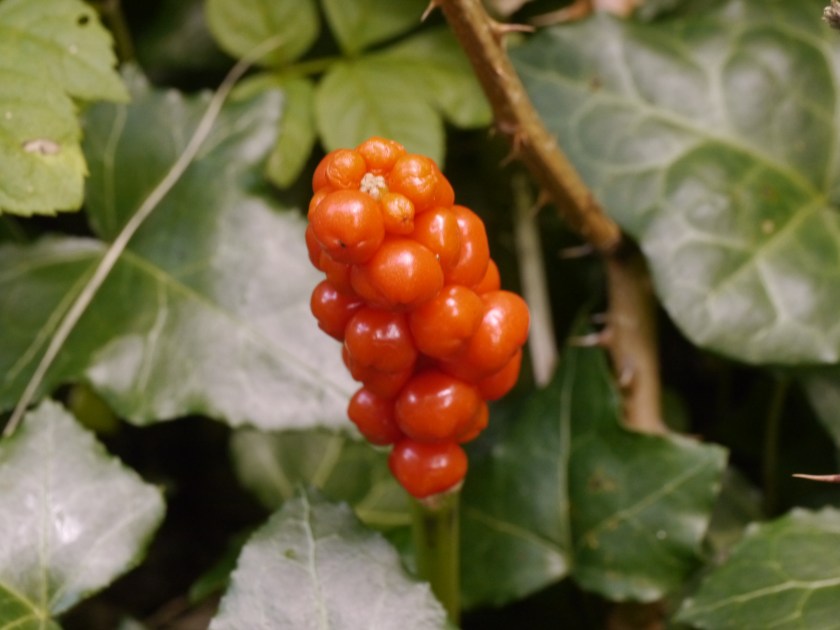
We wasted much of the day waiting for a delivery from Royal Mail that never arrived. To recycle a quip from John Mortimer, writer and barrister, “it’s like tantric sex; you’re in all day and nobody comes.” So (moving rapidly on) we didn’t set out on our walk until 3.00pm. Years ago we were walking in Leigh Woods in Bristol when a tramp – ‘rough sleeper’ carries a whole different set of connotations nowadays; this was a man who had chosen to live in the woods for whatever reason. Anyway he came rushing up to us in a state of high excitement and begged us to follow him. “I’ve been living here for ten years and I’ve never seen one before”, he said, and he led us off into the wood where he had found the first thorn apple he, or we, had ever seen there. Jimson weed, devil’s Snare or thorn apple, it’s got a bit of a reputation for being poisonous/hallucinogenic and the RHS entry for it spends almost as much time describing how to kill it as it does to grow it. We, however, were pleased to see it, thanked him and went on our way.
Yesterday I mentioned here that we haven’t yet seen the otters on the river and blow me if we didn’t meet a man who had – earlier today. Yesterday too, I mentioned that we hadn’t noticed the resident heron for a few days and there we were near an improvised shelter (bender) on the bank watching a larger heron that we haven’t seen before when this man came up to us and told us that only this morning he’d seen a female otter with two cubs, swimming at the exact spot we were standing in. It was beginning to feel as if we were on a roll.
What next? Well, a little further on we saw in one spot – without moving – two swans, one cormorant, one kingfisher, our usual heron and two – yes two peregrines. Admittedly the peregrines were about 60 feet up on St John’s Church spire but that was a bit of a moment to savour, and remember; this is all in the very centre of Bath. A group of young men were passing and joined in the peregrine watching. “They’re up there on the nest platform” I said; and one of them replied “I know, my dad made the nest box and two of the little ones have got together and had babies!”
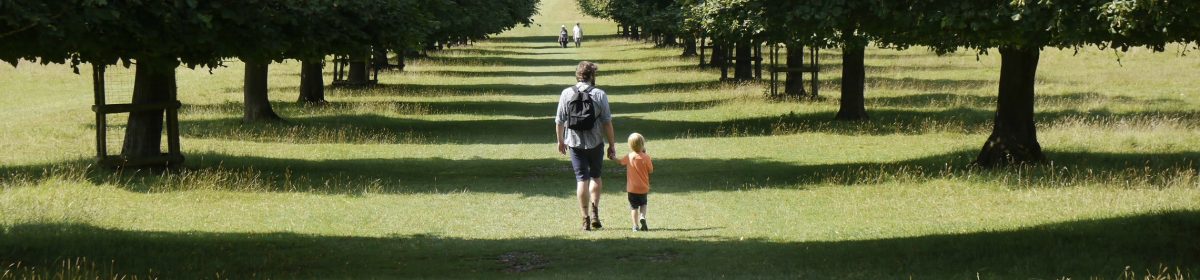
There were hordes of people out walking in the parks and on the canal in spite of the slate grey and rain bearing clouds overhead. Somewhere up there there was rain falling high above us because a rainbow had gathered together all the sunlight that we weren’t seeing and formed an inverted bowl over our heads. Dogs, children, adults, students in careless groups of eight and ten oblivious to the wide birth we were giving them. It was an almost joyful atmosphere as we grabbed what fresh air we could before retreating into lockdown and endless repeats on the television.
As we walked along the river beneath the railway station a long express train pulled in and we noticed for the first time that the lights inside the carriages were glimmering on to the platform. There’s a marvellous sense of inside/outside as it gets darker and the whole townscape slowly changes from day to night. The sky was washed with Paynes Grey, possibly my favourite watercolour; and stationary tree trunks that the spate had brought downstream were riffling the water, making the street lights dance. We quickened our pace to get back where the otters were before it got too dark to see them, but it wasn’t to be. Still; now we know where they are, we can take the binoculars and search for a holt. It was a lovely walk, and completely, unexpectedly rich as walks so often are.
And as I’m writing I remember that among the plants in flower that I listed briefly yesterday, I forgot the hedge woundwort and prickly sow thistle near the canal. The woundwort looks very like a pink/purple nettle, but the killer trick for identifying it is the smell of the crushed leaves that can be anything from mildly unpleasant to almost nauseating. It’s supposed to be effective against boils and such like. I just love the English names of these medicinal herbs; they’re little poems – two or three syllable haiku. Latin names are more useful but I wouldn’t be without Mrs Grieve and Geoffrey Grigson’s lists of local names. I remember an old countryman telling my sister the local name for dandelions – ‘pissabeds’ and giggling as my mother glowered at him. In fact she knew them all very well but never mentioned the more earthy ones.
And then back home, hungry as horses, we fell upon homemade and home grown baked beans; our own borlotti and our own rich tomato sauce mopped up with our own everyday sourdough. Life doesn’t get any better.








 However I don’t think they’d have made much of the three exhibitions of photography upstairs. We had a pair of obsessive photographers of old pithead works, cooling towers and post industrial ruins all of which proved that we’ve moved decisively into a new age. Whether it’s a better age is a moot point, although Martin Parr’s photo of coal miners washing one another’s backs in the pithead baths was enough to suggest that the romance of the collieries was not a million miles from the romance of L’Angleterre profonde pilloried by Stella Gibbons. There was a video of some ex miners at Deep Pit being interviewed and by chance I actually spoke to one of them when we were taking a primary school trip there some years ago. He told me he hated every minute of it, and then went on to say that the best bit about the job was the camaraderie, the clubs and competitions above ground. I was taught by a generation of teachers who were the children of Welsh miners, and whose parents were adamant that their sons should not go down the pits. My father was a railwayman and he had much the same idea.
 And so to the last exhibition that left me at one with Amos Starkadder and his sermon to the Quivering Brethren. The only way I can describe August Sander’s eighty photographs, taken in Germany in the period straddling the second world war is mortifying. These restrained, formal portraits, whose avowed purpose was to document Sander’s home country are a million miles from propaganda – and that’s what makes them so powerful. They are forensic, but not in an unkindly way, and when I say they include portraits of the victims of nazi persecution alongside a soldier and a member of the SS as well as the death mask of his own son who died in a nazi prison you have to wonder how Sander managed not to lose his mind. I guess they achieve exactly what he intended; a portrait of a whole country in change – and we now know what that change would bring. Simply to look at the photographs of the artists, writers and musicians who would become the objects of murderous hatred, for their race or faith and beliefs; or even simply for being creative, is to feel the chill of the possibility of it all happening again.


 There’s a shed with a chimney down on the allotments next to Bath Deep Lock on the Kennet and Avon Canal, and on cold days like this an inviting whisp of smoke goes up, suggesting a pot bellied stove and a comfortable carver chair. This, in my view, ought to be a part of every allotment so that on days unsuitable for gardening, some contemplative tea drinking could take place. However, the rules are strict and this is not permitted on our site. Our community hut is well on the way to collapsing and so we can’t have those days of idle chatter and shared plans – which is a shame, because from October until March we pretty much retreat from being a community and become singleton allotmenteers, wrapped in double layers of outer clothes and scarves and sharing nodding acknowledgements across the open spaces.
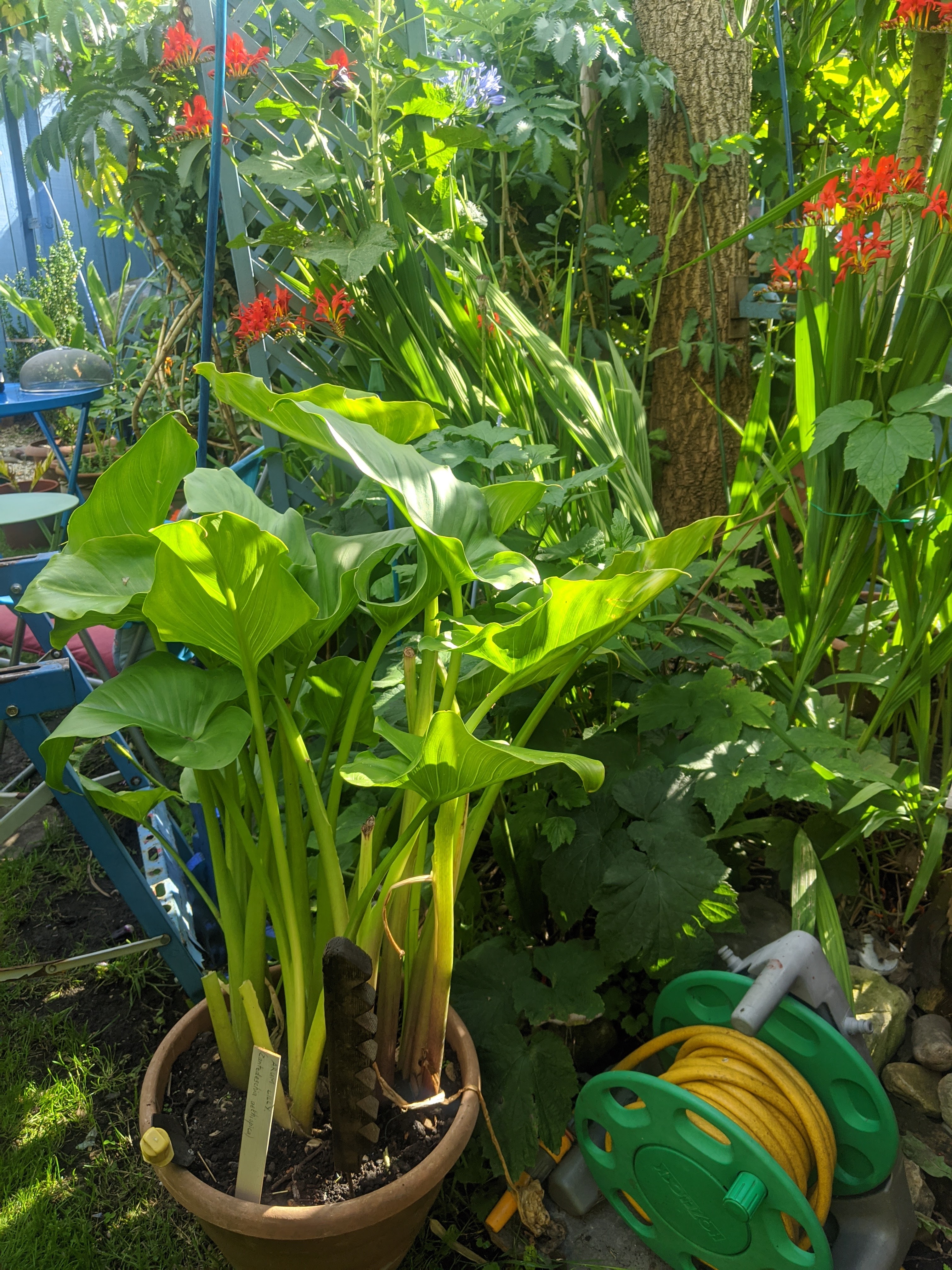
 My mother was very good at the forensic gaze. This morning’s kitchen would have troubled her, I’m certain, but I didn’t even notice that it’s pretty filthy until I put it on the screen. That’s the way of things, I suppose – most of our interiors (mental as well as domestic) would look pretty grubby and a bit random if we were to examine them with the cold eye of a picture editor. But we don’t, and I took the photo to remind myself of the great joys of the ordinary over and against the set-piece strutting that we’d prefer to have you believe about us.