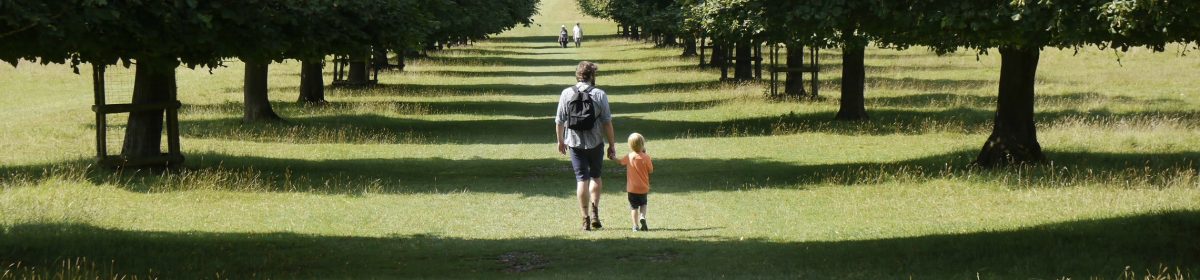
Is this a bunch of photos or some kind of electronic reliquary?

Well it’s probably both, but for now I’ll go with the “Caucasian Wingnut” label on the tree. The other photos – in no particular order – are of my lightweight plant recording kit; the view from Dyrham Park in Gloucestershire which I’ve been going to since I was old enough to ride a pushbike and had to climb over a wall to trespass and where I’ve ridden horses, foraged St George’s mushrooms and recorded plants and fungi ever since. It’s also possible, if you walk to the edge of the escarpment, to see nearly all the places I’ve lived in since I was born. There are a pair of “then and now” photos of the cottage we lived in when we were at art school; one picture of our latest allotment; some stored dried and bottled food from it; some pots of tayberry jam and another of Priddy Pool on the Mendip hills and finally a Ragged Robin plant. They’re all extracted from the 20,000 photos I’ve spent 18 months processing down to 1000 botanical records and 500 species – which I’ll finish this week before I start on the fungi.

For the benefit of WordPress and Facebook followers who may be wondering why I’m writing this, I’m trying out a new link to Bluesky since the Facebook algorithm has blocked my posts because their computer has decided that “The Potwell Inn is a business” – no it’s not it’s the title of a comic novel by HG Wells. If the link works properly it should give present and future readers access to the whole nearly 1 million words and associated photos from the past decade. Press that follow button. You know you want to do it!!

@davepole.bsky.social

Somewhere between the recycling depot and the destructor bridge there’s a spirituality of hope – but I can’t find it.

The new Destructor Bridge

Bath is a city divided by the river. Walking west to east along the towpath between Windsor Bridge and Churchill Bridge you follow the northern half of the city which bears the postcode BA1. BA1 is posher than BA2 because it’s got most of the expensive and Georgian parts. Then, at Churchill Bridge – (I’m sensing a bit of a pattern here because you will already have passed beneath Victoria Bridge) – it all takes a bit of a dive on the northern side as you pass the bus station, the railway station and the Southgate shopping Mall and then Royal Mail sorting office before you approach the end of Pulteney bridge where (if you dare) you can pop into the public loos over Waitrose and change back into your Jane Austen inspired Emma costume or pretend you’re Knightly according to taste and preference.

In many cities they demolish the old and build the new on top but in Bath, given that the tourist money has come from the old, for several centuries, they built the heavy industry and the ugly/smelly bits across the river out of sight. The Destructor bridge linked the upper Bristol Road to a giant incinerator which was next door to the gasworks and just along from Stothert and Pitts where they specialized in heavy engineering; cranes; bridges and transport across the British Empire. As industry died, plans were hatched by friends of the developers to “improve” the city by demolishing older buildings in favour of concrete tower blocks. You can read about this in the excellent and angry book “The Sack of Bath” by Adam Fergusson. We bumped into his daughter once in a pub in Hay on Wye and immediately recognised one another as kindred spirits.

Sorghum? where the hell did that come from?

It just so happens that we live near the towpath – just far enough away to avoid the smell of sewage as long as you hurry past a couple of the outflows in the summer. The towpath is my plant hunting ground; the place which never fails to reward me with something new; often a squatter or a vagabond. I reckon I could easily account for 50 species in my records, probably more. On Friday I went for a walk along the path to clear my head. On the opposite bank they’re clearing the old gasworks site in order to build hundreds of new flats – the river view would increase the value of an old air-raid shelter into six figures. The noise was horrendous, with drilling, piling and lorries everywhere. The spirit of the old destructor bridge lives on with a twenty first century sound-track. On my side of the river I passed the recycling centre which is joined by the relatively new version of the destructor bridge which clung to its name but lived up to its reputation when they discovered it was a bit too long or maybe too short when they came to lift it into place and retreated bloody but unbowed for months as the designers licked their pencils and tried to find someone to blame. Fortunately it wasn’t called the Prince Andrew bridge because that would have taken nominative determinism to the level of farce.

But I was there clearing my head because the previous week we had attended the funeral of a young friend, just 40 years old from bowel cancer and I needed to find that kind of safety in numbers that lets me escape into a spreadsheet for a couple of hours. Walking past the destructor bridge and the recycling centre seemed to be hauntingly significant as I recorded and photographed the ordinary, everyday plants that most of us ignore as if they were strangers in the street. Ivy leaved toadflax, cocksfoot grass, alkanet, broad leaved dock, ribwort plantain, blackberry, ivy, herb robert, false oat grass, buddleia, marsh figwort, common ragwort; red valerian, groundsel, bilbao fleabane, gallant soldier, pellitory of the wall, mugwort, tansy, several kinds of dog rose and annual mercury. I fear I’m writing a book of remembrance for the weeds I pass in the street as the climate catastrophe intensifies.

We tend carelessly to describe grief as a kind of temporary and solvable disturbance of the mind. Time, we say, is the great healer. But it’s not, I want to scream. Bereavement. and the grief that explodes in us when it happens, more closely resembles a stroke. It destroys memory, reshapes the world in unfamiliar ways so we can’t recognise the places we once knew. The loss of a limb just as the loss of someone we love, can’t be mitigated by positive thinking and we don’t get over it – ever.

And I feel as if I’m suspended between the grim spirituality of destruction and the optimistic recycling of fading memories. The river becomes the Styx in this uninvited metaphor. The noise, the roar and pollution of the bulldozers and lorries on one bank and on the other the recycling centre where we take the things we no longer want – to be reprocessed into something else. On the one bank letting go completely and on the other, clinging to the hope that something may be retrieved while we rather desperately make records and take photographs, out of which – one day – it might be possible to build a spirituality of hope in a world where God – like Elvis seems to have left the building.

Creeping Thistle – Cirsium arvense

A little death – no not that kind

The gracious muddle that I prefer to write in

It’s not that I wasn’t warned – WordPress has been telling me for ages that something to do with Google apps was about to stop working but, being both lazy and unable to understand most of their technical information I ignored it and put it aside with letters from the bank and HMRC.

I ask this as a kind of rhetorical question: what could cause you most distress? …. a diagnosis of some rare but curable disease or losing your phone? Having been on three fast-track referrals for suspected cancers (none right) in as many months I can tell you that my world ended momentarily when I clicked on WordPress yesterday only to be told that “it” (no amplification) was no longer supported. It took a few minutes of intense meditation and heart-rate control to determine that the bereavement was far more limited than the extinction of ten years of work. The only thing that had happened was that a small shortcut app to the blog has been discontinued following a bit of a theological row between several behemoth sized companies about the number of blogger brains you can arrange on the head of a pin.

The remedy for this temporary extinction event was simple. I just had to search for the Potwell Inn and up popped my site with everything apparently working. However, my insatiable curiosity soon got the better of me and I ended up searching for my blog on Google Gemini, the AI app where I received a full report on the Potwell Inn which described all of my topics of interest in detail and (I thought) rather approvingly. There was a tendency to centre things on my more recent postings which gave the location of the Potwell Inn as Doynton – a small village near here where I once (maybe 50 years ago) did a talk for the young farmers but where we occasionally visit the local pub which I’m happy to give a shout-out to. The Cross House does some good food in a lovely atmosphere but it’s not the Potwell Inn, largely because the Potwell Inn – in the form that I write about – doesn’t exist anywhere except in my imagination and in my memories of HG Wells’ comic novel A History of Mr Polly from school days where it was a set book. The mere mention of the author and title should alert you to the archaeological nature of my affection for a short novel that, as a very shy and bewildered; possibly neuro-diverse teenager, built up as a safe space in my mind.

So the bad news for those of my readers who have wasted time searching for the Potwell Inn (one actually turned up on the allotment one day, and another wrote to me about one of the several imposters that actually exist in bricks and mortar) I’m sorry. The Potwell Inn is just a mental bolt-hole for an undiagnosed neuro-diverse old bloke, tumbling at speed towards his 80th year. On the other hand everything else, everything I’ve ever written about is real. Madame is my real partner of 60 years (we met when she was 15) we really have an allotment and all the plants, fungi, places and adventures are true, the campervan and it’s multiple vicissitudes is real too. So the really amusing fact is that Gemini got everything completely right about the Potwell Inn apart from one very important detail: it doesn’t exist.

Now I always thought that the power to confer existence on a being – and even the word being seems to confer some kind of existential reality – but stepping away from that whirlpool – the power to confer existence is reserved to God, or the Tao or some kind of immortal, invisible, ineffable superpower. If you look for Google Gemini in the scriptures you won’t find it lurking anywhere in the prehistory before Adam and Eve had to get their kit on in a hurry and Cain murdered Abel. I mean, seriously, Google doesn’t figure before sex and death (the subject of the only joke I can remember my lovely psychoanalytic psychotherapist Robin cracking. I’d told him about a dream I’d had of walking down Hotwells road being followed by two elephants. He replied with “I’m a Freudian, they must be sex and death!”)

Anyway, I think I’ve uncovered the Achilles’ heel of the whole AI bubble. It confers existence where it has no right. We avoid UPF’s – Ultra Processed Foods- but they only kill us one at a time. Ultra Processed Facts can kill whole families, cities, cultures; in fact there seems no limit to its potential for harm. Going back to the bible just for a moment (I promise) you might wonder why idolatry gets such a bad press; even making it to Moses’ ten most wicked things in the Guardian. The answer is that what idolatry does is worship the partial instead of the whole incomprehensible but beautiful thing. It takes the easy way around the mountain.

So to get back to the Potwell Inn, you’ll see one category that I never use – it’s the one entitled Uncle Jim. He is the violent drunkard brother of the licensee of the fictional Potwell Inn, known only as the fat lady. Gemini, by the way, can’t bring itself to use the word fat and substitutes plump thereby daring to change the text! Polly accidentally removes Uncle Jim from, well- life I suppose – in a farcically comical fight which accidentally gives him a new identity. I don’t use the Uncle Jim tag because in my version of the Potwell Inn he’s gone forever, vanquished and washed up on a beach wearing the wrong jacket. All other contenders for the Uncle Jim slot are automatically given life-bans from my pub. The little river runs gently by, unpolluted by agricultural runoff and raw sewage. Beavers build their dams upstream and wildlife flourishes on the banks. I just need one place in my head where the darkness has no dominion.

Not the Potwell Inn

The return of the Red Headed League – who says nature has no sense of humour?

Sycamore moth caterpillar – Acronicta aceris

I wrote this post 13 months ago and then, for some reason, never published it and it’s been sitting in the drafts folder ever since. I used to have a producer on the radio who would say -“I know what you’re trying to say, and I know that you do too – but you haven’t actually said it!” – and re-reading it yesterday I think it fell into that category; so I’ve tweaked it a bit and added a couple of paragraphs to say what I was actually trying to say and I’ll leave it to you to decide whether it worked.

Rather an arresting sight on the pavement outside the flat today. I wondered for a moment whether caterpillars have hen parties but obviously this one wasn’t wearing a tiara so I didn’t bother to look and see if there were any tipsy bridesmaids about. I don’t think the Sycamore moth is particularly rare but I would have noticed had it crossed my path. Anyway, it must have fallen from the tree outside and was making its way across the road to the relative safety of the Green – relative safety because it would surely make a tasty snack for a gull – or a magpie, what with the ginger wig and all.

I frequently have trouble trying to figure out what my real vocation is; I’ve done so many things – but there’s always been writing somewhere in it. I fell in love with the natural world as a child and now I’m a passable amateur field botanist but when I sit down to think about it, what really gets my juices flowing is the beauty of plants; their histories, traditional names and uses for food and medicine and their journeys around the railway yards of Europe. DNA and microscopic identification skills are no more exciting to me than completing a hard crossword; fun but not significant. I get as much thrill from the Biting Stonecrop outside the door as I would from finding a ghost orchid (unless it was in the pavement outside!), and I don’t have a tidy mind so I like to root around on my hands and knees to find plants rather than see them displayed like zoo specimens in wire cages and bare earth. If it came to a choice between writer and botanist it would have to be a writer – a no brainer. Latin binomials have their uses of course, and when it comes to the correct naming of plants they’re essential, but where’s the romance in it?

The abundant Mexican Fleabane here could be and often is seen as a weed. I just don’t get it. Last week the official council weed scraper laboriously removed nearly all the plants along the bottom of our retaining wall but then stopped when he came to a glorious waterfall of the daisy lookalikes at the corner and put his scraper away. The bottom of the wall is now alive with the resurgent leaves of Nipplewort, Dandelions and Hemp agrimony which simply shrug off the insult. The whole object of a plant, I suppose, is to be visible and visited by pollinators. You’d think that for caterpillars the opposite would be the case; that they’d make themselves as invisible as possible until they’d pupated and emerged in their final forms. Not so, though. The ginger Sycamore Moth caterpillar, like so many of its cousins, doesn’t even try to be cryptic in its appearance. Does it actually taste filthy or does it just look as if it will. There’s an extravagance in nature which breaks all the bounds of decency and order – especially if you happened to be a Victorian philosopher like John Ruskin who once wrote of Selfheal:

It is not the normal characteristic of a flower petal to have a cluster of bristles growing out of the middle of it, or to be jagged at the edge into the likeness of a fanged fish’s jaw, nor to be swollen or pouted into into the likeness of a diseased gland in an animal’s throat.

John Ruskin, Proserpina – quoted by Richard Mabey in his book “Weeds”

Richard Mabey’s book, cited above, is an erudite source of wisdom about weeds that deserves a place on any bookshelf. In his description of Self Heal he mentions the visual effect of swathes of the plant as akin to “brazed copper”. Ruskin seems to have had a bit of a thing about the colour of copper. One account of the reason for his inability to consummate his marriage to the red headed Effie Gray was given by her years after their marriage was annulled – “the reason he did not make me his Wife is that he was disgusted with my person the first evening.”

I can only assume that Ruskin found much to disapprove of in the disorderly and occasionally ginger world of nature. Sometimes anarchy is just a way of describing something whose connectedness and complexity is utterly beyond us. Science is the scalpel to the butterfly net of the poet’s work. Reductive or expansive – that’s the challenge. Are the tools we use to engage with nature intuitive and imaginative, or laser focused, seeing nothing beyond the quarry?

Well, I’m for the butterfly net approach every time. Of course, in this critical age of triple breakdown; environmental, climate and economic, we need science as never before, but just as I’ve always taught, myths are the way we tell the truth about mysteries – and the intuitive, expansive and imaginative tools of the poet are every bit as important as the scanning electron microscope and the DNA printout. To choose just one approach to nature wilfully limits our understanding. Slippery and indefinable as it may be, to exclude beauty from our calculus is to take us into Gradgrind’s miserable world. Ruskin’s failure to appreciate Effie Gray’s sensuous beauty was a failure of his humanity. He pursued her, courted her and married her so he could push a pin through her heart as if she were a trophy butterfly.

But enough! I bet you didn’t know that John Masefield liked to keep a box of rotting apples under his desk to fire up his imagination. Stanley Spencer kept something entirely more unpleasant near him but you’ll have to google for that. We have a neighbour on the allotments who has a tree laden with quinces which have the most lovely perfume, enough to fill the whole flat, and every year we put a bowl of them on the table. I’ve made quince jelly in the past and believe me they’re as tough as old boots and need a lot of cooking. When you cut through the fruits the black pips have a positively satanic look and they also contain hydrocyanic acid.

Of all the virtues of nature we mustn’t ever forget its sensual pleasures. For us, it’s more than just the necessity of eating, or growing or intellectual understanding because every one of the senses is engaged in a merry dance. Autumn is not merely mists and mellow fruitfulness, it’s celebration, festival, recollection and thanksgiving, singing, dancing and feasting. Oh and it’s also available in copper coloured.

Set like a spinnaker in a south-westerly, here’s our drought-beating chard

From this autumnal end of the telescope, the past growing season – which we’d written off as disastrous – needs a more nuanced description. Yes the bindweed had a marvellous time, and the couch grass invaded from the abandoned allotment below us; the tomatoes in the polytunnel suffered in the unbearable heat and so it goes on. We were very discouraged and even considered packing it in; but Madame held firm and, in the light of our late harvests, things don’t look so bad after all. Once we’d decided to carry on, the obvious starting point was to clear the beds and prepare them for next spring. We made the decision to leave the borlotti and the runner beans on their teepees for a week or so to see if the scattered blossoms would bear any late fruit, and that was a wise choice because both crops came to life after the rain and gave us a smaller than usual but welcome crop. The late tomatoes set a big crop of unripened green fruits which we picked as we cleared the tunnel and stored in the warmth but covered in some black plastic. It seems they don’t need light as much as they need warmth and we’ve been able to replenish most of our stores of passata. When I came to clear the potato beds they too had bided their time and although the skins were a bit tough, (a common problem across the allotment this year), we’ll have plenty for the winter. Our apples, pears and plums gave us their biggest ever pickings – they were only planted in 2021 – and the strawberries which failed miserably have come back to life and are producing many strong runners which we’ll use to make a new bed over the winter. Today, fired up with energy, I set to repairing some rotting edgings and tending to a commercial blackberry that’s repaid a great deal of TLC with some new growth. The rhubarb too has thrived so – all in all – and supplemented by our stores of frozen, pickled and bottled food we shall look forward to the winter with confidence.

But every silver lining has its cloud and two days ago we had another break-in on the site and this time they came equipped with bolt-croppers and cut through the tension wires on the fence, making it easier to pass things into the lane. However they weren’t very bright, and neither were they very lucky it seems. None of us keeps anything except mostly old hand tools in our sheds and in our case they sheared off the padlock and then went away empty handed when they discovered a second mortice lock. They may, of course have noticed the trail-cam pointing in their direction and had a moment of enlightenment before they scarpered. Over the years we’ve lost hundreds of pounds worth of equipment, had the toughened glass in the greenhouse smashed and the polytunnel slashed. Our other problem is what we call ‘shopping’. Unknown people enter the site and steal fruit on an industrial scale. Trees are stripped bare. If we see people who shouldn’t be there we ask them to leave, but I caught a well dressed local restaurateur one sunday morning with several bags stuffed with stolen figs from our neighbour’s tree. Contrary to common sense – which is all too common but not in a nice way, and not the least sensible – there’s not a shred of evidence to support the idea that lawlessness is confined to hoodie wearers, rough sleepers and foreigners. How much carbon do they emit compared with the besuited occupants of huge child killing SUV’s which ignore the 20mph speed limit outside the allotments because rules, like taxes, are for the little people. Lawlessness is a societal and cultural problem, and so is homelessness, drug and alcohol abuse and it spreads its tentacles throughout the whole of society. The malignant spread of selfishness and greed has been given free reign for fifty years and it could take fifty years to repair the damage. Criminalising environmental protest, locking up pensioners for demonstrating against genocide and extracting millions of litres of water from the Thames and replacing it by pumping (poorly) treated sewage effluent back into the river is most certainly not the answer. Jobs, education, youth clubs, training for decent jobs, proper healthcare and housing for all, the fear and financial stress of the elderly taken seriously and adequate mental health provision for the casualties of blighted childhoods all these are the vital signs of effective governance, not more Big Brother nonsense from out of touch politicians. Do I sound cross ???

Q: Which of us would dream of letting our families starve because we wanted keep all our money for ourselves?

A: The kind of person who has utterly lost any moral sense of direction.

Mending the nets

Anyway, we bought a new padlock for the shed and spent a few hours in the sunshine working on the warm earth. It was lovely and as we worked I pondered the reason why so many of our crops survived the drought and heat waves. Last week Joe (our supplier) carried half a ton of manure down to our plot at the bottom. That’s been the minimum amount every year for ten years and my guess – what with all the other compost we’ve made and scrounged – is that approaching ten tons of organic matter has been added and worked into the beds which, when we took the plot on, were nothing but couch, bindweed, old carpets (don’t even think about it!!) clay and starved looking earth. Digging the potatoes before it rained, the earth was black and crumbly, smelt like earth should and was still a bit moist six inches down. Soil regeneration by increasing organic matter is slow, expensive and hard, but it works – and with climate change increasing its grip year on year (sorry, but think SUV’s again) it’s the only show in town if we hope to grow healthy crops to feed ourselves. I’ll finish with a photo of one of the cleared bed awaiting its food for the year, a layer of cardboard from our recycling area and a cover of weed-control mat. “Tomorrow shall be our dancing day”

Délicieux

Délicieux – “delicious” in English apart from its normal usage is also the title of a 2021 French/Belgian comedy-drama film directed by Éric Besnard, which charts the rise of the first restaurants in France just before the French revolution. We watched it a couple of nights ago and allowing for the odd historical inaccuracy, like moving the action from Paris to the Auvergne region, charts the fall of the aristocratic elite of the day and the subsequent redeployment of hundreds of highly trained chefs into parts of France that had no tradition of eating other than at home in the family setting. It’s a great film, up there with my other foodie favourites because sometimes when we’re sick to death of the murderous and cynical events on the news we need a couple of hours of relief. And it’s always good in any case to see the ruling classes humiliated and shamed even if it’s only in a film. Well worth watching and under a fiver.

Anyway, it made me sit up and remember how and why I started cooking in the first place. Mum was a decent cook with a small repertoire of favourites. By the time Madame and I got together I’d never tasted garlic, green peppers or any of what the supermarkets still describe as exotic vegetables. So when we moved into our first flat; I was 21 and Madame was 18, neither of us had considered how we were going to feed ourselves. I’d hovered in the kitchen and watched my mum cook; she showed me how to judge the thickness of Yorkshire pudding batter by the sound it makes, and I could make a passable bacon sandwich. My dad literally could not make a cup of instant coffee! Madame still can’t recall her mother ever cooking a meal and so confronted with starvation we agreed to take it in turns to cook and that’s never changed.

At the same time we were exposed for the first time to a different cuisine as soon as we went to college and started to meet new people from different social backgrounds who invited us to their homes and whose parents (who probably thought of us as amusing waifs and strays) invited us to eat with them. I fell in love with the whole thing but we could never have afforded to eat out, so the only way we could eat like our better off friends was to learn to cook. I bought books, slowly accumulated a few pans and after walking miles looking for ingredients, practiced. It never occurred to me to train as a chef; my whole ambition was to be a good cook. There was a shop around the corner that sold cookware and I would spend hours looking through the window at the Le Creuset pots. I bought my first ever carbon steel knife there and resolved never to make-do with inferior equipment – which meant that my skills and equipment were glacially slow to improve. It was decades before we could afford to travel and see continental food at first hand.

Our problem was that so many ingredients were simply unobtainable. We learned the location of bay trees, rosemary bushes and other herbs. Sage and thyme were only available in bunches as Christmas approached so we foraged for what we needed in the leafy streets and gardens and eventually got ourselves our first allotment. It’s a well rehearsed truth that olive oil could only be obtained in tiny bottles at the chemist. Luckily we had a deli nearby, run by a Hungarian refugee who imported foods we’d never seen or even dreamed of. We learned to grow some food and we were lucky enough to find neighbours who could show us how to dress the chickens, pheasants and rabbits that found their way to our door. The local butcher showed me how to humanely kill and pluck a chicken. When I was a community arts worker I learned to be careful about expressing any food preferences, because some of the young men I worked with would go poaching to order.

Today we were sitting at the table shelling the borlotti beans to store for the winter. At lunchtime we had a tasting of several varieties of apple that we grow and ate chunky bread. After a dreadfully tough summer we were on the point of giving up the allotment but Madame kept the faith and we’re back on track once again preparing the ground for next season. Against all expectations the fruit crop; sweet apples, pears, plums, damsons and cookers has been the best ever. The borlotti crop was the largest yet and even the potatoes held fast in the ground right through the drought. Chard, spinach and most of the herbs survived too, with minimal watering. The tomatoes and peppers suffered in the polytunnel but now at last the rain has come and the water butts are slowly filling. Storage is easy but harvesting water is a bit more tricky. The greenhouse roof faces east and west, taking most of the weather pretty well. The water butts there fill quickest, but the shed roof slopes to the north and its three barrels are much slower to fill. So the trick is to pump water from the full barrels to the empty ones so that every drop is captured. I can see that the dramatic climate change we’re experiencing is not going to reverse any time soon and so droughts, extreme weather and storms need to be factored into our planning.

So now we ache in places we didn’t know existed, but we grow closer each time we go to the allotment. The shared physical work renders the gym subscription redundant and the mental challenge of planning it all is rewarded at this time of year in the kitchen and at the table, and there really is some kind of spiritual dimension to it. The news is terribly unsettling, and the uncaring viciousness of so many people provokes paranoia and despair; but somehow the simple act of plunging your hands into the soil, or sowing and harvesting your own food have the strange capacity to heal those hurts. Our friendships among the other allotmenteers brings us together in a shared interest with a huge range of people and skills. Doctors; nurses; teachers and professors muck in with many others with quite different life experiences. The allotments are, in the truest sense, a university.

Walk on by!

Dandelion – obviously! but more complicated than you might think.

Everybody knows what a dandelion looks like, I imagine, but there’s no shame in not knowing that there are around 250 species of dandelion in the UK and – if you’ve got time and a good psychotherapist you could learn to tell them all apart. The beloved blackberry is a similar case but even more complicated, with around 330 species. They’ve evolved an interesting method of reproduction -known by the academics as apomixis which roughly translates as having sex with yourself; don’t knock it if you haven’t tried it – or as Woody Allen said – if you’re going to have sex you might as well have it with someone you love.

Anyway, and moving on rapidly, the dandelion is a handy reference point for what you might call the “walk on by” plant which draws together two threads of the WOB phenomenon. The dandelion in the photo, for instance, has been there along with its definitely not cousins for all of the ten years we’ve lived here. Until today I’ve never photographed or recorded it because it’s too common and therefore not worth the bother. However fate has confined us to short walks near home for most of the summer and the local rogues and vagabonds of the pavements and towpath have been the only available source of botanical interest; which disposes me more kindly to the dandelion. I’m sorry for my casual disregard in the past but now I just have to walk on by not because they’re common and vulgar but because I haven’t got the time or the confidence to sort them out; although I did shell out for the standard handbook which has been sitting unopened on the shelf like a bishop’s bible for months.

After months of tests and investigations we’re near the end of the tunnel (you’ll see why that’s a highly inappropriate joke in just a moment), and all I’m waiting for is to have a 35mm polyp removed from my colon so I can stop being anaemic and feeling knackered. I’m relying on the expertise of the multitude of consultants, nurses, interns and doctors who’ve peered up my rear end, when they tell me that this thing – about half as big again and the same shape as a champagne cork- isn’t malignant. Like birdwatchers they know the jizz of a nasty one when they see it. I have great confidence in them.

But spending every moment checking the phone for the next appointment doesn’t just cost you time, it drains the creative springs and makes life a bit grey and dull. We’ve cancelled several campervan trips so we could both be available for appointments at the drop of a hat and so necessarily I’ve been focusing on the local weeds. It’s bad enough trying to take macro photos out in the wilds; passers-by tend to stop and ask if you’re OK. Do the same thing on a pavement or on the towpath and they’re likely to call the police. But don’t for a moment suppose that all you’ll ever find outside your city centre front door is dog poo and beer cans. I’ve been amazed at how many relative rarities make even a temporary home for themselves in the mean streets of Bath, and recording the ordinaries balances the books against the statistical over-representation of exotica in the field guides. If we’re going to keep tabs on the unfolding runaway climate disaster we’ll need to record the sparrows, silverfish and brambles of the earth.

Here’s another one I’ve never recorded except in some remote and rather glamorous wild place. There was member of the same family, the Sea-spleenwort for which I persuaded Madame to walk miles in freezing wind and sheeting rain in January to find it on the sea-cliffs where it belonged, only to have it shown to me on the basement wall of the Guildhall in Bath. Sadly it seems to have gone now and I thought its near relative, the wall-rue, which has always grown unrecorded by me on the wall below our flat might have died from drought this summer. But this morning I dodged the rain to photograph the dandelion and came back with Hemp-agrimony; wall-rue and field-speedwell – all within ten yards of the front door. I shall have to make a list of plants that grow with 100 yards of the flat and I’ll guarantee it will exceed fifty species.

There’s a bit of a knack to naming plants from their leaves alone and today AI threw me completely off track with the speedwell which it identified as ground-ivy. A most enjoyable trip to the books settled the matter in favour of the speedwell but the two plants are alarmingly similar until you see the flowers. The purple flowers scattered near the speedwell had me scratching my head until I remembered there’s an Argentinian Vervain in full flower growing in a pot next to it. You see, even boring plants turn out to be better than the Times crossword for getting your brain in gear.

Back in August 2024 I set myself the target of organising my utterly random collection of photographs, and identifying the names and locations of all of them with a supporting photo. It took me a whole year to get them on to a spreadsheet and now there are 898 records sitting there waiting to land on several unfortunate referee’s desks. My species total is up to 472, just 28 short of the 500 target. I also set myself the target of completing 1000,000 words on this blog and so far I’m up to 951,500 which leaves me around 49 more posts to write. As my old friend Joan Williams used to say – God willing and a fair wind I’ll get there. But I’m not a trainspotter by temperament and so if it takes until next february it won’t keep me awake at night.

Aren’t statistics a slippery thing to deal with? I read yesterday that this polyp that I’m entertaining at the moment increases my risk of colon cancer by something like 75%. Reading that statement carefully suggests that my real risk depends upon what percentage of any polyps of any size are malignant. The answer to that is 5-7%. So my real risk is more like 75% 0f 10% ie 7.5%. It’s possibly less significant than crossing the A4 on a zebra crossing with a Range Rover approaching.

Hefted

If you know Mendip at all well, you’ll know that this thatched building holds a stack of sheep hurdles on Priddy Green

Nostalgia can be a poisonous affectation. It’s all too easy to use the wistful, often wilful mis-remembrance of the past to reduce the past to a coddled egg; good to eat but with no future. Real history is troubling; often leads in two directions, and ambiguous to a fault. On the other hand, the sense of rootedness in a place, or in a community in which the two ideas often overlap, is foundational to our practise of being human. You’ll probably think I’ve lost the plot if I write about Cornbrash, Brandon Hill stone and Bath stone and yet the glimpse of a building made with any of these three will as good as a six figure OS grid reference. They would not just signify districts but the era they were built in and the likely social class of the people who lived in them. Add to that a dialect, a particular way of sounding a troubling “r” in Gloucestershire, or a single sentence in Bristolian would tie the speaker down to something like a parish. There’s a sawmill in Wick and when I go there, I could curl up on the counter like a cat – I feel so at home. This isn’t something you can fake. You’d have to live not just any lifetime, by my lifetime to pick up the resonances.

I understand this better now than ever as I’ve learned about plants, where they grow and what they prefer to grow in. As I child I learned to love lying under beech trees growing on a moss covered bank on the boundary of our grandparents’ smallholding. My mother’s whole vocabulary of local names was learned amongst the winding lanes of the Chilterns. We looked in vain as children to see what Granny Perrin’s nest was, and why our mother could see it when we couldn’t. Even the roads had their own language of shiny flint pebbles, and hiding in the depths of woods once worked by bodgers who turned chair legs and wheel backs was Margaret’s Beer Shop where we could drink cherryade as a treat. I came to know what I now understand as acid heath, on Rodway Hill as slowly I came to understand how localities have their own unique floras.

Mendip is famous for its abandoned lead mines and again there are plants that can survive heavy metal pollution and environments which have their own special designation, Calaminarian, which is how the calamine lotion that our mother dabbed on our chicken pox spots brought zinc from the ore into Mr Ladd, the chemist’s armoury. Nowadays my old friends are the pavement scoundrels, constantly harried by the council’s strimmers. The poor council workers don’t seem to know about tap roots and seeds, or annuals and biennials and so they knock em all down like skittles and within a fortnight they’re up again. Then, of course there’s the riverbank with its own royal flush of perfectly adapted plants. Stones, dialects and plants store the local memory as certainly as books. Footpaths and shortcuts, streams, hiding places abandoned dramlines and climbing trees marked our territory and as we spread our wings, our bikes were the means by which we invaded and occupied other peoples’ places.

So much, then, for a rather lyrical take on the sense of place. The Greeks might have dignified it as the genius loci but we were unconscious of our hefting. It was just home as far as we were concerned.

A couple of nights ago we watched Peter Hall’s film “Akenfield” which I’d seen years ago but completely forgotten. I read the source and inspiration for the film , Ronald Blythe’s book “Akenfield” when I was in my twenties, along with Henry Williamson’s long cycles of novels, and I read J A Baker’s book “The Peregrine” a little later. In truth I consumed voraciously just about any scraps of natural history writing I could lay my hands on. Akenfield is a groundbreaking oral history of rural Sussex at the beginning of the 20th century and both a celebration of the skills of farmworkers and denunciation of the appalling conditions in which they worked. The extractive philosophy of modern agriculture was cultured in the minds of landowners centuries before the first tractor appeared on the land. I watched most of the film near to tears.

But one of the happier lessons of the film was that whatever happened to them, the farm workers had song. They sang in church, they sang on army service in the first world war, they sang in pubs and they sang as they took the harvest in on wagons loaded high, with the children riding on top as a treat. I suddenly remembered that my sister and I had shared that triumphal ride in Stoke Row one hot summer’s day, and how insecure and prickly our perch was. It was the strangest feeling to recall the stooks and ricks of the days before the chequerboard plastic wrapped fields we see today. That overarching sense of history is disappearing and, because of our failure, we’ll never be able to bring it back.

Some forms of nostalgia are a positive waste of energy except perhaps that we still, we always will have song. Barely fifteen years ago I sat in the kitchen of a farmhouse in one of my parishes and watched, through the window, as a procession of combines, trailers and tractors drove along the lane, headlights blazing, to come in for supper and then go back to harvesting the fodder maize that feeds the cattle. Today we went for a drink in the pub in Doynton. The village has changed beyond recognition but if the flow of traffic could be staunched for a while a couple of horses and their riders persuaded to pass by and a rookery installed to provide the music. If a sunset could be organised to bathe the cornbrash walls with evening light and if the conversation dropped just a tiny bit in volume and we stepped outside, I think we could almost see the ancestors in the shadows.

Yet we still have song. Those who believe that their mission in life is to make life harder for us should beware of our spiritual and revolutionary songs of resistance. They too have a long and deeply local history; often rooted in the sense of place, hidden in the DNA of songs and carols that still speak deeply to the most irreligious of us. Of all the things I miss about my ministry it’s the raucous Christmas carol services, packed to the gills with people who were drawn back year by year into the old ways; the funerals where for a fleeting moment we could believe that all would be well and all manner of things would be well as we sang Abide with me. But perhaps most of all on Easter Eve when I was able to sing the exultet; a long plainsong solo hymn of hope for the coming year.

Sunset through the campervan window at Priddy

This bus is much shinier than it was when I drove it!

One of the odder reasons love Agatha Christie films and other 1950’s costume dramas is because there’s always a chance that they will feature my old bus, and after a bit of a hunt on the internet I found it restored, repainted and looking very fine indeed. I have a very strong connection with this exact bus (the little one in the picture), although when I drove it for three years it was hand painted in cream and brown and beginning to look a bit scruffy as it had already seen 25 years of service at Clifton College, transporting mud-caked boys from Clifton to Beggars Bush where the sports field was. After art school there was no prospect of any paid work and so I went to Clifton College and Madame went to Wills tobacco factory – which she hated – and then got herself the perfect job at Long Ashton Research Station; the horticultural department of the university in which she thrived. There’s a link here that gives a much fuller account with pictures of the original wooden slatted seats and the unbelievably rudimentary dashboard. Just click above and you’ll find it.

I went for the job and was interviewed by the Bursar to whom I lied about my qualifications, or at least told a half truth in that I did have some O Levels but failed to mention the honours degree bit. He asked me if I’d ever driven any larger vehicles and I said I’d driven a transit van and that was it. He shook my hand and said I’d be fine and off I went. On my first day I noticed an empty greenhouse and asked about it. Trev, the boss, said that my predecessor had filled the greenhouse with plants but just as they were coming into flower he’d come in one night and cut them all down and taken them away. Well well, I thought, this is going to be fun. I was to be a half time groundsperson in the mornings, tending the playing fields, marking out the pitches and helping out with the workshop where the brilliant but irascible mechanic, Geoff, would curse, hammer and repair our collection of old and worn out machinery. We once completely dismantled and rebuilt a Massey Ferguson 35 tractor; repaired a damaged Barford roller by replacing its piston rings with some taken from a Vespa motor scooter. The other half of my job was driving the school buses. They were beasts with crash gearboxes and frankly underpowered for dragging 25 schoolboys up from Avonbank on the river where they rowed, back to Clifton. I had never seen a crash gearbox before and so my first trip up Park Street from the river was conducted very slowly in second gear generating a huge traffic jam. The trick was to match the speed of the gearbox with the speed of the engine. If you failed to get it right the gearbox emitted fierce grinding noises and refused to engage – so when changing down from second to first there was a danger of rolling back and crushing the car behind. Changing up a gear was a bit easier because you declutched once, paused for a moment for the engine to slow down, declutched again and with a brief prayer the gear would engage like (as we used to say) greased weasel shit. This was the famous but these days unknown skill of double declutching which has gone the way of quill pens and longbows. There was a small team of retired Bristol Omnibus Company drivers who joined us in the afternoon because they knew how to change gear. I remember one, called George, with great affection.

My other workmates were the boss, Trev, who rum tum tummed and pom-pommed under his breath constantly; smoked his pipe and taught me the weeds which plagued us on the fields because he would never mix sprays to the recommended strength since he maintained that the manufacturers exaggerated the dose to make more money. Consequently we made our contribution to the development of weedkiller resistance among Speedwells and the infestation got worse and worse. In the summer I would mow the fields, pulling a gang mower behind the little Fergie and pausing frequently to acquire the beginnings of my field botany skills. In the winter we’d maintain the equipment and (favourite job) lay the boundary hedges and warm our hands on bonfires of prunings on frosty days.

Chubby was my other work friend. Indeterminately old and wily with withered skin over a foxy face, he would carry a brown paper bag in his pocket with as much as a couple of thousand pounds in it. He was notorious as a wheeler dealer and was reputed once to have bought a small herd of cattle off the field and resold them the same day without even moving them. Stories about Chubby included the time he sold his shoes at a dance, and I almost killed him once when we we felled a large tree. I was wielding the chainsaw and he was driving the tractor with a tensioning rope which I was convinced was too short. It was too short and when the tree came down Chubby was enveloped by the branches. Miraculously when I rushed across he was still sitting on the Fergie, laughing and completely unscathed. Chubby had a bit of a secret life, we all thought, but since the name of a well known Bristol criminal was attached we just included it in life’s rich tapestry.

Over the years I’ve worked with some proper characters and kept it all close but learned so much of great value. One of the best lessons I learned over the years is that real people stab you in the front when you get out of line. It’s the polite middle classes who stab you in the back!

Anyway, back on the allotment I’ve forsworn heavy exercise in theory at least, and today I cleared a bed of potatoes, with a few rests, panting and leaning over the refilled pond. It was a delight to discover that all our efforts at feeding the soil with compost has rewarded us with a smaller than usual but still useful crop of potatoes, and it’s true what they say; compost really does hold the moisture and after a three month drought there was still a perceptible trace of moisture in the earth. This season has focused all of our minds on water and as this is also the time for planning next year’s projects I’ve been wondering about taking out two of the compost bins which we don’t use properly and substituting one of those 1000 litre polythene water tanks to increase our stores to 2,250 litres – because it looks very much as if droughts are going to feature large in future.

And just to finish, we installed the trailcam again this week and captured a lovely image of a badger hunting sweetcorn in the night. He’s also done us the favour of digging over our wood chip paths in search of roots and grubs. Good luck to him, I say!

Badger on allotment

Bye By Brook – finding the well

By brook at Slaughterford

We’re not done with you yet sir

Last Friday I got yet another message from the hospital requiring an urgent phone consultation on Tuesday regarding a test I’d failed miserably. I imagined a large number of health professionals rushing to the red phone. to deal with my case. I’ve soaked up an incredible amount of NHS time in the last six months and I’m so grateful for it. It’s an odd privilege to be fast tracked twice in a month on suspicion of completely different cancers but I’ve noticed that the doctors are constantly changing and often poorly prepared for our encounters, and so there’s never time for them to sit back and observe, chat, prod – all the things that I know from long experience are essential to drill down to the heart of the problem. But, being retired, have got time to explore and read the NICE guidance about the drugs which I’ve been prescribed and I know that some of the problems I experience are actually caused by them. They’re called iatrogenic symptoms – caused – if you like – by the very medications that are supposed to keep me well.

Time is possibly the greatest unused skill in the caring profession. I’ve never forgotten a pastoral conversation with an oncologist who was being broken by his workload, and who told me that at its worst his first thought when a patient came into the room was how can I get rid of this person? He wasn’t bad or lazy, just exhausted, burnt out and lost. There was never enough time to listen deeply to the person in front of him When I was running writers’ groups I got very used to the back pocket poet syndrome. Someone would sit silently in the class for an hour, too shy often to make a contribution and then they would produce a crumpled sheet of paper just as they were leaving. Such contributions were often very good.

Smiling, or being smiled at by strangers is a rare treat in a paranoid world.

David Isitt, one of my finest teachers would sometimes gather a group of us, all mature students on retreat, and on a fine day we would sit under a tree and he would run one of his CAT sessions. CAT stands for close attention to text and we could sometimes spend an hour pondering the multiple meanings of a single phrase. Close attention is a powerful tool for psychotherapists, doctors, partners and – as I proved to myself on Monday – for home bakers. On this the fourth or maybe the fifth heatwave of the summer, I had a sourdough loaf overprove and almost collapse. That one was turned into breadcrumbs, but then I needed to make bread urgently and so I did what I should have done all along, and I paid close attention to the rising dough. In the 25C heat, my usual 36 hour timetable easily condensed into a single working day and I came out with a good sourdough loaf. On another occasion and another retreat, a group of us – all strangers to one another – were invited to join hands in couples and behold one another. It was uncomfortable, challenging and revelatory to lock my gaze with a stranger and allow some sort of understanding to pass between us. The absolute opposite of hurrying down the street wearing headphones and looking at a mobile; avoiding any eye contact. Smiling, or being smiled at by strangers is a rare treat in a paranoid world.

Anyway, enough of all that; because the real point is that all this unsettling news has let the black dog back into the room and I spent a night that combined 3 hours sleep with about five of restless pondering which rewarded me with something of a vision. My mind drifted back to my early twenties when I had a long spell of what was diagnosed as phobic anxiety. I became convinced that I was about to die, and this actually changed the physical appearance of everything around me. Even the leafless winter trees looked like the bronchioles and alveoli of dying lungs. Eventually, under threat of being thrown out of art school I saw our GP and he told me that although he could give me some medication, it would be better for me – that’s to say Madame and me – to take ourselves off to the pub for some human company. His advice worked perfectly and within a few weeks I had a visionary moment and thought to myself – of course I’m going to die, but not yet! Ironically, some months later I was at a party, standing at the top of a rather grand Georgian flight of stairs holding a glass of wine and he came up and said to me “I see you took my advice” and promptly toppled cartwheel style back down the stairs, as drunk as a skunk.

However, apart from reminding myself how much a state of mind can even change the appearance of the world, I remembered how I began tentatively drawing again sitting on the side of By Brook, the small river that rises in Gloucestershire, runs through the Castle Combe valley, and below the farm where we were living; eventually joining the river Avon outside Bath. I made a laborious drawing (using hard pencils) of the knotted roots of a tree on the opposite bank – a drawing that sadly I can’t find anywhere- so I had to settle for a photo I took in Slaughterford last year. It was the drawing that unblocked me. Back in the day there were wild trout in abundance but nowadays it’s a shadow of its former self – milky, polluted and desperately in need of recovery. Fortunately there’s a group of volunteers improving water quality by improving the flow with rills and riffles, but I imagine many of the problems are caused by excessive abstraction.

Old bull looking at the sunset – Llyn peninsula this July

So in my mind’s eye, during my sleepless night, I was back there on the bank, and the clearest notion came to me that whatever my state of health, my creative wellsprings are still intact. My body ages – as it must – but creatively I’m still young, still capable of being inspired and driven by the sight of an unknown plant, still able to write to the best of my ability and, to use a phrase I overheard on a bus many years ago, to tell shit from pudding. Of course it’s a bit harder to get back to that place than it once was but real creativity has always been the combination of inspiration with technical understanding. Without technical understanding, inspiration is a mess of unresolved thoughts. Without inspiration, technique is dull and dead. I think of myself as being profoundly fortunate to have (at last) both – and now I know where to find the well.

The road-bridge at Slaughterford