Bye By Brook – finding the well

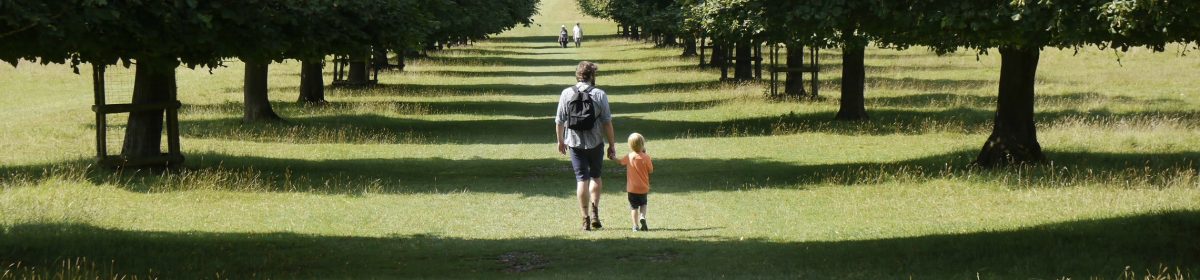
By brook at Slaughterford

We’re not done with you yet sir

Last Friday I got yet another message from the hospital requiring an urgent phone consultation on Tuesday regarding a test I’d failed miserably. I imagined a large number of health professionals rushing to the red phone. to deal with my case. I’ve soaked up an incredible amount of NHS time in the last six months and I’m so grateful for it. It’s an odd privilege to be fast tracked twice in a month on suspicion of completely different cancers but I’ve noticed that the doctors are constantly changing and often poorly prepared for our encounters, and so there’s never time for them to sit back and observe, chat, prod – all the things that I know from long experience are essential to drill down to the heart of the problem. But, being retired, have got time to explore and read the NICE guidance about the drugs which I’ve been prescribed and I know that some of the problems I experience are actually caused by them. They’re called iatrogenic symptoms – caused – if you like – by the very medications that are supposed to keep me well.

Time is possibly the greatest unused skill in the caring profession. I’ve never forgotten a pastoral conversation with an oncologist who was being broken by his workload, and who told me that at its worst his first thought when a patient came into the room was how can I get rid of this person? He wasn’t bad or lazy, just exhausted, burnt out and lost. There was never enough time to listen deeply to the person in front of him When I was running writers’ groups I got very used to the back pocket poet syndrome. Someone would sit silently in the class for an hour, too shy often to make a contribution and then they would produce a crumpled sheet of paper just as they were leaving. Such contributions were often very good.

Smiling, or being smiled at by strangers is a rare treat in a paranoid world.

David Isitt, one of my finest teachers would sometimes gather a group of us, all mature students on retreat, and on a fine day we would sit under a tree and he would run one of his CAT sessions. CAT stands for close attention to text and we could sometimes spend an hour pondering the multiple meanings of a single phrase. Close attention is a powerful tool for psychotherapists, doctors, partners and – as I proved to myself on Monday – for home bakers. On this the fourth or maybe the fifth heatwave of the summer, I had a sourdough loaf overprove and almost collapse. That one was turned into breadcrumbs, but then I needed to make bread urgently and so I did what I should have done all along, and I paid close attention to the rising dough. In the 25C heat, my usual 36 hour timetable easily condensed into a single working day and I came out with a good sourdough loaf. On another occasion and another retreat, a group of us – all strangers to one another – were invited to join hands in couples and behold one another. It was uncomfortable, challenging and revelatory to lock my gaze with a stranger and allow some sort of understanding to pass between us. The absolute opposite of hurrying down the street wearing headphones and looking at a mobile; avoiding any eye contact. Smiling, or being smiled at by strangers is a rare treat in a paranoid world.

Anyway, enough of all that; because the real point is that all this unsettling news has let the black dog back into the room and I spent a night that combined 3 hours sleep with about five of restless pondering which rewarded me with something of a vision. My mind drifted back to my early twenties when I had a long spell of what was diagnosed as phobic anxiety. I became convinced that I was about to die, and this actually changed the physical appearance of everything around me. Even the leafless winter trees looked like the bronchioles and alveoli of dying lungs. Eventually, under threat of being thrown out of art school I saw our GP and he told me that although he could give me some medication, it would be better for me – that’s to say Madame and me – to take ourselves off to the pub for some human company. His advice worked perfectly and within a few weeks I had a visionary moment and thought to myself – of course I’m going to die, but not yet! Ironically, some months later I was at a party, standing at the top of a rather grand Georgian flight of stairs holding a glass of wine and he came up and said to me “I see you took my advice” and promptly toppled cartwheel style back down the stairs, as drunk as a skunk.

However, apart from reminding myself how much a state of mind can even change the appearance of the world, I remembered how I began tentatively drawing again sitting on the side of By Brook, the small river that rises in Gloucestershire, runs through the Castle Combe valley, and below the farm where we were living; eventually joining the river Avon outside Bath. I made a laborious drawing (using hard pencils) of the knotted roots of a tree on the opposite bank – a drawing that sadly I can’t find anywhere- so I had to settle for a photo I took in Slaughterford last year. It was the drawing that unblocked me. Back in the day there were wild trout in abundance but nowadays it’s a shadow of its former self – milky, polluted and desperately in need of recovery. Fortunately there’s a group of volunteers improving water quality by improving the flow with rills and riffles, but I imagine many of the problems are caused by excessive abstraction.

Old bull looking at the sunset – Llyn peninsula this July

So in my mind’s eye, during my sleepless night, I was back there on the bank, and the clearest notion came to me that whatever my state of health, my creative wellsprings are still intact. My body ages – as it must – but creatively I’m still young, still capable of being inspired and driven by the sight of an unknown plant, still able to write to the best of my ability and, to use a phrase I overheard on a bus many years ago, to tell shit from pudding. Of course it’s a bit harder to get back to that place than it once was but real creativity has always been the combination of inspiration with technical understanding. Without technical understanding, inspiration is a mess of unresolved thoughts. Without inspiration, technique is dull and dead. I think of myself as being profoundly fortunate to have (at last) both – and now I know where to find the well.

The road-bridge at Slaughterford

Sometimes we just long for the supermarket in Montaren

The little garden we’ve created on the pavement outside.

Back in the day, and usually at this time of year we would pack our camping gear and drive south about 900 miles to Provence. Of course it was often blisteringly hot there, with the temperature into the 30’s and when things got too much we would invent a reason to go to the supermarket in Montaren where the air conditioning was well worth a couple of bottles of local wine. Nobody seemed to mind a couple of overheated English tourists hanging about the place gazing through the windows at the car park where it seemed as if the surface of the earth might shrivel and peel off. Uzès is a charming town, but you need to get up early in the morning if you expect to go for a walk. And you have to watch out for scorpions which can give you a nasty bite.

So now we’re into the fourth heatwave of the summer in more generally temperate Bath why does it feel so terribly hot when we’ve previously driven hundreds of miles and camped in a tent where it was maybe 10C hotter? We were there during what came to be known as the “canicule” where the death notices of the elderly seemed to be pinned to every tree. In that part of France everything seemed to stop for a couple of months while ridiculously foolhardy young men engaged in bull running through the streets, trying to catch a young bull by the tail and pull it away from its companions. The most exciting thing I’ve ever disapproved of! I suppose it must be because we’re more than a decade older and our thermostats need renewing, but today our strategy is to close the windows and shutters and to think of things to do that don’t involve movement. The closest thing to any seriously energetic pursuit is watering the little garden we’ve created outside and down two flights of stairs or (normally) the lift.

However, yesterday – with the good news from the hospital; (no more BCC’s or anything worse) – I felt full of energy. As soon as I’d got back from the hospital I’d fed the sourdough starter which had been lurking unfed in the airing cupboard for months. Fearing the worst, I gave it a tentative sniff and it smelt wonderful; yeasty, fruity like apples, like autumn. I gave it two tablespoons of wholemeal rye flour for breakfast and 24 hours later it was roaring for more. So the day began with the stupidest plan ever for a heatwave – a day at the stove. My three point plan was to bake a Dundee cake, a sourdough loaf and a batch of plum chutney with the allotment plums that were in danger of going mouldy. Fortunately most of the makings were in the cupboard and starting at nine a.m. I was all but finished by ten p.m. after a thirteen hour bake off. The sourdough loaf takes 36 hours from batter to finished loaf, but the great joy of it is that there’s barely twenty minutes of actual work involved. Mostly it just sits there growing and growing until it goes into the oven with a burst of steam and energy. The chutney was all chopping and boiling and fills the flat with delicious smells and chilli vapours that make your eyes water. The Dundee cake is a favourite for our camping trips in the van and I usually chuck in a few extra glacé cherries for luck. And here they are on the big table:

The past six months have been a bit of a test, what with various ailments on both our parts and Madame’s knee replacement so it’s been something of a dark time what with my melancholic temperament – things like the sourdough got neglected along with this blog at times. My long march towards a million words slowed to a shuffle while I concentrated on cataloguing and recording plants. But progress, however slow, is still progress and with a great deal of encouragement from Madame, my rock, and our neighbour Charlie I’m back on track to accomplishing a million words, a thousand records and five hundred species by the end of this year.

Exactly a year ago today I was very much not looking forward to my routine endoscopy the following day – and in the manner of these things we resolved to go dry, free from alcohol – because we really were hitting it too hard and the booze is always at the top of every list of things to avoid. It was easier than either of us anticipated and the money we saved has all been spent on extravagances like keeping the campervan on the road and me buying second hand botany books. After a long intermission life feels pretty good again and the moment I post this I’m going back to the kitchen to cut a slice of the future.

So where is my existence inscribed?

It’s been a very strange few weeks. I remember vividly from back probably twenty years ago, sitting in a white painted consultant’s room and waiting for him to give me the results of my endoscopy, wondering is this how it always finishes up …… being given the bad news by someone half my age and who barely knows me ? and yet – as it almost always does- leaving with good news that might yet be bad news. Endlessly left processing the words of others for hints of what they know about me but choose not to say out loud. Ironically, it’s always harder to process good news than bad. I left the hospital yesterday after being seen by five doctors and two consultants over the last three months all of whom pored over my arms and my back with their cameras and magnifying glasses and – after I’d signed the consent forms and had the risks explained to me in kindly detail – pronounced the lesions benign and put their scalpels away for another day. I’d prepared myself for the worst and then suddenly I was back on the bus stop with a reprieve. Those youthful months, driving a tractor in full sun with not so much as a smear of sun cream and wearing nothing but a pair of shorts had written themselves on my skin. I am inscribed with the follies of my days of vigour.

So after a ridiculous lunch of favourite things we drove across to the lake at Newton Park and walked together in something approaching silence as I processed the good news; unpacking the bits of the future I’d stowed away in case I wasn’t going to need them. It’s not over yet, of course. I’m still waiting for the results of blood tests, poo tests, urine tests and other tests as yet not invented as the doctors figure out why I’m anaemic and exhausted. I want to throw the word iatrogenic in their faces. “You’re crushing my heart with your beta blockers and extract of foxglove and blood thinners and all the other speculative miracle cures and all I’m suffering from is the casual and unthinking cruelty of the powerful!” I’d like to get my hearing back but the NHS can’t afford the technicians to fit the hearing aids they’ve already prescribed. I’d like to get my glaucoma laser-fixed as promised and I’d like it if the NHS dentist it took ten years to find would use something less dangerous than mercury amalgam to fill my teeth when she wouldn’t dream of treating any private patients that way. But I can’t say any of that to them because any sense of grievance is so dangerous; so poisonous. I’ve seen peoples lives destroyed by the sense of grievance – it seeps through the bloodstream and damages every relationship; sucking the joy out of life and crushing any residue of the lyrical, any feeling of connectedness.

So we go to the lake and sit there quietly watching the swans and moorhens and soaking up the intense late summer light sparkling on the leaves, the grass and the water. The bleached trunks of the dead oaks lining the path never looked brighter or more lovely. And I’m taking photographs of the plants we find – another part of me inscribed with something better than the abbreviated AI notes on my NHS records. The trace of my life divides into two further streams. There’s this blog and then there’s the record of plants seen, loved, identified recorded and photographed. One stream of words and another of data.

Then this morning I went into the kitchen and to my great delight discovered that the sourdough starter I’d completely neglected during these last months has come back to life, greedily digesting the breakfast of dark rye flour that I gave it when I got back from hospital. The future begins with cooking, eating, and sharing. Every saucepan, casserole and bread tin beckons the way forward. I will bake bread, I think, taking a small step forward.

I like the west – if ever I think about going somewhere it’s always west of where I am, and I like water, although I struggle with the notion that nature is somehow beneficial. How does that work? But being in nature is an active process, never passive. Water is where we begin our lives; swimming in an ocean of amniotic fluid. Birth is hard and I wonder if our attachment to water, to waves is a kind of yearning for the way back to that primal, protective warmth. Being born is irreversible and so water and the earth, being closest are the next best thing. Could it be that our first memories are inscribed in water and earth? Could it be that the water and the earth remind us of the before and beyond of our existence and that – surprisingly – we find it comforting?

It’s late summer so there are berries. We passed (and I photographed) spindle berries, hawthorn berries, sloes, damsons falling across a garden wall, blackberries and of course elderberries, which I forgot to photograph because stupidly I neglect the things I know best. There’s no better investment in the future than making jams, preserves, pickles, sauces and ketchups. Somehow they throw a line of engagement into the unknown, an investment in the likelihood of our being around to eat them. Hiding amongst them all are the darker natural notes – deadly nightshade, enchanters’ nightshade, woundwort, bittersweet which all prefer the shade and which it pays to know well. Your liver will thank you for your diligence.

But above all, we are inscribed in the people we love and who have loved us, occasionally for almost a lifetime. Parents, grandparents and (sometimes) children too, our partners of course who carry the bad and good of us because they love us, and the multitude of people we encountered and paused to be close to – to take their load if only for a while; to share a life giving thought or to dare to challenge. Our teachers, mentors and friends are inscribed in us as we are in them and it’s good!

One swallow doesn’t make a summer

One lonely cornflower

And neither does one cornflower make a wildflower meadow whatever the salespeople of wildflower seed mix may say. We saw a similar attempt by the local council to achieve pollinator paradise on the flood terraces in front of the old Avon Street car park – possibly the previous holder of the ugliest building ever allowed in Bath but an accolade now about to be seized – you couldn’t make this up – by the new police station. Anyway, someone thought it would be a good thing to cheer the riverside up with some pretty wildflowers and it did, for a single season, after which the original occupants reasserted their ancient rights and crowded out the pretty newcomers. I’ll come back to the original occupants

Let’s be clear, I love wildflowers and they do make excellent pollinator plants, but you can’t just chuck a few seeds on a patch of any old soil and expect them to thrive. Plants, like the rest of us, have their firm preferences about where they make a home for themselves, because they’ve all evolved to grow in their particular places. Any deviation from a plant’s usual preference regarding sunlight and shade, rich soil or poor, drought or frost, acid or alkaline soil and the right kind of neighbours, can prevent it from setting seed and reproducing itself because many plants and pollinators have extremely specific needs in the rumpy pumpy department. Some plants have found it so difficult that they pollinate themselves and to hell with the consequences (field botanists having breakdowns). Founding a pollinator paradise takes a lot of expertise and preparation not to mention a great deal of patience. As nature takes on the gardening work we move into a different and much slower timescale.

Ironically, now that Bath has developed the ambition to build a wildlife corridor across the city, following the river Avon, it’s become clear that earlier generations of councillors, architects and property developers have already demolished some important but ugly areas, like the old gasworks which – because it was so heavily polluted – was off limits until the means of remediating them was better understood. So after decades of standing derelict, during which all manner of wildlife and plants created a true nature reserve, the councillors and their mates demolished the lot to build highly profitable but unaffordable homes and then offered to build a wildlife corridor on a the only narrow strip of riverbank they hadn’t already destroyed and turn it into a promised land for wildlife, and dogs, and pedestrians and cyclists and sow it with a kind of modified birdseed so that we’d all be grateful for the chance to immerse ourselves in the countryside. All ten feet of it – until an otter makes a meal of a swimming dog when nature may well be declared dangerous and shut down.

The other thing we need to take into account is that in many circumstances the local weeds – in spite of being a bit, well, meh – are excellent pollinator plants already. Think of the common as muck buddleia tree and the creeping thistle. Making thriving communities of wildflowers needs more than a handful of imported debutants shivering in the frosty air. They need unusually high resilience and adaptability and a mountain of good luck before they make it into their second year. Cornflowers have been around in this country since the Iron Age and for most of that time they were a pestilential nuisance in arable fields. With the advent of farm industrialisation, almost overnight the means of controlling cornflowers – killing them actually – using herbicides, turned the renegades into rarities and the great wheel of fortune brought them into the sunlight again. Sadly I’d bet my pension that none of them will be around by next season, and we’ll be searching for the lovely white comfrey which has now been strimmed out just below our flat. There’s enough greater burdock growing now on the Avon Street part of the corridor to start brewing dandelion and burdock once again, like Bowlers did before the factory was demolished to build the car park. Fortunately you can still go and look at Bowler’s bottling machinery in the Museum of Work – which, to be fair, is a brilliant afternoon visit. I was lucky enough to see it all in situ when I helped photograph the old works after it closed – I was only the bag-man to be fair.

My preferred option would be for us all to fall back in love with what we’ve already got before we wallpaper the riverbank with William Morris imitations. I love the muscular weeds, the fistsized birdcages of the wild carrots in late summer, the bizarrely improbable wild lettuces down by the bus station, the willowherbs (how many kinds can you spot?) and the bafflingly similar dandelion lookalikes. Our neighbour spotted comma butterflies taking nectar from the buddleias down near Green Park today. How many bramble varieties can you spot? There are hundreds of them and goodness knows how many in Bath. Mallows, mulleins, gypsywort, soapwort and beggarticks are all there on the canal waiting for a hello and the waterlilies in the river would love a wave from you (clonking pun intended!) and with all these plants, the closer you look the more stunning they are; the simplest walk becomes a festival of beauty and what’s more, it’s constantly changing. Just noticing that the landscape is constantly evolving is exciting. The waterside flora is in constant flux throughout the year like a never-ending flower show. You’ve probably heard of the slow food movement and perhaps we should explore the wildlife corridor with a slow walking movement, (which will totally annoy the cyclists and runners but hey!). There are phone apps that will help you identify the plants you’ve photographed very accurately. Flora Incognita is very good as are Obsidentify and iNaturalist -all of them free – and if birds are your thing Merlin is very good and fun to use and bear in mind that many birds feed and rely on seeds to get through the winter.

As the much missed Whole Earth Catalogue said on its cover – “We can’t put it together – it is together” – and it will only stay together if we understand and treasure what we’ve already got!

Orange balsam on the river today.

How old is old?

Madame and New King Street, Bath, 21st July 2025

Madame and me were sitting companionably on a bench in Henrietta Park when I suddenly blurted out “maybe this is what we’re meant to do“. I’m having real trouble adjusting to getting old and I think I must have been doing a bit of subconscious bargaining with the grim reaper – “Look I’ll just sit around staring at the wallpaper and shouting at the telly if you’ll leave me alone and go away!” Madame – not surprisingly – gave me a funny look and the subject was dropped. There is nothing more remote from my ambitions than giving up and staring at the wall, and yet it’s all too easy to accept the general view that old people should shut up, stop moaning and step aside from the industriously youthful as they go about their important business at 100mph. “Oh dear”- I’m inclined to brood – ” I’m getting progressively deaf and without nightly eyedrops I’d probably get irreversible glaucoma, my asthma’s getting worse and the medication maintains its iron grip on my heartrate; oh and there’s the skin cancer and the oesophageal problems waiting like hungry dogs on the threshold and my knees hurt. Actually that’s the core of another argument against assisted euthanasia viewed as a form of equity release by helpful relatives. The next morning, with nothing further said on the subject, we both woke up with the same plan. Let’s renew our gym subscriptions! And so we did.

Good ageing seems to be far more about what we think of ourselves than what other people think about us. I’ve got some big plans, all of which involve getting about and thinking straight. For instance I’ve written almost a million words on this blog without the slightest financial support of my loyal readers who have more sense than that. I’ve built a database approaching 1000 plant records and later this year I’ll have identified 500 species of wildflowers – all of which gives me immense joy. I recently read a newspaper article suggesting that age is just a number and – well – it is a number in one sense, but more importantly it’s a usefully predictive number whose predations can be ameliorated, softened and reduced when you realize they’re not a script. The key to a happy life is having some agency and the nerve to use it when the need arises. Most of the things I can’t do any more are also things that I’ve had the privilege of doing and enjoying in the past.

And so to the photograph and its five subjects which include four plants and a building. Even in a small patch of weeds there’s a question to be pondered and the question with this photo is “how old is old?” , and it turns out that I’m by far and away the youngest participant in this little tableau. Once upon a time I used to think of wildflowers as universally ancient species – like first nation people; pristine examples of the way things were intended – (not sure by whom or what!) – and to be the enduring model for the future and end-point of environmental restoration. But that turns out to be nonsense. Here’s the batting order for our arrival in this country, leaving aside the little brown clump of annual meadow-grass which has died of drought but will be back next year as sure as eggs is eggs, and pretty well anywhere in the world with a temperate climate.

  • Photographer (me) 1946
  • Mexican fleabane 1895
  • New King Street, Bath 1764 – 1770
  • Ivy-leaved toadflax 1617
  • Green bristle grass 1666
  • Sun Spurge pre-1500.

However there’s a huge flaw, a kind of category error in my reasoning here because my six objects are all (including me) both species – types – of plant, building, human – and at the same time instances; unique, one-off and temporary. However much I’d like to imagine that I’m the single permanence in a world of impressions in reality I’m just another fleeting instance . The great fire of London may have ravaged our distant ancestors but neither me or the green bristle grass were there to witness it; nor were we there in the 2nd World War to witness the bombing of the neighbourhood or the drunkenness, the brothels and the stinking dye-works of the Georgian period. All that happened was that we passed one another in a quiet and sunny street and I took a photograph because I didn’t quite understand what I was looking at. My greedy ego wants to erect a monument to perpetuate the big moment, but the street that day was a river of un-noticed instances in full spate and all I took to the party was my temporary existence and my momentary consciousness of an unrecognised plant that isn’t even particularly rare.

So it turns out that firstly I’m not really a spring chicken and secondly the idea of a consistent unchanging natural world is a load of cobblers. As Gerard Manley Hopkins put it more elegantly than I could ever manage – “Nature is a Heraclitian fire”; turning, evolving, climbing and coiling and occasionally flashing a blinding glimpse of an ungraspable truth. Even in my senescence I’m still a part of it; still in the dance albeit rather slower these days.

I’d never seen a specimen of Green bristle-grass, and I even thought for a moment it was some kind of meadow foxtail coming in from the cold. I just love the way that plants travel around the world, recognizing no borders and setting up home wherever they find a congenial place- even if that’s just a crack in the pavement. Looking at my little timeline I realize that we’re all boat people when push comes to shove. None of us have any right to puff out our chests and declare that we’re indigenous as if that carried some kind of mysterious moral weight. On my desk in front of me, four tiny (1mm) seeds have fallen out of the plant. I can take them and sprinkle them in the pots outside the door and see if they grow because they’re the plant’s message and investment in the future, although some would argue that would be an unwarranted interference in nature. I’ve had a couple of days of pure fun, photographing, measuring and recording something of a rare event.

The earth will get along with or without me and I’ve always hated self-pity in others, but meanwhile there’s work to be done. Every day’s an adventure if you get your head into the right space and stick to the things you can do rather than those you can’t.

Sunset over the Monet and Brecon canal

Madame and I have exchanged words about whose idea it was to take this picture, but it was me that pressed the button. The resemblance to a Monet painting only occurred to us over breakfast this morning. The impressionist blobs of Hogweed and Nettles; the solitary clump of Reed canary grass and – if this were an ultra high definition photo – the little cloud of mating Mayflies; balanced by the streaks of cloud and the bright gaps between the leaves; even the composition leading your eye towards the horizon and the hills around Brecon.

If you look very carefully you might be able to see a low wall alongside the small road leading west towards Llanfrynach, and if you had walked up there last night you would certainly seen a farmer and tractor carrying large bales of hay back across the canal to his barn; he with a broad smile on his face as he sang (inwardly) a hymn of thanksgiving in Welsh for the harvest snatched from the jaws of global weather disruption. I gathered my watery eyes and snot soaked features into a smile as he passed, trailing clouds of pollen behind him. It’s been a tough week for plant hunting – hot, sweaty and malignantly pollen-rich, and necessitating my taking industrial quantities of asthma inhaler and paracetamol. This is the second time we’ve camped in Wales during haymaking, and the other one didn’t end well either!

Anyway, enough wheezing for now. I was particularly interested in the canalside wall because I’ve been reading the most marvellous book called “Urban Plants” by Trevor Dines, only published last week and I’m not on any kind of commission here! In it, there’s a chapter on walls and so my eye was drawn immediately to the one on the canal where to my great delight I found three more plants I’d not recorded before – by no means rare, but new to me – I’m not a twitcher. In addition to the grass I’ve already mentioned, there was a vetch and a couple of new stonecrops. Being a good (non-practising, lapsed) Protestant I still need to balance every moment of pleasure with a good deal of hard work which, yesterday, included several email conversations with other botanical friends who know a lot more about plants than I do. So welcome to my spreadsheet numbers 727-729, we all hope you’ll be very happy.

Anyway it was an idyllic and peaceful end to the day and a decent night’s sleep on top of the duvet. But this morning I celebrated the new day with the thickest, blackest, sweetest and bitterest cup of coffee ever made.

I’d forgotten, but we’ve been carrying this little mocha coffee maker in the campervan for so long that I only found it accidentally while I was clearing out the cupboard last week. Madame has always made fun of me because on one of our first ever camping trips to the Lizard, we struggled across the fields with a cafetiera and my portable typewriter. by now, sixty odd years later I can understand why the typewriter, but the coffee apparatus is some kind of transitional object. For goodness sake I don’t even like the life-threateningly sweet tar of its gurgling infusion, just the smell gives me palpitations – but that cup of coffee in the morning with its big spoonful of sugar somehow girds my loins (if you’ll forgive the imagery). A slice of toast and home-made bramble jelly, a very small cup of the distillate of hell and I’m ready to write. I feel like a writer.

Nine tenths of writing isn’t the perspiration bit, it seems to me, but in noticing. It’s an almost pathological interest in the tiniest things that cross your path – for instance …… what are those nettles and that hogweed doing there looking pretty in the photo? They’re both of them opportunist, thuggish colonisers of disturbed ground. At least half of the peaceful and lovely rural idyll probably looked like a mud-bath a year ago. Someone’s been doing some earth moving. Why does that plant on the wall look so like the rare one I found on a supermarket wall in St David’s several years ago? Because they’re closely related but not the same. What about this one with similar leaves but loads of dead stalks standing up? – same family, again different cousin. You have to be careful with cousins and families.

Anyway, we’ll be back home soon and then off to North Wales. Right now I’ll be putting on the kettle, filling the water tank and emptying the cludger – oh joy!

Delight in the ordinary

In my theological college, at the head of the main staircase, was a door marked “Ordinary”. The plaque was made in varnished wood with gold lacquer lettering – in other words not a practical joke knocked up by a few students – and neither was it a comment on the person on the far side of the door who was far from ordinary. It took a while to find out that the Ordinary – the capital letter isn’t a mistake – plays an important role in any church organisation. It seems obvious, but it’s the Ordinary’s job to keep things running smoothly. In particular he (it was a ‘he’ back in the day) didn’t order the biscuits for brake-pad pudding, always a favourite in the refectory – I’m joking! – or the cabbage (someone once said to me that they knew it was an evangelical college the moment they walked through the door and smelled the boiling cabbage!). It was the job of the Ordinary to organise and supervise the worship, the liturgy and also to make sure that there were no unusual or possibly heretical interruptions to the daily flow of prayer and worship, although I remember one occasion when I was reading from St John’s Gospel and without warning a portly young lady came galumphing on to the platform wearing green tights and performed a liturgical dance around me. It was up there with the moment when I was reading the same passage from St John at a huge carol service in St Mary Redcliffe when I noticed the line at the bottom of the order of service “This page is sponsored by Pascoes Complete Dog Food”.

The Ordinary, then, supervises the day-to-day inner life of the church and keeps it on track, which turns out to be a vitally important role. Until this morning I had never thought of the ecosystem within which we live as a form of liturgy. Spring, summer, autumn, winter, the phases of the moon, the tides and the procession of solstice and equinox all seem to be written into the physical warp and weft of the universe as eternal truths, inviolable to human meddling. But if we take the seasons as an instance we can see immediately that whatever the astronomers and meteorologists define as the seasons, these entities are no more than marks in a calendar; because what we call spring is not an abstract concept but a complex human experience.

Madame is recovering from a knee replacement operation and so we have been pretty much confined to local walks. My regular walks to the supermarket have obliged me to stop and look at the kind of plants that are too lowly (weeds) normally to attract much interest. I stopped today to photograph a particularly fine example of hedge mustard, a plant which is often accompanied by a dried dog’s turd at its base, when the thought exploded in my head that the seasons could be considered to be a form of extraordinary liturgy; a kind of music which unfolds within simple rules but which is capable of great variation. Just to give a rather churchy example (last time, honestly) Ralph Vaughan Williams inserted a single extra note into the seventh line of the tune of “Abide with me”. I always find it almost unbearably poignant to hear that musical phrase played – usually at funerals it should be said.

If the seasons are some kind of liturgy, who – or where – is the Ordinary?

So here’s the takeaway point. The task of the Ordinary is to patrol the everyday worship of a community – think monastery or convent – and keep it within the agreed bounds – just as an umpire might oversee a game of cricket and determine what is and what isn’t within the boundary. The question I’m asking myself is who, or where is the Ordinary who oversees and patrols to keep the Earth from harm? The question arises because it becomes clearer every month that the earth is being harmed; not by any sort of malevolent supernatural force but by us. The great processional song of the plants, the insects, the birds and mammals is falling inexorably silent. The liturgy, the song of the earth, is being broken.

Every year we look eagerly for the signs of spring along the canal. Probably the earliest arrival is the Winter Heliotrope which spreads its faint almond perfume along the towpath. Then come Lesser Celandines, Lenten Roses in the park, Snowdrops, and then the pace quickens and we can barely keep up. The canal banks are surprisingly orderly – Cow Parsley, Hogweed, Bluebells all seem to know their times and places and emerge to use a few weeks of sunshine to complete their cycles before another more vigorous neighbour shoulders its way through. It’s anything but chaotic. This procession – in all its diversity – allows a space for every imaginable life form. This is not just a canalside bank, it’s a symphony if only we would but stand there for a whole season without moving and listen to the three dimensional unfolding – four if you include time. You may not be any kind of believer but I defy anyone who claims not to be moved to profound and deep gratitude for the experience.

We have met the enemy -it is us

Nature as liturgy is a new experience for me but above is the old expression repurposed on an Earth Day poster by Walt Kelly in 1970 five decades ago and paraphrasing a saying coined by an American naval commander in 1813, and it is still as important as it was 55 years ago. The disease of our failing civilization didn’t appear the year before last, it’s been lurking in the shadows ever since the industrial revolution. If I dare to use another religious concept (which does at least stand the test of time) the disease gnawing at our inner lives is the ancient granddaddy of all sins – idolatry: the sin of worshipping the partial, the fabricated and trivial gods we invent for ourselves instead of the whole which escapes us always because we are too fearful of the silence.

The ordinary, the everyday life of the planet is slowly dying from a kind of spiritual and intellectual heart failure after many lifetimes of abuse by us. The liturgy, that procession of music and words expressed in nature, is being broken on the one hand by bad actors who know perfectly well that they are doing wrong but persist in any case because they’re getting rich on the back of it, and on the other hand those of us whose silence is culpable because it is a form of complicity.

Madame and I have a couple of small allotments and we can vouch for the fact that this has been one of the most difficult growing seasons we have ever known. The seasons no longer seem reliable so even sowing and harvesting feel risky. Supermarket shelves are regularly patchily stocked and we read of many instances of sickness caused by the agricultural use of pesticides and polluted water. Even the seeds we have propagated ourselves in the kitchen are not thriving as they should when we get them into the ground. An old saying that – “the farmer’s boot is the best fertilizer” alludes to a remoteness from the earth that could as easily apply to working the soil from aloft the vast behemoth of a tractor as it does to urban life with its desert-like pavements. When we first lived in Wiltshire we would often pass a farm known as “Star Fall farm” which sounds at least a bit lucky for its owners. On the other hand when near Malvern we used to pass another farm – its homophone cousin – called “Starve all” – which doesn’t sound nearly so much fun. Where we live there is a great deal of social housing which shelters some very vulnerable people. One young man regularly seems to forget his medication and will stand out on the green howling “the earth is burning” at the top of his voice for a full hour at a time. He’s not wrong. I’m sad that people hurl abuse at him when his anxieties seem to have driven him mad. Star-fall becomes starve – all and brings us all to our wits’ end.

So driven by necessity and post operative recovery, we’ve been doing our botanising very close to home and guess what? the plants we find are vigorous survivors; bullies, thugs and supremely patient life-forms which can bide their time for an age and then seize any opportunity to grow. They are also just as numerous as their more glamorous country cousins. I counted up to forty species within the putting-out-the-bins range of the flat and a wider search could easily yield fifty. We can all stand and gawp at a Bee Orchid, but I understand how it’s harder to get that enthusiastic about a little Thale cress plant that seems to grow, set seed and die back in a couple of weeks in a crack between the wall and the pavement. However these little inconspicuous plants are just as much a part of the web of life, the processional symphony of nature as the wonderful and rather rare Hungarian Mullein at the top of this piece. While the sopranos and basses capture the most attention, the inner lines of the altos and tenors are the scaffolding for the texture and richness of the chord; the thankless punctuation of the liturgy without whom it would become incomprehensible.

I’ve spent years pondering on the much repeated idea that nature is somehow good for us; a sure remedy for depression and every other known disturbance of mind, body or even spirit. I’ve always concluded that a passive engagement with it is pointless and can bring no rewards. The Greek roots of the word liturgy mean a kind of voluntary work for the benefit of the people. It referred to the practice of rich Athenians doing a bit of volunteering. I’ve come to believe that only active engagement with the earth constitutes genuine liturgy – a communal and cultural response of thanksgiving. Is it any surprise that in these dying days of the Church of England a decent harvest festival will have a bigger attendance than an Easter communion.

I very much hope I’ll be able to enter and embrace my own period of senescence in a world that’s turned its back on all the madness and selfishness, and learned to listen and respond once again to the song of the earth. A tribute to the Ordinary we can’t name or even describe because the Tao that can be spoken is not the Tao

A rare Hungarian mullein – Verbascum speciosum whose growth I’ve been following since last August. At 174 cm it’s a bit taller than me! A true cadenza (the flower not me!).

Muckyannydinny Lane – or how to inspire, recruit and train an army of naturalists to save the earth.

I have no idea who mucky Anny was, although I can hazard a guess that she was not much loved by the godly wives of Seymour Road. I can vouch for the fact that the little cut-through alley was the scene of many a knee trembler; back in the days when a degree of broken glass and a few rusty cans were the inevitable setting for illicit cuddles before sex was invented.

Muckyannydinny lane peeled off from the more salubrious lane that led to the primary school and the little Methodist Chapel where Auntie Doreen and her extended family presided. She also presided over my school dinners where she could punish me for minor crimes by heaping extra swede on my plate. The end of the lane was guarded by a Mr Monks, a mortuary attendant (I’m really not kidding!) who would yarn to us about his macabre experiences whilst teaching us for our first aid badges with the Boy’s Brigade.

Muckyannydinny lane was a side turn for the bravest souls to take a difficult route to the bottom of Seymour road; a short-cut for which wellingtons and a machete would have been useful. Opposite Mr Monks’ cottage was a hedge of knotted and writhing branches much like the ones in the photograph. The hedge absolutely fascinated me. If that image conveys a certain eroticism it’s because the first time I ever saw two people making love (after a fashion) it was just a little further on, at the end of Muckyanny …….. you get the picture. They were teenagers, she was crying and he was pressed into her in what must have been a practical rather than delightful manner. Hence the knee trembler . Obviously at around eight years old I had no idea what was going on and I hurried past, avoiding the hostile glare of the young man and struggling not to look back for another intoxicating draught of forbidden fruit. I could feel the forbidding teachings of the Methodist chapel crumbling, but far from any sense of bewilderment and trauma the experience welded together the experience of nature (the lane with the knotted hedge) with the eroticism of the teenaged couple.

Years later I spent several days perched on the bank of By Brook attempting to capture the same kind of entangled mass of roots in a pencil drawing. The exact same feelings were flooding back; which would seem to indicate a fine example of a psychological complex. The associations of one powerful experience flooding the field of another. So if you were to ask me about my love of nature – and if I were being strictly honest – I’d have to cut all the anodyne explanations, clear away the smokescreen and to say that from a very early age the natural world was suffused with a kind of aesthetic eroticism. For me it was infused with a wild amalgam of spirituality, poetry, art, and contemplative joy. The natural world could lead to ecstasy – being lifted out of myself; out of my troubled, complicated family; out of anxious meals waiting for the inevitable row, away from steamy windows and threats of awful punishment for unspecified crimes at Sunday School.

Bring immersed in nature

So I was planting potatoes on the allotment a couple of days ago when I was joined by a couple of fearless Robins who came up to my feet and filled their beaks with pests I was glad to see the back of. Somewhere back in the bushes next to the road, there was a nest with young and our two universes overlapped for an hour while I planted spuds and they fed their brood. Obviously I talked to them but apart from a beady glance in my direction now and again, the conversation never really got off the ground. So I wondered “whose allotment was this anyway?” as I watched them, and I concluded that it was obviously a shared space. Later I spotted a clump of grass that I’d identified using an AI app a couple of days previously. It said it was Barren Brome but being a bit of a belt and braces kind of naturalist I got the books out – sooo many books! – and double triple checked. They weren’t much help as it turned out except for one book that said that if you looked at the ligule – technical term I know, but if you look carefully at the stem just where the leaf branches off – you would see that in Barren Brome the ligule is sort of shredded; shaggy. Imagine wearing a T shirt under a normal shirt and that your neck is the grass stalk. The ligule is the bit where your T shirt shows. It can be all sorts of shapes and appearances from pointed to shaggy and even just a line of bushy hairs. The other important bit is called the auricle and not all grasses have them but they’re the equivalent of your shirt collar – little pointed lapels that sometimes overlap and occasionally aren’t there a all. If you really want to impress your friends you can wander through a field of growing cereals and identify what’s growing there just by looking at the auricles. That’s a trick taught to me by a retired grain salesperson on a pilgrimage years ago.

Anyway, and sorry for that looping distraction, I rather distractedly pulled out a stalk of this grass and looked for the ligule (and now you know what that is), and there was exactly the minute shaggy, threadbare looking structure I was looking for, and there followed not just the inner nod and a resolution to record it – no! there was a burst of joy; real song-like joy at my discovery.

Robins, Barren Brome, the sun on my back and planting potatoes became a totally immersive occupation. Wild nature is like that. I talk mainly about plants but the moment I saw my first Heron take off (it froze my blood with its ancient magic); heard my first Curlew call or caught sight of a Kingfisher on the Monmouth and Brecon canal, they changed me, reorganised the inner workings of my mind. A group of Adders sunbathing at the bottom of a buddle-pit on Velvet Bottom provoked a tectonic mind-shift.

Nature isn’t there for our amusement, or for showing off how clever we are. There’s no future in objectifying nature with our beloved reductive thinking; making more and more of less and less, as if it’s (she’s) there so we can exploit her for personal gain, like a victim of slavery. Nature isn’t really there for any fathomable reason at all which is precisely why it’s so wonderful. You will probably know the slogan “We have seen the enemy, it is us” coined, decades ago, to help celebrate Earth Day. I’d like to reverse that slogan in the face of the terrible emergency we’re facing and imagine ourselves as foot soldiers whose only weapons are poetry, philosophy, religion (properly understood and not mangled by worship of the status quo); spirituality; music; drama; dance ; healing and multifaceted cultures working together in creative resistance.

But in order to achieve that we need both to to inspire but more important to equip and enable ordinary people like us to take on the Magisterium and demand to be taken seriously, to be allowed to learn and grow in confidence and stature without having to resort to hand-to-hand combat in the corridors of influence. There’s an old, but useful proverb that I came across during my parish priest days:

The people who keep the church open are the same as the ones who keep it empty!

I’ve lost count of the times I’ve been turned away demoralized and deflated by some self-styled expert whose instinctive response to new ideas is to destroy them in case they catch on. Being largely self-taught in botany, for instance, means that I have to start from nowhere every time; battling with the jargon, technical terms and latin that seem almost designed to lock out intruders. The plus side is that I’m extremely stubborn and I press on by building the conceptual framework that underpins the whole edifice. When I know something I really know it and so I push back, only to be labelled rude and aggressive. Someone once called me the rudest person they’d ever met. I thought at the time they’d been rather lucky.

How can we persist in a situation where millions, probably the majority of people know there’s an absolutely linked climate and financial crisis and would willingly do something to help, but feel intimidated by precisely the out-of-date ideas which got us into this mess in the first place. The current crisis is largely fuelled by fear, envy, greed and hatred. With all respect to the welly telly brigade, watching documentaries about nature is not a substitute for being in it; immersed in it, enraptured by it, possessed by it and – dare I say – guided by it.

There’s nothing like growing an allotment for teaching us how stupid is the idea of controlling nature for our own benefit. Nature is our mother, our lover, our spiritual guide and our friend.

A very long wait rewarded!

Madame holding one of our faintly miraculous crop of cauliflowers

It’s been an extremely odd few weeks, what with the campervan van engine blowing up after a service error which was meant to keep it on the road. “All repairs will be under the warranty”, the nice mechanic said, after he realized that I wasn’t going to scream at him. Then there were the two weeks in Cornwall during which we identified over a hundred new-to-me- species and then, on Monday morning we bowed to the inevitable and shipped up to the local hospital for Madame’s second knee replacement. We reported at seven and by eight the same evening we were driving home again clutching sticks, an embarrassingly obvious commode and a bag of pills – most of which looked either dangerously addictive or dangerously laxative ……. who knew?

And so I straightened my nurse’s hat and buckled down to a routine that only fitted our quiet and orderly lives where it touched. It turns out there’s a very short distance between tired and tetchy and in pain and tetchy with a fuse that can be lit by the most innocent roll of the eyes. The drug routine was so complicated I had to make a spreadsheet to explain all the timings, and we soon abandoned a couple of the drugs which made Madame puke. We are model patients – eschewing the morphine in favour of a couple of paracetamols and a scant diet of pride and anxiety – chewed over fifty times and swallowed painfully. However progress has been good and today I appointed myself chief occupational therapist and we went to the allotment to see how things are going. And they are going very well indeed. Not least the cauliflowers which we’ve been growing for over fifty years and never really succeeded with. Today every plant carried a perfect small cauliflower – just right for the two of us. It was like a botanical Easter egg hunt except it was me crawling around and Madame directing the search from her comfortable chair.

So in between nursing duties I managed to complete the plants spreadsheet having trawled through 17,000 photos, most of which were useless – lacking useable data – and boiled it all down to 6oo verifiable records and 400 species; in terms of bang for buck I think it would be hard to justify! I was chatting late last year with a retired recorder who though he and his wife might complete 1,000,000 records this year. Awesome!

Getting old is a bit of a pain. Bits drop off and long relied upon faculties like hearing and sight start to deteriorate, but all the same it gives you time to think. And I think a lot about this current fashion for “being in nature”. It does seem to me that if 100,000 people passed Moses’s burning bush in tourist buses – in all probability not a single one of them would have seen what he saw that day. I’m more and more convinced that there’s some kind of hierarchy in the simple act of noticing something. As a first draft I’d venture – first passively looking; then noticing; then seeing (perhaps for the first time); then contemplating and finally beholding. The truly life-changing bit of being in nature doesn’t come without some real effort and concentration and to behold nature is to relinquish all control and become part of what some call The Tao. As any half decent artist will tell you, you don’t reach your best work by learning tricks, you reach it by stepping aside.

A hedgerow Elm in seed on the Lizard; a memory from living in Wiltshire more than 50 years ago jolted me into recognizing an old friend I thought had died.

Equinox

The gated entrance to Swildon’s Hole, Priddy.

I’m sorry about the quality of that picture but in this instance it really was a snapshot from my phone – in spite of the fact that I was carrying a far more respectable Olympus. I was just feeling a bit lazy and pissed off because I had been struggling with the menus on the GPS unit and consequently feeling a bit technophobic. Yesterday was the day I was intending to give a first run to a new workflow plan, but even on the simplest and cheapest Etrex I could buy I was still getting banjaxed by the multiple choices I needed to go through to find a simple grid reference and speeding up my plant recording had failed its first test.

So to begin at the beginning, the weather forecast was perfect, it was the first day of astronomical spring – (less tidy but more meaningful than the meteorological version which favours tidiness over aeons of history) – and Madame suggested we should go for a walk on Mendip. The campervan trip we’d planned for a 2 day visit to Priddy was cancelled because the news from the garage was much worse than we feared and the engine is going to need a complete rebuild including valve replacements and resurfacing of the cylinder head. Everything you could fear from a cam belt failure was actually caused by getting the old one replaced before disaster could happen. Incompetence, neglectfulness or the failure of brand new components will probably all figure if there is ever a full accounting, and the only consolation is that the garage has accepted full responsibility and will carry out the repairs under warranty.

So we took the car up to Priddy and parked at the end of the old drove that leads down to Priddy Pool. I’ve spent weeks prepping and planning the new plant recording strategy and so I was eager to give it a dry run early in spring before the first flush of wildflowers really begins. This is probably going to be deadly dull to all but a handful of gimlet eyed enthusiasts so I’ll keep it short. The plan is to get a full record of each new find on the spot. Photo, followed by initial ID using Flora Incognita or one of the other AI apps (if I didn’t know it already), and then a full and reliable grid reference using the Etrex handheld and backup photos for later then, finally, all that gathered information typed into the phone above the EXIF data for the pictures. This should be a bombproof workflow that speeds up the whole process both in the field and back at home. After a frustrating rehearsal I’d say it will need a whole lot of practice before I’m fluent enough to speed up.

Anyway I landed up taking just one photograph using the new method and it’s a narrow Buckler-fern, Dryopteris carthusiana; very common around the Mendips (and everywhere else) and you could find it in Nine Barrows Lane Priddy at national grid ref ST 53469 51927 which is accurate to about three feet either way. This is not an earth shattering find of course but I double and triple checked all the components and the most gratifying thing is that the grid reference is really spot on. The deceptive offerings of the mobile phone look impressive but over the past seven months of data building I’ve discovered they’re anything but accurate. One record of a similar fern made about half a mile away had it growing in a car park in Wells!

Enough! My next quarry is a similar looking fern called a Borrer’s male fern which apart from its name would appear equally dull to the neurotypical. But coincidence had it that Madame was doing a bit of background Googling while I was chatting about a botanist called Borrer about whom I know absolutely nothing. This is how she defends herself against my more obsessive traits. Much to our joy we discovered that William Borrer FRS – ( Henfield, Sussex, 13 June 1781 – 10 January 1862) was not only one of the leading botanical lights of the eighteenth century but – wait for it – he lived in a house called Potwell . This, obviously, is a sign!

I wouldn’t bother going to Priddy just to look at a fern you could probably see a mile from almost anywhere in Britain, but Priddy is a very beautiful village with an extremely decent pub that does proper meals like liver and bacon – so not for the faint hearted. It’s also a very particular ecologically rich environment on carboniferous limestone and sits above some fantastic cave systems which – in my reckless years – I loved to explore. These days it’s a gentle stroll on the surface that floats our boat. There are abundant droves and footpaths across the whole area and if you’re lucky you can enjoy moments of absolutely peaceful silence. Yesterday there were a few wildflowers in bloom, but most strikingly the Lesser Celandines were huge; the flowers were easily twice the diameter of their townie cousins in Bath. The weather forecast held to its promise of wall-to-wall sunshine and we strolled so heedlessly that we got lost at one point so we had to retrace our steps, fetching up eventually just above the entrance to Swildons where we leaned against a drystone wall and ate our sandwiches – bread rolls filled with ham and mustard and topped up with crisps.

It’s less than twenty miles from Bath and yet, 1000 feet higher, it feels remote; detached from traffic jams and stress. When I was a community arts worker the youngsters would come up here to collect magic mushrooms. This wasn’t a problem usually unless they were drinking rough cider at the same time, when they often got a bit unpredictable. Only my memories and the almost continuous stream of aircraft passing above on their way to and from Bristol airport remind me that there’s no escape from our folly.

Up at Newton Park farm shop the other day I spotted this Massey Ferguson tractor – identical to the one I used to drive when I was a groundskeeper about 100 years ago. I think it was a model 35 but I didn’t check this one. They were absolute pigs to start and so if you were selling one it would more easily find a buyer on the Mendips where you could bump start them with the benefit of a steep hill to run down in the morning. I once – with the help of a genius mechanic called Geoff – dismantled our 35 down to the last nut and bolt and then rebuilt it as a kind of winter project.