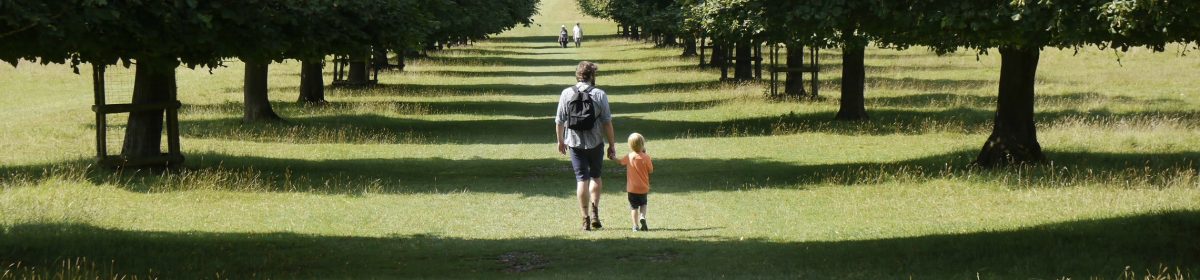
While the rest of the country is apparently melting under 30C plus temperatures we’re sitting under thick Atlantic clouds and sea mist for most of each day. It seems to brighten up for a couple of hours in the afternoon – so poor sunbathing weather but excellent for walking and mooching around looking at plants. We’re a mile or so away from the nearest village and eight miles from a very good supermarket in Nefyn which deserves an award for its community spirit. They cook a daily hot lunch, and every day customers queue for a decent takeaway meal at a very reasonable price. They also support local businesses – farms and dairies and (in this last bastion of the Welsh language) show no signs of tourist fatigue. They’re also very adept at recognizing us and speaking English before we’ve even spoken. Must be something about the way we dress! I’ve yet to say ‘thank you’ in Welsh (‘diolch’) for fear of provoking a conversation. Far from the stereotypical view of the Welsh we’ve always found people extremely friendly and helpful. What still remains a challenge is the long history of asset stripping by the English (think coal, slate, minerals and especially water) and the scandal of second homes. A couple of years ago I had a long chat with a local farmer’s wife and she quizzed me quite fiercely. We parted on friendly terms after she asked me “but if you lived here would you learn to speak Welsh?” and I answered “In a breath!” – and it’s true. As my old Greek tutor, Gerry Angel once said – “there are only two languages worth learning, Greek and Welsh” – but I should add that he was an ardent Welshman. I had to learn to pronounce Welsh place names when I was running a writers’ group in South Wales and needed to travel everywhere by bus. Welsh has the great advantage of having phonetic spelling so once you’ve learned a few basic rules about sounds and stresses, you can find your way to Ystradgynlais without provoking amusement among the other passengers.
The Lleyn peninsula, the thin strip of land that leads west from Snowdonia into the Irish Sea, is – if you’re a poetry reader – RS Thomas country. He was vicar of Aberdaron for many years and became a campaigning Welsh speaker even though he only learned the language as a young man. Like many reformed smokers and drinkers he out-did most people in the ferocity of his new attachment to Welsh and (according to the excellent biography “The man who went into the West” by Byron Rogers) even berated the local butcher for labelling his meat in English. I met RS once at a reading and he was charming, although his bone-dry sense of humour could be misleading to anyone unable to tune in to it. I was far too awestruck to say anything sensible to him but I’m still in love with his work which is all in English because he never felt confident enough of his grasp of the nuances of the Welsh language to write poetry in it – the complete opposite of Samuel Beckett who wrote in French after 1945 because (he said) it allowed him to write without style.
Elsi, Thomas’s wife and a fine artist in her own right, is buried above Aberdaron in the bleak churchyard of St Maelrhys Church, Port Ysgo, with their son Gwydion; near to the grave of Jim Cotter who was also Vicar of Aberdaron and a pioneer of modern liturgy as well as being a significant campaigner for gay rights in the church. I knew Jim quite well from some of the retreats he led; a delightful man. Yesterday while out walking near Rhiw we met a couple whose next-door neighbour RS had visited regularly. Apparently he would often bring a piece of cake in his pocket when visiting. Local opinion about him was always divided. Some thought him a saint and others thought he was “a miserable old bugger”. His bishop and the church in Wales hierarchy had no grasp of his gift so they hated each other cordially and refused to let him continue to live in his house when he retired. The house now appears to be empty and there’s a hole in the roof (reported by Madame as we drove past) , so it seems the churches’ incapacity to cope with gifted and creative clergy is undiminished.
Elsi and RS Thomas were great friends with the Keating sisters who owned the estate of Plas yn Rhiw. They too lived pretty austere lives in their house (now owned by the National Trust) and when we visited it in 2019 I was very moved by finding, in their kitchen, a very similar paraffin stove to the one my grandmother had in her cottage in the Chilterns. The Keatings had Plas yn Rhiw extended and some of the furnishings including a fine staircase were salvaged by Williams Clough Ellis who also designed an extra floor for them whilst not working on the italianate village of Portmeirion.
So to cut a very long story short, we’re moving later this week to stay for a few days in a rather inaccessible and tiny cottage on the National Trust estate, overlooking Porth Neigwl bay within easy walking distance of Plas yn Rhiw, The Thomas’s retirement home – Sarn cottage, and St Maelrhys Church all joined by footpaths across the abandoned manganese mines I mentioned a couple of days ago. How much good fortune is proper in such a short visit. Thomas’s poems speak to me and often kept a few embers of faith smouldering in me when I read them during hard times in the past, because unlike the prophets of Baal and all their certainties he practiced doubt, uncertainty and steadfastness in the face of an overwhelming emptiness. It has a posh theological name – kenosis – but I prefer Wittgenstein, “whereof one one cannot speak thereof must remain silent” or perhaps the Taoist saying – “The Tao that can be spoken is not the Tao”.
I suppose some might find churchyards rather melancholic places. but not me. We were walking alongside the Monmouth and Brecon canal when we saw the road sign which indicated a church half a mile up the hill. It was more of a Welsh mile and a steady climb of 200 metres, passing an adventure centre and a lot of sheep before we came upon the church which is so large as to hold a population much larger than the little collection of houses around and about which wouldn’t even amount to a hamlet’s worth. It was a blistering hot june morning and we passed a group of walkers descending who said there was a good bench up at the churchyard and that sealed the deal.
I’ve spent a lot of time in and around churches and the first thing that caught my attention was the broadly circular wall to the churchyard. This is an often seen feature of Saxon churches which stood on repurposed pagan sites. Churches dedicated to St Helen (Emperor Constantine’s mother who once revivified a corpse with a piece of the true cross that she’d bought from the local relic market) , for example, were almost all situated on springs and one of our neighbours hired a dowser who managed to locate the spring at what would have been my local parish church before the congregation all moved away to work in the quarries.
The walk up a narrow lane to the church was a botanist’s dream, notwithstanding the worst hay fever I’ve ever suffered from. I dripped, sneezed and coughed my way up the long hill taking photos while Madame walked on ahead. By the time we reached the church gate I’d found five species of wildflower I’d never seen before. The circular churchyard and the yews reputed to be more than 2000 years old suggested that this squarely built church sitting silently in the hillside has a history reaching back through beyond the Roman period. Holy places are like that. We find ourselves being drawn to them, never quite knowing why. I’ve always thought that they function as lost property offices frequented by people like me who can’t even fully describe what it is that we’ve lost.
The guidebook came up with some facts and recalled some of the tragedies that the church has seen, including the deaths of family wedding-party who, in 1753, drowned while attempting to cross the river Usk. Outside the church a patch of grass was reserved for the playing of handball, and a pit for cockfighting – forerunners of the creche and free coffee with damp biscuits after the service, favoured by modern clergy.
Outside, a fallen yew tree has been turned into a noticeboard worthy of Antoni Gaudi.
But as I wandered around the churchyard I chanced upon some plants, presumably garden escapes or maybe sown on purpose. I knew that if they were truly naturalised and “wild” they would have been exceptionally rare, but after a few moments the more likely thought came to me that they’d been deliberately put there; safe behind the railings of a pair of listed chest tombs and as symbols of the resurrection just beyond the reach of strimmers and zealous gardeners. The plants – Jacob’s Ladder – were there in three colours, blue, purple and white; a kind of living bible class for those who care to stand and stare. Jacob’s ladder on which, in his dream, Jacob saw the angels ascending and descending to earth. It’s a potent symbol in a churchyard even now – subtle and creative, even a bit subversive.
In my theological college, at the head of the main staircase, was a door marked “Ordinary”. The plaque was made in varnished wood with gold lacquer lettering – in other words not a practical joke knocked up by a few students – and neither was it a comment on the person on the far side of the door who was far from ordinary. It took a while to find out that the Ordinary – the capital letter isn’t a mistake – plays an important role in any church organisation. It seems obvious, but it’s the Ordinary’s job to keep things running smoothly. In particular he (it was a ‘he’ back in the day) didn’t order the biscuits for brake-pad pudding, always a favourite in the refectory – I’m joking! – or the cabbage (someone once said to me that they knew it was an evangelical college the moment they walked through the door and smelled the boiling cabbage!). It was the job of the Ordinary to organise and supervise the worship, the liturgy and also to make sure that there were no unusual or possibly heretical interruptions to the daily flow of prayer and worship, although I remember one occasion when I was reading from St John’s Gospel and without warning a portly young lady came galumphing on to the platform wearing green tights and performed a liturgical dance around me. It was up there with the moment when I was reading the same passage from St John at a huge carol service in St Mary Redcliffe when I noticed the line at the bottom of the order of service “This page is sponsored by Pascoes Complete Dog Food”.
The Ordinary, then, supervises the day-to-day inner life of the church and keeps it on track, which turns out to be a vitally important role. Until this morning I had never thought of the ecosystem within which we live as a form of liturgy. Spring, summer, autumn, winter, the phases of the moon, the tides and the procession of solstice and equinox all seem to be written into the physical warp and weft of the universe as eternal truths, inviolable to human meddling. But if we take the seasons as an instance we can see immediately that whatever the astronomers and meteorologists define as the seasons, these entities are no more than marks in a calendar; because what we call spring is not an abstract concept but a complex human experience.
Madame is recovering from a knee replacement operation and so we have been pretty much confined to local walks. My regular walks to the supermarket have obliged me to stop and look at the kind of plants that are too lowly (weeds) normally to attract much interest. I stopped today to photograph a particularly fine example of hedge mustard, a plant which is often accompanied by a dried dog’s turd at its base, when the thought exploded in my head that the seasons could be considered to be a form of extraordinary liturgy; a kind of music which unfolds within simple rules but which is capable of great variation. Just to give a rather churchy example (last time, honestly) Ralph Vaughan Williams inserted a single extra note into the seventh line of the tune of “Abide with me”. I always find it almost unbearably poignant to hear that musical phrase played – usually at funerals it should be said.
If the seasons are some kind of liturgy, who – or where – is the Ordinary?
So here’s the takeaway point. The task of the Ordinary is to patrol the everyday worship of a community – think monastery or convent – and keep it within the agreed bounds – just as an umpire might oversee a game of cricket and determine what is and what isn’t within the boundary. The question I’m asking myself is who, or where is the Ordinary who oversees and patrols to keep the Earth from harm? The question arises because it becomes clearer every month that the earth is being harmed; not by any sort of malevolent supernatural force but by us. The great processional song of the plants, the insects, the birds and mammals is falling inexorably silent. The liturgy, the song of the earth, is being broken.
Every year we look eagerly for the signs of spring along the canal. Probably the earliest arrival is the Winter Heliotrope which spreads its faint almond perfume along the towpath. Then come Lesser Celandines, Lenten Roses in the park, Snowdrops, and then the pace quickens and we can barely keep up. The canal banks are surprisingly orderly – Cow Parsley, Hogweed, Bluebells all seem to know their times and places and emerge to use a few weeks of sunshine to complete their cycles before another more vigorous neighbour shoulders its way through. It’s anything but chaotic. This procession – in all its diversity – allows a space for every imaginable life form. This is not just a canalside bank, it’s a symphony if only we would but stand there for a whole season without moving and listen to the three dimensional unfolding – four if you include time. You may not be any kind of believer but I defy anyone who claims not to be moved to profound and deep gratitude for the experience.
We have met the enemy -it is us
Nature as liturgy is a new experience for me but above is the old expression repurposed on an Earth Day poster by Walt Kelly in 1970 five decades ago and paraphrasing a saying coined by an American naval commander in 1813, and it is still as important as it was 55 years ago. The disease of our failing civilization didn’t appear the year before last, it’s been lurking in the shadows ever since the industrial revolution. If I dare to use another religious concept (which does at least stand the test of time) the disease gnawing at our inner lives is the ancient granddaddy of all sins – idolatry: the sin of worshipping the partial, the fabricated and trivial gods we invent for ourselves instead of the whole which escapes us always because we are too fearful of the silence.
The ordinary, the everyday life of the planet is slowly dying from a kind of spiritual and intellectual heart failure after many lifetimes of abuse by us. The liturgy, that procession of music and words expressed in nature, is being broken on the one hand by bad actors who know perfectly well that they are doing wrong but persist in any case because they’re getting rich on the back of it, and on the other hand those of us whose silence is culpable because it is a form of complicity.
Madame and I have a couple of small allotments and we can vouch for the fact that this has been one of the most difficult growing seasons we have ever known. The seasons no longer seem reliable so even sowing and harvesting feel risky. Supermarket shelves are regularly patchily stocked and we read of many instances of sickness caused by the agricultural use of pesticides and polluted water. Even the seeds we have propagated ourselves in the kitchen are not thriving as they should when we get them into the ground. An old saying that – “the farmer’s boot is the best fertilizer” alludes to a remoteness from the earth that could as easily apply to working the soil from aloft the vast behemoth of a tractor as it does to urban life with its desert-like pavements. When we first lived in Wiltshire we would often pass a farm known as “Star Fall farm” which sounds at least a bit lucky for its owners. On the other hand when near Malvern we used to pass another farm – its homophone cousin – called “Starve all” – which doesn’t sound nearly so much fun. Where we live there is a great deal of social housing which shelters some very vulnerable people. One young man regularly seems to forget his medication and will stand out on the green howling “the earth is burning” at the top of his voice for a full hour at a time. He’s not wrong. I’m sad that people hurl abuse at him when his anxieties seem to have driven him mad. Star-fall becomes starve – all and brings us all to our wits’ end.
So driven by necessity and post operative recovery, we’ve been doing our botanising very close to home and guess what? the plants we find are vigorous survivors; bullies, thugs and supremely patient life-forms which can bide their time for an age and then seize any opportunity to grow. They are also just as numerous as their more glamorous country cousins. I counted up to forty species within the putting-out-the-bins range of the flat and a wider search could easily yield fifty. We can all stand and gawp at a Bee Orchid, but I understand how it’s harder to get that enthusiastic about a little Thale cress plant that seems to grow, set seed and die back in a couple of weeks in a crack between the wall and the pavement. However these little inconspicuous plants are just as much a part of the web of life, the processional symphony of nature as the wonderful and rather rare Hungarian Mullein at the top of this piece. While the sopranos and basses capture the most attention, the inner lines of the altos and tenors are the scaffolding for the texture and richness of the chord; the thankless punctuation of the liturgy without whom it would become incomprehensible.
I’ve spent years pondering on the much repeated idea that nature is somehow good for us; a sure remedy for depression and every other known disturbance of mind, body or even spirit. I’ve always concluded that a passive engagement with it is pointless and can bring no rewards. The Greek roots of the word liturgy mean a kind of voluntary work for the benefit of the people. It referred to the practice of rich Athenians doing a bit of volunteering. I’ve come to believe that only active engagement with the earth constitutes genuine liturgy – a communal and cultural response of thanksgiving. Is it any surprise that in these dying days of the Church of England a decent harvest festival will have a bigger attendance than an Easter communion.
I very much hope I’ll be able to enter and embrace my own period of senescence in a world that’s turned its back on all the madness and selfishness, and learned to listen and respond once again to the song of the earth. A tribute to the Ordinary we can’t name or even describe because the Tao that can be spoken is not the Tao
A rare Hungarian mullein – Verbascum speciosum whose growth I’ve been following since last August. At 174 cm it’s a bit taller than me! A true cadenza (the flower not me!).
I have no idea who mucky Anny was, although I can hazard a guess that she was not much loved by the godly wives of Seymour Road. I can vouch for the fact that the little cut-through alley was the scene of many a knee trembler; back in the days when a degree of broken glass and a few rusty cans were the inevitable setting for illicit cuddles before sex was invented.
Muckyannydinny lane peeled off from the more salubrious lane that led to the primary school and the little Methodist Chapel where Auntie Doreen and her extended family presided. She also presided over my school dinners where she could punish me for minor crimes by heaping extra swede on my plate. The end of the lane was guarded by a Mr Monks, a mortuary attendant (I’m really not kidding!) who would yarn to us about his macabre experiences whilst teaching us for our first aid badges with the Boy’s Brigade.
Muckyannydinny lane was a side turn for the bravest souls to take a difficult route to the bottom of Seymour road; a short-cut for which wellingtons and a machete would have been useful. Opposite Mr Monks’ cottage was a hedge of knotted and writhing branches much like the ones in the photograph. The hedge absolutely fascinated me. If that image conveys a certain eroticism it’s because the first time I ever saw two people making love (after a fashion) it was just a little further on, at the end of Muckyanny …….. you get the picture. They were teenagers, she was crying and he was pressed into her in what must have been a practical rather than delightful manner. Hence the knee trembler . Obviously at around eight years old I had no idea what was going on and I hurried past, avoiding the hostile glare of the young man and struggling not to look back for another intoxicating draught of forbidden fruit. I could feel the forbidding teachings of the Methodist chapel crumbling, but far from any sense of bewilderment and trauma the experience welded together the experience of nature (the lane with the knotted hedge) with the eroticism of the teenaged couple.
Years later I spent several days perched on the bank of By Brook attempting to capture the same kind of entangled mass of roots in a pencil drawing. The exact same feelings were flooding back; which would seem to indicate a fine example of a psychological complex. The associations of one powerful experience flooding the field of another. So if you were to ask me about my love of nature – and if I were being strictly honest – I’d have to cut all the anodyne explanations, clear away the smokescreen and to say that from a very early age the natural world was suffused with a kind of aesthetic eroticism. For me it was infused with a wild amalgam of spirituality, poetry, art, and contemplative joy. The natural world could lead to ecstasy – being lifted out of myself; out of my troubled, complicated family; out of anxious meals waiting for the inevitable row, away from steamy windows and threats of awful punishment for unspecified crimes at Sunday School.
Bring immersed in nature
So I was planting potatoes on the allotment a couple of days ago when I was joined by a couple of fearless Robins who came up to my feet and filled their beaks with pests I was glad to see the back of. Somewhere back in the bushes next to the road, there was a nest with young and our two universes overlapped for an hour while I planted spuds and they fed their brood. Obviously I talked to them but apart from a beady glance in my direction now and again, the conversation never really got off the ground. So I wondered “whose allotment was this anyway?” as I watched them, and I concluded that it was obviously a shared space. Later I spotted a clump of grass that I’d identified using an AI app a couple of days previously. It said it was Barren Brome but being a bit of a belt and braces kind of naturalist I got the books out – sooo many books! – and double triple checked. They weren’t much help as it turned out except for one book that said that if you looked at the ligule – technical term I know, but if you look carefully at the stem just where the leaf branches off – you would see that in Barren Brome the ligule is sort of shredded; shaggy. Imagine wearing a T shirt under a normal shirt and that your neck is the grass stalk. The ligule is the bit where your T shirt shows. It can be all sorts of shapes and appearances from pointed to shaggy and even just a line of bushy hairs. The other important bit is called the auricle and not all grasses have them but they’re the equivalent of your shirt collar – little pointed lapels that sometimes overlap and occasionally aren’t there a all. If you really want to impress your friends you can wander through a field of growing cereals and identify what’s growing there just by looking at the auricles. That’s a trick taught to me by a retired grain salesperson on a pilgrimage years ago.
Anyway, and sorry for that looping distraction, I rather distractedly pulled out a stalk of this grass and looked for the ligule (and now you know what that is), and there was exactly the minute shaggy, threadbare looking structure I was looking for, and there followed not just the inner nod and a resolution to record it – no! there was a burst of joy; real song-like joy at my discovery.
Robins, Barren Brome, the sun on my back and planting potatoes became a totally immersive occupation. Wild nature is like that. I talk mainly about plants but the moment I saw my first Heron take off (it froze my blood with its ancient magic); heard my first Curlew call or caught sight of a Kingfisher on the Monmouth and Brecon canal, they changed me, reorganised the inner workings of my mind. A group of Adders sunbathing at the bottom of a buddle-pit on Velvet Bottom provoked a tectonic mind-shift.
Nature isn’t there for our amusement, or for showing off how clever we are. There’s no future in objectifying nature with our beloved reductive thinking; making more and more of less and less, as if it’s (she’s) there so we can exploit her for personal gain, like a victim of slavery. Nature isn’t really there for any fathomable reason at all which is precisely why it’s so wonderful. You will probably know the slogan “We have seen the enemy, it is us” coined, decades ago, to help celebrate Earth Day. I’d like to reverse that slogan in the face of the terrible emergency we’re facing and imagine ourselves as foot soldiers whose only weapons are poetry, philosophy, religion (properly understood and not mangled by worship of the status quo); spirituality; music; drama; dance ; healing and multifaceted cultures working together in creative resistance.
But in order to achieve that we need both to to inspire but more important to equip and enable ordinary people like us to take on the Magisterium and demand to be taken seriously, to be allowed to learn and grow in confidence and stature without having to resort to hand-to-hand combat in the corridors of influence. There’s an old, but useful proverb that I came across during my parish priest days:
The people who keep the church open are the same as the ones who keep it empty!
I’ve lost count of the times I’ve been turned away demoralized and deflated by some self-styled expert whose instinctive response to new ideas is to destroy them in case they catch on. Being largely self-taught in botany, for instance, means that I have to start from nowhere every time; battling with the jargon, technical terms and latin that seem almost designed to lock out intruders. The plus side is that I’m extremely stubborn and I press on by building the conceptual framework that underpins the whole edifice. When I know something I really know it and so I push back, only to be labelled rude and aggressive. Someone once called me the rudest person they’d ever met. I thought at the time they’d been rather lucky.
How can we persist in a situation where millions, probably the majority of people know there’s an absolutely linked climate and financial crisis and would willingly do something to help, but feel intimidated by precisely the out-of-date ideas which got us into this mess in the first place. The current crisis is largely fuelled by fear, envy, greed and hatred. With all respect to the welly telly brigade, watching documentaries about nature is not a substitute for being in it; immersed in it, enraptured by it, possessed by it and – dare I say – guided by it.
There’s nothing like growing an allotment for teaching us how stupid is the idea of controlling nature for our own benefit. Nature is our mother, our lover, our spiritual guide and our friend.
Madame holding one of our faintly miraculous crop of cauliflowers
It’s been an extremely odd few weeks, what with the campervan van engine blowing up after a service error which was meant to keep it on the road. “All repairs will be under the warranty”, the nice mechanic said, after he realized that I wasn’t going to scream at him. Then there were the two weeks in Cornwall during which we identified over a hundred new-to-me- species and then, on Monday morning we bowed to the inevitable and shipped up to the local hospital for Madame’s second knee replacement. We reported at seven and by eight the same evening we were driving home again clutching sticks, an embarrassingly obvious commode and a bag of pills – most of which looked either dangerously addictive or dangerously laxative ……. who knew?
And so I straightened my nurse’s hat and buckled down to a routine that only fitted our quiet and orderly lives where it touched. It turns out there’s a very short distance between tired and tetchy and in pain and tetchy with a fuse that can be lit by the most innocent roll of the eyes. The drug routine was so complicated I had to make a spreadsheet to explain all the timings, and we soon abandoned a couple of the drugs which made Madame puke. We are model patients – eschewing the morphine in favour of a couple of paracetamols and a scant diet of pride and anxiety – chewed over fifty times and swallowed painfully. However progress has been good and today I appointed myself chief occupational therapist and we went to the allotment to see how things are going. And they are going very well indeed. Not least the cauliflowers which we’ve been growing for over fifty years and never really succeeded with. Today every plant carried a perfect small cauliflower – just right for the two of us. It was like a botanical Easter egg hunt except it was me crawling around and Madame directing the search from her comfortable chair.
So in between nursing duties I managed to complete the plants spreadsheet having trawled through 17,000 photos, most of which were useless – lacking useable data – and boiled it all down to 6oo verifiable records and 400 species; in terms of bang for buck I think it would be hard to justify! I was chatting late last year with a retired recorder who though he and his wife might complete 1,000,000 records this year. Awesome!
Getting old is a bit of a pain. Bits drop off and long relied upon faculties like hearing and sight start to deteriorate, but all the same it gives you time to think. And I think a lot about this current fashion for “being in nature”. It does seem to me that if 100,000 people passed Moses’s burning bush in tourist buses – in all probability not a single one of them would have seen what he saw that day. I’m more and more convinced that there’s some kind of hierarchy in the simple act of noticing something. As a first draft I’d venture – first passively looking; then noticing; then seeing (perhaps for the first time); then contemplating and finally beholding. The truly life-changing bit of being in nature doesn’t come without some real effort and concentration and to behold nature is to relinquish all control and become part of what some call The Tao. As any half decent artist will tell you, you don’t reach your best work by learning tricks, you reach it by stepping aside.
A hedgerow Elm in seed on the Lizard; a memory from living in Wiltshire more than 50 years ago jolted me into recognizing an old friend I thought had died.
Two figures from the tympanum at the abbey in Conques, above the river Lot
Sorry – this one’s a bit heavy, but it’s been burning away at me for many years and it needed to be written.
This is probably a sideways compliment to the Buddhist saying that if you meet the Buddha on the road you should kill him, but sadly, the Christian churches capitulated long ago to the temptations of systematic theology and mansplaining exactly what God was supposed to do to maintain their (his?) contract of employment. As for me and my heretical disposition, I stay committed to the idea that the Tao that can be spoken is not the Tao. I remember asking the librarian one day in the library at theological college where I’d find the works of Thomas Aquinas. She looked heavenwards towards the mezzanine and waved a languid arm around the lines of shelves. Being an evangelical college, the lines of books were untroubled by readers.
I’ve absolutely no desire to write at any length about the rather bracing day that left me standing under a bridge in Hay on Wye watching the flooding river and knowing that in a kind of reverse baptism it wasn’t my sins that had been washed away but my beliefs. All I felt was a kind of relief that at last things were clear; along with an aching sense of the loneliness of a life without the distractions and consolations of what we used to call “stamp and circumponce“. I could abandon the comfort of the old dictum ex opere operato that says as long as you get the ritual and the words right it doesn’t matter how mendacious, greedy, ambitious, stupid or corrupt you are; the sacrament is still valid. That was the bishops’ favourite defence in the promotional chess game.
When I was a curate I stood in occasionally as a chaplain at the Bristol Royal Infirmary. I was called on one day to perform an emergency baptism on a severely burned child who was not going to survive. When I got there I discovered that the child was so swathed in bandages there was nowhere it was safe to baptise conventionally, so I improvised with a couple of drops of water and a smear of oil on the bandages. The memory still haunts me. My boss; who was a stickler for the correct procedures – criticised me in front of the whole chapter at our next meeting and announced that the child had died unbaptised. Forty years later I cannot even begin to fathom the cruelty of valuing the blather of ritual over compassion for a child and his grieving parents. Things never really got better.
I treasure a talk I once attended, given by a very ordinary (that’s a compliment by the way) – man called Ian. He was neither wealthy nor clever and he’d saved up for ages to go on a pilgrimage to Jerusalem and Galilee. He told us how, on a blisteringly hot day he’d queued in the sun to visit the empty tomb in Jerusalem and when he eventually got to the front he noticed a sign that read (in several languages) “He is not here, He is risen”. In a completely artless way he described the sense of disappointment that swept over him as he realized that, in an experience he still hadn’t grasped huge depth of, he’d found exactly what he’d come for. Faith can only begin where belief lies dead on the floor
The database that didn’t know when to stop. On the monitor Tinder fungus in Henrietta Park
Yesterday, as I was typing the latest batch of plants into the database, it suddenly dawned on me that the Potwell Inn isn’t the only journal I keep. This is a long and rather meandering story, but after we retired and after a particularly stressful family Christmas, we took ourselves down to Cornwall and were leaning over the sea wall in St Ives watching the waders and gulls when I realized that I didn’t have a clue what any of them were called. With the inscrutable emptiness of any retirement plans lapping around in my mind, Imade a ludicrous resolution that from then on I’d refuse to walk past anything I couldn’t name. Of course – like all resolutions – it was broken before we left the beach, but what followed was a trip to the local bookshop and our first bird book.
At that stage I’d been keeping a journal for some years but it was locked and private because much of it referred to my work and troubling family matters. Then technology intervened; my computer kit refused to communicate with the app I was using and in spite of a bit of helpline raging I was told that my kit was ancient rubbish and I should spend several thousand pounds on renewing it or piss off into outer darkness where there would be less gnashing of teeth. I’d reached the point in my church work where I could hardly cope with any more grief and felt my ability to empathise was slowly shrinking. With retirement imminent and following a great deal of group therapy and several years of one-to-one psychoanalytic psychotherapy I made the crucial decision to go public and start a blog in which I could pay more attention to celebrating life and being human. The Potwell Inn, the blog you’re reading now is approaching its tenth birthday. WordPress was more tolerant of heritage kit and in fact in the ensuing years I’ve moved across three platforms and four computers without a hitch. The pleasing irony is that WordPress eventually bought out the self-righteous and surly Day One and honour was satisfied.
The Potwell Inn was always intended to be a safe place for me to work in. After decades (my whole working life|) of negotiating dangerous places like public schools, prisons, youth centres and psychiatric hospitals to the Church of England (which was by far the most dangerous) I was pretty much burnt out and I needed to find somewhere to be truly myself without having to pretend I was the fearless and fun-loving extrovert I was generally taken to be. Here in the Potwell Inn, with a few notable exceptions, I have no idea who’s reading about me and for the most part I don’t need to mask or self-censor. I still need to guard against oversharing, and this is probably an appropriate moment to remind readers that the Potwell Inn is a virtual pub whose concept is borrowed from HG Wells’ comic novel “A history of Mr Polly” which was a set text from school but which provided me with an imaginary safe place as I day dreamed and gazed through the classroom window on airless summer days. Very few people I’ve known have really got past my armour so my cherished hope is that the customers – i.e. the readers of the Potwell Inn – find something in common here.
As a child my escape strategy was books. I became a completely promiscuous reader of biographies, the complete works of Dickens, Wells, later Henry Williamson, and up into much later writers. I consumed poetry, particularly the Black Mountain poets. My first involuntary tic involved moving the book past my eyes as opposed to moving my eyes across the page. I would begin a new line with the book held level with my ear. Mr Jablonski the ophthalmologist apparently thought it was just an odd habit and I’d soon get over it. Well I did and I didn’t, in that the tic just moved elsewhere; I lost the disturbing reading habit and started twisting my mouth and neck painfully. Much later I discovered that with an effort of will I could sometimes move it to less visible places, at about the same age- maybe ten or eleven, that I started to feel unable to breathe when things were sprung unexpectedly on me. My diaphragm would tighten like a drum and I could only partially fill my lungs. My Dad had a laudable thing about never making promises he couldn’t be sure of keeping but he sometimes applied it in upsetting ways, for instance by never telling my sister and I when we were going on holiday. We would go downstairs and see the suitcases standing near the door and I would be thrown into a panic – having no idea what was coming next.
The second thread of this post is a lifelong love of lists. The first book I remember was a picture dictionary, rapidly followed by i Spy books, Observer guides and a never ending sequence of obsessions that my Mother would disparage as “fads”. I became an expert on the rigging of sailing ships which led to a lifelong interest in knots – the cue for binge reading Patrick O’Brian. I could list the later (almost always non fiction) books that captured me – “The Foundations of Wireless” by M G Scroggie, way beyond my comfort zone; “Writing Illuminating and Lettering” by Edward Johnston – whose house in Putney we stumbled upon last year; and then after studying “A Potter’s Book” by Bernard Leach, I got into Parmelee on ceramic glazes and now over sixty years later I’m sitting next to the fourth edition of Clive Stace’s “New Flora of the British Isles”. Every one of these books involved the writing and testing of lists – endless lists which, all bar the last ten years or so, are lost forever. I even crack jokes about “feeling a list coming on”, which I think only Madame understands.
My first wildlife lists were handwritten in scruffy notebooks and also in about 17,000 photographs; many duplicated, two thirds of which didn’t even have basic EXIF data. The jumbled and unexamined sediment of a white knuckle life lived in fear of being “found out” – although I never knew what for. I’ve mentioned my melancholic temperament several times in this blog, but it occasionally tips over into what one doctor called “phobic anxiety” and even depression. In my twenties I knew I was ill when I started to see the winter trees as the bronchioles and alveoli of dead people. My mood was only lifted by absorbing, sinking myself in technical detail – the more complex the better and so I emerged from my ceramics degree with more knowledge of glazes and firing than was thought proper by the faculty members who believed that creativity did better when it was uncluttered by any technique at all. I recall a testy exchange with the Head of Department when he saw a drawing of an apple tree which I’d made which attempted to express its characteristic form. All living things have distinctive forms just as they have their individual variations. Close, even meditative attention is the prerequisite of all of art and science. He denied furiously that there was anything distinctive about tree forms and I may have given a sharp reply. That capacity to start fights also followed me through life. I never could defer to flawed or undeserved authority; neither could I tolerate pomposity, and in the end I got fairly used to being called ! “the rudest person I’ve ever met!” to which I would sometimes reply “Well you’ve been lucky then!” One of the best teachers who really stretched me – Sid Harris who taught Sociology – would challenge my flights of fancy by saying firmly “that’s all very well David – but where’s the evidence???” Evidence, honesty, clarity and truthfulness are foundational to civil society. Neglect them and you land up with fraudsters, liars, rapists insurrectionists and racists running the country. My principal defence at school became what must have seemed a frighteningly quick gift of sarcasm. By the end of first year sixth form I’d come within a whisker of getting myself into real trouble and left school with my collar being felt by the Head Teacher whose neurotypicality would have won awards, and my first job was as a junior photographic technician at the university where they handed me a Leica and a box of film; showed me where the darkroom was and said “go and learn to use them”. It didn’t last long but I managed to get a City and Guilds qualification. After that I tasted the joys of unskilled engineering work and welding before Madame and I met when she was 15 and I was 18 and she persuaded me to go back to college. I was astonished when they offered me a place.
I could go on but there’s no point except to say that at some point last year I decided to sort out my photos. I was interested to see whether I could recognize as many as 100 wild plants. I started off with a very elementary database but the more data I typed in, the more possibilities for extending my understanding popped into my mind and the more complex it became until it became a thing of beauty; a second Potwell Inn journal expressed in a different language. The photos, mostly taken on a phone over the past eleven years had enough attached EXIF data to reconstruct the past in diary form. I could find a photo and its date and location and it would evoke the whole complexity of the moment of discovery. Other details were embedded in my memory; of smells, of landscapes, of my companions (usually Madame). The database soon had over 350 entries, some of the plants I’d entirely forgotten ever encountering. The referencing and identification is quite intense work but after a few hours spending time – even with people I know and trust on, for instance, a field trip – I need a few hours of solitude to recover. I slip into my study, turn the computer on and open the Floras I’m using and an intense feeling of safety and relaxation floods through me. Memories of holidays, walks and random strolls along the river and canal banks can repair all those stressed out neurons.
There’s a deep historical, maybe spiritual significance in the naming of things. In the Old Testament as the creation is described (this isn’t a religious riff by the way, I’m just pointing out how fundamental the naming of things is). So in Genesis 1 – the first of 2 creation stories – and not many people notice that there are two – God creates and divides the higher orders – birds, sea monsters, every living creature that moves and then generalizes every green plant for food (does that make God 1 a vegetarian? a poisoner?) – and feels rather pleased. Then in chapter 2, a second and different account, God 2 makes everything in its higher order and then after a bit of dangerous cultural faladiddle in creating Eve, invites Adam to inspect and name all the living things – thereby making him the first taxonomist. Orders, families, genera, species and eventually sub-species. Put briefly, we’ve been naming and ordering things from the very beginnings of written culture.
A single flower is a single dollop of data – enjoy it while it lasts in a jam jar. A photograph with an added date and location makes it ten times as useful to our understanding. My 17,000 uncatalogued photos (not all of them flowers of course) is a personal scrap heap, of no use or interest to anyone except me and the ever patient Madame. But when I extract just half of a percent of them and tabulate them in a searchable database with “who, what, where and when” – all verified then they become seriously interesting and useful. But not only useful. I would insist that these living libraries of accumulated knowledge are beautiful.
At the New Year Madame and I went on our usual walk and found 22 plants in flower. Our Bath Natural History Society group went out a day later and recorded 66. A couple of days later again the lists were published nationally and I discovered that a plant which I’d recorded as Canadian Fleabane, which grew profusely outside our flat two years ago; was this year recorded as two different species – the Bilbao Fleabane and Guernsey Fleabane. I just had to go and check my apparent mistake and so I went out on Sunday in a freezing drizzle and gathered some samples of what looked like very dead material brought them home to take measurements and macro photographs and after a lot of head scratching and turning of pages came to the conclusion that they were right and I was wrong. Good news and bad news because I got an extra record. The trainspotter trap is never far from the surface.
There was more good news when we spotted (left – Right) the first Celandine of the year, Butcher’s Broom in flower and Cow Parsley in flower too as well as some Snowdrops. Spring is just around the corner.
But perhaps the tree walk we went to on Saturday yielded the nicest surprise, because we were shown something which was visually completely uninteresting and yet reminded me of a time when this part of the world was full of enormous Elm trees. On the left is an Elm sapling. It won’t get much bigger because it will soon be struck down by Dutch Elm disease, but I understand that resistant varieties are being sought out and grown on. I’d really love to see just one fully grown and magnificent Elm back in Wiltshire where we were students and fell in love with the landscape.
Dropping the mask has been quite a challenge – just as coming to terms with my own occasional oddness has been equally challenging. Possibly, my friends might say, the effort has been entirely theirs but diversity is the very essence of nature. Every living being, every plant, animal, insect or fungus is largely the same as every other of its kind – and yet different somewhere deep in its recesses. I wouldn’t swap with anyone else for the world. As a lesson from nature it’s irreplaceable and, for me, so are the lists which offer the safety in numbers that I mentioned in the title. Almost every wildlife programme we watch wants to suggest that nature is healing – that going for a walk in nature somehow fills us with an invisible miasma that makes us whole again. Well that may be partly true but I’d love to see it tested in some scientific way because my own thought is that it’s not just walking through it that does the trick but engaging deeply with it. It’s the engagement that makes us well – and the deeper the better!
A stacked focus macro photograph of the prickles on the cactus that lives on my desk
This is turning into something of a series. On January 5th I wrote about the plants being markers of the passing seasons after walking down a lane towards the beach here in Cornwall; none of them rare in any sense but all capable of lifting your heart as an avatar of spring. On 6th January I wrote about plants and their properties as irreplaceable sources of as-yet undiscovered drugs; but I warned that they’re also the canaries in the environmental coalmine warning us clearly about the danger of our extractive and instrumental abuse of nature. Then on the 7th January I turned towards the difficulties but also rewards of a meditative relationship with plants and nature as a whole. Notwithstanding the difficulties of talking about “soul” and “spirituality” I asked whether a loosely Taoist spirituality can build a deeper relationship with the earth and creation without resorting to religious fanaticism. Is there a way into a green spirituality that honours Wittgenstein’s wise aphorism – * “whereof one cannot speak, thereof one must be silent” ? or perhaps more simply, can we ever attempt to explain mysteries without distorting and diminishing them?
So today, in the fourth of these I want to address another gift that plants bring to us – their sheer beauty. Anyone who’s ever loved a William Morris wallpaper or fabric design will understand his debt to natural forms. Any ceramic artist must surely be especially inspired by the natural forms, textures and colours of fungi. Any painter could learn how to replicate the colours, and any sculptor the forms of these exquisite parts of creation that were growing here long before the first hominids evolved and will still be here and still evolving long after we’ve gone the way of the dinosaurs. I don’t write this as a knockdown stand-alone argument for preserving nature, but I believe that the aesthetic can’t be left out of the argument because it’s the aesthetic dimension that helps us to value those parts of life that can’t be reduced to money. If you ask the question “what is a Cowslip worth?” could anyone respond fully without mentioning its beauty, its history, its place in the scheme of things? The value of a wildflower meadow could never be expressed without including its aesthetic dimension except – I write this with a heavy heart – a property developer who might pay lip service to its “recreational value” by offering to build a playing field somewhere else – a promise that will be waived away by the local planning authority if the developer pleads that they can’t make a profit unless they build on the football field too!
And if I might sound off a little bit longer, if we all watched nature programmes on TV from dawn ’till dusk, seven days a week, we’d be in danger of being as ignorant of nature as we were when we were born. Television is inherently passive entertainment more or less presented as education. The real stuff is out there in the cold and rain or, with a bit of luck, on those warm summer evenings when once, in France, I grumbled because a churring Nightjar was keeping me awake in my tent. Real nature is sensual, tactile and mucky, and it demands patience and fierce concentration as well as some ultra rewarding book-work.
When I was learning to do botanical illustration (I never got very far but it taught me the value of close attention), I took dozens of close-up photographs of a Hyacinth so I could paint it using just three colours. This is a great exercise for anyone to try. I’ll never be a William Morris, but I’ll never again dismiss a Hyacinth from a supermarket as “just a Pot Plant”. As I went through my albums looking to pick some appropriate photographs for this post, it occurred to me that one other gift from the natural world to us is to inflame our curiosity. But that would demand a separate post.
*Tractatus Logico-Philosophicus
The Potwell Inn New Year quiz – answers below
First image – which kind of Wild Carrot is this?
Second image – what’s so fishy about this?
Third (Bindweed) what’s the significance of the little pointed bit between the two reddish leafy things?
Upper fourth – Which children’s’ book character shares a name with this plant?
Lower fifth – which word does this plant share with the one above?
Left upper sixth – What part of the body shares a name with this fern?
Left lower seventh – what’s wrong with this Strawberry?
Right eighth – where would you look for this plant?
Left ninth – What punctuation mark shares the name of this butterfly?
For the photo at bottom right, check out the tree label!
Answers – 1. Sea Carrot, 2. Oyster fungus, 3. !t’s the difference between Large Bindweed, where you can see it, and Hedge bindweed where you can’t. Gardeners hate both! 4. Marsh Woundwort. 5. Marsh thistle. 6. Hart’s tongue. 7. It’s yellow, still a strawberry but it’s inedible, 8 Sea radish. 9.Comma. 10. See nameplate.
I wrote, only a couple of days ago, about having to change all my saved database dates to the American standard – month/day/year – and here’s why. If you look at the picture, I set my new Olympus TG-7 to time and date stamp my photos so it would be easier to reference them. It’s no big deal really unless it happens to be the 11th September when the associations with 9/11 spread like a dark stain on the calendar. Converting the dates keeps taking me back to the twin towers.
But there’s another anomaly about date-stamping. It speaks of the seventh of January as if time were frozen at that moment – and in one limited sense it was. At exactly 12.51 GMT I was sitting on a very wet seat on the sea wall, looking at the waves rolling in, when I turned around and there, was a whole botanical life story. The roots, the leaves and the senescent remains of last season’s flowers couldn’t be sliced up like a supermarket cucumber; they were – they are indivisible. A little to the left I found another plant which was (improbably) flowering, out of season. Entirely out of time and out of season these plants would – if he’d had any sense at all, have thrown Thomas Gradgrind (See Dickens’ “Hard Times”) into a rage of doubt.
Later in our winter walk we found Gorse obeying the rules and Knapweed breaking them shamelessly. Plants, as I never tire of saying, don’t read textbooks and consequently don’t obey our imposed human attempts to regulate nature.
There’s a line in Peter Shaffer’s play Equus where Dr Dysart, a psychotherapist who is attempting to understand/treat an adolescent man who has blinded six horses says “Without worship you shrink, it’s as brutal as that. And when have I ever galloped?” Dysart, reflecting on his own timid suburban life is grappling with his envy. but also the cost to his 17 year old patient, Alan, of returning him to something that’s called normal but lacks all fervour and intensity.
That line, lament – if you like – “Without worship you shrink, it’s as brutal as that. And when have I ever galloped?” has lurked in the back of my mind for many years. Occasionally I mark these posts with the tag “Green spirituality”, and a couple of days ago I used the word “soul” which I never feel comfortable doing because I couldn’t say exactly what they mean. Alan, the adolescent in the play, has built up a whole theology around his passion for horses, and there’s the problem. Religion attracts dangerous pathologies like moths to a flame. Why would I want to risk adding to that number?
So I seem to occupy the somewhat purgatorial space between the instinct to worship and the urge to run a mile from anyone who claims to have the secret; but the plants can still (quite literally) bring me to my knees. I could have chosen any number of plants to illustrate this. Yesterday we found loads of extremely infant Wild Carrots and – because sometimes the youthful forms of plants can be very different from their grown up parents, they’re hard to identify. But their presence in all their life-stages, mirrors our own so marvelously that I can look at the senescent remains of the old rock samphire amid the fresh green leaves of the younger and feel a powerful sense of belonging. The gulf between me and what the Taoists call “the ten thousand things” is bridged by that sense of solidarity. The same wisdom teaches that “The Tao that can be spoken is not the Tao” Any kind of theology to try to explain that unity is destined to fail. Like all theologies it is no more than suffocating waffle, and I’ve heard a bit of that, believe me!
In a previous post I wrote about dialects and suggested that the plants which grow in particular environmental niches are a kind of dialect which we – as observers and often users of landscapes can learn and understand. So today I want to take a small step further and suggest that the philosophical distance between ourselves and the plants, indeed all of the ten thousand things which has created an epidemic of blindness, must be overturned if we are ever to become fully human. Nature speaks, mostly inscrutably. You might think of the spring flush as a song of outpouring joy but I should say that the predominant tone of most natural history programming falls into the pathetic fallacy trap. We don’t feel like plants and animals and neither do/could they feel like us. We meet as strangers and we can either lock them into our own conceptual prisons, or make the effort to learn their language. The earth speaks in her own way and we respond in ours – for good or ill. That’s a conversation
What I am sure about is that the shock of recognition that comes with stumbling upon a new plant is as close to worship as I need to experience. Botany is not at all like trainspotting!
While we didn’t exactly come down to Cornwall to search for spring – after all it’s barely January – what you certainly notice is that everything’s at least a couple of weeks ahead of Bath. I listed a few early starters yesterday; none of them in flower but all putting in an appearance. So, in the depths of this grey and dreary weather I thought it would be nice to show a couple of plants from today that cheered me up no end. On the left Allium triquetrum, three cornered garlic, and on the right Poa annua annual meadow grass; both cheap as chips, common as muck and mutton dressed as lamb if you like, but lovely. I must have a slut’s eye for the local weeds.
Sea Spleenwort in Bath city centre!
My mind was actually set on higher things because I set out with a grid reference that I hoped would lead me to some Sea Spleenwort. We’ve walked miles along this bit of coastline looking for it but if it’s there it’s no more than a millimetre tall (which I know isn’t true because I’ve seen it growing in Bath). I know it was here years ago because it was recorded by an impeccably qualified botanist, so I guess it may just have died out – like so many species in these times of climate and wildlife destruction.
It’s been freezing cold and wet here since we arrived and I was thinking that if the Atlantic Meridional Overturning Circulation (AMOC) should change direction (which is a real possibility with global climate change) we shall have to stop pretending we live in a warm and temperate climate and put up with living at the same latitude as St Petersburg. At the moment we’re in denial about the effects of climate change. We dream of uninvented, uninventable technologies coming over the hill to save us, like the Seventh Cavalry in an old cowboy movie but the bad news is that they’re not there.
Maybe we focus too much on the loss to science with species destruction. OK there are a million reasons why we might need to learn from life-forms we haven’t yet even discovered; powerful drugs to be discovered and so forth, but the sheer loss of beauty that comes with species destruction is a loss to our souls (and don’t ask what I mean by “soul” because even though I couldn’t say what it is, it’s still an important intangible something which raises our humanity above the instrumental.
The weather here, even in the far South West, has been pretty awful, although not as bad as it’s been further north, but those flowers (even grasses have flowers) are a kind of token that we know will be redeemed as February turns to March and our hearts begin to thaw.