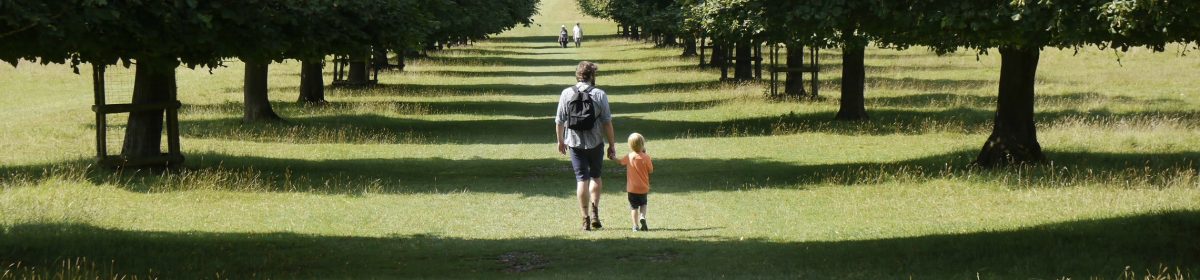
At last! a proper spring morning; one to get us out on our favourite circular walk along the river and back along the Kennet and Avon canal. I suppose I could lend it a bit of spurious significance by calling it a transect but today was about the sun on our faces, warming us right through. Of course we noticed the sheer dynamic of plant growth but my notebook stayed in my pocket as we paid more attention to the nest building swans on the canal and the birdsong everywhere. The power of spring is unstoppable and knowing the succession of plants in the same spot year after year only makes it more impressive – or should I say awe inspiring. Spring is so transient that it’s almost a spiritual exercise in non-attachment. We can wonder at its beauty whilst knowing all along that it all passes. No place here for bitter reflection or clinging to the moment – it comes, it lifts our spirits and it passes and we can give silent thanks for that little shared moment.
In Henrietta Park we passed a Birch tree that expressed something of the paradoxical nature of life. I can’t recall ever seeing a tree so knackered by galls and outgrowths and yet still possessed of a strange beauty. Just down the path a great tree stump which last year boasted a large crop of Oyster fungus, is being rapidly consumed by other fungal rotters.
So let’s not call the walk a transect although we do it twice or three times a week, and let’s call it a conversation over time between sentient beings of wholly different orders, and I have to confess that this morning I think we both identified more with the knackered tree and yet – reading Oliver Rackham’s extraordinary book “Woodlands” – (P. 38 in my paperback edition) trees have their own strategies for longevity, none of which require expensive creams or medications. I think this one caught my mournful meditation on the fragility of life and whispered to me “Get over yourself and enjoy the sun!” So that’s what we did!
I don’t know what it is about Rue but its leaves lend their name to several other plants including a little fern called Wall Rue – Asplenium ruta-muraria that grows outside on a stone wall near our flat, and this plant, Rue Leaved Saxifrage – Saxifraga tridactylites that’s set up shop all along the road. You’d have to be quick to find it though because it’s an annual which flowers early and then pretty much disappears until the following spring. Once you get your eye in it’s easy to identify. The leaves really do resemble the leaves of Rue which, come to think of it is a neophyte that’s set up shop here in the south so you may never see it in the wild. But the giveaway are the sticky glandular hairs which are pretty clear in the photo. Plants have all sorts of survival strategies; but sometimes they just get lucky and this one keeps going by reproducing itself so early in the year that it escapes the attention of the council sprayers. Why our neighbours work themselves up into such foaming indignation about a few tiny plants in the pavement is beyond me, but they do – and they write furious letters to the council denouncing the evils of weeds and their effect on property values. Sure enough the assassins are never far behind although here they’ve given up on glyphosate and have resorted to salt. You can hear the plants laughing and after a brief period when they look dead enough to give the Council a break, they come back in full vigour.
Back at home our recent Dartmoor trip continues to refresh our minds like a bubbling spring and we’re already planning a return. Going through a previous set of photos and notes we remembered that we’d spotted about half a dozen Dunlin up near Great Staple Tor on a previous visit; completely unaware of their rarity we hid behind a rock and watched them for half an hour.
I’ve spent the day collaborating on writing a very short description of a walk for a field trip later in the year. You’ve no idea (or perhaps you have) what hard work it is to steer four strong individualists towards a common purpose. My forthcoming talk next month on the use of wildlife databases and apps to help nature lovers find what we’re looking for had to be cancelled because my co-presenter died suddenly and quite unexpectedly yesterday. We’d all turned up for another lecture and suddenly it was cancelled and everyone was in complete shock and disbelief.
It was Rob who first helped me to identify the Rue Leaved Saxifrage in the photo, and he was my go-to teacher for all botanical enquiries. He was an inveterate explorer and you would sometimes spot him rooting around for rare plants on the central reservation of a busy dual carriageway with buses, lorries and cars dashing past. He would cheerfully spend a year on a seashore project thirty miles distant, travelling back and forth in buses or on the train because he didn’t own a car. It’s funny isn’t it. I spent my working life looking after grieving people and yet when it comes close to me I’m useless at dealing with it.
No – we were looking forward to a more Wordsworthian sort of Spring
Much to our surprise we woke this morning to a couple of inches of snow. You might describe our present weather as topsy turvy, but that would trivialise it. We were chatting the other day and what seems clear is that one of the early warnings of climate catastrophe is the sheer unpredictability of the weather. On the allotment the old certainties are falling one by one. Good Friday, for instance, is the traditional day for planting potatoes (in the UK) and that gives it six weeks to wander over the calendar in any case, due to the synchronisation (or lack of it) between the solar and the lunar calendars. But today after February broke all records for warmth and rainfall, the snow came as a complete surprise. Madame and I sat in bed this morning feeling just a bit smug because we’d spent much of the week preparing the campervan for just such an event; draining the water tank and such like. Since we came back from Dartmoor – or more precisely from a workshop on an industrial estate outside Ivybridge – we’ve been preparing the van so we can get away and start enjoying the luxury of having everything now working properly. Only four years ago the electrics failed completely one January night and we had to huddle in the sleeping bag with only head torches for light.
I don’t know why we haven’t walked on Dartmoor for so long. We’re blessed for high country here in the Southwest, with Dartmoor, Exmoor and Bodmin Moor to the south and across the Severn and westwards we’ve got the Bannau Brycheiniog (Brecon Beacons), the Cambrian Mountains and then mighty Eryri (Snowdonia). I’m not one of those people who grumble about the change of names from English to Welsh. Years ago I did a lot of bus journeys running writers’ groups in South Wales and I simply had to learn how to pronounce Welsh place names. Ystrad Mynach was a particular struggle, but Welsh is a phonetic language and once you know a few simple rules, like the fact that “y” is a vowel in Welsh, it’s painfully easy to sound as if you know where you’re going.
But crossing Dartmoor a couple of times last week – we had to commute between the campsite and the workshop – we felt very drawn towards it. Our first visit was more than forty years ago when we stayed near Burrator and found the Devonshire Leat, a quite wonderful piece of industrial archaeology, and one which – given my attachment to abandoned industrial landscapes – resonated within me. It’s not even that I search for them, they just seem to find me. I can almost hear the voices from the past in them; miners and quarrymen; shepherds and packhorse drivers; tinkers and overseers. Safe paths across the peat bogs mark their passage across the centuries and standing stones celebrate or warn of ancient beliefs and untimely deaths.
Part, I think, of the Grimstone and Sortridge leat on Whitchurch Common, Dartmoor
This photograph was taken in March 2016 and it took a bit of finding because there was no location amongst the EXIF data – those were the days! We were staying in the campervan near Tavistock and we’d come down from the northern area of the moor – just mooching about really, enjoying the early months of retirement and going through that long process of asking – if not work, what are we for? I’d asked an old friend whose partner had retired before me, how long it took her to embrace the freedom. Much to my consternation she replied “five years?”. Looking back, I’d say for me closer to eight. Here are a few more photographs from one of our very first journeys in October 2016.
Knowing next to nothing about fungi I photographed the waxcap among dozens of brightly coloured neighbours and then discovered years later that their presence is a sign of unimproved land. Patently obvious, I now know, but that’s how understanding happens.
This time in Ivybridge we went to the local bookshop and I bought a couple of books. One of them – Guy Shrubsole’s “The Lost Rainforests of Britain” is so good I read it – or rather devoured it -in two days. It’s a marvellous and accessible account of an almost unknown and rapidly disappearing habitat – and before long I’d gathered together all the resources on my bookshelves that would help me to understand these sites better. If that sounds a bit worthy it’s really not. For years I’ve been a bit obsessed with ferns, fungi, mosses, lichens and all the other woodland species that characterise this rare habitat; but my obsession has focused on their appearance – they can be very beautiful. Now I’m going to dig into the science and identification of them. Suddenly the new season has gifted me a project. The second book, Karen Armstrong’s “Sacred Nature” is altogether different and although she raises all kinds of ideas I’m familiar with, there’s no dirt under its fingernails.
The workshop removed the twisted wreck of a satellite aerial from the roof of the campervan and installed a much neater and lower profile miFi outfit. It seems a bit extravagant but I always need internet access on our travels to the public natural history databases which are so full of expertise and advice. We’re off very soon for some time in Eryri (Snowdonia) to spark up the botanical appetite, grease our creaking knees and get our eyes working.
This photograph doesn’t nearly capture the drama and force of the river Erme just as it passed beneath the old bridge at the top of Fore street in Ivybridge. We turned around and crossed the bridge and looked down into something resembling a maelstrom; an unsurvivable torrent of peat-stained moor water shouldering down the narrow and deep river bed, past shops and houses and old mill buildings and out beyond the town, heading towards its seafall below Holbeton. Forty years ago we swam in the river at Mothecombe as I was recovering from a bout of viral pneumonia. Swimming upstream was hard work, but the return journey made us feel like Olympic athletes.
How to describe the indescribable power of floodwater haunts my mind. I dream about it and think about it constantly because it always carries a wealth of meaning, a hierarchy of suggestion. So far in one paragraph I’ve ventured –maelstrom; unsurvivable torrent; shouldering; drama and force. I see the water as if it were a flayed body on an anatomist’s slab, the knotted musculature speaking of movement; but poorly because that’s too static altogether because its days of carousing are over. Another image that came to me last night in the dark, was the sound of an invading army of infantry, advancing silently in the dark; but again the murmuring, even of an imaginary crowd of football fans bent on mischief has the menace but nowhere near the vocal range, the musicality of the water as it twists and turns over boulders. Then I thought of the twisting of the flooding river as a cable, and later as a rope (more flexible). I thought of a rope walk where the separate fibres are spun and drawn together creating strength and flexibility out of shorter fibres. But finally two steps came to my aid at once in my thoughts. Why not wool? Imagine that sheep are now the principal inhabitants of the moor and even the longest fleece must be spun into woollen yarn. The history of the moor, now that the mines have closed, is written in wool. The farmer shears; the fuller cleans; the spinner spins; a skein of wool draws together every corner of the moor and finally the sleins are woven or knitted. I like to think of the streams and tributaries contributing their ten pennyworth into the great yarn of water flowing towards the sea. And what could be woven from that yarn? Is there a place for the lady in the Sally Army? a place for the dodgy taxi driver, the ten firms of solicitors that cluster in the town, the psychotic man shouting at no-one, the local ladies of a certain age drawing raffle tickets in the Italian cafe, the bookshop owner and the cafe proprietor, the despondent landlord? The customers of the innumerable charity shops and the fast food outlets. The history of the moor isn’t written as much in the big events as in bus tickets, receipts and whispered adulteries in the bar. It’s Llareggub, the yarn of poets, woven from the water that has seen it all and washed it all away.
Anyway, enough lyrical stuff! The reason we were in Ivybridge at all was nothing to do with having memories recalled, but because the campervan was needing some repairs done about three miles up the road. In the past we’ve sat in the waiting room but we knew that this was going to be at least a day’s work and there’s a limit to the amount of sitting around I can tolerate. The principal repair – or at least it was when we first arranged the appointment – was to replace the badly degraded and cracked vac-formed sink. But then the mission creep crept in, and we added investigation of the non-functioning leisure battery charger, the removal of the old satellite dish that detached itself noisily one day when we were driving back from the Brecon Beacons – now known as Bannau Brycheiniog and getting the gas jet on the 3 way fridge working after three years. This time we decided to skip the 4.00 am alarm call to get us there in time for the workshop to open and we booked a couple of nights at the campsite just outside Tavistock so we could take a more relaxed approach with a night in the van either side of the appointment.
In view of the appalling weather we delayed leaving until lunchtime when the driving rain eased off; but just as we parked up at the campsite we noticed an old fault – a busted fuel filter – pouring diesel on to the gravel. I didn’t need to think twice about the cause, but the cure – at nearly 5.00pm was more problematic. Suddenly the early start at the workshop was in peril. Anyway I rang the AA and explained the fault and, wonderfully an AA van pulled in 20 minutes later carrying a spare. This man really knew his stuff and we were repaired inside fifteen minutes.
The next morning we resolved not to drive over the moor on account of the weather, but the satnav paid no attention and before long we found ourselves on roads, but especially bridges which were all too close to the width of the van. We soldiered on in the driving rain with Madame in brace position most of the way and eventually we arrived twenty minutes later than planned at the workshop; dropped the van off and called a taxi (I’m not going to name the company). The driver was a bit of a shock. An old friend of ours, a scientist, told us how he and his student friends had invented a new unit of measurement – the millihelen – which was the amount of beauty required to launch one ship. Our driver was somewhere down in the microhelen range, with a prominent hooked nose, deeply lined skin and what can only have been an expensive Beatle wig, improbably auburn and shining like spun plastic. He was also very difficult to engage in conversation but that wasn’t a problem because he was the most erratic driver I’ve met in years. We took the longest possible route on the way there which cost us £14 – and not the guide price of £10 – but in fairness it was further because he used the A38 and we were glad to be alive. On the way home he took the back roads for reasons which became obvious because he had obviously been using cocaine and carried on snorting noisily on nothing as we careered around the edge of Dartmoor at a cost of £10 and possibly a couple of counselling sessions. On the bright side he recommended an Italian place and dropped us off outside it.
It was absolutely freezing on Thursday. Ivybridge under black skies looked like the kind of place that sheep gather in shop doorways to shelter and then die of exposure anyway. The cafe – Marco’s Trattoria in Fore street was wonderful; lovely food; warm and functioning as a real social hub. The owners, we discovered when we spoke to one of them, were both professional engineers and huge fans of Italian cooking. We had a revealing conversation about her engineer’s take on making pizzas which involved the strictest time and temperature protocols.
The bookshop about two doors away was just what you’d expect with a decent local collection, loads of maps and natural history. I couldn’t resist buying a couple of books – local bookshops struggle to survive, and so desperate were we to stay out of the freezing weather that we even went into the bank and spent twenty minutes in a warm queue in order to make a cash transfer that I could have done in one minute on the laptop. Then a couple of turns around the centre of town before my fingers went white and I couldn’t feel them any more. On our way around we discovered a microbrewery being run as a social enterprise, and Madame was overwhelmed by the kindness of a Salvation Army volunteer who she asked where the toilets could be found and took her inside to their day centre. I was outside in the rain, and one of their customers passed me shouting at no-one in particular with the most appalling racist threats which, given his nationality, was rather surprising. With two and a half hours still to fill we sat in the better looking of the pubs for a couple of hours over a pint of Guinness until it was time for the taxi driver to put his razor blade away and fetch us. The Landlord had moved down from Northampton in October and he reckoned it had rained every day since then. When I told the taxi drive story to our youngest son he said that people always think that city centres are where it all happens, but he reckoned the real crazies live out in the sticks. Our oldest son said – “how do you think taxi drivers survive the hours without the coke”. That’s me put in my place then!
When we got back to the workshop, one look at the boss’s professionally mournful face told us that the job could not be finished in a day and so we arranged to come back the following morning. We drove to the campsite through Plymouth to avoid the roads across the moor but it turned out to be a totally stupid decision because the centre of the city was utterly clogged – possibly by the discovery of a 500lb wartime bomb and a recently changed traffic layout that foxed the sat nav completely and sent us around Derriford Hospital in an endless traffic jam. In the end we turned off the A386 on to the moor again.
On Friday morning – we didn’t need to discuss it – we set out across the moor and loved it. It was still raining and the bridges hadn’t been miraculously widened during the night; we even saw a few flurries of powdery snow but yesterday’s nightmare journey was vindicated by the scenery and the 40mph speed limit which was a very safe speed with sheep and horses everywhere. As we passed over the 12 century bridge at Horrabridge, Madame had an inspired moment as she recognised the Spar shop and the cottage we’d stayed at when our first baby was only 6 months old. He had screamed for hours and Madame had convinced herself that it was because he “didn’t like the wallpaper”. I went up to the Spar shop and bought a tub of Ski yoghurt which he downed hungrily and quickly, promptly falling asleep after eating possibly the most corrupting food I could possibly have given him. Later I stood in the garden and wondered whether I could cope with fatherhood at all.
In a couple of hours the job was finished and we drove home with a new sink, a functioning miFi system with a new smart TV, a fridge that worked on gas once more and a functional charging unit. We even found a garage that sold LPG on the A38, although the wheelie I did to get into it may have perplexed a few people and so – as they say – all our ducks were in a row. The smile on the mechanic’s face as we left the workshop suggested that we may have paid for his summer holiday too!
As a small postscript to this, I should say that a couple of weeks ago I bought a polo necked sweater knitted from raw Welsh Black sheeps’ wool to the same pattern worn by Ernest Shackleton. It cost an arm and a leg, and it smells like a sheep (lovely!) but it’s just the toughest and warmest garment you could imagine. I also bought the matching beanie but I think I may already have mislaid it somewhere. So although I can’t boast of weaving a history I can at least lay claim to wearing a bit of it, although confusingly it’s not black but brown; beautiful, warm, smelly brown.
If I were to create a soundscape of me walking through most of the exhibitions we go to it would go something like this:
Hmm
OK? (rising note on the K)
Yes but
Why?
WTF?
Hmm
The silences are usually punctuated by the sound of shoes on wooden floors and the rustle of prayer books, or should I say catalogues? Darkened rooms and silent introspection could suggest some sort of meditative process going on but (aside from the Rothko room in the Tate) it seems more often to occupy the empty space between two coffees.
Yesterday we went to the Royal West of England Academy with our friends Tony and Glen to see a couple of shows which were untypically given space to breathe. Madame was especially taken by some drawings by Denny Long. I wandered among some very late sculptural works by John Hoyland which seemed to me to be 3D maquettes for paintings. Then Madame disappeared for a minute and came back through the glass door of a darkened room which I’d concluded led to nowhere in particular. “You’ve got to come and see this!”
The four of us have been friends for more than 50 years. We met on what might have been known as a happening back in the day, and nowadays – in the era of curators and gallerists who, like half assed bodhisattvas sacrifice their own meagre creative gifts to help the rest of us to understand stuff properly – would be known possibly as an intervention; you know – the kind of thing where a scouring pad is accompanied by a three page artist’s statement. When we get together we all too easily slip into geriatric misbehaviour. Yesterday we found a box of dressing up clothes in the gallery and felt obliged to try the tiaras out.
Me, Glen and Tony – photographed by Madame
One of the great benefits of being old is getting away with misbehaviour that would have you thrown out if you were thirty. Anyway, we went through the glass door into the darkened room and there it was; a large painting by John Hoyland called “Voyage to now”.
It’s very hard to describe what’s happening when you fall in love with a painting. I’ve seen John Hoyland’s work over the years and found it interesting, bright, colourful and all the other lukewarm adjectives you could apply to a painting. But this was very different. This one spoke, or rather sang! – and the song was full of joy as well as full of echoes. The first thought that came into my mind was of lying on a real Freudian style couch with my psychoanalytic psychotherapist, Robin, sitting silently behind me as I spoke and re-arranged the furniture in my house of memories. Robin was the master of silences which were never in the least hostile, but warm and safe silences that seemed to be saying “go on, don’t be scared”. Then came echoes of more paintings remembered from previous encounters. These resonances, of Van Gogh’s Starry Night; Samuel Palmer; the 20th century British ruralist movement; Paul Nash; Turner – the list of artists goes on; all of them lyrical.
I must have encountered the phrase “music of the spheres” when I was very young, and having no idea of its mathematical connotations I thought that if, at night, I listened intently enough I’d be able to hear it. I had unconsciously turned a theory into a physical manifestation. Many years later I discovered that this is what artists do; gifted ones at any rate. There’s no crime or failing in references and quotations. One of the great gifts of modernism was to set artists free from the doctrine of absolute hardcore originality. I’m thinking of poets like T.S. Eliot and Ezra Pound and others like Basil Bunting. Full of quotations and remembrances of half sung ancient rhymes and mysteries. I’m thinking of musicians and weavers and potters. The untalented have their theories and then illustrate them, but the greatest artists think with their fingers and eyes and bring the intangible showings within their minds into plastic, tangible life. If any piece of art needs an artist’s statement to work, it’s a wrong’un!
And so I couldn’t tear myself away from this painting. I jokingly asked the attendant if he’d mind if I nicked it. I even offered him the £2 coin in my pocket if he’d just look away. He thought this was vastly amusing but said his lowest price was more than £2 – so I got Madame to take a photo instead, and now it’s in my head glowing with life and inspiring connections and thoughts as a fruiting fungus might shed spores.
Maybe, just maybe, this was just the beginning of the Chinese Year of the Dragon for me too. As we walked up to the Gallery we passed the most enormous queue outside the Museum. It snaked up the road and around the corner, some of its members in fancy dress – we saw at least one panda. In total around 4,500 people apparently went to celebrate the festival yesterday and they were by no means all Chinese. This year is said to be highly auspicious for births and standing in front of John Hoyland’s painting, being infused with its joyful light I could faintly understand what it was saying. Maybe I’d never really got Hoyland’s painting before because I just wasn’t ready. There’s an ancient Chinese proverb that goes like this:
To teach someone who is not ready is a waste of breath
not to teach someone who is ready is the waste of a person.
Most of my least favourite expressions come with the word “natural” stitched in like a lucky charm. Actually I could put that more strongly if I said that natural is a thoroughly mischievous, occasionally dangerous word in the armoury of some commentators. Advertisers, of course, like to use the word at least three times in any label concerning food or beauty products. ‘Natural’ medicine claims a get out of jail free card by using the word all the time. I always used to counter it by mentioning Foxgloves as a natural product capable of doing great harm except that I now take Digoxin which is a synthesised version of the same thing and so I’m obliged to admit that some natural products are only dangerous if not properly prescribed. Maybe I’ll move the critique to Hemlock Water Dropwort for which there are no uses that wouldn’t lead to a grisly death.
Anyway my target today isn’t herbal medicine or even rejuvenating creams and psychotropic substances. My target is the use of the word natural as part of a slam-dunk argument in favour of whatever beige, magnolia or vanilla flavoured eight figure referenced point on the broad surface of the sexual behaviour of all living things the speaker happens to inhabit.
This entertaining thought came to me as the result of my ID binge this week, trying to sort out a group of very similar looking plants. I’ve always known that living things have evolved a multitude of ways of reproducing themselves, and that getting it on is very different between, let’s say, a Red Campion and a tangle of Couch grass. Obviously I have my own preferences as a human, and so I’m particularly glad not to be a fern whose reproductive journey is so complicated that it can only be described with the aid of diagrams which explain that the parents never actually meet one another but have to wait for an intermediate stage involving sperm, gametophyte and moisture to happen in a quiet place somewhere else. Others involve the birds and the bees but not in a fun way and yet others seem to be able to produce males and females on different plants or even in some separatist communities only to produce females. Other living things change sex for reasons unknown to science or Sunday School teachers. In fact, flicking through the glossary of my most respectable flora and reading between the lines of Latin camouflage ; it looks as if Nature more closely resembles the 1930’s Berlin depicted in “Cabaret” than the chaste discourse of a Jane Austin conversation. I’d say it’s a jungle out there if that too didn’t carry a 12 bore normative shotgun.
So natural is not a word I need to use very often. It’s too much like putting a smudge of makeup on after a particularly big or bad night out. If someone asserts that something isn’t natural I wonder which of the multitude of other naturals this particular behaviour is being teased out from. The core of the argument is this; if we are trying to situate ourselves within the natural world instead of above it then we surely have to accept that we also share the diversity of its reproductive and affective means. We have to accept that the natural world is more diverse and much more dangerous than the skinny latte version of our so-called human nature that does far more to promote hatred than it does love.
Adder, basking on the road to Porthor beach, Lleyn in June 2021
The gall of Urophora cardui, Picture Wing fly, on a creeping thistle.
This, by the way, is my 1000th post on the Potwell Inn.
I just seem to keep going and people just seem to keep reading my stuff and whatever my stats lack in reach they certainly make up for in the quality of the readers. Please feel free to raise a glass to the Landlord of the Potwell Inn who’s feeling a bit chipper today. The next big celebration will be when we reach 1,000,000 words – hopefully by the end of the year; and remember you can search the whole site on any word at all – not just the featured keywords. Happy browsing.
I once went to the GP with a very painful big toe. He examined my foot intently; moved the joint until I winced; sat back in his chair and pronounced – “you’ve got hallux rigidus”. I believe the expected response is to whisper “How long have I got Doc?” but happily, and entirely due to the efforts of some of my teachers who thought it was important to teach even oiks like us a bit of Latin, I curled my lip and said – “That just means stiff toe, and I knew that already”. As Sam Weller might have said – “Collapse of stout party”.
Latin can be a real obstacle to botanists and gardeners alike. It can be used defensively to lock out the great unwashed or in attack by making earnest apprentices feel stupid. Yesterday’s post – “The Three Graces – a rainy day job” called for a fair bit of searching through a heap of floras. I can’t resist buying them, but when it comes to taking them out on field trips they’re often too heavy or too obscure to contemplate carrying around all day. The other enduring flaw is the overuse of Latin terms which make sure you spend as much time in the glossary at the back as you do looking at the plant itself. I’ve even got two large volumes of Latin terms that can slow an identification down to a crawl. At this point I’m not moaning about the Latin names of plants because – although I’m not a taxonomist (there you go again), I do understand perfectly well that if a species isn’t given a name that’s the same wherever on earth it’s found, we’ll get utterly bogged down in misunderstandings. So of course we need the Latin, alongside the Linnaean binomial system: surname followed by forename so not only am I one of the Poles, I’m not Lancelot Pole or indeed Lady Margaret Pole – because she’s been dead for centuries – but Dave Pole; landlord of the Potwell Inn which doesn’t exist except in my fantasy.
So now we’ve cleared that up I would also want to say that I absolutely love the English names of plants. Any plant name beginning with viper’s, dog’s and devil’s, or ends with bane attracts me as a moth to a flame. Geoffrey Grigson’s book of English plant names is pure poetry in my eyes – after all he was a poet – and so often the English plant name gives a clue to an ancient use. Scabious and perhaps in particular Devil’s-bit Scabious was used to cure scabies and it was, so legend has – so effective that the Devil himself spitefully bit the root off. Pilewort I’ll leave you to work out, and Scrophularia seems suggestive of the apothecary’s shelf too. I could take you to the exact place on a clifftop in Tenby where I saw Viper’s Bugloss for the first time. and the poor old adjective dog has been attached to so many less than exciting plants it should probably sue. The fact that I once, at the age of about ten, heard dandelions being referred to by an old man in Pucklechurch as Piss the Bed as we walked back from the Rose and Crown Inn at Parkfield, has lodged forever in my memory. Corn Marigold and Marsh Thistle give important clues about their habitats.
So which flora do I most often take out in my bag for a day’s botanising? As ever there’s a story attached. While I was still struggling through the botanical foothills I was once on my knees on a footpath in St Brides Bay, Pembrokeshire examining some Hemlock Water Dropwort, when I was stepped over by a tall and somewhat tweedy scotswoman who stopped to ask me what I was looking at. I explained as best I could and she was enormously helpful and encouraging. It transpired that she was a professional and teacher of botany so I plucked up my courage and asked her if she could recommend a flora for a relative beginner. She told me that she always advised her students to get hold of a copy of the revised edition of Francis Rose’s “Wildflower Key” revised by Clare O’Reilly. It’s a little out of date in places and the illustrations could be better but of all the floras lined up in my bookcase, it’s the most battered because the keys and identification hints are so good. Like all old friends it takes a while to build a relationship with it, but when I pick up my copy I get the warm feeling that comes with knowing that even if I don’t get the full species name, I’ll get close enough to make my homework much easier – and yes, I also use Stace and all the others. One of these days I’ll honour my promise to write about the wonderful resources available to newcomers online but meanwhile the best way forward for anyone wanting to find out about our UK wildflowers would be to join a natural history society and go out on some field trips; and to join the BSBI (Botanical Society of Britain and Ireland).
Small Scabious, Scabiosa columbaria, Bannerdown Common. Bath.
At least I think so!
This little botanical odyssey began for me in July 2017, approaching seven years ago. I suppose a flora written by an extremely inexperienced botanist would find very few buyers, and sorting this group out has been a long job for me, foxed -as I’ve always been – by the similarity in colour. They all look a bit like the Scabious my mother loved and grew in the garden. Now; looking at them side by side on the page it’s obvious that they’re different but I’ve never seen even two, let alone three of them side by side in the same place. They were all separated by years and distance across a line between Bath and Snowdonia; each to its own preferred habitat.
Anyway it’s been raining for two days, limiting any outdoor attractions, and three big ideas came along like buses. The first idea was that I’m probably not going to die – at least not yet. This idea – call it the Black Dog if you like – has been haunting me for more than fifty years. The first and worst occasion nearly got me thrown out of art school for not showing up. We were living in an idyllic cottage above Bybrook and doing the things we were most passionate about, and yet I was tormented by the spectre of death – winter trees became veins and lungs, I felt permanently exhausted and without any hold on the future, no vision; no comfort at all in nature. In the end, and under threat of being expelled, I went to the doctor and, refusing to give me antidepressants, he prescribed regular trips to the pub.”You need people, not pills” he said. He was right, and soon afterwards a wonderful revelation was given to me. “Yes you are going to die, but not yet!” So bus number one came back this week and I realised that the phobic anxiety I was diagnosed with all those years ago had returned and then gone away again.
Bus number two was the annual discussion with Madame about whether we should sell the campervan. When she suggested it would be better to get it repaired and perhaps even take ourselves away for a whole month of walking, drawing, writing and botanising I felt my heart leap – for once in a good way.
Bus number three was the impulse buy I mentioned in my last post – “Frustrating Flowers and Puzzling Plants” by John M Warren and published by Pelagic Press. After a couple of months of being unable to do any serious botanical study, the book lit me up and I suddenly felt that spring and summer were truly on the way and calling me outside to meet all those precious plants again. Even better was the fact that the illustrations in the book were not only excellent but also looked very like a series of studies I once did of Hyacinth flowers. It suddenly occurred to me that what this little group of three – but could be half a dozen pale blue Scabious like flowers - needed, was a highly detailed set of drawings of their heads, including blowups of their reproductive bits, to help me – and perhaps others as well – get our heads around identifying them apart. I knew I could do it. A hand-holding guide to avoid being made to feel small by an expert. I once said to a very experienced botanist that I found grasses difficult. They simply said “Oh grasses are easy!” I was so incensed I spent months crawling around in fields trying to sort them out and three years later I’m nowhere near good, but improving.
So the oppressive cloud suddenly lifted and I felt a happy place opening up between now and the unavoidable fact that one day the wheels will fall off – but not yet! Sufficient unto the day is the evil thereof.
All this led to a deep dive into my photos. My usual practice is to photograph plants – which is a skill in itself; knowing what you’ll most wish you’d noted when you’re back home with the books. However my enthusiasm for pressing the shutter – which takes moments – is countered by the time it takes to put names to the plants. It can take hours, days or even years to make a secure identification, and the more you practice the harder it seems to get. The photos are just the beginning of the process. The three graces at the top of the post involved a fascinating excursus around the sex life of the Devil’s-bit scabious when I realized that my photos were nowhere near good enough to make any visual sense of the meaning of gynodioecious, thrown at me by the Book of Stace (IV). That knowledge will go forward with me because I now have a plan to revisit all three plants, and any more cousins I can find – in order to become a bit of an expert at some perfectly ordinary and common plants. Naming things is the most tremendous fun. It turns nature into an old friend and makes every walk and adventure; and if I make a mistake – well, nobody dies and the worst that can happen is that I feel a bit silly for a moment: but then field botanists are some of the kindest and most helpful people you could hope to meet. Mostly.
I don’t joke about my old enemy the black dog. It can really mess you up, but if that’s you too, take heart in the truth of the moment. The beauty at hand will always drive out the dog on the horizon.
Clockwise – Peltigera, Dog Lichen; Scarlet Elf Cap, 2 views of Woodchester Lake at the bottom of a steep valley; a spring at Tinkley Gate about 500 feet above it, and a Musketeer at his lunch; plus a rear view of a fabulous borrowed Swarovski birding scope which another of us carried all day without complaining (or seeing anything except wood pigeons through it!)
Life is not always a primrose path, and these past weeks have not disappointed. We’ve (and I mean all of us, not just me), been suffocated by the evil miasma arising from truly shocking events. The continuing genocide in Gaza, the insanity of the forthcoming American elections, not to mention those here in the UK; the managerialist cruelty of the Post Office scandal and too many random instances of egregious evil, lying, fraud and misrepresentation in the government; not to mention breaking through the 1.5C barrier, licencing new oil wells and allowing millions of children to languish in poverty. It sucks all the air out of the room and makes me feel like a gaffed fish dumped on the deck of a boat steering into a maelstrom. To go out looking for plants or growing them on the allotment feels like a wilful betrayal. Like a grieving parent I feel guilty when a brief moment of sunshine brings a flash of pleasure. I shouldn’t be feeling this – I think – as I grimly return to the nightmare.
But needs must, and the past weeks have been filled with our annual debate about whether to sell or keep the campervan; and also prepare for a field trip which I’m co-leading. As for the campervan, it’s getting old now and so every year it needs some expensive TLC. This year it’s a new sink – the old one cracked and disintegrated; we’ve also decided to get the 3 way fridge repaired so the gas works again, and investigate the slow charge rate going to the batteries and then to remove the old satellite dish which had made a valiant attempt to tear itself off the roof coming back from Brecon one day. When I asked about replacing it I was told that they haven’t fitted a satellite dish for years, so now we’re having a new miFi which necessitates a new TV and a substantial chunk of our savings. That’s the downside. The upside is that the campervan is still a lot cheaper to run than renting cottages and in any case we love it, love the opportunities it brings to go botanizing and walking where we please.
As for the field trip in these days of elf and safety, there must be planning and risk assessment which needs to go further than a quick look at the OS Map. Just the kind of mission that the Musketeers love to undertake – even on a bitterly cold and windy day with intermittent rain. So to Woodchester, or rather to Tinkley Gate (Tickly Bottom as we decided to call it), and which is at the top of the steep sided valley. We three, being of mature years, decided to take the blue route which the notice board specifically admonished us not to take. It was, as advertised, wet and muddy, steep and slippery and also closed in part; denying us any possibility of an easier return to the car park. Of course it’s the wrong time of the year for bosky dells and wildflowers although we saw several seasonal fungi; and of birds there were almost none. A Mallard with two mates, Robins and Coal tits heard but not seen, a gang of depressed wood pigeons, a Raven, a pair of Cormorants – in fact a dark hue all round apart from a brief glimpse of what – by its chestnut wings and purposeful flight – could have been a Kestrel; but which appeared and disappeared in less than a second below us in the woods. Our trek back up the muddy path to the car park was a triumph of concealed athleticism – each stopping breathlessly every few yards to let the others catch up.
So this week’s task is to tabulate the risks and to access a few databases to see what could be there in late April. Funnily enough I was supposed to be doing a solo lecture on AI and the slew of phone apps and public databases that have taken out some of the sting of identifying wildlife. Unfortunately Cardinal Richelieu has decided that he needs to be on hand to correct every other sentence and spearhead a swift return to WADITW which is the guiding principle of all failing voluntary institutions. The acronym stands for we always do it this way, so I may withdraw and produce a version of the same talk on The Potwell Inn.
Coincidentally, a wonderful new book was published this month by Pelagic Press (I paid good cash for my copy, there are no sponsored pages on this blog!). The book is entitled “Frustrating Flowers & Puzzling Plants” by John M Warren, and it will be of most interest to UK and Irish readers. It’s not a flora as much as a compendium of ID tips for some of the most difficult plant families like Speedwells, or Dead Nettles, Mints and Woundworts for instance, which have baffled me for years with only transitory moments of illumination. It features some really excellent illustrations, and a new kind of tabular key that can take us from genus to species in some of the most complex families. All of this accompanied by a very dry sense of humour. Each section ends with a paragraph on how far should I go where he takes aim at some of the more obsessive corners of field botany and made me laugh out loud – occasionally at myself! There’s a whole chapter on one of the turning points in my botanical journey when I finally realized that not all Dandelions are, in fact, Dandelions at all. It’s called Yellow composites – things that look a bit like a dandelion. As I read it I realized, joyfully, how far I’ve come since that day sixty years ago, and yet how far there is still to go. I love this book. It’s going into my bag for a bit of a laser focused plant naming binge this summer along with Baby Stace (sorry, Concise Flora).
If anything can lift my mood at the moment it’s the prospect of a trip in the campervan, laden with books, smartphone and laptop. Madame even suggested the other day that we could go for a whole month. I felt the sun rise inside me.
Some of the revellers watching the draw for the wassail King and Queen in the orchard behind the pub on Saturday
I’m not sure if the bloke in the stovepipe hat above was representing the Engineering Section of the Cider Club as Brunel, but as you can see, Littleton people – and lots from elsewhere – went the extra mile on Saturday night and turned up in proper mummers’ costume and makeup. It can be extremely cold in late January but if there’s a clear sky we often enjoy a perfect moonrise over the orchard just as the volley of blank, black powder shots are fired of to scare the demons away. Sparks and flames light the sky and we all get going on the saucepans and empty barrels while cheering lustily, fuelled by a variety of ciders. Lifesaver – the original cider – comes in at a modest 4% but there’s also Lifetaker which – our son reliably told us – is nearer 10%. I used to love cider but as I’ve got older it seems to have taken against me and in any case I’m usually driving so I have a perfect excuse not to make myself ill. Someone there liked it so much they’ve even had themselves tattooed.
Of course these ancient celebrations of the New Year – Plough Monday is another example – feel a bit pagan. My attitude to them is a bit too open minded for some. I’ve always thought of paganism as a sort of “open all hours” spirituality, a bit like a left luggage office where you can look for something that’s missing even if you don’t quite know what it is. The word pagan is bandied about so sloppily, often as a religious insult, that it resists all definition. For me, the Earth and her courses could never be appropriated into any spiritual systematics because we barely understand them, and so we just need to express our gratitude and joy at these times of turning. I’m there because I used to be the Vicar, and I can be relied on to bless the trees in as amusing a manner as possible and in less than 100 words.
The funniest part of the ceremony was the point at which a slice of bread soaked in cider is hung on the branches. The Green Man attempted a sub scientific explanation which had the insects which would otherwise have munched on the shoots and buds attracted away by the smell of cider. I prefer to think that the smoke from the bonfire would have been a more efficient deterrent. Anyway, someone asked a young boy – about seven years old I should guess – if he would hang the slice of bread on the tree. He demanded with a completely straight face – “Is it gluten free?“. So bread hung up and a glass of Lifesaver poured around the roots, a poem read by the Green Man, shotguns fired, pans beaten and a blessing from me and we all followed the King and the Queen back to the marquee in her ceremonial chariot.
As we walked down the avenue marked by lanterns I fell into conversation with a farmer I’d known for thirty years and whom I’d confirmed, married and whose children I’d Christened. I may well have also Christened him since I knew his parents well. He gave up an afternoon a few years ago to show a group of us his new robotic milking parlour. I thought I’d hate it, but it was evident that the cows who got their udders cleaned and backs scratched on their way through liked it so much they would try to go back around for a second feed – prevented by the software. Anyway we talked about regenerative farming and about his small wind farm – fiercely contested at the time, and the fact that he powers the whole milking operation from solar panels and sells raw milk from a vending machine in the yard. We talked about no-till and regenerative farming and soil improvements, not least how long they take to show results, and I felt I was talking to someone we should applaud as a farmer rather than offer knee jerk antagonism; lumping all dairy farming into an undifferentiated mass of baddies.
Later we bumped into a nursery nurse who’d looked after our youngest when he was a baby and she threw her arms around him and gave him a big hug. I think he was totally taken aback at being remembered at all, and touched by how much she’d cared about him. I was able to tell him that I’d had to fetch him home from Nursery once after they’d fed him “mud” aka mushrooms!
There was an excellent folk band, joined by a ukulele group and we sang a couple of wassail songs including the Gloucestershire Wassail and then they all went off on more well known songs. During the evening we discovered that an elderly parishioner had died during the night and there was palpable sadness at the news.
I remember Margaret Thatcher claiming that there’s no such thing as community. What a deluded thing to say! She’d obviously never known what it is to experience good neighbours; a shared culture; a village; a history and the mutuality that thrives on shared experience.
Wassail, wassail all over the town! Our toast it is white and our ale it is brown; Our bowl it is made of the white maple tree; With the wassailing-bowl we’ll drink to thee!
The first verse of the Gloucestershire Wassail traditional carol sung on Epiphany Eve
Postscript
I spent most of Friday writing another long piece, but I couldn’t make it work. It just felt bad tempered, incoherent and plain wrong. I know myself well enough to be sure that I’d have kept on fiddling with it and press the publish button with the faintly guilty feeling that I’d let myself down. Anyway in a rather Jungian moment, I somehow managed to press select all and delete; throwing away hours of work. After a few fiery moments as I hunted desperately for my deleted words I realized that my inattention and a fat thumb had done unconsciously what my unconscious was demanding, and I felt completely peaceful about it. I still don’t know how I did it, but thanks anyway to my inner critic. As someone (much disputed) once wrote, you need to learn to “kill your darlings!” It’s not unusual for me to incorporate twenty or thirty edits in a piece, but I’ve never ditched the lot before. Lesson learned.