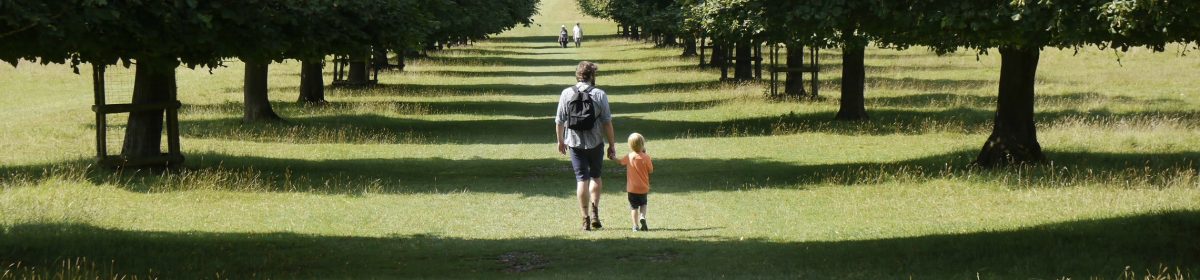
Well it’s probably both, but for now I’ll go with the “Caucasian Wingnut” label on the tree. The other photos – in no particular order – are of my lightweight plant recording kit; the view from Dyrham Park in Gloucestershire which I’ve been going to since I was old enough to ride a pushbike and had to climb over a wall to trespass and where I’ve ridden horses, foraged St George’s mushrooms and recorded plants and fungi ever since. It’s also possible, if you walk to the edge of the escarpment, to see nearly all the places I’ve lived in since I was born. There are a pair of “then and now” photos of the cottage we lived in when we were at art school; one picture of our latest allotment; some stored dried and bottled food from it; some pots of tayberry jam and another of Priddy Pool on the Mendip hills and finally a Ragged Robin plant. They’re all extracted from the 20,000 photos I’ve spent 18 months processing down to 1000 botanical records and 500 species – which I’ll finish this week before I start on the fungi.
For the benefit of WordPress and Facebook followers who may be wondering why I’m writing this, I’m trying out a new link to Bluesky since the Facebook algorithm has blocked my posts because their computer has decided that “The Potwell Inn is a business” – no it’s not it’s the title of a comic novel by HG Wells. If the link works properly it should give present and future readers access to the whole nearly 1 million words and associated photos from the past decade. Press that follow button. You know you want to do it!!
Bath is a city divided by the river. Walking west to east along the towpath between Windsor Bridge and Churchill Bridge you follow the northern half of the city which bears the postcode BA1. BA1 is posher than BA2 because it’s got most of the expensive and Georgian parts. Then, at Churchill Bridge – (I’m sensing a bit of a pattern here because you will already have passed beneath Victoria Bridge) – it all takes a bit of a dive on the northern side as you pass the bus station, the railway station and the Southgate shopping Mall and then Royal Mail sorting office before you approach the end of Pulteney bridge where (if you dare) you can pop into the public loos over Waitrose and change back into your Jane Austen inspired Emma costume or pretend you’re Knightly according to taste and preference.
In many cities they demolish the old and build the new on top but in Bath, given that the tourist money has come from the old, for several centuries, they built the heavy industry and the ugly/smelly bits across the river out of sight. The Destructor bridge linked the upper Bristol Road to a giant incinerator which was next door to the gasworks and just along from Stothert and Pitts where they specialized in heavy engineering; cranes; bridges and transport across the British Empire. As industry died, plans were hatched by friends of the developers to “improve” the city by demolishing older buildings in favour of concrete tower blocks. You can read about this in the excellent and angry book “The Sack of Bath” by Adam Fergusson. We bumped into his daughter once in a pub in Hay on Wye and immediately recognised one another as kindred spirits.
Sorghum? where the hell did that come from?
It just so happens that we live near the towpath – just far enough away to avoid the smell of sewage as long as you hurry past a couple of the outflows in the summer. The towpath is my plant hunting ground; the place which never fails to reward me with something new; often a squatter or a vagabond. I reckon I could easily account for 50 species in my records, probably more. On Friday I went for a walk along the path to clear my head. On the opposite bank they’re clearing the old gasworks site in order to build hundreds of new flats – the river view would increase the value of an old air-raid shelter into six figures. The noise was horrendous, with drilling, piling and lorries everywhere. The spirit of the old destructor bridge lives on with a twenty first century sound-track. On my side of the river I passed the recycling centre which is joined by the relatively new version of the destructor bridge which clung to its name but lived up to its reputation when they discovered it was a bit too long or maybe too short when they came to lift it into place and retreated bloody but unbowed for months as the designers licked their pencils and tried to find someone to blame. Fortunately it wasn’t called the Prince Andrew bridge because that would have taken nominative determinism to the level of farce.
But I was there clearing my head because the previous week we had attended the funeral of a young friend, just 40 years old from bowel cancer and I needed to find that kind of safety in numbers that lets me escape into a spreadsheet for a couple of hours. Walking past the destructor bridge and the recycling centre seemed to be hauntingly significant as I recorded and photographed the ordinary, everyday plants that most of us ignore as if they were strangers in the street. Ivy leaved toadflax, cocksfoot grass, alkanet, broad leaved dock, ribwort plantain, blackberry, ivy, herb robert, false oat grass, buddleia, marsh figwort, common ragwort; red valerian, groundsel, bilbao fleabane, gallant soldier, pellitory of the wall, mugwort, tansy, several kinds of dog rose and annual mercury. I fear I’m writing a book of remembrance for the weeds I pass in the street as the climate catastrophe intensifies.
We tend carelessly to describe grief as a kind of temporary and solvable disturbance of the mind. Time, we say, is the great healer. But it’s not, I want to scream. Bereavement. and the grief that explodes in us when it happens, more closely resembles a stroke. It destroys memory, reshapes the world in unfamiliar ways so we can’t recognise the places we once knew. The loss of a limb just as the loss of someone we love, can’t be mitigated by positive thinking and we don’t get over it – ever.
And I feel as if I’m suspended between the grim spirituality of destruction and the optimistic recycling of fading memories. The river becomes the Styx in this uninvited metaphor. The noise, the roar and pollution of the bulldozers and lorries on one bank and on the other the recycling centre where we take the things we no longer want – to be reprocessed into something else. On the one bank letting go completely and on the other, clinging to the hope that something may be retrieved while we rather desperately make records and take photographs, out of which – one day – it might be possible to build a spirituality of hope in a world where God – like Elvis seems to have left the building.
It’s not that I wasn’t warned – WordPress has been telling me for ages that something to do with Google apps was about to stop working but, being both lazy and unable to understand most of their technical information I ignored it and put it aside with letters from the bank and HMRC.
I ask this as a kind of rhetorical question: what could cause you most distress? …. a diagnosis of some rare but curable disease or losing your phone? Having been on three fast-track referrals for suspected cancers (none right) in as many months I can tell you that my world ended momentarily when I clicked on WordPress yesterday only to be told that “it” (no amplification) was no longer supported. It took a few minutes of intense meditation and heart-rate control to determine that the bereavement was far more limited than the extinction of ten years of work. The only thing that had happened was that a small shortcut app to the blog has been discontinued following a bit of a theological row between several behemoth sized companies about the number of blogger brains you can arrange on the head of a pin.
The remedy for this temporary extinction event was simple. I just had to search for the Potwell Inn and up popped my site with everything apparently working. However, my insatiable curiosity soon got the better of me and I ended up searching for my blog on Google Gemini, the AI app where I received a full report on the Potwell Inn which described all of my topics of interest in detail and (I thought) rather approvingly. There was a tendency to centre things on my more recent postings which gave the location of the Potwell Inn as Doynton – a small village near here where I once (maybe 50 years ago) did a talk for the young farmers but where we occasionally visit the local pub which I’m happy to give a shout-out to. The Cross House does some good food in a lovely atmosphere but it’s not the Potwell Inn, largely because the Potwell Inn – in the form that I write about – doesn’t exist anywhere except in my imagination and in my memories of HG Wells’ comic novel A History of Mr Polly from school days where it was a set book. The mere mention of the author and title should alert you to the archaeological nature of my affection for a short novel that, as a very shy and bewildered; possibly neuro-diverse teenager, built up as a safe space in my mind.
So the bad news for those of my readers who have wasted time searching for the Potwell Inn (one actually turned up on the allotment one day, and another wrote to me about one of the several imposters that actually exist in bricks and mortar) I’m sorry. The Potwell Inn is just a mental bolt-hole for an undiagnosed neuro-diverse old bloke, tumbling at speed towards his 80th year. On the other hand everything else, everything I’ve ever written about is real. Madame is my real partner of 60 years (we met when she was 15) we really have an allotment and all the plants, fungi, places and adventures are true, the campervan and it’s multiple vicissitudes is real too. So the really amusing fact is that Gemini got everything completely right about the Potwell Inn apart from one very important detail: it doesn’t exist.
Now I always thought that the power to confer existence on a being – and even the word being seems to confer some kind of existential reality – but stepping away from that whirlpool – the power to confer existence is reserved to God, or the Tao or some kind of immortal, invisible, ineffable superpower. If you look for Google Gemini in the scriptures you won’t find it lurking anywhere in the prehistory before Adam and Eve had to get their kit on in a hurry and Cain murdered Abel. I mean, seriously, Google doesn’t figure before sex and death (the subject of the only joke I can remember my lovely psychoanalytic psychotherapist Robin cracking. I’d told him about a dream I’d had of walking down Hotwells road being followed by two elephants. He replied with “I’m a Freudian, they must be sex and death!”)
Anyway, I think I’ve uncovered the Achilles’ heel of the whole AI bubble. It confers existence where it has no right. We avoid UPF’s – Ultra Processed Foods- but they only kill us one at a time. Ultra Processed Facts can kill whole families, cities, cultures; in fact there seems no limit to its potential for harm. Going back to the bible just for a moment (I promise) you might wonder why idolatry gets such a bad press; even making it to Moses’ ten most wicked things in the Guardian. The answer is that what idolatry does is worship the partial instead of the whole incomprehensible but beautiful thing. It takes the easy way around the mountain.
So to get back to the Potwell Inn, you’ll see one category that I never use – it’s the one entitled Uncle Jim. He is the violent drunkard brother of the licensee of the fictional Potwell Inn, known only as the fat lady. Gemini, by the way, can’t bring itself to use the word fat and substitutes plump thereby daring to change the text! Polly accidentally removes Uncle Jim from, well- life I suppose – in a farcically comical fight which accidentally gives him a new identity. I don’t use the Uncle Jim tag because in my version of the Potwell Inn he’s gone forever, vanquished and washed up on a beach wearing the wrong jacket. All other contenders for the Uncle Jim slot are automatically given life-bans from my pub. The little river runs gently by, unpolluted by agricultural runoff and raw sewage. Beavers build their dams upstream and wildlife flourishes on the banks. I just need one place in my head where the darkness has no dominion.
And notwithstanding appearances I’m not saying them here either. What I am doing is attempting to photograph a very small fungus while holding a six inch ruler behind it. In plants and fungus spotting size really does matter. Here’s what I was trying to get a picture of – it’s a tiny clump of candlesnuff fungus on some dead wood up on the Mendip hills.
Two things coincided which I wanted to write something about; the first was a random comment by a young man a couple of weeks ago which rang some serious warning bells in my mind. The second reason was our first fungus hunting visit to Priddy this late autumn. As to the first challenge I should say at the start that although I’ve never consumed any kind of hallucinogenic substance I am very interested in such properties and I’m filled with wonder at the way plants and fungi can synthesize unimaginably complex molecules which have the effect of reversibly changing our brains. Anyway I was having a conversation about Psilocybin with this young man and he mentioned that Velvet Bottom was a good place to gather them. Now I know Velvet Bottom well; it’s one of my favourite places on Mendip – however I wouldn’t eat anything foraged from there because the whole site is heavily polluted with lead, zinc and even cadmium to the extent that in some patches of ground nothing will grow except a few heavy metal tolerant plant specialists. Grazing by sheep is only allowed for very short periods to maintain the habitat, and downstream in Shipham gardening has, at times, become severely restricted due to fears of cadmium poisoning. I’m sure that readers of the Potwell Inn would never dream of boiling up magic mushrooms or, for that matter Fly agarics to make tea but just in case any readers were planning post retirement breakouts, I’d advise that there are safer places than Velvet Bottom to begin a life of crime.
But I also wanted to write about the metaphorically fatal attractions of fungi which can get very obsessive. I’m just grateful it’s a relatively short season. Fungi are beautiful, strange, mysterious and fleeting visitors which spend most of their time invisible and underground. What we see are the fruiting bodies; the spore carrying parts which can carry their offspring many miles. To be fair, fungi can be very hard to identify and although there are now one or two phone apps that will have a go, they’re still nowhere near safe enough to pronounce any fungus edible. I was testing one new app while we were out and although it easily managed some simple tasks, it failed completely on quite a number. I got many warnings that such-and-so was potentially dangerous. I don’t forage theses days in any case but I have poisoned our cat – which luckily recovered, and come within a whisker of poisoning Madame and me. Even easily recognised and safe fungi – St George’s mushroom for instance has built up intolerance over any years with some real experts, and suddenly made them ill.
But there’s more than enough aesthetic and scientific interest in fungi to compensate for leaving them in the ground. I’ll just put a few pictures up below to show the huge variety of form, texture and colour that they can display – not to mention odour which can range across the whole spectrum from apricot to dead sheep. I love them, and look forward to meeting them again every autumn and then there are always lichens, mosses and liverworts to fill the dark days of winter with fascination. My suggestion would be to photograph anything you encounter that interests you and make a note of the location – you can usually do this on your phone. Then perhaps one day you’ll feel inclined to identify and organise them in a spreadsheet and make a contribution to proper science in this time of global species extinction and climate change. All these below were photographed in a short walk last Thursday.
On Saturday I mended the allotment shed window which had been smashed months ago by vandals. I thing by comparison with the fungi my handiwork lacks a certain architectural je ne sais quois !
Well the last ten days were a bit of a challenge but at last the polyps (six more of them, including a real biggie) have been removed from my colon and my system is almost recovered from fasting followed by 24 hours drinking drain cleaner and a morning under sedation at the local hospital watching the job being done on a big screen. I found out later that they’d given me a combination of pethidine and midazolam which were the reason I was able to not wriggle/scream/ or change my mind. As is the nature of these drugs I can barely remember what went on and as for the bus ride home it’s blank. I can remember the exact moment they wore off, though, as if a curtain was lifted and when I read the consultant’s notes I had the usual post-operative WTF? moment. On the plus side the (award winning) team were lovely and kindness itself.
So …. the campervan was fixed on tuesday after being recovered for the second time with a non functioning clutch. On Sunday we checked out Morrison’s garage at the Mall and they still sell LPG, so we’ll be ready for the next adventure as soon as they re-open the road through Pilning, and today we had our flu and covid top-ups and pressed a big bag of apples for juice during the afternoon.
Having decided to carry on with the allotment we’ve been working hard every day getting beds cleared and prepped ready for planting up. There are over a hundred broad bean plants of different varieties growing steadily in the greenhouse in their root trainers and very gradually we’re getting back on track. It’s been a magnificent year for the apples, and all of the trees planted in 2021 have fruited this year, which has created a new challenge for us because in spite of my careful records, it looks as if the nursery had mislabeled some of the trees, and in one row of five the first and last had been wrongly labeled – so Winter Gem and Grenadier had been transposed. This was the first time we’d been able to see the problem. The red- skinned apple on the left was one we inherited and we’ve never known for sure what it is but have gone (provisionally) for Ribstone Pippin and the green one on the right is Winter Gem which, ‘though it doesn’t look all that nice is actually delicious and very fragrant. The red spots on the skin are caused by a reaction between oxygen and the skin as the apple ripens off the tree.
Apple identification is a difficult skill to learn because it includes consideration of the horizontal and vertical section of the fruit; its shape, whether conical or round; exact description of skin colour; streaking; degree of greasiness; flowering and ripening times, the colour of the exposed fruit and the degree of russeting and you have to do a lot of it before you can be proficient. We spend a lot of time on the National Fruit Collection website – it’s extremely thorough and well worth bookmarking.
Anyway, while I was feeling sorry for myself a very divisive philosophical issue came up on the allotments when a member wrote a rather cross Facebook message about “rubbish” being “dumped” along the fence line at the bottom of the site. Madame absolutely forbade me to respond, but I feel safe here to write that there has been a growing problem, and distance, between those allotmenteers who believe you are only closer to God in a garden as long as you’ve slaughtered every blade and leaf of plants which you didn’t grow for food or aesthetic pleasure. Wild animals too, but especially badgers rats and foxes, oh and squirrels and mice – oh alright then – cats too are not permitted either. As for insects and above all caterpillars, need I say more?! At the greener end are those who, like us, keep a trail cam to enjoy the nocturnal visitors (which also include deer); we control the rats by never chucking the remains of Friday night’s takeaway on the compost heap because we know that rats originally came from India and love a curry. We have a scuzzy looking pond in which rat-tailed maggots can grow into hoverflies, and we allow lots of weeds to stay – especially nettles – because some rarish butterflies love them, and some lovely seed-setting grasses for the birds to chomp on. We obviously don’t want the Whites to eat our brassicas and so we net them carefully. Sweetcorn needs fortifications to keep the badgers out and so it goes on. Our allotment is, by the standards of the evangelicals and fundamentalists of tidyness, messy; but here’s the point. Nature just loves messy, and over ten years we’ve been visited by a dozen relatively rare plants which stay for a year or two and then move on. There was Peruvian apple, Stone-parsley, Bullwort, A rarish form of Fumitory, and others too. All-comers are welcome to come and raise a family over a couple of seasons and if some people think they’re just weeds it’s their loss.
Our relationship with nature is a conversation in which (for instance – like the apple trees) no-one speaks for four years and then something important happens. We accept that the plot we rent is not ours, but belongs to two of us (two legged creatures) and all of the other creatures from deer down in size but not importance to amoeba and thence to pollens and yeasts. We cannot compel but, as the astrologers say of the stars, we can only dispose, and if you don’t talk to the plants how will you know what they need?
So if we empty our buckets of trimmings, prunings and nuisance weeds like couch and bindweed along the fence we’re not dumping them (with all the negative connotations of that word, we’re putting them there because as they rot down to return their nutrients to the earth they provide a place of safety for dozens of species like woodlice, spiders, ladybirds, all kinds of pupae, field mice, hedgehogs and slow worms whose contributions to pollination, clearing up infestations of blackfly and suchlike, eating rotting leaves and aerating the soil – we rely on. We are part of a vast interdependent food chain. We do not dump plastic waste, old pushchairs and mattresses crisp packets or discarded drinks bottles and cans.
But we do process and store all sorts of delicious food that would otherwise be wasted. These tomatoes were picked green from dying vines after the drought, and ripened in the dark so they could be reduced to a roasted passata which keeps for at least a couple of years and is as good as pixie dust for bringing a pasta dish to life.
I wrote this post 13 months ago and then, for some reason, never published it and it’s been sitting in the drafts folder ever since. I used to have a producer on the radio who would say -“I know what you’re trying to say, and I know that you do too – but you haven’t actually said it!” – and re-reading it yesterday I think it fell into that category; so I’ve tweaked it a bit and added a couple of paragraphs to say what I was actually trying to say and I’ll leave it to you to decide whether it worked.
Rather an arresting sight on the pavement outside the flat today. I wondered for a moment whether caterpillars have hen parties but obviously this one wasn’t wearing a tiara so I didn’t bother to look and see if there were any tipsy bridesmaids about. I don’t think the Sycamore moth is particularly rare but I would have noticed had it crossed my path. Anyway, it must have fallen from the tree outside and was making its way across the road to the relative safety of the Green – relative safety because it would surely make a tasty snack for a gull – or a magpie, what with the ginger wig and all.
I frequently have trouble trying to figure out what my real vocation is; I’ve done so many things – but there’s always been writing somewhere in it. I fell in love with the natural world as a child and now I’m a passable amateur field botanist but when I sit down to think about it, what really gets my juices flowing is the beauty of plants; their histories, traditional names and uses for food and medicine and their journeys around the railway yards of Europe. DNA and microscopic identification skills are no more exciting to me than completing a hard crossword; fun but not significant. I get as much thrill from the Biting Stonecrop outside the door as I would from finding a ghost orchid (unless it was in the pavement outside!), and I don’t have a tidy mind so I like to root around on my hands and knees to find plants rather than see them displayed like zoo specimens in wire cages and bare earth. If it came to a choice between writer and botanist it would have to be a writer – a no brainer. Latin binomials have their uses of course, and when it comes to the correct naming of plants they’re essential, but where’s the romance in it?
The abundant Mexican Fleabane here could be and often is seen as a weed. I just don’t get it. Last week the official council weed scraper laboriously removed nearly all the plants along the bottom of our retaining wall but then stopped when he came to a glorious waterfall of the daisy lookalikes at the corner and put his scraper away. The bottom of the wall is now alive with the resurgent leaves of Nipplewort, Dandelions and Hemp agrimony which simply shrug off the insult. The whole object of a plant, I suppose, is to be visible and visited by pollinators. You’d think that for caterpillars the opposite would be the case; that they’d make themselves as invisible as possible until they’d pupated and emerged in their final forms. Not so, though. The ginger Sycamore Moth caterpillar, like so many of its cousins, doesn’t even try to be cryptic in its appearance. Does it actually taste filthy or does it just look as if it will. There’s an extravagance in nature which breaks all the bounds of decency and order – especially if you happened to be a Victorian philosopher like John Ruskin who once wrote of Selfheal:
It is not the normal characteristic of a flower petal to have a cluster of bristles growing out of the middle of it, or to be jagged at the edge into the likeness of a fanged fish’s jaw, nor to be swollen or pouted into into the likeness of a diseased gland in an animal’s throat.
John Ruskin, Proserpina – quoted by Richard Mabey in his book “Weeds”
Richard Mabey’s book, cited above, is an erudite source of wisdom about weeds that deserves a place on any bookshelf. In his description of Self Heal he mentions the visual effect of swathes of the plant as akin to “brazed copper”. Ruskin seems to have had a bit of a thing about the colour of copper. One account of the reason for his inability to consummate his marriage to the red headed Effie Gray was given by her years after their marriage was annulled – “the reason he did not make me his Wife is that he was disgusted with my person the first evening.”
I can only assume that Ruskin found much to disapprove of in the disorderly and occasionally ginger world of nature. Sometimes anarchy is just a way of describing something whose connectedness and complexity is utterly beyond us. Science is the scalpel to the butterfly net of the poet’s work. Reductive or expansive – that’s the challenge. Are the tools we use to engage with nature intuitive and imaginative, or laser focused, seeing nothing beyond the quarry?
Well, I’m for the butterfly net approach every time. Of course, in this critical age of triple breakdown; environmental, climate and economic, we need science as never before, but just as I’ve always taught, myths are the way we tell the truth about mysteries – and the intuitive, expansive and imaginative tools of the poet are every bit as important as the scanning electron microscope and the DNA printout. To choose just one approach to nature wilfully limits our understanding. Slippery and indefinable as it may be, to exclude beauty from our calculus is to take us into Gradgrind’s miserable world. Ruskin’s failure to appreciate Effie Gray’s sensuous beauty was a failure of his humanity. He pursued her, courted her and married her so he could push a pin through her heart as if she were a trophy butterfly.
But enough! I bet you didn’t know that John Masefield liked to keep a box of rotting apples under his desk to fire up his imagination. Stanley Spencer kept something entirely more unpleasant near him but you’ll have to google for that. We have a neighbour on the allotments who has a tree laden with quinces which have the most lovely perfume, enough to fill the whole flat, and every year we put a bowl of them on the table. I’ve made quince jelly in the past and believe me they’re as tough as old boots and need a lot of cooking. When you cut through the fruits the black pips have a positively satanic look and they also contain hydrocyanic acid.
Of all the virtues of nature we mustn’t ever forget its sensual pleasures. For us, it’s more than just the necessity of eating, or growing or intellectual understanding because every one of the senses is engaged in a merry dance. Autumn is not merely mists and mellow fruitfulness, it’s celebration, festival, recollection and thanksgiving, singing, dancing and feasting. Oh and it’s also available in copper coloured.
From this autumnal end of the telescope, the past growing season – which we’d written off as disastrous – needs a more nuanced description. Yes the bindweed had a marvellous time, and the couch grass invaded from the abandoned allotment below us; the tomatoes in the polytunnel suffered in the unbearable heat and so it goes on. We were very discouraged and even considered packing it in; but Madame held firm and, in the light of our late harvests, things don’t look so bad after all. Once we’d decided to carry on, the obvious starting point was to clear the beds and prepare them for next spring. We made the decision to leave the borlotti and the runner beans on their teepees for a week or so to see if the scattered blossoms would bear any late fruit, and that was a wise choice because both crops came to life after the rain and gave us a smaller than usual but welcome crop. The late tomatoes set a big crop of unripened green fruits which we picked as we cleared the tunnel and stored in the warmth but covered in some black plastic. It seems they don’t need light as much as they need warmth and we’ve been able to replenish most of our stores of passata. When I came to clear the potato beds they too had bided their time and although the skins were a bit tough, (a common problem across the allotment this year), we’ll have plenty for the winter. Our apples, pears and plums gave us their biggest ever pickings – they were only planted in 2021 – and the strawberries which failed miserably have come back to life and are producing many strong runners which we’ll use to make a new bed over the winter. Today, fired up with energy, I set to repairing some rotting edgings and tending to a commercial blackberry that’s repaid a great deal of TLC with some new growth. The rhubarb too has thrived so – all in all – and supplemented by our stores of frozen, pickled and bottled food we shall look forward to the winter with confidence.
But every silver lining has its cloud and two days ago we had another break-in on the site and this time they came equipped with bolt-croppers and cut through the tension wires on the fence, making it easier to pass things into the lane. However they weren’t very bright, and neither were they very lucky it seems. None of us keeps anything except mostly old hand tools in our sheds and in our case they sheared off the padlock and then went away empty handed when they discovered a second mortice lock. They may, of course have noticed the trail-cam pointing in their direction and had a moment of enlightenment before they scarpered. Over the years we’ve lost hundreds of pounds worth of equipment, had the toughened glass in the greenhouse smashed and the polytunnel slashed. Our other problem is what we call ‘shopping’. Unknown people enter the site and steal fruit on an industrial scale. Trees are stripped bare. If we see people who shouldn’t be there we ask them to leave, but I caught a well dressed local restaurateur one sunday morning with several bags stuffed with stolen figs from our neighbour’s tree. Contrary to common sense – which is all too common but not in a nice way, and not the least sensible – there’s not a shred of evidence to support the idea that lawlessness is confined to hoodie wearers, rough sleepers and foreigners. How much carbon do they emit compared with the besuited occupants of huge child killing SUV’s which ignore the 20mph speed limit outside the allotments because rules, like taxes, are for the little people. Lawlessness is a societal and cultural problem, and so is homelessness, drug and alcohol abuse and it spreads its tentacles throughout the whole of society. The malignant spread of selfishness and greed has been given free reign for fifty years and it could take fifty years to repair the damage. Criminalising environmental protest, locking up pensioners for demonstrating against genocide and extracting millions of litres of water from the Thames and replacing it by pumping (poorly) treated sewage effluent back into the river is most certainly not the answer. Jobs, education, youth clubs, training for decent jobs, proper healthcare and housing for all, the fear and financial stress of the elderly taken seriously and adequate mental health provision for the casualties of blighted childhoods all these are the vital signs of effective governance, not more Big Brother nonsense from out of touch politicians. Do I sound cross ???
Q: Which of us would dream of letting our families starve because we wanted keep all our money for ourselves?
A: The kind of person who has utterly lost any moral sense of direction.
Mending the nets
Anyway, we bought a new padlock for the shed and spent a few hours in the sunshine working on the warm earth. It was lovely and as we worked I pondered the reason why so many of our crops survived the drought and heat waves. Last week Joe (our supplier) carried half a ton of manure down to our plot at the bottom. That’s been the minimum amount every year for ten years and my guess – what with all the other compost we’ve made and scrounged – is that approaching ten tons of organic matter has been added and worked into the beds which, when we took the plot on, were nothing but couch, bindweed, old carpets (don’t even think about it!!) clay and starved looking earth. Digging the potatoes before it rained, the earth was black and crumbly, smelt like earth should and was still a bit moist six inches down. Soil regeneration by increasing organic matter is slow, expensive and hard, but it works – and with climate change increasing its grip year on year (sorry, but think SUV’s again) it’s the only show in town if we hope to grow healthy crops to feed ourselves. I’ll finish with a photo of one of the cleared bed awaiting its food for the year, a layer of cardboard from our recycling area and a cover of weed-control mat. “Tomorrow shall be our dancing day”
Délicieux – “delicious” in English apart from its normal usage is also the title of a 2021 French/Belgian comedy-drama film directed by Éric Besnard, which charts the rise of the first restaurants in France just before the French revolution. We watched it a couple of nights ago and allowing for the odd historical inaccuracy, like moving the action from Paris to the Auvergne region, charts the fall of the aristocratic elite of the day and the subsequent redeployment of hundreds of highly trained chefs into parts of France that had no tradition of eating other than at home in the family setting. It’s a great film, up there with my other foodie favourites because sometimes when we’re sick to death of the murderous and cynical events on the news we need a couple of hours of relief. And it’s always good in any case to see the ruling classes humiliated and shamed even if it’s only in a film. Well worth watching and under a fiver.
Anyway, it made me sit up and remember how and why I started cooking in the first place. Mum was a decent cook with a small repertoire of favourites. By the time Madame and I got together I’d never tasted garlic, green peppers or any of what the supermarkets still describe as exotic vegetables. So when we moved into our first flat; I was 21 and Madame was 18, neither of us had considered how we were going to feed ourselves. I’d hovered in the kitchen and watched my mum cook; she showed me how to judge the thickness of Yorkshire pudding batter by the sound it makes, and I could make a passable bacon sandwich. My dad literally could not make a cup of instant coffee! Madame still can’t recall her mother ever cooking a meal and so confronted with starvation we agreed to take it in turns to cook and that’s never changed.
At the same time we were exposed for the first time to a different cuisine as soon as we went to college and started to meet new people from different social backgrounds who invited us to their homes and whose parents (who probably thought of us as amusing waifs and strays) invited us to eat with them. I fell in love with the whole thing but we could never have afforded to eat out, so the only way we could eat like our better off friends was to learn to cook. I bought books, slowly accumulated a few pans and after walking miles looking for ingredients, practiced. It never occurred to me to train as a chef; my whole ambition was to be a good cook. There was a shop around the corner that sold cookware and I would spend hours looking through the window at the Le Creuset pots. I bought my first ever carbon steel knife there and resolved never to make-do with inferior equipment – which meant that my skills and equipment were glacially slow to improve. It was decades before we could afford to travel and see continental food at first hand.
Our problem was that so many ingredients were simply unobtainable. We learned the location of bay trees, rosemary bushes and other herbs. Sage and thyme were only available in bunches as Christmas approached so we foraged for what we needed in the leafy streets and gardens and eventually got ourselves our first allotment. It’s a well rehearsed truth that olive oil could only be obtained in tiny bottles at the chemist. Luckily we had a deli nearby, run by a Hungarian refugee who imported foods we’d never seen or even dreamed of. We learned to grow some food and we were lucky enough to find neighbours who could show us how to dress the chickens, pheasants and rabbits that found their way to our door. The local butcher showed me how to humanely kill and pluck a chicken. When I was a community arts worker I learned to be careful about expressing any food preferences, because some of the young men I worked with would go poaching to order.
Today we were sitting at the table shelling the borlotti beans to store for the winter. At lunchtime we had a tasting of several varieties of apple that we grow and ate chunky bread. After a dreadfully tough summer we were on the point of giving up the allotment but Madame kept the faith and we’re back on track once again preparing the ground for next season. Against all expectations the fruit crop; sweet apples, pears, plums, damsons and cookers has been the best ever. The borlotti crop was the largest yet and even the potatoes held fast in the ground right through the drought. Chard, spinach and most of the herbs survived too, with minimal watering. The tomatoes and peppers suffered in the polytunnel but now at last the rain has come and the water butts are slowly filling. Storage is easy but harvesting water is a bit more tricky. The greenhouse roof faces east and west, taking most of the weather pretty well. The water butts there fill quickest, but the shed roof slopes to the north and its three barrels are much slower to fill. So the trick is to pump water from the full barrels to the empty ones so that every drop is captured. I can see that the dramatic climate change we’re experiencing is not going to reverse any time soon and so droughts, extreme weather and storms need to be factored into our planning.
So now we ache in places we didn’t know existed, but we grow closer each time we go to the allotment. The shared physical work renders the gym subscription redundant and the mental challenge of planning it all is rewarded at this time of year in the kitchen and at the table, and there really is some kind of spiritual dimension to it. The news is terribly unsettling, and the uncaring viciousness of so many people provokes paranoia and despair; but somehow the simple act of plunging your hands into the soil, or sowing and harvesting your own food have the strange capacity to heal those hurts. Our friendships among the other allotmenteers brings us together in a shared interest with a huge range of people and skills. Doctors; nurses; teachers and professors muck in with many others with quite different life experiences. The allotments are, in the truest sense, a university.
Dandelion – obviously! but more complicated than you might think.
Everybody knows what a dandelion looks like, I imagine, but there’s no shame in not knowing that there are around 250 species of dandelion in the UK and – if you’ve got time and a good psychotherapist you could learn to tell them all apart. The beloved blackberry is a similar case but even more complicated, with around 330 species. They’ve evolved an interesting method of reproduction -known by the academics as apomixis which roughly translates as having sex with yourself; don’t knock it if you haven’t tried it – or as Woody Allen said – if you’re going to have sex you might as well have it with someone you love.
Anyway, and moving on rapidly, the dandelion is a handy reference point for what you might call the “walk on by” plant which draws together two threads of the WOB phenomenon. The dandelion in the photo, for instance, has been there along with its definitely not cousins for all of the ten years we’ve lived here. Until today I’ve never photographed or recorded it because it’s too common and therefore not worth the bother. However fate has confined us to short walks near home for most of the summer and the local rogues and vagabonds of the pavements and towpath have been the only available source of botanical interest; which disposes me more kindly to the dandelion. I’m sorry for my casual disregard in the past but now I just have to walk on by not because they’re common and vulgar but because I haven’t got the time or the confidence to sort them out; although I did shell out for the standard handbook which has been sitting unopened on the shelf like a bishop’s bible for months.
After months of tests and investigations we’re near the end of the tunnel (you’ll see why that’s a highly inappropriate joke in just a moment), and all I’m waiting for is to have a 35mm polyp removed from my colon so I can stop being anaemic and feeling knackered. I’m relying on the expertise of the multitude of consultants, nurses, interns and doctors who’ve peered up my rear end, when they tell me that this thing – about half as big again and the same shape as a champagne cork- isn’t malignant. Like birdwatchers they know the jizz of a nasty one when they see it. I have great confidence in them.
But spending every moment checking the phone for the next appointment doesn’t just cost you time, it drains the creative springs and makes life a bit grey and dull. We’ve cancelled several campervan trips so we could both be available for appointments at the drop of a hat and so necessarily I’ve been focusing on the local weeds. It’s bad enough trying to take macro photos out in the wilds; passers-by tend to stop and ask if you’re OK. Do the same thing on a pavement or on the towpath and they’re likely to call the police. But don’t for a moment suppose that all you’ll ever find outside your city centre front door is dog poo and beer cans. I’ve been amazed at how many relative rarities make even a temporary home for themselves in the mean streets of Bath, and recording the ordinaries balances the books against the statistical over-representation of exotica in the field guides. If we’re going to keep tabs on the unfolding runaway climate disaster we’ll need to record the sparrows, silverfish and brambles of the earth.
Here’s another one I’ve never recorded except in some remote and rather glamorous wild place. There was member of the same family, the Sea-spleenwort for which I persuaded Madame to walk miles in freezing wind and sheeting rain in January to find it on the sea-cliffs where it belonged, only to have it shown to me on the basement wall of the Guildhall in Bath. Sadly it seems to have gone now and I thought its near relative, the wall-rue, which has always grown unrecorded by me on the wall below our flat might have died from drought this summer. But this morning I dodged the rain to photograph the dandelion and came back with Hemp-agrimony; wall-rue and field-speedwell – all within ten yards of the front door. I shall have to make a list of plants that grow with 100 yards of the flat and I’ll guarantee it will exceed fifty species.
There’s a bit of a knack to naming plants from their leaves alone and today AI threw me completely off track with the speedwell which it identified as ground-ivy. A most enjoyable trip to the books settled the matter in favour of the speedwell but the two plants are alarmingly similar until you see the flowers. The purple flowers scattered near the speedwell had me scratching my head until I remembered there’s an Argentinian Vervain in full flower growing in a pot next to it. You see, even boring plants turn out to be better than the Times crossword for getting your brain in gear.
Back in August 2024 I set myself the target of organising my utterly random collection of photographs, and identifying the names and locations of all of them with a supporting photo. It took me a whole year to get them on to a spreadsheet and now there are 898 records sitting there waiting to land on several unfortunate referee’s desks. My species total is up to 472, just 28 short of the 500 target. I also set myself the target of completing 1000,000 words on this blog and so far I’m up to 951,500 which leaves me around 49 more posts to write. As my old friend Joan Williams used to say – God willing and a fair wind I’ll get there. But I’m not a trainspotter by temperament and so if it takes until next february it won’t keep me awake at night.
Aren’t statistics a slippery thing to deal with? I read yesterday that this polyp that I’m entertaining at the moment increases my risk of colon cancer by something like 75%. Reading that statement carefully suggests that my real risk depends upon what percentage of any polyps of any size are malignant. The answer to that is 5-7%. So my real risk is more like 75% 0f 10% ie 7.5%. It’s possibly less significant than crossing the A4 on a zebra crossing with a Range Rover approaching.
After all the drama of repeated heatwaves, the weather has finally returned to relative normality and we’ve been rejoicing in the rain. We’ve had a few big thunderstorms but surprisingly in spite of very heavy rain, only the top few inches of the allotment were wetted adequately. We’d prepared the ground by emptying the waterbutts at the end of the last hot spell, hoping they’d refill – but then, when it was too late, I discovered that the gutter on the shed had come adrift of its mountings, leaving the water to travel uphill. Looking more closely I could see that an inexpensive redesign would capture rain much more successfully. The two butts on the greenhouse were working better but again the gutters are pitifully small and don’t cope with precisely the kind of downpours we most need to store.
This summer we came very close to giving up the allotment together. The hard work is OK but this year with Madame’s knee replacement and me visiting just about every department in the local hospital we ran into a wall. Happily, with just a couple of minor procedures still to do, we’ll be back firing on all cylinders by next spring, which just leaves the results of several months of neglect to sort out. The battle is 90% mental but for the first time in months it feels like we’re winning. It hasn’t all been bad on the allotment. The soft fruit didn’t do well at all but the fruit trees – apples, pears, damsons and plums have all yielded record returns. Even the poor old potatoes managed to give us a half-decent crop after the dry conditions, and the newly planted raspberry canes are thriving. Last night we ate our own potatoes, runner (string) beans and chard with stewed plums for pudding. Allotments are very friendly places, and it’s rare not to exchange surpluses with our neighbours. It seems to me that the allotment looks after our bodily and spiritual needs while certainly my intellectual (mind) needs are well catered for by plant hunting and studying their habitats and habits.
Anyway we decided to give ourselves a day off on Monday and we took ourselves over to Dyrham Park which we haven’t visited over the summer because it gets so overcrowded. Actually that’s not quite true because we made a couple of early visits to White Field to search for the orchids. At this time of year the pasture is cut for hay and normally we’d turn our attention to fungi, but apart from one fairy ring (Marasmius oriades) there was nothing much to see.
Black Worcester pears on a southwest Facing Versailles espalier
Anyway we wandered down through the terraces and visited the formal gardens which (sorry no photo) have matured brilliantly. We were a bit dubious when they were first laid out but now they look lovely. On the outside wall of the big house there is a fabulous example of espalier pruning which we were lucky to have explained to us by the head gardener a couple of years ago. This Versaille method is based on very short fruiting spurs, but by doing this he explained that you could take the espalier to a larger number of tiers. He’d spent some time actually learning the method in Versailles.
Crataegus orientalis
Below the formal garden we walked around the large pond which was choked with blanket weed and then onwards to the small pond surrounded by mown grass with its own waterfall. It was crystal clear, and we bagged one of the seats and sat quietly watching the other visitors. Then, inexplicably, we both said exactly the same word – “Marienbad”. Couples standing still, casting shadows, nor speaking – a kind of freeze frame – and I thought how I’d first climbed over the wall to the park something like 65 years ago, long before it was turned over to the National Trust. We’ve ridden horses there in the 1970’s and spent many hours cycling back and forth between Bristol and Dyrham to visit friends.
There’s a question that often gets asked.“What would you say if you met yourself at the age of 14; what questions would you ask?, what advice could you give?” and sitting there in the warm sun, I felt that there was no need for any kind of meeting. We were, in the deepest possible sense both there! connected in an almost surreal sense every version of “me” over the years, sharing the same moment. It was very beautiful.
Later, after a glass of apple juice and a shared sandwich, we wandered up the quieter back route to the top alongside Sands Hill, passing at the very bottom a rotten tree trunk which had been left available to house and feed every kind of wood boring insect. The photo shows the human palace lurking behind the insect paradise.
I was going to shrink this one down, but changed my mind
As we climbed steeply upwards I stopped to record a couple of everyday trees and soak up the view of a small stand of very tall pines. Then. right at the top we met a couple of volunteers who said that there was a group of deer just beyond us. The whole herd had to be slaughtered due to TB three years ago, and although we knew they were being replaced we’d looked in vain for them in their paddock. Then suddenly there they were; four larger stags and a young one which we could hardly see. We looked at one another silently, deer and humans, without fear or hostility. I think two magic moments in one walk is more than any of us have the right to expect.