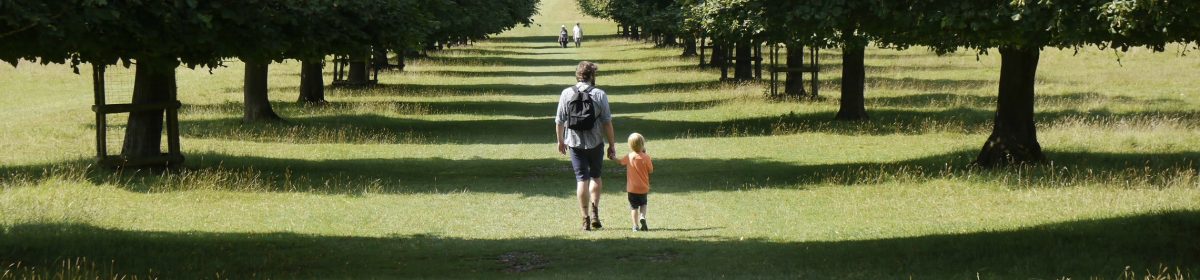
Camino 4 – Monistrol d’Allier

20th May 2010 ctd:

Monster monster day.  Crossed over a big ridge to Monistrol d’Allier where we found an unlikely Englishman called Peter running a restaurant.  Couldn’t stop him chatting. Had a coffee and a triangular toasted sandwich – the machine for which he hopes to sell in Korea (!) –filling was made from last night’s leftovers gratin dauphinoise, bits of dry cured ham and cheese sealed in a kind of crêpe.

Journal

This is becoming quite a chastening exercise because every bit of the journey I read back in the contemporary notes comes to me with extras I didn’t recall at the time – like the fact that Peter the proprietor of the hotel and restaurant brought out a wooden board with a lump of local sausage, olives and a large hunting knife for us to help ourselves as he (mostly he) talked. I got the impression he was quite isolated and rather lonely since his wife and, I think, daughter were away somewhere. I couldn’t resist this photo – “Poseur,” apart from the English loanword meaning, meant something like installer, and I wonder if it referred to houses built for the workers building the SNCR railway track from Paris down to Nice. If you drive rather than walk out of Monistrol d’Allier, you follow the railway line which looks incredibly scenic. The trains were still running infrequently a few years ago and there was a ticket that allowed passengers to get on and off as frequently as they liked. It’s a journey I’d still love to make. According to the Cicerone guide there’s a campsite where we stayed next to the river but I can’t remember anything about it.

Some years later, Madame and I retraced as much of the route as we could in our little Hyundai i10 and we stopped off at Monistrol to spend a night at the same hotel. Peter the owner was still there and at supper he walked through to the kitchen with a big tray of freshly picked bright yellow girolles. They would have cost £50 at the market. Our room was spartan – like student accommodation – but on checking it just now it seems to have gone a bit more upmarket these days, although I don’t think the Korean toasties had taken off. There’s really nothing much to see in Monistrol; Madame vowed never to return, and I didn’t argue.

You get some idea of the terrain we were getting ourselves into from the photos below. The warning below them , which we hadn’t properly embraced, was in the indispensable Cicerone guide “The way of St James”. More on that tomorrow with a bit of luck.

I haven’t been spending all my time on writing up the Camino; we’ve also been incredibly busy on the allotment and tomorrow we’re back off to the Bannau (Brecon Beacons) to spend a couple of days with our friends. Hopefully we’ll have time to put out the moth trap and see some of the spectacular moths you can find there, even at 1000 feet – and the fungus season is cranking up nicely although a large box of girolles is probably not going to happen. Looking at the Camino photos the Aubrac hills, although they’re closer to 4000 feet, aren’t dissimilar.

This was only the second day of our walk but even by then we were beginning to realize the scale of the effort we’d be needing to make. Our rucksacks were back breakingly heavy and none of the training walks had been anywhere near the level of difficulty we were now attempting. Somewhere on one of my dead laptops there’s a spreadsheet with the weight of every single item we were taking – all neatly added up. On the night we actually packed them we weighed them on the bathroom scales and the rucksacks were around 5 kilos heavier – a powerful incentive to send some of the kit back to the UK. Individually the kit was as close to state of the art as we could afford; all of it – from bivvy mats, sleeping bags to quick drying clothes, overtrousers and raincoats, super lightweight – it rains a lot up there in the spring. Looking back, was it really necessary to take a spare pair of shoes? Two cameras rather than one? – the list of errors went on. But there’s a reason for it all that hid under the radar as I was planning, because I’m a bit of a hobbit – I believe I need my familiar objects around me.

I suppose most people would say – off the top of their heads – that the object of a pilgrimage is to get to the destination; the holy place at the end of the rainbow. But for me the essence of the enterprise is to embrace vulnerability. For me, not knowing where I’m going to sleep or eat each night is extremely challenging. Not knowing what the next day will involve or where I’ll finish up; not speaking the language very well; not knowing what we would do if ( as happened several times) when we arrived at the campsite, it was closed and locked, or all the shops shut. I could never come out of a period of vulnerability feeling smug or spiritual; just exhausted, wary and fearful but strangely exhilarated and open, with all my senses on steroids. There’s a clarity of thinking that comes alongside vulnerability. The dead hand of my scripted future is swept aside. One of the notes I found in the notebook today that didn’t find its way into the typed transcript was this –

My worst fear would be that my life would turn out to be a quotation from somebody else’s

Journal

Camino 3 – why then? why now? and why me?

I had a stroke of luck today when I found my original notebooks among a box of old files. I still use the boots on the allotment so they’ve lasted around 14 years of hard work. Still waterproof too!

Three questions, then – but not all questions have the same dangerous forensic quality or indeed the same capacity to disturb a night’s sleep. When I formulated them it seemed likely that – at this distance in time – they’d be easy to answer but – well, it seems not. You’d think, wouldn’t you, why then? would be simple; I was due a sabbatical, so who wouldn’t?

Why then?

The Church can be the devil, and when it thinks it can’t be it is!

Canon Francis Palmer in an ordination sermon.

On the one hand, I was an enthusiastic walker and I’d become fascinated by the idea of pilgrimages. I’d even invented and done a two day, forty mile walk from Malmesbury Abbey to Littleton on Severn, following the most likely route to be taken by monks travelling to one of my churches. An old legend told the story of one of my predecessors being murdered on the way to take a communion service, and having the chalice he was carrying stolen by robbers. It was said that a nearby spring turned red every year to commemorate his death. An alternative legend claimed it was the Saxon anchorite St Arilda who was murdered by a Roman officer called Nuncius when she refused to submit to him. I designed the walk to pass both churches dedicated to her as well as my own, and also the spring named after her – which involved a bit of mild off-route trespass. It is thought that the occasional red colouration of the water is due to a micro-organism.

Much earlier in my life I’d managed to include St Ann’s well in Syston into a cross country run which I invented to keep a sadistic PE teacher off my back. It’s difficult for much younger people to understand that we boomers – apart from all the good things like education – also had to put up with a significant percentage of our teachers suffering from PTSD after war service.

Anyway, aside from my interest in pilgrimage and the availability of the sabbatical there was something else. As Francis Palmer warned on the day I was ordained, the church is a dangerous institution. Bullying is endemic. Both congregations and senior clergy are all too willing to destroy, or encourage the destruction – physically, psychologically and spiritually – of anyone who challenges their authority or orthodoxies. I had to cope with a group inside the church who constantly belittled and challenged me; but also a local head teacher who attempted to destroy my career by making false accusations against me. The accusations were easily disproved but the church legal authorities refused to intervene on the grounds that he was clearly mad. We had church members on the doorstep shouting abuse at me or whoever answered the door. We were about to begin a major refurbishment of the church which was overwhelmingly supported by all but a handful of vocal diehards. Yet I was very close to burning out after approaching twenty years of constant headwind in spite of which we increased the congregation, built up a vibrant music group and extended our outreach into the village. Francis Palmer was right, and so was Dom Edmund Wheat who once said to me “always remember that availability is an ascetic discipline”. I no longer knew what, if anything, I believed in any more – apart from believing in the congregation who had stuck with me. I may have thought, without ever articulating it to anyone, that I might, just possibly, find God again out there in the wilderness.

So I filled in an airily optimistic proposal for some funding without mentioning any of what I’ve just written, and it was approved. I was awarded a few hundred pounds most of which I spent on an amazing Hilleberg two person lightweight tent because I thought that was how everybody else conducted long pilgrimages. Then came the maps, the guidebooks and spreadsheets and time ticked on as I bought essential boots and equipment and carried out long training walks.

Why now?

So why am I writing this after so many years? I can think of two possible answers. Firstly, and without any provocation from me, the thought that I might try and walk to St David’s Cathedral popped into my head last time we were in Pembrokeshire. To be clear, I would walk to St Non’s Well not the Cathedral which is 3/4 hour walk further on but far too noisy and full of tourists – and I would do it in short sections, over a period of time and preferably with Madame somewhere close.

The other reason is because I’ve been worrying that the wheels are increasingly wobbly and may fall off before I’ve accomplished a couple of goals. Nothing immediately life threatening is happening but I seem to be taking a lot of medication and visiting the hospital more and more. Bless them, they’ve done wonders, but it seems to me that it’s time – and this is a lovely euphemism – to get things straight; and the Camino is one of those life events that I need to straighten out while I can still put one foot reliably in front of the other. I don’t want to spoil the plot, but I’m still post-Christian and I’m still hoping, still looking for an answer.

The second goal – and this is pure hubris – is to finish writing a million words in this blog, about being human, or being virtuous I’m 80% there now.

Why me?

Well why not? However most of my life has felt as if I was being called to do or be something but I never found out what it was! Vocation is exactly that kind of thing which happens when you go for a job interview and protest that you haven’t seen a job description. At the risk of sounding psychotic, words sometimes land in my heart that are incapable of doubt. There’s a form of utterance in grammar that’s called performative. So these performative statements land without warning and because of their nature, what is spoken just happens. Mercifully they’re vanishingly rare in my experience, but it’s odd when the words “It’s alright” plop into your heart and immediately everything is alright and all melancholy and doubt fly away. There was another one – a bit cryptic but I knew instantly what “clear the decks” meant for me.

So moving on we’ll come to day one of the actual walk:

20th May 2010
Yesterday – bit of a slog (that’s an understatement).  We seemed to be climbing all day – could only get a coffee in St Christophe because the (food) service was finished.  Got to Montbonnet and decided to push on to St Privat d’Allier – which turned out to be all uphill. Arrived at the Camping Municipal (very good) at 6.30pm.  Feasted on the weirdest and thinnest cheese omelette ever + chips and lettuce leaves.  Bed at 8.30pm.  Up at 6.00 and faffed about until 8.00 so we could stock up on pain au chocolat at the boulangerie.

Journal.

A leftover shot from yesterday

The gall of Urophora cardui – a picture wing fly.

You may disagree, but for me this gall, growing on an old enemy to any farmer or gardener – Creeping thistle – is exceptionally beautiful. It suggests a tiny Baobab tree. If you were interested to Google up the fly itself – named on the caption – you’d see that flies too can be very pretty; these are called Picture Wing flies and I’ve never seen one, so there’s still plenty of wildlife for me to look out for.

I wrote a few weeks ago about the sowing of wildflowers along the edges of several paths in the grounds of Dyrham Park. I have to question my reasons for disliking out-of-place wildflowers because I’m quite sure that a kind of covert “wild-ism” can establish itself and become a brake on wildlife conservation. With global and disastrous heating of the climate; we’re certain to see many of our native species disappear and be replaced by migrating plants moving north to escape from the heat. We’re going to have to learn to welcome all sorts of human and non human strangers here and we’re going to have to learn to say sad farewells to old friends if we’re going to regain the earth as a friend. We’re also going to have to accept that when every news bulletin features the latest out of control fires across the world it’s we who are responsible. There’s no future (really!) in treating climate disaster as an abstract concept – we have seen the enemy – it is us!

I said at the time I wrote about this, that I thought many of the artificially seeded wildflowers would look lovely for a season and then fail to thrive and for once I’m sorry that I’m right, because it’s happening already and the thugs are reasserting themselves in a big way, and chief among them is the Creeping thistle. Yesterday in Dyrham Park the National Trust was deploying volunteers to cut them down. Truth to tell, the only way to control them properly is to pull the young plants out by hand, roots and all. The game volunteers were working with strimmers and sickles in a snowstorm of thistledown and undoubtedly this pernicious weed spreads viable seeds; but it gains control of large tracts of ground by spreading by rapidly growing roots which, like Bindweed, can regenerate from small fragments. Alongside the newly laid paths which, a couple of months ago were covered with wildflowers, the Creeping thistles already reign supreme in the overly rich and recently overturned soil. Re-establishing wildflower meadows is the work of decades. Meanwhile the Hogweed is showing the door to the Wild Carrot and a few poppies struggle to flower. Our son’s partner muttered that “they’re all weeds as far as I can see” and she’s right.

But aside from grumbling about missed opportunities; something else has been on my mind. A couple of days ago I mentioned Geoffrey Hill, the poet and writer of a poem sequence entitled “Mercian Hymns”. I was musing on what a strong sense of rootedness in a landscape means whilst reading “On the Black Hill” by Bruce Chatwin. I first read Geoffrey Hill maybe fifty years ago and although I loved Mercian Hymns I didn’t really understand the poem. This brought back to my mind one of those turning point memories from decades back. I was having real problems with the choir in one of my churches. There’s no getting away from it, they hated me with the kind of hatred that thrives like the creeping thistle in the virtuous people of the church when they’re not getting all their own way. So in a last ditch attempt to get them to cooperate, I enlisted a friend – a great musician and conductor who was struggling to teach me to play the piano – to come and run a rehearsal for me. The choirmaster had, by this time, walked out. Imagine this choir as a group of surly sixteen year olds in detention on a hot Friday afternoon. They were not going to cooperate even if the roof fell in. So we struggled on for a while and my friend suddenly marched across the chancel; tore the hymn book from the hands of one of the ringleaders of the rebellion; threw it violently on the floor and shouted in her face – “For goodness sake forget the notes and look for the music!” That was pretty much the end of the choir, but soon I recruited musicians and singers; learned to conduct and passed my music theory exams so I could engage with them on more like equal terms.

It was a thrilling intervention that, this week, suddenly helped me to understand what I was doing wrong with Mercian Hymns. I had been struggling to understand the words but failing to find the music. So I immediately searched and found a second hand copy of the poems for £8.00. It arrived on Wednesday and I found that it was speaking to me in a language I could inexplicably understand. When the book arrived I tore open the package and at once saw the cover. It was Paul Gauguin’s painting “The Vision after the Sermon”.

I have to pause here and take a deep breath because this Old Testament story about Jacob crossing the Jabbok brook is immensely important. You can read it in Genesis chapter 32 if you wish, but you don’t need any faith at all to learn from it. Jacob is making a life-changing journey into a new life; leaving his family and everything familiar behind. He crosses the river and spends the night wrestling with an angel, demanding a blessing from this mysterious being. The angel gives him the blessing, but injures his hip at the same time. Psychoanalytically, this is about as important a story as they get. Carl Jung spoke often of our wounds as being integral to our creativity. We work from them; we grow from them. But the story goes further because it tells us that creativity and generativity are a relentless struggle with forces we barely understand. If you’re a writer or an artist; if you’re a farmer or an allotmenteer or a parent or if you wish to live a virtuous life seeking justice or compassion, you are going to have to wrestle with the angel, sometimes all night, and even at the cost of getting hurt – demand that blessing and live with the consequences.

So where does that leave us with the Creeping thistle with its very own gall? Where does it leave us with weeds and disappointments and failed crops? Where does it leave us when we confront injustice and inhuman behaviour? Where does it leave us with loss and gain?

Well, it leaves us exactly where we are already but suggests that the only way forward will – almost always – come at a cost. We need the kind of honesty that tells us – this is going to hurt – but it’ll be worth it in the end.

A dangerous music

Taken on Cap Corse in 2010

We were watching Stanley Tucci’s cookery series on TV last night and at the very end of his visit to Sardinia and after sharing a rather grisly starter of cooked sheep’s blood and mint with a group of shepherds they barbecued the lamb- basted with the bitter honey of the Strawberry Tree – and began singing the traditional shepherd songs of the island. We’d heard that sound before on Corsica; every bit as lovely in its rather chilling way. It’s called polyphonic music; a highly textured interweaving of voices. This kind of music appears all over the world in different registers between high culture and folk song- we were in Barcelona some years ago and next door to the Museum of Contemporary Art there was a sound installation where the forty parts of Tallis’ motet Spem in alium were each given a loudspeaker, the whole arranged on stands in a circle which we were free to move inside. We were transfixed with tearful joy. At a less exalted level, there are many traditions of circle singing around the world; some, but by no means all, associated with Psalms. What these traditions all share is the complex interweaving of a single phrase being sung in something like a round by singers following different intervals.

Shepherd music, though, is less associated with loosely organised religion than it is with various forms of independence struggle. We were on Corsica on Bastille Day, for instance and not a single firework was let off. Most Corsicans don’t give a toss for the French government. Similar song forms exist in Finnish and – closer to my heart – in Wales.

But this isn’t going to be a technical discussion. The point of it, for me, is that polyphonic song is powerfully spiritual, visceral in its intensity. One of the things the lower voices do in Sardinia seems to be very similar to Tibetan throat singing; the bass sings a very rich fundamental along with its harmonics. Even the single note at the bottom would be incredibly difficult for most singers to reach; but to allow the overtones and harmonics to develop around it takes the song to a different level.

I often talk about the absolute necessity of shared community values if we are to flourish, because the whole purpose of this blog is to find ways of being fully human while living in a culture that strips us of any vestige of humanity if we aren’t careful. Singing, we are encouraged to believe from infancy onwards, is (like art) a difficult and rare skill that few of us possess – which is a pernicious lie because it cuts us off from a turbo charged source of spiritual food. Look at a shepherd choir, a folk band, a string quartet, a circle of singers and watch them as they watch each other while they make music. There’s a wild and passionate engagement with one another as we make music, which breaks down the barriers between us and allows us to experience our own wholeness in, and with others. As I often said in my old day job; “if they knew what was going on here they’d tax it or ban it altogether”. When you join music with a shared culture, a shared memory or aspiration then it takes on a scary power.

What’s the first thing a colonial power does to subdue a culture? It takes away its language, its shared memories, its art, its poetry and its songs – and so singing, remembering and celebrating become a countercultural act. I’ve never forgotten a retreat I went on at Emmaus House in Clifton. There we were, a bunch of complete strangers, and we were invited to take both hands of the person next to us and behold them. You simply wouldn’t believe what a deep experience that was because it involved a profound letting go of boundaries. Singing does that too, but on steroids!

But I wouldn’t want to forget that these humanising experiences are additive. Add singing to a shared meal, a bit of drama, (carrying in the haggis, beating saucepans around an apple tree, a bawdy mummer’s play – you get the picture) and invisible threads are woven like cat’s cradles around the participants. So in answer to the question –how can I feel more alive? more human? get down off your solitary dung heap, stop crowing like a preacher, get your head out of your arse, lose all those inhibitions, eat your dinner together and sing as if your life depended on it – because it does!

What a difference a day makes!

This view through the campervan door on consecutive days is a perfect cameo of Welsh weather. The patch of grass that’s visible on the right hand photo is just out of frame on the left. If you’re lucky you can make out the ridge of Talybont forest on the left whereas it’s clear on the right.

The campsite we stayed on is a place we’ve used several times. Right next to the canal it’s only a short distance to a place where we can easily launch the kayak, and we’re far from alone in seeing this as a perfect place for energetic walks and even more energetic bike routes over the hills on the Taff Trail. All day long the supremely fit come bowling into the campsite with their Volkswagen T5’s magnificent legs and haggard faces looking for all the world like sturdier versions of the crack smokers on the green outside the flat in Bath. I’ll get to them later.

Notwithstanding the physical challenges available, there’s also an awful lot of wildlife to be seen, although how you would get to experience any of it from the saddle of a bike is debatable. Ironically we saw more wildlife than we ever expected by just sitting still on the grass outside the van. There was a field mouse who took an hour to make his mind up and then shuttled back and forth collecting the crumbs we’d thrown down. He was sleek and almost chestnut in colour, quite beautiful. There were the two hedgehogs in the dusk and innumerable birds; sparrows, dunnocks, blackbirds, an amazing kingfisher bursting out of the hedge, buzzards, robins, wrens, blue tits, coal tits and woodpigeons – all seen without moving a step from the van. I was racking my brains to remember this line from W.H. Davies:

WHAT is this life if, full of care,
We have no time to stand and stare?—

W.H. Davies “Leisure”

It’s a bit corny, but then I remembered its uncanny echo of Milton’s Sonnet 19 on his blindness “When I consider how my light is spent”, that ends –“They also serve who only stand and wait.” – there’s a real spiritual point to standing still and waiting, that challenges our cultural obsession with success, hard work, achievement.

So we’d run out of milk when we got home and I wandered down to the supermarket to get some. Sadly, since the fire at Green Park Station, the milk vending machine has been disconnected. As I walked back in the sunshine a loud argument was being conducted across me on the street. “I’m effing desperate, I am” screamed a woman at the obviously sick man who was just in front of me. She was forging on, head down in that characteristic junkie walk. He shouted back – “It’s just here at the end of the block”. I knew in a second that they were off to meet one of the several dealers who work this area and use the corner as a rendezvous point. Sure enough as I followed them to the end of the road they were there, with a mobile standing on the corner; she was still shouting needlessly into the receiver. Then two, three and four people turned up to join the queue. They have the hunted look of those who have been shriven by their lives, bent over like the trees on the ridge of Freezing Hill, parchment skinned, incoherent bog burials.

The deal was a messy affair in several acts. She borrowed some crack from someone in the queue and stormed over to the privacy of the bushes at the edge of the green where she shared a pipe with her benefactor and walked back miraculously calmed. Arguments broke out – there was shouting and swearing until the dealer cycled up and then for ten minutes noisy negotiations broke out. People stormed off and returned chastened; shouting, more shouting, a big man was throwing haymakers at an invisible enemy. There were dangerous looking dogs barking. Eventually she got her drugs and sat calmly in full view, injecting into her neck. She wandered off again into the woods and returned with a bicycle. It was sad; so appallingly sad, to see these ruined lives.

Blaming the victim is always cheaper

Where do you even begin to find a way through this mess? There’s a strong association with mental illness, homelessness and alcohol – any or all of which could be tackled if we chose to resource it, but blaming the victim is always cheaper. In a world without the prospect of employment, drug dealing looks like a rational choice where the most successful and profitable business are centred on greed and entirely disregard the consequences. The street is a dangerous place so getting a dangerous dog is a rational response once again. I was having a conversation with a financial advisor recently and he told me that if you’re simply interested in making money and don’t give a hoot for ethical investments, then oil and weapons are the star performers. The tanks, guns and landmines are just flying off the shelves. The same old saw comes back every time – “We have seen the enemy, it is us”.

And then I remember A F Woodman who was the music teacher who introduced me and so many others to music – the “brandy of the damned” – according to George Bernard Shaw; and I remember him shouting at me “I know you can hear it, Pole – but are you listening?”

I’m listening!

A Day Lily in our container garden outside the flat

The well tempered household

The title, “Well tempered household” is a steal from a gardening classic by Christopher Lloyd called “The Well Tempered Garden” – well worth reading even though he seems to think of a small garden being anything less than three acres. “Tempered” in the sense that he’s using it has nothing to do with bad tempers or good manners because it’s drawing on a process familiar to sword makers when steel is heated and cooled in order to make it less fragile, more ductile and altogether stronger. A well tempered garden in this sense is a garden that’s capable of withstanding the kinds of climatic surprises and shocks that we’re becoming all too familiar with.

So extending the metaphor to a whole household – like the Potwell Inn – seems not to be too far a stretch, at least to me. We’re not tidy, we’re frequently bad tempered but the Potwell Inn is a well tempered household because in amongst the joyful moments we’ve seen a few shocks and many stresses; we’ve endured scary times and sad times; we’ve frequently been hard up, and to borrow another idea from Nietzsche – what doesn’t kill you makes you stronger. I like to think that layer after layer of experience has been forged into the steel of our being, such that our resilience has made us strong.

Of course there are some shocks that experience can’t overcome. Yesterday we went to visit an old friend with Motor Neurone Disease and against all the odds we had a really lovely afternoon together. Any difficulties in listening to his failing voice were overcome, and – not for the first time – I felt the presence of a kind of luminosity which is not unusual among those who are approaching death. We left and drove back to Bath on a warm and sunny evening and I was overwhelmed by a sense of fullness as all my summer evenings were forged into one. It was an unexpected and extraordinary moment.

Back in the kitchen there were jobs to do, and so I kneaded the new batch of dough for the morning and set it into a banneton that I’ve only used a few times before. I don’t think I could ever write a full account of baking bread. It’s so embedded in my memory and my hands that hundreds of micro decisions contribute to the final loaf. There is a recipe stuck to the fridge, but it’s overwritten with so many amendments I rarely even look at it. But when the stars align and the starter, the batter and then the dough come right there’s a feeling that it’s going to be good. But there’s another feeling too because having the starter right, having the flour and then the loaf right are tokens of stability. Well tempered baking is a fundamental part of a well tempered household and so too is the allotment which brings us healthy food. Today we harvested tomatoes, potatoes, aubergines, green beans and sweetcorn and Madame picked 2Kg of blackberries from the footpath. Today we’re winning the sweetcorn battle with the badgers six nil. Lunch was good.

The Pyrex bowl in which I’ve proved every loaf I’ve ever baked is so precious and replete with memories that it’s only ever hand-washed. I’m not sure I could cope with losing it. The sourdough starter is more than ten years old and always sulks when we go away and don’t feed it. Recently a couple of American neighbours were in the process of moving away and they entrusted a three generations old sourdough pancake batter to our care.

So yesterday evening we ate late, watched television far too late – binging on “Bear” series two – and then listened to some of the music again while we drank too much wine. The sound track is amazing. A short night, then, and up early with a thick head to bake the loaf.

As the produce floods in, I spend more and more time in the kitchen. Today there were the blackberries to be cooked and strained through a cotton twill bag to make jelly. Bramble jelly is one of the most fragrant of all the jellies, and it always feels like we’re eating summer when we have it. Then today I also made the first batch of roasted tomato passata which we use as a base for many meals throughout the year. I suppose all this is another instance of resilience; of the tempering process that keeps the household on track even during the toughest of times. Without our sack of flour, the bakers yeast and the sourdough starter and a cupboard full of preserved produce from the allotment we’d have felt very exposed, but as it was, our principal enemy was isolation.

Are we self-sufficient? Absolutely not; but are we well tempered and resilient? without doubt!

Hello – do you come here often?

Stone Parsley, Sison amomum,

OK so there’s nothing much to see here; no great rarity except for the fact that I’ve never, ever noticed it before – and I don’t mean I’ve never noticed it here in Bath, I haven’t noticed it anywhere. I was stomping alongside the pavement below Royal Crescent in a barely suppressed rage caused by a third futile visit to the pharmacy trying to get the drugs that were prescribed for me six weeks ago. Nothing unusual there, then, but what was noteworthy was the fact that the moment I noticed this tiny stranger (the flowers are barely 3mm across) my mood changed dramatically for the better.

Look! it’s almost invisible

There’s a big family of wildflowers known as the Apiaceae. They used to be known as Umbellifers but nothing stays the same for long in botany – so think Cow Parsley, Hogweed, carrot; that kind of plant with the flowers gathered in a sort of umbrella shape at the top of each stalk. They can be a bit of a baffling family because it’s so easy to get them wrong. They flower at different times in the season and you rarely get to see them side by side so you can compare them. Over the years I’ve learned to identify quite a few of the common ones – often by looking at the seeds with a hand lens; but with this particular flower I realized that somewhere deep in my memory and in an unconscious act, all the plants I knew by name had passed rapidly through my brain and in an instant I knew that I didn’t know what it was.

So I took some (terrible) photos – not really knowing what I was looking for – and then very roughly identified it at home, starting with Google Lens (feel free to hiss) and then with three or four books I’d got a ballpark idea of what I was looking for. Then armed with one or two key points – the leaves and stalks turn red as they age; the leaves, when crushed, have an unpleasant smell; the seed capsules are very prominent and green and so on. This morning I went back and checked once more. Perish the thought that I’d dare to criticise the experts but the leaves, when crushed, didn’t smell so much of petrol but was more like the smell of the Woundworts. There were traces of red on the lower leaves and some stems which matched the descriptions in colour and shape; so yes I’m satisfied that it was Stone Parsley. A quick search on the BSBI Atlas database revealed that it had been recorded previously in this part of Bath, so it wasn’t rare – it was just rare to me – and I felt the day had been vindicated.

I remember the first time I ever encountered the difficulties of being sure about members of this family of plants. When I discovered that I might have to look at seeds with a magnifying glass, my heart sank and I carried the sense that this was an impossible task for decades. But slowly I learned how to look properly and now I can approach them in the knowledge that close attention to detail is all it needs, and if that doesn’t yield a name, then I am allowed to phone a friend.

Why am I writing this? Well I have so often been put off by well meaning people who will give a Latin name but not talk about the process which leads to it. Being entirely self-taught I am never confident of pronouncing the names I do know, but years of exposure to multiple different pronunciations of the same name by equally competent experts assures me that if I go ahead and mispronounce it with confidence, most people will be filled with doubt that they’ve been saying it wrong. It’s a kind of bluff that usually gets me there.

Of course doing field botany can be difficult and occasionally intellectually challenging, but it’s also tremendous fun; especially if you’re out with a bunch of experts who are also good company and best of all, good teachers. From time to time I like to bang on a bit about the way that so many people assert – without offering any evidence – that nature is good for us. Well perhaps I could offer the idea that mindful and alert walking in nature cheers me up, stimulates the mind and is good physical and even spiritual practice. It can even stop me brooding about the state of the NHS.

What have you to do with me?

  • What have you to do with me, Spider?
  • What have you to do with me, Sloe?
  • What have you to do with me, Tomato?
  • What have you to do with me, Wren?
  • What have you to do with me, Bramble?
  • What have you to do with me, Hornet hoverfly?
  • What have you to do with me, Peacock butterfly?
  • What have you to do with me, abandoned mineshaft?
  • What have you to do with me, Coltsfoot?
  • What have you to do with me, lead slag?
  • What have you to do with me, pig?
  • What have you to do with me, field mushroom?
  • What have you to do with me, Wild Madder?

A walk on the wild side?

Luckily the threatened rain held off all day yesterday so our time with the grandchildren, while their mum was at work, was at least dry enough to go over to Dyrham Park for a bit of fresh air and subtle natural history. I’ve been going there for over sixty years – when I was young and before the National Trust acquired it I was a bit of a trespasser. I used to cycle ten miles or so culminating in a fearfully steep hill on my old gearless Raleigh bike, and climb over the wall into a different world. Much later on Madame and I would hire horses at the stables and ride through the park only more or less in control of their ill-tempered behaviour. I remember one particularly evil horse called Copper who knew every low branch in the park and took off at a full gallop hoping to unseat me. I was never a natural rider!

The field now called Whitefield was directly adjacent to the hill and the wall and so, although this is just a faint memory, I must have laid on my back there and watched the clouds passing overhead; one of my first experiences of what came to be known as oceanic feelings, although at the time I was too young to have known anything at all about Rolland and Freud – but as a result the place has always been very special to me.

Back, though, to Dyrham Park in 2023 and the creeping sense that the 21st century hunger for what the copywriters call “experience” as they tack it uneasily to any old event; has infected even the National Trust . What might once have been going to look at a garden is inflated to “Having A Garden Experience”, as if somehow the having of an experience adds a new layer of gravity and depth to it. This shift of emphasis also leads to the awful domain of the curator whose superior understanding of almost everything from art to gardens and Egyptian mummified remains compels them to lead us by the hand through the world and – where there’s not quite enough interest to it – to put the missing bits in. We buy our tickets at the entrance and get our biodegradable bag of ooohs and aaaahs to spend on the way around.

Wild Carrot

This is especially troubling in relation to nature and wildlife because being driven around a wildlife reserve behind a tractor with a rather loud commentary is in no sense a substitute for lying on your back and watching the clouds, listening to the birds and getting a Cider With Rosie view of the lowest level of plants; in amongst the roots and stalks. To be clear, there are no tractors or commentaries at Dyrham Park but some of the most lovely footpaths have been winter proofed with intensely white crushed limestone in order to direct the visitors around the park without getting their shoes muddy and – what’s worse – the edges of the paths have – in some of the busiest areas – been sown with wildflowers mixes that feature plants which would not normally be seen there. In high summer they’re extremely pretty but there’s no signage to assist visitors in understanding that this is a thoroughly unnatural display. In fact these wildflower displays might even nudge visitors into thinking that ecological destruction is not really happening because they’ve seen fields that are absolutely full of life. Yesterday we even spotted Cornflowers, alongside Poppies and other all-but-extinct pests of arable land; virtually poisoned out of existence by intensive agriculture in their natural habitat. There were huge drifts of Wild Carrot looking rather out of place but stunningly beautiful architectural plants in their more usual setting. This was a trick that the planners tried to use to greenwash the development of the riverside in Bath. Sadly, but inevitably the wildflower mix only lasted for one season and then were outgrown by the usual thuggish natives.

The awful truth is that there is just one area of genuine wildflower meadow in Dyrham Park and that’s Whitefield now fringed on two sides by a road and an expanded car park, and yesterday – after a lovely display of wildflowers and orchids in early spring – now bone dry and looking all but dead because the truth is – beyond the fences – the curated scenery of the pay to view park mocks the climate destruction and extreme weather conditions that are causing increasing extinctions of some of our most rare plants. Worse still, it’s outside the boundary of the park and is used as a dog walking area. This was brought home to us yesterday when – as we always do – we took the grandchildren to their favourite part of every trip there; playing in the stream that flows down from a spring below Whitefield, following the road down to the big house. But it wasn’t there; it had dried up completely. Whitefield looked more like the South of France in August. Notwithstanding the rain running down the windows as I write this, we’re in drought and we’ve been in drought for months.

Roesel’s Bush Cricket plus youngest grandson.

But nothing dampened the enthusiasm of the grandkids for hunting grasshoppers and crickets, and I even managed to work in a brief lesson on grass ID with the oldest. We play natural history games constantly in the hope that some of this invaluable knowledge will rub off on them. I was blessed by a Grandfather and a Mother who did the same with me and it enriched my life. I wonder if we’re not our own worst enemies when it comes to understanding and teaching about climate change. Dyrham Park, beyond the gaudy displays and formal gardens has got some really good plantlife. With three children to look after it’s hard to spend time riffling through the grass; but yesterday offered a feast of grasses apart from the usual suspects like Cocksfoot, Perennial Rye and False Oat grass. There were Timothy, and different Fescues, and some very fine grass – probably clinging on after the departure of the deer. There was Yorkshire Fog … oh and I could go on, but my point is that if we want to encourage people really to treasure the environment we need to encourage them to give the time and energy to move into a deeper slower and more personal experience of the natural world.

I used to have an inspiring teacher who taught us how to read literature better by way of what he called CAT sessions. CAT stood for close attention to text. We could spend an hour unpacking a single sentence. Natural History deserves its own CAT sessions. Yesterday I noticed something about the Wild Carrot flower that I’d never seen before. I’ll put the photo below, but if you look carefully you’ll see a red flower in the centre of the umbel. I’d never before given it the close attention it needed and when I checked it got even more interesting because no-one really knows what it’s there for. I think I must have assumed it was one of those bright red beetles sometimes known as bonking beetles. Some suggest it may be to attract pollinating insects but who really knows; but simply noticing it reminded me how poorly I often attend to the smallest details of wildflowers.

Back home we fed the children with hot dogs and afterwards the oldest told us that they’d had hot dogs the day before, and then when we delivered them back home they asked what was for tea and their Mum said – Hot Dogs. Three days running – poor souls, they must love us!

Wild Carrot – Daucus carota – plus mysterious red flower.

Bread and circuses?

A Mallow beside Whitesands Bay – but which Mallow? definitely a three pipe problem which, for a non smoker, is a bit tricky!

This post, which is a bit of a change from my usual more lyrical writing, came after spending a couple of very happy hours going through my photographs and doing a bit of ID searching and cataloguing while I went along. I know it sounds very nerdy, and I suppose it is, but it always gives me intense pleasure – especially when I discover that I have already photographed a plant which I’ve only just learned how to identify. My collection of thousands of photographs is more than a library catalogue because each one recaptures a plant, a time and a place; it lights up my memory of events and places that might have happened years ago.

It was the appalling thought that these irreplaceably beautiful reminders of our vulnerable earthiness might not be available to our grandchildren that made my hackles rise. Field botany; the finding and mapping of plants is overwhelmingly done by volunteers like me (in my very small way). The more data we gather the more it becomes obvious that the rate of extinctions is accelerating and that more and more of the plants described in literature will no longer be found in a ruined environment. This is not an act of some invisible and spiteful god but the inevitable consequence of the deranged relationship of the wealthy countries with the earth. I use the word deranged thoughtfully because it seems to me that it’s only what’s known as cognitive dissonance – our ability to obscure and tolerate the yawning chasm between our beliefs and our aspirations – that stops us from rising up in rage against this cruel extractive and exploitative regime.

… Already long ago, from when we sold our vote to no man, the People have abdicated our duties; for the People who once upon a time handed out military command, high civil office, legions — everything, now restrains itself and anxiously hopes for just two things: bread and circuses.

Juvenal 2nd Century Roman poet – in Satire 10; 77-81

When Juvenal wrote this he was not so much criticising the Roman elite as raging at the way the mass of people preferred free food and lots of violent and bloody spectacle rather than engage in their civic duty and responsibility; and – sadly – it’s not difficult to see a parallel between the declining Roman Empire and our own times. Our society is in terminal decay with corruption, greed and institutional lying, obscured by the salacious reporting of sexual scandals in the media.

So at what point does our capacity to believe Mother Julian, that “all shall be well and all manner of things shall be well”, break down? When will our hearts finally rebel in the face of the incontrovertible evidence of catastrophic climate change, economic collapse, and hunger? How much longer can the final demands pile up in the hallway before we – the people – demand better? The bread is becoming unaffordable and the circus is a seedy porn show so – something has to break soon.

But just when we need visionary leaders, we get lumbered with two main parties who seem to be neck and neck in a feeblest platitude competition; staring into the abyss with their political telescopes firmly planted on their blind eyes. Personally I wouldn’t vote for either of them if the only other candidate was a dead sheep. The present electoral system has been so rigged by the powerful that without urgent reform the lights will go out while they’re still organising the agenda for a preparatory discussion among five of their mates. But we need not (must not) resort to cudgels or any form of violence. Bernard Lonergan came up with a list of seven virtues which we should try to live out ourselves in order that we can demand them from our politicians. As I write them out I’m astonished at how naive they sound and yet … here they are from Wikipedia:

“be humble, be hospitable, be merciful, be faithful, reconcile, be vigilant, and be reliable”

Bernard Lonergan

Or to take a more traditional approach – and I’m sorry that both these examples come from Christian teaching:

Justice; Temperance; Prudence; Fortitude

Or to take a Buddhist view of the virtues:

loving-kindness, compassion, empathetic joy, and equanimity

I could go on but suffice it to say that almost all religious faiths, not to mention atheism and agnosticism will come up with a very similar group of virtues. This isn’t something that confines itself to the religious or those capable of believing six impossible things before breakfast; and here it might be wise to remember that there’s abundant scientific evidence that those who do easily believe those six impossible things are utterly immune to evidence – which only seems to strengthen their belief; as witnessed by those groups who withdraw to the desert to await the end of time who, when it fails to materialise, blame themselves for calculating it wrong: or indeed those brexiters who say the problem isn’t that it was a terrible idea but that it was badly implemented!

Politicians have one point of vulnerability which – even with the help of the largely supine media – they cannot conceal. If we refuse to vote for the charlatans, the delusional, the liars and half-wits and lend our votes to the most virtuous (people displaying the qualities I’ve listed above) then it’s sending a clear message to them all that we demand change and won’t tolerate backsliding on promises at the behest of paid lobbyists. Neither of the two main parties in the UK meet those criteria and so I’m happy to say I won’t vote for them but I will vote for the candidates who embrace earth-first policies and are prepared to change the electoral system so that it can deliver the policies we need to avoid catastrophe. He have to elect leaders who walk the walk and not merely talk the talk.

Maybe the Ragwort and the Cinnabar moth stand more chance of surviving than we do!