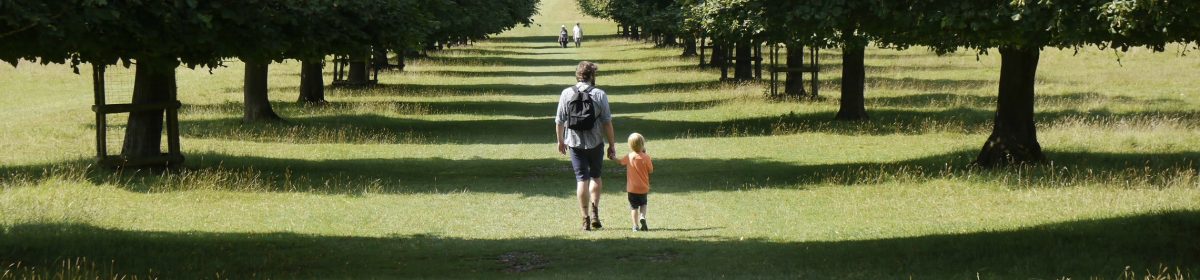

Luckily the threatened rain held off all day yesterday so our time with the grandchildren, while their mum was at work, was at least dry enough to go over to Dyrham Park for a bit of fresh air and subtle natural history. I’ve been going there for over sixty years – when I was young and before the National Trust acquired it I was a bit of a trespasser. I used to cycle ten miles or so culminating in a fearfully steep hill on my old gearless Raleigh bike, and climb over the wall into a different world. Much later on Madame and I would hire horses at the stables and ride through the park only more or less in control of their ill-tempered behaviour. I remember one particularly evil horse called Copper who knew every low branch in the park and took off at a full gallop hoping to unseat me. I was never a natural rider!
The field now called Whitefield was directly adjacent to the hill and the wall and so, although this is just a faint memory, I must have laid on my back there and watched the clouds passing overhead; one of my first experiences of what came to be known as oceanic feelings, although at the time I was too young to have known anything at all about Rolland and Freud – but as a result the place has always been very special to me.
Back, though, to Dyrham Park in 2023 and the creeping sense that the 21st century hunger for what the copywriters call “experience” as they tack it uneasily to any old event; has infected even the National Trust . What might once have been going to look at a garden is inflated to “Having A Garden Experience”, as if somehow the having of an experience adds a new layer of gravity and depth to it. This shift of emphasis also leads to the awful domain of the curator whose superior understanding of almost everything from art to gardens and Egyptian mummified remains compels them to lead us by the hand through the world and – where there’s not quite enough interest to it – to put the missing bits in. We buy our tickets at the entrance and get our biodegradable bag of ooohs and aaaahs to spend on the way around.

This is especially troubling in relation to nature and wildlife because being driven around a wildlife reserve behind a tractor with a rather loud commentary is in no sense a substitute for lying on your back and watching the clouds, listening to the birds and getting a Cider With Rosie view of the lowest level of plants; in amongst the roots and stalks. To be clear, there are no tractors or commentaries at Dyrham Park but some of the most lovely footpaths have been winter proofed with intensely white crushed limestone in order to direct the visitors around the park without getting their shoes muddy and – what’s worse – the edges of the paths have – in some of the busiest areas – been sown with wildflowers mixes that feature plants which would not normally be seen there. In high summer they’re extremely pretty but there’s no signage to assist visitors in understanding that this is a thoroughly unnatural display. In fact these wildflower displays might even nudge visitors into thinking that ecological destruction is not really happening because they’ve seen fields that are absolutely full of life. Yesterday we even spotted Cornflowers, alongside Poppies and other all-but-extinct pests of arable land; virtually poisoned out of existence by intensive agriculture in their natural habitat. There were huge drifts of Wild Carrot looking rather out of place but stunningly beautiful architectural plants in their more usual setting. This was a trick that the planners tried to use to greenwash the development of the riverside in Bath. Sadly, but inevitably the wildflower mix only lasted for one season and then were outgrown by the usual thuggish natives.
The awful truth is that there is just one area of genuine wildflower meadow in Dyrham Park and that’s Whitefield now fringed on two sides by a road and an expanded car park, and yesterday – after a lovely display of wildflowers and orchids in early spring – now bone dry and looking all but dead because the truth is – beyond the fences – the curated scenery of the pay to view park mocks the climate destruction and extreme weather conditions that are causing increasing extinctions of some of our most rare plants. Worse still, it’s outside the boundary of the park and is used as a dog walking area. This was brought home to us yesterday when – as we always do – we took the grandchildren to their favourite part of every trip there; playing in the stream that flows down from a spring below Whitefield, following the road down to the big house. But it wasn’t there; it had dried up completely. Whitefield looked more like the South of France in August. Notwithstanding the rain running down the windows as I write this, we’re in drought and we’ve been in drought for months.

But nothing dampened the enthusiasm of the grandkids for hunting grasshoppers and crickets, and I even managed to work in a brief lesson on grass ID with the oldest. We play natural history games constantly in the hope that some of this invaluable knowledge will rub off on them. I was blessed by a Grandfather and a Mother who did the same with me and it enriched my life. I wonder if we’re not our own worst enemies when it comes to understanding and teaching about climate change. Dyrham Park, beyond the gaudy displays and formal gardens has got some really good plantlife. With three children to look after it’s hard to spend time riffling through the grass; but yesterday offered a feast of grasses apart from the usual suspects like Cocksfoot, Perennial Rye and False Oat grass. There were Timothy, and different Fescues, and some very fine grass – probably clinging on after the departure of the deer. There was Yorkshire Fog … oh and I could go on, but my point is that if we want to encourage people really to treasure the environment we need to encourage them to give the time and energy to move into a deeper slower and more personal experience of the natural world.
I used to have an inspiring teacher who taught us how to read literature better by way of what he called CAT sessions. CAT stood for close attention to text. We could spend an hour unpacking a single sentence. Natural History deserves its own CAT sessions. Yesterday I noticed something about the Wild Carrot flower that I’d never seen before. I’ll put the photo below, but if you look carefully you’ll see a red flower in the centre of the umbel. I’d never before given it the close attention it needed and when I checked it got even more interesting because no-one really knows what it’s there for. I think I must have assumed it was one of those bright red beetles sometimes known as bonking beetles. Some suggest it may be to attract pollinating insects but who really knows; but simply noticing it reminded me how poorly I often attend to the smallest details of wildflowers.
Back home we fed the children with hot dogs and afterwards the oldest told us that they’d had hot dogs the day before, and then when we delivered them back home they asked what was for tea and their Mum said – Hot Dogs. Three days running – poor souls, they must love us!


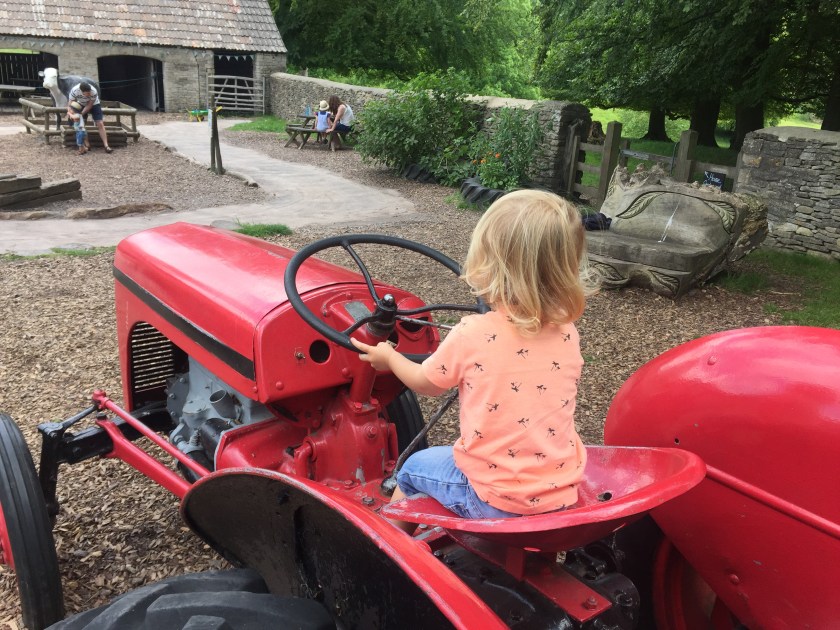
 It was a day for catching up with old friends and big hugs for the family, so we were up at the plot early to check that the greenhouse, the hot bed and the coldframes were ready for another unseasonably hot day. Our children may not appreciate the analogy but seeing the sun shining on the allotment, watching seedlings develop and feeling the wamth of the earth is not a million miles away from the sheer pleasure of being loved – for no discernable reason – by your children and grandchildren. Our youngest said to us once, after a day out with his first nephew, “It’s really strange the way they look at you, decide you’re OK and just love you”.
