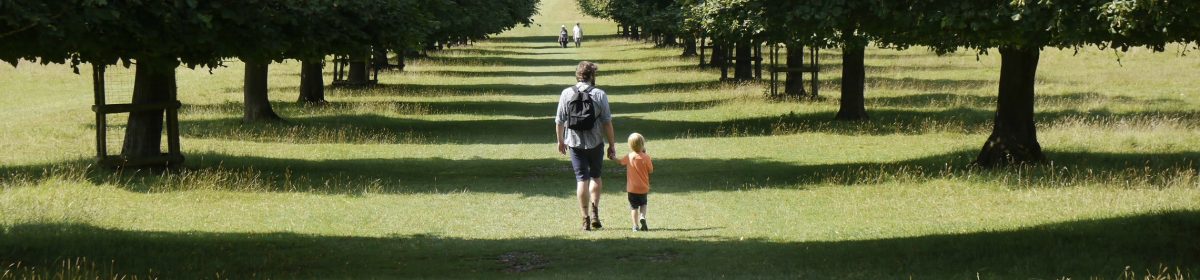
An evening benediction after the storm

We were in the middle of making up the bed in the campervan when the whole interior was suddenly suffused with golden light after a stubbornly grey day. After ten more minutes of sunset it was dark; the wind finally gave way and the leaky windows stopped singing.

It’s not just us. We stand at the edge of the campsite and see doors and tents opening everywhere as shadowy dusk-darkened campers take photographs they may never look at again. The feeble flash of the phone cameras is an ironic commentary on our hubristic relationship with nature. It’s a scene from “Close Encounters of the Third Kind” enacted every time the sky clears as night falls. We wonder whether the Green Ray will momentarily flash across the sea but it never does and it doesn’t matter, because if it did, every sunset afterwards would feel like a disappointment. So we stand there like penitents at the edge of the land, waiting for a blessing ; a sign that all will be well and all manner of things will be well.

“Isn’t that just so beautiful” we murmur without quite understanding how the earth seems to stand still at these moments which, strictly speaking, are the moments of extreme dynamism when day gives way to night and we, in our exact place and time, experience the loss of the sun with nothing more than faith and hope to keep us safe through the night. Of course we rarely reflect on this but turn to go back indoors and open another bottle, but perhaps a holiday – there’s a clue in the name – is the time when time is made for wonder.

When we are at the far western edge; in Cornwall,in Pembrokeshire and on the Lleyn peninsula, we see the sun setting over the sea. The last word of each day, you might say, is emptiness and silence with no human structure or invention intruding. The setting sun is silent but strangely the Moon always seems to me to have an ethereal sound trailing behind her. The sunsets here unite the elements of earth, air, fire and water which, in the West, are the constituents of life itself. The Taoists add wood and metal and take away air but that seems to me to spring from another, equally valid conception of our place in the world in which we are makers. What defines us as human is not so much thinking as detached observers of what the Taoists call the Ten Thousand Things; but our capacity as makers. Wood; Fire: Earth; Metal and Water – the elements that lie at the heart of the forge, the pottery, the farm and the building.

Air, though, as the medium of sound, has to fall still for there to be silence. St Davids Cathedral, in the absence of the crowds, is one of the most silent places I know save for the Jackdaws whose chatter almost enhances the absence of sound. Early in the morning and late in the evening the Cathedral sits in a protected valley – out of sight of seaborn raiders – so deep that uniquely, from my limited experience, the passer-by looks down on the roof and tower; so the sounds of ice cream queues, the pasty and souvenir shops and the constant flow of buses, coaches and minibuses barely intrude. The silence seeps into your bones and it’s good. The silence searches your inmost being and occasionally – if you wait long enough and quietly enough – will even speak; say something important. You needn’t even go into the building, in fact it may me more of a distraction to go through the great wooden door and be dazzled by the work of human hands. Any old seat outside in the sun or the wind and rain will do but it’s fine to wait for a sunny day because that makes it easier to wait.

And if you find, like me, that hordes of people are a bit off putting, try St Non’s Well about a mile’s walk away and the traditional birthplace of St David, but perhaps more importantly a place to take off your walking boots and bathe your tired feet in the cool water. The well itself is almost invisible to coastal path walkers with their eyes and hearts set on a personal best target, so you can sit there in silence for ages without being disturbed. Those that do see you usually hurry away in case you’re a threat to civilized human life!

That St David’s is a holy place is without doubt; but I doubt whether any religion has more than squatters’ rights to its benedictions.

When the going gets tough …..

The endlessly adaptable Mexican Fleabane – Erigeron karvinskianus spreading along our street year by year
Phew what a scorcher! – says the sub editor for the 10,000th time

The Met Office defines a heatwave as a period of three days or more when the temperature rises above the expected. So no argument then! we’re in a heatwave; something I guess most of us in the UK would have known without the benefit of the definition. However, definitions sometimes throw up potential problems such as this one. In a time of global heating what’s expected? Upon what form of statistical calculation is that decision made. Is it the average temperature? the mean temperature? – and what happens when the temperature is rising year on year? Even if the mean June temperature is calculated over the past five, ten or even fifty years, it will surely rise; and at what point will the media be dutifully reporting a cold snap because the mean June temperature falls below a level that we’ve become wearily accustomed to. Maybe we need an alternative way of expressing the impact of temperature rises – for example excess deaths; the effect on crops; the price and availability of food; the water levels in the reservoirs; pollution in rivers as the reduced dilution effect of dry weather gives the game away ?

Of course, what we usually do in the real world is lament the idiocy of politicians who are too cowardly to address the crisis, and get on with it as best we can. Here at the Potwell Inn we’re getting up early and going to the allotment soon after seven o’clock so we can get three or four hours in before it’s too hot to work any more. Some jobs are much harder – for instance setting out young plants when temperatures are likely to rise to 30 C (86 F). They need intensive care from day one. The simplest manual jobs like tilling a bed or raking in compost or fertilizer can be exhausting, and watering becomes a test of stamina. At its worst I can walk 10000 steps between the water troughs and the allotment.

But there’s an upside too. After a seemingly endless winter in our flat we both felt thoroughly seedy and out of condition, but now we’re suntanned and as fit as fleas. Allotmenteering is both a physical and also an intellectual challenge – trying to predict what might happen next. I suppose you could say it resembles sailing, inasmuch as reading the weather almost becomes an obsession. We look to see where the wind is coming from. South westerlies can be warm but they also bring rain in from the Atlantic. A cold easterly can decimate fruit blossom and kill tender plants – we lost our Tarragon and Rosemary as well as an established Clematis during the winter and any heavy rain or snow can be destructive of plants or netting. It’s no use thinking “I’m not going out in this” because staying in might cost you your crop or your nets.

So we don’t feel in the least downhearted about this heatwave because, like the Mexican Fleabane in the photo, we can – if we work at it – adapt to all manner of changes. Don’t for a minute imagine that I’m saying we can adapt ourselves out of catastrophic climate change without changing our whole lifestyle. What I am saying is that being hard-up for most of our lives, being prepared to keep the household just about going by earning a living wherever it’s possible is a great training in resilience – I’ve washed up in a hotel, driven buses, been a rather poor welder, a groundsman, a night cleaner in a factory, worked nights on my own in a rat infested factory sawing large blocks of polystyrene foam into sheets, and worked in a prison and a couple of old style mental hospitals. I can cook, clean and grow stuff and of course I worked as a parish priest for 30 years and I think I learned a great deal about being human or how not to be human. Madame has a very similar skill set and so we muddle along contentedly together, knowing that a good life doesn’t depend on having a Range Rover.

I’ve been reading a short article by Prof Massimo Pigliucci in “Philosophy Now” which I picked up from a newspaper stand before I looked at the price. Anyway the article lists six ethical ideals shared by almost all the world’s faiths. This is a long way from religion in the commonly understood sense. These values are:

  • Practical wisdom
  • Justice / morality
  • temperance / moderation
  • fortitude / courage
  • Humanity
  • Transcendence (gratitude, hope, spirituality

This group of dispositions broadly represents what’s usually called Virtue Ethics. To risk simplifying the idea so much it becomes a parody, these kind of dispositions, when internalised and lived out in everyday life, are the most effective guidance we have for flourishing – not for getting rich, or amassing honours and power but simply flourishing, being / becoming human. When you think about it it would be hard to express a better wish list for gardeners, nurses, or so-called captains of industry.

There’s a kind of grim satisfaction in knowing that when the climate catastrophe finally strikes us, the wealthy can only hope to buy a few more years of absolution from the bletted fruits of their behaviour before they realise they’ve got no talent for being human and no skills to change themselves. The snake oil salesmen and the invisible Seventh Technological Cavalry will have fled, and their last moments will be spent howling at a blackened sky like Violet Elizabeth Bot “I’ll thcweam and I’ll thcweam and I’ll make mythelf thick!”

Ghost Signs

Wittgenstein wrote of thinking that one cannot see one’s way around, saying ‘We feel as if we had to repair a torn spider’s web with our fingers.” And while on the topic of philosophy in general and Wittgenstein’s philosophy in particular, I should like to take this chance to pass on a piece of advice that I have kept in mind throughout the writing of this book, remembering it as his on one of the two occasions when he took part in a public discussion in Oxford. Wittgenstein interrupted a speaker who had realized that he was about to say something that, although it seemed compelling, was clearly ridiculous, and was trying (as we all do in such circumstances) to say something sensible instead. ‘No,’ said Wittgenstein. ‘Say what you want to say. Be crude and then we shall get on.’ The suggestion that in doing philosophy one should not try to banish or tidy up a ludicrously crude but troubling thought, but rather give it its day, its week, its month, in court, seems to me very helpful. It chimes of course with Wittgenstein’s idea that in philosophy it is very difficult to work as slowly as one should.ย 

From the introduction to Phillipa Foot “Natural Goodness”

I took these photographs in Bath today as we went in search of the original signage for Hand’s Cafe in the Abbey Square, which I wanted to insert in yesterday’s post to try to illustrate the usefulness of stretching the meaning of “Palimpsest” to include wildflowers that once signified whole industries – now largely forgotten.

That said, I have always been attracted to these so-called ghost signs because they have the effect of situating you in two places at once; the here and now, and the past. The idea of being in two places at once is both difficult and troubling because there seems no way of explaining, even to a sympathetic listener who may well believe what seems to be self-evident – that each moment in time passes by as if caught in the flow of a river – is false.

Just as one example – each time I find a plant that I’ve previously identified, and especially if naming it was particularly difficult, I inwardly relive the moment of discovery, the place, the weather, the exact setting and mood of the place as if I were still there in the past ‘though I know I’m in the present.

I remember once standing at one end of Damery Lake on a packbridge and being overwhelmed by the presence of a young officer in the thick of a First World War battle, standing with me and harnessing my imagination to recall a happy moment in his own past, fishing in the lake. It was all over in an overwhelming moment of intense introspection. I cite this not to push a non-existent reputation as a psychic; but because I don’t understand it and can’t explain it.

If we’re going to develop any kind of Green Spirituality or ethic we have to find a new framework for understanding ourselves which will undoubtedly feel difficult, perhaps insane, to someone steeped in the Cartesian dualism that’s still the dominating culture of our time. So this will be hard – which is why I find Phillipa Foot’s recollection of Wittgenstein so encouraging. Be crude and then we shall get on, and never be afraid of sounding like a fool. Don’t tidy up ludicrously crude but troubling thoughts but give them all the time they need.

Mindfulness. “Walking in nature rather than through it”

Today we have naming of parts. Yesterday,
We had daily cleaning. And tomorrow morning,
We shall have what to do after firing. But to-day,
Today we have naming of parts. Japonica
Glistens like coral in all of the neighbouring gardens,
And today we have naming of parts.

Henry Reed, “Naming of parts” 1942

I love the way that, when I’m writing, images and ideas surface in my mind. My first thought when I sat down to write this post was that these four Cranesbills would have been exactly the species which inspired William Morris in his designs. Next I pondered for a while (it’s 5.00am after a sleepless night) on the extraordinary fact that in nature these closely related species are so plentiful. Do we really need twelve of them (Harrap’s “Wild Flowers”). Colin French’s “Flora of Cornwall” lists 34 species and subspecies; such an abundance that the only possible conclusion is that abundance, excess and diversity are somehow hardwired into nature. To return to a previous thought, if Nature is structured like a language then this abundance represents the dialects; the regional and environmental inflections of the same idea – like each one of us; all (potentially) beautiful if only we could break out of the prison we create when we each see ourselves as the only show in town.

And then Henry Reed’s poem plopped into my mind and I had the clearest recollection of myself in my early teens, sitting in a hot and airless classroom and gazing longingly out of the window as our teacher struggled to interest us in this poem. Not me, though. The poem sold itself to me in an instant. Here was another human being, feeling exactly like me at that moment and I took it to constitute permission to daydream. I’m quite sure that our teacher had no such aim in mind, but that’s the dangerous and disruptive power of poetry.

Peacock butterfly resting on a Charlock plant.

I’m indebted to Alan Rayner, by the way, for the idea of walking in nature rather than through it. It came up during a long conversation on a Bath Natural History Society field outing when we were overtaken by a runner pounding by us and seeing nothing at all. This last fortnight the experience repeated itself endlessly as we stood and watched a Kestrel hovering, or knelt in the grass delicately uncovering Spring Squills or – in this specific instance paused to photograph no less than four species of Geranium along a quarter of a mile of sunken lane bordered on both sides by Cornish walls as butterflies jazzed around tracing marvellous curlicues in pursuit of rivals, mates or nectar.

Without that special kind of relaxed mindfulness none of this diversity would have been visible. I suppose you could go out after a specific quarry – some rare or interesting plant – and cover more ground – eventually dragging your photographic elk back to the cave; but my favourite way of walking in nature is to move slowly, turning up all the senses to ten and let the plants do the talking. I’m not sure what practical use this kind of meditation has, other than cleansing the mind of thoughts about the endless dishonesty and stupidity of some politicians or the grinding anxiety that all this beauty is being threatened by the greed and selfishness of war and oil. Perhaps that’s the link with the poem about sitting in a stuffy room and learning how to assemble and fire a rifle in the context of the Second World War.

A wild Strawberry ripening on the warm top of a wall

Looking, seeing and beholding seem to me to constitute a hierarchy of mindful attention. For all the superficial similarities, each one of the Cranesbills is quite distinct. The shape of the leaves, for instance is crucial; compare the deeply incised lace-like divisions of the Cut-leaved Cranesbill in the larger photograph with the more modest Dove’s-foot Cranesbill in the centre of the strip of three to the left. Notice the fern like leaf of Herb Robert and the unusually pale flowers of the other * Dove’s-foot Cranesbill – each one an expression of the irrepressible creativity of Nature, and each one asking of us to name them because naming something – in a strange but powerful way – brings it into existence for us. The more we can name, the bigger the world becomes and the more intense our relationship with it. Even the word “Cranesbill” tells us something about the history of our language. If you look at the forming seed behind the flower at the top left – the Herb Robert – you might see the resemblance to a bird’s head and beak. But when was the last time that the sight of a Crane (the bird, I mean) was sufficiently commonplace to attach its name to a plant? Some centuries, I guess!

So it was farewell to Cornwall on Wednesday as we woke early and packed the campervan. This time we were on the Roseland peninsula, a very different place from the Lizard and a very different feel to the natural history as well. But we’ve already booked to return in September. Curiously, we were talking to our allotment neighbour when we got back and we discovered that without ever meeting one another we had been staying on the same campsite for over a decade. He was planning to drive down today for the half-term week. It’s a small world – worryingly and vulnerably small!

Back home, though, we turn our full attention to the allotment which – thanks to some good neighbours – survived the very hot weather, but urgently needs weeding and TLC.

*I submitted just one of what I initially thought were four species to the local BSBI Recorder – the marvellously skilled Ian Benallick for verification – and he corrected my identification earlier today, so apologies for any apoplexy caused by my mistake. His kind correction led me to double check all my ID’s in Tim Rich and A C Jermy’s “Plant Crib”. Geraniums, it seems, are a difficult group. Yet another example of the way we learn so much more from our mistakes than we do from our successes.

Having enjoyed every moment of sunshine on holiday, we spent some of today working at 35 C in the polytunnel which is now almost planted up with summer residents and looks lovely.

Towan Beach

Another postcard from paradise

Looking down the mouth of the Percuil river towards St Mawes and Falmouth

After my exhausting battle with language in the last post I thought, maybe, that I, along with any readers who follow this blog sequentially, needed a bit of a lie-down. Unfortunately most readers clearly don’t read it sequentially and so a very long and slowly unfolding idea will only be found by searching on the tag “green spirituality”.

I just need to add one further dimension to a rather one-sided discussion by suggesting that the aesthetic is, in a peculiar way, another sense to add to the five more commonly accepted ones – sight, hearing, taste, touch and smell. At its most basic, the aesthetic embraces all of the five, and often makes sense where the logical mind fails. I never could understand Madame’s passion for art until (I was nineteen and she was fifteen) I suddenly got it in front of a semi abstract painting of the back of a Georgian terrace in the Bristol Museum and Art Gallery. My conversion felt like a several gigabyte data dump constituting the key, and taught me in an instant the difference between seeing and beholding. That’s all I wanted to add to the previous post. If our unconscious minds really are structured like a language then the language is more likely to be musical, poetic or artistic than logical and scientific. To drag an ancient canard out of the confit, truth is beauty and beauty is truth – ask any mathematician.

Anyway one of the most visible plants around down here at the moment checks in at best part of six feet tall; it’s Charlock and in terms of beauty it’s way down the scale. The Book of Stace describes it as an archaeophyte and denizen. I had to look denizen up and it’s a plant that can compete with native plants and generally act as if it is a native. For goodness sake don’t let the Daily Mail get hold of this information or they’ll be organizing vigilante Charlock squads.

So Charlock is no beauty and yet if you should want to distinguish it from its multitude of close cousins who have been stowing away on grain ships since Roman times in order to pollute our pristine land with foreign genes; one thing you can do is stroke the stem and the leaves and if it’s five or six feet tall, let the sense of touch flush it out. It’s very bristly and rough. You have to look at the sepals – the tiny little leaves poking out directly beneath the flowers (which should be yellow) and if they stick out at right angles you can toss your head in disdain at this wretched jumped up weed. Or alternatively you could say “Good luck mate, I wish I had half your energy” .

I much prefer talking to plants and birds because there’s always the possibility of a silent conversation beginning, and who knows where that will lead? These moments of intense contemplation can be almost erotic in their intensity. I’ve spent days trying to capture the texture and form of a single Hyacinth blossom in watercolour. In the early days of my artistic adventures I remember seeing a drawing of Clevedon Pier by Peter Lanyon; a completely relaxed charcoal line that perfectly expressed the pier in a way that a prissy architect’s drawing could never have achieved.

So never neglect the aesthetic power of plants and flowers. They don’t have to be rare. I suppose there is a bit of the trainspotter in all of us, but the pleasure of finding (top left clockwise) Kidney Vetch and Sea Carrot growing in full spring colours was only marginally less than finding the Spring Squill and the Cut Leaf Cranesbill; or the little pathside explosion of Primrose, Buttercup, Soft Shield Fern and Ivy; the Cuckoo Flowers which I climbed over a fence to photograph and found a couple of hours later had all been mown off. A little bereavement. And then, finally the Pale Flax whose flower is so intense that you could spend an afternoon gazing into its depths and pondering how long it is since it was part of a valuable cloth industry.

So it’s been a wonderful couple of weeks. Yesterday we were sitting outside the campervan drinking a cup of tea and we recorded no less than seven birds strutting their stuff nearby. We heard a Robin, a Blackbird, House Sparrows, a Dunnock, a Wren, a remarkably faint Curlew, and the usual garrulous cries of Crows, Magpies and Jackdaws. During our walk we watched House Martins scooping mud up from a drying puddle to build their nests and saw sparrows having a noisy dust bath on the tinder dry coast path. All this on a day that I completely failed to find a single Sea Spleenwort after thrashing sweatily along every cliff and sea facing Cornish wall I could find – in spite of all my attempts to research it beforehand. That’s the other thing about nature: it’s always surprising.

Percuil

I’m constantly writing and thinking about the reason the natural world so deeply affects me (and so many of us), in such a way that it’s almost impossible to express in words. Feeling good about the natural world hardly does justice to it when for instance – at the moment of taking this photograph of the Percuil river – I was so filled with inexpressible gratitude and joy. It was an intensely spiritual moment, I might say; except that any half sensible interrogator would ask – “Well what does spiritual actually mean?”

We’d just walked down the path in the photo, through open woodland that was just alive with wildflowers. Now and again we caught glimpses of the river across a gated field entrance but mostly we were concentrating on re-finding the reliable patch of Early Purple orchids we’d found several years running. The dappled woodland was a perfect setting for the yellows, blues and reds of Celandines and Buttercups; Bluebells, Cow Parsley, Herb Robert and Red Campions. Little moments of visual intensity suspended in air above the green background; a silent triumphant chord turning one of the five senses into another.

Plant hunting turns out to be an incredibly sensual experience. With a bit of experience the exploration of any new plant – it needn’t be rare at all -uses all of the senses. The texture, colour, minute details of form, taste, (used with extreme discretion) and smell. The geology underfoot, time of day and time of year, exact setting – mid field, hedgerow, open woodland or dark forest; all these play into a reflection that draws on our memory and previous experience distilled down to a single moment with a single expression of Nature.

Yesterday I was idling along looking at different kinds of Dock – I was able to comfortably name three – all of them ubiquitous in this country – Broad Leaved, Curled and Common Sorrel. I could have managed a couple more but they weren’t there, but in naming them I used exactly the sensual plus procedure I described above. When I started out I almost always forgot the diagnostic powers of stroking and sniffing, until I encountered Hedge Woundwort whose crushed leaves smell horrible.

When we reached the little boatyard at Percuil we sat on a wall in the sun, looking at the moored boats when Madame caught sight of a familiar plant right in front of us. “Its Fennel” – she said – “Go and look”, and so I did. It wasn’t difficult because we use Fennel and grow it ourselves. So a roll between the fingers and a sniff confirmed beyond any doubt. But at this point the story took another entirely new turn because the BSBI (Botanical Society of Britain and Ireland), have just published an online database of all the plants, their distribution, their increase and decrease in the face of this environmental catastrophe. Thirty odd million records processed and mapped. So out came my mobile phone and with a few taps we discovered that Common Fennel is indeed very common around the coast but hasn’t been recorded in the little four kilometer square in which we were sunbathing. So that’s a new record that sits like the last piece of a jigsaw in a long coastline.

But once you’ve photographed, checked and rechecked and consulted the field guides and satisfied yourself that the name is factually correct, there’s always a remainder. A chunk of the experience that refuses to be reduced to dimensions and probabilities and pays no heed to logic and expertise. It doesn’t even have to be a rare plant – it could as easily be a Dandelion. Maybe some kind of spirituality is where that remainder lives. When all the pub quiz / trainspotter stuff is over and done, something is left that feels as if it’s mostly made from love, wonder and gratitude. A whole other sense above and beneath the tactile, the sensual and the intellectual. Maybe the beginnings of a Green Spirituality lie within this barely explored sense. The earthy, material, exhilarating phenomenon that we call Nature speaks through our senses. Here’s the orchid – still there and below that, some bits and bobs including a stunning bit of walling.

With just anger and despair we’re on a hiding to nothing. We need a few geologians to help us draw thinking and actions together.

This is going to be a very short post but I think it’s important to think aloud occasionally, if only to begin to set out some kind of a stall. My aim here is to tease out a couple of missing threads in the environmental movement; threads that – if we could fill them with life – might release enough energy to get this heavy stone to the top of the mountain.

The only data I really understand is myself and my feelings which seem constantly to suck the life out of any hope. Despair is utterly destructive. I’ve mentioned before (often) that any kind of earth spirituality needs a structure, a framework in which to function, to act, to think and to conduct our daily lives. This doesn’t seem to me to require the invention of any supernatural entities; there’s more than enough awe in nature to inspire the biggest of thoughts and responses and even to drive to our knees from time to time. That’s the first missing link – a structure or framework which will need to be maintained and expanded by our best thinkers.

This would be the first task of what I’ll call the geologians – the earth philosophers who know how to ask good questions and frame good answers. Theologians do God which is a good deal easier since “because I say so” is a circular argument which I’ll come to with the next missing link. Geologians will help us to think sensibly, coherently and truthfully without waving big sticks like damnation and purgatory.

The second missing link after the framework begins to take shape will be to form a canon – a collection of writings that can command general acceptance. This wouldn’t be too hard, there are loads of books on my shelves that call themselves “readers”- selections of writings that seem to demand our attention because they help us to think more clearly. I’m certainly not proposing we turn our geologians into a high priesthood. A canon is a collection of trustworthy writings that come with the assurance that they won’t lead us into the wilderness – and I’m sorry for the occasional reference to more biblical notions but they’re handy shortcuts sometimes. However, as I hinted before, even canonical literature needs to be constantly examined and revised if it’s not going to die and become putrid. That’s why “because I say so” ican never be on the agenda.

The third, and possibly the trickiest component will be what we have to describe as the cultus – without for a moment implying a derived cult. The cultus might involve – for instance – thanking a plant for meeting some of our needs before we dig it up; community harvest or planting festivals and so forth.

These three threads already exist extensively within native, first nation and ancient cultures. They have elders and wise people who maintain the culture and guide actions, they have highly refined structures of belief and they abound in ceremonies and rituals which enfold communities and hold them together. However this can’t mean that we could just take a system off the shelf and apply it to ourselves. Many of the existing systems are highly localized – to plains communities; herding communities or forest communities. We in the overdeveloped and greedy west have obliterated the concepts of theology, cultus and canon in order to remove any opposition to neoliberal capitalism. The vision I’m talking about refers more to a possible post apocalyptic future. The driving force is the hope that the most thoughtful and creative minds of our generation; artists, poets, scientists engineers and philosophers (well not my generation perhaps; I’m pretty ancient!) – may forge a new vision that can act as a bridge towards a new sustainable future.

Most revolutions are fought without much of a vision of what happens afterwards and this is what leads to populism and dictatorship; easy to fall into and hard to dispense with. Lashing out might feel good for a moment but the bad actors have all the power and they won’t hesitate to use it. What they don’t have is the power to eradicate a contagious vision. Faith – as the evangelists often say – is caught and not taught. Belonging is far more powerful than believing. We’ve got local elections in the UK in a few days time and I’m immensely disheartened by the fact that the Greens have the right policies expressed in the style of a university seminar reading. To borrow and adapt an idea from Monica Furlong; feminist theologian “anger is hope overwhelmed by despair”. Only visions can express theories with sufficient power to change “the way we do things round here”.

Calendula cream, chef’s ass, the marriage service and a green spirituality

One of the best pub signs I’ve ever seen!

Yesterday was just one of those days that left me almost breathless with pleasure. We were five old friends whose various relationships reach back way over fifty years; five old friendships that have seen and survived all manner of triumphs and tragedies and five human beings sharing a walk (well, more of an amble) on a stunning spring day, while we followed the course of the remains of the Somerset Coal Canal which was built to carry coal from the North Somerset coalfield to the junction with the Kennet and Avon canal, near Dundas aqueduct. For me, a light bulb went on when I realized how much of the old stone structure had survived, but Madame also had it written down as a place to return to – a lot!

It wasn’t a long walk by any stretch but we gave it several hours anyway, soaking up the sun and exploring off the path from time to time, looking at plants and rusting iron lock gate nails with equal interest; catching glimpses of the equally abandoned railway line that forced the demise of the canal. For me it’s a paradise of post industrial relics and possible sites for interesting wildflowers, and by all accounts it has some very interesting geology, which is always good news for plant hunters. But it wasn’t all green wellies and Tilley hats. C and I had a friendly bird app competition with our phones and I realized that the absence of an in-phone database meant that hers identified a Black Cap Warbler much faster than mine which was still looking for a signal. Just for interest I was using Birdnerd and C had Merlin – hers was clearly better for off-grid id’s – mine’s always worked perfectly well but perhaps I’ve just been lucky with phone masts.

Weld – Reseda luteola

There were no rarities spotted, but it was just as reassuring and pleasurable to see Dandelions, Cuckoo Flowers, Cowslips, White Nettles and Ground Ivy all flowering in profusion. The only oddity was what I think must have been Weld – Reseda luteola, AKA Dyers Weed, Dyers Rocket or Yellow Weed. No prizes, then, for guessing what it was once used for. If it was Weld I suppose that would make it a post industrial plant relic from a much earlier historical moment. Lurking up and down these beautiful valleys are the ruins and remains of monastic communities with their medicinal herb gardens and watermills, grinding grain from local farms. Far from being enjoyable just for its remoteness and quietness, you could almost feel the presence of innumerable farm labourers, fishermen, monks, boaters, miners, navvies and railwaymen, all those faint echoes flowing towards the river Avon. The horizons are punctuated by the silhouettes of grand mansions and farms such that we were obliged to consider the source of all that wealth. One of our party had long dead ancestors who were in the cloth trade and who may have furnished the backs of navvies, slaves and workhouse inhabitants. with fustian – rough but hard wearing cloth that combined cotton weft on linen warps.

We finished up – as all good walks do – in the pub where I photographed the hauntingly lovely sign at the top of this post; something I’ll come back to in a moment.

I’ve been struggling for a long time to find a way of expressing what seems to me to be a fundamental difficulty in this post-religious age. A few days ago I wrote this:

the intoxicating smell of the wet but warming earth โ€“ known as petrichor โ€“ carried the subliminal message of the season. Is there some kind of spirituality here? โ€“ something to do with being held by an embracing framework? 

The trouble with words like Spirituality and Love is that they’ve been so trampled upon by blowhards, bishops and pornographers they no longer have any meaning at all except for a vaguely felt inflammation of the imagination which could be anything from a vision to a mild virus, and so writing about such things becomes an exercise in frustration; altogether lacking the tools for the job.

For me, best and most creative ideas come when the parts of a solution finally come together for no discernable reason except the relaxed mindfulness of a walk. These ideas, quite often, are not the lofty analytics of a Holmesean three pipe problem. They can seem vulgar, irreverent and occupy worlds so different it’s almost like harvesting the energy of colliding comets.

So here’s the problem – how can we find a contemporary way of expressing the content of words like spirituality and love. What kind of love, from all of the available flavours, would best express our love for the Earth in this age of catastrophe? and secondly, what form of spirituality could provide a language accessible to the religious, the determinedly non-religious and that huge population in the middle who long for a structure, a framework for understanding a way of being human that isn’t part of what’s destroying us all?

And so what about these three components?

  • Chef’s Ass
  • Calendula officinalis
  • The marriage service

These three rather disparate ideas have at least one thing going for them because they include a painful (but not fatal) human condition, a plant that provides a useful remedy, and a form of words that might just provide the beginnings of a framework.

Let’s take Chef’s Ass first. If you’re working in very hot and humid sweaty conditions – for instance in a restaurant kitchen, polytunnel or just walking for long distances in inappropriate clothes you may contract a very uncomfortable form of abrasion rash known colloquially as chef’s ass in the trade. I consulted our son – who’s a chef – on a possible cure, and he said he’d once tried alcoholic hand gel which turned out to be effective but screamingly painful. I hoped I could find a less extreme cure for my similar gardening related problem and turned to our home made Calendula Cream which, to my great surprise and relief worked miraculously well. It’s so cheap and easy to make I wonder why anyone would pay ยฃ15 for a tube, or resort to potentially dangerous remedies like hydrocortisones.

Calendula flowers drying in August 2020

Forget God for a moment because there’s absolutely no reason to invoke any kind of higher level supernatural powers here. The earth provides us with a multitude of effective remedies for many unpleasant, painful but non-malignant diseases. Calendula is just one example. Now the application of the cream did the trick for me, but that left me with the odd sense that I should be able to say thank-you for that help. I get exactly the same feeling harvesting our produce, eating it and sharing it with friends. That unchannelled, unfocused gratitude needs somewhere to land but all too often, like a boomerang, it circles back on itself and manifests itself as pride.

I know I’m using a religious term here but bear with me just for a moment while I explain. Pride is a very dangerous thing not least because it blinds us to our own fallibility. But collective pride – for instance in our ability to solve every challenge, even catastrophic climate change, through our own cleverness is a form of idolatry. Our thank-you’s desperately need to be channelled into something less destructive than pride.

So with that in mind I’ll turn to to some words from the marriage service which once seized me so powerfully in the course of a wedding service I was taking, that I had to stop in my tracks and recover my wits before I could continue. Each of the couple (and I’m using this example in a completely secular and non gendered way) say to one another – “All that I am, I give to you, and all that I have I share with you”. From that moment onwards I almost invariably reminded my couples that the second half of the promise was the easy bit. “All that I have I share with you” is the kind of arrangement that any half witted solicitor could organise. It’s a kind of prenuptial clause. But the second half of the promise- “All that I am I give to you” is on a different plane. How many of us have even the faintest clue what “all that I am” means for ourselves, let alone our prospective partner?

And yet the point here is that the earth has made precisely that promise to us. The earth says – “all that I am I give to you” and means it utterly, to the end. But we, in our infinite pride, forget that in this imagined marriage relationship with the earth we secretly and covetously hope to get our hands on the money and say that sentence with our fingers crossed behind our backs. There’s no more destructive relationship than a one sided and selfish marriage. This is not a religious point!

So at last I come back to the pub sign. I’m a sucker for naive paintings and a complete fool for the ones that express in paint something that the painter could never have articulated in words. Our angel, with a look of considerable doubt on her face is taking an anchor from the heavenly (that’s the hope bit) to the earthly ( that’s the anchor). When the rope breaks there’s no guide to the way back and we are lost. So to recap from the top; all those ancient voices flowing down to the river and onward to the sea were the hopes of our ancestors, lived out in the world of nature that provided food and health as best the earth could offer. It was greed and selfishness that fouled things up and because of that idolatrous worship of our own powers we now face an existential crisis.

Ironically (or maybe not), we five walkers all agreed that it wasn’t just the complete ineptitude of our politicians or the continuing impact of lockdown; the war in Ukraine, or even the cost of living that was making us depressed and unhappy. There is something deeper that wrecks our sleep and furnishes our worst dreams. Without finding a new relationship with the earth and all living things we’ll remain delusional, lonely and ultimately doomed.

What do we need most urgently, a green philosophy? a green spirituality? or a green ethic?

The great ship of state is sinking fast!

OK so this quotation looks a bit chewy but don’t panic, in fact skip it altogether rather than give up because it’s profoundly important that we understand what’s at stake. There are essentially three points here. I’ve shortened the quotation from its original length by cutting out the proposition that music, poetry, art, spirituality and drama are all ways of thinking, and I’d argue more broadly that the whole of human culture – (including doing botany and allotmenteering), embodies tools for doing so. The second point follows – that shutting down philosophy is a pretty moronic thing to do when we need to practice thinking clearly in order to stay alive. The third point is that waiting for technology to come over the hill like the Seventh Cavalry and save us from all our problems is plain wrong.

In the 1980s, as one philosophy department after another was closed under a Conservative government led by former Somervillian Margaret Thatcher, Mary [Midgley] led a campaign to rescue hers. Though unsuccessful, she never gave up in her mission to defend philosophy. Philosophy is not a luxury, Mary insisted. Philosophy is something we humans need in order for our lives to go well. She argued trenchantly against the mythical idea that we can entrust our future to technology and artificial intelligence. This is a comforting sedative, but when it comes to figuring out what to do next about climate, war, environment or education – it is ultimately suicidal. She ends her final book, What is Philosophy For?, with a warning and an imperative:

“[W]hat actually happens to us will surely still be determined by human choices. Not even the most admirable machines can make better choices than the people who are supposed to be programming them. So we had surely better rely here on using our own Minds rather than wait for Matter to do the job.

And, if this is right, I suspect thatโ€ฆ philosophical reasoning-will now become rather important. We shall need to think about how best to think about these new and difficult topics – how to imagine them, how to visualize them, how to fit them into a convincing world-picture. And if we don’t do that for ourselves, it’s hard to see who will be able to do it for us.”

Metaphysical Animals – How four women brought philosophy back to life. Chatto & Windus 2022. Page 298

The River Avon, 50 metres from our flat, is running at its highest level for 20 years and may well go higher as the last two days of heavy rain run off into it. I’ve run out of metaphors for its sheer power. The speed and intensity of the flow defies description. Ideas such as malignant are way off because rivers don’t bear us any grudge, they just do rivering. Rivers have moods of course but these are not human sulks or bursts of sudden rage; these moods are morally neutral. On a balmy day in Spring it’s possible to kid yourself that nature has been “put on” just for us; a kind of revelation or – as Mother Julian might have written – a shewing; a manifestation of something divine. But if that’s true; is the river today a sign of divine anger? Is it smiting us in some sense? Is there an intelligence behind it all that we’ve insulted?

I don’t think that inventing supernatural beings, especially humanoid ones, settles any arguments at all. We’re still always left with a ‘WTF are we supposed to do?? ‘ which usually ends by throwing some poor individual or group under a bus. But if this awe-inspiring flood is humbly accepted as an instance of natural forces, it loses none of its power to contextualise us within nature. Nobody’s showing off here. We’re not here to learn lessons, we’re here to think with all judicious haste how to respond to the song of the river, and it does have a song if you stand and listen. The bare earth and yellow grass had a song last summer, a dry and rustling song. The East wind has another song as it shrives the plants for day after day until their cells have burst and they collapse. The unseasonable weather has a song; a lament if you prefer, that that we are adrift. The seasons, by which we once navigated as if they were a kind of compass, have become anomalous and untrustworthy; our seeds fail to germinate and our crops fail.

Much of our predicament is marked – not by presence but by absence. The Cuckoo, the House Sparrow, the insects and bees and butterflies. Slowly, bit by bit, the complex dialect of our sense of place – the voices, the histories and memories, the regularities, the fragmentary graffiti of everyday life – are all gone. The environmental catastrophe, understood just as bad science and failed technology is missing great continents of meaning. The same catastrophe taken a simple legal battle with the guilty in the dock and the innocent as complainants edits all the complexities out.

We are in the midst of a growing catastrophe of being. Culture – the way we do things round here – has been so eroded, let’s be clear, by the theocratic madness of neoliberal economics, that we have had the joy; the spirituality; the heftedness; the manual labour; the cooking; the teaching; the nurturing; the everyday poetry and song, the sense of belonging to something so big that it could never be traversed in a lifetime; the ebb and flow of the seasons and their celebrations; the capacity to love and be loved back without reserve or fear …….. all bled out, reprocessed and sold back to us as simulacra.

So to return to the title of this post, my answer would be that we need them all – green philosophy; green spirituality and green ethics – the trinity of disciplines that will enable us once again to find our true place in nature, and to hear the Song of the Earth once more.

Is the climate emergency really a conceptual emergency?

A section of the soil strata on the appropriately named Hell’s Mouth Bay – Porth Neigwl

That’s it folks. That’s all there is!

For three centuries we had been encouraged to consider the earth simply as an inert and bottomless larder stocked for our needs. To be forced to suspect now that it is instead a living system, a system on whose continued activity we are dependent, a system which is vulnerable and capable of failing, is extremely unnerving.

Yet the damage already done undoubtedly shows that this is so. How can we adjust to this change? As I have suggested throughout this book, in conceptual emergencies like this what we have to attend to is the nature of our imaginative visions – the world-pictures by which we live. In the vision belonging to the contractual tradition, the natural world existed only as a static background. It was imagined simply as a convenient stage to accommodate the human drama. That vision radically obscured the fact that we are ourselves an organic part of this world, that we are not detached observers but living creatures continuous with all other such creatures and constantly acting upon them. It blinded us to the thought that we might be responsible for the effect of these actions. In order now to shake the grip of that powerful vision what we need, as usual, is a different one that will shift it. We need a more realistic picture of the way the earth works, a picture which will correct the delusive idea that we are either engineers who can redesign our planet or chance passengers who can detach themselves from it when they please. I think that we need, in fact, the idea of Gaia.

Mary Midgley – From “Individualism and the Concept of Gaia” in “The Essential Mary Midgley” Published by Routledge, Page 350.

I was totally struck by that sentence about this being a conceptual emergency, but of course it’s a no brainer if you think how much our attitudes and unexamined core beliefs shape our actions. In a conversation with Alan Rayner last Wednesday about his book (See the post “About Glory” for more details), he said that what is needed is no less than a paradigm shift in our understanding of the way evolution works; and I completely agree. Mary Midgley expresses this as a conceptual emergency and urges us to create new imaginative visions; “the world pictures by which we live” – and this is work for poets, artists and dreamers. A shocking piece of American research, featured in the Guardian a few days ago, showed that only 2% of American TV and film even referenced the environmental catastrophe that is barreling down towards us.

There’s a very good reason why changing the description from environmental crisis to conceptual crisis is a brilliant strategy, and that’s because moving the problem up a level takes the search for a solution out of the hands of the unholy trinity of big business, politicians and scientists and moves it back to all of us and the way we do things round here. Only a complete conceptual change supported by new visions , new hopes and an acceptance that we are a part of nature will do. The broken concept under which we are suffering is the same one that is destroying the earth and all that it is capable of doing is offering some new kind of kryptonite widget at great expense and available only to the wealthiest. Like the medical treatments of the past, their cure is to bleed the patient – and if the patient (rapidly becoming the victim) fails to get better, to bleed them again until they expire. In our case the patient is the earth and the doctors are the politicians whose fundamentally wicked attitudes were on display this week at the tory party conference.

I’m happy to count myself among the “enemies of enterprise” if by enterprise they mean the kind of extractive enterprise that impoverishes all but the most powerful and pollutes the earth. And I’m happy to count myself as part of the “anti growth coalition” for the same reason although I’m grateful for the inadvertent gift of a good rallying cry.

Just look at the photograph at the top of this piece and notice how thin is that precious layer on which we are utterly reliant for life itself. There is absolutely no need to turn this into a new religion, dance around maypoles (although that might be a lot of fun) or ingest hallucinogens – although I’m very tempted to do just that, after all at my age what’s to lose? But the identification of fungi is quite a bit harder than you might think. It’s taken me two days to provisionally identify my clifftop find as Macrolepiota excoriata – the delightfully named “Frayed Parasol” as opposed to the “Shaggy Parasol” or the Slender Parasol. Endless lexical amusement and a long draught of poetry after a week of shameful news.