Back in Cornwall

If you look carefully above the familiar Beech hangar known as the Nearly Home Trees, or more properly Cookworthy Knapp you’ll see the glimmer of a wind turbine propeller blade just peeping above the trees. I don’t know whose bright idea it was to allow it to be built there but it does little to enhance a view that always lifts our spirits when we return to Cornwall. In fact it’s not actually in Cornwall at all but still in Devon – providing a useful, if overworked, scapegoat to blame for the indignity. I feel slightly guilty about calling them “Nearly Home” because we don’t live here, but we’ve both loved coming down here for over fifty years since we lived in Falmouth for a year and fell in love with the place.

Since the first time we discovered the Lizard it’s been our go-to destination. We’ve camped here, stayed in cottages when funds permitted and brought the campervan down on many occasions. Writing and drawing have always been a part of the agenda, but photographing and recording some of the amazing plants have been added to the list so we bring a faintly ridiculous amount of kit here, up to and including the portable WiFi gear that weighs far less than the portable Remington typewriter I insisted on stuffing into my rucksack on our first visit. A second and equally eccentric corner of the bag was filled by an Italian aluminium coffee percolator. The last time we stacked our kit up in the hall our neighbour asked us if we were moving out.

Storm Chandra – the latest of three named storms has changed our idea of what’s possible while we’re here. In fact I don’t remember us having a “storm season” at all until quite recently but now it’s a thing, like the monsoon season and the hurricane season. No doubt Keir Starmer will be bending every sinew to discuss the climate crisis with the Chinese government; just after he’s signed off on buying a few more nuclear power stations and secured some juicy weapons contracts. How blessed we are to have such Nelsons at the head of the ship of state, (Sorry; that sentence was auto-corrected from ” such Nellies at the head of the shit of state”).

Anyway, our journey down was largely unaffected by the storm apart from fierce rain as we drove through Devon and a 30 minute delay on the A30 when traffic was funnelled into a single lane so that four blokes could dig out a blocked drain. We were so glad of the new windscreen wiper blades! There were flooded fields to the left and right of us almost all the way, but we managed to load the car in a dry spell and once we got beyond Helston it cleared up beautifully. Chatting to a lost delivery driver this morning he told me that the side roads hereabouts are still blocked by floodwater and fallen trees, and on the television news we learned that the Environment Agency hadn’t even begun to assemble their array of mighty pumps on the Somerset Levels until storm Chandra had made landfall. There was a worrying moment as we drove through Redruth, when we heard an awful noise and smelt something like burning rubber which thankfully turned out to be outside the car and leaking in. It looks and feels like a town where whole industries go to die. They voted against the EU down here but the new A30 improvements are a stark reminder of what a few billion pounds worth of help from the neighbours can do. So now there’s fantastic roads infrastructure for the bailiffs to haul the machinery and the jobs out of the county.

Anyway we’re here and in, and after the usual hour of curses and hand-to-hand combat with the mobile router we even have the internet. It didn’t take long to Google up what’s on locally and we’ve already signed up for a talk at the village hall on Monday about the Lizard Flora. There are two rare plants that we’ve been seeking for years – one of them – Spring Sandwort – also occurs on the Mendips and although we know roughly where they ought to be we’ve never found them. But they also occur down here on the Lizard and the reason is that it’s a plant that’s tolerant of the post-industrial mine waste that occurs from lead mining on Mendip and Serpentine on the Lizard which has large surface areas of the mineral. The other plant we’d love to find is Land Quillwort which, being not much larger than a 1p coin and also not producing flowers but spores is loosely associated with ferns and is one of the plants we have in danger of becoming extinct. The Lizard is the only place it grows. So – as my Mum would have said Hope springs eternal in the hearts of the faithful (actually Alexander Pope said that first but I prefer my Mum’s identical version.

Spring Squill (I think!)

One of the problems of identifying the Quillwort is that it bears a strong resemblance to the emerging leaves of the Spring Squill which also grows here – it’s just much smaller. We were wandering on the clifftop some years ago before we got quite so interested in plants and we met a woman who was scanning the grass as only botanists do. “What are you looking for?” I asked. You probably need to know that this was before I discovered how deaf I’d become. I was sure she’d replied “squirrels” and so not wishing to display my ignorance I asked “what sort? grey or red?” – “Spring”- she answered” and then the penny dropped. I hope you’ll also be pleased to know that just before we came away I got my third set of NHS hearing aids which are absolute game changers. Apart from being able to hold a lucid conversation with Madame (my mishearings were becoming hilarious), I can now receive phone calls, listen to music and even connect them to the satnav. Madame finds this bit troubling because now I shout at thin air and have conversations with people who aren’t there.

While I was waiting to intercept the lost delivery driver at the top of the lane I chatted to a ninety year old local man who was born here and still lives in his grandfather’s house. He looked as fit as a flea, and told me how he still gets pleasure from pushing open the door knowing that his grandfather’s hand had touched the same ironwork. The air must be pretty good around here.

Who knew that the world is so noisy?

Hazel catkins on the riverside path

Well, this is a new one! At last, yesterday I had my new hearing aids fitted after a six month wait. I mentioned the long wait to the audiologist at the hospital and she looked so troubled I immediately changed the subject. Poor things, they must have had a battering from angry patients. These new ones are a bit of a game changer because they’re bluetooth capable and they’ve also got some kind of wizardry built in that generates faint white noise which subdues the tinnitus noises. They’re caused by the brain which doesn’t like the silence of deafness so it generates some very unappealing whistling sounds to compensate. I think the hearing aids, by making sure that it’s never silent, stop the brain having to fill in the gap. Nature abhors a vacuum even when it’s between your ears.

Anyway, she also said that although it would be uncomfortable it was better to wear them continually so that the brain would get used to the change in sounds faster. I now know what she meant. We walked down Green Park road yesterday and the high frequency noise of passing car tyres was almost unbearable. By the evening I was completely exhausted by beeping kettles and roaring washing machine and so (as you do) I asked Google Gemini whether the tiredness was a known side effect of new hearing aids. And it seems that it’s well known enough to have a name – “listening fatigue” which results from the brain – which even on a quiet day burns 20% of your energy – desperately trying to catch up with this new sound environment. The upside is that I can now (with some help from my friend Kate) listen to music, take phone calls and turn off the subtitles on the telly while reducing the volume. Our neighbours will be rejoicing . My dad used to have the telly on so loud you could hear it halfway down the road.

When, last January I had a routine blood test I had no idea what a storm of hospital appointments and procedures would be unleashed. I am now grimly familiar with the Royal United Hospital and hope – in the nicest possible way – that after one last appointment with the glaucoma clinic in January and one more blood test, we’ll be able to go our separate ways; but I can’t leave without saying how great they’ve been and how grateful I am that the many overseas nurses and doctors who helped to find out what was really wrong were prepared to stay here and keep the NHS running in spite of the racist abuse they have to put up with. In the end it turned out to be a pretty non-lethal and treatable combination of troubles and I’m glad to say that the engine is now running smoothly again; my appetite is returning along with a lovely touch of optimism. Madame too is practically back to normal after her knee replacement and the campervan is back on the road with a reconditioned engine, new clutch, cambelt and alternator so 2026 is filled with the promise of new adventures. In a month’s time we’ll be back in Cornwall armed with the trailcam and moth trap. Can’t wait.

On an equally celebratory note, I managed to fulfil two of the three resolutions by going back through all the old jumble of photos, stored – shoe-box style and beyond reach. I managed to turn the 22,000 photos into 1000 records and I identified 500 species of plants growing in the places we visited. The only resolution I didn’t meet was to complete a million words on this blog – but I’m only 8000 words short and they’ll be written before we go down to Cornwall and start a new set of lists; this time including moths. I’ve started the fungus records as well, so there will be hours of head scratching to look forward to.

2025 was the year in which we decided to give up the allotment and then changed our minds when I was well enough to walk up to the track without stopping three times. So now we’re ready for whatever the climate crisis throws at us next season. As always the point of growth is the place of injury and we’ve learned a great deal about gardening through extreme weather and even managed some decent crops right at the end of September. The apple crop was magnificent and we’ve still got a few fresh allotment apples in store.

At home the Pensions Board have finally begun to plan how they’re going to deal with the black mould in our flat – it’s only ten years after all since we first complained, and the Church of England never rushes a decision when it can be kicked into the long grass for a decade.

So that’s it. The Potwell Inn is signing off for 2025 but the doors will probably be open again tomorrow. I suppose someone will call last orders at some point, but for now we seem to have escaped, Bon Voyage mes amis!

Catch a bus – it could change your whole perspective on life.

Bath bus station – there are no pretty views!

I’m working up three posts at the moment and hopefully I’ll publish them all by the end of next week One of them is about what I’ve always called “nodes” – which is about places that seem to exude a lot of energy, hopefully without going full leyline over them. Secondly I’m researching a piece on the ways I’m trying to improve my photography to make it more helpful in identifying plants. The third, this one, is about buses and what travelling on then can teach us.

It’s a kind of in-joke among plant hunters that the maps we use to find and record plants are really maps of plant hunters. Cambridge, for instance, has a very high score when it comes to plant records, but it also has a very high score in terms of botanists. Statisticians have had to find some very smart mathematical models for removing the bias. I had a friend, now sadly dead, who was a prolific recorder of wildflowers. I’d describe him as brilliant and difficult, but he was always ready to help me out and taught me a great deal. The thing about him – Rob, his name was – was that he didn’t drive a car and so he travelled mostly by bus or by hitching lifts with other botanists. I’ve been watching a particular group of plants called Fleabanes for several years now. They can be quite tricky to identify and there are three very similar species, two of which grow in Bath and another which seems to be making a slow journey up the river from Avonmouth. So two possible reasons for the slow journey are firstly that the seeds float or blow up the river. Floating is highly unlikely because the Avon flows in the opposite direction. Wind dispersal is more likely because the prevailing wind direction is south westerly and the seeds are like miniature dandelion clocks. But looking at the maps, the records could as easily be explained by their position on bus routes. I’ve seen Rob on his hands and knees searching in the central reservation of a dual carriageway, so it’s entirely possible that the records really reflect bus journeys. I now feel obligated to search for the wandering Fleabane every year to continue his work.

These days I find doing the washing up infinitely more rewarding than listening to the recycled press releases which hide under the banner of journalism in these diminished days. But yesterday I caught several mentions of “the next war” being touted by almost all of them in a brain dissolving teaser for some kind of announcement about building more weapons factories. It reminds me that we all live in a particular cultural context from which we can never really escape. One of my radio producers once told me that she thought my best writing came when I was being lyrical. Well, it’s not a big stretch from being unable to sing the Lord’s song in a strange land (Babylon) to struggling to find the lyrical voice in a context like this, where lying, thieving from the vulnerable, accepting bribes and trading in weapons that dismember children is regarded as good business.

Rob was finding his lyrical on his hands and knees surrounded by the roar and fumes of fast traffic. Several people, Chris Packham for one, have mentioned hyper focus recently as one of the features of neuro divergence. Perhaps that’s it for some of us, although my own experience is that almost no amount of focus can get me past the feeling of despondency and gloom that this government promotes. If it has a vision at all it’s to spread passivity like a virus through the population.

Anyway, to get to the point – which is about travelling by bus – one of the major causes of passivity is isolation, and that isolation is enforced by illness, poverty, going everywhere by car, wearing headphones and creating your own impoverished environment by doomscrolling on the phone and listening only to your own curated soundscape. A bus, on the other hand is a tin box with six wheels and virtually no suspension which forces you into the company of people you’d never normally meet or speak to. At Bristol bus station a couple of days ago, paramedics were treating someone who’d collapsed on the floor. There were local and international travellers, shoppers and people going home from work looking grey; homeless people, students, schoolchildren and pensioners like us, taking advantage of the free bus pass. There were people of diverse colour and nationality, several slightly deranged people all jammed in, thigh to thigh and standing well inside my usual comfort zone. It’s a challenging and immersive environment in which anything could happen – and I love it. The late night bus is even more gripping. You always get one or two people the worse for wear. One one journey back to Bath there was one man who had no idea where he was; just got off the bus and wandered away in the dark. Another fell asleep with his kebab in is hand and it went all over the floor. Yet another man waved contentedly at his own reflection in the window, half recognizing a familiar face.

The point is – the people you meet on the bus aren’t your carefully curated version of reality but the real thing. Poverty and neglect of the elderly isn’t just a number on a spreadsheet, it’s the old man with his zimmer frame sitting in front of you who hasn’t had a bath or a shower in months and smells so bad that only the smell of a Mcdonalds being eaten by an overweight young person nearby manages to cover the crime like a cheap deodorant. These, dear Mr Starmer are the people you are supposed to be thinking about and working for, but you don’t travel on buses so you’ll never know about them. It’s no use blustering on about the deprivations of your own childhood. Your dad was a toolmaker, and many people will think he made tools like shovels and chisels. But that’s not what toolmakers do. They make the tools which are used in factories to manufacture aeroplanes and cars. Their work is immensely skilled and they have all done long apprenticeships – as long as many doctors. They work in tolerances of fractions of a thousandth of an inch on machines that cost more than a mansion and they are paid accordingly. I worked as a labourer in a tool making company in the 1960’s and they were paid more than double the average wage. They were and probably still are the creme de la creme among engineers because they could work for weeks on a press tool that, if it warped when it was sent off for hardening and cost thousands of pounds. Give it a rest, then, Starmer. All that carry-on about gathering around a single smouldering coal and eating stone soup doesn’t pass the Ernest Hemingway test for bullshit. You lived in a comfortable house and had a good education. Go ride buses for a week – I’d happily buy your pass for the good of the country – and meet the electorate. Get off the bus now and again and learn the names of some flowers; learn Welsh, (I slipped that one in – I never have, but I can pronounce Welsh place names properly; who needs vowels anyway? – work a day or two on a trawler; pick orders in an Amazon warehouse.

So how do I find the lyrical; find peace of mind in a culture of lies, failure and violence. Well, there is still beauty; beauty especially in nature. There is still love; there is still compassion that trickles out from the earth like a spring. It just isn’t coming from the Westminster goon show.

“Where’s the plan?” we ask; “What’s the strategy?”. But as anyone who’s done a management course will know. Culture eats strategy for breakfast. Our problems aren’t caused by lack of strategy but by a degraded culture.

Spooky coincidences on our latest trip

A visit to Dyrham Park in Gloucestershire shows the National Trust deeply involved in conservation and wildlife – but with a sense of humour!

Black Nightshade in Dyrham Park formal gardenmy 1000th record, cue shark approaching music

Have I been droning on about targets recently? Well tough, because I’ve just met two of my three targets/resolutions by using storm Claudine as cover for a day at the computer – catching up with some plant data entry. And five minutes ago I got over the line and logged 500 species across 1000 records. It’s nothing much to brag about because not long ago I was chatting to the retired recorders for West Gloucestershire and this year they expect to submit their millionth record; but then I console myself with the knowledge that they started long before me – competitive – me??

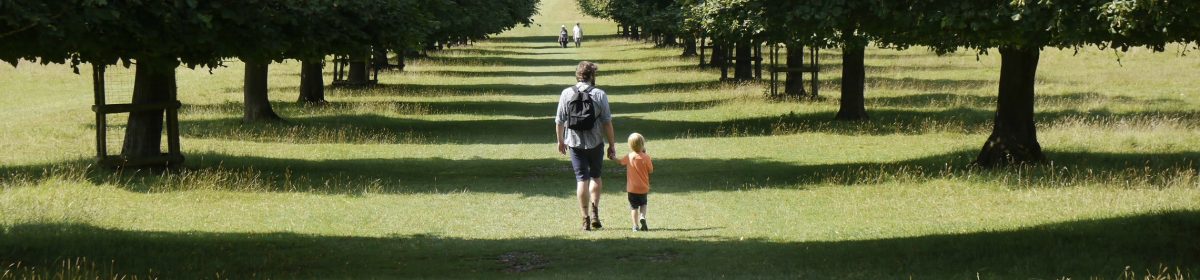
So Madame and I took advantage of the nice weather yesterday and drove over to Dyrham Park for a walk in the fresh air, having been kept indoors for days with the terrible weather. I knew I needed nine new records and got my first one as we left the car park and I realised that I’d never recorded the lovely avenue of trees that I’ve used as a banner for the last ten years. Of course I knew they were Limes but when I photographed them and turned to the books I discovered that they weren’t going to give up their precise identity without a struggle. Yes, they are Limes but no they’re not what I thought at all and turned out with a bit of forensics to be hybrid Limes, confusingly called “Common Lime” because they are – well – common. If you look again at the banner at the top of all these posts you’ll see our youngest son and our oldest grandson walking down the avenue together hand in hand. You’ll also see that the trees have all been given flat bottoms by the herd of grazing deer which were culled when they contracted TB a few years ago and have now returned with the perimeter of the park fortified with enormous fences to keep out any infected cousins. So that was good news and we await the restoration of the unnatural fringes by the deer when the leaves grow again next spring.

So that was one for the record and we wandered on down through the terraces where the National Trust team have done a great deal of forestry work, thinning and planting Yew, Bird Cherry and numerous other plants. The Rhododendrons, I imagine, are for the chop later when the newcomers have established. Most of the affected Ash trees have now been taken out so the park is going to look very different in a few years time. But everywhere we went, we could feel a real sense of direction and purpose in the plantings, it was very pleasing to see, and well done to all the volunteers who do most of the donkey work.

I guess it’s the time of year but of course the evergreens have the stage at the moment, and I always feel they’re a bit funereal. Yews and Laurels; well that’s churchyards and wreaths as far as I’m concerned! Down in the formal gardens you can see how the vision is working out. To be honest I’m not keen on straight rows and tulips but the head gardener has introduced a very subtle subversive note into the plantings and so we relished the long borders of espalier cider apples with all their local names, although we looked in vain for “slack ma girdle” which was the name we gave our quiz team when Madame worked on apple trees at the research station. Better still we found Soft Shield ferns and Black Nightshade growing on the banks and some of the healthiest looking Harts’ -tongue ferns we’d ever seen. A deft hand with the planting scheme has completely swerved any feeling of the Parks Department and created a garden that we’ll return to many times. The pruning of the apples and pears – under the guidance of the Head Gardener – who did some training at Versaille, (he told us), is unusually tight and looks almost daringly tight to the branches.

Then, for the first time ever, we ventured into the house itself – well, actually the servants’ area – because I’d spotted a very pretty Delftware tulip stand through the window in the old kitchen. It’s only the second one we’d ever seen and with the exception of two genuine antique earthenware pots, the kitchen and dairy have been equipped with some very nice freshly thrown scalding pans. There’s a photo below.

So it’s a red letter today. Two resolutions fulfilled and the third, of which this post is a part, is to complete a million words before New Year; just 34,000 to write which is going to be tough. Next year’s resolutions are going to be about boiling down the ten years of the blog to its essentials, and next week I’ll make a start on logging the fungi. Targets are good!

Autumn continues to come good.

Well the last ten days were a bit of a challenge but at last the polyps (six more of them, including a real biggie) have been removed from my colon and my system is almost recovered from fasting followed by 24 hours drinking drain cleaner and a morning under sedation at the local hospital watching the job being done on a big screen. I found out later that they’d given me a combination of pethidine and midazolam which were the reason I was able to not wriggle/scream/ or change my mind. As is the nature of these drugs I can barely remember what went on and as for the bus ride home it’s blank. I can remember the exact moment they wore off, though, as if a curtain was lifted and when I read the consultant’s notes I had the usual post-operative WTF? moment. On the plus side the (award winning) team were lovely and kindness itself.

So …. the campervan was fixed on tuesday after being recovered for the second time with a non functioning clutch. On Sunday we checked out Morrison’s garage at the Mall and they still sell LPG, so we’ll be ready for the next adventure as soon as they re-open the road through Pilning, and today we had our flu and covid top-ups and pressed a big bag of apples for juice during the afternoon.

Having decided to carry on with the allotment we’ve been working hard every day getting beds cleared and prepped ready for planting up. There are over a hundred broad bean plants of different varieties growing steadily in the greenhouse in their root trainers and very gradually we’re getting back on track. It’s been a magnificent year for the apples, and all of the trees planted in 2021 have fruited this year, which has created a new challenge for us because in spite of my careful records, it looks as if the nursery had mislabeled some of the trees, and in one row of five the first and last had been wrongly labeled – so Winter Gem and Grenadier had been transposed. This was the first time we’d been able to see the problem. The red- skinned apple on the left was one we inherited and we’ve never known for sure what it is but have gone (provisionally) for Ribstone Pippin and the green one on the right is Winter Gem which, ‘though it doesn’t look all that nice is actually delicious and very fragrant. The red spots on the skin are caused by a reaction between oxygen and the skin as the apple ripens off the tree.

Apple identification is a difficult skill to learn because it includes consideration of the horizontal and vertical section of the fruit; its shape, whether conical or round; exact description of skin colour; streaking; degree of greasiness; flowering and ripening times, the colour of the exposed fruit and the degree of russeting and you have to do a lot of it before you can be proficient. We spend a lot of time on the National Fruit Collection website – it’s extremely thorough and well worth bookmarking.

Anyway, while I was feeling sorry for myself a very divisive philosophical issue came up on the allotments when a member wrote a rather cross Facebook message about “rubbish” being “dumped” along the fence line at the bottom of the site. Madame absolutely forbade me to respond, but I feel safe here to write that there has been a growing problem, and distance, between those allotmenteers who believe you are only closer to God in a garden as long as you’ve slaughtered every blade and leaf of plants which you didn’t grow for food or aesthetic pleasure. Wild animals too, but especially badgers rats and foxes, oh and squirrels and mice – oh alright then – cats too are not permitted either. As for insects and above all caterpillars, need I say more?! At the greener end are those who, like us, keep a trail cam to enjoy the nocturnal visitors (which also include deer); we control the rats by never chucking the remains of Friday night’s takeaway on the compost heap because we know that rats originally came from India and love a curry. We have a scuzzy looking pond in which rat-tailed maggots can grow into hoverflies, and we allow lots of weeds to stay – especially nettles – because some rarish butterflies love them, and some lovely seed-setting grasses for the birds to chomp on. We obviously don’t want the Whites to eat our brassicas and so we net them carefully. Sweetcorn needs fortifications to keep the badgers out and so it goes on. Our allotment is, by the standards of the evangelicals and fundamentalists of tidyness, messy; but here’s the point. Nature just loves messy, and over ten years we’ve been visited by a dozen relatively rare plants which stay for a year or two and then move on. There was Peruvian apple, Stone-parsley, Bullwort, A rarish form of Fumitory, and others too. All-comers are welcome to come and raise a family over a couple of seasons and if some people think they’re just weeds it’s their loss.

Our relationship with nature is a conversation in which (for instance – like the apple trees) no-one speaks for four years and then something important happens. We accept that the plot we rent is not ours, but belongs to two of us (two legged creatures) and all of the other creatures from deer down in size but not importance to amoeba and thence to pollens and yeasts. We cannot compel but, as the astrologers say of the stars, we can only dispose, and if you don’t talk to the plants how will you know what they need?

So if we empty our buckets of trimmings, prunings and nuisance weeds like couch and bindweed along the fence we’re not dumping them (with all the negative connotations of that word, we’re putting them there because as they rot down to return their nutrients to the earth they provide a place of safety for dozens of species like woodlice, spiders, ladybirds, all kinds of pupae, field mice, hedgehogs and slow worms whose contributions to pollination, clearing up infestations of blackfly and suchlike, eating rotting leaves and aerating the soil – we rely on. We are part of a vast interdependent food chain. We do not dump plastic waste, old pushchairs and mattresses crisp packets or discarded drinks bottles and cans.

But we do process and store all sorts of delicious food that would otherwise be wasted. These tomatoes were picked green from dying vines after the drought, and ripened in the dark so they could be reduced to a roasted passata which keeps for at least a couple of years and is as good as pixie dust for bringing a pasta dish to life.

One swallow doesn’t make a summer

One lonely cornflower

And neither does one cornflower make a wildflower meadow whatever the salespeople of wildflower seed mix may say. We saw a similar attempt by the local council to achieve pollinator paradise on the flood terraces in front of the old Avon Street car park – possibly the previous holder of the ugliest building ever allowed in Bath but an accolade now about to be seized – you couldn’t make this up – by the new police station. Anyway, someone thought it would be a good thing to cheer the riverside up with some pretty wildflowers and it did, for a single season, after which the original occupants reasserted their ancient rights and crowded out the pretty newcomers. I’ll come back to the original occupants

Let’s be clear, I love wildflowers and they do make excellent pollinator plants, but you can’t just chuck a few seeds on a patch of any old soil and expect them to thrive. Plants, like the rest of us, have their firm preferences about where they make a home for themselves, because they’ve all evolved to grow in their particular places. Any deviation from a plant’s usual preference regarding sunlight and shade, rich soil or poor, drought or frost, acid or alkaline soil and the right kind of neighbours, can prevent it from setting seed and reproducing itself because many plants and pollinators have extremely specific needs in the rumpy pumpy department. Some plants have found it so difficult that they pollinate themselves and to hell with the consequences (field botanists having breakdowns). Founding a pollinator paradise takes a lot of expertise and preparation not to mention a great deal of patience. As nature takes on the gardening work we move into a different and much slower timescale.

Ironically, now that Bath has developed the ambition to build a wildlife corridor across the city, following the river Avon, it’s become clear that earlier generations of councillors, architects and property developers have already demolished some important but ugly areas, like the old gasworks which – because it was so heavily polluted – was off limits until the means of remediating them was better understood. So after decades of standing derelict, during which all manner of wildlife and plants created a true nature reserve, the councillors and their mates demolished the lot to build highly profitable but unaffordable homes and then offered to build a wildlife corridor on a the only narrow strip of riverbank they hadn’t already destroyed and turn it into a promised land for wildlife, and dogs, and pedestrians and cyclists and sow it with a kind of modified birdseed so that we’d all be grateful for the chance to immerse ourselves in the countryside. All ten feet of it – until an otter makes a meal of a swimming dog when nature may well be declared dangerous and shut down.

The other thing we need to take into account is that in many circumstances the local weeds – in spite of being a bit, well, meh – are excellent pollinator plants already. Think of the common as muck buddleia tree and the creeping thistle. Making thriving communities of wildflowers needs more than a handful of imported debutants shivering in the frosty air. They need unusually high resilience and adaptability and a mountain of good luck before they make it into their second year. Cornflowers have been around in this country since the Iron Age and for most of that time they were a pestilential nuisance in arable fields. With the advent of farm industrialisation, almost overnight the means of controlling cornflowers – killing them actually – using herbicides, turned the renegades into rarities and the great wheel of fortune brought them into the sunlight again. Sadly I’d bet my pension that none of them will be around by next season, and we’ll be searching for the lovely white comfrey which has now been strimmed out just below our flat. There’s enough greater burdock growing now on the Avon Street part of the corridor to start brewing dandelion and burdock once again, like Bowlers did before the factory was demolished to build the car park. Fortunately you can still go and look at Bowler’s bottling machinery in the Museum of Work – which, to be fair, is a brilliant afternoon visit. I was lucky enough to see it all in situ when I helped photograph the old works after it closed – I was only the bag-man to be fair.

My preferred option would be for us all to fall back in love with what we’ve already got before we wallpaper the riverbank with William Morris imitations. I love the muscular weeds, the fistsized birdcages of the wild carrots in late summer, the bizarrely improbable wild lettuces down by the bus station, the willowherbs (how many kinds can you spot?) and the bafflingly similar dandelion lookalikes. Our neighbour spotted comma butterflies taking nectar from the buddleias down near Green Park today. How many bramble varieties can you spot? There are hundreds of them and goodness knows how many in Bath. Mallows, mulleins, gypsywort, soapwort and beggarticks are all there on the canal waiting for a hello and the waterlilies in the river would love a wave from you (clonking pun intended!) and with all these plants, the closer you look the more stunning they are; the simplest walk becomes a festival of beauty and what’s more, it’s constantly changing. Just noticing that the landscape is constantly evolving is exciting. The waterside flora is in constant flux throughout the year like a never-ending flower show. You’ve probably heard of the slow food movement and perhaps we should explore the wildlife corridor with a slow walking movement, (which will totally annoy the cyclists and runners but hey!). There are phone apps that will help you identify the plants you’ve photographed very accurately. Flora Incognita is very good as are Obsidentify and iNaturalist -all of them free – and if birds are your thing Merlin is very good and fun to use and bear in mind that many birds feed and rely on seeds to get through the winter.

As the much missed Whole Earth Catalogue said on its cover – “We can’t put it together – it is together” – and it will only stay together if we understand and treasure what we’ve already got!

Orange balsam on the river today.

The Potwell Inn and the modern peasant

I’ll get to the dog later, meanwhile the fruits of a morning in the kitchen; some bread proving on the stove , some Tayberry Jam, some Dutch apple cake and a delightful but very hungry Bordeaux Mastiff.

Being a modern peasant

Like all the best thoughts, this one popped into my mind after a couple of days on the stove. Beaten back into the kitchen by 90 mph winds and repeated floods, we’ve moved into one of my favourite times of the year – the pre-Christmas cookathon. In the last couple of weeks I’ve made the Christmas puds, the Christmas cake and a Dundee cake plus a lot of experimental bread baking of which more later. There’s method in the madness because it involves emptying the freezer as much as possible to make room for the Christmas onslaught, as well as emptying the cupboards of all the dried fruit that’s been lurking in the larder since last year. I appreciate that the real focus should be on buying the new seasonal dried fruit that’s just coming on to the market but I’ve never been that organised. I’ve often mentioned here that I get the feeling I’m channeling my Mum when I cook the Christmas food. It was she who taught my sister and me to bake bread and make the cakes and puddings. She taught me to make Yorkshire puddings with an unforgettable demonstration of the specific gloppy sound of a batter at just the right thickness. I admit that I dropped the added bicarb in greens as soon as I could, but the basics were all there.

This mindfulness of the past is an essential peasant quality. Peasant consciousness is filled with connections – with seasonality; with location; with nature; and all of them forged into instinctive knowledge. My Mum could judge the approaching weather by looking into the sky and seeing what was going on over Granny Perrin’s Nest which I could never see! She’d never used anything other than an outside earth closet until she’d lived her first decade in the Chilterns. She knew the flowers by their local folk names which makes it difficult to know what she was actually describing when she talked about her favourite flower – Ladies Slipper – which is used for seven flowers in Somerset alone.

I hate the way we use the word “peasant” to denigrate people whose knowledge is so profoundly integrated and I much prefer the French paysan which embodies the sense of rootedness and place; of flora and fauna and of the knowledge of how to grow things well and how to heal them; how to cook and eat and how to move in a landscape without damaging it. Peasant speech is full of earthy, hard won wisdom – not from the latest scientific paper but from generations of experience. My Grandfather Tommy Cox whose family had lived in Stoke Row since the eighteenth century; so long that the village had both Cox’s Cottages and Cox’s Lane within its boundaries, would say of cow manure – “There’s more heart in a sheep’s fart!”. He was a self-taught carpenter who gave me my first slide rule; taught me how to use logarithms and helped me build my first radio sets. He was as far from stupid as you could get; the prototype of all modern peasants.

Peasant knowledge lives in the hands and fingers, in the senses of touch and vision, taste and smell; in the ability to mend and repair; to ride the waves when the going gets tough, in the collaborative community of mutual aid and barter. All this came back to me as I was writing my talk on AI and plant phone apps. Yes we can use the correct name – in Latin too – but do we even begin to see what my Mum saw? do we know if Ladies Slipper was an almost extinct orchid, or perhaps a more common Kidney Vetch whose specific name “vulneraria” suggests healing properties. Was she laughing because she knew the name, on that walk back from the Crown at Parkfield when the old man passing us described the Dandelions my sister had picked as “piss the beds”. She was the most larcenous mother in history. Any walk around a garden would see her dropping snaffled plant material into her pre-prepared handbag. My sister is still growing one of Mum’s liberated Speedwell plants on the steps outside her flat. Both of us inherited her love of gardening and both of us have had city allotments. We two seem to have inherited that peasant blood; of growing and eating our own produce and in my passion for hand crafts.

Meanwhile it’s been radio silence on the Potwell Inn blog, largely because it’s been a pretty chaotic time, with hospital and GP appointments (we are now both officially alive!); failed hot water boiler; four named storms; dentist appointments – we like to squeeze them all in while we’re not off camping; family birthdays; physiotherapy appointments; winter repairs to the camper van, a field trip to the Mendip Hills; writing a talk on artificial intelligence and wildlife phone apps which I gave last Tuesday to the Bath Natural History Society; and a four day trip to our friends in the Bannau Brycheiniog aka the Brecon Beacons – which is where the dog comes in. Last weekend we drove up to the Bannau to our friends’ smallholding. As ever it was a full four days which included loading a couple of pigs to take to the local slaughterhouse, and trips to Brecon and Talgarth where we watched a dozen or more Red Kites milling around in search of scraps from the local butcher who feeds them. Red Kite were a rarity a few years ago and now they’re fanning out across the country. They don’t kill their prey but are mainly carrion eaters – tidying up and reaping where others have sown. Recently we saw approaching fifty milling around a rubbish tip north of Rhayader and it can only be a matter of time before we fickle humans start to regard them as a bit of a nuisance and accuse them of stealing babies from their prams.

Much of the weekend was occupied by fun cooking, and we worked together to produce a lavish Sunday lunch from their own produce. Star of the show was a largish lamb joint which was placed on the side while we ate. Almost unnoticed the dog’s enormous head appeared silently above the counter and he took the whole joint in his jaws – slinking silently off followed by the irate owner and our friends who had nurtured the sheep. As Sam Weller might have said whilst describing a human kerfuffle in Pickwick Papers- “collapse of stout party!”

A revelation in the breadmaking department

I’ve had a breakthrough on the hunt for the perfect sourdough loaf. I’ve always gone with the prevailing wisdom (i.e. fashion) which insists that loaves should be bursting through their crusts with what’s known in the trade as spring, and with crusts as hard as hell that lacerate your mouth, and crumb that’s full of holes through which butter runs and greases your armpits. If it’s also got a pH around 2 and keeps you up all night with acid re-flux that just proves how hard you are. Of course some of these aims are mutually contradictory, for instance it’s virtually impossible to get anything other than a brick out of 100% wholemeal grains, and your four year old sack of flour bought during lockdown wouldn’t rise even with the addition of plastic explosive. As ever, ruthless orthodoxy is a blind alley with a big argumentative crowd of evangelical artisan bakers at the end.

What we’ve always wanted was rich sourdough flavour from a tin loaf with a regular cross section for slicing and toasting and a flavoursome crust with good colour which is soft enough to eat but adds to the whole taste – like the breakdown on good cheese; the bit between the rind and the main body which, by the way, I love. In search of this goal I just bought three black iron bread tins which are just fantastic – heavy and needing regular care but never washed. I bought a similar French crêpe pan twenty years ago which never ever sticks. But the real change was of mindset. I’ve always been the kind of cook who would slavishly follow the recipe or instructions in search of so-called perfection. But over recent years, and as my experience deepens, I’ve become more thoughtful; more creative and more willing to branch out. The arbiters of sourdough orthodoxy have always tended towards a ruthless rejection of yeast. Purity is everything – even though sourdough starters must naturally vary greatly. I’ve got two; both rescued from my own neglect; one (called Tigger) was grown from some dried flakes on a dead starter tub and the other (Eeyore) came from the impoverished and terminally sick original. Tigger took off like a rocket – hence the name, and Eeyore was always slower but after months of comparison bakings much nicer and better adapted to the Potwell Inn timetable.

The breakthrough came when I came across Ken Forkish’s book “Evolutions in Bread” and skimmed into a page that described adding conventional dried yeast to the initial sourdough batter after maturing it overnight. You’ve no idea how I resisted the very idea of polluting my sourdough, but I tried it with some leftover supermarket flour and to my great surprise the combination of black iron tin and a sprinkle of yeast halfway through gave just the kind of softer, moister texture with all of the genuine flavour that we were looking for. The photo shows the third batch using Eeyore starter, the heavyweight tin and my favourite organic traditional flour.

The talk

So finally, the talk to the Bath Natural History Society was last Tuesday and as luck would have it, I was speaking in the next door room to A C Grayling the philosopher. He popped his head around the door and I was able to offer my condolences for having to share the evening with me, even if we were in different rooms. He seemed to bear it bravely. As it was I had an audience of around 35 (I didn’t count) – including 3 Vice County Recorders and two national authorities – so anyone with more brains than me would have been intimidated but I was well prepared for a degree of hostility; AI raises very strong feelings so in full diplomatic mode I kicked off with a faked photo of a ghost orchid made (by our son) using Google Gemini. Things could only get better after that, I thought.

As it was the talk went pretty well – I wasn’t aiming at the experts but at the newer members who are quite intimidated by conspicuous upstaging in Latin. I treated it as a kind of seminar where it was acceptable to lob questions at the participants – only one of whom appeared to have nodded off. He paid rapt attention for the rest of the talk. Given that I’d had to teach myself an entirely new programme and use a bunch of software on equipment I’d never seen before, my feared wipeout didn’t happen and the presentation ended just at the moment I caught sight of Madame tapping her watch. What a coincidence!

Clack click; clack click – let’s think, let’s think – sings the passata machine.

High season for tomatoes (and Wrens)

We grow our tomatoes in the polytunnel on grafted rootstocks and with blight resistant varieties. It’s by no means cheap, but we haven’t lost a crop to blight in years, and having grown both from seed and from grafted rootstocks, the commercial ones, bought from a local nursery (so we can see what we’re getting) have a much higher yield and more than pay for themselves as long as we water them consistently and feed them with an organic seaweed based fertilizer. They ripen over a period which gives us plentiful fresh tomatoes in the kitchen but any surplus is quickly preserved. Freezing is very energy intensive, so we rely on reusable glass preserving jars with new metal tops every year so they seal perfectly. Our collection of Italian jars and bottles has been in continuous use for nearly ten years now. After several years of pushing the pulp through a sieve – which is very slow – we bought a cheap hand cranked passata machine which will easily mill six pounds of tomatoes in ten minutes, neatly removing skins and seeds which we don’t put into the compost any more because then we land up with hundreds of tomato seedlings!

The passata machine and the pulp. The pale yellow lumps are butter.

Depending on which part of the cycle the little spring loaded paddles have been assembled in against the sieve, the first few turns of the handle yield hesitant and irregular clickings. But as soon as the hopper is filled with peeled and chopped tomatoes and the process speeds up, it sounds to me something like “Lets think! Let’s think!” Each hopper goes through the machine five times, recovering first the juice and later the thicker pulp. Finally the skins go through because there’s a surprising amount of pulp still on the skins. At the end I have a deep pan half filled with passata and a shallow enamel dish filled with almost dry seeds and skin. It’s high summer and one of those grounding kitchen rituals which mark the transition of the seasons, just as marmalade making marks the end of winter and Christmas pudding, the beginning of it.

This kind of sauce making reduces our almost unmanageable crop of tomatoes to around a quarter of their original weight and prepares them for storage so they last more than a year. We make several kinds of sauce, but this one – which we simply call Hazan number one comes from Marcella Hazan’s marvellous book “The Essentials of Classic Italian cooking”. We also make straight passata and roasted tomato sauce from Pam Corbin’s River Cottage Handbook “Preserves”. Then there’s tomato ketchup from a 1950’s HMSO book and, if there are any leftover green tomatoes we make chutney from my Mum’s old cookbook. Nothing gets wasted at the Potwell Inn apart from (very occasionally) the Landlord.

Meanwhile Madame has been continuing with her years-long search for a ratatouille recipe that I’ll actually like. I was put off ‘rat’ by over-exposure to it on camping trips in the past, when it always tasted of methylated spirits from the Trangia Stove. However, because we’ve got all the fresh ingredients coming off the allotment at the moment, she has been experimenting from a whole pile of recipes and yesterday’s came from Delia Smith, but shares its DNA with a much earlier one by Jane Grigson. The whole aim is to create a dish that doesn’t look like pavement vomit. Simply boiling up all the ingredients into a wet and slimy sludge should be enough to get you a stiff fine for vandalism. Anyway, Madame’s latest iteration last night looks and tastes like the best yet.

But there’s more to it than that. “Let’s think ….. let’s think” sings the passata machine as I crank the handle.

I love this kind of seasonal cooking (and eating), and I learned about kitchen thrift from my mother and grandmother who understood food shortages from the experience of two world wars. But there’s more to it than that. “Let’s think ….. let’s think” sings the passata machine as I crank the handle. These seasonal earthings are incredibly important to both of us and at these times we work as a team in the kitchen. I suppose – if you suffer from the burden of believing that there are better or more important things to do with your time than press tomatoes through a sieve or make your own Hollandaise sauce – then you’ll miss the meditative thoughtfulness that repetitive kitchen work brings. The meditation strengthens the link between growing the plant, preparing the food and eating together.

Growing food, cooking and eating together are fundamental to thriving; much more – dare I say – than commodified health and conspicuous consumption. Pouring damson jam into pots brings the trees and their fruits to the table in the depths of winter. Making a wish over the Christmas pudding mixture is – at its very least – a wish for a peaceful future. Beating a mayonnaise or mashing potatoes will give a few minutes respite from endless bad news about riots and hatred. Baking bread means committing 24 hours to something of more moment than gossip.

My thoughts – as I crank the handle of the passata machine – are the spiritual equivalent of Mother Julian’s prayer that – “all will be well and all manner of things will be well.” The seasons, the moon and the tides wax and wane without regard for our existential angst. Whilst anyone with a grain of common sense will understand that we really cannot be anything we want to be, because our lives are a continual negotiation with nature and circumstance; we can still thrive by immersing ourselves in the flow moments when we know what it means to be human rather than spend anxious lives doom scrolling on our mobiles. Maybe the wooden spoon should be promoted to first prize?

The bindweed in the background should remind any gardener that the devil is always lurking in the background, waiting for an opportune moment

An old friend – the Widcombe Heron

Not being a birder of any merit, I couldn’t tell you which of the Widcombe herons this is. There’s a substantial heronry just up the road from Prior Park nursery and it’s not unusual to see one anywhere along the Kennet and Avon Canal between Deep Lock and – let’s say – Dundas aqueduct. I’ve never forgotten seeing my first heron take off unexpectedly from just behind a hedge. My heart almost froze as it cranked itself into the air like a pterodactyl entering my world through some kind of worm hole into the past. Today’s creature was less impressive as it perched on the rope bumper waiting for us to leave and toppled into the canal after a half-hearted attempt to fly away. Later it flew away down the canal in that nonchalant way that we humans adopt when we’ve done something really stupid.

I think Madame and me both needed a break from weeding on the allotment – I mean I quite enjoy hand weeding but hour after hour of its punishing effect on our backs and knees makes the prospect of a straightforward walk all the more attractive. This particular walk is one we’ve done many times because we developed it during the COVID lockdown; a circular walk of almost exactly 10,000 steps using the river and the canal towpaths and passing through Sydney Gardens and Henrietta Park and back through Widcombe.

The advantage of repeatedly following the same walk is the way we get to know the plants and birds. I suppose you could over-egg it by calling it a transect but it’s really much more informal than that and we include sinking boats among our objects of interest along the way. The regular floods we’ve been experiencing wreak havoc with moored boats which – if their mooring lines are too short – turn turtle and sink. Here’s one from September 2022

-and the same boat today:

You may notice that the Buddleia has now been joined by a big group of Purple Loosestrife and the wreck is gradually turning into a small nature reserve as the cabin roof gradually rots away. On the far side of the bridge pier a sunken narrow boat rests dangerously beneath the surface, the roof rail with which it was obviously hitched has torn off and is all that’s now visible except for a big yellow buoy to warn passing boat traffic. At least it makes a pleasant change from stolen pushbikes and supermarket trolleys, but you have to wonder whether there’s a rusting fuel tank hidden inside, waiting to leak into the already polluted river. It costs thousands of pounds to remove these sunken boats.

I was on the lookout for a Soapwort that usually shows itself on the canalside, but it was a tad too early I think. I was so absorbed in photographing narrowboats that I passed a site where Marsh Figwort grows. I’ve always wondered where the name Figwort comes from and I’m indebted to my new favourite book for telling me that figs is one of the names the herbalists gave to piles – which judging from the herbals was an extremely common affliction in the past.

Our last find was a group of Musk Mallow growing in a little wildflower area at the end of Widcombe High Street. Unlike many such little created reserves, this one has nothing but native plants in it, and they seem to be enjoying themselves. I think they’re really beautiful.

Bloodstained Juggling with six balls

By Brook seen from the lawn of the White Hart in Ford

I’m wrestling with half a dozen recalcitrant strands of an idea that just might make a story. Of course it might also just make a WTF? mess – only time and a patient reader will tell.

So the first strand is this. I mentioned last week in The Potwell Inn blog that my copy of Geoffrey Grigson’s marvellously useful book “An Englishman’s Flora” is falling apart and I’d have to buy another copy. My clapped out paperback is a 1975 reprint of the original hardback published in 1958 and the pages are now turning brown and are foxed. The glue binding is breaking down and it’s just at the point where the pages start dropping out. I bought it for next to nothing in an Oxfam shop and I see that the cover price was less than £2 when it was new. Anyway, prompted by my resolution it went into our very small bathroom where I rediscovered what a magnificent resource it is and immediately searched out a hardback secondhand version for £17, presently on it way from another OXFAM shop in Harrogate. That’s thread one.

Thread two emerged when I was browsing through the book and randomly came across the entry for Dwarf Elder which is given no less than seven pages by the gloriously erudite Grigson. Married three times, his last wife was Jane Grigson the food writer who – I discovered today during my flurry of research – believed that food is such an important component of being human flourishing that it deserves the same high standard of writing as any other form of literature. Of course she was absolutely spot on which is why I’ve got a shelf full of her books. That’s a side issue, though for the purposes of this piece of weaving, but what a family they must have been!

The main thread concerns the Dwarf Elder because I only saw the plant for the first time this year on the footpath to the north of the lakes at Woodchester Mansion. According to the BSBI Plant Atlas 2020 it’s in steep decline across the country; probably partly due to the fact that it’s no longer planted as a medicinal herb often in churchyards in order, they believed, to improve its health giving qualities.

So threads three and four join the river at this point because Grigson points out that it’s a stronger version of the Common Elder, the roots and leaves of which can yield a blue dye and a powerful purgative. We should bear in mind that for many centuries (this plant gets mentioned by Dioscorides in his first century pharmacopeia ) – plants were prized more for their medicinal usefulness more than for their aesthetic qualities. However the more intriguing point is that its local name is Danewort and it was believed – perhaps due to the colour of the berries and leaves – that it sprang from the bodies, or more specifically the blood, of Danish invaders. The bloody colour and the doctrine of signatures gave the game away – it was thought. So far, so fascinating I thought, but then I (metaphorically) sat up straight because he wrote that the plant could still be found in 1974 in the village of Slaughterford which straddles By Brook. Hold on to that thought because I’ll come back to it for another thread. As it happens, and as you’ll know already if you’re a Potwell Inn regular, we drove over to Slaughterford only a few weeks ago in search of a pub which turned out to be in the next village of Ford. If you were even considering duplicating our trip I’d strongly advise approaching the pub from the A420 because the connection between Slaughterford and Ford is not much better than a muddy track.

But why Slaughterford? You have to ask don’t you? Grigson quotes the 17th century Wiltshire historian John Aubrey and then dismisses his assertion that Dwarf Elder aka Danewort or even Danesblood which still apparently grows in Slaughterford is the sign that a battle between King Alfred and the Danish invaders was fought in the village and resulted in the rout of the Danes with much slaughter. A quick scamper around Wikipedia establishes that the consensus today is that the battle was actually fought some miles away in Edington.

But in the early hours of this morning, I was mulling over what I’d discovered about Grigson, and another fact that came up was that he’d lived in “North Wiltshire”. Might he have lived in Slaughterford? was the tantalizing thought which kept me awake. The answer, after an early start on the laptop, was no he didn’t. But he did live quite nearby on the other side of Chippenham.

Gradually the picture was emerging that Slaughterford was not the scene of a famous battle fought by King Alfred and so how on earth did it come by such a gory name? The truth turns out to be that the name is a contraction from the Saxon of Sloe Thorn – and so the village name really means the river crossing where the sloes trees (Blackthorn) grows.

There must have been many crossing points on By Brook. At one time there were over twenty mills working there and we actually walked up the river past the last functioning paper mill in around 1970. Coming upon it while walking the banks from Corsham was quite a surprise – a semi derelict industrial site in the midst of the most beautiful valley. I’m waiting for my newer and more durable copy of the book to arrive, but what a fascinating journey from a Greek botanist to a 20th century poet. The Slaughterford myth gets repeated even in quite recent herbals – Mrs Grieve’s 1920’s book “A Modern Herbal” quotes it without comment.

There are two further points about By Brook I could make. Firstly the photos I took from the pub garden strongly suggest that the water is far more polluted and eutrophic than it was when we first encountered it in 1970. You’d probably find it impossible to make paper there now, and the brown trout also need clean and unpolluted water. But secondly, there is strong enough evidence to make it to the Natural History Museum website, that there is at least one family of beavers living on the brook. Thank goodness the beavers are vegetarian and therefore no threat to the local trout. In fact the fly fishers commissioned a report on the condition of the brook which recommended some modifications to the river bed to improve flows and slacks to help with breeding the native brown trout. Maybe they’ll get their wish granted free of charge by nature. I’m sure beavers and brown trout have lived in harmony in previous centuries before the beavers were hunted to extinction.

Postscript

My secondhand book arrived today – big thanks to OXFAM in Harrogate. It’s wonderful – in excellent condition and properly bound to lie flat. I absolutely love it! The paperback version can go back for an honourable retirement in the bookcase.