Including two distinct types


So the first bunch are entirely harmless in most ways but just as a weed is a flower in the wrong place these are mostly weeds in the wrong place – that’s to say the North Quay in the centre of Bath isn’t the place you’d expect to see clifftop and ancient meadow specialists. But walking along the river just now is a continuous surprise, for instance I’ve never seen a corncockle in its natural habitat – there’s a clue in the name – and as for ragged robin, one of my favourite wildflowers I associate it with boggy ground in West Wales and on Mendip but not next to the bus station.
Now I know that there are many purists who think that these artificial wildflower mixes somehow ruin the ‘purity’ of the local environment – and you can see their point – except that short of seeing them in the wrong place you’d be pretty unlikely to see them at all. Why not a bus station? – if it keeps the species going surely that’s better than letting it become extinct because they’ve turned its favourite habitat into a car park. I’ve been fascinated to see what’s survived and what’s passed into oblivion over the last three years, and the sheer diversity of plant-life on the river bank makes a glorious picture in the sunshine. Sadly I think some will not thrive in this turned over soil and the nettles and docks are not going to give way to their more fragrant and colourful new neighbours. Perhaps this would be a good time to put up signage to introduce walkers to some of the newcomers. I was honestly flummoxed by the corncockle, for example, because I’ve never seen it before and it was just as beautiful as an unexpected non-native introduction because it’s virtually extinct in the wild. So rogues, but the kind you can develop some affection for.
Walking through Bath today we could see that, notwithstanding all the scientific advice, the streets are slowly coming back to life; and you have to wonder why this is being allowed? My own darkest fear is that the Covid 19 pandemic is being used as a kind of distraction burglary and what’s being stolen is the environment, the air we breathe, the water we drink and the food we eat. What’s being stolen is job security, education, care in the community and a hundred and one other supremely important things that are regarded as profit sapping extravagances by the powerful, and if they get their way we can wave goodbye to any chance of dragging the earth back from destruction.
That corncockle is almost extinct because of what’s been done to its natural habitat. In fact you could say that the wildflower seed mix so beloved of architects and town planners is- ‘though it might be keeping the species just about alive – no more than a bit of idle greenwashing. Playing the fiddle while the earth burns. The same could be said of so many artisan extravagances and consumer distractions.
the more dangerous kind of rogue wears a suit and tells you what you want to hear while he’s draining away your hopes and selling them off to the highest bidder
There’s a very well thumbed copy of Naomi Klein’s book “This changes everything”. It’s so well thumbed, it looks as if I’ve had it for years, but it’s almost new. The truth is it’s so alarming that I can only manage a paragraph at a time and so it’s aged prematurely while it fuelled my anger and despair. And that’s the problem. Despair is their tool! It’s really not impossible to imagine a world in which we made things we needed for real, and made them so they’d last. I’ve got a large Pyrex bowl in the kitchen in which I’ve been proving bread dough for over fifty years. It’s scratched and dull from continual use and yet I’m so fond of it I treat it like an old friend. I’d be heartbroken if anything ever happened to it. I don’t feel poor; I don’t feel ashamed that I wear a pair of shoes until they pretty much fall apart; I don’t feel ashamed that I can sew a button on, or that we buy quality clothes because they last for years and pass through from ‘best’ to ‘OK for the allotment’. I don’t need a big car to prop up my fragile ego.
While I was writing this I wandered into the kitchen and saw a drug deal being conducted right in front of me on the street below. Both dealer and customer looked like rogues, but the more dangerous kind of rogue wears a suit and tells you what you want to hear while he’s draining away your hopes and selling them off to the highest bidder. Farmers and fishermen alike have been conned into thinking that leaving the EU would allow us to protect our own. It can’t do that because the World Trade Organisation is set up to make it illegal to protect our own.
Covid has taken our attention away from the environment – the hottest, sunniest and driest spring for many decades has been taking place. Levels of pollution have dropped – this isn’t rocket science! – but if we go back to the way things were they will rise inexorably again as they have in China. Covid has taken our attention away from an economic system that has served the wealthy for so long, but is now collapsing under the weight of its own contradictions. We haven’t got one big problem we’ve got several and time is running out.

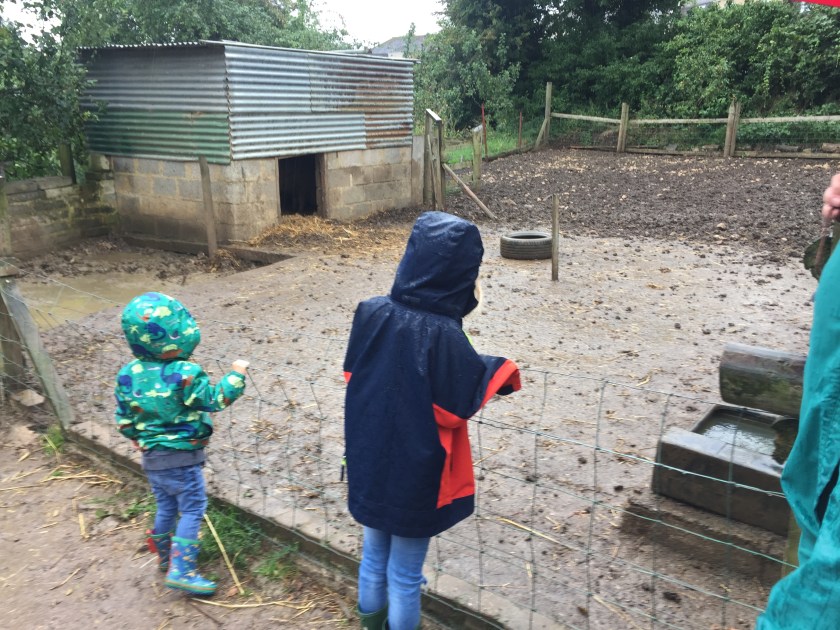
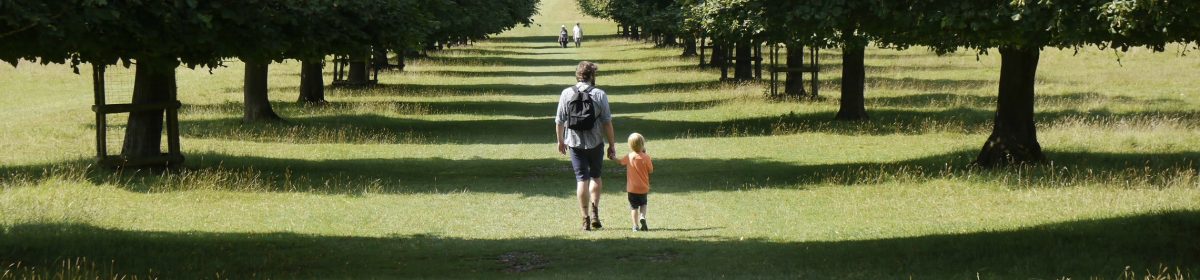
 A couple of days of intensive grandparenting have kept us pretty busy at the Potwell Inn, and yesterday we bussed over to Bristol to look after the two youngest during the day while their mum and dad were at an event. We’d planned taking them to the Museum and Art Gallery – always a haven for wet days and access time for glum looking parents, but due to a mix-up with the buses into the city centre we spent most of our time on the bus. The museum turned out to be closed on Mondays anyway but – and this is the important point – the children were wonderfully philosophical and loved the buses which, I suspect, they don’t get to use much. We use them whenever we can because it keeps the car off the road and it’s free. This is no mean achievement for the government, a social policy that older people love, use all the time, and must surely be good for the environment. It makes no distinction between the deserving and the undeserving poor (a truly malignant calculus) and I can’t understand why politicians don’t stop waffling on with endless pious hopes about public transport and support it with hard cash. People will flock to it if it’s cheap (and clean), but when a single bus fare from Bath to Bristol in peak time costs £5 there’s very little incentive to leave the car behind. The poorest, of course, have no choice.


 We know the whole environmental culture has to change, and so let’s take the example of tree planting. Should we plant a million trees, say? Well yes, but where should we plant them? – and what trees should we plant? whose land shall we plant them on? who will pay for them, maintain them and keep them healthy? Can we tackle the climate crisis and the extinction crisis at the same time with the same plan – or will the two sides of the larger crisis require a plan modulated to meet both? This is where I part company with some of Monbiot’s comments because one obvious solution is to use the presently indefensible agricultural subsidy system to change the farming culture. To say to farmers “you can do what you like (within the law) with your own land, but we won’t pay you to do it if it doesn’t bring about any public good.” I’m pretty sure that most farmers would be only too pleased to stop damaging their land so long as it didn’t bankrupt them in the process. Most hill-farms get 80% of their income from subsidies. Monbiot is quite right to say that the hill-country landscape has been turned into a wildlife desert by overgrazing sheep, but whose fault is that when, until recent years, farmers were paid according to the size of their flocks so, of course, they overstocked the sheep. Millions, if not hundreds of millions of trees could be planted on some of that unproductive land but the best possible workforce and custodians of the new forests would be the farmers who presently farm sheep. They’re in place already and they know their land as only farmers do. Calling for an end to sheep farming only makes a dangerous situation worse. Do we even know what numbers of sheep might constitute a sustainable national flock? Aren’t there economic and ecological benefits to maintainin a much smaller national flock thereby retaining the best of the hill farming culture and reducing overproduction to the point where the market for sheep and wool improves. Would a revival in woollen cloth be a sustainable alternative to more plastics? I don’t see the point in alienating and threatening farmers with the expropriation of their livelihoods when we know we’re going to need them onside. The grouse moors are much harder to defend, especially when the cost of shooting is so great that only the wealthy can participate, and amid the costs to wildlife by heather burning are the sinister statistics around the shooting and poisoning of birds of prey by gamekeepers who know when to keep their mouths shut.


 We were birdwatching down on the estuary today when I caught sight of this curious object. From 20 yards it looked like a fungus, but sadly it turned out to be just another piece of plastic waste – in this case a polyurethane foam canister leaking foam as the canister degrades in the salt water. I’d have carried it home if it weren’t for the fact that it appeared to still have enough propellant left to make it explode.