Cottage Economy

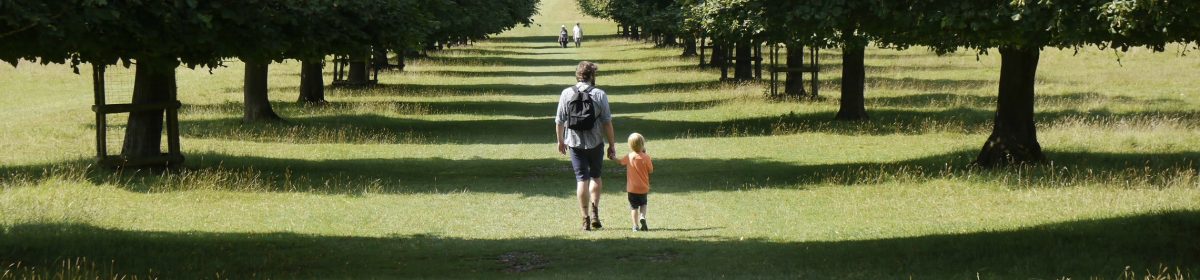
This photograph of Stoke Row hangs over my desk partly as a reminder of another era, but also as a reminder of my grandfather who, apart from a spell working as a carpenter in London, was born and lived there for almost the whole of his life. He was probably the biggest influence in my life; very short and equally short tempered with a creative gift for cursing that I’m fortunate to have inherited. He was a vernacular builder which meant his drawings were almost always on the back of a fag packet and securely in his head. Most importantly he was a natural radical and he had a collection of books that opened my mind to a world of possibilities, and several huge long sheds in which he stored everything he’d ever wanted to repair but never got round to; for instance a couple of penny in the slot pianolas which he would let my sister and me play with. He could make rainbows with a stirrup pump; give us rides in his wheelbarrow and let us feed the hens or look for Charlie the toad in the greenhouse. He also grew and cured his own tobacco which was so smelly he was chucked out of the pub for smoking it. He made carpenter style furniture – he was no Chippendale -hand built the first wireless set in the village and owned the first television. He also helped me to build my first transistor radio and erected a long wave aerial in the garden for me. He was almost entirely self educated and taught me logarithms before he gave me my first slide-rule (a kind of manual calculator for working with big numbers). He introduced me to Dickens and H G Wells and although he was a devout atheist, would secretly repair the benches in a local churchyard.

Much later, long after he died, I discovered the radical writer and pamphleteer William Cobbett; thorn in the side of everyone who annoyed him and whose two books “Rural Rides” and “Cottage Economy” inspired me and reminded me of my grandfather. I think this website owes a great deal to William Cobbett’s writing. In “”Rural Rides” he took up the cudgels on behalf of starving farm workers after undertaking a series of rides on horseback to see for himself the terrible poverty that followed the systematic impoverishment of land workers during the Industrial Revolution. He fought government corruption and campaigned for a more just electoral system – and when I say campaigned – his writings were fierce enough to have him thrown into prison several times. He fled from justice to France in the middle of the revolution; thought better of it and sailed on to America only to find that as a conservative he sat uneasily within the radical movements of the day, I would probably have hated him if I’d ever met him because he was really a backward looking old style conservative but the fire that flows through every sentence of Rural Rides is a model of righteous anger.

Most historians dismiss Cobbett because he advocated a return to the old rural ways. He was a ruralist and farmer himself and although he spent the last years of his life as an elected MP he never gave up campaigning. He wrote at the beginning of the industrial capitalist society and already he could see the cruelty and contradictions inherent in its exploitative and extractive philosophy. Today; as we suffer in the dog days of the same ideology, radical thinkers are again persecuted and imprisoned by powerful interests who can’t tell the difference between criticism and insurrection; and national politics once more is stained by corruption; industrial strength lying and greed.

Cobbett’s other book – “Cottage Economy” is, or should be required reading for anyone interested in 19th century traditional farming and any form of self-sufficiency. In a haze of what might seem to be sentimental idealisation of rural life due to Cobbett’s lifelong conservatism, Cobbett explains brewing, bread baking, building an ice house, the keeping and killing of farm animals and the preserving of them by smoking. He thought that the potato was the work of the devil and that the drinking of tea and the consumption of potatoes made men effeminate(?). Bread and beer were the culinary gods in his canon, and at a time when much water was unsafe to drink, the consumption of “small beer” – brewed from the remaining malted grains after they’d been once sparged – or washed for the making of stronger ale – was much safer having been boiled. Above all the book is a fascinating social history of village life before the industrial revolution. It’s hilariously funny at times – Cobbett was an old fashioned Church of England member and addressed some of his funniest and most excoriating prose to the Methodist Ministers who – in his fertile imagination – would always turn up to visit the poor cottager on the day that the pig was killed. No-one could possibly try to run a 21st century life on the pattern of a 19th century polemic, but his memorable style can make you wish it could still be possible; indeed some survivalists really do try it.

But Cobbett understood and called out injustice and its perpetrators in a fearless way that scared them. He was utterly incorruptible in a way that I would love to see once again. His pen name was Peter Porcupine – you get the joke at his own expense and he never stopped writing, pamphleteering and campaigning on behalf of the poor. Most critics focus on what he was wrong about. I prefer to attend to the things he was absolutely right about.

I wonder what my Grandfather – who was a member of the Independent Labour Party – and my Father who was also a lifelong Labour Party member would think about the present state of British Politics which is so corrupted by the lust for power that we can only look forward to choosing between a wealthy liar and a spineless liar because the electoral system is purpose built to crush radical dissent.

But although I get very sad at times I’m essentially an optimist, and the Potwell Inn and the way we do things around here are essentially my personal project to dig a pollution free well; think as clearly as I can; grow some healthy food to cook and keep us out of the hands of the merchants of sickness; oh and find every occasion to provoke and challenge the knuckle draggers and drool mongers who are driving all life on earth into a wall in the hope of enriching themselves at our expense.

There are, as the saying goes, no pockets in a shroud!

Pleasure delayed – batch cooking.

Madame with aubergines.

Suddenly we have surpluses to deal with – possibly due to the fact that we invested in grafted aubergine and tomato plants this year and they are strikingly vigorous and are both producing fruit at speed. I know that many gardeners avoid spending money on F1 hybrids and grow all their crops from seed, but seeds often decline in their ability to germinate quite quickly and some saved seed may be infected with diseases. Is it worth spending the extra on grafted plants and F1 hybrids? In my opinion, the blight resistant varieties of tomato and potato are worth their weight in gold – they really work. Every year on the allotment site there are gardeners who lose their entire crop when blight strikes. There’s no more depressing sight in the world. Our grafted plants are far more productive than the ones we grow from seed ourselves so we’ll continue to buy them. However they can arrive in a very sorry state when we’ve ordered online and sat for days in a warehouse, and so we prefer to buy them at a garden centre where we can see what we’re getting.

So this weekend it’s been raining and therefore a perfect time for batch cooking. I’ve made bramble jelly with the wild fruit we picked, and a couple of kilos of ripe tomatoes into the first batch of roasted tomato passata. This batch was so powerfully flavoured I bottled it in 250g jars – plenty for a pasta dish for two. The last job was to stuff eight aubergines with a middle-eastern flavoured lamb mixture. We’ll freeze them and get them out for a quick meal on a busy day.

I’ve written before about the pleasures of a full store cupboard; pleasures which are just as flavourful when delayed as they are the day they are made. Some things, of course, don’t store or freeze well and they’re the heart of the seasonal contribution to our meals. Tomatoes are so important that we produce three different sauces – unflavoured straight passata; Hazan number one – a beautifully flavoured passata/sauce with mild onion and indecent amounts of butter; and finally the roasted sauce which is a standby for any dish that needs a tablespoon of rocket fuel – umami on steroids. Most seasons we make enough to feed us throughout the year.

It’s been an uphill struggle to second guess the weather this year. The seasons have been badly affected by climate change and the unwillingness of politicians to address the coming crisis is a shameful betrayal. I was particularly struck by a droll remark by an ex Labour party supporter who adapted one of Blair’s catchphrases to: “Tough on hope; tough on the causes of hope”. Someone needs to show them that sticking your fingers in your ears and shouting la la la la la doesn’t amount to a strategy. Lowest common denominator politics is low and common and I can’t understand why anyone with more than ten brain cells would want to indulge in it in the face of the suffering that economic, climate and ecological destruction is causing already. Shame on them!

The well tempered household

The title, “Well tempered household” is a steal from a gardening classic by Christopher Lloyd called “The Well Tempered Garden” – well worth reading even though he seems to think of a small garden being anything less than three acres. “Tempered” in the sense that he’s using it has nothing to do with bad tempers or good manners because it’s drawing on a process familiar to sword makers when steel is heated and cooled in order to make it less fragile, more ductile and altogether stronger. A well tempered garden in this sense is a garden that’s capable of withstanding the kinds of climatic surprises and shocks that we’re becoming all too familiar with.

So extending the metaphor to a whole household – like the Potwell Inn – seems not to be too far a stretch, at least to me. We’re not tidy, we’re frequently bad tempered but the Potwell Inn is a well tempered household because in amongst the joyful moments we’ve seen a few shocks and many stresses; we’ve endured scary times and sad times; we’ve frequently been hard up, and to borrow another idea from Nietzsche – what doesn’t kill you makes you stronger. I like to think that layer after layer of experience has been forged into the steel of our being, such that our resilience has made us strong.

Of course there are some shocks that experience can’t overcome. Yesterday we went to visit an old friend with Motor Neurone Disease and against all the odds we had a really lovely afternoon together. Any difficulties in listening to his failing voice were overcome, and – not for the first time – I felt the presence of a kind of luminosity which is not unusual among those who are approaching death. We left and drove back to Bath on a warm and sunny evening and I was overwhelmed by a sense of fullness as all my summer evenings were forged into one. It was an unexpected and extraordinary moment.

Back in the kitchen there were jobs to do, and so I kneaded the new batch of dough for the morning and set it into a banneton that I’ve only used a few times before. I don’t think I could ever write a full account of baking bread. It’s so embedded in my memory and my hands that hundreds of micro decisions contribute to the final loaf. There is a recipe stuck to the fridge, but it’s overwritten with so many amendments I rarely even look at it. But when the stars align and the starter, the batter and then the dough come right there’s a feeling that it’s going to be good. But there’s another feeling too because having the starter right, having the flour and then the loaf right are tokens of stability. Well tempered baking is a fundamental part of a well tempered household and so too is the allotment which brings us healthy food. Today we harvested tomatoes, potatoes, aubergines, green beans and sweetcorn and Madame picked 2Kg of blackberries from the footpath. Today we’re winning the sweetcorn battle with the badgers six nil. Lunch was good.

The Pyrex bowl in which I’ve proved every loaf I’ve ever baked is so precious and replete with memories that it’s only ever hand-washed. I’m not sure I could cope with losing it. The sourdough starter is more than ten years old and always sulks when we go away and don’t feed it. Recently a couple of American neighbours were in the process of moving away and they entrusted a three generations old sourdough pancake batter to our care.

So yesterday evening we ate late, watched television far too late – binging on “Bear” series two – and then listened to some of the music again while we drank too much wine. The sound track is amazing. A short night, then, and up early with a thick head to bake the loaf.

As the produce floods in, I spend more and more time in the kitchen. Today there were the blackberries to be cooked and strained through a cotton twill bag to make jelly. Bramble jelly is one of the most fragrant of all the jellies, and it always feels like we’re eating summer when we have it. Then today I also made the first batch of roasted tomato passata which we use as a base for many meals throughout the year. I suppose all this is another instance of resilience; of the tempering process that keeps the household on track even during the toughest of times. Without our sack of flour, the bakers yeast and the sourdough starter and a cupboard full of preserved produce from the allotment we’d have felt very exposed, but as it was, our principal enemy was isolation.

Are we self-sufficient? Absolutely not; but are we well tempered and resilient? without doubt!

For want of a nail the shoe was lost ..

The beginnings of the container garden

Today we started to make a container garden outside our block of flats. We’ve been talking about doing it for months and then our neighbour, Wes, plonked a couple of containers down and the blank wall just came to life. After that it was a no-brainer and we bought and borrowed some pots and brought things down from the allotment to make a start. This is a community project that just seems to have spread right down the street. The majority of front entrances now have displays outside – some of them really beautiful. I put this photo up on the residents’ app a few minutes ago and got 5 likes within minutes so maybe others will want to join in.

We’re massively lucky to live right in the centre of Bath, but this is also an area of great deprivation with a lot of social housing and – as I’ve written before – big problems caused by drugs and alcohol, with ambulances being called almost daily. On the plus side we have a big patch of green outside which, in hot weather, becomes a favourite venue for parties and barbecues. I have an entirely personal theory that the nicer we make the area look, the better people will behave, so this is our street campaign to make this area family friendly and welcoming. There are no rules, no committee, no chief executive and no competitions. Occasionally we organize, but more often than not some kind of street party just happens spontaneously. One of our neighbours will sit out on the broad Georgian pavement with a bottle of wine and before you know it there are half a dozen of us. Most of us live in some kind of social housing and we have a tremendous mix of musicians, teachers, nurses and even a couple of retired professors along with the retired and unemployed all with different and interesting backstories.

I titled this piece “For want of a nail … ” because this traditional rhyme brings home one of the most critical issues in our society. The neglect of tiny things can often have catastrophic consequences. Loneliness and isolation are endemic, especially among older and poorer people and the cost of neglecting it is prodigious. In the current environmental crisis we are losing species every day and we have absolutely no idea which of those losses will prove critical, so every little wildlife garden we create, every journey we make using public transport, every action we take to build stronger communities, every small act of kindness could just make the difference.

Covid had a terrible effect on community life and just about every voluntary organisation has suffered. Many people are still scared of crowded places and it will take a long time to mend the damage. These small instances of community action are also acts of resistance against the ideology that preaches that there’s no alternative to the neoliberal economic orthodoxy that loads the burden on to the poorest and most vulnerable families. The mere existence of functioning neighbourhoods and communities that are maintained by the people who live in them and share their experience and good fortune freely are anathema to our Gradgrind government.

In many ways living here feels like a return to the sixties and seventies. There are very few advantages in being old, but one of them is the experience of communal living at its best and worst, and understanding that if something needs doing you can just do it. It’s amazing what can be achieved without grant support and official recognition. But if we wait for the politicians to change things it’s all over for human life on earth.

Hello – do you come here often?

Stone Parsley, Sison amomum,

OK so there’s nothing much to see here; no great rarity except for the fact that I’ve never, ever noticed it before – and I don’t mean I’ve never noticed it here in Bath, I haven’t noticed it anywhere. I was stomping alongside the pavement below Royal Crescent in a barely suppressed rage caused by a third futile visit to the pharmacy trying to get the drugs that were prescribed for me six weeks ago. Nothing unusual there, then, but what was noteworthy was the fact that the moment I noticed this tiny stranger (the flowers are barely 3mm across) my mood changed dramatically for the better.

Look! it’s almost invisible

There’s a big family of wildflowers known as the Apiaceae. They used to be known as Umbellifers but nothing stays the same for long in botany – so think Cow Parsley, Hogweed, carrot; that kind of plant with the flowers gathered in a sort of umbrella shape at the top of each stalk. They can be a bit of a baffling family because it’s so easy to get them wrong. They flower at different times in the season and you rarely get to see them side by side so you can compare them. Over the years I’ve learned to identify quite a few of the common ones – often by looking at the seeds with a hand lens; but with this particular flower I realized that somewhere deep in my memory and in an unconscious act, all the plants I knew by name had passed rapidly through my brain and in an instant I knew that I didn’t know what it was.

So I took some (terrible) photos – not really knowing what I was looking for – and then very roughly identified it at home, starting with Google Lens (feel free to hiss) and then with three or four books I’d got a ballpark idea of what I was looking for. Then armed with one or two key points – the leaves and stalks turn red as they age; the leaves, when crushed, have an unpleasant smell; the seed capsules are very prominent and green and so on. This morning I went back and checked once more. Perish the thought that I’d dare to criticise the experts but the leaves, when crushed, didn’t smell so much of petrol but was more like the smell of the Woundworts. There were traces of red on the lower leaves and some stems which matched the descriptions in colour and shape; so yes I’m satisfied that it was Stone Parsley. A quick search on the BSBI Atlas database revealed that it had been recorded previously in this part of Bath, so it wasn’t rare – it was just rare to me – and I felt the day had been vindicated.

I remember the first time I ever encountered the difficulties of being sure about members of this family of plants. When I discovered that I might have to look at seeds with a magnifying glass, my heart sank and I carried the sense that this was an impossible task for decades. But slowly I learned how to look properly and now I can approach them in the knowledge that close attention to detail is all it needs, and if that doesn’t yield a name, then I am allowed to phone a friend.

Why am I writing this? Well I have so often been put off by well meaning people who will give a Latin name but not talk about the process which leads to it. Being entirely self-taught I am never confident of pronouncing the names I do know, but years of exposure to multiple different pronunciations of the same name by equally competent experts assures me that if I go ahead and mispronounce it with confidence, most people will be filled with doubt that they’ve been saying it wrong. It’s a kind of bluff that usually gets me there.

Of course doing field botany can be difficult and occasionally intellectually challenging, but it’s also tremendous fun; especially if you’re out with a bunch of experts who are also good company and best of all, good teachers. From time to time I like to bang on a bit about the way that so many people assert – without offering any evidence – that nature is good for us. Well perhaps I could offer the idea that mindful and alert walking in nature cheers me up, stimulates the mind and is good physical and even spiritual practice. It can even stop me brooding about the state of the NHS.

What have you to do with me?

  • What have you to do with me, Spider?
  • What have you to do with me, Sloe?
  • What have you to do with me, Tomato?
  • What have you to do with me, Wren?
  • What have you to do with me, Bramble?
  • What have you to do with me, Hornet hoverfly?
  • What have you to do with me, Peacock butterfly?
  • What have you to do with me, abandoned mineshaft?
  • What have you to do with me, Coltsfoot?
  • What have you to do with me, lead slag?
  • What have you to do with me, pig?
  • What have you to do with me, field mushroom?
  • What have you to do with me, Wild Madder?

A bit of a cathartic clearout of the Potwell Inn larder

When we were at art school we usually got temporary Christmas jobs at the Post Office. While Madame sorted post I did a delivery round during the day and then at night I worked on Chippenham railway station, loading the mail trains with sorted mail. Every night we fought hand-to-hand with the guard who wanted to sort the mailbags as they came on to the van, whereas all we wanted to do was to get them on there and clear off to somewhere warm. We would stand on the platform with the bags loaded on to a trolley and then the moment the doors opened we would hurl them into the van so fast that the guard would be buried under the pile, cursing us furiously.

I was reminded of this because there comes a time, every season, when we realize that we need to prepare for the onslaught of produce which invariably ripens all at once but in an unpredictable order so – as has happened this year – the glut of aubergines has overtaken the courgettes and there’s no sign of any ripening tomatoes. Ideally we’d prefer them to ripen slowly but simultaneously so we could turn at least some of them into ratatouille which freezes pretty well. There are four – no – five alternatives as the crops come in. Eat them fresh; store them for a short period in the fridge but eat them before they go mouldy; freeze, bottle or preserve them in some way to last the winter; give them away to deserving neighbours who – if it’s courgettes – will secretly feed them into the recycling bin; or feel overwhelmed and give up even trying until they’re only fit for the compost heap. This has, for the third or fourth successive year, been a difficult season for growers. After months of drought I’m considering adding another 1000 litres of rain water storage – just in case. I checked the tanks today and it’s surprising how a day and a half of heavy rain can replenish them – but I need to build a sloping roof over the compost bins to increase the harvesting area.

There’s also the issue of jam jars and here, I confess to a rather silly obsession with uniformity. We have tall jam jars, shorter honey jars and then a whole collection of very lovely looking imported Italian ones in different shapes and sizes. The thought of bottling a single batch of jam in a variety of different jars would stop me in my tracks. However, we always make too much jam (and jellies, chutneys, pickles and preserves), so rather than chuck the elderly batches out I order another box of jars and then we preside over a large quantity of – say – strawberry jam of different vintages. Being human we eat the newest first and so the ancients gradually get paler and paler, possess less and less flavour and sometimes even the sugar begins to crystallize out. I once saw a jar of marmalade in a convent labeled as “King Charles the Martyr” – it rather put me off!

So every few years we have a cathartic clearout of the larder – which extends across three rooms and the garage and we spoon large volumes of anonymous gunk into the recycling bins so the jars can be reused. Washed and sterilized they gladden my obsessive heart as I ponder what to do with them next. So this week I’ve made redcurrant jelly – which we add to mint sauce and other sauces; and Tayberry jelly. The Tayberry is a cross between a raspberry and a blackberry and eaten straight off the vines it’s very tart; but cooked and strained through a jelly bag the pips are all removed and it makes the kind of jelly that sells for nearly £10 a pot in a classy delicatessen. This Tayberry was only planted three years ago and it suddenly produced a decent crop of what a Greek scholar might describe as “wine dark” fruit (that should add at least a couple more quid to the value. So this year we’ve done 20lb marmalade, and about 10 lb each of damson, redcurrant and Tayberry, with blackberries and blackcurrants in the freezer waiting their turn. This is where the problem originates.

Then, the tomatoes will start to flow and they’re the backbone of the kitchen when it comes to sauces, ketchup and passata. The plan is to get all this done before September. Our Borlotti beans took us by surprise because I failed to read the packet or to remember that nano means dwarf. So ours are thriving at ground level, being towered over by a tall set of bamboo canes which they have no need of. Madame is suggesting we sow the proper variety underneath the canes and hope they make it. It’s a risk because dried borlotti are another kitchen staple.

This morning after sulking for a fortnight since our holiday during which it wasn’t fed – the sourdough starter finally gave it up and frothed energetically like an excited spaniel – so I started a loaf that I’ll bake tomorrow evening. 36 hours is a long fermentation but it allows the full flavour to develop. Life is good, but whether I’ll still be saying that after winding the passata machine for hours and hours is another thing. But when winter comes and if I’m feeling sorry for myself I just need to open the cupboards and look at all the food we’ve grown and I’ll cheer up!

A walk on the wild side?

Luckily the threatened rain held off all day yesterday so our time with the grandchildren, while their mum was at work, was at least dry enough to go over to Dyrham Park for a bit of fresh air and subtle natural history. I’ve been going there for over sixty years – when I was young and before the National Trust acquired it I was a bit of a trespasser. I used to cycle ten miles or so culminating in a fearfully steep hill on my old gearless Raleigh bike, and climb over the wall into a different world. Much later on Madame and I would hire horses at the stables and ride through the park only more or less in control of their ill-tempered behaviour. I remember one particularly evil horse called Copper who knew every low branch in the park and took off at a full gallop hoping to unseat me. I was never a natural rider!

The field now called Whitefield was directly adjacent to the hill and the wall and so, although this is just a faint memory, I must have laid on my back there and watched the clouds passing overhead; one of my first experiences of what came to be known as oceanic feelings, although at the time I was too young to have known anything at all about Rolland and Freud – but as a result the place has always been very special to me.

Back, though, to Dyrham Park in 2023 and the creeping sense that the 21st century hunger for what the copywriters call “experience” as they tack it uneasily to any old event; has infected even the National Trust . What might once have been going to look at a garden is inflated to “Having A Garden Experience”, as if somehow the having of an experience adds a new layer of gravity and depth to it. This shift of emphasis also leads to the awful domain of the curator whose superior understanding of almost everything from art to gardens and Egyptian mummified remains compels them to lead us by the hand through the world and – where there’s not quite enough interest to it – to put the missing bits in. We buy our tickets at the entrance and get our biodegradable bag of ooohs and aaaahs to spend on the way around.

Wild Carrot

This is especially troubling in relation to nature and wildlife because being driven around a wildlife reserve behind a tractor with a rather loud commentary is in no sense a substitute for lying on your back and watching the clouds, listening to the birds and getting a Cider With Rosie view of the lowest level of plants; in amongst the roots and stalks. To be clear, there are no tractors or commentaries at Dyrham Park but some of the most lovely footpaths have been winter proofed with intensely white crushed limestone in order to direct the visitors around the park without getting their shoes muddy and – what’s worse – the edges of the paths have – in some of the busiest areas – been sown with wildflowers mixes that feature plants which would not normally be seen there. In high summer they’re extremely pretty but there’s no signage to assist visitors in understanding that this is a thoroughly unnatural display. In fact these wildflower displays might even nudge visitors into thinking that ecological destruction is not really happening because they’ve seen fields that are absolutely full of life. Yesterday we even spotted Cornflowers, alongside Poppies and other all-but-extinct pests of arable land; virtually poisoned out of existence by intensive agriculture in their natural habitat. There were huge drifts of Wild Carrot looking rather out of place but stunningly beautiful architectural plants in their more usual setting. This was a trick that the planners tried to use to greenwash the development of the riverside in Bath. Sadly, but inevitably the wildflower mix only lasted for one season and then were outgrown by the usual thuggish natives.

The awful truth is that there is just one area of genuine wildflower meadow in Dyrham Park and that’s Whitefield now fringed on two sides by a road and an expanded car park, and yesterday – after a lovely display of wildflowers and orchids in early spring – now bone dry and looking all but dead because the truth is – beyond the fences – the curated scenery of the pay to view park mocks the climate destruction and extreme weather conditions that are causing increasing extinctions of some of our most rare plants. Worse still, it’s outside the boundary of the park and is used as a dog walking area. This was brought home to us yesterday when – as we always do – we took the grandchildren to their favourite part of every trip there; playing in the stream that flows down from a spring below Whitefield, following the road down to the big house. But it wasn’t there; it had dried up completely. Whitefield looked more like the South of France in August. Notwithstanding the rain running down the windows as I write this, we’re in drought and we’ve been in drought for months.

Roesel’s Bush Cricket plus youngest grandson.

But nothing dampened the enthusiasm of the grandkids for hunting grasshoppers and crickets, and I even managed to work in a brief lesson on grass ID with the oldest. We play natural history games constantly in the hope that some of this invaluable knowledge will rub off on them. I was blessed by a Grandfather and a Mother who did the same with me and it enriched my life. I wonder if we’re not our own worst enemies when it comes to understanding and teaching about climate change. Dyrham Park, beyond the gaudy displays and formal gardens has got some really good plantlife. With three children to look after it’s hard to spend time riffling through the grass; but yesterday offered a feast of grasses apart from the usual suspects like Cocksfoot, Perennial Rye and False Oat grass. There were Timothy, and different Fescues, and some very fine grass – probably clinging on after the departure of the deer. There was Yorkshire Fog … oh and I could go on, but my point is that if we want to encourage people really to treasure the environment we need to encourage them to give the time and energy to move into a deeper slower and more personal experience of the natural world.

I used to have an inspiring teacher who taught us how to read literature better by way of what he called CAT sessions. CAT stood for close attention to text. We could spend an hour unpacking a single sentence. Natural History deserves its own CAT sessions. Yesterday I noticed something about the Wild Carrot flower that I’d never seen before. I’ll put the photo below, but if you look carefully you’ll see a red flower in the centre of the umbel. I’d never before given it the close attention it needed and when I checked it got even more interesting because no-one really knows what it’s there for. I think I must have assumed it was one of those bright red beetles sometimes known as bonking beetles. Some suggest it may be to attract pollinating insects but who really knows; but simply noticing it reminded me how poorly I often attend to the smallest details of wildflowers.

Back home we fed the children with hot dogs and afterwards the oldest told us that they’d had hot dogs the day before, and then when we delivered them back home they asked what was for tea and their Mum said – Hot Dogs. Three days running – poor souls, they must love us!

Wild Carrot – Daucus carota – plus mysterious red flower.

Christmas Steps

It’s been an interesting few days because we’ve been over to Bristol – our city of birth- three times, and each time we’ve been able to revisit familiar places. This one is particularly important to me because when Christmas Steps was virtually rebuilt many decades ago, my Grandfather, who was over 70 at the time, came out of retirement to work on the medieval timbers because he was one of very few carpenters who actually knew how these timber framed buildings worked. So I always feel a particular affinity with this important remnant of the City, most of whose medieval buildings were destroyed by bombing during the 2nd world war; and those that weren’t were mostly demolished by planners, just as they were in Bath.

But these few buildings are surrounded and dwarfed by all the usual canyons of undistinguished glass and steel towers. Bristol, a creative boom city, is from a pedestrian’s street level point of view, noisy and rather shabby. There are many empty shops in what were once important shopping centres. Plato thought that cities were a work of art but he’d have held his tongue if he’d been here. Here’s a photo of the now derelict original Bristol Royal Infirmary – the revamped modern hospital is just across the road but why on earth they don’t do something about this ghastly mess is a mystery.

The lettering over the door includes the words “Charity Universal” – Hmmm!

But we couldn’t resist revisiting the Museum and Art Gallery where we found one of the pieces of pottery that most inspired my interest in Chinese ceramics. This Chün dynasty bowl is inspirational in its restraint – an object of meditation,

Later we had lunch at Watershed and were greatly amused to see that so many apparent pitching meetings were going on in the cafe. We felt a bit odd; actually talking to one another with no anticipation of a future commission whilst sharing a bottle of wine and keeping our mobiles in our pockets without a single laptop between us. Most of our fellow diners wore furrowed brows for fear of being suspected of slacking, drank water and spoke of going forward, hiding behind their de rigeur screens. Later again as we walked to the bus station and passed the foot of Christmas Steps again, Madame pointed out the rather elaborate birthday cake she would like me to bake for her. Very well Madam!

Bread and circuses?

A Mallow beside Whitesands Bay – but which Mallow? definitely a three pipe problem which, for a non smoker, is a bit tricky!

This post, which is a bit of a change from my usual more lyrical writing, came after spending a couple of very happy hours going through my photographs and doing a bit of ID searching and cataloguing while I went along. I know it sounds very nerdy, and I suppose it is, but it always gives me intense pleasure – especially when I discover that I have already photographed a plant which I’ve only just learned how to identify. My collection of thousands of photographs is more than a library catalogue because each one recaptures a plant, a time and a place; it lights up my memory of events and places that might have happened years ago.

It was the appalling thought that these irreplaceably beautiful reminders of our vulnerable earthiness might not be available to our grandchildren that made my hackles rise. Field botany; the finding and mapping of plants is overwhelmingly done by volunteers like me (in my very small way). The more data we gather the more it becomes obvious that the rate of extinctions is accelerating and that more and more of the plants described in literature will no longer be found in a ruined environment. This is not an act of some invisible and spiteful god but the inevitable consequence of the deranged relationship of the wealthy countries with the earth. I use the word deranged thoughtfully because it seems to me that it’s only what’s known as cognitive dissonance – our ability to obscure and tolerate the yawning chasm between our beliefs and our aspirations – that stops us from rising up in rage against this cruel extractive and exploitative regime.

… Already long ago, from when we sold our vote to no man, the People have abdicated our duties; for the People who once upon a time handed out military command, high civil office, legions — everything, now restrains itself and anxiously hopes for just two things: bread and circuses.

Juvenal 2nd Century Roman poet – in Satire 10; 77-81

When Juvenal wrote this he was not so much criticising the Roman elite as raging at the way the mass of people preferred free food and lots of violent and bloody spectacle rather than engage in their civic duty and responsibility; and – sadly – it’s not difficult to see a parallel between the declining Roman Empire and our own times. Our society is in terminal decay with corruption, greed and institutional lying, obscured by the salacious reporting of sexual scandals in the media.

So at what point does our capacity to believe Mother Julian, that “all shall be well and all manner of things shall be well”, break down? When will our hearts finally rebel in the face of the incontrovertible evidence of catastrophic climate change, economic collapse, and hunger? How much longer can the final demands pile up in the hallway before we – the people – demand better? The bread is becoming unaffordable and the circus is a seedy porn show so – something has to break soon.

But just when we need visionary leaders, we get lumbered with two main parties who seem to be neck and neck in a feeblest platitude competition; staring into the abyss with their political telescopes firmly planted on their blind eyes. Personally I wouldn’t vote for either of them if the only other candidate was a dead sheep. The present electoral system has been so rigged by the powerful that without urgent reform the lights will go out while they’re still organising the agenda for a preparatory discussion among five of their mates. But we need not (must not) resort to cudgels or any form of violence. Bernard Lonergan came up with a list of seven virtues which we should try to live out ourselves in order that we can demand them from our politicians. As I write them out I’m astonished at how naive they sound and yet … here they are from Wikipedia:

“be humble, be hospitable, be merciful, be faithful, reconcile, be vigilant, and be reliable”

Bernard Lonergan

Or to take a more traditional approach – and I’m sorry that both these examples come from Christian teaching:

Justice; Temperance; Prudence; Fortitude

Or to take a Buddhist view of the virtues:

loving-kindness, compassion, empathetic joy, and equanimity

I could go on but suffice it to say that almost all religious faiths, not to mention atheism and agnosticism will come up with a very similar group of virtues. This isn’t something that confines itself to the religious or those capable of believing six impossible things before breakfast; and here it might be wise to remember that there’s abundant scientific evidence that those who do easily believe those six impossible things are utterly immune to evidence – which only seems to strengthen their belief; as witnessed by those groups who withdraw to the desert to await the end of time who, when it fails to materialise, blame themselves for calculating it wrong: or indeed those brexiters who say the problem isn’t that it was a terrible idea but that it was badly implemented!

Politicians have one point of vulnerability which – even with the help of the largely supine media – they cannot conceal. If we refuse to vote for the charlatans, the delusional, the liars and half-wits and lend our votes to the most virtuous (people displaying the qualities I’ve listed above) then it’s sending a clear message to them all that we demand change and won’t tolerate backsliding on promises at the behest of paid lobbyists. Neither of the two main parties in the UK meet those criteria and so I’m happy to say I won’t vote for them but I will vote for the candidates who embrace earth-first policies and are prepared to change the electoral system so that it can deliver the policies we need to avoid catastrophe. He have to elect leaders who walk the walk and not merely talk the talk.

Maybe the Ragwort and the Cinnabar moth stand more chance of surviving than we do!