Oh yes it was!

Sadly my old pal the Hungarian Mullein has passed. You can still see it where it toppled head first into the canal where, it would be nice to think, its progeny will set up home in the coming years. It’s a bit of an unusual find here in Bath and I had to argue my case with the Vice County Recorder, Helena, who very properly demanded we wait until it flowered until it could be recorded. And did it flower! Its whole life story unwound over two years between germinating in 2023 and flowering this summer and Madame and I walked the riverbank to the canal many times to record its progress; always worried that some overzealous strimmer would take it out. But spared the strimmer, the casual act of vandalism or even a careless narrowboat tether rope, this magnificent showoff did its thing and then toppled, senescent, into the canal. It’s the way of things; we are all part of the same cycle, and a successor plant is already growing next to my left foot in the photo. As you can also, the deceased was a good foot taller than me ‘though that’s not much to brag about. Let’s just say it’s over six feet and not dwell on my height.

After our walk to the canal we came back by the usual riverside walk and recorded a lovely Winter Cherry in full blossom, a field Scabious and two Mallow species, plus a Welsh poppy and what’s called (I think) a confused Michaelmas daisy, so called not because it’s confused (I’m not sure if that’s possible for a flower) but those of us who try to name it are. Very confused. All these in flower as well as some Mugwort whose flowers are extremely dull and minimalist but whose leaves when brewed up are said to give you lucid dreams. I can’t vouch for that because my dreams are all too lucid already, and often hang over me all day. I wonder if a brew made from the Michaelmas Daisy might give you confusing dreams – all I’m sure of is that this group of plants is a bit dodgy and can damage your liver – so they all go into the category of temptations resisted (like incest and Morris dancing as Oscar Wilde might have said).

By complete coincidence we passed by the edge of Green Park and came across one of the parents of the difficult Common Lime tree in Dyrham Park. It’s unusual for me to stumble across a parent and its hybrid in a short enough period to remember the size of their respective leaves, but the much larger leaves of the (wait for it) Broad-leaved Lime, Tilia platyphyllos was a dead giveaway.

Trees are fun, and we’re blessed with a large number of champions here in Bath. Interestingly the two parents of the Common Lime are the Broad-leaved and the Small -leaved, both of which are extremely rare in the wild. But their hybrid is vigorous and easy to propagate which is why it became the Common-Lime several centuries ago. Does it matter if it’s a sort of alien invader? I’ve been reading a marvellous book titled “Alien Plants” by Clive Stace and Michael Crawley and if you’re at all bothered by what you might call boat plants you’re going to have a very bare garden indeed.

Here the larger problem of wild seed sowing is raising its head. Several years ago, as the riverside walk was being initiated, a neglected border which had an abundance of genuine native plants was dug up and re-seeded with wildflowers. I’d previously found a plant called Weld growing there in the shadow of what would have been a very smelly dyeworks where it’s likely Weld was used. Sadly the wildflowers grew for one season only and then disappeared. I’ve not seen any of the original plants again. Dyrham Park tried a similar thing but their plot was invaded by creeping thistle and the expensive wildflowers all disappeared. This week, going through my photos, I found Corn Marigolds, Field Marigolds and Cornflowers had all enjoyed a brief moment in the sun before being choked out by the thugs. It would be far better to learn to appreciate the plants that actually thrive here than to import a whole bunch of no-hopers, however beautiful!

Spooky coincidences on our latest trip

A visit to Dyrham Park in Gloucestershire shows the National Trust deeply involved in conservation and wildlife – but with a sense of humour!

Black Nightshade in Dyrham Park formal gardenmy 1000th record, cue shark approaching music

Have I been droning on about targets recently? Well tough, because I’ve just met two of my three targets/resolutions by using storm Claudine as cover for a day at the computer – catching up with some plant data entry. And five minutes ago I got over the line and logged 500 species across 1000 records. It’s nothing much to brag about because not long ago I was chatting to the retired recorders for West Gloucestershire and this year they expect to submit their millionth record; but then I console myself with the knowledge that they started long before me – competitive – me??

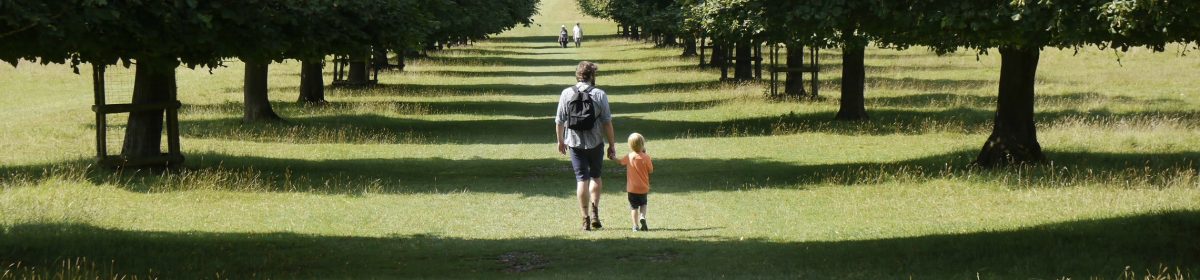
So Madame and I took advantage of the nice weather yesterday and drove over to Dyrham Park for a walk in the fresh air, having been kept indoors for days with the terrible weather. I knew I needed nine new records and got my first one as we left the car park and I realised that I’d never recorded the lovely avenue of trees that I’ve used as a banner for the last ten years. Of course I knew they were Limes but when I photographed them and turned to the books I discovered that they weren’t going to give up their precise identity without a struggle. Yes, they are Limes but no they’re not what I thought at all and turned out with a bit of forensics to be hybrid Limes, confusingly called “Common Lime” because they are – well – common. If you look again at the banner at the top of all these posts you’ll see our youngest son and our oldest grandson walking down the avenue together hand in hand. You’ll also see that the trees have all been given flat bottoms by the herd of grazing deer which were culled when they contracted TB a few years ago and have now returned with the perimeter of the park fortified with enormous fences to keep out any infected cousins. So that was good news and we await the restoration of the unnatural fringes by the deer when the leaves grow again next spring.

So that was one for the record and we wandered on down through the terraces where the National Trust team have done a great deal of forestry work, thinning and planting Yew, Bird Cherry and numerous other plants. The Rhododendrons, I imagine, are for the chop later when the newcomers have established. Most of the affected Ash trees have now been taken out so the park is going to look very different in a few years time. But everywhere we went, we could feel a real sense of direction and purpose in the plantings, it was very pleasing to see, and well done to all the volunteers who do most of the donkey work.

I guess it’s the time of year but of course the evergreens have the stage at the moment, and I always feel they’re a bit funereal. Yews and Laurels; well that’s churchyards and wreaths as far as I’m concerned! Down in the formal gardens you can see how the vision is working out. To be honest I’m not keen on straight rows and tulips but the head gardener has introduced a very subtle subversive note into the plantings and so we relished the long borders of espalier cider apples with all their local names, although we looked in vain for “slack ma girdle” which was the name we gave our quiz team when Madame worked on apple trees at the research station. Better still we found Soft Shield ferns and Black Nightshade growing on the banks and some of the healthiest looking Harts’ -tongue ferns we’d ever seen. A deft hand with the planting scheme has completely swerved any feeling of the Parks Department and created a garden that we’ll return to many times. The pruning of the apples and pears – under the guidance of the Head Gardener – who did some training at Versaille, (he told us), is unusually tight and looks almost daringly tight to the branches.

Then, for the first time ever, we ventured into the house itself – well, actually the servants’ area – because I’d spotted a very pretty Delftware tulip stand through the window in the old kitchen. It’s only the second one we’d ever seen and with the exception of two genuine antique earthenware pots, the kitchen and dairy have been equipped with some very nice freshly thrown scalding pans. There’s a photo below.

So it’s a red letter today. Two resolutions fulfilled and the third, of which this post is a part, is to complete a million words before New Year; just 34,000 to write which is going to be tough. Next year’s resolutions are going to be about boiling down the ten years of the blog to its essentials, and next week I’ll make a start on logging the fungi. Targets are good!

Before your very eyes – Cheshire cat plants are the lost smiles of nature.

If you’re up to speed with the latin names you won’t need me to tell you what they are. I’m using the common English names because they’re the place most of us start our journey as well as expressing the poetry of nature.

Actually (so far) one of these plants – the one at the top left – hasn’t yet joined the ranks of the disappearing but it’s still early days in the crisis of species extinction that’s barrelling down on us. So on the left, top to bottom there are the Small Scabious, The Sheeps-bit, often called Scabious as well, and the Devil’s Bit; ditto. The one on the right is a Common Restharrow – which was the initial impetus to write this post. I’m writing about these plants, and the reason I think you should be interested too is that seeing them is like looking at the prelude to a slow motion car crash.

I wonder if there was a smidgeon of irony in choosing bonfire night to launch the latest Red List – or to give its full name “A new vascular plant red list for Great Britain”. I can hardly imagine the great British public queueing around the block to get a copy before the ink dries, and it is very technical (but over the years I’ve already put in the hard miles); however it’s a duplicitous ten quid’s worth of ebook masquerading as a scientific survey when it’s really a requiem for a disappearing earth. Every paragraph is damp with tears – it’s the saddest list of names you’ll ever find in a book about plants.

Here’s a Google Gemini summary of the findings:

Increased Threat Level: The proportion of species assessed as threatened (Critically Endangered, Endangered, or Vulnerable) has increased 26% (434 species) are now classified as threatened, up from 20% in the previous 2005 list. A further 140 species are listed as Near Threatened, suggesting their conservation status is of concern.Widespread Declines: Many plants that were once common and widespread in the countryside have continued to decline and are now assessed as threatened.

So let’s start with the larger picture at the top of the page, in a way that’s also a defense of English plant names. The name Common Restharrow at least paints a picture. Having driven a little grey Massey Ferguson 35 and towed a chain harrow to aerate and tear out the thatch of dead grass whilst flattening molehills I get the joke. If I’d been doing the same job a century ago and leading a horse-drawn harrow I might have called the plant “rest horse”, because this little plant in a typically tangled mass can stop a harrow in its tracks. I’m thinking of the rain soaked agricultural labourers in Peter Brooks’ film of Ronald Blythe’s book “Akenfield”. Ononis repens defines the plant’s place on the spreadsheet down to ten decimal points, but fails to tell the story. Of course, unlike my Fergie, a giant turbo charged tractor would pass over without noticing – but it wouldn’t need to notice any more because Restharrow is disappearing altogether. It’s been moved up the parade of shame from “least concern” to “vulnerable” under the onslaught of intensive farming. I can still take you to see it, but it’s mostly on the coastal headlands in west Wales and Cornwall at the field edges, beyond the reach of sprays and ploughs.

And that’s where the sadness comes. The loss isn’t just technical – an entry on a spreadsheet – but a loss of memory, of relatedness, of history; it’s personal. Sun, wind and rain; strolling and rolling together with Madame; hours, days and weeks of searching followed by the moment of joy in finding. These are not the simple pleasures of an ice-cream at the end of the day’s plant hunting; they’re the joys of complete focus and engagement; of falling in love. This is a big deal.

In a recent posting I was writing about human grief in a very allusive way (which I hinted at in the title), and in parallel, I can’t stop wondering whether the loss of meaning when we lose someone close to us isn’t just damaging when what’s lost is a part of the physical world in which all our memories are embedded. In Stoke Row on, the edge of the Chilterns, my grandparents had a smallholding. More even than remembering what they looked like I can’t escape from associating them with the Beech trees that surrounded their cottage; from the sight and smell of the paraffin stoves on which granny cooked, and of the rich oily smell of chicken meal. I remember that the first squirrel I saw was a red squirrel, and I remember the line of trees at the back which my Mum would examine and proclaim that there was rain over Granny Perrin’s nest. My Mum’s favourite flower, she would say, was Lady’s Slipper – but which – of about ten alternatives did she mean? The orchid is now extinct so that leaves nine. When she died my sister and I were trying to decide where we could bury her ashes and we did a bit of research to see if we could return her to her childhood home. It was a powerful blow to discover that the Crest smallholding is now covered with an industrial estate. In fact it was even more of a bereavement to discover that I would never see the tarmac road dressed with flint pea-gravel again, nor gather primroses nor help to gather prickly and itchy hay to be stacked in stooks and ricks.

So let’s go back to the three Scabious, only one of which (top right) is really a Scabious. The other two, united by their similar appearance and vibrant pale blue-violet colour, kept me bewildered for several years although, once you know how, they’re worlds apart. I was always dazzled by the name Devil’s-bit. Such a plant must be special, I thought – like Viper’s Bugloss and Deadly Nightshade; it’s the names that draw me in like a moth to a flame. But Devil’s Bit and Sheep’s-bit never seem to grow side by side so the moment of revelation is more likely to happen in front of a decent macro-photograph or, in my case looking at the illustrations in Collins Wild Flower Guide and seeing – actually noticing – for the first time that the stamens on Devil’s-bit are like little mallets and on the sheep’s-bit they’re tiny little trumpets. Oh floods of joy! except what I recall more than anything else is where they grow, and they grow there because they are perfectly suited to their homes; to the weather and climate, to the soil, and to the grazing or cutting regime under which they can thrive. Change any one of those things and they’ll likely dwindle and disappear – not waving you might say – but drowning. One blisteringly hot day in the midst of a drought we shall go back and they won’t be there any more.

Maybe the flowering plants are nature’s way of smiling at us. I used the metaphor of the disappearing Cheshire cat’s smile at the top. Perhaps it’s the canary in the mine; whatever – it’s nature sending us a message that when the flowers go they take the joy with them.

Thrift growing on a clifftop in St David’s Pembrokeshire

Somewhere between the recycling depot and the destructor bridge there’s a spirituality of hope – but I can’t find it.

The new Destructor Bridge

Bath is a city divided by the river. Walking west to east along the towpath between Windsor Bridge and Churchill Bridge you follow the northern half of the city which bears the postcode BA1. BA1 is posher than BA2 because it’s got most of the expensive and Georgian parts. Then, at Churchill Bridge – (I’m sensing a bit of a pattern here because you will already have passed beneath Victoria Bridge) – it all takes a bit of a dive on the northern side as you pass the bus station, the railway station and the Southgate shopping Mall and then Royal Mail sorting office before you approach the end of Pulteney bridge where (if you dare) you can pop into the public loos over Waitrose and change back into your Jane Austen inspired Emma costume or pretend you’re Knightly according to taste and preference.

In many cities they demolish the old and build the new on top but in Bath, given that the tourist money has come from the old, for several centuries, they built the heavy industry and the ugly/smelly bits across the river out of sight. The Destructor bridge linked the upper Bristol Road to a giant incinerator which was next door to the gasworks and just along from Stothert and Pitts where they specialized in heavy engineering; cranes; bridges and transport across the British Empire. As industry died, plans were hatched by friends of the developers to “improve” the city by demolishing older buildings in favour of concrete tower blocks. You can read about this in the excellent and angry book “The Sack of Bath” by Adam Fergusson. We bumped into his daughter once in a pub in Hay on Wye and immediately recognised one another as kindred spirits.

Sorghum? where the hell did that come from?

It just so happens that we live near the towpath – just far enough away to avoid the smell of sewage as long as you hurry past a couple of the outflows in the summer. The towpath is my plant hunting ground; the place which never fails to reward me with something new; often a squatter or a vagabond. I reckon I could easily account for 50 species in my records, probably more. On Friday I went for a walk along the path to clear my head. On the opposite bank they’re clearing the old gasworks site in order to build hundreds of new flats – the river view would increase the value of an old air-raid shelter into six figures. The noise was horrendous, with drilling, piling and lorries everywhere. The spirit of the old destructor bridge lives on with a twenty first century sound-track. On my side of the river I passed the recycling centre which is joined by the relatively new version of the destructor bridge which clung to its name but lived up to its reputation when they discovered it was a bit too long or maybe too short when they came to lift it into place and retreated bloody but unbowed for months as the designers licked their pencils and tried to find someone to blame. Fortunately it wasn’t called the Prince Andrew bridge because that would have taken nominative determinism to the level of farce.

But I was there clearing my head because the previous week we had attended the funeral of a young friend, just 40 years old from bowel cancer and I needed to find that kind of safety in numbers that lets me escape into a spreadsheet for a couple of hours. Walking past the destructor bridge and the recycling centre seemed to be hauntingly significant as I recorded and photographed the ordinary, everyday plants that most of us ignore as if they were strangers in the street. Ivy leaved toadflax, cocksfoot grass, alkanet, broad leaved dock, ribwort plantain, blackberry, ivy, herb robert, false oat grass, buddleia, marsh figwort, common ragwort; red valerian, groundsel, bilbao fleabane, gallant soldier, pellitory of the wall, mugwort, tansy, several kinds of dog rose and annual mercury. I fear I’m writing a book of remembrance for the weeds I pass in the street as the climate catastrophe intensifies.

We tend carelessly to describe grief as a kind of temporary and solvable disturbance of the mind. Time, we say, is the great healer. But it’s not, I want to scream. Bereavement. and the grief that explodes in us when it happens, more closely resembles a stroke. It destroys memory, reshapes the world in unfamiliar ways so we can’t recognise the places we once knew. The loss of a limb just as the loss of someone we love, can’t be mitigated by positive thinking and we don’t get over it – ever.

And I feel as if I’m suspended between the grim spirituality of destruction and the optimistic recycling of fading memories. The river becomes the Styx in this uninvited metaphor. The noise, the roar and pollution of the bulldozers and lorries on one bank and on the other the recycling centre where we take the things we no longer want – to be reprocessed into something else. On the one bank letting go completely and on the other, clinging to the hope that something may be retrieved while we rather desperately make records and take photographs, out of which – one day – it might be possible to build a spirituality of hope in a world where God – like Elvis seems to have left the building.

Creeping Thistle – Cirsium arvense

Autumn continues to come good.

Well the last ten days were a bit of a challenge but at last the polyps (six more of them, including a real biggie) have been removed from my colon and my system is almost recovered from fasting followed by 24 hours drinking drain cleaner and a morning under sedation at the local hospital watching the job being done on a big screen. I found out later that they’d given me a combination of pethidine and midazolam which were the reason I was able to not wriggle/scream/ or change my mind. As is the nature of these drugs I can barely remember what went on and as for the bus ride home it’s blank. I can remember the exact moment they wore off, though, as if a curtain was lifted and when I read the consultant’s notes I had the usual post-operative WTF? moment. On the plus side the (award winning) team were lovely and kindness itself.

So …. the campervan was fixed on tuesday after being recovered for the second time with a non functioning clutch. On Sunday we checked out Morrison’s garage at the Mall and they still sell LPG, so we’ll be ready for the next adventure as soon as they re-open the road through Pilning, and today we had our flu and covid top-ups and pressed a big bag of apples for juice during the afternoon.

Having decided to carry on with the allotment we’ve been working hard every day getting beds cleared and prepped ready for planting up. There are over a hundred broad bean plants of different varieties growing steadily in the greenhouse in their root trainers and very gradually we’re getting back on track. It’s been a magnificent year for the apples, and all of the trees planted in 2021 have fruited this year, which has created a new challenge for us because in spite of my careful records, it looks as if the nursery had mislabeled some of the trees, and in one row of five the first and last had been wrongly labeled – so Winter Gem and Grenadier had been transposed. This was the first time we’d been able to see the problem. The red- skinned apple on the left was one we inherited and we’ve never known for sure what it is but have gone (provisionally) for Ribstone Pippin and the green one on the right is Winter Gem which, ‘though it doesn’t look all that nice is actually delicious and very fragrant. The red spots on the skin are caused by a reaction between oxygen and the skin as the apple ripens off the tree.

Apple identification is a difficult skill to learn because it includes consideration of the horizontal and vertical section of the fruit; its shape, whether conical or round; exact description of skin colour; streaking; degree of greasiness; flowering and ripening times, the colour of the exposed fruit and the degree of russeting and you have to do a lot of it before you can be proficient. We spend a lot of time on the National Fruit Collection website – it’s extremely thorough and well worth bookmarking.

Anyway, while I was feeling sorry for myself a very divisive philosophical issue came up on the allotments when a member wrote a rather cross Facebook message about “rubbish” being “dumped” along the fence line at the bottom of the site. Madame absolutely forbade me to respond, but I feel safe here to write that there has been a growing problem, and distance, between those allotmenteers who believe you are only closer to God in a garden as long as you’ve slaughtered every blade and leaf of plants which you didn’t grow for food or aesthetic pleasure. Wild animals too, but especially badgers rats and foxes, oh and squirrels and mice – oh alright then – cats too are not permitted either. As for insects and above all caterpillars, need I say more?! At the greener end are those who, like us, keep a trail cam to enjoy the nocturnal visitors (which also include deer); we control the rats by never chucking the remains of Friday night’s takeaway on the compost heap because we know that rats originally came from India and love a curry. We have a scuzzy looking pond in which rat-tailed maggots can grow into hoverflies, and we allow lots of weeds to stay – especially nettles – because some rarish butterflies love them, and some lovely seed-setting grasses for the birds to chomp on. We obviously don’t want the Whites to eat our brassicas and so we net them carefully. Sweetcorn needs fortifications to keep the badgers out and so it goes on. Our allotment is, by the standards of the evangelicals and fundamentalists of tidyness, messy; but here’s the point. Nature just loves messy, and over ten years we’ve been visited by a dozen relatively rare plants which stay for a year or two and then move on. There was Peruvian apple, Stone-parsley, Bullwort, A rarish form of Fumitory, and others too. All-comers are welcome to come and raise a family over a couple of seasons and if some people think they’re just weeds it’s their loss.

Our relationship with nature is a conversation in which (for instance – like the apple trees) no-one speaks for four years and then something important happens. We accept that the plot we rent is not ours, but belongs to two of us (two legged creatures) and all of the other creatures from deer down in size but not importance to amoeba and thence to pollens and yeasts. We cannot compel but, as the astrologers say of the stars, we can only dispose, and if you don’t talk to the plants how will you know what they need?

So if we empty our buckets of trimmings, prunings and nuisance weeds like couch and bindweed along the fence we’re not dumping them (with all the negative connotations of that word, we’re putting them there because as they rot down to return their nutrients to the earth they provide a place of safety for dozens of species like woodlice, spiders, ladybirds, all kinds of pupae, field mice, hedgehogs and slow worms whose contributions to pollination, clearing up infestations of blackfly and suchlike, eating rotting leaves and aerating the soil – we rely on. We are part of a vast interdependent food chain. We do not dump plastic waste, old pushchairs and mattresses crisp packets or discarded drinks bottles and cans.

But we do process and store all sorts of delicious food that would otherwise be wasted. These tomatoes were picked green from dying vines after the drought, and ripened in the dark so they could be reduced to a roasted passata which keeps for at least a couple of years and is as good as pixie dust for bringing a pasta dish to life.

The return of the Red Headed League – who says nature has no sense of humour?

Sycamore moth caterpillar – Acronicta aceris

I wrote this post 13 months ago and then, for some reason, never published it and it’s been sitting in the drafts folder ever since. I used to have a producer on the radio who would say -“I know what you’re trying to say, and I know that you do too – but you haven’t actually said it!” – and re-reading it yesterday I think it fell into that category; so I’ve tweaked it a bit and added a couple of paragraphs to say what I was actually trying to say and I’ll leave it to you to decide whether it worked.

Rather an arresting sight on the pavement outside the flat today. I wondered for a moment whether caterpillars have hen parties but obviously this one wasn’t wearing a tiara so I didn’t bother to look and see if there were any tipsy bridesmaids about. I don’t think the Sycamore moth is particularly rare but I would have noticed had it crossed my path. Anyway, it must have fallen from the tree outside and was making its way across the road to the relative safety of the Green – relative safety because it would surely make a tasty snack for a gull – or a magpie, what with the ginger wig and all.

I frequently have trouble trying to figure out what my real vocation is; I’ve done so many things – but there’s always been writing somewhere in it. I fell in love with the natural world as a child and now I’m a passable amateur field botanist but when I sit down to think about it, what really gets my juices flowing is the beauty of plants; their histories, traditional names and uses for food and medicine and their journeys around the railway yards of Europe. DNA and microscopic identification skills are no more exciting to me than completing a hard crossword; fun but not significant. I get as much thrill from the Biting Stonecrop outside the door as I would from finding a ghost orchid (unless it was in the pavement outside!), and I don’t have a tidy mind so I like to root around on my hands and knees to find plants rather than see them displayed like zoo specimens in wire cages and bare earth. If it came to a choice between writer and botanist it would have to be a writer – a no brainer. Latin binomials have their uses of course, and when it comes to the correct naming of plants they’re essential, but where’s the romance in it?

The abundant Mexican Fleabane here could be and often is seen as a weed. I just don’t get it. Last week the official council weed scraper laboriously removed nearly all the plants along the bottom of our retaining wall but then stopped when he came to a glorious waterfall of the daisy lookalikes at the corner and put his scraper away. The bottom of the wall is now alive with the resurgent leaves of Nipplewort, Dandelions and Hemp agrimony which simply shrug off the insult. The whole object of a plant, I suppose, is to be visible and visited by pollinators. You’d think that for caterpillars the opposite would be the case; that they’d make themselves as invisible as possible until they’d pupated and emerged in their final forms. Not so, though. The ginger Sycamore Moth caterpillar, like so many of its cousins, doesn’t even try to be cryptic in its appearance. Does it actually taste filthy or does it just look as if it will. There’s an extravagance in nature which breaks all the bounds of decency and order – especially if you happened to be a Victorian philosopher like John Ruskin who once wrote of Selfheal:

It is not the normal characteristic of a flower petal to have a cluster of bristles growing out of the middle of it, or to be jagged at the edge into the likeness of a fanged fish’s jaw, nor to be swollen or pouted into into the likeness of a diseased gland in an animal’s throat.

John Ruskin, Proserpina – quoted by Richard Mabey in his book “Weeds”

Richard Mabey’s book, cited above, is an erudite source of wisdom about weeds that deserves a place on any bookshelf. In his description of Self Heal he mentions the visual effect of swathes of the plant as akin to “brazed copper”. Ruskin seems to have had a bit of a thing about the colour of copper. One account of the reason for his inability to consummate his marriage to the red headed Effie Gray was given by her years after their marriage was annulled – “the reason he did not make me his Wife is that he was disgusted with my person the first evening.”

I can only assume that Ruskin found much to disapprove of in the disorderly and occasionally ginger world of nature. Sometimes anarchy is just a way of describing something whose connectedness and complexity is utterly beyond us. Science is the scalpel to the butterfly net of the poet’s work. Reductive or expansive – that’s the challenge. Are the tools we use to engage with nature intuitive and imaginative, or laser focused, seeing nothing beyond the quarry?

Well, I’m for the butterfly net approach every time. Of course, in this critical age of triple breakdown; environmental, climate and economic, we need science as never before, but just as I’ve always taught, myths are the way we tell the truth about mysteries – and the intuitive, expansive and imaginative tools of the poet are every bit as important as the scanning electron microscope and the DNA printout. To choose just one approach to nature wilfully limits our understanding. Slippery and indefinable as it may be, to exclude beauty from our calculus is to take us into Gradgrind’s miserable world. Ruskin’s failure to appreciate Effie Gray’s sensuous beauty was a failure of his humanity. He pursued her, courted her and married her so he could push a pin through her heart as if she were a trophy butterfly.

But enough! I bet you didn’t know that John Masefield liked to keep a box of rotting apples under his desk to fire up his imagination. Stanley Spencer kept something entirely more unpleasant near him but you’ll have to google for that. We have a neighbour on the allotments who has a tree laden with quinces which have the most lovely perfume, enough to fill the whole flat, and every year we put a bowl of them on the table. I’ve made quince jelly in the past and believe me they’re as tough as old boots and need a lot of cooking. When you cut through the fruits the black pips have a positively satanic look and they also contain hydrocyanic acid.

Of all the virtues of nature we mustn’t ever forget its sensual pleasures. For us, it’s more than just the necessity of eating, or growing or intellectual understanding because every one of the senses is engaged in a merry dance. Autumn is not merely mists and mellow fruitfulness, it’s celebration, festival, recollection and thanksgiving, singing, dancing and feasting. Oh and it’s also available in copper coloured.

Walk on by!

Dandelion – obviously! but more complicated than you might think.

Everybody knows what a dandelion looks like, I imagine, but there’s no shame in not knowing that there are around 250 species of dandelion in the UK and – if you’ve got time and a good psychotherapist you could learn to tell them all apart. The beloved blackberry is a similar case but even more complicated, with around 330 species. They’ve evolved an interesting method of reproduction -known by the academics as apomixis which roughly translates as having sex with yourself; don’t knock it if you haven’t tried it – or as Woody Allen said – if you’re going to have sex you might as well have it with someone you love.

Anyway, and moving on rapidly, the dandelion is a handy reference point for what you might call the “walk on by” plant which draws together two threads of the WOB phenomenon. The dandelion in the photo, for instance, has been there along with its definitely not cousins for all of the ten years we’ve lived here. Until today I’ve never photographed or recorded it because it’s too common and therefore not worth the bother. However fate has confined us to short walks near home for most of the summer and the local rogues and vagabonds of the pavements and towpath have been the only available source of botanical interest; which disposes me more kindly to the dandelion. I’m sorry for my casual disregard in the past but now I just have to walk on by not because they’re common and vulgar but because I haven’t got the time or the confidence to sort them out; although I did shell out for the standard handbook which has been sitting unopened on the shelf like a bishop’s bible for months.

After months of tests and investigations we’re near the end of the tunnel (you’ll see why that’s a highly inappropriate joke in just a moment), and all I’m waiting for is to have a 35mm polyp removed from my colon so I can stop being anaemic and feeling knackered. I’m relying on the expertise of the multitude of consultants, nurses, interns and doctors who’ve peered up my rear end, when they tell me that this thing – about half as big again and the same shape as a champagne cork- isn’t malignant. Like birdwatchers they know the jizz of a nasty one when they see it. I have great confidence in them.

But spending every moment checking the phone for the next appointment doesn’t just cost you time, it drains the creative springs and makes life a bit grey and dull. We’ve cancelled several campervan trips so we could both be available for appointments at the drop of a hat and so necessarily I’ve been focusing on the local weeds. It’s bad enough trying to take macro photos out in the wilds; passers-by tend to stop and ask if you’re OK. Do the same thing on a pavement or on the towpath and they’re likely to call the police. But don’t for a moment suppose that all you’ll ever find outside your city centre front door is dog poo and beer cans. I’ve been amazed at how many relative rarities make even a temporary home for themselves in the mean streets of Bath, and recording the ordinaries balances the books against the statistical over-representation of exotica in the field guides. If we’re going to keep tabs on the unfolding runaway climate disaster we’ll need to record the sparrows, silverfish and brambles of the earth.

Here’s another one I’ve never recorded except in some remote and rather glamorous wild place. There was member of the same family, the Sea-spleenwort for which I persuaded Madame to walk miles in freezing wind and sheeting rain in January to find it on the sea-cliffs where it belonged, only to have it shown to me on the basement wall of the Guildhall in Bath. Sadly it seems to have gone now and I thought its near relative, the wall-rue, which has always grown unrecorded by me on the wall below our flat might have died from drought this summer. But this morning I dodged the rain to photograph the dandelion and came back with Hemp-agrimony; wall-rue and field-speedwell – all within ten yards of the front door. I shall have to make a list of plants that grow with 100 yards of the flat and I’ll guarantee it will exceed fifty species.

There’s a bit of a knack to naming plants from their leaves alone and today AI threw me completely off track with the speedwell which it identified as ground-ivy. A most enjoyable trip to the books settled the matter in favour of the speedwell but the two plants are alarmingly similar until you see the flowers. The purple flowers scattered near the speedwell had me scratching my head until I remembered there’s an Argentinian Vervain in full flower growing in a pot next to it. You see, even boring plants turn out to be better than the Times crossword for getting your brain in gear.

Back in August 2024 I set myself the target of organising my utterly random collection of photographs, and identifying the names and locations of all of them with a supporting photo. It took me a whole year to get them on to a spreadsheet and now there are 898 records sitting there waiting to land on several unfortunate referee’s desks. My species total is up to 472, just 28 short of the 500 target. I also set myself the target of completing 1000,000 words on this blog and so far I’m up to 951,500 which leaves me around 49 more posts to write. As my old friend Joan Williams used to say – God willing and a fair wind I’ll get there. But I’m not a trainspotter by temperament and so if it takes until next february it won’t keep me awake at night.

Aren’t statistics a slippery thing to deal with? I read yesterday that this polyp that I’m entertaining at the moment increases my risk of colon cancer by something like 75%. Reading that statement carefully suggests that my real risk depends upon what percentage of any polyps of any size are malignant. The answer to that is 5-7%. So my real risk is more like 75% 0f 10% ie 7.5%. It’s possibly less significant than crossing the A4 on a zebra crossing with a Range Rover approaching.

Hefted

If you know Mendip at all well, you’ll know that this thatched building holds a stack of sheep hurdles on Priddy Green

Nostalgia can be a poisonous affectation. It’s all too easy to use the wistful, often wilful mis-remembrance of the past to reduce the past to a coddled egg; good to eat but with no future. Real history is troubling; often leads in two directions, and ambiguous to a fault. On the other hand, the sense of rootedness in a place, or in a community in which the two ideas often overlap, is foundational to our practise of being human. You’ll probably think I’ve lost the plot if I write about Cornbrash, Brandon Hill stone and Bath stone and yet the glimpse of a building made with any of these three will as good as a six figure OS grid reference. They would not just signify districts but the era they were built in and the likely social class of the people who lived in them. Add to that a dialect, a particular way of sounding a troubling “r” in Gloucestershire, or a single sentence in Bristolian would tie the speaker down to something like a parish. There’s a sawmill in Wick and when I go there, I could curl up on the counter like a cat – I feel so at home. This isn’t something you can fake. You’d have to live not just any lifetime, by my lifetime to pick up the resonances.

I understand this better now than ever as I’ve learned about plants, where they grow and what they prefer to grow in. As I child I learned to love lying under beech trees growing on a moss covered bank on the boundary of our grandparents’ smallholding. My mother’s whole vocabulary of local names was learned amongst the winding lanes of the Chilterns. We looked in vain as children to see what Granny Perrin’s nest was, and why our mother could see it when we couldn’t. Even the roads had their own language of shiny flint pebbles, and hiding in the depths of woods once worked by bodgers who turned chair legs and wheel backs was Margaret’s Beer Shop where we could drink cherryade as a treat. I came to know what I now understand as acid heath, on Rodway Hill as slowly I came to understand how localities have their own unique floras.

Mendip is famous for its abandoned lead mines and again there are plants that can survive heavy metal pollution and environments which have their own special designation, Calaminarian, which is how the calamine lotion that our mother dabbed on our chicken pox spots brought zinc from the ore into Mr Ladd, the chemist’s armoury. Nowadays my old friends are the pavement scoundrels, constantly harried by the council’s strimmers. The poor council workers don’t seem to know about tap roots and seeds, or annuals and biennials and so they knock em all down like skittles and within a fortnight they’re up again. Then, of course there’s the riverbank with its own royal flush of perfectly adapted plants. Stones, dialects and plants store the local memory as certainly as books. Footpaths and shortcuts, streams, hiding places abandoned dramlines and climbing trees marked our territory and as we spread our wings, our bikes were the means by which we invaded and occupied other peoples’ places.

So much, then, for a rather lyrical take on the sense of place. The Greeks might have dignified it as the genius loci but we were unconscious of our hefting. It was just home as far as we were concerned.

A couple of nights ago we watched Peter Hall’s film “Akenfield” which I’d seen years ago but completely forgotten. I read the source and inspiration for the film , Ronald Blythe’s book “Akenfield” when I was in my twenties, along with Henry Williamson’s long cycles of novels, and I read J A Baker’s book “The Peregrine” a little later. In truth I consumed voraciously just about any scraps of natural history writing I could lay my hands on. Akenfield is a groundbreaking oral history of rural Sussex at the beginning of the 20th century and both a celebration of the skills of farmworkers and denunciation of the appalling conditions in which they worked. The extractive philosophy of modern agriculture was cultured in the minds of landowners centuries before the first tractor appeared on the land. I watched most of the film near to tears.

But one of the happier lessons of the film was that whatever happened to them, the farm workers had song. They sang in church, they sang on army service in the first world war, they sang in pubs and they sang as they took the harvest in on wagons loaded high, with the children riding on top as a treat. I suddenly remembered that my sister and I had shared that triumphal ride in Stoke Row one hot summer’s day, and how insecure and prickly our perch was. It was the strangest feeling to recall the stooks and ricks of the days before the chequerboard plastic wrapped fields we see today. That overarching sense of history is disappearing and, because of our failure, we’ll never be able to bring it back.

Some forms of nostalgia are a positive waste of energy except perhaps that we still, we always will have song. Barely fifteen years ago I sat in the kitchen of a farmhouse in one of my parishes and watched, through the window, as a procession of combines, trailers and tractors drove along the lane, headlights blazing, to come in for supper and then go back to harvesting the fodder maize that feeds the cattle. Today we went for a drink in the pub in Doynton. The village has changed beyond recognition but if the flow of traffic could be staunched for a while a couple of horses and their riders persuaded to pass by and a rookery installed to provide the music. If a sunset could be organised to bathe the cornbrash walls with evening light and if the conversation dropped just a tiny bit in volume and we stepped outside, I think we could almost see the ancestors in the shadows.

Yet we still have song. Those who believe that their mission in life is to make life harder for us should beware of our spiritual and revolutionary songs of resistance. They too have a long and deeply local history; often rooted in the sense of place, hidden in the DNA of songs and carols that still speak deeply to the most irreligious of us. Of all the things I miss about my ministry it’s the raucous Christmas carol services, packed to the gills with people who were drawn back year by year into the old ways; the funerals where for a fleeting moment we could believe that all would be well and all manner of things would be well as we sang Abide with me. But perhaps most of all on Easter Eve when I was able to sing the exultet; a long plainsong solo hymn of hope for the coming year.

Sunset through the campervan window at Priddy

Hello stranger!

I think I must have some kind of aura that encourages complete strangers to come and engage with me. I’m not claiming any supernatural powers here, just the very ordinary skills of getting alongside people. I’ve spent hours on empty railway stations listening to very troubled people (more often than not, other men) who just want to unburden themselves. Maybe it’s my general scruffiness or perhaps because I seem not to have my head stuck up my arse and so I represent the unthreatening type. I’m short and a bit overweight and only Madame could see my gleaming virtues – and that’s not all the time! Funnily enough I was just typing that sentence and the doorbell rang. It was a young delivery driver and as he helped unload our groceries he opened up at length about his sadness that his army career hadn’t worked out as he hoped.

But this gift – if you can call it that – seems to be extending itself to plants. This year I’ve spent hours and hours searching for different species of fleabane. I’m ashamed to admit that I was provoked by the sheer competence of our County Recorder – call it the positive side of envy – and decided that I needed to get my head down for some serious plant hunting. So far I’ve found five of them, four of which I’ve found the jizz for – that’s a term birders use to explain how they can identify a peregrine falcon diving at 60mph without thinking about it. But having done all that work; photographing, measuring (size matters) and even buying a couple of second hand books, blow me if one of them didn’t pop up on the allotment next to ours. We’ve had Peruvian apples, rare fumitories, stone parsley and bullwort all dropping in to say hello and this week after an eighteen month stalking of a Hungarian mullein on the canal, two of them popped up on other allotments on the site and I’ve no idea why, except for the absence of herbicides and a general aversion to tidiness. It feels as if they’re coming to me for a friendly welcome.

Plants are surprisingly mobile and some – like my fleabanes betray something of that in their names; Canadian, Mexican, Argentine and Guernsey – usually referring to where they were first found. But some also are brought in by the plant trade and another one I saw this week – an Eastern Catnip – moved from Eastern America to a nursery near us and then strolled across the towpath to set up shop in a crack in the pavement. As I’ve recorded all these migrants it’s clear that words like “native” need to be taken with a large pinch of salt. Even the sycamore is a bit of a boat tree, brought in from overseas, and the Sweet Chestnuts here and in the mountainous parts of France and Corsica were probably brought there by the Romans and have now embedded themselves in the “local” cuisine. Those who carp on about strangers and foreigners should obviously get a life and stop prowling suspiciously around the subject like a goat meeting an unfamiliar food for the first time. Looking back to some arcadian ideal time forgets that Britain (or if you really must – “Ingelland” could as easily be described as a desert, a sea or an ice sheet and the original inhabitants coming from almost anywhere in the world, east of Greenwich. We’re all more or less foreigners here; on this “septic isle” as William Connor of the Daily Mirror once described it back in the days when the Mirror was a proper newspaper.

Anyway that’s enough nostalgia for a bank holiday weekend. Things have been happening on the allotment at the dog end of one of the worst growing years we can remember, and after Madame staged a major rebellion when the idea of packing it in was mooted, we’ve been back on the job non-stop, clearing the ground ready for autumn and winter. I was watering the borlotti beans this evening when I realised that one of the key arguments in favour of gardening for improving mood is that caring for just about anything seems to release a flood of endorphins into the blood. The feeling of warm satisfaction I get when I’ve given some time to listen to someone is almost identical to the feeling I got tonight watering the beans which were looking a bit sorry for themselves. Today we filled the pond, weeded the fruit bushes and I fed and mulched the summer raspberries after giving them a good soak. We rarely talk while we work, but it’s always good to be there. There’s a lovely biblical image about being at peace that goes

Everyone will sit under their own vine and under their own fig tree, and no one will make them afraid,

Micah 4:4

As it happens we have both a vine and a tall fig tree next to our plot and the heat this year has yielded a bumper crop. It’s been good and the good is invulnerable to the evil we see day by day on in the media.

Purple Loosestrife

Charlie’s radical garden

Impatiens taymonii in Charlie’s garden

Before you sigh and turn away for a bit more doomscrolling because I used a bit of latin at the top – be assured that this post is guaranteed to make you happy, so happy that I can’t imagine why I’m not charging you to read it!

So a long time ago we moved to Stoke on Trent to run a small but doomed pottery that lasted all of six months before it fell to earth. We were there at the same time the last bottle kilns were being demolished just down the road at Price’s teapot factory and one of our team was a wonderfully skilled, but recently redundant mouldmaker who’d helped to unpack the last kiln load as the factory shut down. It’s true he had a bit of a drink problem, and once came in from a 48 hour binge and mistakenly cleaned his beloved Triumph 2000 with kitchen scourer but I never met anyone else who could look at a complex sculpture, turning it one way and another and plan exactly how to make a twenty piece plaster mould from it.

Anyway, the local pubs had not then evolved to the point where Madame could drink in the public bar, and we were always directed to the snug where foul language and boy’s banter were banned. The snug in our local sported a lovely Busy Lizzie in a pot. It was huge, and when Madame mentioned what a lovely plant it was the landlady simply picked it up and gave it to her with a big smile. A couple of months later it travelled back to Bristol with us in our overloaded Morris 1000 pickup and it spent the next couple of years following us around in our peripatetic existence. We were often surprised by the kindness of people we hardly knew.

The Busy Lizzie is a member of the fairly large family known as Impatiens, one of which is a bit of a rogue and causes all manner of problems in this country where, since it escaped from gardens in the mid 1800’s has spread rapidly across the country with the help of its explosive seed pods which can fire their contents twenty feet. Its name, of course is Himalayan Balsam. There are four members of the family listed in my go-to list of British and Irish wildflowers, and two of them grow on the Kennet and Avon canal – on the left Orange Balsam and on the right Himalayan Balsam – the plant that the Daily Express loves to hate.

There’s another member of the family charmingly known as Touch me not Balsam that’s much rarer and only a couple of days ago I was wondering how I could lure Madame into the campervan for a quick trip to mid-Wales where it grows wild. I claim not to be a trainspotter but I can confess to getting a bit over obsessed with photographing whole families of plants. There’s another family I’ve got (Madame might say) overfamiliar with; they’re the Fleabanes and so far I’ve found four of them growing locally but five and six are harder to find.

So with this in mind, I must introduce our friend Charlie who is a taxonomist (but I forgive him), a retired professor, no less, who has worked in some very high-profile positions which I won’t mention to protect his privacy. He lives about four doors down from us and we meet up weekly to chat and for Madame to blag plants from his unusual garden. Charlie and I share a bit of a passion for the plants that eke out an existence on the walls and pavements and waste ground that surrounds us in Bath. They have a classification all of their own; ruderals, aliens and survivors – like most of our neighbours here. In fact we agreed yesterday that it would be fun to work together on as comprehensive a list of local bruisers as we can manage given our arthritic knees and hips. I’m getting used to people stopping and asking if I’m alright as I struggle to stand after getting down and dirty with my phone, photographing a pavement specimen.

There are rules about recording plants on the national database, but plants rarely pay any attention to rules and so seeds attach themselves to car tyres and shoes and travel distances from their proper places before dropping off and starting a new life on the streets. Other seeds blow in on the wind and fall out of window boxes or get a new start in life outside a pub where someone had too much to drink and – need I continue? The tomato is a favourite addition to the local flora. The rules are quite clear. “Thou shalt not record a plant growing in a garden.” By chance both Charlie and I were inspired in the last few weeks by reading Trevor Dines new book “Urban Plants” which is one of the few botanical textbooks either of us have read from cover to cover and I’ve also been reading Clive Stace and Michael Crawley’s “Alien Plants” , and we both came to the same conclusion – that the word “wild” is so poorly defined as to be almost impossible to use. Field botanists have a whole lexicon to separate different classes of wildness, but gardens – especially Charlie’s garden – present some proper challenges.

My Mum would carry a large and larcenous handbag marked swag in which she would carry away thumb and finger cuttings of any plants she liked without regard for their rightful owners. Charlie’s garden does the same but with an international range, which makes it a lovely place to sit and drink tea,or coffee and yesterday – tragically – I spotted two of my hoped for “wild” flowers growing right in front of me. The first, which is the photograph at the top of this post, turned out not to be the hoped for Touch-me-not balsam but the Chinese species daymonii which is a proper garden plant that shouldn’t be recorded because it doesn’t grow in the wild and hasn’t been recorded even as a garden chuckout survivor in this country. But isn’t it beautiful? such lovely markings on the petals and a worthy posh cousin to the others. Good news, then, the Mid Wales trip is still on but don’t tell Madame.

However the next plant to catch my eye was a nice specimen of Tall Fleabane (Fleabane number five) which has never been recorded close to Bath and, in any case was growing in a pot. But at least I’ve photographed it and I’ll keep it for reference until I find a genuine wild version.

Tall Fleabane in Charlie’s garden.
Buckwheat,

There was also a rather nice Buckwheat plant which could easily have blown in on the wind, or been hiding in some garden compost – again not one for the record, but then – just as we were leaving – my eye caught a very small member of the carrot family which I vaguely remembered because I’d seen it twice before, growing in a newly planted municipal border and again wild near a stream south of Bath. It was almost hidden below its more showy neighbours but I had to check it out and when I did it brilliantly demonstrated the dilemma for those of us who like to make records. Here it was growing just inside a garden – so it shouldn’t be recorded – but on the other hand it’s hard to imagine why Charlie would have sown it deliberately in such an unsuitable position. The plant is Fools’ parsley and it’s short, not remotely beautiful (apart from to me) and extremely poisonous. One for the record then because I’ll call it a weed – and thanks for the coffee Charlie. See you next week.

Fools Parsley -Aethusa cynapium –poisonous!