

I fell asleep last night clutching a new wildflower book – I would have called it a flora but that would have been misleading since Madame’s name (which is a closely guarded secret) is not Flora. But it’s a sign that the natural world, in the course of a couple of riverside walks, has got me back in her grip. I was lamenting the impossibility of botanising in Cornwall or Wales for weeks, but the last two days on the riverbank have energised me in much the same way – the sheer pleasure of recognising old friends that I never knew grew here in the middle of a small city; here today, wintercress and broomrape growing within a few hundred yards – neither of them rare. The slightly mad abundance of plant life is a telling sign that nature doesn’t need us half as much as we need her. Over the river in the Crest Nicholson gulags they left a wildflower meadow in one corner of a field of hard-wearing perennial ryegrass – no ball games permitted – which struggles in the teeth of the siberian winds generated by the tall buildings. The grounds are maintained by a company with a cunning plan to mow another inch off the meadow with every cut. It will then disappear; the last sop of ecological reparation for the destruction of the old gasometers and abandoned industrial buildings that really were a wildlife haven. But we still have the anarchic, weed infested verges; the real eco-deal thriving under their neglect by the strimmer army – long may their funding be neglected!
 At home, energised by thoughts of weeds, I woke with cheese scones on my mind. I know that sounds like a non-sequitur but there’s nothing quite like baking to calm you down, and so I baked a batch of the ultimate comfort food. I really should have baked a Dundee cake but there wasn’t time because we wanted to go to the allotment to see how our wind and frost preparations had survived. The max and min thermometer in the greenhouse showed that the inside temperature had dropped to 5C during the night, so that meant the outside got down to around 2 or 3C – too close for comfort for the tender plants, so we were pleased that we’d gone to the trouble of wrapping them all up and building new screens. I’m beginning to sound a bit manic here, I know, but life’s too good to waste a minute – even in lockdown.
So everything in the garden was lovely (ish) and we added a new screen attached to the grapevine training wires. The bad news was that thieves had dropped by again and stolen our neighbour’s new shed which was waiting to be assembled and so rather vulnerable. I find it really difficult to connect with a mindset like that – and even if *’hell and heaven and all that religious stuff’ is abolished now, should we keep just a tiny corner of hell going for allotment thieves – just for old times sake?
Coming home we overheard a conversation about roasting rhubarb in the oven. I’m ashamed to say we’d never heard of it, but we promptly roasted half a kilo of our own Victoria, with some light brown sugar, and it’s delicious. We’ve eaten so much rhubarb in the last few weeks I think if you shoved a chimney pot on my head I’d lose weight and turn pink – I’d settle for being tall!
- is a quotation from a rather fun poem by ee cummings
As an addendum, today we found a shop selling bakers flour, rye flour and yeast. The threat of torture wouldn’t induce me to say where it is, but for those in the know, if you flare your nostrils and search out the perfume of patchouli and listen carefully for Joni Mitchell you’ll know where I mean.


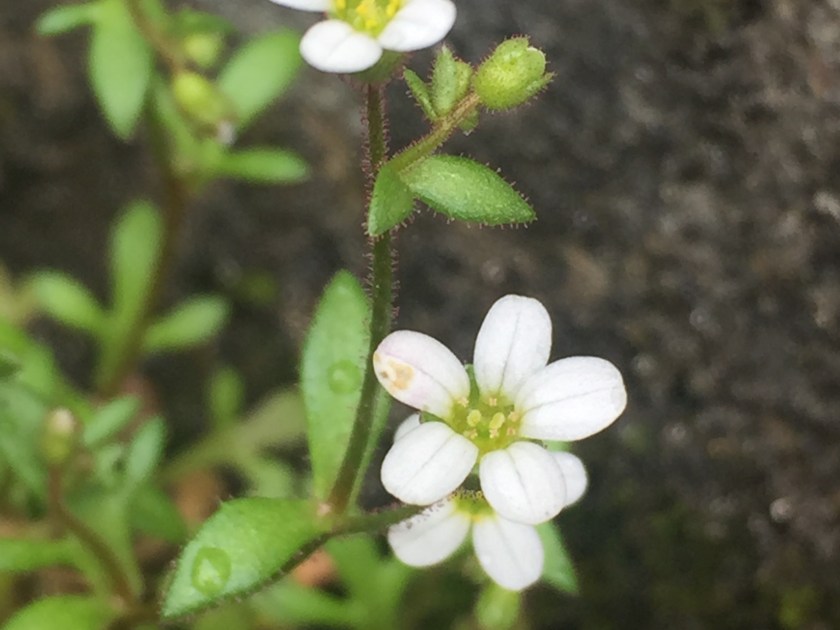 There are others too – this one is


 And so a new project began to form in my mind. Obviously I’d really love to spend my life in places of outstanding wildness and beauty, recording stunningly lovely and rare orchids. However I actually live right next to the Bath to Bristol Cyclepath which is much loved by commuters on foot, runners, lycra louts on their handbuilt racing bikes, drunks, homeless people and drug dealers who rather appreciate the opportunity of a swift exit if the police arrive. That’s why all our local dealers ride bikes, because they’re over the river and away before the police can do a thirteen point turn and chase them. The litter bins have proved particularly useful for hiding stashes of drugs by taping them up under the lid, like a kind of unofficial click and collect service.


 Actually that’s not quite true because we’ve been eating new season garlic for quite a while as the main batch dried in the greenhouse. The picture shows about half the crop, and the results show that the variety Early Purple Wight was the most successful of the three varieties we tried. We’d thought that most of the alliums were a bit of a disappointment this year, and we dug up the onions when they appeared to be suffering from some kind of (unidentifiable) affliction. However, less fearful (diligent?) allotmenteers left their affected plants in and many of them have recovered and now look well, so maybe we were overcautious, but the combination of twisted and wilting foliage with softness in the sets suggested some kind of rot. We found no evidence of fly infestation at all. so that’s another one to put down to experience. There’s a lot of “no idea” in gardening if we’re honest, but plants are amazingly resilient and can come back from the brink. It’s been so dry this season, and it’s been difficult to give the plants enough water. When we planted the leeks out a couple of weeks ago they looked terribly sorry for themselves, but even the sickliest have pulled themselved into the ground and are looking more vigorous now. Our sage plants, particularly, respond to ruthless pruning with loads of new growth. Parsley seems to hate being watered from above with a rose, and most of our plants seem to prefer a good soaking straight from the can at ground level. There’s a mass of detailed experience that comes into play on the allotment, and so many things that can go wrong – but the rewards are immense, and we don’t beat ourselves up too much if we get it wrong. Life’s too short to waste with gloomy reflections on the inevitable failures.