Christmas at the Potwell Inn

Mistletoe

Geoffrey Grigson lists so many myths, folklore fragments and healing properties for mistletoe that after the second dozen I gave up counting them. Many of them were concerned with fertility, citing the similarity between mistletoe berries and what he coyly calls the male part. I’ve tried to verify that by looking at photos (of plants, of course) but I don’t really get that one; unless he had some uniquely blessed male friends with an extra testicle for luck! However if mistletoe gives license for a kiss I’m all in favour as long as it’s between consenting friends. Never inflame a temptation unless you’re free to yield to it has always been my motto.

Grigson, whose book “The Englishman’s Flora” lives on my desk, wasn’t writing a botanical textbook. The reason his book is so useful is because it’s a work of anthropology; examining how how and why plants have been used in the past – which often also explains how or why they got their names. Just one example is Figwort – which doesn’t make much sense until you look at the tight purple rinsed flower and then discover that “fig” was one of many ways of describing piles and so it was thought (via the doctrine of signatures) that it would cure that very common and uncomfortable condition.

Anyway, enough of that! Christmas has come and still lingers like a houseguest with a toothbrush for a few more days before we all secretly breathe a sigh of relief and get on with our boring and predictable lives. The Potwell Inn, as always, was especially busy with overnight guests; some of them sons. Partners and children were visited and hugged on Boxing day. It’s conventional for clergy (and retired ones like me) to moan about the workload, and it’s true; Christmas was always hard going with up to 20 carol services. Christmas Eve was particularly heavy going with services at 8.00am, 10.00am 4.00pm and 11.30pm followed by no more than four hours sleep and then four more in the morning. Then, because I was constantly up and around until 3.00am and then again at 7.00am , it always fell to me to attend to the turkey, cook gammon and feed the five thousand between services until I finally got home, tyres smoking from roaring around narrow country lanes and share a bottle of celebratory champagne after which I would finish cooking dinner rather drunkenly, discover I wasn’t really hungry any more and fall asleep.

Christmas cooking can’t be fully described without talking as Geoffrey Grigson did with a form of culinary anthropology in mind. Coincidentally – or perhaps importantly, Geoffrey the poet was married to Jane Grigson the cookery writer who did understand that there was more to Christmas cooking than a few ingredients. Cooking is regional, familial, historical and associated with powerful spiritual connections because Christmas, solstice, yule and so on are all associated with a key moment in the calendar – the slow return of longer days. Farm workers, for instance, were often laid off in the weeks surrounding winter solstice and so Plough Monday – the day the plough was brought into Christian churches to be blessed; signifies that turning point in the agricultural year.

Every year the bookshops are flooded with Christmas recipe books, and yet – apart from a few novel bells and whistles – most of them miss the point altogether. Very few food writers have explored the deep connection between the recipes and the cultures that brought them into being. Cooking is an important aspect of anthropology and very few food writers have grasped that essential fact. Cooks will, for instance, try to tweak the Christmas pudding with a novel ingredient or two and describe the dish as “essential” without even attempting to answer the question “why is that?” One of the few, and one of my favourite food writers is Patience Gray. A couple of years ago I wrote a piece about another of my favourite food writers who also managed to unite the recipe with a sense of the history and culture of a place; she was called MFK Fisher, an American writer who wrote some fine books about French cookery traditions. I’ve long thought that there must be some kind of genealogy for cookery writers and I even had a bash at creating one a couple of years ago. The piece I wrote is called “About a Book” and you can easily reach it with the linked title here. The titles of all the books and their writers are all in that incomplete list. These writers, and especially Patience Gray who lived much of her life in Puglia, penetrated the deep roots of the cultures they were writing about. Their books would still have been an inspiration without a single recipe – although I’m so glad they left their accounts. Modern cookbooks with their rich and unctuous photographs and endless hybrid ingredients make me feel queasy.

This year I missed my parishes more than ever before. Ten years into retirement we’ve finally reset our lives and I’m able to look back with a degree of detachment and write that with a few exceptions I loved every moment. I never saw myself as a great theologian – I was far too given to exploring heretical ideas for that. Real faith, it seems to me should bear a close resemblance to Odysseus’ wife Penelope weaving, or rather not weaving the burial shroud for her father Laertes in the Odyssey. If it’s not unpicked regularly, you’ll risk being hooked up with a dud, or a foolish or even a sociopathic religious sect. But with my background in community arts, I knew from the outset that the skill set needed for a full church is pretty much the same as it is for a full pub, and my preaching was always inspired and inflected by everyday conversations, about ordinary things with people I’d grown to love, however annoying they could sometimes be. Leaving them was a profound bereavement. Perhaps the Potwell Inn was the consolation I needed.

There is, of course, a strongly ritualistic element in Christmas cooking; much of it leaning on family memories of the past. For years we mentioned the possibility to our three grown-up sons that we might change the Christmas day menu. They were invariably horrified at the thought and so it was turkey every year until lockdown when I cooked Mexican just for Madame and me. It felt very naughty! Aside from that there are a slew of memories that we honour in the weeks preceding Christmas. Making Christmas cake and Christmas puddings demands the making of wishes, and thankfully we no longer have to lift the steaming puddings out of the wash boiler with a bleached white copper stick hooked into a looped knot in old torn sheets. These days we use the pressure cooker which still retains at least some of the drama.

On Christmas Eve I cook a piece of gammon; sometimes roasted in the oven and sometimes poached in cider, always flavoured with cloves, peppercorns, bay, star anise and sage. The leftover stock or meat juices are kept for lentil soup. That’s supper and breakfast in one. Then the stuffings are prepared echoing with memories of Elizabeth David; the giblets poached with a few root veg to complement the gravy and all set out in the cold ready for the morning. On Christmas morning the bird is stuffed, the pigs in blankets rolled in bacon painted with mustard and the steam begins to run in rivulets down the windows. Then there is roasting, basting and prodding and poking with the thermometer until we are all agreed that the bird is cooked and the roasties crisp. Gluttony follows as night follows day and then the blazing Christmas pud and for those with elasticated bellies, sherry trifle. Christmas dinner is liturgical; we know it’s not real life but for a few blissful hours we can pretend it is.

The sherry trifle is made from a recipe given to me by Gill, an old friend, many years ago and which has been riveted on to the menu for decades. The biggest problem is sourcing the crystallised angelica without which it just doesn’t look right. The last time I found any (in Penzance) I bought the whole stock, so now I need to begin the search again. Oh and cheap glacé cherries are dyed with a kind of red stain that leaches quickly into the whipped cream spoils it.

Then on Boxing Day inevitably cold turkey with bubble and squeak after which we strip the remaining meat from the bones and make about a gallon of stock, some of which we use as broth the next day, and the rest of which is reduced and frozen in cubes for later.

So that’s the menu for our lump standard Christmas dinner, but there’s another ingredient which carries even more emotional baggage, because on Boxing Day especially we eat pickles.

There are no eat-by dates on pickles and chutneys at the Potwell Inn. we open them up and if they’re not sporting a flora of moulds we taste them and they’re almost always OK. Chutneys can be awfully raw at the beginning but they greatly improve with age, and I can always remember each batch in the making. Years ago I bought a gross of honey jars with tin lids which will corrode pretty soon when in contact with vinegar fumes so we’ve learned to keep the honey jars for jams, jellies and marmalade and keep pickles and chutneys in Kilner jars with rubber seals. We grow our own red and white currants on the allotment; alongside beans, cucumbers, chillies, carrots, courgettes. Plums and damsons come from our friends in Severnside, along with medlars which we blet for two or three weeks until they’ve gone soft. The bletting, brining and cooking can take ages but once finished and bottled they’ll keep for years and in the autumn, when the cupboards are full, they lend a feeling of continuity and security as well as adding unique flavours to a lunch of bread and cheese. With this kind of food we dine with our ancestors. We inherited the thriftiness of our parents who lived through shortages and it’s heartbreaking to think that future generations may miss that strange comfort of making leftovers taste lovely.

So time now for me to cook supper – and meanwhile we at the Potwell Inn wish all our friends big hugs and restrained kisses and to all our readers a very happy Christmas and New Year.

Bah humbug! Madame saves the day

Christmas is done. The dread gap between the Winter Solstice and New Year has not been fractured (yet) by family disputes, old rivalries or half-buried resentments. No tremendous hangovers; no mountains of leftover food – which was all boxed up and distributed to those who couldn’t eat it on the day and no incriminating photos posted online. Let’s call it a tremendous success which always comes at the price of relentlessly patrolling the ramparts. Like wartime firewatchers we attempt to locate the incendiary remarks before they ignite, and we lob them over the wall avoiding my sherry trifle whose pendulum had swung to the deadly end of the spectrum. Everything except the gammon stock was good but unfortunately I forgot to turn the heat down whilst reducing it and didn’t notice until three fire alarms went off. The resulting charred mess took three days to remove but the pan is now gleaming. So – as my old boss used to say – when he had no idea what to say – well there we are.

I suppose I should mention that our celebrations were compromised by the fact that we were both recovering from COVID. Second time this year and ameliorated if not prevented by our jabs. So there was a good deal of coughing and spluttering going on although we were not – according to the test – actually infectious. A bit snippy maybe!

Christmas – I think we’re supposed to say – is a family time; a time of celebration. Well yes, but it’s still exhausting and emotionally draining. Most of the time we don’t waste that much energy on expecting the best of everyone, we just accept that things will probably be a bit shit but we’ll muddle through like we always do. Sharing loos and showers; negotiating the choice of TV programmes and getting the washing up done are the banana skins of family life. You can’t wish a personality change on another human being and even middle aged ‘boys’ seem to revert to an early teen mindset. Last night after the last wave of the last hand with rictus damaged smiles we fell into bed only for me to wake again an hour later with battery acid reflux. It was dark, overcast and raining by morning and even the trees outside were wrapped in a coat of shining slime. Something had to be done.

Thanks to the global climate catastrophe – the named storms are coming three at a time and the high temperature record was once again being broken over the festival season and the weather feels ugly and depressing. The allotment, being at the bottom of a hilly site with a stream running underground through our apple trees, is all but inaccessible. There are daylight, temperature and weather processes that are essential to the wellbeing of perennial plants like apples; but disrupted as they are, the growing of crops is becoming more like a lottery.

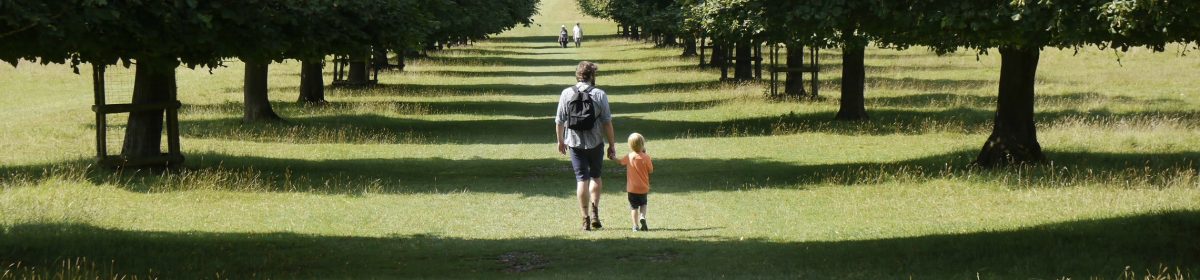
So while I cleaned the oven and descaled the steam function; then put the dishwasher on a cleaning cycle and made strong coffee; Madame went back to bed and worked silently on her tablet for half an hour while I cleaned up the crime scene. When she eventually shouted “Come here” in her most imperious voice I responded immediately and she said “the cottage in Cadgwith is free” – (but still not cheap, I thought), while my heart leapt for joy and my soul sang in their hearty and soulful fashion. With £150 discount it still wasn’t really cheap but it was below the inexcusably extravagant line, so after ten seconds deliberation we booked it for a week. Photos from the kitchen door at the top of this post.

Our most extravagant moment almost escaped our attention entirely. One of the boys brought a bottle of wine and I could tell it was a good one just by looking at the label. I said it looked good and he said “It should be at that price!” All unknowing I opened it and took a sip and it was wonderful – I mean symphonic. Madame was having a dry night so I managed to drink about three quarters of the bottle before caution and generosity compelled me to stop. Only then, after I had a sneaky look online did I discover just how good it was. Oh and expensive too. It may well turn out to be the most expensive wine I’ll ever drink. Madame finished it up the next day and agreed that it was very good. I’m glad I didn’t know its value before I tried it. I’ve often wondered whether the whole wine connoisseur thing was a snobbish affectation but on the basis of a blind tasting there was no doubt.

And so, back to my favourite place on earth to look for plants and ferns and especially a Quillwort that I managed to walk past without recognising last year. It will be a tremendous place for a bit of spiritual renewal – it always is!

A (true) Christmas Story

Unexpected visitors never bring much joy, and a vicarage is the first place many truffle stuffed crises make their landfall. We were on the main road to a spike (an overnight hostel) and in those days we weren’t seeing as many drug users as now. Mostly we saw old style tramps who’d never come off the road. One, called Goldie, was a regular and turned up one day with what looked like a gangrenous arm. “How did you get this?” I asked. “Rats” was his one word reply. I quizzed him a bit and he seemed to be very scared of any sort of institution – including hospitals. This was a common factor with many of our visitors, so I did a deal and said “if I can get you into A&E without sitting in a waiting room will you let me take you?” He agreed this would be alright and so I phoned the Consultant, (a friend), and we arranged for Goldie to jump the queue. He was absolutely alive with lice but I bit the bullet and drove over (leaning slightly towards the open window) and the hospital kept their side of the bargain and took him straight through.

As they helped him off with layer after layer of clothes I swear I’ve never seen so much livestock on a human being. I’m beginning to itch as I write this! Then they cleaned him off with Swarfega which they apparently kept especially for these situations and cleaned up the festering bites (yes, plural) and injected him with antibiotics. Meanwhile I chatted to him about how long he’d been on the road and he told me he’d become known as Goldie because he’d gone on the road during the time in 1965 when a Golden Eagle called Goldie (Gallic shrug) had escaped from Regents Park zoo. The eagle was eventually recaptured after killing one of the American Ambassador’s ducks and attacking a couple of terriers but my Goldie had never spent a night indoors since then. That put him at least 15 years on the road. He was a nice guy, small and quiet and very self-contained. The doctors asked where he was going – he walked everywhere – and he said he was going to Gloucester; so they typed up a letter for the Royal Infirmary there and begged him to go there as soon as he arrived. He insisted that I set him down on the A38 at the exact spot I’d found him and wouldn’t hear of me driving him to Gloucester. Later I discovered he’d never shown up at Gloucester and I never heard of him or saw him again. I bought a couple of cans of insect killer from the local farm supplier on the way home.

Another regular turned up looking dreadful and blagged a few paracetamols off Madame; so she gave him the tablets and a drink with a bag of sandwiches and he set off towards Thornbury. Minutes later she got a call from the nextdoor (previous) parish warning her not to give him any paracetamol because she’d already given him some. Madame phoned ahead to Thornbury and warned them what had happened – just in case. We thought we might have killed him but he seemed to survive the onslaught of goodwill because he came back a year later.

But what I’m about to write about takes the Palme d’Or. A once in a lifetime stocking filler for a knackered Vicar looking for a Christmas sermon. Sadly, though, I’ve never used it because – once again – I don’t know how it ended but I fear it didn’t go well.

Imagine – nineteen rowdy Christmas carol services in, with three still to go and we’re chilling in front of a log fire, watching telly with a glass of wine in our hands when the doorbell rings. …..

“Hello?”

“My waters have broken”

In front of me was a young woman, pretty bedraggled and more than a bit grubby but manifestly very very pregnant. Lurking darkly in the background was a young man. It was a bitterly cold, frosty December night and so I did what all sensible middle aged men do – I shouted

“MADAME”

We had a huddled conversation in the hall along the lines of – “theresthisgirloutsideandherboyfriendandshesaysherwatershavebrokenandshelookspegnantandIdontknowwhatwecandobutwillyoucomeandjustlook!” …..”please?”

Madame immediately took charge and whisked the girl up to the bathroom, got her undressed and into a warm bath. The odd partner refused point blank to come in so I left him outside and shut the door on him. I didn’t fancy having him wandering around stealing the family silver (ho ho) while we delivered a baby! But I decided – discretion being the better part of valour – that I’d stay out of the way and hit the phone trying to find a midwife. You have no idea how difficult it can be to get a midwife to turn out at night. I rang the district; all the maternity services I could think of; and the GP surgeries and no-one was prepared to come out. Meanwhile, Madame arrived back downstairs with the young woman looking a great deal cleaner and wearing a completely different and very familiar set of clothes. The old ones we just binned.

The full story began to come out and she told us the reason they were sleeping rough was that her last baby (!) had been taken away by Social Services and the only way she could keep this baby was to have it – as she said – “In a hedge”. She’d met the young man when they were both inpatients at a mental health unit. They refused point blank to take up the offer of a bed for the night, and eventually – way after midnight – a midwife drove out from Bristol, examined her and said that her waters hadn’t broken yet. So that was that. I thought that the boyfriend was controlling and possibly abusive but we needed to keep them close enough overnight to get more help in the morning.

It was, as I said, bitterly cold but at his insistence they would sleep in a bus shelter. So we gave them blankets and sandwiches which he threw down angrily in front of us because they didn’t eat meat! He had terrible acne and didn’t look as if he cared much about either of them. So first thing in the morning I found them in the bus shelter and begged them to just wait while I tried to get more help, and after a couple of hours on the phone I found some emergency accommodation in Bath. Once again I offered to drive them but he refused so I gave them their bus fare, wrote the address on a piece of paper and they set off. They never showed up in Bath and I never found out how the story continued.

And I’ve never used the story because – I very much hope – those vulnerable lives are still being lived out there somewhere; and I also hope that they finally found someone with the resources to help them – not just me with nothing to offer but goodwill and the wrong sandwiches. No kings showed up, there were no guiding stars, no shepherds and Jesus failed to be born in a bus shelter.

This page is not sponsored by Dr Bowler’s Brown Bowel Oil Company.

The Widcombe Mummers in 2020

Actually this site isn’t sponsored at all, but runs at a built in loss because I created the site; write all the material; publish it (1008 posts and 824,256 words); take all the photos and pay all the bills. I have no desire at all to become an influencer and I cope with the money side by not looking.

I do like it when people read my stuff and like it, and I love it when my follower count goes up – who wouldn’t? – but just recently I’ve noticed a few corporate followers and when I check them out (I like to know who’s following and read their stuff) I discover that they’re pushing expensive pink website pills that will make me a pile of money and followers in return for ……..what exactly? I’d only sell myself if I could work out a price but unsolicited bundles of used notes are always acceptable. I guess it’s actually pointless writing this because they probably don’t read my stuff at all. I can imagine there are all sorts of AI bots crawling over it like maggots in a tin and stealing my copy. That would at least infect the next AI generation with a punctuation problem because all my posts are really scripts and written to be read aloud. The punctuation is a deeply obscure personal code to measure out exact packets of silence between words, clauses, sentences and paragraphs. The secret of writing for the ear is to control the silences. Apart from that I welcome GCHQ and other espionage agencies into my world because I love to waste their time – and if anyone is pinching my stuff I’d appreciate a credit at least.

I wanted to recall a true story of something that happened while I was training as a curate in St Mary Redcliffe Church – another institution with a bit of a branding problem. Every year Penny Bron (sadly no longer with us) and the people at the Cancer Care Centre in Clifton organised a glitzy Christmas carol service to which the great and the good flocked in their diamonds and fur coats. You could smell the mothballs. It was all forgivable because many thousands of pounds were raised to support her excellent work. After the service we were all usually invited up to the Mansion House to meet the exceptionally great and good for drinks with the Lord Mayor – that year it was Joan Jones who, for some reason, I’d really hit it off with. Then a couple of events happened that threw it all off course. Firstly the big star, The BBC chief correspondent Kate Adie, got called out to the Middle East because the prospect of the Gulf War was in the process of becoming a reality. Then a number of other celebrities were delayed, sick, or unavailable and so when it came to the reading of the nine lessons, we discovered after the service had started that we were three readers short. I was sitting opposite the boss and at the first long silence he nodded at me and I went to the lectern and read. I had a reading to do myself, so I returned to the lectern again. At reading number six I rose once again in my growing magnificence and then finally came the final reading from St John’s Gospel – again missing a reader.

I’ve got a bit of a thing about St John’s Gospel. The opening words invite us to see the creation as an entirely new beginning ex nihilo; a word, a performative utterance, something so unspeakably powerful that what was spoken came into being. A writer’s dream. I gave it everything I had. The page in front of me was a printed from the programme and as I reached the final sentence I spotted at the bottom, these words:

This page is sponsored by Pascoe’s Complete Dog Food.

If you are casting about for the perfect example of bathos please help yourself. After the service finished I was approached at the North Porch by a woman who said she had lost her husband. A little gentle probing – you can understand why – revealed that she’d arranged to meet her husband after the service but he hadn’t turned up and she thought he might have gone “straight to the reception” [this is the beginning of an hilarious misunderstanding]. I wasn’t intending to go because after a couple of years gasping with boredom, I just wanted to go home. So I said “oh well never mind I’ll drop you off there”. Off we went up to Clifton and swept into the Mansion House Drive where we could see the lights on but the main door was closed. I rang the bell and we waited for a while and then the butler – an enormously tall Cornishman, dressed for a career playing Scrooge in panto, opened the door and asked our names. This is a bit weird I thought, but he said “Follow Me” (I capitalised that because it was a kind of order) and so we did. I had no idea what my companion’s name was so we said who we were, followed him to a set of huge double doors which he threw open and introduced us by name.

The table was laid for the great and good and, as he announced us, my companion looked at me in blind panic and said “What do we do?” and I whispered “let’s just see what happens” at which point Joan Jones, bless her, understood what had happened and walked up to me; gave me a huge hug and a kiss on the cheek and ordered Poldark to set two more places and then set us down between Bernard Levin and Jenny Murray. Luckily my companion was in an evening dress and I was still wearing a Persian silk cassock which could get me in anywhere.

Dare I say, we had a marvellous evening. At around 1.00am I dropped her off at the Grand Hotel and said – “don’t tell your husband where you’ve been he won’t believe you.” The next morning she rang to say that the reception she was supposed to be at was at the Lloyds Bank headquarters. I’ve never seen or heard from her since.

Anyway – if you’re a corporate you’ll glean from this that I don’t like corporate do’s and I think sponsorship is ruinous. I do love good readers because without you all these hours at the laptop would be a complete waste of time, and I love followers who can cope with my scattergun posts. The next performance of the Widcombe Mummers is New Year’s Day at 12.45 on Widcombe Parade. There will probably be a performance by the Marshfield Mummers on Boxing Day at 11.00am in the Market Place – but you’d better check that. They have the most wonderfully inventive costumes made from torn newspaper. I’ve always followed Oscar Wilde’s advice that you should try everything once except for Morris Dancing and incest; but these old traditions (obviously not the incest one – this not darkest Gloucestershire) – are a kind of wormhole into the past.

Now, eight years out into the glorious liberation I can bear to recall Christmas as it once felt; relentless, exhausting and fun, and as I’m completely incapacitated by a cold I may write again before Christmas, but if not – have a good one!

The Wassail – here’s one I blessed earlier!

Photographed in one of the Marcher Apple Network orchards last year; saucy little vixens eh?

I thought I’d been quietly retired from my role at the Littleton on Severn Wassail. Last year no invitation arrived and I thought to myself ‘that’s it then’. As soon as my successor arrived in the parish I’d offered him the job and he’d said that he’d just watch me next time round to get the hang of it. I could sense after the first time that he thought it was a bit pagan. He was wrong of course; wassailing is thoroughly, indubitably and cheerfully pagan. Over the years it grew to include the election of a king and queen for the night, memorably won one evening by a gay couple after a totally rigged vote. There was a huge bonfire, a mummers play, a folk song group and a great deal of cider. My job was to stand on a picnic bench and bless the trees while shotguns primed with black powder were fired at the sky by green men and women hidden in the trees. Smoke and flames from the shotguns and much shouting and banging of saucepans followed in order – I insist – to drive the devil out. The 2024 event will also feature a ukulele band which may well do a better job of devil driving. My new colleague was pretty shocked by all this boozy revelry and cross dressing and, I think – being a good evangelical, took the job on last year in order to reign in the revelry and anoint the event with brief talk about Jesus. Needless to say it played badly with a press ganged congregation. 

There’s a skill to rural ministry that takes a while to learn, and because I believe that all God talk is utterly inadequate and therefore heretical I’m not remotely fazed by anyone else’s attempt to express the mystery in a different way; so harvest festivals, Plough Monday blessings, and carol singing are all as powerful in their way as weddings, funerals and baptisms. A lifetime of talking and listening to people in extremis and in everyday situations has taught me that most of them had always thought very deeply about the great mysteries – more than many bishops, I might say, and that to interrupt them and try to correct their theological grammar is grossly impertinent and insulting. I’ve never met a more lucid natural theologian than the late Bob Talbot who, with his wife Rene ran a fishing tackle shop in Bedminster. I sat fishing with him on a river bank one morning and listened entranced by and envious of his spiritual connection with nature.

Anyway, the invitation arrived yesterday asking if I might think about blessing the orchard once more at the next Wassail. The letter from the Secretary of the Cider Club popped up on the laptop and I asked Madame what she thought. We’ve both got longstanding connections with the parish, the pub and for Madame the cider orchard too. She beat me to it because she was working for Long Ashton Research Station soon after we married, and was a part of the team of horticulturalists and scientists who planted and maintained it as an experimental plot behind the pub in the 1970’s. Later we would drink in the White Hart on Jazz nights, and later still I became vicar of the parish.

Littleton has always been a cider producing area. One local farm would make several thousand gallons of cider every year for the farm labourers as part of their pay. Even as late as the 1970’s the labourers at the research station orchards were entitled to a daily allowance of it. If you bite into a real cider apple the bitter flavour of the tannins will pucker your mouth and it will feel dry; but they contain a surprising amount of juice. Stories abound of throwing rats or bacon into the barrels to improve fermentation and although no-one has ever actually owned up to doing it in my presence, I’ve no doubt that any meat and bones would be quickly dissolved in the acidity of the ferment. On some farms, women were not allowed into the cider houses because it was feared they would stop the fermentation. This was a regular occurrence for Madame and me when I bought cider and she was asked to wait in the car while I went in for a wet. I learned fast that a wet was never less than a pint and sometimes two so I said no.

The Wassail is on and I’m happy about it. The Cider Club these days has many more incomers than original born and bred members but the village still has the capacity to replicate its historical culture through the pub, the cider club and even the church. As long as those fateful words “we always do it this way” are never uttered, cultures can adapt and embrace new ideas. This year the Winter Solstice comes at 3.27am on Friday morning and for me it can’t come too soon. There will be bonfires and songs no doubt and I’d feel completely free to join in the celebration except I’ll hopefully be asleep and in bed trying to get over a lousy cold.

The end of the wild is nigh!

Do I think that apples would fail to pollinate without prayers, or crops never grow without ploughs being blessed? Do I think that without the Yule celebrations the days would get ever darker? No, not a bit. But I do believe that these celebrations are the way we manifest our connection with and dependence upon the earth, her tides and seasons but even more importantly our dependence on one another; on human community and shared values. 

I used to be a bit scared by the sandwich board men in Bristol and their gloomy message that the end of the world was just around the corner. To my infant eyes, immediately after the war, looking across the bombed buildings and burnt out churches it seemed as if we were halfway there already. Nowadays the earth is in greater peril than ever but we’re choking and drowning in the terrible conjunction of affluence, indifference and effluents. The celebration of the seasons puts us back in the right relationship with the earth without which we’ll find it hard to motivate ourselves to change.

In case I don’t get to write for a little while – It’s going to be very busy for the next couple of weeks – Happy Whatever!

Winter Solstice – I should go down to the canal

Winter Heliotrope on the Kennet and Avon Canal

Christmas brings out my inner Thomas Hardy. I’d really like life to be like “Under the Greenwood Tree” his only cheerful, not to say funny book; but reality turns out to be – in the main – “Jude the Obscure”.

I wake up early this morning at around 4.30am and lie in bed filled with the sense of a recurrent dream in which I am slowly becoming invisible; a wraith moving through remembered places and among people I loved and some who loathed me -evoking feelings inviolable to passing time but always there; a miasma.

Madame asks “can’t you sleep?“; “No”; “What’s up?”; “Dreams”. A pause. “Go and make a cup of tea”. And so I shuffle off to the kitchen and boil the kettle – searching for a packet of shortbread biscuits to cheer myself up. I give myself a stern talking to: “For crying out loud – do try to stop being so down!” – so I read for a bit, drinking tea and eating biscuits. I’ve just started “The Waste Land – Biography of a poem.” by Matthew Hollis. I’ve been spending far too much time reading in the past, and I quickly run out of concentration – it’s possibly a bad choice for a chronic melancholic. Then I remember that this evening at 21.47 we will celebrate the Winter Solstice. For some bizarre reason it feels like a personal achievement, although in truth it’s the beginning and not the end of winter. But seasons come sheathed inside one another like celestial music, and so today we celebrate a subtle change of key. The buds are on the trees. The long winter nights concede their dominion to the sun and from now until the summer solstice the light dominates and thistledown memories give way to new life.

We haven’t been down there yet, but the canalside will be showing the first flowers of Winter Heliotrope. When they’re in their full glory they have a strange perfume – like almonds possibly – but subtle – you have to search for it. There will be Coltsfoot – but in eight years we’ve not seen it here in Bath, and in fact the last time I saw it I was on my bicycle taking a turn around my parishes bordering the Severn and I spotted it peeping through snow. Of course there are many winter flowering garden plants but they never lift the heart as much as wildflowers. We greet them one by one in the spring like old friends with whom we’d lost touch.

The seasons aren’t just measured by day length but by events like this and – as my sister reminded me yesterday – some time in mid January we will suddenly notice that the brief snatches of the themes we overheard in the overture, have broadened out and asserted themselves. The woodwinds have been joined by the strings and by June it will have become a full Brahmsian orchestra. The saints pass in procession; the old Christian calendar which had the good sense to borrow extensively from the (so-called) pagans – is the liturgical song of the earth. Plough Monday – the first Monday after the Feast of the Epiphany – when the Young Farmers carried an old Ransomes Plough into the church to be blessed and it was so bitterly cold that the Archdeacon lost his voice as he preached at the beginning of the old farming year and his breath crystallized in the air. These are the furnishings of the memory; a form of defence against the enslavement of technology and greed.

And so I shall throw off my gloomy cloak and we will celebrate. The season that begins tonight and lasts around two weeks is often deprecated as a festival of overconsumption and indulgence. From 1644 until 1660 Christmas celebrations were officially banned in England by the Puritans and replaced by a period of solemn reflection on our sins! – In their dreams! Of course Christmas and its revelries were never suppressed and our reputation for surly disobedience remains untarnished – but the celebrations always ran deeper than the deepest roots of imposed religion. The fear of the dying of the light and the joy when it returns defies all logic. We know perfectly well that the sun will triumph – until next year – and yet – the return of green shoots leaves us shuddering with thankfulness and we celebrate. In this time of catastrophic climate change we know that the unthinkable may yet come to pass.

And so this week, as we all meet up again, I’m cooking; practicing and planning. The diary is marked up with the day we need to collect our meat from the farm, the exact time and day I need to start a sourdough loaf to be ready, fresh, on Christmas day. We’ve hunted down our best pickles and chutneys; I’ve taught myself to bone, stuff and roll a chicken; our groceries and a good deal of wine will arrive early on Christmas Eve and there is fresh stock in the fridge. I’ve learned how to make hollandaise reliably with a good deal of help from our youngest (chef) son and so Christmas breakfast will be eggs royale, or benedict according to taste. Madame – who likes neither – will probably have poached eggs on toast; either way we all get spoiled. We won’t be eating anything like a month’s calories in a day. We’ll be spending money we haven’t got on treats we can’t afford but the government hasn’t crushed our will to live yet. Christmas Eve will be Italian; a light salad of lambs lettuce, dried ham and burrata followed by pappardelle in a rich ragu of tomato and ox cheek and Christmas lunch will be utterly traditional by popular demand.

In the midst of Covid lockdown Madame and I had a Mexican and really enjoyed it. For the first time in decades I haven’t made a Christmas cake or Christmas puddings – all far too rich for us these days and then the festival of cold meat and lentil soup will take us up to New Year’s Eve when we’ll probably be in bed by 10.00pm. I see nothing much to celebrate from last year apart from its ending and short of an unexpected political earthquake nothing much to look forward to. The earth, though, has her own seasons and we’ll begin by looking for those Winter Heliotropes whose faint perfume will certainly overpower the stench of corruption and idiocy that surrounds us. Our celebrations are an act of resistance.

And if I don’t post again before the weekend – we wish you a very happy time this weekend. Whatever name and faith you give it, we hope it’s cheerful Hardy, not too Laurel and Hardy and not at all dark Hardy!

Quince – a sinister fruit?

All I want for Christmas is my ……… don’t go there!

15th November 2022

You might have thought – with no supporting evidence at all apart from a mention in a glossy food supplement – that the quince was just another unusual fruit. Quince marmalade, quince cheese and quince jelly all feature on the menus of aspirational (overpriced) restaurants where the finished food slides effortlessly onto the plate and we eat it with no thought of the process; in fact with not much thought at all except possibly its impact on the bill.

A couple of years ago I made medlar jelly which is unlikely to figure on any menu anytime soon because the faffery involved in picking, bletting, cooking and bottling them exceeds any fleeting pleasure at its weird flavour. The French name which roughly translates as dog’s arse, referring to its appearance, is close to being the only amusing thing about it. The recommended use of medlar jelly as a companion to game is a bit of a clue – possibly best eaten with something like a long buried seabird. Its principal value is its prodigious longevity. We’ve had half a dozen jars in the store cupboard since the day I made it – and they’re likely to stay there until they start growing an obvious layer of penicillin.

However yesterday’s task seemed, on the surface, to be a more likely culinary prospect. Quince figures on posh menus and in historical novels but never having tasted it I wouldn’t know why, and when our allotment neighbour’s tree set a huge crop this year we asked her if we could pick a few.

Possibly the nicest thing about the quince straight from the tree is its astounding perfume. Three in a bowl fragranced the whole flat until they quickly went mouldy and then smelt a bit darker. It’s best – the books say – to pick them is when fully ripe and still on the tree. This is one of those bits of hand-me-down gardening advice that has escaped serious scrutiny for generations, because they pass from not quite ready – to lying dead on the grass in the single blink of an eye. In precisely the way the badgers harvest our sweet corn during the night before we intend to harvest them, the moment you look a quince tree in the eye a stopwatch starts ticking and by the time you’ve fetched your bucket they’ve gone – apart that is from the ones at the very top of the tree just out of reach. Undaunted I balanced on a wobbly rail and picked four pounds of them ripe, but still on the tree.

The quince does not give it up without a fight. As I was slicing and chopping them the pips reminded me irresistibly of sets of spare dentures for rats (see photo above). This thought was probably brought on by the fact that some of these fruits had clearly been nibbled by rats – which are great tree climbers – but not consumed. If one bite was enough to put a rat off what could they possibly taste like? Much chopping later I quickly looked at my treasured 1968 HMSO book “Home Preservation of Fruit and vegetables” and found that I needed to simmer them for up to four hours, strain them through a jelly bag, return the pulp to the saucepan and add more water, simmer for another 10 minutes and then pour back through the jelly bag.

During this time the overpoweringly fresh, floral radiance was followed by something more like boiled sweets or bubblegum. Many hours later I’m still waiting for the last drops of juice to drip from the soft but essentially undamaged chopped fruit and then the sugar, boiling and bottling can begin. I reckon we might get four 14 oz jars out of it with a following wind.

However I have to report a deeper pleasure in the making. We’d over indulged in the last everyday sourdough loaf and so I had started a replacement early on the previous morning and left it proving in its banneton overnight. Fermentation is a time and temperature process, and so I woke several times in the night wondering if it was overflowing its banneton like a muffin top – that’s annoying – and so soon after 5.00am I was having a sleep defeating mental battle about going to check. I lost the battle and got up at about 6.30 and, needless to say, the dough had behaved perfectly; gently domed above its basket.

And then, alone in the kitchen, I had one of those epiphanic moments, remembering Christmases past. My parish duties meant that on Christmas Eve I would be at work by 8.00am and then after three services finishing at around 2.00am after the Midnight, I would turn the oven on, grab a few hours of sleep and then start the Christmas turkey in the oven before racing off to take another five services – getting home by 1.00pm usually totally exhausted. But those solitary moments in the kitchen were absolutely precious to me. If there is a reason this memory popped into my mind it must have been the perfume of the quinces, still filling the kitchen with Christmas perfumes; citrus, apple and spice. If I can bottle that later today it will be the first time I’ve ever made a preserve that made me shed a tear!

Postscript

24 hours on and here are the results. Exactly as I predicted the 4lbs of raw quince yielded 4 lbs of quince jelly; bearing in mind the added water and sugar. The flavour is lovely- certainly not bubble gum or candy – but not the same as the raw fragrance of the quinces off the tree. Chatting to a neighbour on the allotment yesterday she told us that she’d baked a couple in the oven and eaten them with ice cream, and that they were delicious. So all in all, well worth the effort. Picture below.