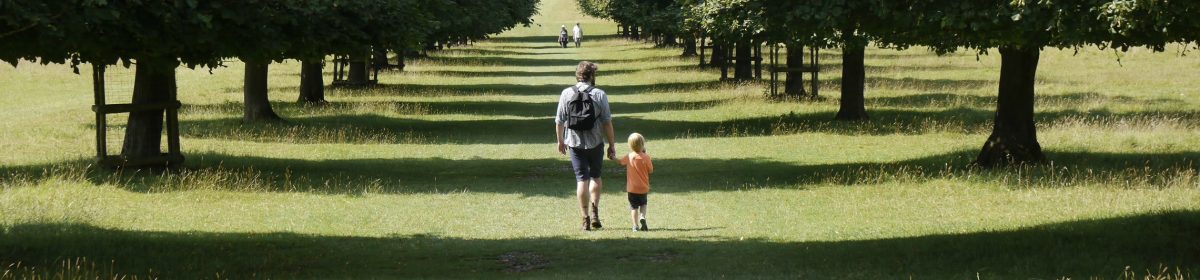
 It was always going to be the hottest day of the summer so far, and so we agreed to give the (shelterless) allotment a miss. The thunderstorm on Monday night had given the ground a real soaking, in fact we went to bed and then got up again at around half past midnight as the first growls of thunder got underway. It was the oddest storm I’ve ever watched – there were no lightning bolts to be seen and yet the sky was as bright as day each time there was a flash. When I was a child I took part in a survey where I had to count the time between the flash and the thunderclap and send off other bits of information on a postcard, but if I’d been doing the same survey on Monday night I’d have had nothing to write. The thunder was – well – thundrous and almost continuous, and when the rain eventually got underway it was very very intense. People were out on the Green whooping and running around and at the back we could hear cheers breaking out. The sheer oddity of the storm had turned it into a comunity event.
 So no need for watering and far too hot to be doing any jobs on the allotment we elected to walk up the river and along the Kennet and Avon Canal to Bathampton. We’re very fortunate to be able to walk right across Bath without leaving the footpath (bar crossing a couple of main roads). We got to a point opposite the railway station where the heights of the many floods that have affected the river are engraved on the plinth of the footbridge. Some of the floods were way above our heads, and if you’ve ever seen the Avon in flood you’ll know what a scary prospect that would be.
The canalisation of the river has always been a main source of the floods and in the last couple of years an artificial flood plain has been built in the most affected area. Sadly (as per normal) the native bankside flora was stripped out by the diggers and a pre-seeded carpet of so-called wildflowers was put there to replace them. Do architects and civil engineers ever actually look at wildflowers? `The resulting mess that extends along the length of the ‘improvements’ comprises plants from every corner of Europe except this one and it looks either stupid or downright ugly – depending on your mood. A much loved and reliable crop of Burdock near the road bridge has been replaced by a chocolate box mix of intense reds and blues that don’t belong, and the saddest thing of all is that the majority of passers-by probably don’t even notice. Flooding, environmental destruction and heatwaves are all part of the same massive challenge and the mainstream political parties here just don’t get it. Enough!
By the time we got to the station we realized that a walk up the canal was going to be far too uncomfortable and so we took the short cut through town, opened the windows and pulled the shutters across and while Madame dozed I wrote for a couple of hours.
In the evening a workshop on Polygonaceae (that’s Docks, Sorrels Knotweeds etc in plain English). Sadly , and probably due to the 32C temperature, the attendance was a bit disappointing – well there were two of us. I was slightly outgunned by the workshop leader and the only other participant who was a County Recorder and who could easily speak a sentence where I could only understand the conjunctions. However I quite enjoyed it and while they argued about promiscuous hybridizing I got on with it and looked at the samples. After a mind-numbing two hours I’d successfully identified three easy plants and learned two new terms, which I count as a great night out. I’ll never look at a Dockweed the same way again.

Mercifully, this morning it’s cooler and we’re off to do a great deal of weeding. We have a rule on the allotments that says we can’t have a “bonfire” between March and the end of September – which happens to be the time we most need to burn weeds like couch. We’ve argued the toss about whether a small incinerator – burning at low temperature and creating very little smoke except when first lit – is the same thing as a bonfire. But rules, apparently are rules and so we must bag up our noxious weeds in plastic sacks (obviously we compost almost everything), and drive them to the tip, engine idling while we advance a metre at a time in the queue. There they will be bulldozed around the bays and loaded into huge lorries when they can be driven either to landfill somewhere miles away, or to Avonmouth where they can be – wait for it – burned in a brand new incinerator. Ah yes – that’s going to save the world!


 But after a damp start early this morning (with a view like this even damp starts are magical), the sky cleared slowly and by the time we got back from St Davids and had a greedy bacon sandwich, the sun was shining, we whacked on our boots and went for a long walk with me ticking off plants as we went. I’ve now found four of the five Plantains here and I found the other one in the middle of Bath a couple of years ago, so that’s a botanical royal flush. As we walked we wondered if we’d somehow wandered into paradise: the sea, the sun, the wildlife and flowers feeding our souls as we went along. Even the discovery that the Willowherbs are a much more complicated family than I’d imagined couldn’t dampen my enthusiasm – every dificulty became an opportunity – hooray, more features to look at and absorb – even my knackered knees felt as if they were enjoying themselves.


 That’s it for now. The internet connection here is very temperamental, and the phone signal pretty spasmodic too. I snatched a photo of Madame’s drawing in progress and then took another of my notebook – “Rite in the Rain – Model 973T – as previously drooled over, as proof that I actually do write things down. Finally some pictures of yesterday’s finds.


 The road to hell being paved with good intentions I thought I’d make a start with the grasses – principally because I’m not very good at them and since they’re ubiquitous it would immediately up my success rate. This is one everyone will recognise – it’s the grass that you pull the seeds off between thumb and finger when you’re a child, and it’s called False Oat Grass – Arrhenatherum elatius – and when I pulled a bit up because I was curious about how it spreads I discovered these beautiful bulbules at the root. Of course five grasses in and my appetite was well and truly whetted and so I started listing all the plants in the hedge – which brought it up to 32 before Madame threatened to throttle me.


 We only clocked the lovely Pyramidal Orchid as we were leaving Dyrham Park this morning. It was hiding behind a fence on the road out and right next to it was the flowering spike from an Agrimony plant – that photo’s a bit out of focus because I was blocking the exit road and rushed it. The occupants of the car behind didn’t even pause to look what I’d just been on my knees photographing.