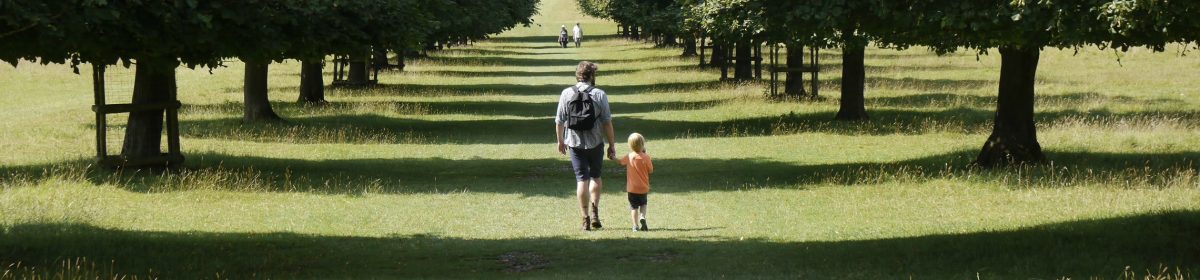
I suppose some might find churchyards rather melancholic places. but not me. We were walking alongside the Monmouth and Brecon canal when we saw the road sign which indicated a church half a mile up the hill. It was more of a Welsh mile and a steady climb of 200 metres, passing an adventure centre and a lot of sheep before we came upon the church which is so large as to hold a population much larger than the little collection of houses around and about which wouldn’t even amount to a hamlet’s worth. It was a blistering hot june morning and we passed a group of walkers descending who said there was a good bench up at the churchyard and that sealed the deal.
I’ve spent a lot of time in and around churches and the first thing that caught my attention was the broadly circular wall to the churchyard. This is an often seen feature of Saxon churches which stood on repurposed pagan sites. Churches dedicated to St Helen (Emperor Constantine’s mother who once revivified a corpse with a piece of the true cross that she’d bought from the local relic market) , for example, were almost all situated on springs and one of our neighbours hired a dowser who managed to locate the spring at what would have been my local parish church before the congregation all moved away to work in the quarries.
The walk up a narrow lane to the church was a botanist’s dream, notwithstanding the worst hay fever I’ve ever suffered from. I dripped, sneezed and coughed my way up the long hill taking photos while Madame walked on ahead. By the time we reached the church gate I’d found five species of wildflower I’d never seen before. The circular churchyard and the yews reputed to be more than 2000 years old suggested that this squarely built church sitting silently in the hillside has a history reaching back through beyond the Roman period. Holy places are like that. We find ourselves being drawn to them, never quite knowing why. I’ve always thought that they function as lost property offices frequented by people like me who can’t even fully describe what it is that we’ve lost.
The guidebook came up with some facts and recalled some of the tragedies that the church has seen, including the deaths of family wedding-party who, in 1753, drowned while attempting to cross the river Usk. Outside the church a patch of grass was reserved for the playing of handball, and a pit for cockfighting – forerunners of the creche and free coffee with damp biscuits after the service, favoured by modern clergy.
Outside, a fallen yew tree has been turned into a noticeboard worthy of Antoni Gaudi.
But as I wandered around the churchyard I chanced upon some plants, presumably garden escapes or maybe sown on purpose. I knew that if they were truly naturalised and “wild” they would have been exceptionally rare, but after a few moments the more likely thought came to me that they’d been deliberately put there; safe behind the railings of a pair of listed chest tombs and as symbols of the resurrection just beyond the reach of strimmers and zealous gardeners. The plants – Jacob’s Ladder – were there in three colours, blue, purple and white; a kind of living bible class for those who care to stand and stare. Jacob’s ladder on which, in his dream, Jacob saw the angels ascending and descending to earth. It’s a potent symbol in a churchyard even now – subtle and creative, even a bit subversive.
I can’t claim too much about the plant in the photo except to say that I’m almost certain it’s a wild Tulip, Tulipa sylvestris – hiding in plain sight among hosts of dandelions and what will soon be equal numbers of Oxeye daisies and Rough Hawksbeard. Talk about a needle in a haystack! I’ve sent off some more photos and measurements to the Magisterium for confirmation but I’m fairly sure of my ground.
Our discovery was purely accidental – we arrived back from our holiday on the Lizard and 24 hours later Madame was in hospital having a Knee replacement. It’s essential to exercise (sensibly) after the operation, so we took ourselves off for a very short walk in the Park and in the absence of any mown paths so early in the year I took the opportunity of scouting around for special plants. Later in the year we’re almost certain to find Bee orchids, Early purple and pyramidal orchids too, but this year has already been strange – climatically – so an early expedition made sense and almost immediately I noticed this plant which stuck out like a sore thumb amongst its neighbours.
Until I’d spent a few hours with the AI apps and then the field guides I had no idea either that a wild tulip even existed. However it escaped from a garden in the 17th century and has set up shop in a sparse set of locations across the south. I hesitate to use the word rare, but it’s certainly uncommon. However the bad news is that my specimen was badly infected by Pulcinella (probably) rust fungus and may well not flower this year. Richard Mabey says (In Flora Britannica) that it often fails to flower in any case so I’m not holding my breath. I’ve been visiting an equally unusual Mullein plant on the Canal for almost a year now waiting for it to flower, so although patience is not a virtue I possess much of, I’m used to waiting.
The supreme irony, of course is that the Park was overrun with visitors to the formal gardens which were hosting a Tulip Mania event. Dare I confess that I’m not overly fond of tulips but clearly thousands of people are, and the car park was completely rammed. However our favourite parking spot was empty as ever and we barely saw another human being as we discovered the ancestor of all those blowsy showoffs down in the formal gardens. It looked like a modest and rather sickly leek, but a single sniff confirmed that it wasn’t a member of the allium family.
So there it is – we await the verdict of the Magisterium whilst drifting spores have infected the most important non-exhibit in the show. I really hope it flowers because it’s very pretty in the modest way of wildflowers compared with their steroidal and silicone plumped offspring.
Today Madame and i went to have her dressings taken off, and we both received our Covid boosters. We should get the campervan back this week after the new engine has been fitted and then the summer stretches out before us like a magic carpet. Summer never felt so inviting!
St Georges’s Day – April 23rd; traditionally peak dandelion day.
I’m sorry about the quality of that picture but in this instance it really was a snapshot from my phone – in spite of the fact that I was carrying a far more respectable Olympus. I was just feeling a bit lazy and pissed off because I had been struggling with the menus on the GPS unit and consequently feeling a bit technophobic. Yesterday was the day I was intending to give a first run to a new workflow plan, but even on the simplest and cheapest Etrex I could buy I was still getting banjaxed by the multiple choices I needed to go through to find a simple grid reference and speeding up my plant recording had failed its first test.
So to begin at the beginning, the weather forecast was perfect, it was the first day of astronomical spring – (less tidy but more meaningful than the meteorological version which favours tidiness over aeons of history) – and Madame suggested we should go for a walk on Mendip. The campervan trip we’d planned for a 2 day visit to Priddy was cancelled because the news from the garage was much worse than we feared and the engine is going to need a complete rebuild including valve replacements and resurfacing of the cylinder head. Everything you could fear from a cam belt failure was actually caused by getting the old one replaced before disaster could happen. Incompetence, neglectfulness or the failure of brand new components will probably all figure if there is ever a full accounting, and the only consolation is that the garage has accepted full responsibility and will carry out the repairs under warranty.
So we took the car up to Priddy and parked at the end of the old drove that leads down to Priddy Pool. I’ve spent weeks prepping and planning the new plant recording strategy and so I was eager to give it a dry run early in spring before the first flush of wildflowers really begins. This is probably going to be deadly dull to all but a handful of gimlet eyed enthusiasts so I’ll keep it short. The plan is to get a full record of each new find on the spot. Photo, followed by initial ID using Flora Incognita or one of the other AI apps (if I didn’t know it already), and then a full and reliable grid reference using the Etrex handheld and backup photos for later then, finally, all that gathered information typed into the phone above the EXIF data for the pictures. This should be a bombproof workflow that speeds up the whole process both in the field and back at home. After a frustrating rehearsal I’d say it will need a whole lot of practice before I’m fluent enough to speed up.
Anyway I landed up taking just one photograph using the new method and it’s a narrow Buckler-fern, Dryopteris carthusiana; very common around the Mendips (and everywhere else) and you could find it in Nine Barrows Lane Priddy at national grid ref ST 53469 51927 which is accurate to about three feet either way. This is not an earth shattering find of course but I double and triple checked all the components and the most gratifying thing is that the grid reference is really spot on. The deceptive offerings of the mobile phone look impressive but over the past seven months of data building I’ve discovered they’re anything but accurate. One record of a similar fern made about half a mile away had it growing in a car park in Wells!
Enough! My next quarry is a similar looking fern called a Borrer’s male fern which apart from its name would appear equally dull to the neurotypical. But coincidence had it that Madame was doing a bit of background Googling while I was chatting about a botanist called Borrer about whom I know absolutely nothing. This is how she defends herself against my more obsessive traits. Much to our joy we discovered that William Borrer FRS – ( Henfield, Sussex, 13 June 1781 – 10 January 1862) was not only one of the leading botanical lights of the eighteenth century but – wait for it – he lived in a house called Potwell . This, obviously, is a sign!
I wouldn’t bother going to Priddy just to look at a fern you could probably see a mile from almost anywhere in Britain, but Priddy is a very beautiful village with an extremely decent pub that does proper meals like liver and bacon – so not for the faint hearted. It’s also a very particular ecologically rich environment on carboniferous limestone and sits above some fantastic cave systems which – in my reckless years – I loved to explore. These days it’s a gentle stroll on the surface that floats our boat. There are abundant droves and footpaths across the whole area and if you’re lucky you can enjoy moments of absolutely peaceful silence. Yesterday there were a few wildflowers in bloom, but most strikingly the Lesser Celandines were huge; the flowers were easily twice the diameter of their townie cousins in Bath. The weather forecast held to its promise of wall-to-wall sunshine and we strolled so heedlessly that we got lost at one point so we had to retrace our steps, fetching up eventually just above the entrance to Swildons where we leaned against a drystone wall and ate our sandwiches – bread rolls filled with ham and mustard and topped up with crisps.
It’s less than twenty miles from Bath and yet, 1000 feet higher, it feels remote; detached from traffic jams and stress. When I was a community arts worker the youngsters would come up here to collect magic mushrooms. This wasn’t a problem usually unless they were drinking rough cider at the same time, when they often got a bit unpredictable. Only my memories and the almost continuous stream of aircraft passing above on their way to and from Bristol airport remind me that there’s no escape from our folly.
Up at Newton Park farm shop the other day I spotted this Massey Ferguson tractor – identical to the one I used to drive when I was a groundskeeper about 100 years ago. I think it was a model 35 but I didn’t check this one. They were absolute pigs to start and so if you were selling one it would more easily find a buyer on the Mendips where you could bump start them with the benefit of a steep hill to run down in the morning. I once – with the help of a genius mechanic called Geoff – dismantled our 35 down to the last nut and bolt and then rebuilt it as a kind of winter project.
The database that didn’t know when to stop. On the monitor Tinder fungus in Henrietta Park
Yesterday, as I was typing the latest batch of plants into the database, it suddenly dawned on me that the Potwell Inn isn’t the only journal I keep. This is a long and rather meandering story, but after we retired and after a particularly stressful family Christmas, we took ourselves down to Cornwall and were leaning over the sea wall in St Ives watching the waders and gulls when I realized that I didn’t have a clue what any of them were called. With the inscrutable emptiness of any retirement plans lapping around in my mind, Imade a ludicrous resolution that from then on I’d refuse to walk past anything I couldn’t name. Of course – like all resolutions – it was broken before we left the beach, but what followed was a trip to the local bookshop and our first bird book.
At that stage I’d been keeping a journal for some years but it was locked and private because much of it referred to my work and troubling family matters. Then technology intervened; my computer kit refused to communicate with the app I was using and in spite of a bit of helpline raging I was told that my kit was ancient rubbish and I should spend several thousand pounds on renewing it or piss off into outer darkness where there would be less gnashing of teeth. I’d reached the point in my church work where I could hardly cope with any more grief and felt my ability to empathise was slowly shrinking. With retirement imminent and following a great deal of group therapy and several years of one-to-one psychoanalytic psychotherapy I made the crucial decision to go public and start a blog in which I could pay more attention to celebrating life and being human. The Potwell Inn, the blog you’re reading now is approaching its tenth birthday. WordPress was more tolerant of heritage kit and in fact in the ensuing years I’ve moved across three platforms and four computers without a hitch. The pleasing irony is that WordPress eventually bought out the self-righteous and surly Day One and honour was satisfied.
The Potwell Inn was always intended to be a safe place for me to work in. After decades (my whole working life|) of negotiating dangerous places like public schools, prisons, youth centres and psychiatric hospitals to the Church of England (which was by far the most dangerous) I was pretty much burnt out and I needed to find somewhere to be truly myself without having to pretend I was the fearless and fun-loving extrovert I was generally taken to be. Here in the Potwell Inn, with a few notable exceptions, I have no idea who’s reading about me and for the most part I don’t need to mask or self-censor. I still need to guard against oversharing, and this is probably an appropriate moment to remind readers that the Potwell Inn is a virtual pub whose concept is borrowed from HG Wells’ comic novel “A history of Mr Polly” which was a set text from school but which provided me with an imaginary safe place as I day dreamed and gazed through the classroom window on airless summer days. Very few people I’ve known have really got past my armour so my cherished hope is that the customers – i.e. the readers of the Potwell Inn – find something in common here.
As a child my escape strategy was books. I became a completely promiscuous reader of biographies, the complete works of Dickens, Wells, later Henry Williamson, and up into much later writers. I consumed poetry, particularly the Black Mountain poets. My first involuntary tic involved moving the book past my eyes as opposed to moving my eyes across the page. I would begin a new line with the book held level with my ear. Mr Jablonski the ophthalmologist apparently thought it was just an odd habit and I’d soon get over it. Well I did and I didn’t, in that the tic just moved elsewhere; I lost the disturbing reading habit and started twisting my mouth and neck painfully. Much later I discovered that with an effort of will I could sometimes move it to less visible places, at about the same age- maybe ten or eleven, that I started to feel unable to breathe when things were sprung unexpectedly on me. My diaphragm would tighten like a drum and I could only partially fill my lungs. My Dad had a laudable thing about never making promises he couldn’t be sure of keeping but he sometimes applied it in upsetting ways, for instance by never telling my sister and I when we were going on holiday. We would go downstairs and see the suitcases standing near the door and I would be thrown into a panic – having no idea what was coming next.
The second thread of this post is a lifelong love of lists. The first book I remember was a picture dictionary, rapidly followed by i Spy books, Observer guides and a never ending sequence of obsessions that my Mother would disparage as “fads”. I became an expert on the rigging of sailing ships which led to a lifelong interest in knots – the cue for binge reading Patrick O’Brian. I could list the later (almost always non fiction) books that captured me – “The Foundations of Wireless” by M G Scroggie, way beyond my comfort zone; “Writing Illuminating and Lettering” by Edward Johnston – whose house in Putney we stumbled upon last year; and then after studying “A Potter’s Book” by Bernard Leach, I got into Parmelee on ceramic glazes and now over sixty years later I’m sitting next to the fourth edition of Clive Stace’s “New Flora of the British Isles”. Every one of these books involved the writing and testing of lists – endless lists which, all bar the last ten years or so, are lost forever. I even crack jokes about “feeling a list coming on”, which I think only Madame understands.
My first wildlife lists were handwritten in scruffy notebooks and also in about 17,000 photographs; many duplicated, two thirds of which didn’t even have basic EXIF data. The jumbled and unexamined sediment of a white knuckle life lived in fear of being “found out” – although I never knew what for. I’ve mentioned my melancholic temperament several times in this blog, but it occasionally tips over into what one doctor called “phobic anxiety” and even depression. In my twenties I knew I was ill when I started to see the winter trees as the bronchioles and alveoli of dead people. My mood was only lifted by absorbing, sinking myself in technical detail – the more complex the better and so I emerged from my ceramics degree with more knowledge of glazes and firing than was thought proper by the faculty members who believed that creativity did better when it was uncluttered by any technique at all. I recall a testy exchange with the Head of Department when he saw a drawing of an apple tree which I’d made which attempted to express its characteristic form. All living things have distinctive forms just as they have their individual variations. Close, even meditative attention is the prerequisite of all of art and science. He denied furiously that there was anything distinctive about tree forms and I may have given a sharp reply. That capacity to start fights also followed me through life. I never could defer to flawed or undeserved authority; neither could I tolerate pomposity, and in the end I got fairly used to being called ! “the rudest person I’ve ever met!” to which I would sometimes reply “Well you’ve been lucky then!” One of the best teachers who really stretched me – Sid Harris who taught Sociology – would challenge my flights of fancy by saying firmly “that’s all very well David – but where’s the evidence???” Evidence, honesty, clarity and truthfulness are foundational to civil society. Neglect them and you land up with fraudsters, liars, rapists insurrectionists and racists running the country. My principal defence at school became what must have seemed a frighteningly quick gift of sarcasm. By the end of first year sixth form I’d come within a whisker of getting myself into real trouble and left school with my collar being felt by the Head Teacher whose neurotypicality would have won awards, and my first job was as a junior photographic technician at the university where they handed me a Leica and a box of film; showed me where the darkroom was and said “go and learn to use them”. It didn’t last long but I managed to get a City and Guilds qualification. After that I tasted the joys of unskilled engineering work and welding before Madame and I met when she was 15 and I was 18 and she persuaded me to go back to college. I was astonished when they offered me a place.
I could go on but there’s no point except to say that at some point last year I decided to sort out my photos. I was interested to see whether I could recognize as many as 100 wild plants. I started off with a very elementary database but the more data I typed in, the more possibilities for extending my understanding popped into my mind and the more complex it became until it became a thing of beauty; a second Potwell Inn journal expressed in a different language. The photos, mostly taken on a phone over the past eleven years had enough attached EXIF data to reconstruct the past in diary form. I could find a photo and its date and location and it would evoke the whole complexity of the moment of discovery. Other details were embedded in my memory; of smells, of landscapes, of my companions (usually Madame). The database soon had over 350 entries, some of the plants I’d entirely forgotten ever encountering. The referencing and identification is quite intense work but after a few hours spending time – even with people I know and trust on, for instance, a field trip – I need a few hours of solitude to recover. I slip into my study, turn the computer on and open the Floras I’m using and an intense feeling of safety and relaxation floods through me. Memories of holidays, walks and random strolls along the river and canal banks can repair all those stressed out neurons.
There’s a deep historical, maybe spiritual significance in the naming of things. In the Old Testament as the creation is described (this isn’t a religious riff by the way, I’m just pointing out how fundamental the naming of things is). So in Genesis 1 – the first of 2 creation stories – and not many people notice that there are two – God creates and divides the higher orders – birds, sea monsters, every living creature that moves and then generalizes every green plant for food (does that make God 1 a vegetarian? a poisoner?) – and feels rather pleased. Then in chapter 2, a second and different account, God 2 makes everything in its higher order and then after a bit of dangerous cultural faladiddle in creating Eve, invites Adam to inspect and name all the living things – thereby making him the first taxonomist. Orders, families, genera, species and eventually sub-species. Put briefly, we’ve been naming and ordering things from the very beginnings of written culture.
A single flower is a single dollop of data – enjoy it while it lasts in a jam jar. A photograph with an added date and location makes it ten times as useful to our understanding. My 17,000 uncatalogued photos (not all of them flowers of course) is a personal scrap heap, of no use or interest to anyone except me and the ever patient Madame. But when I extract just half of a percent of them and tabulate them in a searchable database with “who, what, where and when” – all verified then they become seriously interesting and useful. But not only useful. I would insist that these living libraries of accumulated knowledge are beautiful.
At the New Year Madame and I went on our usual walk and found 22 plants in flower. Our Bath Natural History Society group went out a day later and recorded 66. A couple of days later again the lists were published nationally and I discovered that a plant which I’d recorded as Canadian Fleabane, which grew profusely outside our flat two years ago; was this year recorded as two different species – the Bilbao Fleabane and Guernsey Fleabane. I just had to go and check my apparent mistake and so I went out on Sunday in a freezing drizzle and gathered some samples of what looked like very dead material brought them home to take measurements and macro photographs and after a lot of head scratching and turning of pages came to the conclusion that they were right and I was wrong. Good news and bad news because I got an extra record. The trainspotter trap is never far from the surface.
There was more good news when we spotted (left – Right) the first Celandine of the year, Butcher’s Broom in flower and Cow Parsley in flower too as well as some Snowdrops. Spring is just around the corner.
But perhaps the tree walk we went to on Saturday yielded the nicest surprise, because we were shown something which was visually completely uninteresting and yet reminded me of a time when this part of the world was full of enormous Elm trees. On the left is an Elm sapling. It won’t get much bigger because it will soon be struck down by Dutch Elm disease, but I understand that resistant varieties are being sought out and grown on. I’d really love to see just one fully grown and magnificent Elm back in Wiltshire where we were students and fell in love with the landscape.
Dropping the mask has been quite a challenge – just as coming to terms with my own occasional oddness has been equally challenging. Possibly, my friends might say, the effort has been entirely theirs but diversity is the very essence of nature. Every living being, every plant, animal, insect or fungus is largely the same as every other of its kind – and yet different somewhere deep in its recesses. I wouldn’t swap with anyone else for the world. As a lesson from nature it’s irreplaceable and, for me, so are the lists which offer the safety in numbers that I mentioned in the title. Almost every wildlife programme we watch wants to suggest that nature is healing – that going for a walk in nature somehow fills us with an invisible miasma that makes us whole again. Well that may be partly true but I’d love to see it tested in some scientific way because my own thought is that it’s not just walking through it that does the trick but engaging deeply with it. It’s the engagement that makes us well – and the deeper the better!
A stacked focus macro photograph of the prickles on the cactus that lives on my desk
This is turning into something of a series. On January 5th I wrote about the plants being markers of the passing seasons after walking down a lane towards the beach here in Cornwall; none of them rare in any sense but all capable of lifting your heart as an avatar of spring. On 6th January I wrote about plants and their properties as irreplaceable sources of as-yet undiscovered drugs; but I warned that they’re also the canaries in the environmental coalmine warning us clearly about the danger of our extractive and instrumental abuse of nature. Then on the 7th January I turned towards the difficulties but also rewards of a meditative relationship with plants and nature as a whole. Notwithstanding the difficulties of talking about “soul” and “spirituality” I asked whether a loosely Taoist spirituality can build a deeper relationship with the earth and creation without resorting to religious fanaticism. Is there a way into a green spirituality that honours Wittgenstein’s wise aphorism – * “whereof one cannot speak, thereof one must be silent” ? or perhaps more simply, can we ever attempt to explain mysteries without distorting and diminishing them?
So today, in the fourth of these I want to address another gift that plants bring to us – their sheer beauty. Anyone who’s ever loved a William Morris wallpaper or fabric design will understand his debt to natural forms. Any ceramic artist must surely be especially inspired by the natural forms, textures and colours of fungi. Any painter could learn how to replicate the colours, and any sculptor the forms of these exquisite parts of creation that were growing here long before the first hominids evolved and will still be here and still evolving long after we’ve gone the way of the dinosaurs. I don’t write this as a knockdown stand-alone argument for preserving nature, but I believe that the aesthetic can’t be left out of the argument because it’s the aesthetic dimension that helps us to value those parts of life that can’t be reduced to money. If you ask the question “what is a Cowslip worth?” could anyone respond fully without mentioning its beauty, its history, its place in the scheme of things? The value of a wildflower meadow could never be expressed without including its aesthetic dimension except – I write this with a heavy heart – a property developer who might pay lip service to its “recreational value” by offering to build a playing field somewhere else – a promise that will be waived away by the local planning authority if the developer pleads that they can’t make a profit unless they build on the football field too!
And if I might sound off a little bit longer, if we all watched nature programmes on TV from dawn ’till dusk, seven days a week, we’d be in danger of being as ignorant of nature as we were when we were born. Television is inherently passive entertainment more or less presented as education. The real stuff is out there in the cold and rain or, with a bit of luck, on those warm summer evenings when once, in France, I grumbled because a churring Nightjar was keeping me awake in my tent. Real nature is sensual, tactile and mucky, and it demands patience and fierce concentration as well as some ultra rewarding book-work.
When I was learning to do botanical illustration (I never got very far but it taught me the value of close attention), I took dozens of close-up photographs of a Hyacinth so I could paint it using just three colours. This is a great exercise for anyone to try. I’ll never be a William Morris, but I’ll never again dismiss a Hyacinth from a supermarket as “just a Pot Plant”. As I went through my albums looking to pick some appropriate photographs for this post, it occurred to me that one other gift from the natural world to us is to inflame our curiosity. But that would demand a separate post.
*Tractatus Logico-Philosophicus
The Potwell Inn New Year quiz – answers below
First image – which kind of Wild Carrot is this?
Second image – what’s so fishy about this?
Third (Bindweed) what’s the significance of the little pointed bit between the two reddish leafy things?
Upper fourth – Which children’s’ book character shares a name with this plant?
Lower fifth – which word does this plant share with the one above?
Left upper sixth – What part of the body shares a name with this fern?
Left lower seventh – what’s wrong with this Strawberry?
Right eighth – where would you look for this plant?
Left ninth – What punctuation mark shares the name of this butterfly?
For the photo at bottom right, check out the tree label!
Answers – 1. Sea Carrot, 2. Oyster fungus, 3. !t’s the difference between Large Bindweed, where you can see it, and Hedge bindweed where you can’t. Gardeners hate both! 4. Marsh Woundwort. 5. Marsh thistle. 6. Hart’s tongue. 7. It’s yellow, still a strawberry but it’s inedible, 8 Sea radish. 9.Comma. 10. See nameplate.
This photo was taken on the allotment back in 2018
Modern peasant – such a slick title, and I was really pleased with myself for dreaming it up and writing about it a couple of days ago. On the other hand I was a bit cautious about using it in case I was stealing the wind from someone else’s sails – so I Googled it and got back a string of academic references and a book title: “The Modern Peasant, Adventures in City Food” published in 2013 and written by Jojo Tulloh. I’m giving its full title for reasons which (I hope) will become clear and so you can get yourself a copy too.
As it happened neither author nor title meant anything to me but I was intrigued enough to order secondhand copies of two of her books which hadn’t arrived by the time I wrote my piece, and I wrote on, unaware of the resonances between her work and mine. When it arrived I started to read it and I’m now halfway through. It’s almost alarming to see the parallels and tremendously reassuring to think that a generation and 25+ years behind, our vision continues. I always look at the bibliography in every book I come across which has one, and anyone who can freely quote from Patience Gray, Jane and Geoffrey Grigson, John Berger, William Cobbett, Dorothy Hartley .. and so it goes on – someone whose roots are so deeply set within the same humus that inspires the Potwell Inn – I know I’m going to love.
There are books I’ve read which express something that so profoundly resonates with me I know I’ll read and re-read them. Patience Gray, for instance, is one such writer whose recipes express something much deeper; a philosophy of life. Bernard Leach’s book “A Potters’ Book” does the same thing. Hidden within the instructions and formulae is a whole way of being human that can move us on to a different track. I first read the Leach book in one session one summer day, leaning against the library shelf where I’d found it. I didn’t understand the half of it and even now, each time I re-read it I find something new that I never previously understood. That summer afternoon I knew I wanted to become a potter.
So this rather lovely book could be the manifesto for the way of being human that Madame and I dreamed of living out, getting on for 60 years ago. Bread making, fermenting, growing, rearing, foraging, pickling and preserving are the chapter headings beneath which lies a rich mother lode of personal memories. I spent this morning rescuing a batch of Tayberry jelly that refused to set. Tayberries lack pectin and it can make very sloppy jelly; good for rice puddings but not so good on a slice of bread and butter. My discovery today was that by increasing the boiling point to 105.5C – just one degree higher – the jelly (rather less of it) set perfectly.
It’s early winter and our storage cupboards are pretty full. Some crops went well and some not so well. Our weekend in the Brecon Beacons gave us the chance to share ideas, swap recipes and cook together with our oldest friends which is always an inspiring time and makes my creative juices flow. We tasted cheeses and helped to send pigs off for slaughter. Madame and I have brewed beer, grown crops, kept a goat, made terrible wine and maintained a flock of increasingly heterodox hens. Every page of “Modern Peasant” contained a reminder of our journeys in France, Portugal and Spain in search of food we’d read about but never actually eaten. The tripe sausages in a motorway service station near Lyon that tasted of shit were probably the worst thing we ever tried. In Portugal I had to almost fight a waiter to try Feijoada in the one restaurant that still produced it in its original peasant glory. The waiters were so amazed that they surrounded me and watched as I ate, and I swear I found a pig’s tooth nestling in it. In another restaurant a waiter refused point blank to sell me Stone Soup because, he said, I wouldn’t like it. I insisted and I didn’t – but at least I can speak from experience.
Ah yes, we watched handmade cheese being made in Wensleydale and we’ve now eaten our way through many of the artisanal products which have come back from virtual extinction. The Gloucester Services on the M5 have become a place of pilgrimage for foodies; unimaginable 50 years ago! The Potwell Inn kitchen has been assembled from all the recipes we’ve ever tried and loved. There are always two or three types of stock on the go, and the longer we go on the more likely it is that we will have the exact right tool for the job. Two or three times a week you’d see sourdough proving on the stove in a bowl that was given to us 67 years ago.
So yes I was excited, encouraged and inspired by Jojo Tulloh’s book, and if you live in a small flat in the middle of a city and long to discover your inner peasant, this lovely book will set you on the path for sure.
I’ll get to the dog later, meanwhile the fruits of a morning in the kitchen; some bread proving on the stove , some Tayberry Jam, some Dutch apple cake and a delightful but very hungry Bordeaux Mastiff.
Being a modern peasant
Like all the best thoughts, this one popped into my mind after a couple of days on the stove. Beaten back into the kitchen by 90 mph winds and repeated floods, we’ve moved into one of my favourite times of the year – the pre-Christmas cookathon. In the last couple of weeks I’ve made the Christmas puds, the Christmas cake and a Dundee cake plus a lot of experimental bread baking of which more later. There’s method in the madness because it involves emptying the freezer as much as possible to make room for the Christmas onslaught, as well as emptying the cupboards of all the dried fruit that’s been lurking in the larder since last year. I appreciate that the real focus should be on buying the new seasonal dried fruit that’s just coming on to the market but I’ve never been that organised. I’ve often mentioned here that I get the feeling I’m channeling my Mum when I cook the Christmas food. It was she who taught my sister and me to bake bread and make the cakes and puddings. She taught me to make Yorkshire puddings with an unforgettable demonstration of the specific gloppy sound of a batter at just the right thickness. I admit that I dropped the added bicarb in greens as soon as I could, but the basics were all there.
This mindfulness of the past is an essential peasant quality. Peasant consciousness is filled with connections – with seasonality; with location; with nature; and all of them forged into instinctive knowledge. My Mum could judge the approaching weather by looking into the sky and seeing what was going on over Granny Perrin’s Nest which I could never see! She’d never used anything other than an outside earth closet until she’d lived her first decade in the Chilterns. She knew the flowers by their local folk names which makes it difficult to know what she was actually describing when she talked about her favourite flower – Ladies Slipper – which is used for seven flowers in Somerset alone.
I hate the way we use the word “peasant” to denigrate people whose knowledge is so profoundly integrated and I much prefer the French paysan which embodies the sense of rootedness and place; of flora and fauna and of the knowledge of how to grow things well and how to heal them; how to cook and eat and how to move in a landscape without damaging it. Peasant speech is full of earthy, hard won wisdom – not from the latest scientific paper but from generations of experience. My Grandfather Tommy Cox whose family had lived in Stoke Row since the eighteenth century; so long that the village had both Cox’s Cottages and Cox’s Lane within its boundaries, would say of cow manure – “There’s more heart in a sheep’s fart!”. He was a self-taught carpenter who gave me my first slide rule; taught me how to use logarithms and helped me build my first radio sets. He was as far from stupid as you could get; the prototype of all modern peasants.
Peasant knowledge lives in the hands and fingers, in the senses of touch and vision, taste and smell; in the ability to mend and repair; to ride the waves when the going gets tough, in the collaborative community of mutual aid and barter. All this came back to me as I was writing my talk on AI and plant phone apps. Yes we can use the correct name – in Latin too – but do we even begin to see what my Mum saw? do we know if Ladies Slipper was an almost extinct orchid, or perhaps a more common Kidney Vetch whose specific name “vulneraria” suggests healing properties. Was she laughing because she knew the name, on that walk back from the Crown at Parkfield when the old man passing us described the Dandelions my sister had picked as “piss the beds”. She was the most larcenous mother in history. Any walk around a garden would see her dropping snaffled plant material into her pre-prepared handbag. My sister is still growing one of Mum’s liberated Speedwell plants on the steps outside her flat. Both of us inherited her love of gardening and both of us have had city allotments. We two seem to have inherited that peasant blood; of growing and eating our own produce and in my passion for hand crafts.
Meanwhile it’s been radio silence on the Potwell Inn blog, largely because it’s been a pretty chaotic time, with hospital and GP appointments (we are now both officially alive!); failed hot water boiler; four named storms; dentist appointments – we like to squeeze them all in while we’re not off camping; family birthdays; physiotherapy appointments; winter repairs to the camper van, a field trip to the Mendip Hills; writing a talk on artificial intelligence and wildlife phone apps which I gave last Tuesday to the Bath Natural History Society; and a four day trip to our friends in the Bannau Brycheiniog aka the Brecon Beacons – which is where the dog comes in. Last weekend we drove up to the Bannau to our friends’ smallholding. As ever it was a full four days which included loading a couple of pigs to take to the local slaughterhouse, and trips to Brecon and Talgarth where we watched a dozen or more Red Kites milling around in search of scraps from the local butcher who feeds them. Red Kite were a rarity a few years ago and now they’re fanning out across the country. They don’t kill their prey but are mainly carrion eaters – tidying up and reaping where others have sown. Recently we saw approaching fifty milling around a rubbish tip north of Rhayader and it can only be a matter of time before we fickle humans start to regard them as a bit of a nuisance and accuse them of stealing babies from their prams.
Much of the weekend was occupied by fun cooking, and we worked together to produce a lavish Sunday lunch from their own produce. Star of the show was a largish lamb joint which was placed on the side while we ate. Almost unnoticed the dog’s enormous head appeared silently above the counter and he took the whole joint in his jaws – slinking silently off followed by the irate owner and our friends who had nurtured the sheep. As Sam Weller might have said whilst describing a human kerfuffle in Pickwick Papers- “collapse of stout party!”
A revelation in the breadmaking department
I’ve had a breakthrough on the hunt for the perfect sourdough loaf. I’ve always gone with the prevailing wisdom (i.e. fashion) which insists that loaves should be bursting through their crusts with what’s known in the trade as spring, and with crusts as hard as hell that lacerate your mouth, and crumb that’s full of holes through which butter runs and greases your armpits. If it’s also got a pH around 2 and keeps you up all night with acid re-flux that just proves how hard you are. Of course some of these aims are mutually contradictory, for instance it’s virtually impossible to get anything other than a brick out of 100% wholemeal grains, and your four year old sack of flour bought during lockdown wouldn’t rise even with the addition of plastic explosive. As ever, ruthless orthodoxy is a blind alley with a big argumentative crowd of evangelical artisan bakers at the end.
What we’ve always wanted was rich sourdough flavour from a tin loaf with a regular cross section for slicing and toasting and a flavoursome crust with good colour which is soft enough to eat but adds to the whole taste – like the breakdown on good cheese; the bit between the rind and the main body which, by the way, I love. In search of this goal I just bought three black iron bread tins which are just fantastic – heavy and needing regular care but never washed. I bought a similar French crêpe pan twenty years ago which never ever sticks. But the real change was of mindset. I’ve always been the kind of cook who would slavishly follow the recipe or instructions in search of so-called perfection. But over recent years, and as my experience deepens, I’ve become more thoughtful; more creative and more willing to branch out. The arbiters of sourdough orthodoxy have always tended towards a ruthless rejection of yeast. Purity is everything – even though sourdough starters must naturally vary greatly. I’ve got two; both rescued from my own neglect; one (called Tigger) was grown from some dried flakes on a dead starter tub and the other (Eeyore) came from the impoverished and terminally sick original. Tigger took off like a rocket – hence the name, and Eeyore was always slower but after months of comparison bakings much nicer and better adapted to the Potwell Inn timetable.
The breakthrough came when I came across Ken Forkish’s book “Evolutions in Bread” and skimmed into a page that described adding conventional dried yeast to the initial sourdough batter after maturing it overnight. You’ve no idea how I resisted the very idea of polluting my sourdough, but I tried it with some leftover supermarket flour and to my great surprise the combination of black iron tin and a sprinkle of yeast halfway through gave just the kind of softer, moister texture with all of the genuine flavour that we were looking for. The photo shows the third batch using Eeyore starter, the heavyweight tin and my favourite organic traditional flour.
The talk
So finally, the talk to the Bath Natural History Society was last Tuesday and as luck would have it, I was speaking in the next door room to A C Grayling the philosopher. He popped his head around the door and I was able to offer my condolences for having to share the evening with me, even if we were in different rooms. He seemed to bear it bravely. As it was I had an audience of around 35 (I didn’t count) – including 3 Vice County Recorders and two national authorities – so anyone with more brains than me would have been intimidated but I was well prepared for a degree of hostility; AI raises very strong feelings so in full diplomatic mode I kicked off with a faked photo of a ghost orchid made (by our son) using Google Gemini. Things could only get better after that, I thought.
As it was the talk went pretty well – I wasn’t aiming at the experts but at the newer members who are quite intimidated by conspicuous upstaging in Latin. I treated it as a kind of seminar where it was acceptable to lob questions at the participants – only one of whom appeared to have nodded off. He paid rapt attention for the rest of the talk. Given that I’d had to teach myself an entirely new programme and use a bunch of software on equipment I’d never seen before, my feared wipeout didn’t happen and the presentation ended just at the moment I caught sight of Madame tapping her watch. What a coincidence!
It’s true to say that I don’t really like this time of year very much. The botanical fairground has packed up and gone, and I’m left standing in the midst of the yellow grass and the mud wondering if there will be another one next year. Of course – short of the Atlantic Meridional Overturning Circulation (AMOC), doing a quick U turn – there will probably be an improbably wet/cold, dry/warm/generally unpredictable winter followed by another floral circus some time between february and April. Plants seem to be much more adaptable than humans because we spend so much time wittering on about difficult ideas like normal we can’t see what’s happening in front of our eyes, and I for one have no idea how to run a successful allotment in somewhere as cold as St Petersburg – after a spell in Babylon with Deacon Starmer and the funeral band in charge.
So in times of botanical dearth I turn to cooking, drying and preserving. On the stove at this moment is a large batch of ragu – enough for a dozen meals – and a gallon of stock reducing down. It’s a very homely smell and it’ll all go into the freezer against those days when we really can’t be arsed to cook. Good stock is the pixie dust of the kitchen. In the left hand jar photographed at the top is half of a large crop of Habanero chillies, dried in the oven ; an entirely unexpected gift, as it happens, because the nursery label said they were going to grow up as sweet peppers but obviously weren’t. So this summer we were pepperless and this winter we will have to cook Mexican if we’re not going to waste them. They did smell rather beautiful as they dried – even if they made my eyes water! Alongside them is the usual crop of surplus tomatoes, reduced and turned into sauces and passata. The crusty looking layer is butter from our favourite Hazan number one sauce which, with a lump of chopped chorizo and some of the (small) crop of Borlotti makes a decent ribsticker meal on a cold day.
We’ve got a couple more outings to look forward to; a trip up the Kennet and Avon canal in a narrow boat and a long weekend in the Bannau Brycheiniog (Brecon Beacons) with our friends Kate and Nick and perhaps one last adventure in the campervan before Christmas – probably on the Monmouth and Brecon Canal. But the flowers just aren’t there any more and there’s nothing much to report on the allotment (another load of wood chip today – etc), so given that I’ve taken Trappist vows not to spend my time grumbling about the state of the world I’ve very little to get my creative juices flowing.
I know, I really do know, that this time next week I’ll be enthusiastically photographing fungi and going through my endless list of unidentified fern photos ready for next season; and perhaps it’s because Madame and I have crammed a whole years worth of vaccinations, dentist appointments, X rays, cardo assessments, scans and physio stuff, that we’re feeling a bit overwhelmed by our vulnerability; but, to be honest, I’m feeling fitter than I have done for a year or more. The Cardiology department of the Royal United Hospital is on the third floor, up six flights of stairs, and I can now climb then without collapsing halfway. There’s a notice at the top that says “if you can read this you don’t need us!”– (that’s a joke, they’ve been great).
Madame had an unusual conversation with an old parishioner in the week. He must have seen or heard about this blog because he mentioned that we knew we were now running a pub (presumably the Potwell Inn) and living in a council estate. Wrong on both counts I’m afraid. There are no longer any council estates because all the council houses have been sold off – making a cultural stereotype redundant at the same time; and the Potwell Inn isn’t a pub, it’s a metaphor stolen from an HG Wells comic novel called “A History of Mr Polly”. I think I was banned from posting on Facebook because an artificially intelligent (stupid) algorithm decided I am a business. I wish! Anyway Chris – rest assured that we are fine and living near to some Georgian terraces in a cold concrete building with damp and black mould and this is not a pub but an HMO with a lively drug subculture outside on the green; always entertaining. The river outside is pretty but often quite smelly. We’ve always suspected that it’s got sewerage in it – largely due to the frothy schooners that float down from Pulteney Weir when the river floods. But a couple of days ago our friend Charlie posted a copy of a video sent to him by a scientist friend across the way, clearly showing a dense brown slick pouring from what is supposed to be a stormwater outfall. Worse still, the swans seemed to be swimming in it – I’ll never kiss another swan.
So just to cheer up gardeners and allotmenteers everywhere I’ll finish with a photo of everyone’s very favourite plant. Please welcome the Large Bindweed- cousin to the Hedge Bindweed, the Field Bindweed, the Sea Bindweed and the Hairy Bindweed. We used to have a couple of families like that in one of my parishes.
It’s a Mullein – can’t officially say which one until it’s been verified, but our local Country Recorder says that if I’m right it would be a great find.
I’m indebted to Clive Stace and Michael Crawley’s marvellous book “Alien Plants” for much of the historical perspective in what follows.
I don’t suppose anyone knows what a Lamp Boy did, getting on for a century ago; but back in the age of steam it was what we now call a gateway job into being a railway worker. Much of the menial and repetitive work on the railway was done by young people who would, today, be described as children. My dad – born in 1916, left school at 14 and among his first jobs he was a lamp boy. After a series of disastrous railway accidents; safety measures became part of the life-blood of the industry. I remember my Dad sitting at the dining table memorising every signal between Bristol and London or Derby (he changed regions several times). So polishing the lamps and lenses, replenishing the oil and trimming the wicks of the red and white lamps that were mounted front and rear of every train and all the points and signals across the country was the beginning of many a career on the railways; a high status job back in the day.
But of course there were plenty of other menial jobs that occupied young men and kept the country in profit in all our colonial pomp. International trade brought ships and their cargoes from around the world and sailors needed feeding. Most cargo ships carried supplies of food “on the hoof” as it were. Cattle, chickens and such like were often kept on ships and slaughtered to feed crews (or perhaps just the officers) on long journeys. The ships were loaded with fodder before they left and by the time they returned across the oceans they needed to be restocked with grain, hay and straw which, in those days before farm machinery, carried their burden of weed seeds back from abroad. When these ships docked – in Bristol, for instance, they were unloaded and then the holds were swept and all the manure was removed to the dockside where it would be sold off to local farms. The cargo would be loaded onto wagons or railway trucks and narrow boats for transportation to further places. The dockside, canal and railway sidings were a happy hunting ground for botanists like James White. These days we still find unexpected plants which are spread by passing lorries on roadside verges which, it seems, are especially attractive to salt-loving stowaways.
So drawing all those threads together we have James White publishing his invaluable 1912 book “The Bristol Flora” after hunting for all those casuals in the places they were spilled or blown; and one of the biggest railway sidings in Bristol was at St Phillips Marsh where my Dad polished his first lamps before a long career with the Great Western and London Midland and Scottish – still separate companies in those days. For all I know, he may have stepped over my plant or one of its nine cousins as he crossed the lines at work as a child. He once told me about a mass migration of rats from the stables when he said they were so many it felt like a moving sea. Freight trains were loaded at the dockside and passed through the sidings which were almost alongside the Feeder Canal which connected via a navigation section along the River Avon, into the Kennet and Avon canal flowing east towards London past our flat and just up the road from where the plant, mentioned by White, is (possibly) now growing over a century later.
So is my solitary plant a sighting or a history lesson? I like to think it’s both. Even so-called scientific disciplines are set within a broader culture
If you were to do a word search on this blog for “canal” (please feel free, it’s great fun) you would find many mentions of the Kennet and Avon because it’s now a significant part of the life of the Potwell Inn. We walk one section of the bank at least once a week and it never fails to deliver plants that I’ve not seen before. Some of them are medicinal herbs, probably planted by boaters in the past, who had little access to medical care. There is the usual brigade of thugs, vagabonds and chancers brought in by the wind, by birds, on the tyres of push bikes and the boots of generations of walkers. Some of them flower a couple of times and move on, or die in an unsuitable environment. Some set up permanent residence and some – Himalayan Balsam for instance – think to themselves whoopee! and raise families of thousands and tens of thousands. Lazy fly tipping by overtidy gardeners has led to Elijah’s revenge and we are whipped with scorpions. Then there are obvious garden escapes and plenty of native plants that just are – in all their beauty.
Then of course plants associate with insects and many other forms of wildlife and what we get – passing intact through many industrial, post-industrial and suburban areas are linear nature reserves of real significance. Abandoned railway lines; derelict docksides; old gasworks (too expensive to develop); post industrial sites polluted with heavy metals and land rendered unusable through flooding – they’re not pretty but in this age of industrial farming they probably furnish many of the richest wildlife habitats we can enjoy. Forget the SUV – you can probably walk out of your front door and abandon yourself to the wild in a walk of a couple of miles.
I turned the whole of last week over to a personal project that – like a treadmill – wouldn’t let me off; at least that’s my excuse for not posting for a while. I’ve been meaning to gather together all my untidy botanical records into a single spreadsheet for ages; but knowing it would be a bit of a struggle I put it off until it converged with another thread: self doubt in its most insidious form. I’ve got notebooks and photos (many not properly ID’d) going back over years and I am for the most part organised, but only for short periods like trips away in the campervan. Any qualifications I possess are completely unrelated to natural history and so if it’s not theology or ceramics I feel like a minnow in the shark infested ponds of botanical expertise. I know my place but I’d like to swap it for a better one because I really enjoy finding and identifying plants and – dare I say – I’m pretty good at it. However, not possessing a piece of paper with an “ology” on the top, makes me a bit of an insecure wallflower. My inner policeman urges me not to make a fool of myself (psychological code for venturing an opinion).
So I thought I’d make a list. I thought I might find a hundred plants that I know at best and that would be a confidence booster and so I set up a spreadsheet, opened up the notebooks and Google Photos and started to enter plants matched with photos wherever I have them and double check every entry against the field guides, excluding anything I might have got wrong. I soon reached 100, then 200 and then – running out of steam – got to the high 200’s with only a handful needed to cross the magic 300 boundary.
Meanwhile, back on the allotment it’s always busy and so watering, planting out for the winter and weeding also demands time. That’s OK for me because I can weed and look out for likely additions to my list at the same time and so I was taking a break and gossiping with our next door neighbour when I caught sight of a carrot family (Apiaceae) plant that I initially thought could be a Pig Nut and took a quick photo to check. I often use an AI app to quickly assess what I’ve found. They’re pretty useful for identifying the family, but less so at species level. Anyway it came back as a plant I’d never seen – Bullwort. So having told our neighbour that it could be unusual I went back ten minutes later to take more detailed photos and it had disappeared, presumably into his compost heap. It was such an interesting clash of cultures; for me a plant of interest and for him a pernicious weed that needed to be removed ASAP. In the event my first photo was good enough to confirm Bullwort and it didn’t take long to realize that it was at the edge of a scattering of wildflowers grown from a packet of supermarket seeds. So dilemma number two came up – should I record it as described by the field guides – an occasional stray from birdseed and seed mixes – when I remembered my copy of the 1907 Bristol Flora written by James White who haunted railway sidings and docksides in search of accidental introductions that fell off the back of a wagon or out of a torn sack. If he found them he recorded them – and so shall I!
And so I crept and then tottered across the magic 300 with the assistance of a walk down the Canal which rarely fails to yield something interesting and also a photo of an utterly common weed such as often passes under the radar because it’s so common and I feel just a bit vindicated as well as tormented by the thought of the next target. All this is a bit too trainspotting for me, and yet the temptation is enormous.
Realistically the majority of field botanists are complete (but extremely competent) amateurs, and the professionals – with very few exceptions – are helpful, kind and considerate. There are also BSBI tests we could take to award a level of competency but the thought terrifies me, and so I’ll bumble on at my own speed and keep up the day job – writing and gardening and tonight, cooking a courgette risotto for Madame.