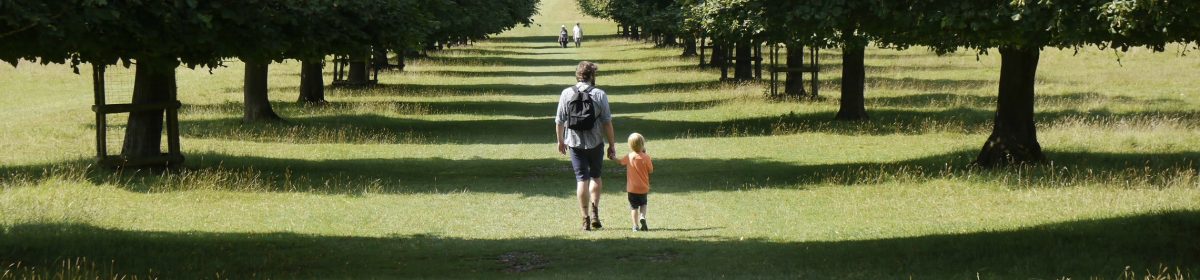
u4 hardly begins to express the richness of a remembered childhood.

u4, by the way, is the way that science now describes these photographs of a not very lovely patch of grassland on a wet July day in 2020, but before I get to that I want to talk about what a dialect usually means.

I was born in Gloucestershire and we’ve lived within twenty miles of Staple Hill for most of our lives – during which time the area has gone under three different county designations; whilst large industries, for instance shoe making and coal mining have disappeared leaving hardly a trace. Perhaps, for me, the saddest thing of all is that the local dialect has almost died as well. You could always tell where someone came from after you’d heard a couple of sentences. Bristol was particularly rich in local dialects so you could almost predict which parish people came from. All that “alright my lover” and “gert lush” nonsense that we hear when outsiders try to imitate Bristolian is fit only for second rate comedy programmes because if – fifty years ago – you’d walked up Two Mile Hill from the centre you’d have travelled through at least four distinct speech forms. The slum clearances and tower blocks mixed things up in the fifties and sixties but even as a child you could leave the hints of Somerset behind as you entered St Jude’s and Old Market and then uphill through Easton (incomprehensible to outsiders) , Barton Hill, St George, Speedwell and unmistakable Kingswood; beyond which Gloucestershire partially reasserted itself, and somewhere in altogether alien territory, there was Wiltshire. When I started going out with Madame, if I missed the last bus (which I did regularly), I would walk from the western boundary to beyond the eastern boundary of the City and stick my head around the bedroom door to say “alright?” to my Mum when I got home. My own voice was shaped by the rounder and softer vowels of the southern part of Gloucestershire and I’ve never tried or even wanted to disguise it. It’s the dialect of my childhood and it’s a thing of structured beauty, of arcades and landscapes and industries; of Methodism and mining and shoe making. I’ve always thought that to lose my accent would be to lose part of my essential being and if anyone has ever equated my accent with any kind of swede bashing stupidity I walk on by and leave them to their knuckle dragging idiocy. If I’m anything at all it’s one of Gramsci’s organic intellectuals whose roots lie in life and experience and whose reading and understanding is refracted through lived experience.

I suppose there is some kind of generic west country accent that will get you by in most places , but with the exception of one place I almost never hear the real thing. When I first visited the sawmill at Oldland Common – exactly halfway between where I was born and where we live now, I was served by a man who spoke the precise dialect of my childhood. I can’t begin to express how unsettlingly moving that was; like finding and losing something very precious that had no monetary value at all but meant the world to me; as if I were listening to a recording of my life starting in the distant past.

Rodway Hill was always a part of my childhood. We had picnics there and eventually I went to school there. On Rodway hill I had the first of many experiences of the oceanic as I laid in the grass watching the clouds and listening to the wind in the (as yet unnamed long grass). The flora were integrating themselves into my mind; becoming part of me. The hill itself is quite small but remains inexplicably protected from all the surrounding development. you can stand at the edge and look across to the dense post-war housing where I was brought up. When I was at school there I went out with a girl who (pre Beeching of course) caught the train back to Yate where she lived and I would walk down to the station with her and look at the sandstone cutting without much curiosity. But that landscape has structured my imagination and so every time I find myself in one of those strange and starved landscapes I feel as “at home” as I do in the sawmill ordering fence posts.

In July 2020 during lockdown I had the strongest urge to go back there and so Madame and I drove over in the rain and I took a series of photographs of the plants that caught my eye. That was the end of it until I made the madcap decision to catalogue all my random photos, name the plants and build a big database. Then last week I got to the Rodway photos and – because I know a bit more botany these days – I saw straight away that these plants were very different to a selection taken from, say, two miles down the road. It was as if the hill spoke in a kind of intangible dialect.

This discovery was provoked by the fact that there was a plant I couldn’t get my head around. All the phone apps told me with absolute certainty that it was Heath Bedstraw – Galium saxatile – Then, after a good deal of research I made the surprising discovery that Rodway hill is a small patch of what the scientists call acid heath, sitting on the cap of precisely the sandstone I’d seen but not understood, waiting for the train with my then girlfriend. Then after even more searching I discovered that my photographID’s were likely correct except for the fact that some of the flowers had five petals and not four, and some of the groups of leaves came in fours but not fives or sixes. After exchanging emails with our County Recorder I discovered that (yet again) plants don’t read textbooks and that my plants were within normal variation.

But there’s a kicker to this rather long-winded piece because it helped unravel the mystery of why I’m attracted to these particular landscapes. Why else would I feel so at home up on Mendip or down in Cornwall, on Dartmoor or on the Bannau if it weren’t for the fact that they speak with exactly the same botanical dialect that I learned on Rodway as a child. The top of Blackdown above Burrington is almost identical – with its sandstone cap above the carboniferous limestone. The reference to u4 in the title of this piece is merely the code for this specific habitat in the National Vegetation Classification (NVC) descriptors with all of the poetry, all of the memories, the longings and all the rest of the synaptic riches stripped out.

Maybe we would be able to grasp the meanings of landscapes and their flora by approaching them as dialects. The way things grow around here. Maybe we should occasionally take a break from Gradgrindian dogmatism of precise description and let u4 back into the sunshine like a pit pony released from darkness and sweated labour into meadows and heaths where lovely things grow in historic and vibrant cultural communities.

A very happy new year to you from the Potwell Inn

A Mendip wordfest!

The upper end of Velvet Bottom

Where else in the world could you get the sheer sensual pleasure of writing “buddle pit”; “Velvet Bottom”; and “swallet” in the same sentence? That’s a rhetorical question because there’s no other correct answer except Charterhouse, a tiny hamlet in the Mendip hills, surrounded by what’s called gruffy ground -an area that’s been surface mined for lead and occasionally copper since Roman times if not before that. The names themselves have a vaguely erotic undertone, like West Country soft-porn – unless, that is, you’ve actually been there; and if you’ve been reading this blog for any time you’ll know that it’s one of my favourite places on earth.

So today we decided to celebrate the late autumn and early winter by going for a wander down the valley. It’s an extraordinarily rich environment. Years ago we took the boys for a walk there and spotted two of the biggest adders we’d ever seen – sunning themselves at the bottom of the shallow pit in the photo at the top. This pit, and others further down the valley are the buddle pits where the pounded lead ore was left to settle – the heaviest and richest falling to the bottom. Obviously a pretty dirty and polluting process, and a new sign board near the best preserved dam describes how an angry mob from Cheddar came up and destroyed some of the head works because the polluted water had travelled underground and was emerging in Cheddar where it was killing the fish. The story of pollution – painfully familiar today – didn’t end in Victorian times because not so long ago the residents of Shipham, nearby, were told not to eat produce from their gardens because of residual cadmium pollution from the same group of mines.

Of course this marginal post-industrial landscape is a paradise for plant hunters and is, nowadays, a great place to find some rare plants. Today we watched three Buzzards circling beneath a mob of agitated seagulls which had been enjoying the muck spreading in one of the fields above; but not much by way of wildflowers apart from a few brave Red Campions huddling down in the sheltered pits.

But there’s never a day when you don’t learn something interesting up there, and today it was a lesson in pteridology – ferns. I’m quite new to fern ID, and so I’m still at the disambiguating stage. Bracken is pretty easy, but down in the valley today it was accompanied by almost equal numbers of Common Male ferns. In summer and from a distance the way to tell them apart is that bracken just spreads untidily whereas Male Fern grows in scruffy but obvious shuttlecocks. Today we could see that the bracken in winter dies back to a familiar pale brown, whereas the Male fern turns almost black as it dies back. You can see it quite clearly in the photo at the top, as you can equally see that some kind of banding is going on with the Bracken and Male Fern each having their own preferred spot. All these clues add up towards an instinctive recognition of the jizz of a species. Elsewhere, and all the way down the track, we could see where badgers had been scraping the grass back looking for something to eat.

We stopped and ate a sandwich at Black Rock quarry and then strolled back up rather more quickly as an early sunset was likely under the thick cloud. A nice walk.

Winter camping – here we come!

Pen y fan in February 2016

Did I mention that we love going to the Bannau Brycheiniog – the Brecon Beacons – or, according to the spellchecker here on my laptop, the “banana strychnine”. Every year as the clocks go back and it gets dark so painfully early, we try to squeeze in one last camper-van trip before we drain the water tank and pull the curtains. Summer is never long enough. It’s over now to fungi and ferns and we managed to fit in a walk around the woods on the Mendips last week which was disappointingly light on fungi but challenging on the fern front. I remember well the early days when I thought there were just Dandelions until I discovered that they were just a small part of a huge group. These discoveries always leave me equally exhilarated and depressed. On our walk, and with a good deal of hands and knees stuff, I confirmed what I already knew in my heart of hearts – that not all green and ferny looking things are called Bracken (any more than all overweight white middle class men in Rohan trousers are called Dave). At once, exhilarated and depressed, I lashed out on a couple (more) ferny books and settled down for a good read. I am abashed; vanquished; and breathlessly looking forward to a ferny bash in the Bannau.

So it’s been a bit of a week – two exhibitions; Paula Rego and Goya at the Holburne Museum and Rinko Kawauchi: “At the edge of the everyday world” at the Arnolfini in Bristol; an excellent talk by the Director of the Holburne at BRLSI and two films – “The Outrun” in Bath and “A sudden Glimpse to Deeper Things” – both of them lovely; the second, showing at the Watershed was a biopic of Wilhelmina Barnes-Graham a shamefully neglected modernist artist. After the usual depressing few autumn weeks we felt like students again, bathing in fountains of glittering inspiration. Of course the payback came with exhaustion and an urgent call to the doctor when my heart rate went down to 45 and blood pressure to 92/61. I’d have to have been a saint not to laugh when the doctor told me that my symptoms were caused by the drugs I was prescribed to cure the symptoms! I don’t want to expire in a Kafkaesque cycle of thwarted goodwill.

Anyway, the sun’s shining and we’ve booked a spot alongside the Monmouth and Brecon canal. I’ve also been sorting through hundreds of old flower photos but I’m held up by the absence of replies to emails requesting bits of information. If this army of citizen scientists is ever going to live up to its immense promise, the learned institutions need to get over themselves and answer emails from those of us without PhD’s. But then I’m a bit of a loner and the least clubbable person you could imagine. Madame is the only person who comes (dangerously) close to “getting” me – we even hold hands in bed: dangerous!

Finally, I’ve yielded to temptation and bought a black iron bread tin. I’ve had enough of pancake sourdough loaves. Tigger and Eeyore the two starters are going well, and so I’ll re-unite them during the week and start some experiments to create an organic sourdough loaf that stands up enough to make a sandwich with a soft enough crust not to rip the roof of my mouth or snap teeth off. Then when that’s done I’m going to write a long letter to Keir Starmer to explain that his job is not to shuffle bits of spreadsheet around like a junior manager in a shoe shop, but to reunite managerial competence with a bit of visionary leadership and some ethical backbone which he seems to have lost somewhere along the way.

Starter or non-starter?

I mentioned on Tuesday that I’ve returned to bread making after quite a long break, and re-started my sourdough starter. In fact the one I made from about 1/2 gram of dried starter flaked from the rim of the original container and given a couple of days feeding, has done so well I made a loaf with some (probably stale) leftover flour in the absence of a delivery from the mill. The resulting loaf in the photo above was pretty good,and so I’ve re-christened the two starters Eeyore and Tigger for fairly obvious reasons. The flour I’ve ordered is made from organic Maris Widgeon wheat which is less productive (50% less than Canadian hard wheat for example) and more expensive but is slightly lower in protein and, the millers claim, perfect for slow proving. I’ve been lowering the protein level by adding cake flour to the mix – which works after a fashion. Breakfast today was a joy!

But we’ve also been busy on other fronts as well. The allotment, mercifully, is pretty well closed down for the winter except for picking the apples; the winter crops will sit quietly in this awful weather. It seems that if you have about ten fruit trees you’re entitled to call it an orchard. We’ve got ten so we can talk about our orchard with a contemptuous toss of the head to those poor souls with only five. Yesterday Madame made a Dutch apple cake and we’ve had stewed apple every day for ages. The great thing about seasonal food is that it almost always runs out before you get sick of it.

Back in the flat I’ve been sifting through thousands of photos of unidentified wildflowers; giving them names, dates and locations – which is a massive undertaking – and then building a database. I’ve got a good memory for where I first saw a plant and so sticking a pin in the OS map for the ones that preceded phone cameras, isn’t as hard as it sounds. So far I’ve got 320 ram stamped entries, all double checked and accompanied by photographic evidence.

Last night we went to a lecture on modern art in Bath, given by the Director of the Holburne Museum. Apparently the City Council allowed a nationally important collection of craft ceramics including the Leach archive to go to Farnham and the national photographic collection to be taken to Bradford. What a huge loss to the city! In return we got the nationally trivial Crest Nicholson development south of the river which looks like a Russian bonded warehouse and was so badly built it’s pretty well bankrupted them with compensation payments which are a closely guarded secret because they’re trying to sell the business before anybody notices! Ah joy – Bath has a Director of Heritage but no head of cultural activities. They say it’s Jane Austin and the Roman Baths that bring the tourists in; but the traffic down Milsom Street towards the shops is always greater than the traffic in the other direction.

So there we are. All’s well with the Potwell Inn and tomorrow we’re off to the Mendips on a fungus hunt before it starts raining again.

Making my peace with winter

Frost and mist on the K & A

As it turned out, my brilliant idea of a trip on the canal was a lot more testing than I’d remembered from previous expeditions long ago. The boat – at 65 feet was hard work; like steering a blind carthorse through a minefield. Directions needed to be figured out long before they were undertaken because narrow boats don’t do anything quickly and steering from the unprotected deck in the persistent rain and wind made me feel like Socrates must have felt as the impact of the Hemlock spread through his body. My hands and feet became more and more painful and even regular offerings of Dundee cake and hot tea failed to move the dial.

The canal has become a kind of linear favela. An improvised substitute for non-existent affordable housing, untreated mental health and addiction problems and unemployment amongst young people. Yes of course there are posh well-found boats for second homers and even airBnB offers (check out the combination locks) and there are numerous canal holiday companies but an uneasy truce between the stakeholders looks and feels highly unstable. Then, recently, the number of permanently berthed wide-beam boats has exploded and can make life very difficult when negotiating a sharp bend. Even finding a mooring spot near any of the villages, towns or road bridges is a nightmare. You can tell the struggling boaters from the piled high wet logs, one wheeled bikes and scrap metal piled on the roof. It’s a sad reflection of a betrayed generation left to rot by governments who don’t give a shit.

The last day was by far the coldest and although the sun eventually broke through and dispersed the mist, I was on my knees as we pulled back into the boatyard. I’m getting a bit old for this malarkey. Our joy was complete when, after we’d loaded up the car, we discovered the battery was beyond flat; rather – dead. Luckily one of the engineers (we’d seen so much of them trying to fix the heating during the trip that they felt like friends) saved the day with a portable lithium battery.

But there’s always a plus side, and this photo taken in a quiet stretch between Avoncliff and Dundas shows the beauty of the autumn trees. The lone fisherman, by the way, gave us a short seminar on how boaters should pass to preserve harmony. He said that many boats tried to pull over to the opposite (shallow) side instead of holding to the middle – thereby stirring up the mud and ruining the fishing altogether.

I’ve always had difficulties with this season. The dying of the light drains the joy out of me and I seem to lose all motivation. But every year – I ought to know this by now – there’s a kind of KĂĽbler Ross moment of acceptance and – as if a switch has been thrown – I feel OK again. I woke up at 5.00am on Sunday and paid an outstanding bill and then fetched my sourdough starter from its hiding place in the kitchen; unscrewed the lid gingerly and sniffed, expecting the worst. It was fine and a lightning bolt of optimism shot through me. Back during lockdown when everyone was making sourdough, the internet forums were full of newcomers suffering from starter anxiety and wondering whether it was even possible to take a break from feeding the ever demanding baby. Yeasts, I should say, are lovely, useful and tiny organisms and are rather harder to kill than Bindweed. I often neglect my starter shamefully – I’ve had it for well over a decade – and it still comes back and fills the kitchen with a delightful apple fragrance. Interestingly, no-one I’ve given it to has managed to keep it alive for any length of time. Has it micro-evolved to the exact conditions of the Potwell Inn kitchen? We’ll be off to the mill this week to get some decent organic flour and all will be well and all manner of things will be well once more.

So I made my peace with winter and spent most of yesterday walking (in my head) on the estuary of the river Esk in Cumbria where it joins the Irish Sea.

We were here in late August 2019 and I took a few photos of flowers I didn’t recognize. Five years later and my plan to organise retrospectively some of the 13,000 photos into a botanical database brought me back again in memory to this beautiful and bleak area, just south of Sellafield. The initial plan was to add Sneezewort to the file, but then I noticed another bunch of photos with nothing but a date and location in the EXIF data. First impression was that they were all pictures of Samphire except that when I looked properly it was clear that they were all three of them different plants and that none of them was Samphire. I should add that there was an abundance of Samphire around but that the proximity to Sellafield would make the eating of anything found on the seashore pretty dangerous! Anyway, in a very contented few hours I’d nailed all three and added them to the database; all of them shoreline and estuary specialists.

Sea Lavender, Sea Purslane, and Sea Aster.

Potwell Inn afloat!

Ah bliss!! We’re back on the Kennet and Avon canal but this time we’re in a rented narrowboat for a few days after a brief handover session that didn’t quite convey the disconcerting slalom that such a long boat performs when the driver is a bit of a novice and oversteers. All the same, we settled down after the first 90 minutes and pulled over to moor up while the sun was still shining. The key to avoiding wild swerves seems to be to read the water resistance against the rudder through the tiller and not to overcompensate before the boat has had time to respond.

The internet signal, though not great, is good enough and the weather forecast is pretty awful so I can see some serious work on the database coming along. I’m slowly working through thousands of photographs of unidentified plants to see if any of them can be given reliable names and locations. Madame, after forty years of implacable resistance to the very idea of a narrow boat holiday has finally given in on the condition that she doesn’t have to do any work involving locks or swing bridges, so our youngest is our acting first mate and general muscle. The plan was originally to moor up at Dundas Aqueduct, but tea and home-made Dundee cake lured us to the bank and we feasted on some readymade paellas which burst into flames when we put them too close to the gas burner. We’re sandwiched here between the main road, a railway line and the river, so it’s all beguilingly muddled up because we can’t see anything except trees. Our first challenge of the morning is to get through a swing bridge that we gave an initial inspection before we closed the shutters on our first night. Our first lock is in Bradford on Avon and Madame is filled with dark forebodings but has kindly volunteered to make a video. I hope it will be very boring and won’t involve the Fire Brigade.

Everything is so slow on a narrow boat, you have to get your head into a different gear altogether. We are constantly overtaken by runners, swans, ducks, and even walkers, so our initial estimate of how far we’d get on this trip already looks wildly optimistic. We’re all looking forward to crossing the two aqueducts. There’s a decent pub next to Avoncliff if I remember correctly but Madame thinks it may be closed. The second, at Freshford is closed on Mondays and Tuesdays so the First Mate is relying on bottled cider. We spotted our first Kingfisher near the pub at Bathampton.

Canals are invariably marvellous. When we lived in Stoke on Trent for a while it wasn’t unusual to see dead dogs floating between the supermarket trollies. Here, though, there is botanical interest everywhere -not so much in the autumn – but in the early spring flush there are all sorts of plants that would have been harvested by the barge people as herbal medicines.

Anyway, more (and hopefully more photos tomorrow) I can feel an early night coming on.

We’ve got the hots for the winter

It’s true to say that I don’t really like this time of year very much. The botanical fairground has packed up and gone, and I’m left standing in the midst of the yellow grass and the mud wondering if there will be another one next year. Of course – short of the Atlantic Meridional Overturning Circulation (AMOC), doing a quick U turn – there will probably be an improbably wet/cold, dry/warm/generally unpredictable winter followed by another floral circus some time between february and April. Plants seem to be much more adaptable than humans because we spend so much time wittering on about difficult ideas like normal we can’t see what’s happening in front of our eyes, and I for one have no idea how to run a successful allotment in somewhere as cold as St Petersburg – after a spell in Babylon with Deacon Starmer and the funeral band in charge.

So in times of botanical dearth I turn to cooking, drying and preserving. On the stove at this moment is a large batch of ragu – enough for a dozen meals – and a gallon of stock reducing down. It’s a very homely smell and it’ll all go into the freezer against those days when we really can’t be arsed to cook. Good stock is the pixie dust of the kitchen. In the left hand jar photographed at the top is half of a large crop of Habanero chillies, dried in the oven ; an entirely unexpected gift, as it happens, because the nursery label said they were going to grow up as sweet peppers but obviously weren’t. So this summer we were pepperless and this winter we will have to cook Mexican if we’re not going to waste them. They did smell rather beautiful as they dried – even if they made my eyes water! Alongside them is the usual crop of surplus tomatoes, reduced and turned into sauces and passata. The crusty looking layer is butter from our favourite Hazan number one sauce which, with a lump of chopped chorizo and some of the (small) crop of Borlotti makes a decent ribsticker meal on a cold day.

We’ve got a couple more outings to look forward to; a trip up the Kennet and Avon canal in a narrow boat and a long weekend in the Bannau Brycheiniog (Brecon Beacons) with our friends Kate and Nick and perhaps one last adventure in the campervan before Christmas – probably on the Monmouth and Brecon Canal. But the flowers just aren’t there any more and there’s nothing much to report on the allotment (another load of wood chip today – etc), so given that I’ve taken Trappist vows not to spend my time grumbling about the state of the world I’ve very little to get my creative juices flowing.

I know, I really do know, that this time next week I’ll be enthusiastically photographing fungi and going through my endless list of unidentified fern photos ready for next season; and perhaps it’s because Madame and I have crammed a whole years worth of vaccinations, dentist appointments, X rays, cardo assessments, scans and physio stuff, that we’re feeling a bit overwhelmed by our vulnerability; but, to be honest, I’m feeling fitter than I have done for a year or more. The Cardiology department of the Royal United Hospital is on the third floor, up six flights of stairs, and I can now climb then without collapsing halfway. There’s a notice at the top that says “if you can read this you don’t need us!”– (that’s a joke, they’ve been great).

Madame had an unusual conversation with an old parishioner in the week. He must have seen or heard about this blog because he mentioned that we knew we were now running a pub (presumably the Potwell Inn) and living in a council estate. Wrong on both counts I’m afraid. There are no longer any council estates because all the council houses have been sold off – making a cultural stereotype redundant at the same time; and the Potwell Inn isn’t a pub, it’s a metaphor stolen from an HG Wells comic novel called “A History of Mr Polly”. I think I was banned from posting on Facebook because an artificially intelligent (stupid) algorithm decided I am a business. I wish! Anyway Chris – rest assured that we are fine and living near to some Georgian terraces in a cold concrete building with damp and black mould and this is not a pub but an HMO with a lively drug subculture outside on the green; always entertaining. The river outside is pretty but often quite smelly. We’ve always suspected that it’s got sewerage in it – largely due to the frothy schooners that float down from Pulteney Weir when the river floods. But a couple of days ago our friend Charlie posted a copy of a video sent to him by a scientist friend across the way, clearly showing a dense brown slick pouring from what is supposed to be a stormwater outfall. Worse still, the swans seemed to be swimming in it – I’ll never kiss another swan.

So just to cheer up gardeners and allotmenteers everywhere I’ll finish with a photo of everyone’s very favourite plant. Please welcome the Large Bindweed- cousin to the Hedge Bindweed, the Field Bindweed, the Sea Bindweed and the Hairy Bindweed. We used to have a couple of families like that in one of my parishes.

Large Bindweed, Calystegia sylvatica

Traveller’s Joy

Old man’s beard, Traveller’s joy, Clematis vitalba.

This new database of mine is already driving me crazy. I’ve got thousands of photos of unidentified plants and hundreds of plant records – the ones I know I’ve seen in the past – easy ones like Elderberry – without any photographs. I try to keep a list of the photos I need to take in my head, but in reality I spot something I might need to photograph for the database and then go back to the laptop to check. It’s never too soon to get organised!

The love of nature is very peculiar. I’ve been vocal in my suspicion of the endlessly asserted factoid that nature is good for you and cures more human ills than the finest snake oil – but that’s just my sceptical nature. When I stop to think I can recall the first time I experienced what I later discovered was called an oceanic experience. The phrase was coined by Romain Rolland in a letter to Sigmund Freud.

a sensation of ‘eternity’, a feeling as of something limitless, unbounded”, a “feeling of an indissoluble bond, of being one with the external world as a whole”

Harebells on Rodway Hill

Which is a bit grand for my unforgettable experience but it was real enough for me – aged maybe 11 – lying in the grass on Rodway hill, listening to the wind fingering the fine grass while I watched a group of Harebells swaying in unison. These days I understand the geology of the Old Red Sandstone and the acidity of the thin soil, but none of that grown-up knowledge comes close to explaining the experience. I’d just want to say that it’s the memory that sustains and inspires me and it’s vanishingly rare in my experience – it doesn’t happen every time I go out botanizing and it doesn’t cure my anxieties but rests there in my mind as a permanent reminder that it’s not all confusing and bad. There’s something indescribable but good under the chaos of events.

Two weeks in Cornwall with an average internet speed of around forty kilobits per second – really! – has tested my saintly patience! Anyway, I took the Old Man’s Beard photo on our last holiday walk and it suited my wicked purposes very well today as I started to write this, because the two words -“traveller” and “joy” were never more inappropriately joined together as we drove back from Cornwall. Our holiday had to be curtailed by two days because one of the components of the campervan water system had failed and we needed to stop off at MURVI headquarters in Ivybridge where it could be repaired. That entailed a considerable detour across-country from Roseland to the edge of Dartmoor via Plymouth; a pleasant drive avoiding any rush hour towns. We arrived on time and the job was done in half an hour by a brilliant fitter called (I think) Chris, who made it all look easy. Thereafter we were on the A38 and later the M5 travelling at about 20 mph all the way. This wasn’t due to flooding, accidents or even roadworks but sheer traffic overload. There was a long queue beyond every single slip road and we chugged along in a pall of pollution and bad tempered driving. It’s my proud boast that we kept up with a Ferrari all the way. Not bad for a 2009 campervan eh? By Saturday the motorway was flooded and the road surface of the new Severn Bridge had lifted so the bridge was closed. More huge queues. Is anyone planning for the impact of a global climate catastrophe? Peaceful demonstrators can get 5 years for protests which may be annoying, while children develop lung disease from pollution.

Comma butterfly in the lane

There are a number of familiar walks from the campsite we’ve been staying at for years. But our familiarity with the resident plants is always challenged by new finds – I wrote about some of them in the most recent post – and so we walk with our eyes wide, scanning the verges waiting for something to stand out. These lanes have plants you’d never see anywhere else and some of them are so shy and retiring we’ve walked past them for years without spotting them. Luckily in the past couple of weeks we’ve spotted something new almost every day. Alongside the Percuil river where we found orchids in spring, we stood and listened to the heartbreakingly lovely call of the Curlews.

We live in Bath which is also continually choked with traffic. Not only that but the size of cars (and therefore engines) seems to be increasing exponentially; driving behaviour is moving close to fairground dodgems – and speed limits? – don’t even ask. All this whilst lobby groups supported by deluded “locals” (they’re often not) are fighting tooth and nail for the human right to drive down narrow residential streets at whatever speed pleases them. It seems to have escaped their tiny thinking parts that the outcome of unrestricted and unregulated traffic is – wait for it – traffic jams. I once took this up with a campaigner waving a placard near to our flat and he admitted that he didn’t even live in Bath. And don’t come back at me about our campervan because it’s only done 52,000 miles in the past 15 years and we keep it in a compound way outside the Bath LTZ which is a price we’re prepared to pay for not clogging the streets or the air.

Sea Carrots – Daucus carota ssp gummifer

Of course autumn has its own unique pleasures, not least to look at plants that are more easily identified by their seeds and seed heads – this applies particularly to the large and confusing carrot family. I don’t know how you could distinguish wild carrots from sea carrots if it weren’t for the fact that senescent wild carrot flowers shrink and bend into tiny old fashioned wicker lobster pots or perhaps bird cages, whereas sea carrots remain fairly open. Then the scarlet fruits in the hedgerows could be Black Bryony, or Woody Nightshade, or Honeysuckle – it’s fun to know the difference.

Coming back home to the crowds and the drug dealers outside on the green was a painful reminder that all is not well in our country. Part of the A36 has fallen down the hill in Limpley Stoke and is closed and on Saturday the students all moved back into their accommodation which effectively closed the lower Bristol road all day. The new Labour government is already weakening environmental regulations and abandoning their election manifesto commitments at the behest of lobbyists and shady donors. Am I cross? Hell yes!!

Blue Moon over the sea

But I’m desperately sad for the young woman and two young men who sat on the bench outside on the green, smoking crack, slumped over; their hopes of better lives draining slowly away.

Upsides and backsides of camping

If you look carefully at the right hand photograph you’ll see a little jet of water, reminiscent of a Brussels fountain, exiting a split in a plastic pressure vessel used – so the blurb says – to equalise the water flow at the taps in the campervan. It’s OK, I suppose, but it means keeping the pump turned off unless you want to fill a kettle because it will make loud pumping noises all day and night if you don’t, and it will also empty the main tank very quickly; not a disaster but a bit irritating. Not nearly as irritating, though, as the almost complete absence of internet signal down here near St Anthony’s Head in Cornwall.

Turning to the good bit, we’ve managed to get out into the weather nearly every day and we’ve eaten well and finished up all the sweetcorn, runner beans and tomatoes that we brought with us. We’ve also carried on our exploration of a lane that goes down to the beach from our campsite and turns, about halfway, into a sunken lane which has got a delightful array of unusual and even rare plants – so I’ve been practicing using the new camera to which I’ve added a flash diffuser ring which makes a huge difference to extreme close-ups and macro photos. I’ve also been using a new, cheapest money can buy, GPS, which is actually very good for recording accurate grid references and saves me recording plants in the middle of the sea. Both the camera and my phone boast that they give grid references in the EXIF data but they can be hopelessly unreliable.

The yellow flower at the top is of the unaccountably named Dark Mullein that we found growing on what must be a collapsed Cornish wall. In the same short stretch we’ve found Red Bartsia, Hedge Woundwort and Babington’s Leeks alongside all the usual suspects, and just up the lane we found a single flower among hundreds of Yellow Flowered Strawberries, known as Yard Strawberries in the US and which I’ve been assuming were common wild strawberries for years. We followed a man accompanied by half a dozen female fans, down the lane on a foraging walk. I hope he didn’t make the same mistake as I have for years. Apparently they’re inedible if not poisonous. I’d never have discovered that from tasting them because I’m very suspicious of the impact of foraging when it goes too far. Down here whole lanes of Wild Garlic have been stripped and sold off to posh restaurants. As if you could gain any esoteric knowledge or benefit of the wild by eating it?

The rest of the time has been spent revisiting some old (plant) friends, now in seed, to tie down their exact names. I’ve been looking at a clump of wild Radish for three or four years, trying to distinguish them from Sea Radish and yesterday I got the evidence I was looking for; an unmistakable string of beads seed capsule and a single yellow flower to seal the deal. I made some progress with the same problem of Wild Carrot/Sea Carrot and comparing the seed heads I’m nearer to understanding which is which.

If you can seriously enlarge the right hand picture you’ll see the exquisite spiked seeds of the clifftop carrot – a sculptor’s gift! As for the wild Leeks, the seed heads have now become balls of fully formed bulblets, like tiny onion sets. I picked up a few and we’ll see if we can grow them on the allotment.

Apart from all that, reading, and ten hours of sleep most nights, I’ve been working on my database of plants, their locations and photos – hence the frustration with the internet. Yes I’m aware this all sounds a bit eccentric but it’s my happy place and that’s not up for negotiation!

Ivy in flower – a late treat for the Ivy bees on our allotment or, in this case a pair of Drone Flies – Eristalis tenax

Seeing and beholding

A rather neglected apple tree on the allotments. I’m thinking of Samuel Palmer.

Hardly anyone was drawing in the 70’s, when we were at art school. A few tutors paid lip service to it but basically it had fallen out of fashion in favour of a rather woolly notion of creativity. Observational drawing; life drawing; were so last year and the now was all about being. Stony ground, then, for those of us who persisted in the archaic study of form and structure. I remember a bit of a row with my Head of Department when I showed him a monochrome painting I’d made of an apple tree and suggested that apple trees had a particular structure that you could see through the distortions of wind, weather and pruning. He said that this was ridiculous and that all the trees were pretty much alike. He, of course, lived in an entirely uniform conceptual world whereas I was drawing the phenomenal. I felt puzzled and deflated by his negative response and yet -decades later – I can see that not only was I in the right, but that an understanding and recognition of these subtle structures would turn out to be absolutely essential when I began to love plants.

*On reading this back to myself the next day it seems I should at least try to explain what I mean about the structure of the apple tree.

All trees, of course, need light and soil and so they have evolved to make the best use of what light there is available which in turn suggests that branches and leaves are always arranged in the most efficient way to catch the sun in order to ripen their fruit/seeds for the continuation of the species. That’s undoubtedly true, but they all seem to do it in different ways and those different ways seem to be remarkably consistent from species to species. The apple, being a domestic fruit, grown for the benefit of humans, gets mucked about a fair bit by pruning for the best possible crop. The one in the photo has been very neglected and in a commercial orchard it would have had the central tangle of overlapping branches pruned out to allow light and air to the tree. But even amidst the mess I can see something of the familiar structure. The apple is a bit of a ballerina. I always think of a dancer on points, arms extended , curving slightly upwards and then downwards towards the lowered fingertips. The fruits, in the autumn, are like fairy lights; golden and streaked with red. They don’t need any notices to suggest “eat me” like Alice’s mushroom although too much cider from those same apples might have something of the same effect – and due to their propensity to cross breed promiscuously, every tree and every fruit – unless it’s been grafted – will be different. Some might be so full of tannin they’ll put your face into a rictus like pucker for the next hour and some so sweet you’ll fetch your penknife back from your pocket and peel another, and then another. While some trees sit solidly on their roots like cathedral pillars, the apple dances for the sun. It’s almost impossible to describe it in words but from winter buds to spring flowers and then ripening fruit it’s pure joy. It’s just a plant, you might say, but we truly know plants through all of our senses. We don’t just see plants we behold them. There’s aesthetic joy in seeing. We smell their perfume; we (when we’re sure of them), listen to them – shake a ripe Cox and you may hear the seeds rattling inside; taste them, dry them for the store and cook them. We can even turn them into alcohol and medicine.

Finding some botanical competency has been a long and pretty arduous journey through small errors and real howlers but just as we once learned to draw the human form by understanding how it articulates and holds together; the process of identifying plants involves genuine and deep contemplation of the tiniest details and the elimination of each false trail one by one until a family and then a species finally emerges. Often I’m defeated and I have to appeal to a higher authority – someone with more experience.

The upside of the experience is that – like the spokes of a wheel – explorations can take you off into all sorts of different disciplines, relationships and histories. Ecology, environment, global heating, folklore, cooking and medicine are just a few of the fields that can help to determine not just the name, but the meaning of a plant within human culture.

Autumn has slammed down the shutters on the prospect of long and warm days and tomorrow is offering a day of driving rain. At this time of year we turn towards the lovely world of fungi but darker nights and shorter days also provide the chance to go back over the hundreds of photographs I’ve taken during the season. This year I’ve been learning to use a new and very lightweight camera which offers in-camera focus stacking and eliminates the biggest bugbear of macro photography – very shallow depth of field. Now, for the first time, I can photograph a leaf and then, later, examine it at around x20 magnification; even down to the tiniest star shaped bunches of hairs. It’s all evidence when it comes to ID.

We’re soon off to Cornwall again in the campervan and so I’ve been hard at it in the kitchen preserving and bottling. Luckily our son has got a half-empty freezer and so some of the work can wait until we’re back. Later on we’re looking forward to a short trip up the canal in a narrow boat. The polytunnel is now clear apart from a couple of lunches worth of sweetcorn. I suppose it’s no surprise that we get so knackered. I’m massively disappointed with the Labour government but I never really expected anything more from them. Deacon Starmer and the Prophets of Gloom would make a great album for a funeral.