The stream of consciousness – a creative affliction.

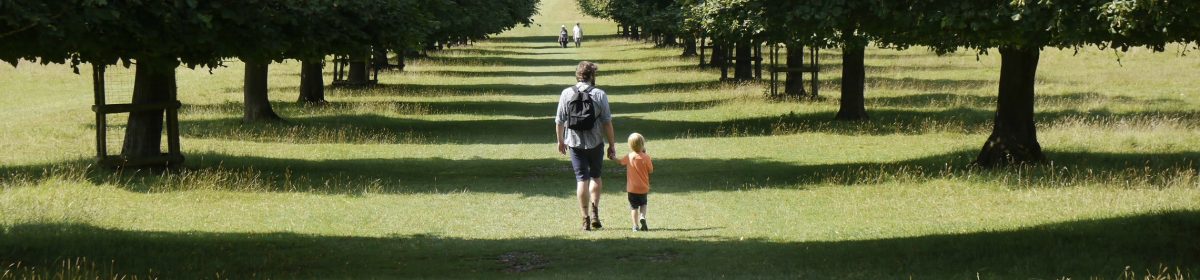
Whitchurch Common, Dartmoor. March 2016

I said to Madame yesterday while we were walking through Bath – “I think I’m living in the 1940’s and 50’s”. She, being an avid reader of history and biographies, knew exactly what I was saying. She’s presently finishing the last of C J Sansom’s Shardlake novels and living in the Tudor period. Not having to explain things is one of the great blessings of our long relationship. Of course the imagination can play tricks and too lax an attitude towards truth telling could lead all the way to prison or even to 10 Downing Street; but in the manner of a psychoanalytic session – by allowing the mind to range freely and without comment, connections of the utmost significance can be forged.

So, if you’re a Potwell Inn regular you’ll know I’ve been thinking about and researching Geoffrey Grigson – author of “An Englishman’s Flora” and husband of Jane Grigson the great food writer. Chains of thought often take us on a journey and in this case it involved reconnecting with the village above By Brook where we lived for two and a half years while we were at art school; and a hairy drive over to Slaughterford in search of a pub that was actually one village further upstream on the little trout river which runs for around twenty miles between Castle Combe and the Avon at Bathampton . In the course of our day and in subsequent reading we discovered that Slaughterford is probably not the site of a famous battle between Alfred the Great and a small army of Danish raiders. and that the name probably derives from the Anglo Saxon term for the crossing near the place where the Blackthorns grow.

But this turned out to be much more than an antiquarian story. Immersing ourselves in a landscape in which we’d lived the early years of our relationship stirred up the strata of many memories. The melodious sound of the small river, for instance became the river that runs through the Potwell Inn garden in HG Wells’ novel – “A History of Mr Polly” as well as being the real place where we’d attempted unsuccessfully to poach brown trout and where I’d spent days drawing a tangle of tree roots. Being an artist or a writer seems to involve a huge struggle to lay hold of something significant. That laying hold rarely seems to work and we are left empty handed. The poet RS Thomas brilliantly describes it as being like placing your hand in the warmth of a hare form which a hare has recently fled. The creative life is full of almost and not quite.

Standing next to the river, memories resurfaced of moments in galleries and museums when suddenly, as if a flare has gone off in the mind, you can see clearly for the first time. Once, unexpectedly bursting into tears in front of a Renoir painting I’d only ever seen poorly reproduced less than the size of a postcard. Being young, passionate and raw the memories never leave you. The paintings that had given us a whole expressive language floated through my head and so in a wild yomp through the unconscious I remembered John Minton and, the imagination being capable of leaping over impossible fences, suddenly brought a roomful of associations – Elizabeth David, Jane Grigson, MFK Fisher, Patrick Leigh Fermor, Alan Davidson; who would all have known one another. Geoffrey Grigson would probably not have figured in too many Christmas card lists having been rude to, or about, so many people.

I’ve got a proof/review copy of Francis Spalding’s biography of John Minton “Dance ’til the stars come down” * which I bought quite cheaply because I couldn’t afford the original. It has no illustrations but in searching the secondhand booksellers today the book came up with his familiar self-portrait on the cover. Completely unexpectedly I almost welled up with grief as I recalled his melancholia, alcoholism and eventual suicide. A man I never met evoked a sense of loss that took me completely by surprise and the terrible thought came to me that this, perhaps, was the beginning of the end. The moment when the dark forces of conservatism began their fight back against post-war optimism and freedom. Since then they’ve synthesised joy and sold it back to us by subscription – one trivial experience at a time. We seem to have lost touch with the ordinary, everyday moments that used to make us dance ’till the stars came down. Art’s now a business, patrolled by curators and gallerists, and art schools run courses on keeping accounts, tax returns, building a website, networking effectively and staying in touch with the fashion of the moment.

I’m filled with the need to go and sit quietly on the bank next to the river once more to listen to what the spirits of the place still have to say to me. They, at least, have not been silenced by the self appointed magistrates of taste!

Postscript

The title of the Minton biography is a borrowing from W H Auden’s poem, which is itself a representation of the medieval “Danse Macabre” and equally a working of Stravinsky’s 1910 Firebird. The idea was very much in the air and was echoed in all sorts of media, not least in Bernard Leach’s rediscovery of 17th century English slipware. I’m thinking of the pelican in her piety. With two world wars in mind, there’s less hope in Auden’s poem – “not to be born is best for man”. A kind of mad defiance in the face of an overwhelming threat is his prescription.

Dance, dance for the figure is easy,
    The tune is catching and will not stop;
    Dance till the stars come down from the rafters;
    Dance, dance, dance till you drop.

W H Auden – Death’s Echo

Wilding

Priddy Pool – April 2024

First the excellent book – written by Isabella Tree – which I read almost as soon as it was published; then an illustrated edition, more of a coffee table version; and now Wilding the film. The pond at the top, as they say in true crime fiction, was posed by models; in this case the lovely Priddy Pool on the Mendip Hills which is on one of our favourite walks. I loved the book and we loved the film too when we saw it in the Bath Picturehouse yesterday along with a half empty theatre and a mostly elderly audience which was completely in agreement with the thrust of the film – if the subdued nods and grunts of agreement were anything to go by. Why it’s become a thing to suggest that older people are mostly reactionary and conservative is a mystery to me; just another way the media frame the arguments by associating them with a bunch of cliches – tall tales without any real evidence.

So we loved the film in spite of the occasionally romanticised view of nature – the Attenborough effect – with some occasionally ravishing filming of misty waters at dawn. I very much hope that I’m right in thinking that the film-makers had one eye on a later television showing. It’s just about short enough to fill a single slot and it presents the arguments in favour of rewilding along with some compelling evidence.

There is, however, quite a herd of elephants skulking in the woods, and these are mostly about funding. How do we take a brilliant idea for improving a few thousand acres of depleted farmland and extend it across the whole country without the benefit of all that bankable collateral, inherent in owning an inherited estate. With next to no income the Knepp estate must have sunk eye watering sums of money into legal fees, infrastructure and last, but by no means least, fencing. With a moribund subsidy system in place; strong opposition from many local farmers and stolid lack of imagination from the government it must have been a terrifying journey at times and we have to applaud their tenacity.

But at times you had to wonder whether the financial pressures have led to a kind of theme park temptation. Safari rides, miraculous appearances of storks, Monarch butterflies and beavers ; the Painted Lady butterflies flying over the horizon right on cue like the visionary apparition of a saint and vanquishing the plague of Creeping Thistle in one season; glamping sites and so forth are more suggestive of Woburn than wilderness. The references to the Oostvaardersplassen rewilding scheme in Holland didn’t quite spell out the public opposition that forced a change of direction on account of the perceived suffering of sick and dying animals. The direct to camera segment about the so-called wood wide web, linking trees together in a sympathetic collegiate structure through mycelial links is by no means a done deal in scientific circles; the absence of any boring detail on the funding and income streams which any farmer considering this idea would need to know. I’m trying to be a critical friend here but such a wholesale upscaling from one estate to the whole country would need huge amounts of subsidy, review, research and feedback. The question asked by one farmer – “how are we going to feed the country?” demands a convincing answer which I don’t think DEFRA has really grasped; and with the average age of a British farmer nudging 70, many working almost single handed, how on earth are they going to cope without at least some telehandling and labour saving machinery?

I’d love to let more young people see the film if only to help them grasp the mess we’re in more completely. Knepp may only be a few thousand acres but it’s a few thousand recovering acres which are already attracting attention from a generally conservative constituency on farms all over the country, struggling to make a living.

What I’d really like to see is the development of many more farms, each exploring progressive, locally inflected ideas and reducing harmful practices including chemical use; soil compacting heavy equipment and enormous fuel costs. The agrochemical industry will howl and lobby furiously but – going forward (how I hate that phrase!) there’s no alternative. Knepp will be part of the answer and that’s a lot better than being part of the problem.

He’s behind you!

Southern Hawker dragonfly

Oh I do love a traditional pantomime joke! I couldn’t resist taking this shot of a Southern Hawker Dragonfly on the allotment today, apparently stalking a Ladybird on the other side of the cane. We’d only just been talking about the absence of many of our familiar visitors during this very unseasonable summer, and then today we had 20C and sunshine, so they all came out to play. There were Damselflies in turquoise and ruby as well as this fierce but beautiful Dragonfly plus many other flying insects. We’ve even had our first newt in the pond.

The warm, wet weather has led to a plague of weeds and so since we got back from St David’s we’ve spent hours every day pulling them up. As it happens I really enjoy hand weeding so it’s not so much of a chore and – being a bit obsessive – I get a kick out of making a good job of it. The downside in the polytunnel today was that it was so very hot, approaching 30C with very little wind to stir the air. There was another find, as ever not in the least rare, but I’ve never seen it before. There are two members of the Galinsoga family in the UK – known by the English names “Shaggy Soldiers” and “Gallant Soldiers” this one was the hairier and scruffier version . The yellow flower also appeared out of nowhere – it’s one of the St John’s Worts this one the “imperforate” form, which is to say there are no little holes to be seen when you hold the leaf up to the sun. We think it must have come from a packet of wildflower mix that our son gave us. Madame remembers broadcasting the seed probably three years ago and it’s finally popped up in two places. Weeds are fun; very diverse and surprising, and Imperforate St John’s Wort is suitable (like Pot Marigolds) for making a very good antiseptic cream.

The other notable thing about the Dragonfly picture is how superior the focus, exposure and depth of field it is when compared with my phone camera. It’s a bit trickier to set up a shot than the point and press phone, but the reward is an altogether better and more useful picture. Sometimes the identity of a plant depends on a few glandular hairs that need really detailed shots.

After the tunnel was weeded I fed all the plants with liquid seaweed fertilizer and picked our first ripe tomato – delicious but only the one between us. Tonight we’ll be eating here with another of our sons – we’ve got three – and we’ve got our own home-grown peas, broad beans courgettes and potatoes plus home grown fresh herbs. Tayberries and strawberries for pud and a glass or two of wine I don’t doubt. We sometimes moan about the hard work and the bad backs; but the flavour of our own vegetables is outstanding – this is no place for modesty – and everyone should at least try to grow a few veg even if it’s just a few herbs and a tomato in a pot outside the front door. I promise you’ll want more. Last night we went over to Bristol to see our grandson in his year 6 leavers play – Robin Hood with some outstanding performances and lots of fart jokes. The fact that loads of dads turned up on the same night as the England v Holland match teaches something about love! Life can be very beautiful. Even the dreaded Chickweed – in the right place.

It’s felt as if we are snatching our food from under the wheels of the climate deniers

Potatoes, broad beans, tayberries and strawberries

At this time of year it’s hard not to be wide awake at 5.00am, and more particularly this year because the timetable on the allotment has been condensed by about a month. A late, wet spring and a mild winter have challenged our ingenuity, so when to sow and plant have become more of a gamble than ever. The plants, on the other hand, are able to compensate for their straightened circumstances and race to complete their cycle of growth. “Time is short” – they seem to think – “Let’s get on with it!”; and I know that talking to your vegetables is thought to be a sign of madness, but they talk to us all the time and it’s downright churlish not to at least acknowledge what they’re saying. At best we are intelligent companions to our allotment plots. We sow and hoe; feed and water, and try to protect them from beasties and east winds as best we can.

It can feel like endless hard labour; hitched like a trailer to the back of a runaway season. The Potwell Inn may seem like a dream life, furnished with warm evenings and cool wine; perfumed by nectar – but it ain’t nothing of the sort. Tasks pile up and all we can do is take the most urgent from the top of the pile while the bindweed shoulders its way across from the abandoned allotment next door. More like a guerilla war against entropy – made far more difficult by knuckle dragging politicians and their sweet talking lobbyists as they bury their tiny brains in the sand and pretend that nothing is going on. But there is always pleasure to be got from drawing on sixty years of experience. Picking just the right tool from the chaotic shed; the draw hoe that will slice the weeds off at the ground if we keep it sharp, the cultivating tool for working compost and pelleted organic fertilizer into the surface; the indispensable ridging tool which gets used just once a year. Hand tools aren’t just useful, they become companions.

The compensations are still there to be snatched out of harm’s way. Our new potatoes came on last week, and they are so sweet I’d pay a tenner for a plateful with a big knob of butter. We grow a first early called Red Duke of York and in early season they’re better even than the Arran Pilots that my father and grandfather swore by. Broad (Fava) beans have done well this year and, again, we eat half of them uncooked- straight off the plants – as we do the strawberries and tayberries. We revert to the prehistoric practise of foraging our patch of earth in spring and then freeze and store; make jams and pickles and sauces in the autumn. Our neighbours probably see our plot as a disgracefully unkempt and weedy riot, but the insects, bees and pollinators; the dragonflies and damselflies and hoverflies wouldn’t agree as they work the clumps of catmint and marjoram. On a good day you can hear them even above the continuous noise of the passing traffic and the ambulances ferrying the casualties of modern life to the hospital.

But then, of necessity, there’s much more than just allotmenteering to contend with. There’s cooking and eating; cleaning painting and decorating, shopping and baking before a moment can be found for a bit of botanising, let alone writing. Did I even mention arthritic hands and knees? – the unwanted honours of getting old. The average summer day begins appallingly early as light floods into the bedroom; the hours race by and by five o’clock in the afternoon and against all common sense we break open a bottle of vinous sedative and talk about love, and children (harder than herding cats) and plan campervan trips. In between times there are always new skills to learn, new accomplishments to strive for. There are no mountains to climb and no dull cruises to endure because our bucket lists are full of the mundane and the ordinary which – given a good light and a fair wind – can sparkle like a teenage dream.

So it’s now eight am and I’m off to the kitchen to make strong coffee and wake Madame. The day begins.

Hmmm – fish pie!

Down the AI rabbit hole part 2. Dandelion Days

Dandelion – Taraxacum agg. Harder to identify fully than you’d ever think possible

Late yesterday evening my son emailed with a far more comprehensive list of the wildlife mentioned by Henry Williamson in the novel Dandelion Days – grabbed up with his pro version of Google Gemini which is much better than my basic version when it comes to extracting text from the photographed PDF I found online. Far longer and more comprehensive but still nowhere near complete. It looks like the only reliable way of achieving a good result will be manually, which raises an interesting question. How important are lists anyway?

The point of trying to create a word cloud was to use it as a tool for unpacking Williamson’s relationship with the world of nature. I might think of it as a kind of Venn diagram where the two fields of interest – human and natural – overlap rather than glower at one another across a chasm of difference.

Lists are important to science of course, but plants have a good deal more interest than placing them in abstract and endlessly changing families. Plants can bring us almost to tears with their extravagant beauty; they can feed us, heal or poison us with equanimity. They can calm us or make us hallucinate; they can signal a whole culture (think leek or thistle), and signal the beginnings and ends of seasons, furnish feasts and famine, promote cooperation and strengthen community; signify the beginning and the end of life; bring us clothing dyes and shelter. Plants – and animals too – are among the most complex signifiers we have; from the scent of a madeleine to the smell of boiled cabbage in an evangelical theological college. To return to my imaginary Venn diagram, we humans are so deeply mutually inscribed with nature that the two circles meld into one seamless interdependence. Our history, geography and environment are mutual – The force that through the green fuse drives the flower / drives my green age (Dylan Thomas)

The Plough Monday that’s still celebrated in Elberton – one of my old parishes – is very different from the one below. It takes place in the parish church and the Ransomes plough (which had to be shortened to get it through the door) is carried in to be blessed by the Young Farmers. Some years ago I asked a local farmer if I could have a small quantity of corn to bless on the night, but when it turned up I was advised not to touch the bright blue grains because they were coated in a powerful systemic insecticide. Nonetheless the sense of community was always there – even on a freezing cold January night, as we celebrated the beginning of the farming year – more notional these days since many spring crops are sown in the autumn.

PLOUGH MONDAY was celebrated in the village in the third week of the new year, and Phillip on his last afternoon was able to see the strange procession. This rite had been held in Rookhurst ever since the walls of the first cottage had been raised from a mixture of straw, cowdung, mud and stones.The Ploughing Matches were held in the morning. At the far end of the field away from the spectators, behind the teams with their straw braided manes and tails bound with coloured ribbons, many birds screamed and wheeled; the gulls graceful and soaring, alighting with grey pinions upheld on a glistening furrow suddenly to seize a worm or a beetle-case; the rooks jostling and flapping sable wings, the starlings chittering and running with eagerness. Sweet chirrupings in the wake of the turmoil were made by the dishwashers, some of them winter visitants with slender breasts of daffodil, and all joying in the food turned up in the gleaming furrows. Bill Nye the crowstarver, and Samuel Caw his mate, a still smaller boy, were enjoying themselves during the Ploughing Matches, for repeatedly from the spinney in the Big Wheat-field, where with other boys they had a roaring fire, the clappers sounded with the clang of the rail, and the beating of tins and sometimes the hollow voices floating in the air.

Rookhurst rejoiced in the afternoon. It was a half holiday, and all made merry. The crowstarvers left their fire and turfed hut and clappers, and joined the revellers. Dressed in the skins of donkeys, and harnessed to an old plough with an applewood-share, they started off for the annual round of the cottage thresholds. Big Will’um, the bailiff, tall and gaunt and heavy- booted, guided the barefooted pair. He himself took long, loose strides; a boyhood in the heavy winter fields, dragging feet from the sticky clods, had given him a slouch. Every aged cottager, clad in best clothes, hobbled to his doorway. ‘Whoa, now, growled Big Will’um. The pair pattered to a then wheeled several times before the cottage, drawing the plough after them. The old people beamed, and nodded, and their gratitude when the corn-spirit had given its blessing. Now the garden would be in good heart for the year’s potatoes, beans, onions, cabbages, lettuces, the roots of rhubarb in the sun-warmed corner. The long black pig not get fever, but fatten well and perhaps reach a weight of twenty score. [400 lbs]

From cottage to cottage they passed, making as to furrow the ground before each one. George Davidson carried a blown-up pig’s bladder on the end of a stick, with which he belaboured grinning labourers and the padding donkeys alike. Ribbons were wound round his body, and a red paper cap was on his head. About a hundred children, men and women, many with cameras, followed the procession, accompanied by dogs of all sizes and breeds. Everyone was happy. Bill Nye had never grinned so much before, enwrapped as he was in the ass’s skin. He knew that a big good meal was at the end of it, and, with luck, a packet of fags and a pair of boots.

Willie felt proud that this was his village, so impressed was Phillip, who declared that he had never heard of such a glorious idea before. Neither Jack nor his cousin was able to tell him why the asses’ skins were always used by the boys who drew the plough. ‘It’s only done in this village, having died out elsewhere,’ said Jack.

‘It’s a jolly old custom too,’ remarked Willie. ‘At least as old as Doomsday Book.’

It was a survival of the rites of the corn-spirit practised since the first thought of man was to put the idea of a god into stone and food. Likewise at the harvest to eat the first-fruits was to have within the body the power of the corn; a survival, possibly, of instinct combined with early human reasoning: the practice of eating the conquered and, therefore, possessing his strength and cunning. 

From Chapter 20 of Dandelion Days by Henry Williamson, first published in 1930

April 2019 at the Lost Gardens of Heligan

Thanks for the memory – it’s pretty wild out there!

The neglected pavement level view outside our flat

It was the Biting Stonecrop – Sedum acre – in flower, that caught my eye first; that’s the very bright green plant with thickened drought proof leaves and yellow flowers in the centre of the picture. We haven’t seen it there before. But when I looked at it on the larger screen at home I saw the Mexican Fleabane; some Canadian Fleabane gathering strength in the background; some unidentifiable out of focus moss at the bottom and above it the most lovely slime mould – which rarely gets this big on an urban pavement and has the gift of moving very very slowly from place to place. We had some on the fire escape once that took a leisurely six months to descend the steps and set up home on a road less trampled by human feet.

On the wall below the raised pavement we’ve got Wall Rue, a fern; Herb Robert, a geranium; then in a narrow crack at the base there’s Sowthistle, Nipplewort, Dandelion (of course) and half a dozen others, surviving historic dowsings with Glyphosate which was replaced by salt crystals and then the road sweeper’s scraper. Around and about the car park (ex builders’ yard), there are over forty species of wildflower – many of them tiny versions of their grander selves which live in less inhospitable environments. It’s often hands and knees botany in these urban settings.

When we talk about nature and wildflowers, insects and mammals our default setting is somewhere green and pleasant; somewhere we usually have to drive miles to get to, armed with expensive kit; GPS units, field guides and binoculars. However, if you were to ask me where you could see otters in Bath, I’d have to say under Sainsbury’s bridge. Red Kite? south of the river. Buzzards – anywhere if you keep your eyes peeled. Peregrine falcons? nesting on the spire of St John’s Church.

The shocking truth is that if you love the wild – and by that I mean the natural world that’s rather the bit neglected by humans than the exhausted and overmanaged bit that we call countryside, then aside from National Trust land, nature reserves and SSSI’s you’re more likely to be able to feast on it in the city these days.

Yesterday we walked over to Widcombe to buy some decent sausages. Our practice is to eat less meat but of better welfare standards and quality. We took the riverside path as usual, and in the process we passed the Bath Quays site which is very slowly taking shape. In the first year either the architects or the local council had specified wildflower borders in the flood control areas. They lasted for a single year, but because they were probably an imported seed mixture an incongruous jumble of flowers that would never normally be seen together in the wild; they died back and were replaced by the usual thugs and vagabonds which just loved the rich imported soil brought in from elsewhere. Ironically, behind the now unimpressive borders was the blighted site of phase two, a demolished car park. This thin, impoverished and fenced off building site is now blessed by a magnificent display of the genuinely wild. My favourite, the Vipers Bugloss has been shuffling from patch to patch as the park area has been “improved” and has now colonized and spread across quite a large area, but as we walked along the 200 metre boundary I gave up counting after I reached 20 species. There was Mugwort; two kinds of Sow thistle, creeping buttercup, Black Medick, Hedge Mustard, Wall Barley, Poppy, Rye grass, False Oat grass, Ragwort, Mallow and Oxeye daisy; and two or three Geranium species, Docks and Sorrels. There were Spear thistles and Creeping thistles and It was all quite overwhelming and I was prompted to wonder whether I should be using a voice recorder and transcription app on my phone to record the sheer variety. The heartbreaking truth is that these will all disappear under a blanket of flats, offices and retail units, leaving a perfect, manicured and expensive view of our grossly polluted river .

So here are some photos of the treasures that live in the most impoverished and sometimes squalid places beneath our feet. We should really value them much more than we do.

Vipers Bugloss.

The hungry gap slowly closes

Most non – gardeners would probably imagine that a hungry gap in the allotment year would come some time in the darkest part of winter; but it doesn’t. It comes around now -late spring and early summer when seeds are sown, plants raised and pricked out, but when there’s nothing much to eat. The potatoes were planted a month ago and are growing well; the tomatoes, aubergines and peppers in the polytunnel are all growing strongly but it’ll be some time before we can taste the fruits of our labours. Apart from overwintered Swiss Chard and a bit of spinach which are both looking a bit knackered by now but still taste good; and a few stored Crown Prince squashes, the first signs of the food year where we live is an early picking of strawberries and some broad beans from the polytunnel.

I wrote about growing broad beans in the tunnel a few years ago, and was a bit put off by a friend’s letter saying that if the flowering plants get too hot they would not set pods. That’s a good point, particularly after a succession of very hot early spring weather in previous years; but on the other hand, there’s a large element of gambling in gardening and this year we decided to risk a couple of dozen plants to the global climate emergency, and it looks as if our gamble has paid off, after a cool and wet spring. To be sure we planted successional broad beans outside, beginning with a November sowing, and they are all thriving obligingly and at different stages of growth but we had our first picking of tunnel grown beans today.

Our polytunnel container strawberries were doing well when we left to go to Cornwall for two weeks, but the watering arrangements seem to have broken down and we lost a few plants to drought; so we’ve been busy weeding and watering to try to rescue as many as we can.

Two weeks away has also given the bindweed a good start in the annual battle, but we’re as stubborn as hell, and although we never beat it, we certainly give it a headache. We’ve a half decent fruit set; the transplanted Blackberry is slowly recovering and the Tayberry is a mass of green fruit. Tayberry jelly is even more fragrant and beautiful than bramble jelly, but I didn’t boil last year’s batch quite long enough to set it well. Possibly it needs a bit of pectin. I think it would make a splendid ice cream – just as damson does.

Yesterday we took ourselves off to Bradford on Avon to meet some old friends for lunch. We always catch the train to our lunches so we can have a glass (or two) of wine. They took us to see a beautifully restored Saxon church dedicated to St Laurence. I suspect if you look at the photo below you’ll notice that there may have been a much bigger church there at some point – you can still see an old roof line and the imprint of what may once have been a clerestory. It’s a glorious jumble of original, later and restored stonework that offered the traditional steel offertory box set into the wall as well as a bank card reader for 21st century visitors. In places the stone floor and steps were polished by centuries of pilgrim feet. There was also what looked like an original Saxon font and possibly the faint remains of medieval painting. As we crossed back over the old bridge, now being hammered by continuous traffic, we were looking to see if the otters which had been spotted recently by our friends would put in an appearance, but I should think they are largely nocturnal. I absolutely love trains. My dad was a railwayman and we lived next to the railway line which once ran almost past our current front door. The river Avon which runs past our flat and also through the middle of Bradford on Avon flows through Melksham and then mysteriously turns north in the direction of Malmesbury. See how nature makes its own mind up about where rivers should flow.

Lunch was good, and the twelve minute train journey back home flew past twice as quickly as a boring and congested car journey.

St Laurence church in Bradford on Avon.

What do you mean – what does it mean? Botany as a sensual pursuit.

The narrow road down to Percuil harbour with the hedgerow in in full flower.

I know there’s a process underlying the transformation of a spring walk in the sunshine into a list such as the one in my notebook yesterday. There’s another page for Wednesday with different plants on it and together they total 50 plants identified, recorded and sent off to the national database. The process must look hilarious to passers-by – old bloke on his knees, ferreting through the bottom of a hedge and talking loudly to himself as his partner walks on, oblivious to the one-sided conversation. A bonkers display of eccentricity. “Is he alright there?” I can imagine someone asking. “Is he lost?”

Well, in a manner of speaking I am lost. Ecstatic. Taken out of myself to another level of consciousness. I’m perfectly prepared to accept that I’m a bit of an outlier when it comes to plants. I know plenty of able bodied and perfectly sane (they might say) academics whose interest in plants can only be expressed in the incomprehensible private language of a Magisterium which exists to defend the McGuffin, or at least its McGuffin; plenty of others are available. It’s easier to learn Icelandic than discern the subtleties of polyploidy, or find the exact term to describe the shape of a leaf. I wish them no ill, I just wish they’d drag themselves away from their scanning electron microscopes and get out there amongst the plebs, (the) hoipolloi; the thugs, weeds and escapees; the abandoned pre-industrial feedstocks, the temporary residents doomed to rapid extinction, the ones threatened by foragers, collectors and developers and the ones that can give users visions, paranoia and even end your life in grisly ways.

My grandfather, who was both well educated and self-taught (they’re not mutually exclusive) had a set of encyclopedias; and one photograph has affected my whole life. It’s a photo of a bloke in a brown warehouse coat – ie working class; the properly educated scientist would have had a white lab coat – standing next to a pile of buckets, jars, beakers and test tubes each containing the correct quantity of some element or compound thought at the time to be essential to life. You might call it Frankenstein’s larder. The caption assured us that this was everything necessary to make a human being , except that the great mystery of the animating principle that drew them all together in the form of a living, breathing – let’s say – poet was not even hinted at. Although I never knew it at the time, this is a form of reductionism, which can be helpful if used properly as a metaphor for understanding complex phenomena; but lethal when used as a slam dunk proof that nothing is greater than the refuse from the pathologist’s table.

Yes to DNA if it helps us to understand the mysteries of relatedness in living things; yes to scanning electron microscopy when it helps us to visualise the pollen grain, the fungal spore and the bacterium; but plants embody so much more. Forgive me for mentioning my earlier life but to worship the partial and ignore the ineffable mystery of the whole is the classic definition of idolatry. We need to take that kind of science out into the world, on to the streets of a ne’er do well culture where it can have some sense knocked into it and its sense of wonder restored.

The supreme irony of all this is that so many people – insultingly known as ordinary – already get it. They go for walks in the sunshine and pause to look at the plants and flowers and absorb something important, as if there were an invisible energy there, flowing back and forth between the hedgerow and the walker. When I first began to encounter flowers and plants as a child I valued their immediate impact – bright as a Daffodil, blowsy as a Gladiolus, tarty as a Dahlia. The plants our Mum grew in the garden. Wild plants often lack that degree of egotism. These days as I learn more about them, I have come to love their complexity. The humble Buttercup has at least nine closely related forms; the Dandelion approaching 300 and don’t even mention the Blackberry . I don’t understand and can’t unravel a fraction of it, but that cloud of unknowing does nothing to diminish my joyful wonder at finding the most common plant hiding amongst its taller neighbours on the side of the footpath. Madame walks on the moment she hears me say HELLOOO in my best botanical voice, and carries on alone, while I’m chatting to my new friend.

I love the way that the plant world can even finesse a colour. This week the Stitchwort and the Cow Parsley (Queen Anne’s Lace is a much nicer name), are shining out from the hedge with an intense white that reproaches the very slightly creamy Hogweed and the distinctly yellowish Alexanders. As a not very accomplished botanical artist I really struggle to find a way of expressing the dynamic range of the hedgerows and meadows. The intense blue of the Germander Speedwell is not better than the pale blue of the Pale Flax; just another note in the huge overarching colour cloud. The colour, shape and pattern of plants are as much an inspiration to the artist as they are data to the taxonomist – look no further than William Morris, Claude Monet and Ivon Hitchens among hundreds of others. And the colours go beyond what we can see into the ultra violet. The honey bee may be seeing something very different than we do.

Taste and flavour are a whole new botanical delight. Let’s put gin aside for a moment; but even poets get in on the act. Here’s William Carlos Williams poem “This is just to say

I have eaten
the plums
that were in
the icebox

and which
you were probably
saving
for breakfast

Forgive me
they were delicious
so sweet
and so cold

William Carlos Williams

It’s a fair bet that the plums in the fridge weren’t just large sloes. Which of us hasn’t tried to convince one of our children that the sloe is as delicious as any plum in order to teach them a memorable lesson in plant identification. There are occasions when the taste of a plant – like the real plums in William’s poem can transport you. As children we used to nibble the young leaves of Hawthorn – we called them bread and cheese. Yesterday I found some Scurvy Grass and I nibbled it. It tasted like fiery horseradish and I was immediately filled with the thought of a barrel of the filthy tasting pickled plant being served to sailors as a preventative for scurvy. With care, and above dog pissing height I often take a bite but never forage except for field mushrooms, oh and sloes which transform gin into something lovely if you’ve got the patience to wait – or sloe vodka which is just as nice but does it a bit .quicker

Smell and taste being closely related, the obvious candidate for this category would be Ramsons (wild Garlic) or Three Cornered Garlic but yesterday offered an altogether quieter but deeper pleasure. As we emerged from the footpath through the woods where we’d feasted our senses on Early Purple Orchids and bluebells, we stepped into a field beside the Percuil river that was full of Sweet Vernal Grass in flower. The books will tell you that the scent of Sweet Vernal Grass is “new mown hay” – and it is; except for the fact that 97% of the wildflower meadows that would once have been cut for hay have now disappeared in favour of Ryegrass and Clover leys. Hardly anyone makes hay in any case so to most young people the “new mown hay” smell is about as meaningful as the smell of moon dust. I’m lucky not to be in that unfortunate group because putting up with knackered knees and all the other indignities of age is the price of knowing that intoxicating perfume, described by the reductivists as Coumarin, because as a child my sister and me onced helped our grandfather make proper hay on his smallholding in the Chilterns. You could spray Coumarin on silage, haylage or concentrated cattle feed and it would still smell horrible. Sweet Vernal grass is the intoxicating perfume of Spring and on Wednesday it swept across us in sweet waves, evoking haunting memories of the lost sensuality of the historic countryside.

Perfumed field near Percuil

All of which brings me to sounds. When I was a teenager I used to cycle over to Dyrham Park, climb over the wall and just lie in the long grass of what’s still called Whitefield. If you want to know what a real wildflower meadow looks like you won’t find a better example this close to Bath. The sound of the wind in the grass and trees is one of the great pleasures of solitude.

So here’s to the benighted idiots of the past. The ploughmen and apothecaries, the wise women, the monks in the infirmaries and the witches; the alchemists, dyers and weavers, the poets and artists who loved plants and flowers but allowed them to be so much more than the sum of their parts. I’ve been filling in the records for all these plants, but apart from the obvious questions like what’s your name? how dare you record this plant you peasant? what’s it called? where was it? was it in flower? ……. I can’t find anywhere the most important question of all – what does it mean? – to you? to the earth?

Early Purple Orchid – smells of Lily of the Valley when young but then of blackcurrant (cats’ pee!) later on.

A catch up on the allotment and a warning to be careful what you wish for – just in case you get it!

So here, at the end of a heavy duty week on the allotment are some of the fruits of our labours after a long and difficult winter. Crops are growing; even broad beans in the polytunnel are in pod and fattening up – which was especially nice when we saw that they were selling at ÂŁ7 a kilo in the supermarket yesterday. Spuds are pushing through and the tunnel strawberries are about to begin their ripening. Spared any early frosts this year the trees have had a good fruit set. The bottom right photo is of a hybrid blackberry that languished in the fruit cage for three seasons so we took a chance on moving it to a better position with more light and air. Eight years after taking over an overgrown field, the plot is finally looking established. There’s a settled feel to it that; after a lot of to-ing and fro-ing; suggests that the allotment has accepted our guardianship. There’s a profound difference in the progress of happy plants over unhappy ones and any successes we have are down to noticing what the plants like best and making sure they get it. The strawberries, for instance, have runnered all over the place and made their way to a narrow bed beside the polytunnel where they are protected from winds in any quarter, and bask in its radiated warmth. It would be the last place I’d have chosen to put them! – but the earth is kept moist from rain runoff, the sun passes happily through the polythene cover and it’s one of the few low-traffic areas on the plot.

Gardening takes up a lot of time and energy, but I’m a great believer in texture and so we’ve tried hard to keep going on other things – like botanising and taking trips in the campervan. I’ve written before about the degree of planning that I do before a trip and I’ve made great use of the Botanical Society of Britain and Ireland’s magnificent databases and distribution maps. But one thing that’s always frustrated me in the past was the fact that ordinary members of the public (like me) only got limited access to the detailed information contained in 40 million records. This meant that if I wanted to check the location of a plant I was interested in I could only get an approximate 2X2 kilometer square on the map. Trust me, scouring 4 square kilometers of bare countryside for a tiny clump of flowers doesn’t half slow you down. There is one particular plant that I’ve been looking for for three years.

Anyway this last week the database was opened up to all BSBI members, with some provisions for protecting especially rare and endangered plants and this gave far more detailed locational information. I’m much more interested in the kind of unthreatened plants which are especially fussy about their environment whether that be pavements or lead mining slag heaps. I had to apply for access and rather to my surprise it was granted. I fell on the database like a hungry wolf and quickly discovered how close I’d been to finding my three year quarry – that’s a trip for the next couple of weeks. But then we’d also been to a lecture on ferns a few weeks ago and one difficult to find plant had cropped up in the midst of one of my favourite places on earth; not pretty but, let’s say, post-industrial. So a quick search online and within seconds I’d got a reasonably precise location. But instead of the adrenaline rush I’d expected I felt a bit ashamed of myself – as if it was cheating. That’s one to resolve later but it feels as if I enjoy hunting more than finding.

My research into AI wildlife recording applications took another step forward when the BSBI released a phone recording app at the same time. Good for them! Of course we shot out for a walk as soon as it stopped raining and I entered a record on the hoof, as it were, with a minimum of fuss. Coincidentally I’d been tasked to produce a precis of several longish reports on the work of the Natural History Society that we’re members of. I always swore that I’d never go to another meeting after I retired but I relented in a moment of weakness. So – and here’s a major confession – I fed all three long reports into Gemini, the Google AI machine and analysed them one at a time and then it took less than half a minute to produce a brilliant summary of all three, of a quality it would have taken me days to produce. My personal prejudices, likes and dislikes played absolutely no part in it because it was produced by a deep text machine with no knowledge of which ideas I liked and which I hated. All my work was focused on asking the best possible question and setting the task in logical and unambiguous terms. You might call it a scientific approach.

I presented the report to the committee and one member kicked off about the absence of the term “research” that wasn’t in any of the contributory papers. I could see that the discussion wasn’t going anywhere and backed off, but I left the meeting feeling that I’d been the victim of gaslighting. My hard work was being dismissed because -well because what? Antonio Gramsci, the Italian political theorist distinguished between organic and traditional intellectuals; the first group theorizing from a world of lived experience and the second (such as philosophers and clergy) giving history and tradition the whip hand. Give me the wisdom that comes from lived experience any day!

Back in the real world, I read two articles that seemed to treat plant recording as a kind of Ian Allan trainspotter discipline – more was clearly better. I get very fed up about this kind of thing, because it puts the amateur naturalist at a tremendous disadvantage. In one instance a recorder had submitted 135 thousand records to the big database. A little bit of basic maths suggests that with 3,500 plant species in the UK you’d have to find every one of them almost 40 times to amass such a score. The real scientific impact of such a magnificent effort is not in the gross total, but in building our knowledge concerning the distribution of plants across the country, their seasonality and preferred environments, the variations in their appearance and whether they are increasing or decreasing in number or in danger of disappearing altogether. Ten thousand records of a single plant – let’s say, bluebell hybrids made right across the length and breadth of the country could be tremendously useful. Amateur naturalists can be a vast army of potential volunteer recorders who, with targeted and appropriate help from the professionals, would get better and better at identifying plants and therefore contribute to the data that scientific research depends upon. There’s no hierarchy needed here; no need for anyone to feel intimidated or inhibited from having a try by the thought that they might get laughed at or patronized. The academic gatekeepers, far from preserving the integrity of the discipline are holding it back; squeezing the life out of it.

But hey! we’re off down to beloved Cornwall in the campervan and I’ll be testing the apps, looking for plants, doing a bit of recording and hopefully some sunbathing too, alongside a few trips to the pub. Here at the Potwell Inn, we celebrate the life ordinary. This weekend an old friend died of Motor Neurone disease. I have no idea how to process that.

An evening in the campervan with an excellent documentary series on Frida Kahlo. I really didn’t notice she wasn’t wearing much when I took it. Madame was consulted and she approved before I included this photo!

The asparagus season gets underway

It’s ironic, really , that we dug up the asparagus bed on the Potwell Inn allotment pretty much on the first day of the official season. I’ve already written about its lack of productivity and in the end borrowed time has run out. Ours was barely 10′ x 5′ but we were down at the Lost Gardens of Heligan a couple of years ago and they had lost a very long bed. For reasons unknown to us, these beds will suddenly turn their faces to the wall and there’s nothing to be done about it. Luckily, there is a Worcester business run by the Chinn family who grow the most fabulous English asparagus no more than 50 miles from Bath. The long plane journey from Peru or wherever else is not just polluting, the flavour really deteriorates and if you, like us, can no longer grow your own it’s really worthwhile getting your hands on the local product. Then you need to make Hollandaise sauce, or at least learn to make it because again the commercial supermarket version is overloaded with chemicals and stabilizers. There’s a reason for that, because the sauce splits very easily – made properly it’s like hot mayonnaise with butter beaten into the egg yolks instead of oil. Life threateningly good for just a brief few weeks of the year; certainly not a dish to eat too often! Traditionally you add a teaspoon of Tarragon Vinegar (very easy to make your own) to the eggs at the beginning and that very faint perfume really brightens the whole dish. Our youngest son used to prep the Hollandaise by the gallon in one restaurant he worked in.

The downside to asparagus depends on your DNA because it makes your urine smell dreadfully sulphurous regardless; but only some of us can actually smell it. Like being able to curl your tongue, the rich odour of asparagus wee is a genetic gift. We had an old friend who was a member of a London club and who swore that there was a notice on the wall, begging members “not to piss in the umbrella stands during the asparagus season”. Oh how they live, the powerful! Anyway the Potwell Inn allows no misbehaviour of that sort, you’ll be pleased to know.

Actually asparagus is marvellous steamed just on its own with a dollop of butter and/or a curl of parmesan; but on high days and holidays we serve it as “DĂ©lices d’Argenteuil” in a recipe by Simon Hopkinson – you can find it online and it’s a bit of a faff but very grand as well. The combination of pancakes, Parma ham, Hollandaise and English asparagus is lovely. Then there’s the flan which Madame loves and finally the BBQ. With those four ways of cooking it and a season that lasts not much more than six to eight weeks, you’ll never get bored.

Alas, much of my time has been spent on the computer when it rains. My research into AI is very slowly gaining ground and it’s almost scarily efficient at doing those boring repetitive jobs that I so dislike. Whether or not it’s a threat to life and civilisation is almost irrelevant because Pandora’s box is open and bad actors can always find a way of exploiting new discoveries for personal gain. Our best defence is to understand the technology and use it enough to recognise the dangers when (as they inevitably will) – they emerge.

An update on the asparagus flan

24 hours later, having scoffed half of the flan for supper I feel I should report on a completely unexpected outcome. Somehow I forgot to start the timer when the flan went into the oven complete with its filling, so when I realized my mistake I had to finish cooking it by eye and instinct. Flans are simple enough to cook, and I really enjoy making them but over the years I’ve discovered that they can go from bloom to blown in two minutes. I’ve also, thinking back on it, fallen into the habit of going for a firm set of the custard which is always useful if the flan is for a picnic and going to be carried around in a box; and of course if you’re baking 20,000 a day in a factory. However, yesterday I had to make a decision without benefit of the clock, so as the top began to take a bit of colour I fetched it out of the oven and put it aside to cool. When it came time to eat it we discovered that the usual firm set middle was still a bit runny, faintly but not oppressively cheesy, unctuous and smooth; like home-made custard. The combination of crisp pastry, firm and very fresh asparagus and the unctuous sauce was absolutely lovely – an accidental discovery made in heaven. I’ve made up my mind to make a cauliflower cheese, not sauced as usual with a cheesy bechamel, but with a cream, eggs and cheese custard. Then we’ll see whether happy accidents can be turned into enjoyable insights.