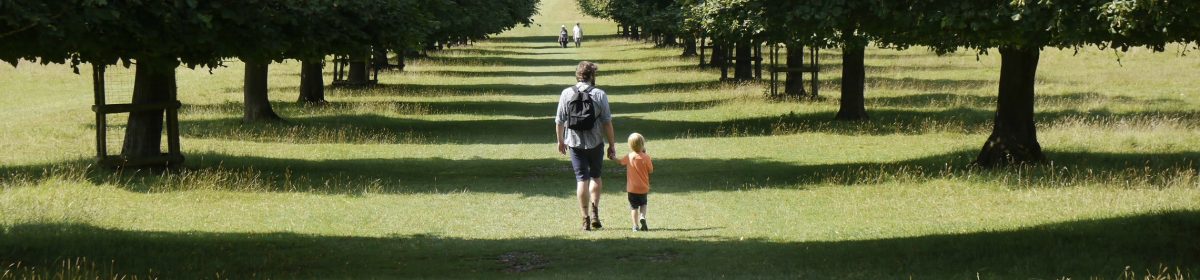
A bit of a Marienbad moment in Gloucestershire.

The floow deer herd is back out in the park

After all the drama of repeated heatwaves, the weather has finally returned to relative normality and we’ve been rejoicing in the rain. We’ve had a few big thunderstorms but surprisingly in spite of very heavy rain, only the top few inches of the allotment were wetted adequately. We’d prepared the ground by emptying the waterbutts at the end of the last hot spell, hoping they’d refill – but then, when it was too late, I discovered that the gutter on the shed had come adrift of its mountings, leaving the water to travel uphill. Looking more closely I could see that an inexpensive redesign would capture rain much more successfully. The two butts on the greenhouse were working better but again the gutters are pitifully small and don’t cope with precisely the kind of downpours we most need to store.

This summer we came very close to giving up the allotment together. The hard work is OK but this year with Madame’s knee replacement and me visiting just about every department in the local hospital we ran into a wall. Happily, with just a couple of minor procedures still to do, we’ll be back firing on all cylinders by next spring, which just leaves the results of several months of neglect to sort out. The battle is 90% mental but for the first time in months it feels like we’re winning. It hasn’t all been bad on the allotment. The soft fruit didn’t do well at all but the fruit trees – apples, pears, damsons and plums have all yielded record returns. Even the poor old potatoes managed to give us a half-decent crop after the dry conditions, and the newly planted raspberry canes are thriving. Last night we ate our own potatoes, runner (string) beans and chard with stewed plums for pudding. Allotments are very friendly places, and it’s rare not to exchange surpluses with our neighbours. It seems to me that the allotment looks after our bodily and spiritual needs while certainly my intellectual (mind) needs are well catered for by plant hunting and studying their habitats and habits.

Anyway we decided to give ourselves a day off on Monday and we took ourselves over to Dyrham Park which we haven’t visited over the summer because it gets so overcrowded. Actually that’s not quite true because we made a couple of early visits to White Field to search for the orchids. At this time of year the pasture is cut for hay and normally we’d turn our attention to fungi, but apart from one fairy ring (Marasmius oriades) there was nothing much to see.

Black Worcester pears on a southwest Facing Versailles espalier

Anyway we wandered down through the terraces and visited the formal gardens which (sorry no photo) have matured brilliantly. We were a bit dubious when they were first laid out but now they look lovely. On the outside wall of the big house there is a fabulous example of espalier pruning which we were lucky to have explained to us by the head gardener a couple of years ago. This Versaille method is based on very short fruiting spurs, but by doing this he explained that you could take the espalier to a larger number of tiers. He’d spent some time actually learning the method in Versailles.

Crataegus orientalis

Below the formal garden we walked around the large pond which was choked with blanket weed and then onwards to the small pond surrounded by mown grass with its own waterfall. It was crystal clear, and we bagged one of the seats and sat quietly watching the other visitors. Then, inexplicably, we both said exactly the same word – “Marienbad”. Couples standing still, casting shadows, nor speaking – a kind of freeze frame – and I thought how I’d first climbed over the wall to the park something like 65 years ago, long before it was turned over to the National Trust. We’ve ridden horses there in the 1970’s and spent many hours cycling back and forth between Bristol and Dyrham to visit friends.

There’s a question that often gets asked.“What would you say if you met yourself at the age of 14; what questions would you ask?, what advice could you give?” and sitting there in the warm sun, I felt that there was no need for any kind of meeting. We were, in the deepest possible sense both there! connected in an almost surreal sense every version of “me” over the years, sharing the same moment. It was very beautiful.

Later, after a glass of apple juice and a shared sandwich, we wandered up the quieter back route to the top alongside Sands Hill, passing at the very bottom a rotten tree trunk which had been left available to house and feed every kind of wood boring insect. The photo shows the human palace lurking behind the insect paradise.

I was going to shrink this one down, but changed my mind

As we climbed steeply upwards I stopped to record a couple of everyday trees and soak up the view of a small stand of very tall pines. Then. right at the top we met a couple of volunteers who said that there was a group of deer just beyond us. The whole herd had to be slaughtered due to TB three years ago, and although we knew they were being replaced we’d looked in vain for them in their paddock. Then suddenly there they were; four larger stags and a young one which we could hardly see. We looked at one another silently, deer and humans, without fear or hostility. I think two magic moments in one walk is more than any of us have the right to expect.

Hefted

If you know Mendip at all well, you’ll know that this thatched building holds a stack of sheep hurdles on Priddy Green

Nostalgia can be a poisonous affectation. It’s all too easy to use the wistful, often wilful mis-remembrance of the past to reduce the past to a coddled egg; good to eat but with no future. Real history is troubling; often leads in two directions, and ambiguous to a fault. On the other hand, the sense of rootedness in a place, or in a community in which the two ideas often overlap, is foundational to our practise of being human. You’ll probably think I’ve lost the plot if I write about Cornbrash, Brandon Hill stone and Bath stone and yet the glimpse of a building made with any of these three will as good as a six figure OS grid reference. They would not just signify districts but the era they were built in and the likely social class of the people who lived in them. Add to that a dialect, a particular way of sounding a troubling “r” in Gloucestershire, or a single sentence in Bristolian would tie the speaker down to something like a parish. There’s a sawmill in Wick and when I go there, I could curl up on the counter like a cat – I feel so at home. This isn’t something you can fake. You’d have to live not just any lifetime, by my lifetime to pick up the resonances.

I understand this better now than ever as I’ve learned about plants, where they grow and what they prefer to grow in. As I child I learned to love lying under beech trees growing on a moss covered bank on the boundary of our grandparents’ smallholding. My mother’s whole vocabulary of local names was learned amongst the winding lanes of the Chilterns. We looked in vain as children to see what Granny Perrin’s nest was, and why our mother could see it when we couldn’t. Even the roads had their own language of shiny flint pebbles, and hiding in the depths of woods once worked by bodgers who turned chair legs and wheel backs was Margaret’s Beer Shop where we could drink cherryade as a treat. I came to know what I now understand as acid heath, on Rodway Hill as slowly I came to understand how localities have their own unique floras.

Mendip is famous for its abandoned lead mines and again there are plants that can survive heavy metal pollution and environments which have their own special designation, Calaminarian, which is how the calamine lotion that our mother dabbed on our chicken pox spots brought zinc from the ore into Mr Ladd, the chemist’s armoury. Nowadays my old friends are the pavement scoundrels, constantly harried by the council’s strimmers. The poor council workers don’t seem to know about tap roots and seeds, or annuals and biennials and so they knock em all down like skittles and within a fortnight they’re up again. Then, of course there’s the riverbank with its own royal flush of perfectly adapted plants. Stones, dialects and plants store the local memory as certainly as books. Footpaths and shortcuts, streams, hiding places abandoned dramlines and climbing trees marked our territory and as we spread our wings, our bikes were the means by which we invaded and occupied other peoples’ places.

So much, then, for a rather lyrical take on the sense of place. The Greeks might have dignified it as the genius loci but we were unconscious of our hefting. It was just home as far as we were concerned.

A couple of nights ago we watched Peter Hall’s film “Akenfield” which I’d seen years ago but completely forgotten. I read the source and inspiration for the film , Ronald Blythe’s book “Akenfield” when I was in my twenties, along with Henry Williamson’s long cycles of novels, and I read J A Baker’s book “The Peregrine” a little later. In truth I consumed voraciously just about any scraps of natural history writing I could lay my hands on. Akenfield is a groundbreaking oral history of rural Sussex at the beginning of the 20th century and both a celebration of the skills of farmworkers and denunciation of the appalling conditions in which they worked. The extractive philosophy of modern agriculture was cultured in the minds of landowners centuries before the first tractor appeared on the land. I watched most of the film near to tears.

But one of the happier lessons of the film was that whatever happened to them, the farm workers had song. They sang in church, they sang on army service in the first world war, they sang in pubs and they sang as they took the harvest in on wagons loaded high, with the children riding on top as a treat. I suddenly remembered that my sister and I had shared that triumphal ride in Stoke Row one hot summer’s day, and how insecure and prickly our perch was. It was the strangest feeling to recall the stooks and ricks of the days before the chequerboard plastic wrapped fields we see today. That overarching sense of history is disappearing and, because of our failure, we’ll never be able to bring it back.

Some forms of nostalgia are a positive waste of energy except perhaps that we still, we always will have song. Barely fifteen years ago I sat in the kitchen of a farmhouse in one of my parishes and watched, through the window, as a procession of combines, trailers and tractors drove along the lane, headlights blazing, to come in for supper and then go back to harvesting the fodder maize that feeds the cattle. Today we went for a drink in the pub in Doynton. The village has changed beyond recognition but if the flow of traffic could be staunched for a while a couple of horses and their riders persuaded to pass by and a rookery installed to provide the music. If a sunset could be organised to bathe the cornbrash walls with evening light and if the conversation dropped just a tiny bit in volume and we stepped outside, I think we could almost see the ancestors in the shadows.

Yet we still have song. Those who believe that their mission in life is to make life harder for us should beware of our spiritual and revolutionary songs of resistance. They too have a long and deeply local history; often rooted in the sense of place, hidden in the DNA of songs and carols that still speak deeply to the most irreligious of us. Of all the things I miss about my ministry it’s the raucous Christmas carol services, packed to the gills with people who were drawn back year by year into the old ways; the funerals where for a fleeting moment we could believe that all would be well and all manner of things would be well as we sang Abide with me. But perhaps most of all on Easter Eve when I was able to sing the exultet; a long plainsong solo hymn of hope for the coming year.

Sunset through the campervan window at Priddy

This bus is much shinier than it was when I drove it!

One of the odder reasons love Agatha Christie films and other 1950’s costume dramas is because there’s always a chance that they will feature my old bus, and after a bit of a hunt on the internet I found it restored, repainted and looking very fine indeed. I have a very strong connection with this exact bus (the little one in the picture), although when I drove it for three years it was hand painted in cream and brown and beginning to look a bit scruffy as it had already seen 25 years of service at Clifton College, transporting mud-caked boys from Clifton to Beggars Bush where the sports field was. After art school there was no prospect of any paid work and so I went to Clifton College and Madame went to Wills tobacco factory – which she hated – and then got herself the perfect job at Long Ashton Research Station; the horticultural department of the university in which she thrived. There’s a link here that gives a much fuller account with pictures of the original wooden slatted seats and the unbelievably rudimentary dashboard. Just click above and you’ll find it.

I went for the job and was interviewed by the Bursar to whom I lied about my qualifications, or at least told a half truth in that I did have some O Levels but failed to mention the honours degree bit. He asked me if I’d ever driven any larger vehicles and I said I’d driven a transit van and that was it. He shook my hand and said I’d be fine and off I went. On my first day I noticed an empty greenhouse and asked about it. Trev, the boss, said that my predecessor had filled the greenhouse with plants but just as they were coming into flower he’d come in one night and cut them all down and taken them away. Well well, I thought, this is going to be fun. I was to be a half time groundsperson in the mornings, tending the playing fields, marking out the pitches and helping out with the workshop where the brilliant but irascible mechanic, Geoff, would curse, hammer and repair our collection of old and worn out machinery. We once completely dismantled and rebuilt a Massey Ferguson 35 tractor; repaired a damaged Barford roller by replacing its piston rings with some taken from a Vespa motor scooter. The other half of my job was driving the school buses. They were beasts with crash gearboxes and frankly underpowered for dragging 25 schoolboys up from Avonbank on the river where they rowed, back to Clifton. I had never seen a crash gearbox before and so my first trip up Park Street from the river was conducted very slowly in second gear generating a huge traffic jam. The trick was to match the speed of the gearbox with the speed of the engine. If you failed to get it right the gearbox emitted fierce grinding noises and refused to engage – so when changing down from second to first there was a danger of rolling back and crushing the car behind. Changing up a gear was a bit easier because you declutched once, paused for a moment for the engine to slow down, declutched again and with a brief prayer the gear would engage like (as we used to say) greased weasel shit. This was the famous but these days unknown skill of double declutching which has gone the way of quill pens and longbows. There was a small team of retired Bristol Omnibus Company drivers who joined us in the afternoon because they knew how to change gear. I remember one, called George, with great affection.

My other workmates were the boss, Trev, who rum tum tummed and pom-pommed under his breath constantly; smoked his pipe and taught me the weeds which plagued us on the fields because he would never mix sprays to the recommended strength since he maintained that the manufacturers exaggerated the dose to make more money. Consequently we made our contribution to the development of weedkiller resistance among Speedwells and the infestation got worse and worse. In the summer I would mow the fields, pulling a gang mower behind the little Fergie and pausing frequently to acquire the beginnings of my field botany skills. In the winter we’d maintain the equipment and (favourite job) lay the boundary hedges and warm our hands on bonfires of prunings on frosty days.

Chubby was my other work friend. Indeterminately old and wily with withered skin over a foxy face, he would carry a brown paper bag in his pocket with as much as a couple of thousand pounds in it. He was notorious as a wheeler dealer and was reputed once to have bought a small herd of cattle off the field and resold them the same day without even moving them. Stories about Chubby included the time he sold his shoes at a dance, and I almost killed him once when we we felled a large tree. I was wielding the chainsaw and he was driving the tractor with a tensioning rope which I was convinced was too short. It was too short and when the tree came down Chubby was enveloped by the branches. Miraculously when I rushed across he was still sitting on the Fergie, laughing and completely unscathed. Chubby had a bit of a secret life, we all thought, but since the name of a well known Bristol criminal was attached we just included it in life’s rich tapestry.

Over the years I’ve worked with some proper characters and kept it all close but learned so much of great value. One of the best lessons I learned over the years is that real people stab you in the front when you get out of line. It’s the polite middle classes who stab you in the back!

Anyway, back on the allotment I’ve forsworn heavy exercise in theory at least, and today I cleared a bed of potatoes, with a few rests, panting and leaning over the refilled pond. It was a delight to discover that all our efforts at feeding the soil with compost has rewarded us with a smaller than usual but still useful crop of potatoes, and it’s true what they say; compost really does hold the moisture and after a three month drought there was still a perceptible trace of moisture in the earth. This season has focused all of our minds on water and as this is also the time for planning next year’s projects I’ve been wondering about taking out two of the compost bins which we don’t use properly and substituting one of those 1000 litre polythene water tanks to increase our stores to 2,250 litres – because it looks very much as if droughts are going to feature large in future.

And just to finish, we installed the trailcam again this week and captured a lovely image of a badger hunting sweetcorn in the night. He’s also done us the favour of digging over our wood chip paths in search of roots and grubs. Good luck to him, I say!

Badger on allotment

Bye By Brook – finding the well

By brook at Slaughterford

We’re not done with you yet sir

Last Friday I got yet another message from the hospital requiring an urgent phone consultation on Tuesday regarding a test I’d failed miserably. I imagined a large number of health professionals rushing to the red phone. to deal with my case. I’ve soaked up an incredible amount of NHS time in the last six months and I’m so grateful for it. It’s an odd privilege to be fast tracked twice in a month on suspicion of completely different cancers but I’ve noticed that the doctors are constantly changing and often poorly prepared for our encounters, and so there’s never time for them to sit back and observe, chat, prod – all the things that I know from long experience are essential to drill down to the heart of the problem. But, being retired, have got time to explore and read the NICE guidance about the drugs which I’ve been prescribed and I know that some of the problems I experience are actually caused by them. They’re called iatrogenic symptoms – caused – if you like – by the very medications that are supposed to keep me well.

Time is possibly the greatest unused skill in the caring profession. I’ve never forgotten a pastoral conversation with an oncologist who was being broken by his workload, and who told me that at its worst his first thought when a patient came into the room was how can I get rid of this person? He wasn’t bad or lazy, just exhausted, burnt out and lost. There was never enough time to listen deeply to the person in front of him When I was running writers’ groups I got very used to the back pocket poet syndrome. Someone would sit silently in the class for an hour, too shy often to make a contribution and then they would produce a crumpled sheet of paper just as they were leaving. Such contributions were often very good.

Smiling, or being smiled at by strangers is a rare treat in a paranoid world.

David Isitt, one of my finest teachers would sometimes gather a group of us, all mature students on retreat, and on a fine day we would sit under a tree and he would run one of his CAT sessions. CAT stands for close attention to text and we could sometimes spend an hour pondering the multiple meanings of a single phrase. Close attention is a powerful tool for psychotherapists, doctors, partners and – as I proved to myself on Monday – for home bakers. On this the fourth or maybe the fifth heatwave of the summer, I had a sourdough loaf overprove and almost collapse. That one was turned into breadcrumbs, but then I needed to make bread urgently and so I did what I should have done all along, and I paid close attention to the rising dough. In the 25C heat, my usual 36 hour timetable easily condensed into a single working day and I came out with a good sourdough loaf. On another occasion and another retreat, a group of us – all strangers to one another – were invited to join hands in couples and behold one another. It was uncomfortable, challenging and revelatory to lock my gaze with a stranger and allow some sort of understanding to pass between us. The absolute opposite of hurrying down the street wearing headphones and looking at a mobile; avoiding any eye contact. Smiling, or being smiled at by strangers is a rare treat in a paranoid world.

Anyway, enough of all that; because the real point is that all this unsettling news has let the black dog back into the room and I spent a night that combined 3 hours sleep with about five of restless pondering which rewarded me with something of a vision. My mind drifted back to my early twenties when I had a long spell of what was diagnosed as phobic anxiety. I became convinced that I was about to die, and this actually changed the physical appearance of everything around me. Even the leafless winter trees looked like the bronchioles and alveoli of dying lungs. Eventually, under threat of being thrown out of art school I saw our GP and he told me that although he could give me some medication, it would be better for me – that’s to say Madame and me – to take ourselves off to the pub for some human company. His advice worked perfectly and within a few weeks I had a visionary moment and thought to myself – of course I’m going to die, but not yet! Ironically, some months later I was at a party, standing at the top of a rather grand Georgian flight of stairs holding a glass of wine and he came up and said to me “I see you took my advice” and promptly toppled cartwheel style back down the stairs, as drunk as a skunk.

However, apart from reminding myself how much a state of mind can even change the appearance of the world, I remembered how I began tentatively drawing again sitting on the side of By Brook, the small river that rises in Gloucestershire, runs through the Castle Combe valley, and below the farm where we were living; eventually joining the river Avon outside Bath. I made a laborious drawing (using hard pencils) of the knotted roots of a tree on the opposite bank – a drawing that sadly I can’t find anywhere- so I had to settle for a photo I took in Slaughterford last year. It was the drawing that unblocked me. Back in the day there were wild trout in abundance but nowadays it’s a shadow of its former self – milky, polluted and desperately in need of recovery. Fortunately there’s a group of volunteers improving water quality by improving the flow with rills and riffles, but I imagine many of the problems are caused by excessive abstraction.

Old bull looking at the sunset – Llyn peninsula this July

So in my mind’s eye, during my sleepless night, I was back there on the bank, and the clearest notion came to me that whatever my state of health, my creative wellsprings are still intact. My body ages – as it must – but creatively I’m still young, still capable of being inspired and driven by the sight of an unknown plant, still able to write to the best of my ability and, to use a phrase I overheard on a bus many years ago, to tell shit from pudding. Of course it’s a bit harder to get back to that place than it once was but real creativity has always been the combination of inspiration with technical understanding. Without technical understanding, inspiration is a mess of unresolved thoughts. Without inspiration, technique is dull and dead. I think of myself as being profoundly fortunate to have (at last) both – and now I know where to find the well.

The road-bridge at Slaughterford

Sometimes we just long for the supermarket in Montaren

The little garden we’ve created on the pavement outside.

Back in the day, and usually at this time of year we would pack our camping gear and drive south about 900 miles to Provence. Of course it was often blisteringly hot there, with the temperature into the 30’s and when things got too much we would invent a reason to go to the supermarket in Montaren where the air conditioning was well worth a couple of bottles of local wine. Nobody seemed to mind a couple of overheated English tourists hanging about the place gazing through the windows at the car park where it seemed as if the surface of the earth might shrivel and peel off. Uzès is a charming town, but you need to get up early in the morning if you expect to go for a walk. And you have to watch out for scorpions which can give you a nasty bite.

So now we’re into the fourth heatwave of the summer in more generally temperate Bath why does it feel so terribly hot when we’ve previously driven hundreds of miles and camped in a tent where it was maybe 10C hotter? We were there during what came to be known as the “canicule” where the death notices of the elderly seemed to be pinned to every tree. In that part of France everything seemed to stop for a couple of months while ridiculously foolhardy young men engaged in bull running through the streets, trying to catch a young bull by the tail and pull it away from its companions. The most exciting thing I’ve ever disapproved of! I suppose it must be because we’re more than a decade older and our thermostats need renewing, but today our strategy is to close the windows and shutters and to think of things to do that don’t involve movement. The closest thing to any seriously energetic pursuit is watering the little garden we’ve created outside and down two flights of stairs or (normally) the lift.

However, yesterday – with the good news from the hospital; (no more BCC’s or anything worse) – I felt full of energy. As soon as I’d got back from the hospital I’d fed the sourdough starter which had been lurking unfed in the airing cupboard for months. Fearing the worst, I gave it a tentative sniff and it smelt wonderful; yeasty, fruity like apples, like autumn. I gave it two tablespoons of wholemeal rye flour for breakfast and 24 hours later it was roaring for more. So the day began with the stupidest plan ever for a heatwave – a day at the stove. My three point plan was to bake a Dundee cake, a sourdough loaf and a batch of plum chutney with the allotment plums that were in danger of going mouldy. Fortunately most of the makings were in the cupboard and starting at nine a.m. I was all but finished by ten p.m. after a thirteen hour bake off. The sourdough loaf takes 36 hours from batter to finished loaf, but the great joy of it is that there’s barely twenty minutes of actual work involved. Mostly it just sits there growing and growing until it goes into the oven with a burst of steam and energy. The chutney was all chopping and boiling and fills the flat with delicious smells and chilli vapours that make your eyes water. The Dundee cake is a favourite for our camping trips in the van and I usually chuck in a few extra glacĂ© cherries for luck. And here they are on the big table:

The past six months have been a bit of a test, what with various ailments on both our parts and Madame’s knee replacement so it’s been something of a dark time what with my melancholic temperament – things like the sourdough got neglected along with this blog at times. My long march towards a million words slowed to a shuffle while I concentrated on cataloguing and recording plants. But progress, however slow, is still progress and with a great deal of encouragement from Madame, my rock, and our neighbour Charlie I’m back on track to accomplishing a million words, a thousand records and five hundred species by the end of this year.

Exactly a year ago today I was very much not looking forward to my routine endoscopy the following day – and in the manner of these things we resolved to go dry, free from alcohol – because we really were hitting it too hard and the booze is always at the top of every list of things to avoid. It was easier than either of us anticipated and the money we saved has all been spent on extravagances like keeping the campervan on the road and me buying second hand botany books. After a long intermission life feels pretty good again and the moment I post this I’m going back to the kitchen to cut a slice of the future.

So where is my existence inscribed?

It’s been a very strange few weeks. I remember vividly from back probably twenty years ago, sitting in a white painted consultant’s room and waiting for him to give me the results of my endoscopy, wondering is this how it always finishes up …… being given the bad news by someone half my age and who barely knows me ? and yet – as it almost always does- leaving with good news that might yet be bad news. Endlessly left processing the words of others for hints of what they know about me but choose not to say out loud. Ironically, it’s always harder to process good news than bad. I left the hospital yesterday after being seen by five doctors and two consultants over the last three months all of whom pored over my arms and my back with their cameras and magnifying glasses and – after I’d signed the consent forms and had the risks explained to me in kindly detail – pronounced the lesions benign and put their scalpels away for another day. I’d prepared myself for the worst and then suddenly I was back on the bus stop with a reprieve. Those youthful months, driving a tractor in full sun with not so much as a smear of sun cream and wearing nothing but a pair of shorts had written themselves on my skin. I am inscribed with the follies of my days of vigour.

So after a ridiculous lunch of favourite things we drove across to the lake at Newton Park and walked together in something approaching silence as I processed the good news; unpacking the bits of the future I’d stowed away in case I wasn’t going to need them. It’s not over yet, of course. I’m still waiting for the results of blood tests, poo tests, urine tests and other tests as yet not invented as the doctors figure out why I’m anaemic and exhausted. I want to throw the word iatrogenic in their faces. “You’re crushing my heart with your beta blockers and extract of foxglove and blood thinners and all the other speculative miracle cures and all I’m suffering from is the casual and unthinking cruelty of the powerful!” I’d like to get my hearing back but the NHS can’t afford the technicians to fit the hearing aids they’ve already prescribed. I’d like to get my glaucoma laser-fixed as promised and I’d like it if the NHS dentist it took ten years to find would use something less dangerous than mercury amalgam to fill my teeth when she wouldn’t dream of treating any private patients that way. But I can’t say any of that to them because any sense of grievance is so dangerous; so poisonous. I’ve seen peoples lives destroyed by the sense of grievance – it seeps through the bloodstream and damages every relationship; sucking the joy out of life and crushing any residue of the lyrical, any feeling of connectedness.

So we go to the lake and sit there quietly watching the swans and moorhens and soaking up the intense late summer light sparkling on the leaves, the grass and the water. The bleached trunks of the dead oaks lining the path never looked brighter or more lovely. And I’m taking photographs of the plants we find – another part of me inscribed with something better than the abbreviated AI notes on my NHS records. The trace of my life divides into two further streams. There’s this blog and then there’s the record of plants seen, loved, identified recorded and photographed. One stream of words and another of data.

Then this morning I went into the kitchen and to my great delight discovered that the sourdough starter I’d completely neglected during these last months has come back to life, greedily digesting the breakfast of dark rye flour that I gave it when I got back from hospital. The future begins with cooking, eating, and sharing. Every saucepan, casserole and bread tin beckons the way forward. I will bake bread, I think, taking a small step forward.

I like the west – if ever I think about going somewhere it’s always west of where I am, and I like water, although I struggle with the notion that nature is somehow beneficial. How does that work? But being in nature is an active process, never passive. Water is where we begin our lives; swimming in an ocean of amniotic fluid. Birth is hard and I wonder if our attachment to water, to waves is a kind of yearning for the way back to that primal, protective warmth. Being born is irreversible and so water and the earth, being closest are the next best thing. Could it be that our first memories are inscribed in water and earth? Could it be that the water and the earth remind us of the before and beyond of our existence and that – surprisingly – we find it comforting?

It’s late summer so there are berries. We passed (and I photographed) spindle berries, hawthorn berries, sloes, damsons falling across a garden wall, blackberries and of course elderberries, which I forgot to photograph because stupidly I neglect the things I know best. There’s no better investment in the future than making jams, preserves, pickles, sauces and ketchups. Somehow they throw a line of engagement into the unknown, an investment in the likelihood of our being around to eat them. Hiding amongst them all are the darker natural notes – deadly nightshade, enchanters’ nightshade, woundwort, bittersweet which all prefer the shade and which it pays to know well. Your liver will thank you for your diligence.

But above all, we are inscribed in the people we love and who have loved us, occasionally for almost a lifetime. Parents, grandparents and (sometimes) children too, our partners of course who carry the bad and good of us because they love us, and the multitude of people we encountered and paused to be close to – to take their load if only for a while; to share a life giving thought or to dare to challenge. Our teachers, mentors and friends are inscribed in us as we are in them and it’s good!

Charlie’s radical garden

Impatiens taymonii in Charlie’s garden

Before you sigh and turn away for a bit more doomscrolling because I used a bit of latin at the top – be assured that this post is guaranteed to make you happy, so happy that I can’t imagine why I’m not charging you to read it!

So a long time ago we moved to Stoke on Trent to run a small but doomed pottery that lasted all of six months before it fell to earth. We were there at the same time the last bottle kilns were being demolished just down the road at Price’s teapot factory and one of our team was a wonderfully skilled, but recently redundant mouldmaker who’d helped to unpack the last kiln load as the factory shut down. It’s true he had a bit of a drink problem, and once came in from a 48 hour binge and mistakenly cleaned his beloved Triumph 2000 with kitchen scourer but I never met anyone else who could look at a complex sculpture, turning it one way and another and plan exactly how to make a twenty piece plaster mould from it.

Anyway, the local pubs had not then evolved to the point where Madame could drink in the public bar, and we were always directed to the snug where foul language and boy’s banter were banned. The snug in our local sported a lovely Busy Lizzie in a pot. It was huge, and when Madame mentioned what a lovely plant it was the landlady simply picked it up and gave it to her with a big smile. A couple of months later it travelled back to Bristol with us in our overloaded Morris 1000 pickup and it spent the next couple of years following us around in our peripatetic existence. We were often surprised by the kindness of people we hardly knew.

The Busy Lizzie is a member of the fairly large family known as Impatiens, one of which is a bit of a rogue and causes all manner of problems in this country where, since it escaped from gardens in the mid 1800’s has spread rapidly across the country with the help of its explosive seed pods which can fire their contents twenty feet. Its name, of course is Himalayan Balsam. There are four members of the family listed in my go-to list of British and Irish wildflowers, and two of them grow on the Kennet and Avon canal – on the left Orange Balsam and on the right Himalayan Balsam – the plant that the Daily Express loves to hate.

There’s another member of the family charmingly known as Touch me not Balsam that’s much rarer and only a couple of days ago I was wondering how I could lure Madame into the campervan for a quick trip to mid-Wales where it grows wild. I claim not to be a trainspotter but I can confess to getting a bit over obsessed with photographing whole families of plants. There’s another family I’ve got (Madame might say) overfamiliar with; they’re the Fleabanes and so far I’ve found four of them growing locally but five and six are harder to find.

So with this in mind, I must introduce our friend Charlie who is a taxonomist (but I forgive him), a retired professor, no less, who has worked in some very high-profile positions which I won’t mention to protect his privacy. He lives about four doors down from us and we meet up weekly to chat and for Madame to blag plants from his unusual garden. Charlie and I share a bit of a passion for the plants that eke out an existence on the walls and pavements and waste ground that surrounds us in Bath. They have a classification all of their own; ruderals, aliens and survivors – like most of our neighbours here. In fact we agreed yesterday that it would be fun to work together on as comprehensive a list of local bruisers as we can manage given our arthritic knees and hips. I’m getting used to people stopping and asking if I’m alright as I struggle to stand after getting down and dirty with my phone, photographing a pavement specimen.

There are rules about recording plants on the national database, but plants rarely pay any attention to rules and so seeds attach themselves to car tyres and shoes and travel distances from their proper places before dropping off and starting a new life on the streets. Other seeds blow in on the wind and fall out of window boxes or get a new start in life outside a pub where someone had too much to drink and – need I continue? The tomato is a favourite addition to the local flora. The rules are quite clear. “Thou shalt not record a plant growing in a garden.” By chance both Charlie and I were inspired in the last few weeks by reading Trevor Dines new book “Urban Plants” which is one of the few botanical textbooks either of us have read from cover to cover and I’ve also been reading Clive Stace and Michael Crawley’s “Alien Plants” , and we both came to the same conclusion – that the word “wild” is so poorly defined as to be almost impossible to use. Field botanists have a whole lexicon to separate different classes of wildness, but gardens – especially Charlie’s garden – present some proper challenges.

My Mum would carry a large and larcenous handbag marked swag in which she would carry away thumb and finger cuttings of any plants she liked without regard for their rightful owners. Charlie’s garden does the same but with an international range, which makes it a lovely place to sit and drink tea,or coffee and yesterday – tragically – I spotted two of my hoped for “wild” flowers growing right in front of me. The first, which is the photograph at the top of this post, turned out not to be the hoped for Touch-me-not balsam but the Chinese species daymonii which is a proper garden plant that shouldn’t be recorded because it doesn’t grow in the wild and hasn’t been recorded even as a garden chuckout survivor in this country. But isn’t it beautiful? such lovely markings on the petals and a worthy posh cousin to the others. Good news, then, the Mid Wales trip is still on but don’t tell Madame.

However the next plant to catch my eye was a nice specimen of Tall Fleabane (Fleabane number five) which has never been recorded close to Bath and, in any case was growing in a pot. But at least I’ve photographed it and I’ll keep it for reference until I find a genuine wild version.

Tall Fleabane in Charlie’s garden.
Buckwheat,

There was also a rather nice Buckwheat plant which could easily have blown in on the wind, or been hiding in some garden compost – again not one for the record, but then – just as we were leaving – my eye caught a very small member of the carrot family which I vaguely remembered because I’d seen it twice before, growing in a newly planted municipal border and again wild near a stream south of Bath. It was almost hidden below its more showy neighbours but I had to check it out and when I did it brilliantly demonstrated the dilemma for those of us who like to make records. Here it was growing just inside a garden – so it shouldn’t be recorded – but on the other hand it’s hard to imagine why Charlie would have sown it deliberately in such an unsuitable position. The plant is Fools’ parsley and it’s short, not remotely beautiful (apart from to me) and extremely poisonous. One for the record then because I’ll call it a weed – and thanks for the coffee Charlie. See you next week.

Fools Parsley -Aethusa cynapium –poisonous!

One swallow doesn’t make a summer

One lonely cornflower

And neither does one cornflower make a wildflower meadow whatever the salespeople of wildflower seed mix may say. We saw a similar attempt by the local council to achieve pollinator paradise on the flood terraces in front of the old Avon Street car park – possibly the previous holder of the ugliest building ever allowed in Bath but an accolade now about to be seized – you couldn’t make this up – by the new police station. Anyway, someone thought it would be a good thing to cheer the riverside up with some pretty wildflowers and it did, for a single season, after which the original occupants reasserted their ancient rights and crowded out the pretty newcomers. I’ll come back to the original occupants

Let’s be clear, I love wildflowers and they do make excellent pollinator plants, but you can’t just chuck a few seeds on a patch of any old soil and expect them to thrive. Plants, like the rest of us, have their firm preferences about where they make a home for themselves, because they’ve all evolved to grow in their particular places. Any deviation from a plant’s usual preference regarding sunlight and shade, rich soil or poor, drought or frost, acid or alkaline soil and the right kind of neighbours, can prevent it from setting seed and reproducing itself because many plants and pollinators have extremely specific needs in the rumpy pumpy department. Some plants have found it so difficult that they pollinate themselves and to hell with the consequences (field botanists having breakdowns). Founding a pollinator paradise takes a lot of expertise and preparation not to mention a great deal of patience. As nature takes on the gardening work we move into a different and much slower timescale.

Ironically, now that Bath has developed the ambition to build a wildlife corridor across the city, following the river Avon, it’s become clear that earlier generations of councillors, architects and property developers have already demolished some important but ugly areas, like the old gasworks which – because it was so heavily polluted – was off limits until the means of remediating them was better understood. So after decades of standing derelict, during which all manner of wildlife and plants created a true nature reserve, the councillors and their mates demolished the lot to build highly profitable but unaffordable homes and then offered to build a wildlife corridor on a the only narrow strip of riverbank they hadn’t already destroyed and turn it into a promised land for wildlife, and dogs, and pedestrians and cyclists and sow it with a kind of modified birdseed so that we’d all be grateful for the chance to immerse ourselves in the countryside. All ten feet of it – until an otter makes a meal of a swimming dog when nature may well be declared dangerous and shut down.

The other thing we need to take into account is that in many circumstances the local weeds – in spite of being a bit, well, meh – are excellent pollinator plants already. Think of the common as muck buddleia tree and the creeping thistle. Making thriving communities of wildflowers needs more than a handful of imported debutants shivering in the frosty air. They need unusually high resilience and adaptability and a mountain of good luck before they make it into their second year. Cornflowers have been around in this country since the Iron Age and for most of that time they were a pestilential nuisance in arable fields. With the advent of farm industrialisation, almost overnight the means of controlling cornflowers – killing them actually – using herbicides, turned the renegades into rarities and the great wheel of fortune brought them into the sunlight again. Sadly I’d bet my pension that none of them will be around by next season, and we’ll be searching for the lovely white comfrey which has now been strimmed out just below our flat. There’s enough greater burdock growing now on the Avon Street part of the corridor to start brewing dandelion and burdock once again, like Bowlers did before the factory was demolished to build the car park. Fortunately you can still go and look at Bowler’s bottling machinery in the Museum of Work – which, to be fair, is a brilliant afternoon visit. I was lucky enough to see it all in situ when I helped photograph the old works after it closed – I was only the bag-man to be fair.

My preferred option would be for us all to fall back in love with what we’ve already got before we wallpaper the riverbank with William Morris imitations. I love the muscular weeds, the fistsized birdcages of the wild carrots in late summer, the bizarrely improbable wild lettuces down by the bus station, the willowherbs (how many kinds can you spot?) and the bafflingly similar dandelion lookalikes. Our neighbour spotted comma butterflies taking nectar from the buddleias down near Green Park today. How many bramble varieties can you spot? There are hundreds of them and goodness knows how many in Bath. Mallows, mulleins, gypsywort, soapwort and beggarticks are all there on the canal waiting for a hello and the waterlilies in the river would love a wave from you (clonking pun intended!) and with all these plants, the closer you look the more stunning they are; the simplest walk becomes a festival of beauty and what’s more, it’s constantly changing. Just noticing that the landscape is constantly evolving is exciting. The waterside flora is in constant flux throughout the year like a never-ending flower show. You’ve probably heard of the slow food movement and perhaps we should explore the wildlife corridor with a slow walking movement, (which will totally annoy the cyclists and runners but hey!). There are phone apps that will help you identify the plants you’ve photographed very accurately. Flora Incognita is very good as are Obsidentify and iNaturalist -all of them free – and if birds are your thing Merlin is very good and fun to use and bear in mind that many birds feed and rely on seeds to get through the winter.

As the much missed Whole Earth Catalogue said on its cover – “We can’t put it together – it is together” – and it will only stay together if we understand and treasure what we’ve already got!

Orange balsam on the river today.

Back home I turn to my books and discover a dark secret

Gypsywort on Monmouth and Brecon canal

My granny often said “curiosity killed the cat” – it was one of many ways she would close down a conversation just as it was getting interesting. As for me I seemed to leak curiosity from every pore and so it was a push-back I knew well. The campervan has many virtues but its fatal deficiency is that I can only take very few books with me and so the real research begins when I get home, and this time I came home with a question – “why Gypsywort?”. Many plant names reference a particular use – like butterbur, milkwort, pilewort, fleabane; or a place – Jersey, Argentine, Cheddar- I could go on for pages – but gypsywort unusually references an ethnic group. Why’s that? I wondered.

I’ve got a dozen or more herbals of various vintage on my shelves, and so I soon discovered that the plant is well recognised as a dye (black, grey or blue ). It’s also known as a treatment for thyroid problems, diabetes and as a sedative. It’s also very potent (dangerous when used carelessly – before you ask). My copy of Gerard doesn’t even mention it – not all modern versions are complete, and none of the others suggest anything other than medicinal uses and occasionally as a dye. So I turned, as I always do with any question of plant names, to Geoffrey Grigson’s wonderful encyclopaedia of English folk names – “The Englishman’s Flora” where the true reason leaked out like effluent .

The story that gipsies [sic] stain themselves with Lycopus europaeus runs from one book to another, beginning with Lyte’s translation of Dodoens , 1578: ‘The rogues and runagates, which name themselves Egyptians, do colour themselves black with this herb’.

And so it goes on; half a page of bilious historical references to gypsies without a shred of evidence that they ever dyed their skin. The word ‘runagates’ caught my ear; so very close to ‘renegades’ its almost a homophone. Unusually, Grigson doesn’t list any alternative names but in the US and elsewhere it’s known as Bugleweed, and in some places water horehound – surely worth adopting here. True Gypsies, Romanies, wouldn’t need to dye their sin because they have naturally darker sin. It’s said that they ultimately came from India – who knows?

Anyway, it’s a lesson in how deeply embedded racial and ethnic prejudice can be even in a remote subject like herbal medicine or field botany. So – with reference to my previous post – even if Gypsies did use gypsywort they only shared it as a herbal medicine with the world and his wife, (even pale skinned rabble rousing populists) and it grows on the sides of canals and rivers because (like me) they find it a very congenial place to be.

Follow the raggle-taggle gypsies O!

29th July 2025

Gypsywort on the Monmouth and Brecon canal

Contrary to the opinions of those who know nothing and prefer to rise above the facts, Gypsies, Romanies as they prefer to be called are a good deal more sophisticated than most people imagine and have an enviably long oral history and tradition that can’t easily be researched by outsiders because it’s not written down. As one of those outsiders what little I know comes from my association with them whilst I was a parish priest. I got to know one family very well and we liked and respected one another. One young woman joined the congregation and despite having been taken out of school as soon as she reached puberty, she had a razor sharp mind; clever, thoughtful and highly intelligent. I won’t go any further, we’re still in touch.

Anyway, my object here is not just to write about the Romany traditions because, being on the outside, I know next to nothing about them. What I do know is that there is a folk medicine associated with travelling people, similar possibly to the Welsh traditions associated with the Physicians of Myddfai and based on streams of human knowledge and experience that could even be traced back to Greece and India.

Look through any list of British plant names and you’ll see lots of plant names ending in “wort”. It’s not the case that every plant with the same “wort” name ending had medicinal uses, some were used in foods and as flavourings; but it’s safe to assume that these plants were singled out for some usefulness which we occasionally no longer know. The herbal medicines of travelling people to which I want to add the owners and crews of narrow boats working the canal system must have been centred on what was “to hand” as they moved about the country. It wouldn’t be impossible to imagine that, as they travelled, they scattered seeds and useful plants on the roadsides and towpaths either in throwing out waste or providing later for their own use when they needed them.

There’s a well recognised problem that maps of plant distribution are liable to reflect the distribution of field botanists as much as the distribution of plants, and so I have to confess that our own records feature large numbers of canal and riverside plants because that’s where we most often walk. On the other hand, the kind of plants we most often record are specialists for that kind of environment so with that in mind I can say that I’ve only ever seen Gypsywort on the canalside towpaths, and it does have some interesting medicinal properties still being exploited for the treatment of breast complaints, thyroid problems and as a sedative. Later on in our walk yesterday we found Water Figwort –

  • another plant used to treat skin complaints including haemorrhoids, hence the name figwort, because this complaint was so common and piles were known colloquially as “figs”. Then there was Purple loosestrife, which was used to treat diarrhoea with its (unproven) antibacterial properties but I can’t find any reference to sedative properties so the strife was probably at the other end, so to speak.
Imperforate St John’s wort.

Imperforate wasn’t, it seems, used to treat melancholy but it was part of a treatment for TB and kidney complaints – very common ailments of poverty. Of course like drystone walling and unicycling it’s all very well having the kit but you really need the expertise as well – but travellers and bargees didn’t have much choice and so were necessarily using these herbal remedies because there was no other show in town. I wonder if anyone ever took a companionable stroll down a riverbank and recorded what a bargee and a Romany had to say about the plants they found. Sadly mutual distrust would have made such a conversation impossible and now it’s probably too late; but I’d really be up for that walk! These days plants are spread around today by cars and boots, not to mention nurseries and “wildflower meadow” seed mixes, much as they were spread in wool shoddy, ships’ ballast and manure in the past and so it’s getting harder to track how things get to where we find them, and so we’ll probably never know whether there’s a significant correlation between canal flora and bargee medicine. As for Romany medicine there’s still a small chance of uncovering some of the lore – in fact I’d be surprised if big pharma hadn’t skulked around the margins looking for something new to patent, but for now it’s more the sense of history that engages me. Our regular 5 mile stroll around the riverbank and the canal towpath is – in Alan Rayner’s neat distinction – a walk in nature rather than a walk through it, and is also a walk in history in the very same sense. “If these stones could talk” we sometimes say without thinking that indeed these stones, these plants do talk in their own quiet stoneish and plantish ways. I’m seized with the desire to understand more deeply how these plants were used, when they were used and whether they worked beyond the placebo effect. What’s certain is that when a plant is steeped in wine or boiled in water, all manner of active ingredients apart from the target property are released and mingled into the dose. Our reductionist ideology wants to reduce everything to one solitary potency but that’s never the way plants work. I caught my GP scanning through his computer during a consultation when suddenly the Gemini AI symbol appeared. I challenged him gently over it and he confessed immediately that he often uses AI as an aid. That’s only OK as long as you can absolutely trust the veracity of the data it’s working with.

AI can accomplish in seconds what folk traditions take decades or even centuries to establish and prove – and that’s a good thing. What’s lost is the sense of connection to the sources and the loss of deep experience in building connections.