Immersive plant hunting

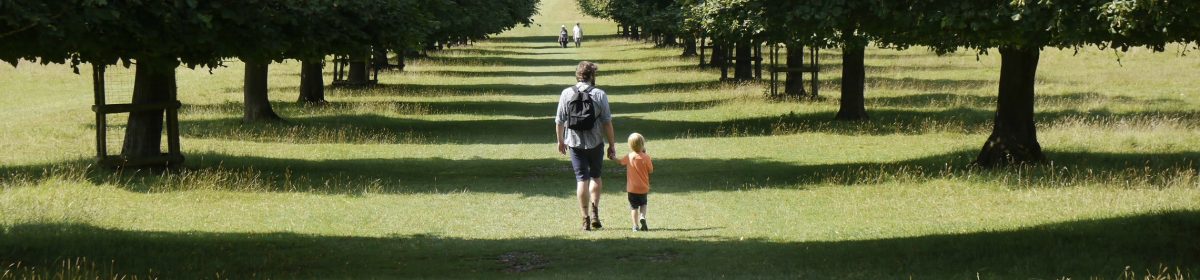
Two of our grandchildren playing in Dyrham Park

There was a moment on Tuesday’s fern hunt when a troubling thought occurred to me. “Why” – I wondered – “do I get so emotional about finding plants?” I think it’s a good question and a useful one. I remember we were once walking on Black Down (Burrington Combe) up at the top where the carboniferous limestone has been eroded away exposing the Old Red Sandstone underneath which is more acidic than the limestone everywhere else, and has an altogether different mix of plants. I was confused about this eccentric outcrop in the Mendips for years until it was explained to me how different the geology of that little area is. So there we were wandering along one of the tracks when suddenly a tiny flower caught my attention and I saw at once that it was an Eyebright, Euphrasia. As usual for me it’s not tremendously rare although it’s difficult to identify fully because it hybridises so readily. But what ran through my mind wasn’t the rational sequence of questions such as a professional field botanist might ask, as much as an explosion of joy; an anschauung, the intuitive understanding that comes with something discovered or revealed. No-one loves a list more than me, but that encounter involved a beholding such as might inspire a poet or artist; but when it comes to describing it, it’s just like trying to hold a writhing eel – trust me on that one, I’ve done it and failed on both counts!

The troubling moment on Tuesday came when I wondered if this emotional response might be no more than a form of sentimentality.

‘Bitzer,’ said Thomas Gradgrind. ‘Your definition of a horse.’
    ‘Quadruped. Graminivorous. Forty teeth, namely twenty-four grinders, four eye-teeth, and twelve incisive. Sheds coat in the spring; in marshy countries, sheds hoofs, too. Hoofs hard, but requiring to be shod with iron. Age known by marks in mouth.’ Thus (and much more) Bitzer.
    ‘Now girl number twenty,’ said Mr. Gradgrind. ‘You know what a horse is.’

Charles Dickens, Hard Times.

Obviously you can take a fact and wrap it in sentimental drivel but it will always lie dead and cold on the page. On Tuesday the first fern we found was an almost perfect Rustyback; a textbook example if you really must but I’d prefer to think of it as an expression, an outpouring of natural energy which, when you give it its name, connects itself to you. The plants become my sisters and brothers – hence all the emotion – love, gratitude, respect not to mention aesthetic pleasure. The naming doesn’t create the plant; but it gives it an address, a point of reference to which I can return – named, and therefore capable of being found and greeted again in a way that makes the earth a bigger, more relatable place.

The Rustyback fern

What is undoubtedly the case is that my childhood was full of such moments because – especially during the long holidays – I wandered (unsupervised) for miles through the countryside with my friend Eddie; laid in the grass on Rodway hill and watched the wind as it swayed the harebells, swung on the trees in the big woods, fished for Sticklebacks in the Oldbury Court ponds and picked bunches of wildflowers for my Mum who always placed them reverentially in jam jars. I suppose we all have that sense of a lost Arcadia. If there were any clouds in the sky we would rarely notice. My Mum was a country girl and she knew the names of plants and taught me and my sister how to love them too as we learned their names.

So yes of course plant hunting takes me back into my happy place, not because I want to be ten years old again, but because it was my ten year old mind in which I first experienced what I came to know later as the “oceanic feeling” and which seems to occur more and more as we search for the ferns, plants and fungi out in what’s left of nature after Thomas Gradgrind has had his filthy way with it.

In a 1927 letter to Sigmund Freud, Romain Rolland coined the phrase “oceanic feeling” to refer to “a sensation of ‘eternity'”, a feeling of “being one with the external world as a whole”, inspired by the example of Ramakrishna, among other mystics.

Romain Rolland (From Wikipedia)

The kind of earth we need to aspire to rediscover is not just a rewinding of the calendar to the nasty 1930’s; of Janet and John books, Ladybird and iSpy. More than anything else I’d just like to create the opportunities for our grandchildren to walk in the woods at night; count the stars and name the constellations; find and name plants and know some of their uses and qualities; feed the hens as my sister and me used to do in Stoke Row, and understand and practice the art of growing and harvesting. We need to rediscover and celebrate our relatedness to the earth, not in empty, sentimental, bound-to-fail aspirations but fully and deeply; surrendering any thoughts of domination. It is religion, you might say – but not as we know it!

Pteridomania strikes the Potwell Inn

Priddy Pool
  • Priddy Fern List ST55F ( a quick way to describe part of an OS Grid square)
  • Apologies for the Latin – English names are second
  • Asplenium adiantum-nigrum – Black Spleenwort
  • * Asplenium ceterach – Rustyback
  • Asplenium ruta-muraria – Wall Rue
  • * Asplenium scolopendrium – Hart’s Tongue
  • * Asplenium trichomanes – Maidenhair Spleenwort
  • Blechnum spicant – Hard Fern
  • Dryopteris affinis – Golden Scaled Male Fern
  • Dryopteris carthusiana – Narrow Buckler Fern
  • Dryopteris dilatata – Broad Buckler Fern
  • Dryopteris filix-mas – Male Fern
  • Polypodium interjectum – Intermediate Polypody
  • Polypodium vulgare s.s – Polypody sensus stricta
  • * Polypodium s.l – Polypodies
  • * Polystichum setiferum – Soft Shield fern
  • Pteridium aquilinum – Bracken

Plant hunting is helped immeasurably by a bit of homework before you set out and equally with more homework even after you think you know what you’ve found. So this rather grand list was easily got by searching the accessible-to-the-public list and ticking off the ferns (Pteridophytes! As my mother used to say “the P is silent as in bathing” . So it turns out that in the little corner of High Mendip where we’re camping, there are 13 fern species (3 are hybrids – only separable by experts with microscopes) and yesterday in our short walk we found five of them – the starred names which are in the photographs clockwise from top left. None of them rare but some, much more common on the limestone rocks hereabouts – environment is a huge thing for plants. Whilst you might think that finding 38% of the available species isn’t bad for a half mile walk down a bridleway, they’re just the ordinary common species. The rarest fern that could conceivably be found near here is the Limestone Fern, but collectors are still capable of uprooting and stealing rare plants so their exact locations are withheld from general access.

The walk was exactly as planned on Monday. Cross the road and walk 250 yards to the entrance of a bridleway; walk very slowly down it as far as Priddy Pool, photographing any interesting plants, and then – depending on the weather, walk on to the churchyard and the limestone walls near Swildons Hole and then across the village green to the pub. The weather, though, was ferocious. The little spring expedition in our imagination actually brought with it 50 mph gusts of freezing wind and occasional pellets of sleet that felt as if they were lacerating our faces. 1000 feet of altitude makes a huge difference.

Down in the bridleway we were pretty much sheltered from the worst of it, and I got some good photographs of the crozier stage of some ferns as they emerge. They are wonderfully sculptural. We also found two very common flowering plants which were quite hard to identify. Yellow Archangel ought to be easy enough, but this one had silvery white spots on the leaves and so I used a bit of internet AI and chased it down to subspecies – probably a garden escape but it seemed fully naturalised.

Priddy Pool – and I mean the pool that adjoins Nine Barrows Lane is a truly magical place. There’s a certain ambiguity about the name because the plural – Priddy Pools refers to a couple of larger ponds in the Mineries nearby, now a nature reserve but once a lead mining area. My Priddy Pool – the only one named on the OS map – holds the water which subsequently runs underground at Swildons Hole. On July 10th 1968 we’d had two months worth of rain in two days, three thousand houses were flooded, eight people died and 24 buses were abandoned on the streets; and Swildon’s Hole took so much floodwater that the entire upper series was rearranged and the old 40 foot pitch (shaft) disappeared. Cavers who entered after the flood found an altogether different cave. It occurs to me that Priddy Pool, far from being an ancient natural formation may have been altered by 20th Century cavers to assist rescues when the cave was flooded. There’s certainly some stonework on the boundary with Nine Barrows Lane that was built there by someone. But now it’s just a lovely place to watch and listen to birds. Of course it could be a buddle pit or a sheepwash – someone must know.

Then as we came out on to Townsend we spotted a Forget me Not. Exactly as I had done with the Yellow Archangel I rather dismissed it as a garden escape with a toss of the head and curl of the lip – but I photographed it anyway because it was growing wild in a shady verge. Back in the campervan I looked up the Myosotis family in the Book of Stace and discovered that there are loads of them and that my suspicion of nursery bred plants was a bit over egged because there are ten legitimate wildies; three of them rare but the others, although they get grown in gardens often escape back into the wild. Another handy ID shortcut was to go back into the Distribution database and see how many of Forget me Nots have ever been seen in my grid square. That reduced the number from ten, to seven and then to an easily manageable two which were so different it was easy to choose the right one. By the time we reached Townsend our fingers were white and we were shivering, so we wandered back to the campervan and turned the heating up to tropical so we could properly enjoy a bottle of Provençal rosĂ© with our sandwiches.

On the left the Wood Forget me Not – Myosotis sylvatica, and on the right Yellow Archangel – Lamiastrum galeobdolon ssp. argenatum

Anyway; notwithstanding the weather – which has been awful – wandering the bosky dells wasn’t the only reason for coming here. We needed to test out all the systems in the campervan to make sure it’s ready for the summer and happily – aside from a lousy WiFi signal which is only just about workable, the van is good. We, on the other hand, are sitting in it in the midst of a cloud with visibility down to 100 yards.

850 feet up a hill, spring comes later

Cuckoo flower on the campsite

It wasn’t meant to be like this – the first proper campervan trip of the year with everything working properly; batteries charging, the gleaming new sink a stranger to leaks and the fridge roaring away on gas. However we hadn’t factored in the altitude difference or the gloomy weather forecast before we set off to High Mendip for a couple of days and last night we were freezing cold on account of forgetting to bring the duvet. On the plus side we had a surfeit of pillows that looked exactly like a duvet until we took them out of the bag. Back down in Bath the trees were leafing up nicely but up here with a scything WNW wind barrelling up the Bristol Channel they’re still stuck in November. Spring comes later when you’re almost 1000 ft up. As ever the dandelions and daisies were risking the weather and covering the grass, but all the same a solitary Cuckoo flower greeted us when we pulled on to our pitch. If ever you needed an example of the importance of environment, this was it. A lover of marshy ground setting up shop under the water tap.

After a week of pretty perfect camping weather with the high temperatures setting records- and during which we were sweating it out on the allotment – winter has regained the initiative and up here, the wind batters the van in gusts of almost 50 mph, howling in every less than perfect window seal. As the temperature falls to 3C. the buds are clenched tight on the trees, like coldwater swimmers’ naughty bits and we’re sitting in bed planning the best time to walk down to the village where the Queen Victoria pub does a life threateningly good old-style lunch; pies and chips and stuff like that. The route we take will depend on how much mud there is down the lane to Priddy Pool where there are some ferns I failed to identify last year. This time I’ve brought a list of possibilities – fifteen of them, because this is a place they love. No news yet on any improved access to the more detailed locations on the database – I hope I haven’t panicked them by asking!

Before we left we had a discussion about whether to bring my super heavy Welsh Black raw sheep’s wool jumper which weighs about 2 Kg and even smells like a sheep. At that moment it seemed ridiculous but today I’m sitting in bed wearing it, along with its hideously itchy companion beanie and listening to the other van dwellers abandoning their holidays, mainly due to disgruntled teenage children. The wifi signal dropped to 0.50 megabits last night as family resentments boiled over, mobile phones went silent and televisions spurted out their entertainment in ten second packets. How we treasure our little Tardis of a campervan.

I first started coming up here when I was a teenager and spent a lot of time exploring the multitude of caves in the area with the help and guidance of the Bristol Exploration Club. I was never going to be an intrepid or even particularly courageous caver, but I loved the sensual and hard natural beauty of the underground, and the smell of the surrounding fields as we emerged from the dark and wetness has imprinted itself in my imagination. Today we will walk the fields above the underground passages, rough tracing their torturous progress from 400 feet above. Swildon’s stream will be roaring after the night of rain and we will be pausing to find early risers among the plants. Slow is also beautiful.

You know the one – where the princess kisses a frog ….

Coltsfoot again – in the centre of Bath

It’s been a while, I know, but following the demolition of the Avon Street car park, many of us have wondered which building will take its place as the ugliest and most ill-advised building in Bath, and I’m delighted to announce that the top place (of my long list) goes to the old telephone exchange on the corner of Monmouth Street and Princes Street, built in the days when Crown buildings were not subject to planning permission. It’s always been a bit of a shady place as to its purposes, and it’s about to be anointed as Bath’s new police station – plus ĉa change etc.

Anyway, we were in the centre of town yesterday and as we passed the building I noticed this redemptive clump of Coltsfoot growing through the cracks in the neglected paving. As ever, Nature is quick to reclaim any neglected spot and I suppose we should record and enjoy this brief moment before it’s designated as a weed and summarily removed. Bath deserves its John Clare and I’m holding the place open until somebody better qualified turns up to celebrate the invisible residents of the city. In 2020, during the lockdown, I listed 26 wild plants growing in and around our car park – once a builders yard – and there are probably as many again waiting for someone to notice.

I know I write a lot about Cornwall and Wales and their wildflowers; but when push comes to shove there’s plenty going on in our own backyard – it’s just that the sunsets aren’t as good! As it happens it’s been a bumper year for Coltsfoot now I’ve got my eye in for likely spots. Their technical name is “ruderal” which means, well …… rude I suppose, in the sense of unkempt rather than wild; neglected rather than protected, and scarred rather than ploughed or dug. It’s the botanical equivalent of the favela or the refugee camp and it’s a great environment for dodgy characters to melt into the background. We even had a Sea Spleenwort hiding on the basement wall of the Guildhall – all washed up I suppose.

We’ve got a few guerilla gardeners in our neighbourhood too. Last summer we put some large compost filled pots outside the block and planted them up. This spring we see that invisible hands have planted tulip bulbs and even a bay cutting which seems to tolerate the extreme environment. The same invisible hands watered the pots when we were away in the campervan. Every year a solitary council employee hacks off the pavement squatters and sprinkles rock salt over the remains. Every year they return undiminished and sing their colourful madrigals to those with ears to hear and eyes to see them. It’s a dog eat dog existence for the rough sleepers of the plant world, but they seem miraculously to get by, and until you learn to distinguish one from t’other you won’t be able to understand their colorful histories. Railway trucks loaded with grain, bird seed imports, wool, and poorly tended compost heaps; even winter salted roads and lorry tyres all add their pennyworth to the diversity of the neglected environment. Old factories, mills and dyeworks cast off their workforce and their raw materials. These plants are evolutionary heroes, rapidly adapting to the new, often tricky places, where their better heeled cousins deign to set up home; on slag heaps, coal tips and mineworks; quarries, gasworks, docksides and railway sidings not to mention empty buildings like the old telephone exchange. Sadly, no-one is going to block the road marching for Whitlowgrass or Wall Barley, but they’re all part of the vast interconnected network of living things we call Nature – capitalizing the word although we have no idea if it really is a thing at all.

Still, we felt blessed by the Coltsfoot yesterday and celebrated with a pint at the Grapes; two old people drawing energy and hope from the crowd of young bar staff beginning their shift. We wish them the greatest happiness knowing, (as they have yet to discover), that in the end we’re all pavement dwellers.

Rue Leaved Saxifrage growing on the telephone exchange wall

“UK genetics project looks for lost apple varieties to protect fruit in climate crisis.” George would have known what to do!

Here’s a fascinating and chastening story from the Guardian newspaper at the weekend. It’s all there above, but you’d need to have sharp eyes and plenty of patience to join the dots. The common factor that joins the threads together is a name you’ll probably never have heard before. I always feel I knew him well because he was Madame’s boss for the four years that she worked at Long Ashton as an Assistant Scientific Officer helping to record experimental field trials of apples and pears; especially for their cider making properties but also as eating and dessert apples. If ever there was a man who knew his apple varieties inside out it was George Gilbert. After he retired he had a considerable hand in designing the orchards at RHS Rosemoor and for the Lost Gardens of Heligan. He could name many varieties simply by closely examining them; the markings, the shape and structure of the flower end and the stem end, and no doubt that word beloved by field botanists and birders – the jizz.

It was George’s great misfortune to live through an era where the brewing of cider shrank to a vestige of its former self, and the justly mocked Golden Delicious apple, grown mainly in Europe was feted as the apple of the future flavourless, unattractive but capable of being used in a cricket game without bruising and easy to grow. The Cox’s Orange Pippin – one of the few apples to come true from seed – always was, and still is liable to disease and difficult to grow. Hybrids galore have been bred from the Cox, but the emphasis was always on yield at the expense of flavour, and they have to be sprayed with a cocktail of fungicides and insecticides every ten days from fruit set until just before harvest.

Tens of thousands – if not millions of apple trees were grubbed out on government subsidies, many of them irreplaceable local varieties naturalised within their unique microclimates. Our son helped grub up an orchard on Severnside until the farmer discovered that he was only thirteen years old and not allowed to drive the tractor. Apples for the most part don’t come true from seed and so resurrecting these lost varieties can almost never come from seed banks, they have to be grown from grafted budwood. Back in the day if the question “which variety of apple is best adapted – let’s say – to growing on a windswept island, battered by the salt winds of the Irish Sea, a hundred people would have shouted out – “The Bardsey you idiot!” The good thing about the Bardsey apple is that it survives in specialist nurseries and orchards and could form part of a grafted apple renaissance in the midst of a climate catastrophe. The real challenge is that there must be hundreds, even thousands of micro-adapted apple varieties which were grubbed out and burned; so the scientists in the study cited by the Guardian are taking samples in Rosemoor Orchard – planted up by George Gilbert who must have had an eye to their future usefulness. The key point is that these are just a tiny proportion of the varieties that once grew in gardens and orchards over the previous centuries. Stripping out and comparing DNA samples is not the best way of discovering their unique properties, but the only way that’s available to the researchers – post orchard-apocalypse. As Joni Mitchell sang so beautifully – “you don’t know what you’ve got ’till it’s gone!”

The battle to save the lost varieties takes on a much more than antiquarian significance as the search to find apple varieties for a very different climate future gets more intense. Many important insects have a mutually important role to play; they pollinate all kinds of fruit but many have evolved to emerge at exactly the time the apple blossom appears. They gather nectar and pollen for food, and the trees get pollinated. If that partnership fails we get a catastrophic failure of biodiversity and we lose a valuable crop. Just to take one example, most allotmenteers like us, no longer have any clear idea of when to sow and plant. Spring weather is so unpredictable now that we’re always trying to second guess the date of the last frost, or those destructive easterly gales. Will April this year bring showers of soft refreshing rain or portend the beginning of a prolonged drought?

I very much hope that the scientists can make rapid progress towards a DNA database and find ways of combining the growing and eating qualities of even a very few traditional varieties. This, surely is just the beginning – there are lovely collections of Welsh apple varieties (some of them in the photo above) in orchards run by the Marcher Network in the Welsh Borders. There’s another lovely collection at Plas yn Rhiw on the Lleyn peninsula in North Wales; and the National Botanical Garden of Wales also has an extensive collection of Welsh apple varieties planted by our friend Charlie Stirton, the first Director and now close neighbour. There are the Lost Gardens of Heligan and probably hundreds of other unknown collections nurtured for their qualities in remote farmsteads across the Western side of the UK. The writer and singer Raynor Winn and her husband are custodians of one of these. Cider has become a big business now, and so-called varietal ciders – Katy, Kingston Black and probably somewhere in a Dartmoor village even such melodious relics as Slack ma girdle fetch premium prices, although a now-passed cidermaker universally known on Severnside as ‘Doughnut’ – once told be that he always blended his cider and always included a few Cox’s.

My grandfather, a carpenter by trade, had a huge collection of tools, many of which he’d made himself. The point about them wasn’t that he used them very often; there must have been some that he never used – but if he’d ever needed it for the once in a lifetime job it would have been there waiting for its moment in the sun. Biodiversity is crucially important to us because when we move into unpredictable times is when we most often discover the irreplaceable usefulness of a single species. The apples are teaching us a lesson we simply can’t afford to ignore because – to quote a memorable sermon I once heard preached by Bishop David Jenkins “if we don’t act now there may be hell to pay!”

Back on the allotment again

Tall Ramping Fumitory – Fumaria bastardii, var hibernica

Everything about the name of this wildflower is correct. It is tall, it’s ramping and it’s definitely a Fumitory. It’s also quite rare in this part of the world and in order to get the ID verified as correct, I had to take it to the national expert. If there are any other Fumaria experts out there who think that’s wrong then please write and I’ll find ripping it out by the handful in our polytunnel less ethically challenging, because the thing is – however tall and rare it may be, the ramping bit of the description is a problem for us. It sets seed prolifically and spreads like wildfire tangling itself rather weakly through our vegetables which makes it very hard to weed out. It started out as a single plant one plot up from us on a path next to a compost heap and it caught my eye. By the next season it had spread to one of our beds and now it’s competing with the Chickweed that also grows prolifically after the beds are cleared in the autumn. We would normally have covered the beds in the polytunnel to suppress weed growth but last autumn we had a bit of a punt with ultra early potatoes broad beans and carrots and so the beds were left uncovered. Apart from the beans, neither potatoes or carrots grew at all and the weeds had free range to strut their stuff. We’ve now had three years of different crops terminally weakened by what I now feel happy to call a weed and Madame rebelled against any protective thoughts I might have been secretly harbouring and so I reasoned that there was no form of weeding short of chemicals or a flame gun that would effectively kill the seeds. Flame guns and polytunnels or nets are not a good combination. And so my plan is simply to fight back by hand weeding, knowing that the process is inefficient enough to keep a few field botanists happy for decades whilst allowing us to grow some crops.

Allotments aren’t always well tended, and weed invasions – whether underground; Bindweed, Creeping thistle, and Couch grass – or by air; Dandelion, Willowherb or by human transfer, the infamous allotmenteers boot with plants like Fumaria – are always a danger’ especially on organic plots. Nature abhors a vacuum and bare earth can be seen from Mars especially if you’re a weed looking for a comfortable and well fed berth. I’m quite sure that one of the biggest reasons for new gardeners giving up their plots is when they leave them in October looking pristine and then in February and March return to an unmanageable jungle. The other reason is probably pigeon attacks. This year we lost much of our purple sprouting crop to a pigeon who managed to crawl in under the nets and then get trapped. We probably spend far more time dealing with weeds than we do sowing and harvesting. We don’t dig unless we really have to remove Bindweed for example.

It’s been an awful beginning to the new season and our plots are still sodden. Even the soil in the polytunnel is wet due to an underground stream running deep beneath it. However the warmest and wettest February could easily be followed by an April heatwave in this unpredictable age of approaching climate disaster. But we’re back with dirt under our nails and with aching backs. It’s good to feel better, but six months of fretting about AF has taken its toll on my confidence and I’ve been approaching physical tasks with my foot on the brakes. I haven’t felt like me at all until quite recently, and all the advice I’ve had is just don’t overdo it – what does that mean when it’s at home? (Sorry that’s a bit of a local phrase).

So there we are – onwards and upwards, but not too far we hope. The campervan is fixed and we’ve got places to go.

First Bluebell – but which one?

Overlooking the Kennet and Avon Canal on the footpath next to Cleveland House

A bit of a shaky start today because both of us had put an Extinction Rebellion procession in our diaries, but neither of us had written down the time or venue. I had a vague recollection that it began at the end of our street – it didn’t, and Madame thought it was at the Guildhall – and it wasn’t – which left us wandering around Bath listening for the sound of crowds or beating drums. We were just walking through Henrietta Park when we thought we heard some kind of rhythmic noise and some very loud shouting, so we sped out of the park towards Pulteney Street where we discovered that the whole of the noise was down to a single team of scaffolders. Aside from the veg market in Stall Street there’s no-one in Bath with voices half as loud as scaffolders who often need to communicate over five floors and heavy traffic. The trader with the huge voice in Stall street market can be heard half a block away “Free pounds of strawberries for a pahnd COME ON!” – with the rising and falling cadence reminiscent of a song – and come we do. It reminds me why barkers gained their nickname; he really does bark; but strangely when you hear him talking, his voice is perfectly normal. Sadly it isn’t quite posh enough to get the Town Crier’s job.

So with the possibility of being arrested as green, woke, communist terrorists receding we wondered whether we should just beat each other up, or go for a walk along the canal. On balance the canal seemed the more attractive proposition. It’s been an interesting few days anyway. When we got back from Snowdonia we noticed that one of the cars in the car park was swathed in blankets and polythene. We also noticed that one of our neighbours had disappeared with her children, leaving husband behind. Later, we discovered that the car (his car) had both front and rear windscreens stoved in with a hammer or – more theatrically in my mind – a baseball bat. The irresistible urge to clothe the evidence in a story involving someone being caught in flagrante took hold, but none of our neighbours seem to have seen who did what and to who(m). Who says that city centre life is boring? The funniest event ever – shared by about 250 twitching curtains – was the incapably drunk couple doing a bit of dogging after a hard afternoon in the sun. Naturally it was never spoken of again.

But back to grim reality, I decided to do a bit more plant ID practicing and chanced upon the first bluebell we’ve seen this year. Bluebells are a great test of the software because (like the dogging couple) they’re promiscuous hybridisers, and most of the ones you see in towns are hybrids between the English and the more vigorous Spanish Bluebells which, some say, will eventually drive out all the natives. I think that’s a bit alarmist and I also think there’s a whiffy smell of botanical racism about it. Anyway, the software turned out to be rather sniffy about Bluebells in any case and refused to applaud our find without a photo of the leaves. You may notice that it was growing through a bed of nettles so for the second time today discretion trumped valour and the ID was left at taxon level. I remember driving past a church in Essex once and seeing the signboard with the words “Strict and Particular Baptist” printed there. I’ve always wondered what minor peccadilloes managed to split a church three ways. I also hope never to have to listen to the explanation!

Anyway, one further benefit of feeling well again is that my appetite is slowly coming back. Last night I cooked the first mushroom risotto in ages and one of our sons joined us for a jolly (and greedy) meal where we drank too much wine and fought for control of the sound system as we played through all our favourites. I find it intensely rewarding that even forty years apart, we share a taste for the same music. He’s a good bass player and we’re so pleased he’s back taking lessons again.

Below, some flowering Blackthorn and some Green Alkanet; both common garden escapes . We also see Lungwort – Pulmonaria officinalis which has a long history (fuelled by the medieval doctrine of signatures) and probably originating from narrowboat herb gardens. The boaters had little access to medical care apart from a few charities, and so herbal remedies were really important to them.

C.A.T. sessions (close attention to text)

The battery charger in the campervan.

I was going to call this post “punkt, point, period, full stop”. But decided to call it C.A.T. in honour of a very fine teacher I once had. His name was Canon David Isitt and he was the joint Principal of the Bristol and Gloucester School of Ministry and I was there to teach some sessions on communications but when David was around I was always a student. On training weekends when the weather was good enough we would sit in a circle on the grass outside the retreat house as if he were Socrates and we were the oikos and would spend a couple of hours distilling the myriad possible meanings of a verse or two from the Bible. The relevance of this charming memory is that today I solved a longstanding problem (my idiocy) by paying minutely close attention to a single Google generated password. For over a year I’ve been beating my head on a wall over my inability to access the OS map app on my phone because it kept rejecting the password. Today in a moment of sub religious ecstasy I noticed a single full stop at the end of it which my smartass phone had never copied because it thought it signified the end of a sentence. I added the dot and the app sprang into life as if by a miracle.

As of now I’m handing in my tools

I wish I’d paid the same attention last September when I replaced the ÂŁ250 charger unit in the campervan by taking a photo of the original one (see above and despair) and replacing it wire by wire with the new one. That never worked either and in all our subsequent campings we would sit in the van with head torches watching the batteries go flat. Previously I’d done the same with the gas jets on the three way fridge with the same result – didn’t work – which was the point of our hideously expensive trip to the workshop on Dartmoor a few weeks ago when my handiwork was repaired but mostly replaced by some great guys who actually knew what they were doing. So the batteries now charge, the fridge works, the sink that always leaked after I replaced the plug has been renewed, and the satellite dish which fell off the roof on the way back from Brecon has been replaced by a new miFi router which works like a dream. As of now I am handing in my tools.

If you are sensing a new resolution and vigour in my mood, it’s because I’ve finally found out what level of beta blockers I need to take without becoming a zombie or listening to my heart thrashing itself to death. I’ve found the sweet spot, I think, and I feel better than I have since last September. Perhaps there’s a clue in the dates! Never undertake electrical repairs when your brain isn’t working.

So today we went down to the van and tested the new systems and they all worked. We have booked a couple of short breaks in some favourite places with good botany potential, and I’ve spent the past two weeks designing the best possible workflow for submitting records – which included learning an entirely new application; iRecord – if you’re at all interested. Having offered to do a talk on useful apps to the Natural History Society, I wandered off into the impenetrable scrub of phone apps for identifying and recording wildlife. As ever, I entered the thicket with the fullest knowledge of what I might find there and promptly discovered that my understanding was mostly cobblers. I began by being quite certain that iNaturalist was by far the best recording app, and then after a few small irritations I fired off some emails to naturalist friends who mostly thought there were big problems with it – not least the verification process which, it seems, might allow three or four people with even less knowledge than me, to tick a box and elevate my incorrect identification to “research grade”; good for my ego but very bad for science. It seems I was conflating easier to use, with best; an error from which none of us are immune.

So, if not iNaturalist; which? Most of my enquiries trickled into the sand when it came to the big beasts at County or National level. Natural history recording, it becomes clear, is like Italy before unification; awash with fiercely defended kingdoms about the size of your average hamlet, and one particular bone of contention is the use of artificial intelligence – please feel free to rub that clove of garlic on your laptop.

The problem with identification is getting worse and not better. DNA analysis has thrown a boulder into the pond – I’m a stranger to any deep understanding of the subject, but the names and familial connections of living things seem to change all the time. The identification of plants by their appearance – morphology in science speak – is no longer as valuable as it once was; and that pulls the rug out from under one of the great strengths of AI – its ability to scan tens of thousands of photographs in less time than it takes you to find your notebook and come up with a plausible ID and name. Like stocks and shares, identifications can also decrease in value. Most of my learned friends prefer to lean on their many years of experience rather than trust a phone app, and if I had that much experience I’d probably feel the same way.

But what about those of us who love to look for plants. birds, mammals, fungi and all the rest – and regularly get stuck in an identification but would still like to make our contribution to the records in this era of environmental destruction. Getting your records confirmed can take weeks and even months but it’s imperative that records are checked by the best available experts before marshes are flooded and rivers diverted to save things that were never really there. Sometimes it’s best to give way and beg forgiveness when your record is rejected but sometimes – more rarely perhaps – it’s worth backing your hunch and asking for a second or even third opinion. So my money, at present, is on iRecord which uses the same family of software as iNaturalist – designed by an outfit called Indicia; hence the similarity of web design. In the iRecord app, you have to enter some kind of identification before you can add photos – then AI will tell you in percentage terms whether you nailed it or failed it. The saved data is made available to hundreds of skilled volunteers who can either agree or disagree with the machine intelligence. The software puts human intelligence firmly in charge. The other great advantage of the programme is that when all’s settled, the record is shared with all the appropriate local and national recording schemes (the warring states?). The data from iNaturalist is also now passed to the British databases but has to go through the same verification process as it would coming off my phone – which is a tremendous waste of volunteer effort.

What’s in it for us apprentices? Well I’ve found that the process of getting some sort of name necessarily involves turning to the books; learning families, environments, seasons and relationships through a process of reinforcement – good educational practice – we all get quicker and more accurate; and therefore more useful in the fight against environmental destruction.

I’ve had a comical vision of future field trips in which participants carry enormous pieces of computer and electronic kit across the fields on converted trolleys with old pram wheels (we’re like that) and stand in silent circles around wiFi aerials and routers gazing at our phone screens in silence. Actually, that’s not funny at all, and in any case hand-held DNA sequencers can already be had at huge cost; sequencers which rely on pre-existing DNA databanks, which can be searched using (you’ve got it) AI. I much prefer crawling around on my knees in the rain and mud. AI is alright for some jobs, but it will never have those moments of left-field inspiration that human minds are so good at. I shared that thought over coffee this morning with (name drop alert) our neighbour Prof Charlie Stirton who came up with exactly the same proposition. High fives then!

So in the next three weeks we’re off in our newly and fully functional campervan and spending a few nights on the beloved Mendips and in the Brecon Beacons – Bannau Brycheiniog means the peaks of Brychan’s kingdom – and later a grand tour of Dartmoor, then West and East Cornwall to catch the spring flushes of flowers while I test a few more phone apps and websites for my talk. Life is good!

The survivor

Rue leaved Saxifrage; Saxifraga tridactylites

I don’t know what it is about Rue but its leaves lend their name to several other plants including a little fern called Wall Rue – Asplenium ruta-muraria that grows outside on a stone wall near our flat, and this plant, Rue Leaved Saxifrage – Saxifraga tridactylites that’s set up shop all along the road. You’d have to be quick to find it though because it’s an annual which flowers early and then pretty much disappears until the following spring. Once you get your eye in it’s easy to identify. The leaves really do resemble the leaves of Rue which, come to think of it is a neophyte that’s set up shop here in the south so you may never see it in the wild. But the giveaway are the sticky glandular hairs which are pretty clear in the photo. Plants have all sorts of survival strategies; but sometimes they just get lucky and this one keeps going by reproducing itself so early in the year that it escapes the attention of the council sprayers. Why our neighbours work themselves up into such foaming indignation about a few tiny plants in the pavement is beyond me, but they do – and they write furious letters to the council denouncing the evils of weeds and their effect on property values. Sure enough the assassins are never far behind although here they’ve given up on glyphosate and have resorted to salt. You can hear the plants laughing and after a brief period when they look dead enough to give the Council a break, they come back in full vigour.

Back at home our recent Dartmoor trip continues to refresh our minds like a bubbling spring and we’re already planning a return. Going through a previous set of photos and notes we remembered that we’d spotted about half a dozen Dunlin up near Great Staple Tor on a previous visit; completely unaware of their rarity we hid behind a rock and watched them for half an hour.

I’ve spent the day collaborating on writing a very short description of a walk for a field trip later in the year. You’ve no idea (or perhaps you have) what hard work it is to steer four strong individualists towards a common purpose. My forthcoming talk next month on the use of wildlife databases and apps to help nature lovers find what we’re looking for had to be cancelled because my co-presenter died suddenly and quite unexpectedly yesterday. We’d all turned up for another lecture and suddenly it was cancelled and everyone was in complete shock and disbelief.

It was Rob who first helped me to identify the Rue Leaved Saxifrage in the photo, and he was my go-to teacher for all botanical enquiries. He was an inveterate explorer and you would sometimes spot him rooting around for rare plants on the central reservation of a busy dual carriageway with buses, lorries and cars dashing past. He would cheerfully spend a year on a seashore project thirty miles distant, travelling back and forth in buses or on the train because he didn’t own a car. It’s funny isn’t it. I spent my working life looking after grieving people and yet when it comes close to me I’m useless at dealing with it.

Dartmoor calls us back but first there’s Spring to survive!

No – we were looking forward to a more Wordsworthian sort of Spring

Much to our surprise we woke this morning to a couple of inches of snow. You might describe our present weather as topsy turvy, but that would trivialise it. We were chatting the other day and what seems clear is that one of the early warnings of climate catastrophe is the sheer unpredictability of the weather. On the allotment the old certainties are falling one by one. Good Friday, for instance, is the traditional day for planting potatoes (in the UK) and that gives it six weeks to wander over the calendar in any case, due to the synchronisation (or lack of it) between the solar and the lunar calendars. But today after February broke all records for warmth and rainfall, the snow came as a complete surprise. Madame and I sat in bed this morning feeling just a bit smug because we’d spent much of the week preparing the campervan for just such an event; draining the water tank and such like. Since we came back from Dartmoor – or more precisely from a workshop on an industrial estate outside Ivybridge – we’ve been preparing the van so we can get away and start enjoying the luxury of having everything now working properly. Only four years ago the electrics failed completely one January night and we had to huddle in the sleeping bag with only head torches for light.

I don’t know why we haven’t walked on Dartmoor for so long. We’re blessed for high country here in the Southwest, with Dartmoor, Exmoor and Bodmin Moor to the south and across the Severn and westwards we’ve got the Bannau Brycheiniog (Brecon Beacons), the Cambrian Mountains and then mighty Eryri (Snowdonia). I’m not one of those people who grumble about the change of names from English to Welsh. Years ago I did a lot of bus journeys running writers’ groups in South Wales and I simply had to learn how to pronounce Welsh place names. Ystrad Mynach was a particular struggle, but Welsh is a phonetic language and once you know a few simple rules, like the fact that “y” is a vowel in Welsh, it’s painfully easy to sound as if you know where you’re going.

But crossing Dartmoor a couple of times last week – we had to commute between the campsite and the workshop – we felt very drawn towards it. Our first visit was more than forty years ago when we stayed near Burrator and found the Devonshire Leat, a quite wonderful piece of industrial archaeology, and one which – given my attachment to abandoned industrial landscapes – resonated within me. It’s not even that I search for them, they just seem to find me. I can almost hear the voices from the past in them; miners and quarrymen; shepherds and packhorse drivers; tinkers and overseers. Safe paths across the peat bogs mark their passage across the centuries and standing stones celebrate or warn of ancient beliefs and untimely deaths.

Part, I think, of the Grimstone and Sortridge leat on Whitchurch Common, Dartmoor

This photograph was taken in March 2016 and it took a bit of finding because there was no location amongst the EXIF data – those were the days! We were staying in the campervan near Tavistock and we’d come down from the northern area of the moor – just mooching about really, enjoying the early months of retirement and going through that long process of asking – if not work, what are we for? I’d asked an old friend whose partner had retired before me, how long it took her to embrace the freedom. Much to my consternation she replied “five years?”. Looking back, I’d say for me closer to eight. Here are a few more photographs from one of our very first journeys in October 2016.

Knowing next to nothing about fungi I photographed the waxcap among dozens of brightly coloured neighbours and then discovered years later that their presence is a sign of unimproved land. Patently obvious, I now know, but that’s how understanding happens.

This time in Ivybridge we went to the local bookshop and I bought a couple of books. One of them – Guy Shrubsole’s “The Lost Rainforests of Britain” is so good I read it – or rather devoured it -in two days. It’s a marvellous and accessible account of an almost unknown and rapidly disappearing habitat – and before long I’d gathered together all the resources on my bookshelves that would help me to understand these sites better. If that sounds a bit worthy it’s really not. For years I’ve been a bit obsessed with ferns, fungi, mosses, lichens and all the other woodland species that characterise this rare habitat; but my obsession has focused on their appearance – they can be very beautiful. Now I’m going to dig into the science and identification of them. Suddenly the new season has gifted me a project. The second book, Karen Armstrong’s “Sacred Nature” is altogether different and although she raises all kinds of ideas I’m familiar with, there’s no dirt under its fingernails.

The workshop removed the twisted wreck of a satellite aerial from the roof of the campervan and installed a much neater and lower profile miFi outfit. It seems a bit extravagant but I always need internet access on our travels to the public natural history databases which are so full of expertise and advice. We’re off very soon for some time in Eryri (Snowdonia) to spark up the botanical appetite, grease our creaking knees and get our eyes working.

Very appropriate! Fingle Woods March 2016