Red Kite causing a food stink – and look who’s stirring the pot in Wales

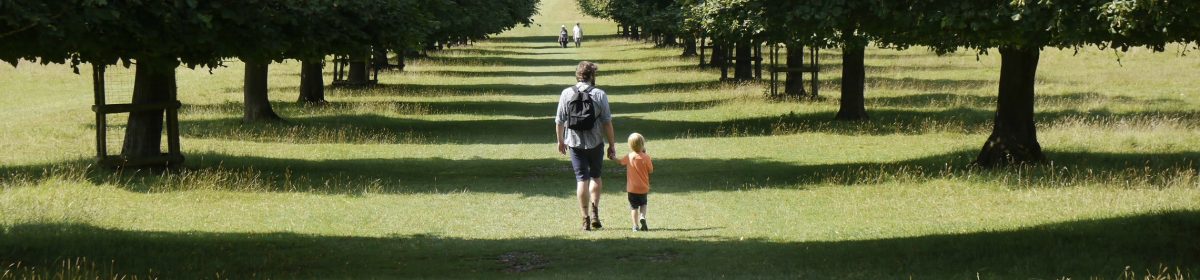
Any guesses where this was taken?

I suppose most of us can remember our first view of a Red Kite – ours was, predictably, whilst driving on the A470 past the Red Kite feeding station in Rhayader. The folks who pioneered the return of this lovely bird deserve all our thanks. Now they’re spreading across the country and we see them regularly in Bath and east of Bristol. On Saturday on our drive up to the Lleyn peninsula we took a back road across the hills beyond Rhayader where we have often seen them in ones and twos, but we were completely taken aback at a flock of maybe fifty birds massing like seagulls behind a plough and swirling noisily in the air. It passed through my mind that either a new – and in my mind unnecessary – feeding station had opened up; or that there was a dead elephant at the very least lying there somewhere. The truth, though announced itself with a horrible putrid smell and explained the excitement. They were gathered over a large waste disposal site which we thought had been closed and capped but which looked and smelt as if the recent rains had flooded and possibly even ruptured the covers. There were pools of water everywhere; a hazard to local watercourses but paradise to a flock of hungry, or more likely greedy scavenging birds.

We look at vultures with distaste and suspicion because of their feeding habits and I wonder how long it will be before a campaign against the Red Kite ‘menace‘ will leak out of the same filthy mess. As we know to our cost in Bath, rats and gulls will take the easiest available food source and if that happens to be human rubbish then that’s what they’ll have. In Bath we even have bilingual signs on the rubbish bins urging tourists to dispose of their leftover takeaways properly – although it seems a bit rich to have them only in English and French. Are the French more inclined to dump their leftovers in the street than other nationalities? – of course not! I suppose in a perfectly ordered ecosystem, the Kites would eschew the rotting burgers and concentrate on eating only rats but in the real world once an ecosystem has been disrupted the consequences simply cannot be predicted. Think of the consequences of introducing myxomatosis into the rabbit population, and of doing the same thing with freeing mink into the wild, releasing grey squirrels and of course allowing Muntjac deer to escape. Farm subsidies, along with the Common Agricultural Policy have skewed the whole food economy in favour of intensive farming for decades and we’re only just beginning to understand at what cost. The unpalatable truth is that in every case the disruption was caused by human intervention. “We have seen the enemy, it is us!” Red Kites prefer to eat carrion – dead flesh and roadkill, and were so efficient at clearing the filth from medieval streets they were protected by law.

Aside from that depressing episode we also passed a number of farms showing “No farmers no food” banners. I can totally understand why farmers with poor quality marginal hill farms are struggling at the moment, but even a quick look at the organisation pushing the campaign would show that it isn’t being funded and promoted by farmers but by rather shadowy and wealthy climate deniers and extreme right pundits who have no interest in the welfare or survival of farms here in Wales. This is one of those covert populist campaigns that spreads utterly daft ideas such as green campaigners are forcing us all to eat insects. What can’t be denied is that the Government is so much in hock to agribusiness and big energy, they’ve totally rolled over to the climate denial lobbyists. This is industrial strength ignorance and stupidity and we know it – and farmers would do well to refuse to have anything to do with it because if the No farmers no food gains traction the only beneficiaries would be the oil and agribusiness industry and the hill farmers will be thrown under a bus.

The underlying theme of the new subsidy scheme is public money for public goods. The Conservative government is now brain dead, bereft of ideas and capable only of pleasuring the biggest landowners. None of the major parties, to my knowledge, has come up with a plausible plan for farmers across the whole spectrum from hill to fen which is regenerative; sustainable and working within a market with its greedy exploitative ethos brought under control, and so if the Labour Party hope to run the show they’ll have to come up with something concrete for farmers to vote for. Any footballer knows that the easiest way to run in a goal is to get the opposition divided.

Aside from the polemic, there are dangers which I know have been recognised by Welsh farmers but which are easily buried under culture war rhetoric. In Wales the more isolated areas are also strongholds for the Welsh language and if the population falls below a certain level, the language will disappear. Why should that worry anyone? It worries me because a language, any language, is a kind of cultural DNA. All of Welsh experience and history is encoded within the language and allowing it to die is a tragedy at the level of burning the library at Alexandria in AD 48, and which was all the more poignant because it was said that the fire was the unforeseen consequence of Julius Caesar’s order to burn the ships in the harbour. But this isn’t a plea for a handful of academics to be given access to the language. It’s the language of RS Thomas’s imagined hill farmer Iago Prytherch, and the language of William Williams of Pantycelyn, and the language of the local butcher and the youngsters who served us our Guinness in the bar today. With a language you can write and say and even think some thoughts that are not encoded in any other tongue. Languages are the glue that holds communities together and introduce the memories and experience of the old to the young . Destroying a whole way of life is a terrible crime – so the plight of these farmers demands our fullest possible attention and the kind of policies that uphold the best and most sustainable practices, supported by clear and reliable subsidies. Demonising farmers as backward looking luddites on the one hand, or sending them off to block motorways on a false prospectus are both dead ends.

Meanwhile, back in the real world

A marvellous piece of lettering by Welsh artist Jonah Jones, seen at an exhibition of his work at Oriel Plas Glyn y Weddw, Llanbedrog in March 2019

The good thing about coming away to this beautiful place to walk, read and try to put together all my thoughts in words is space; sheer space to expand into, free from distractions and chores. The bad thing about it could almost be the same sentence. There’s a point at which the way forward becomes so problematic a kind of paralysis sets in. The remedy, in this instance is to accept that the Jacques Ellul book I’ve been struggling with is not going to help, because its source materials and analysis are now sixty years out of date . Magnetic North moves about by a good bit and trying to find your way to the pole (no pun intended) without the right correction isn’t likely to end happily.

What exactly is the real world anyway? I sometimes wonder, since it seems to be a contested area of knowledge at the moment; but anyway I’ve forsworn any philosophy in this brief post and I’ll talk about the weather in the most descriptive and non blaming way I can manage.

The fierce south westerly gales haven’t given over for days and in the cottage the chimney roars, the vents flap and the occasional sheets of rain hammer at the windows. It’s all very cosy until, as we did this morning, you get a power cut. Yesterday’s photos of the beach at Porth Neigwl missed a couple of shots that would have needed a telephoto lens which in our case we have not got because it’s at the bottom of a bog on Mendip. Apparently there are exceptionally rare mason bees in the dunes there, except I’m not sufficiently experienced as an entomologist to recognise them. But on our way back down the narrow road we spotted around 30 curlew feeding on the marsh – enough to gladden anyone’s heart. When I say this place is a birders’ paradise I’m not exaggerating. Something else worth noting is the light. The good citizens of St Ives in Cornwall like to claim that their light is brighter and more clear than anywhere else on earth. Obviously they would say that because it keeps the artists rolling in; but the light here is equally if not more pure and luminous and it’s so much quieter. The south westerlies rattle the cold fronts across, and each time the rain is followed by glorious movements of intense light that bless the landscape, caressing and intensifying the autumn colours and leaving the artist in us joyfully mystified as to how it could ever be expressed.

Tomorrow morning at the crack of eight o’clock we’re off to Porthmadog to catch the wonderful Welsh Highland Railway up through the Snowdon range to Caernarfon and back. Last time we made the trip in brilliant weather but tomorrow’s forecast is makes grim reading with 20mm rain expected and 50 mph gusts of wind. In normal times you can wander about and get a very good Welsh rarebit from the buffet car but because of covid we’ll be locked into our perspex divided carriages and probably see almost nothing except rain and mist for the whole journey. It’s the last trip if the year so expect it will be crowded with steam train enthusiasts who may not have noticed that we’ll be taken across the hills by a diesel locomotive tomorrow. In the absence of any food from the buffet I’ve ordered a couple of hampers – which each contain a small bottle of prosecco, and so we’ll celebrate the autumn like a couple of budget class swells.

I’m sorry there are so many Welsh sounding names in these posts but Wales is a country with its own precious language. Luckily, Welsh is a completely phonetic language and so once you’ve learned the basics it’s pretty straightforward. The stress usually comes in the penultimate syllable. The only one I haven’t used is the proper name for Snowdon which is Yr Wyddfa which looks unapproachable but sounds like uhr-with-va. Welsh is the queen of languages and I’ve always wanted to learn to speak it properly but haven’t had the chance or anyone to practice with. Anyway it’s a courtesy to the people who cherish their language to be able to ask for directions, sounding as if at least you care.

When remembering is political

“Cofiwch Dryweryn” – remember Tryweryn painted on the wall at the end of a lane that leads to the cottage we’re staying at, and the Free Wales sticker on the adjacent traffic sign.

We’re practically in R S Thomas’s old parish here and he would have hated the souvenir shops, the way the caravan sites have multiplied and the fact that house prices have risen beyond the reach of local people. He sounded as English as I do, but with a much posher accent, the accent of the English ruling classes, which must have been a constant reminder to him that however hard he tried he would never truly be Welsh. He learned the language but could never write poetry in it – not that it stopped him haranguing the local butcher for writing his labels in English. He hated tourists with equal ferocity and apparently would drive his Morris 1000 traveller around the parish as slowly as possible, creating traffic jams of frustrated tourists and locals alike. He flirted with the Free Wales Army during their campaign of burning down holiday cottages although there’s no evidence he took part. He was a fierce opponent of the proposed nuclear power station just up the road in Edern and he wasn’t even popular with many of his parishioners. I guess he just needed to be that much more Welsh than anybody else. Peter Firth, who worked for the BBC and later became Bishop of Malmesbury was a devoted fan of RS’s poetry and he once told me that while he was making a documentary about the great poet they scoured the parish to find someone who would talk about him. Eventually they found a man willing to talk and after buying him beers all evening they settled down to interview him. The first question – ‘did you know RS Thomas’. ‘Oh yes I knew him,’ came the reply – ‘miserable bugger‘.

I met RS once at a reading in South Wales and I’m bound to say he was delightful, with a terribly dry sense of humour but I can see how he might have antagonised those who would have preferred the usual parody of a priest. I was told by the organiser that he once completely captivated a huge audience of schoolchildren in Cardiff as he talked about his work which was, quite rightly, part of their syllabus.

We’re in one of the last strongholds of the Welsh language here on Lleyn. Everybody is bilingual, of course, and they can spot a tourist at 100 paces so I know before I open my mouth they’ve mentally switched to English. So how do I feel about the less than welcoming sign at the end of the lane? It’s famous in mid Wales, reflecting the anger at the way a whole community was flooded so that Liverpool could increase its water supply. That sense of grievance lives on in a thousand Welsh towns stripped of their natural assets; exploited and then abandoned by the English, and is still palpable, but there’s not much mileage in saying I know how you feel, however sympathetic I might be.

Every night we watch the local television news and the inescapable conclusion is that by and large the quality of political discourse and leadership here, shows up the English parliament as a bunch of clowns. If I was Welsh; hearing as we did today that the the Tory Government intends to take back control of road planning from the Welsh Assembly, in order to build its filthy relief motorway across the Newport levels, obliterating three SSSI’s and nature reserves against the will of the Welsh Assembly, then I’d be thinking hard about independence.

No, I think there’s no way of escaping the sense of being the object of suspicion. Many years ago Madame and me were in a bar way down in Southern Ireland – so far South that we were warned it would be dangerous for us to visit one of the local towns – it was at the height of ‘the troubles’. We were enjoying a drink when a group of IRA fundraisers came in and entertained the locals with violently anti-English songs. We sat in complete silence, not daring to utter a syllable we were so truly petrified. Next day we went back and the landlady apologised profusely for what had happened. I said – ‘well we are English’ – as if to suggest we had it coming. ‘Yes I know’ she said, ‘but you’re tourists!’.

And there’s the paradox in a nutshell – what happens when a desperately needed tourist becomes an incomer? We slide effortlessly between the loved tourist and the loathed incomer, and in this drift into nationalism I no longer know what ‘British’ means any more; it has no content and so it’s unusable. ‘English’ is too tainted by the extreme right, and the only term that embraces the fullness of my identity is ‘European’. Wales has shared many ancient trading links with the continent since the Bronze Age and I constantly notice how many Welsh words are rooted in ancient Greek – as Gerry Angel, my old Greek teacher said – there are only two languages in the world worth learning and the better of them is Welsh!

Yesterday we had a brief conversation with a local family who were walking on the clifftop, and during the course of it one of them said “we desperately need tourists here”. Perhaps that’s it. We’re needed here because the economy is so dependent on us, and nobody’s stopping us from loving the country as passionately as we do, but that doesn’t bestow any right of possession on us. We are here on exactly the same terms as we are everywhere else on the earth – as strangers and pilgrims and it behoves us to behave modestly and as good guests.

This ancient culture, rooted in the language of farming, seafaring and fishing is so fragile it could easily disappear forever, just at the very moment in history when it has most to teach us if we are ever going to learn how to live sustainably.