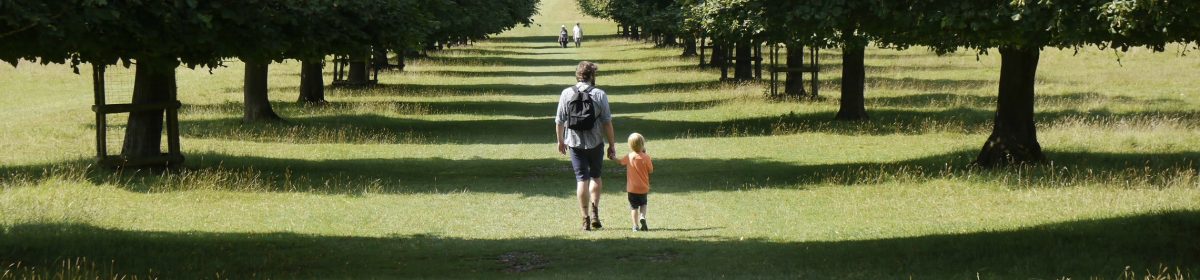


However there was a mild overnight frost and we shall have to hope that they survived. They’re pretty well protected from any cold wind but not fleeced. Yesterday was such a beautiful day that you could forget that this is still early spring and quite likely to throw a nasty surprise. As ever we scan the weather forecast and try to second guess what will happen on our patch but forecasts deal in the generalities of towns and cities not sites and plots. I noticed on a friend’s facebook page that someone had commented that there was no point in wasting time teaching children to grow things because they could learn gardening in half a day. I couldn’t possibly comment.
 Our allotment site is served by cattle troughs which are turned off in October and on again in April. That, of course, means that there’s a period – especially in early spring – where everyone is sowing and nurturing young plants, but there’s no water supply unless you’ve got some storage. For several days we’ve seen allotmenteers wandering around the site, watering cans in hand, looking for an inch of water at the bottom of a trough. I’ve never been so glad that we installed some storage last winter, and so at the beginning of spring we had 1000 litres of rainwater in the butts. We’ve moved into a period of high atmospheric pressure without any rain just at the time when the growing plants need it most. You wouldn’t believe the pleasure that turning a tap and filling a can can bring. This wasn’t so much for watering, the earth is hardly parched at this time of year and it’s only the plants under cover that need it. Yesterday I wanted to spray the growing plants with dilute seaweed foliar feed. Applying it to the leaves does seem to work but it involves getting out the big sprayer which, being bright yellow, is liable to send out misleading signals to other organic gardeners. On the other hand, allowing people to imagine you’re using all manner of toxic chemicals might discourage them from grazing.
Back at the Potwell Inn Madame and me had one of our Big Talks which always involves a bit too much wine and no time or energy for cooking. I love our Big Talks – very therapeutic. So supper was one of those storecupboard pot luck meals, rendered even more interesting by the fact that I retrieved an unlabelled box from the freezer and had to defrost it to see what was inside. It was the simplest of tomato sauces made during the glut last summer and it was absolutely lovely. Linguini + tomato sauce + a bit of Parmesan and, for me a few anchovies scraped from the bottom of a jar in the fridge. It was an unbelievably good way to anticipate this coming season.
 But there was no basil yet. We’ve got a succession growing well in pots, and just as an experiment I took one of the two varieties and stuck a pot in the propagator with the young chillies. Here’s a side-by-side of the difference between the two pots. It can’t be temperature making all the difference because the kitchen stays at a steady 20C, and that’s the setting in the propagator. So it must be mainly down to the overhead UV light.
Finally, a photo of the chillies which are almost ready for their big pots so we can get the tomatoes going. The stowaway basil plant is on the left at the back. These get a foliar seaweed spray once a week and I’m very happy with their progress. The biggest disappointment was that not a single Bhut Jalokia (the 1000000 Scoville unit chilli) germinated. Next season then!

 But we don’t live in an ideal world – even at the Potwell Inn, and so even photos like this are compromised by the fact that the last touch of sun from a beautiful day was just disappearing behnd the trees. On the other hand, when we went up in the morning to plant the last few potatoes, the sun was reaching the whole of the plot after its winter sleep. Roughly speaking it reaches all parts directly between the two equinoxes, which means that for the whole of the growing season we’re no worse off for sun than our neighbours at the top of the slope and much better protected from the wind all year round. Prospective allotmenteers often reject the plots at the bottom of the site, especially if they come in mid winter with the ground frozen hard, and it’s worth remembering that it can take several seasons to get the measure of any piece of ground. I’m quite sure that real allotments – as opposed to the imaginary variety – all have their different challenges, and waiting for the perfect plot to come along is a recipe for never doing any gardening. Half the fun is knowing your patch of earth and working with it to produce some food. There’s an issue of mindset here – piece of ground isn’t a blank canvas, it’s a complex ecosystem that you can only join on its own terms. The saddest thing is when new allotmeteers take on a plot, blitz in in spring and sow or plant anything and everything only to see the weeds reassert themselves and the crops fail in the sumer.

 This is one of those days that – for me at least – seem to carry a weight of memories which almost demand a moment or two of reflection. Traditionally potato planting took place on Good Friday, but there are a couple of flaws in that association. Firstly we now live in a determinedly post-Christian society when the majority of people have little idea of when Good Friday falls. The second problem is that the reason most people don’t know exactly when it is, is because – being tied to the moon’s phases – it wanders around all over the calendar. There are some early Easters when it would be inviting disaster to plant on Good Friday and others when you might miss a couple of weeks of delicious new potatoes. So the last week in March – in our part of the world – seems about right. The young leaves won’t be appearing above ground until the last frost has passed – although for us last year there was a late frost on May 3rd, and we lost all the runner beans, but the spuds were fine. Runner beans, for US readers – are a bit of a British obsession.
 So is potato planting the horticultural equivalent? Does all the sowing that’s been going on in propagators and on windowsills for weeks, demand a formal marking of the new season? and doesn’t potato planting – occasionally associated with a Christian festival but more likely with a long weekend bank holiday – doesn’t that make the planting of potatoes the ideal candidate? Compared with sowing a row of seeds, planting potatoes is a much bigger deal. It takes longer, gives you backache and feels especially significant. Needless to say I didn’t have enough space – entirely my own fault. The 2 Kg of left over seed potatoes correlated exactly with the 2Kg of Arran Pilot seed potatos that I bought on impulse. What’s the point of all that planing if even I don’t follow it?
  So tomorrow there will be a discussion about which bed to raid. But spring is here, the equinox is past and the days are longer and warmer. Our autumn sown onions, which had been looking a bit sorry for themselves, have suddenly perked up and thrust upwards. The garlic, similarly, is looking well and the elephant garlic in particular looks like a stand of leeks (to which they’re related).

 Aparently tonight’s full moon is called – who knows where?- a worm moon. It’s also a super moon, which is to say it’s very close to the earth and so appears very large. Possibly it’s a worm moon because this is the time of year when the worms come up from their hidey holes deep in the earth and make their presence felt on the surface. But today there wasn’t much time for gardening or anything else because both Madame and me were at the local hospital – Madame overnight and me for some tests – neither of us needing overmuch concern.

 It’s not particularly difficult to compost a bicycle, but there are certain special compost heap designs that favour the process. Obviously this can be a very slow form of composting and so it’s important not to rush the process since partially composted bicycles can make the formation of a fine tilth for seed sowing very difficult. The easy ingress of air and rainwater is known to favour rusting, and of course the addition of iron to the soil is of some benefit to maintaining colour in hydrangeas. The impact of aluminium and rubber is less well, known but leather saddles are favoured by some species of worm.


 Back down then to the bus station via Christmas Steps where we stopped for me to photograph a building that my grandfather came out of retirement to work on when he was 72. He was what’s known as a ‘generic builder’ – a carpenter by trade, for whom timber framed buildings were familiar from decades of experience. At the base there used to be a very good chippie but it’s gone now. Bristol was our ‘home city’ for many decades but now it’s easier to catch a bus than to negotiate its ever more sclerotic traffic system. When we got home I found a box of Jiffy 7 modules on top of the piano so while I cooked, Madame sowed seeds. Tomorrow we’ll be marooned in the flat for most of the day by the Bath Half Marathon, but if we defy the stewards and run across the road we might be able to get to the allotment for a few hours.
 This photo of our first real garden was taken in 1970. We were students at Bath Academy of Art and we rented this cottage on a farm in Corsham, Wiltshire for two and a half years. The art school was a twenty minute walk across the fields. You can just see through the doorway to the back garden where we kept a goat. We had an outside toilet, a very deep well which must once have been the water supply and a gigantic water cistern which we discovered by accident when we were ploughing there and the plough caught on a large metal ring which, when we levered the stone up led to a two chamber storage cistern big enough to swim around. The connection betwen the two chambers involved diving through a small hole – I was thin in those days!
 Here’s a photo I took when we stayed up in the hills on Cap Corse at the northern end of Corsica a few years ago. I suddenly thought of it during the night as I listened to the relentless sound of the wind outside. Of course, here in the South West we’re used to winds, but the Atlantic fronts usually rattle through for a few hours or maybe a day or two. However we’ve had this particular group of storms for two weeks now and the experience on the ground – as opposed to the weather charts – suggests that this is a bit of an outlier.