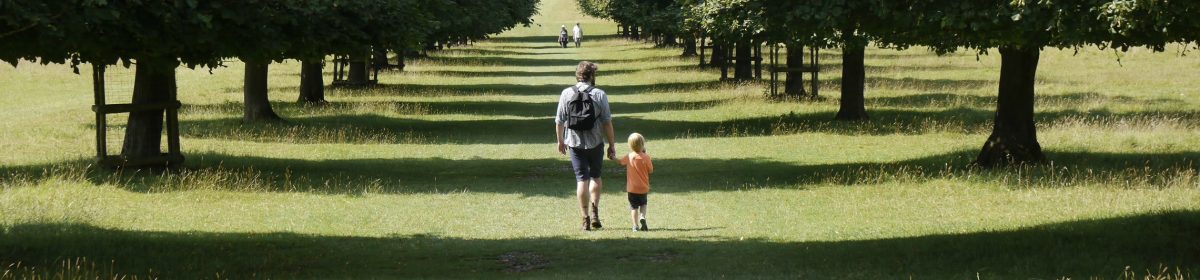
 If you detect a certain look of distaste on Madame’s face, it’s just what anyone might look like when they’ve just heard something that compels a rearrangement of the neural networks. How many of us go to the Lost Gardens of Heligan in search of Downton Abbey -you know, six residents lovely frocks and fifty servants – or perhaps in search of a lost time of horticultural innocence. I’m so exercised thinking about the poisons that we’re pouring on to the earth in the 21st century, that it really never occurred to me to enquire too deeply into what they were putting on it in the early 1900’s. So – meet what our guide today claimed was known by the gardeners as “the widowmaker’. It’s an ordinary hand operated spray, through which the gardeners dispensed weedkiller and insecticide. Substances like sea salts, waste manufacturing products, and oils were used as weed killers. In the late 19th century, additional materials such as carbon disulfide, borax, pyridine and other coal-tar derivatives, mercury, strychnine and arsenic trioxide were used, not to mention nicotine of course. So let’s not get too breathlessly sentimental about late 19th and early 20th century horticulture it was as much a product of the industrial revolution as any other aspect of life.
 However, a century later – now we can see what havoc industrialised agriculture can wreak on the countryside and its ecology – anything before 1945 is going to look better than what we’ve got now. Time for a cheerful picture. Here we’re looking at about half of just one of several gardens dedicated to growing fruit and vegetables at Heligan and you can see some rather vast rows of shallots. This is the bed we photographed in the autumn under four or five inches of seaweed straight off the beach. We had a conversation with the head gardener and she was very reassuring, so we mulched our asparagus bed with a car-load of seaweed from North Wales and, just as she said, the seaweed has almost disapeared and we have a very healthy growth of second year asparagus. We’ve taken and eaten just a few spears but the bed will be fed and left alone for the rest of the season, just keeping an eye out for asparagus beetle which decimated our neighbours’ crops last season. Allotmenteers face the same challenges as the old gardeners of Heligan in controlling pests and we’ve turned our backs on synthetic chemicals, but we did have to use natural pyrethrum twice last year, or face the destruction of our plants. It was applied early in the morning when the impact of any drift on passing insects would be minimised, and the asparagus itself was not in flower. We try not to let the perfect drive out the best. Short of a major infestation you can often pick enough beetles off plants to set them back.
It was here too, at Heligan last year, that we first saw a hotbed in action and again we were sufficiently inspired to build a small one ourselves and in spite of a few mistakes on my part (like getting too little straw in the manure) it’s providing us with salad onions, beetroot, radish and lettuce which appear to love their warm environment.


We’re staying on the campsite adjoining the gardens. I’ve never mentioned the campervan before. We call it “Polly” which, confusingly refers to Alfred Polly the hero of the Potwell Inn. On the right our inflatable kayak that gets us to some epic birdwatching spots on local canals.
Apart from visiting the gardens, as always when we’re in the van I’ve been doing some serious reading. This time it’s been Isabella Tree’s book “Wilding”. It’s a brilliant book that raises all manner of questions and ideas for us. My head is spinning with challenges, not least because instinctively I’m a tidiness freak (only) when it comes to the allotment. I have to remind myself that my idea of rubbish could often be better described as habitat. Once again, I’m trying to bridge the gap between what can be done on many hundreds of acres and our 250 square metres, and I know there is a link, but we just haven’t worked it out yet. I remember one of those annoying management catchphrases – “culture eats strategy for breakfast”, and it’s true. Reading Tree’s book, I understand perfectly what so many of the objectors were getting so exercised about. One decription of culture that really impressed its usefulness on me was “the way we do things round here”. Changing the way we do things involves for most of us – especially for me – the sense of overriding long held prejudices and instincts. But ‘bring it on’ I say – for the first time in years I’m beginning to feel optimistic.
 This photo is pretty out of date because, in the intervening period since it was taken, the chillies have been removed from the heated propagator and the basil put back in for a bit of a holiday in the sun which resulted in them growing rapidly. There are a number of different varieties of basil and this is the first year we’ve grown anything except the normal “Classico” type we’re used to buying in the shops. Franci seeds have a pretty wide selection for the UK market but I’m sure there are many other suppliers, and this year we added their ‘Basil bolloso napoletano’ to our list. It’s impossible to compare the performance of the two types because we treated them rather differently. The fact is, any basil seems to love heat and light.
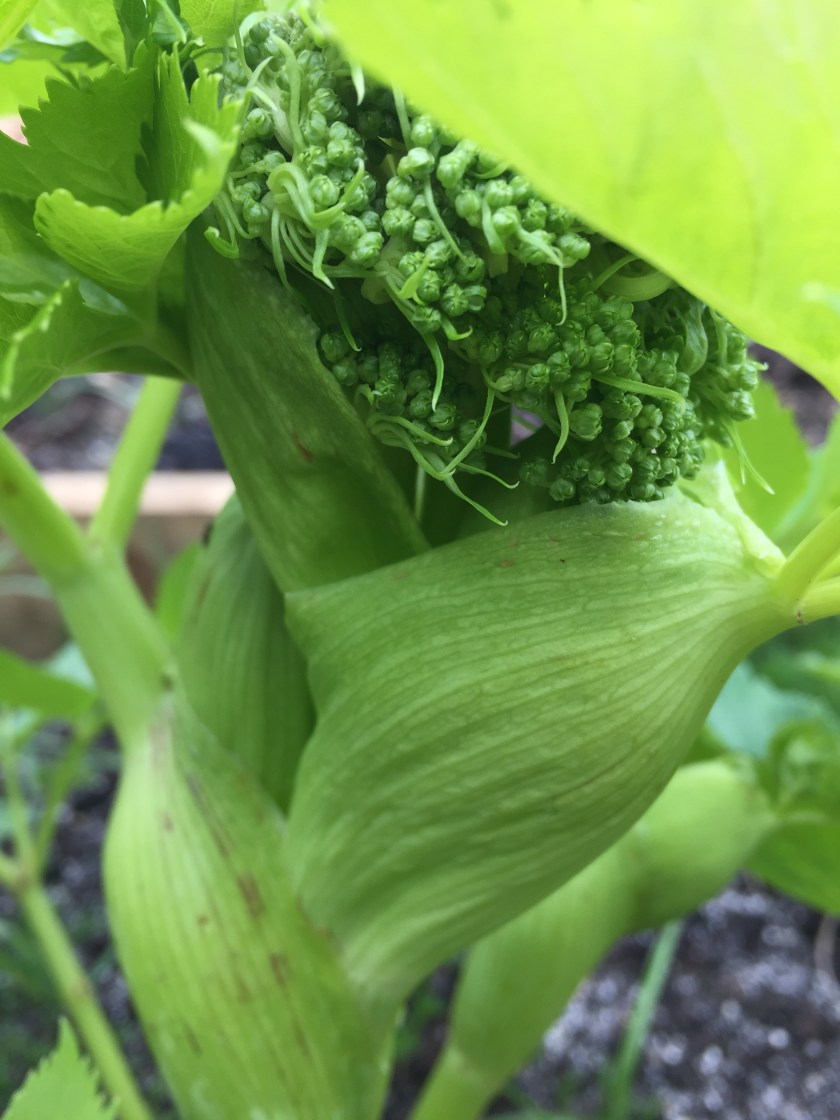 I don’t care for ‘Misery Lit’ or – (sorry) – blogs that describe ‘battles against’ this or that horrible disease. I’m absolutely not prepared for going down that route anytime soon, and that’s that. However – and imagine me saying that ‘however’ slowly, stressing all three syllables and ending in an upspeak question mark …. Having had a bit of hand-to-hand combat wth the idea of mortality these last couple of months, I thought that getting all positive test results would pick me up and set me down exactly where I started. It didn’t!


 Being old often means being invisible. You get used to being walked off the pavement by much younger people so absorbed in their mobile phones and their busy lives that you feel you’re an obstacle. And yet yesterday I went into a local bookshop and was struck forcibly by the fact that Isabella Tree’s book “Wilding” was selling by the dozen to those selfsame people. ‘Wonderful’, I thought, ‘more allies’, and yet you couldn’t blame them for thinking that we baby boomers are at least a part of the problem, because it happened during our years of vitality. There was a vegan food fair at Green Park station yesterday and although I was a bit puzzled by ‘vegan fish and chips’ and vegan hot dogs’, I refuse to be scornful and dismissive because long after we’ve left the scene, these beautiful, idealistic young people will have their chance to roll back the damage of industrial food production. Meanwhile the best thing we can do is to supplement the TV natural history documentaries with real hands-on experience of the wild. Nature’s not a safari park, and we learn more about nature by squeezing a mint leaf from a plant we’ve grown on the windowsill than watching any number of films – and that mention of mint leads me to think about peas. The douce Provence peas we sowed in the autumn are coming into flower even though they’re barely six inches tall.

 And very nice it was too. Madame and me had gone for one of those most dangerous of things – a wander around town, passing by the lovely veg stall outside M & S where prices all seem to be negotiable. “Come on” shouts the barker with a voice so loud you can hear it across town. “Weeee-ve got rainy day reductions on fruit”……. “Weeee’ve got purple sprouting – which is what we call broccoli when it’s purple!” – You get the picture, he’s a comic with a dry sense of humour but for £10 you can fill two carrier bags with fresh veg. Six people working flat out on the stall. Our perambulation took us through several favourite shops and we arrived back at the Potwell Inn HQ with a bag of mussels, a bottle of Pecorino and a loaf of sourdough bread because I was feeling too lazy to start a loaf yesterday and anyway the oven door is falling off and creaks dreadfully when you open and close it. More expensive repairs I fear.


 This is the time of year when there’s a sudden rush of new allotmenteers on to the site. Some are experienced gardeners and some absolute beginners. With the newcomers it pays to be circumspect because we all come to the ground with a set of expectations, and it’s no use blundering around or bashing them on the head with your pet enthusiasms which – in my case at least – were first formed in a very different era. My gardening heros were neighbours like Mr King, Mr Monks; my grandfather and the Mr Digwell cartoons in the Daily Mirror. The first book on gardening we bought together was an RHS publication called “The Vegetable Garden Displayed” in which – apart from the gardeners who all appeared to be from BBC Central Casting – vegetables were grown in straight lines surrounded by acres of weed free space. In fact, space never seemed to be a problem and allotments in monochrome photos and of gardens too, stretched into the blue mists of aerial perspective. A small garden was something less than an acre without a permanent staff. I wish I was joking …


 So we’ve had a lovely week, the water troughs have been turned on, and everything seems to be growing merrily but one experiment seems to have reached a conclusion. The carrot on the left was part of an experiment to test two types of compost, a new carrot variety, and to see if the carrot roots would penetrate a soil pan. Just to take the last test first, it’s clear that this carrot at least has fattened up in the layer of compost but hasn’t penetrated the soil pan at all. I guess the root just wasn’t strong enough – so point taken (unintentional pun) – and this isn’t a refutation of the no-dig method at all, but it doesn’t work miracles. The soil structure will still need easing and improving before ‘no-dig’ will work properly, and yes I’m well aware of the dangers of confirmation bias!


