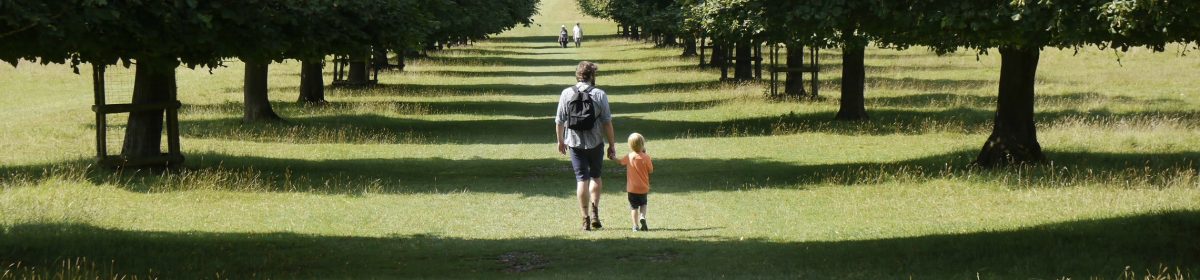

Muckyannydinny Lane was the name we used, as children, for a narrow, wet, rubbish filled and overgrown short cut from “The Lane” to halfway down Seymour Road. It was such an uninspiring dump that, so far as I know, no-one ever actually used it except couples who in those far off days needed somewhere out of sight to consummate their relationships. Consequently it became imbued with an almost erotic overtone for me as a child – which may or may not explain a great deal!
Moving rapidly on, I think it’s time to remind everyone that the Potwell Inn is not a real place but a fictional creation of H G Wells whose leading character Alfred Polly had more influence on me growing up than a whole garrison of teachers freshly returned from the 2nd World War, many of them suffering from the same sorts of depressions and mental disturbances that afflicted my Dad. Mr Polly, in the course of the novel, burns down half the town in which he lives unhappily, by setting fire to his stairs while attempting to commit suicide. He becomes an inadvertent hero by rescuing a trapped elderly lady and in the ensuing chaos slips away to search for something better – which turns out to be the Potwell Inn where he only has to get rid of the psychopathic Uncle Jim in order to find his paradise. Uncle Jim, being vanquished in an act of bungled heroism quite as daft as the suicide bid, washes up dead some time later wearing Polly’s jacket, therefore allowing the hero to be declared dead and consequently free to pursue an idyllic life with the plump landlady of the establishment. So not quite the story of my life but tremendously resonant for a teenager living in a house haunted by PTSD, falling for Madame who, though she was as slender as a whippet had plenty of crap to leave behind as well.
So after those two oxbows and the confluence of several small streams in the great journey of life, I want to say that yesterday was something of a disappointment. “What you want and what you’ll get is two different things” my Granny (who could start a fight in an empty room) would often say. I was missing the campervan, missing the coastal path walks, missing the botanising and feeling mightily grumpy about it. Madame, noticing the dark cloud moored over my head, suggested a walk up to Prior Park to look at the plants. Absolute bomber direct hit! that was exactly what I needed to do. And so all fired up I downloaded a new plant recording app for the phone, packed pocket magnifier, notebook, copy of Rose and even a six inch steel ruler and we set out.
Setting out involved passing the astroturfed bankside, but I did notice one or two dodgy looking plants that might have stepped right over from Muckyannydinny Lane. Prior Park has become a bit of a building site because they’re repairing one of the dams that’s been tunnelled into by marauding Signal Crayfish. The new app refused to work and after my third attempt to log in I had a huffy message to say I’d been barred and needed to email the management. The Cafe was shut, and there were nothing but weeds and Cabbage Whites to look at and so we turned back and walked home again.
As we walked back with my dudgeon level set to nine, I began to think a bit more rationally about what was going on. Not all of the plants along the bankside were Bohemian interlopers. There were some that looked like – well, proper weeds which had emerged from the builders rubble and the subsoil, briefly resurrected from their tarmac tombs. There’s a certain muscularity about these plants. Nature abhors a vacuum almost as much as it abhors architects’ fancy wildflower mix, and the bankside has become a grudge match between the flowers introduced for their attractive colours, and the native weeds. Milwall versus the local croquet club. Guess which was winning?
 And so a new project began to form in my mind. Obviously I’d really love to spend my life in places of outstanding wildness and beauty, recording stunningly lovely and rare orchids. However I actually live right next to the Bath to Bristol Cyclepath which is much loved by commuters on foot, runners, lycra louts on their handbuilt racing bikes, drunks, homeless people and drug dealers who rather appreciate the opportunity of a swift exit if the police arrive. That’s why all our local dealers ride bikes, because they’re over the river and away before the police can do a thirteen point turn and chase them. The litter bins have proved particularly useful for hiding stashes of drugs by taping them up under the lid, like a kind of unofficial click and collect service.
The path is a unique environment all of its own. There’s the river bank on one side, parks, houses and factory buildings on the other. It’s much altered and constantly dug up for building work and it enjoys heavy traffic most of the day. If dogs’ turds and discarded cans and bottles contribute any nourishment it must be highly fertile. Graffiti add a certain edginess to the flat surfaces, but in real life, notwithstanding the fact that the Council like to boast about it as a great achievment for the environmentalists, it’s a frog and no amount of kissing is going to make it into a prince.
But it’s my frog and I like it. This morning I was up at the crack of ten o’clock to take some photos. I’ve already ID’d three native plants I’ve never seen before and I can feel a big list coming on. Prickly Lettuce and Weld are hardly going to draw in the twitchers, but as I’ve said so often – if you don’t know that it’s there you won’t know when it’s gone. One day, I hope, the Natural History of Muckyannydinny Lane will stand with Gilbert White’s Natural History of Selborne. Meanwhile a few photos to whet the appetite.


 AND – I’ve also been trying to sort out my study which, as I’ve already written, involves getting rid of several hundred books that I’d been clinging to in case I forgot who I was. Consequently the twin planets of the allotment and the study have swung into malevolent alignment. That said, though, the business of handing over boxes of books at the Oxfam shop and then rearranging the survivors in proper order on the shelves has had a very happy effect. I hadn’t realised how reproachful a shelf of unread books can be, and if – like me – you’re an olympian self-doubter, the constant look of unread-ness relating to a past enthusiasm can sap the will dreadfully. I’m sure this is the blindingly obvious core of the decluttering movement – old stuff ties you down, keeps you looking backwards. I’ve had persistent images of my (suitably sad) children taking the exact same books to the same Oxfam shop after my death and, frankly, I’d rather spare them the pain and reward myself with the sense of release that comes from sitting at my desk and being surrounded by books I use constantly and love.


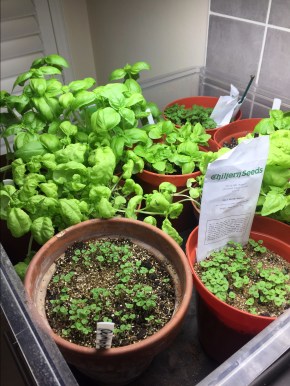 Summer is as much a smell as anything more meteorological. Yesterday evening we were sitting in the living room when Madame said, “I can smell chewing gum”. I wrinkled my nose up in mimed solidarity and it was true but it wasn’t chewing gum it was cats’ pee. It was the smell of summer. There were the elderflowers infusing on the stove, and several different kinds of basil gently sunning itself in the propagator, along with a sink full of fresh spinach and a salad spinner loaded with newly picked lettuce. Oh yes summer is good.


 The water flowing into this old wash boiler comes straight out of the hill and serves as the water supply for the house. It’s clear, pure and tastes a lot better than the stuff that comes out of most taps. It also happens that the spring makes the most wonderfully relaxing sound; I could sit and listen to it all day. I’ve strip washed in it in the past, when the possibility of being surprised by a passer by was almost infinitesimally small. As a precaution, 30 odd years ago, we used to boil the water before drinking it. Over the years it’s proved completely safe and so nowadays no-one bothers.
  We were first brought to this place all those years ago, when it was a holiday cottage and painting studio – it’s pretty inaccessible, although the faciliies are much improved from the days when the stream, when it was in spate, would flow into the cottage under the living room wall and out again under the door. Now it’s in full occupation as a smallholding. Hill farming doesn’t pay any more and so its full-time flock of sheep and hens, and a part time herd of fattening pigs are subsidised by two incomes from work outside the holding – this is not a place for the faint-hearted. More than 250 metres higher than our allotment, the spring sowings need to be best part of a month later, and the winters are much fiercer.


 bafflingly confusing and often invisible creatures and sends reports in to the County Recorder because knowing what you’ve got is the essential first step in knowing whether you’re in the process of losing it. These photos, taken last year show Madame and Kate unpacking the trap and sorting the moths into jars so they could be identified and released again. We were absolutely amazed at the diversity and sheer beauty of some creatures we’d never seen before. Where there are only relatively few (between 50 and 70 including migrant) butterfly species, the moths make up for it with over 2500 species including a whole set of micromoths which are tiny and brown and need expertise way beyond my paygrade. As always, the world gets more complicated the closer and more carefully you look.


 I’m always on the lookout for simple ways of making this blog a bit more interactive without compromising its security, and so for the past 24 hours I’ve been beating my head against a wall of techie talk and failing to get a contact form to work. If, by any chance you used the form to contact me during any of its iterations since yesterday evening, then I’m sorry but your message is out there in limbo.
 Back at the Potwell Inn we too have deceased window boxes, hence the trip to the garden centre, and the generally decrepit look outside the Gulag. Dead daffodils don’t have the same attraction as their younger selves. Inside, on the other hand, is a different matter. It looks like the morning after a student party but the mess comprises hundreds of plants in different stages of development, and unsteady piles of garden reference books – far too many of both. The kitchen is all but unuseable except for picking the supply of basil and brewing tea.
  The simplest meal involves a tremendous amount of moving – gravel trays, root trainers and any receptacle that can be pressed into service cover the table and much of the floor. This period is always a great boon to the freezer which needs emptying in the next couple of months ready to store fresh produce. Truth to tell however, there’s only so much chard, broccoli and frozen borlotti beans a person can cheerfully consume – even in a good cause – and I found myself looking lustfully at a ready meal in the supermarket today.
 So today at the allotment I extracted the first victim from a trap with a tinge of sadness mitigated by the knowledge that this one at least wouldn’t be peeing on our lettuces. Elsewhere, with the help of a decent amount of rain, the potatoes have roared ahead. It is a true conundrum, the way that however hard we water, a couple of hours of rain brings on the allotment far better. What is the magic ingredient in rainwater that trumps the expensively processed stuff that comes out of the tap? Or is it precisely the expensive chlorine enriched processing that holds tapwater back from giving our plants what they really need? Yesterday I planted some companionable nasturiums amongst the apples. They’d been languishing in a half tray in the cold frame but had never thrived. I transplanted them with no great hope of success but the alternative was to throw them away. This afternoon we took another look and an unbelievable transformation had taken place. In fact everything in the fruit cage looked as if it had been given a dose of steroids during the night. The strawberries had drawn up to their full height and were seeming to invite me to ‘step outside’ if I even mentioned the possibility of straw to hold their fruit above the ground. The nasturtiums had picked up so much I wondered whether we’d be spending the rest of the summer getting them under control. Plants have this way of talking to us – if only we’d listen. Perhaps that’s all that ‘green fingers’ amounts to, the capacity to listen to what they’re saying.


 I don’t care for ‘Misery Lit’ or – (sorry) – blogs that describe ‘battles against’ this or that horrible disease. I’m absolutely not prepared for going down that route anytime soon, and that’s that. However – and imagine me saying that ‘however’ slowly, stressing all three syllables and ending in an upspeak question mark …. Having had a bit of hand-to-hand combat wth the idea of mortality these last couple of months, I thought that getting all positive test results would pick me up and set me down exactly where I started. It didn’t!


 Being old often means being invisible. You get used to being walked off the pavement by much younger people so absorbed in their mobile phones and their busy lives that you feel you’re an obstacle. And yet yesterday I went into a local bookshop and was struck forcibly by the fact that Isabella Tree’s book “Wilding” was selling by the dozen to those selfsame people. ‘Wonderful’, I thought, ‘more allies’, and yet you couldn’t blame them for thinking that we baby boomers are at least a part of the problem, because it happened during our years of vitality. There was a vegan food fair at Green Park station yesterday and although I was a bit puzzled by ‘vegan fish and chips’ and vegan hot dogs’, I refuse to be scornful and dismissive because long after we’ve left the scene, these beautiful, idealistic young people will have their chance to roll back the damage of industrial food production. Meanwhile the best thing we can do is to supplement the TV natural history documentaries with real hands-on experience of the wild. Nature’s not a safari park, and we learn more about nature by squeezing a mint leaf from a plant we’ve grown on the windowsill than watching any number of films – and that mention of mint leads me to think about peas. The douce Provence peas we sowed in the autumn are coming into flower even though they’re barely six inches tall.