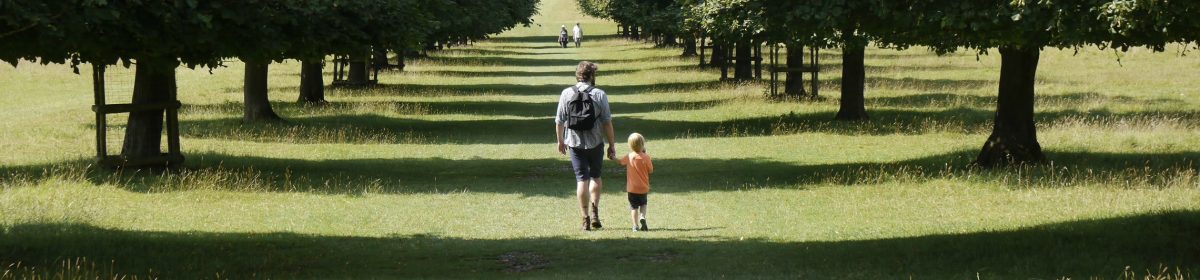
 And very nice it was too. Madame and me had gone for one of those most dangerous of things – a wander around town, passing by the lovely veg stall outside M & S where prices all seem to be negotiable. “Come on” shouts the barker with a voice so loud you can hear it across town. “Weeee-ve got rainy day reductions on fruit”……. “Weeee’ve got purple sprouting – which is what we call broccoli when it’s purple!” – You get the picture, he’s a comic with a dry sense of humour but for £10 you can fill two carrier bags with fresh veg. Six people working flat out on the stall. Our perambulation took us through several favourite shops and we arrived back at the Potwell Inn HQ with a bag of mussels, a bottle of Pecorino and a loaf of sourdough bread because I was feeling too lazy to start a loaf yesterday and anyway the oven door is falling off and creaks dreadfully when you open and close it. More expensive repairs I fear.
As for mussels, as always keep it simple. Today I fried some finely chopped bacon before adding chopped shallots but often I leave the bacon out. When everything is softened I chuck in a glass or perhaps two of white wine and a handful of chopped parsley with the mussels, slam the lid on and cook it hard for a couple of minutes until the mussels are all open. Voila – job done. Eat the mussels with your fingers then drink the rich stock with a slice of decent bread and finish the bottle of wine while you set the world to rights.
Today we were talking about how to join up the local with the global. It’s a constant challenge to many of us to see how our tiny efforts at the local level will ever make the kind of difference we need to head off the twin disasters of ecological degradation and climate change. Does our tiny effort at composting our kitchen waste ever amount to anything more than virtue signalling? Does our individual refusal to use chemicals on the allotment ever make more than a nanopercentage of the thousands of tons being poured on the earth by agribusiness? And at a time when the government has its eyes firmly fixed on retaining the patronage of the few, who’ll look after the rest of us? Or – to put it another way – have all these years of campaigning and lobbying for ‘green issues’ been wasted?
Oddly enough, I think, this time of political turmoil has had some unintended consequences which could lead to real change. It’s rapidly dawning on a generation of the kind of people who might never previously have counted themselves as ‘politically active’ that they’ve been cheated, and they’re getting cross about it – I suppose I’m one of them. Let me give an example. This year you’ll know, if you’re been on board for a while, I built a manure-fired hot bed. It works, it’s been an education. Then the other day I discovered that some manure is contaminated with an insecticide . Environmentalists have once again been thwarted by the use of exemptions following lobbying by the powerful agrochemical industry. The chemical is called Dimilin and it’s used to control insect infestation in intensive rearing units – themselves a morally dubious operation. And here’s the bit that got me spitting fire – it’s been listed as a food additive, even though it’s clearly a systemic insecticide. So conceivably, the manure that we allotmenteers have been applying to our precious soil, has been contaminated with a systemic insecticide which is persistent enough to pollute soil and run-off water and, worse still, my be contributing to the disastrous decline in insects. Whose brilliant idea was that? We thought that neonicotinoids had been totally banned, but it turned out that they’re still in use for some crops. It’s also emerged that many thousands of protected wild birds have been slaughtered through the liberal use of exemptions provided by Natural England to landowners, and these weren’t all pigeons and seagulls – the linked article quotes “at least 40 species, including the skylark, blackbird, great tit, bullfinch, robin, wren, red kite, moorhen, mute swan, kestrel, peregrine falcon and golden plover.”
My question is – how many other pieces of hard fought-for environmental legislation are being quietly undermined and made mockery of by powerful interests who know how to use their financial muscle and connections?
“Think global and act local” is a good slogan, but I’m much preoccupied with the interaction between the two. Yesterday this chain of thought was provoked by a new green initiative called Natural Climate Solutions and fronted up by George Monbiot among others. Most of the initiatives proposed there are on a large scale, not the kind of thing you can do in a single garden or allotment. So there’s the conundrum in a nutshell – think globally because some solutions to the unfolding crisis can only be addressed at the larger political level. But acting locally needs to be linked to it in a way that we know will make more difference than helping us to feel we’ve just done something. If we think of what kind of campaign we need to conduct, as a kind of lever that can magnify the effects of the local in order to lift a heavy load in the larger sphere, what will the fulcrum be? What could be the single cause around which sufficient people at the long end of a lever, could coalesce around an idea, a dream that would move the mountain of vested interest?


 This is the time of year when there’s a sudden rush of new allotmenteers on to the site. Some are experienced gardeners and some absolute beginners. With the newcomers it pays to be circumspect because we all come to the ground with a set of expectations, and it’s no use blundering around or bashing them on the head with your pet enthusiasms which – in my case at least – were first formed in a very different era. My gardening heros were neighbours like Mr King, Mr Monks; my grandfather and the Mr Digwell cartoons in the Daily Mirror. The first book on gardening we bought together was an RHS publication called “The Vegetable Garden Displayed” in which – apart from the gardeners who all appeared to be from BBC Central Casting – vegetables were grown in straight lines surrounded by acres of weed free space. In fact, space never seemed to be a problem and allotments in monochrome photos and of gardens too, stretched into the blue mists of aerial perspective. A small garden was something less than an acre without a permanent staff. I wish I was joking …


 But we don’t live in an ideal world – even at the Potwell Inn, and so even photos like this are compromised by the fact that the last touch of sun from a beautiful day was just disappearing behnd the trees. On the other hand, when we went up in the morning to plant the last few potatoes, the sun was reaching the whole of the plot after its winter sleep. Roughly speaking it reaches all parts directly between the two equinoxes, which means that for the whole of the growing season we’re no worse off for sun than our neighbours at the top of the slope and much better protected from the wind all year round. Prospective allotmenteers often reject the plots at the bottom of the site, especially if they come in mid winter with the ground frozen hard, and it’s worth remembering that it can take several seasons to get the measure of any piece of ground. I’m quite sure that real allotments – as opposed to the imaginary variety – all have their different challenges, and waiting for the perfect plot to come along is a recipe for never doing any gardening. Half the fun is knowing your patch of earth and working with it to produce some food. There’s an issue of mindset here – piece of ground isn’t a blank canvas, it’s a complex ecosystem that you can only join on its own terms. The saddest thing is when new allotmeteers take on a plot, blitz in in spring and sow or plant anything and everything only to see the weeds reassert themselves and the crops fail in the sumer.


 The owners of this car are on holiday. We know that because after the signs went up and the heavy machinery rumbled on to the street, and after a large number of men in high viz coats, traffic wardens and council officials had conferred and made telephone calls it became clear that the car would not be moving because its owners were having the time of their lives (we hope) getting away from it all. Reality, however, cannot be got away from so easily, and so when these lucky people return from whatever beautiful and unspoiled part of the world they’ve been rendering slightly less beautiful and unspoiled, they will find their car sitting in a four inch deep patch of the way things used to be round here. Not exactly Roman Bath, but decade of austerity Bath. There’s an election, possibly two elections coming up and so let’s say the incumbent party (no politics round here please), have promised a new police station, the police have been patrolling very visibly for weeks now, the drug dealers and their customers have been moved on somewhere else and the streets in this electorally volatile part of the city have been paved with gold – or at least tarmac. All this joy and benificence will have passed our happy holidaymakers by as they contemplate how to jack their car out of its heritage hole, being close-parked at both front and rear.


 After a lifetime of being up at 5.30am we’re now a lot gentler on ourselves, and I generally get up at 7.00. When we were both working full-time, Madame would leave the house at 7.00am and then I would have a couple of hours to think, read and write before the random demands of the day commanded my attention. But now those precious couple of hours have settled into a new routine where I get up and make tea for us both, and then I head for the kitchen or my ‘study’. As long as I supply occasional coffee and stick my head around the door now and again Madame is happy to read while I get on with my thing which is noodling around.
 It’s surprising how much time it takes to feed the sourdough starter, check all the seedlings and make sure they’re happy, strain and feed the kefir and, on bread days, knead dough. Then there’s reading and planning and working out what’s needed on the allotment and what we need to eat most urgently.
 Yes, as Madame pointed out, you normally make it with gigantic summer cabbages that weigh 25lbs and need a whole barrel to themselves; but I don’t see why you shouldn’t make a couple of pounds with a Savoy and see what happens. After all, theoretically, you can ferment anything with enough carbohydrate in it to get the process going. So I’m off to the allotment this morning to check whether the drip watering system in the greenhouse worked earlier on, to take the temperature of the hot bed (they’re like children, you know), and to cut the cabbage and bring it back to the kitchen.

 then the ordinary becomes the Ordinary and the most everyday actions like cooking and eating together; growing and harvesting, singing and talking are infused with delight, and it’s precisely that that so pisses authority off because delight is its own authority and its own legislator and defers to no lawyer or religion, and that is why it’s perceived as being dangerous.
 I can answer that question for us at the Potwell Inn because one of our children suffered from his earliest months from what was thought to be lactose intolerance. It turned out to be something else and he’s now approaching forty and in good health, but that’s not the point. For us that possibility – in the era before smartphones – meant that shopping became a nightmare in which small print was obsessively pored over and during which we carried a long printed list of safe foods which had to be updated every few weeks because manufacturers would change recipes and what was ‘safe’ one week would contain lactose a month later. Lactose was a cheap and easy recipe component that found its way into the most unexpected places. What that experience did – and this is the takeaway point – was to pathologise food for us. We were in an unusual and rare position and eventually, after several years of hospital admissions, it became clear that lactose wasn’t the underlying problem and things kind of settled down again.