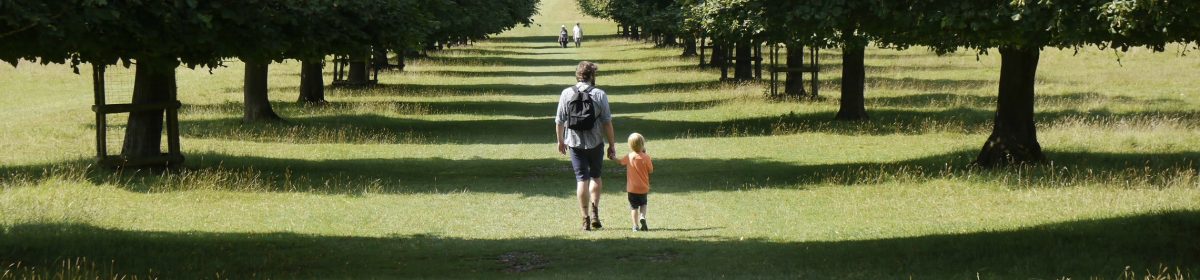

A couple of days ago a minor skirmish broke out on social media regarding the change of name from Brecon Beacons to Bannau Brycheiniog – in the wake of the announcement by the National Park Authority that it’s rapidly going broke. Coincidentally I was continuing to read Jan Morris’ excellent book “The Matter of Wales” which exposes the part played in the suppression of the Welsh language by the English educator Matthew Arnold. This latest outbreak of social media bile and stupidity was led by a mob of English speakers, one of whom bravely named the mountain at the top of this piece “Penny Fan”. The troubles of the National Park and – for all I know – the entire nation could, according to the wisdom of the internet, be laid at the door of the Welsh Language. All those expensive road signs. They’d be stuffing themselves with silver spoons and turtle soup if they’d given up Welsh and spoken the same as what we do and joined our brilliantly successful politics and neoliberal economic witchcraft. Ah well! Whatever that means the answer is probably Port Talbot.
Anyway, back home from our little adventure in the hills above Talgarth we discovered that the builders had not finished dealing with our black mould and can’t come back to complete until the Easter holidays are over, so we spent a couple of days cleaning up the cement dust and turned to the allotment which is the only bit of our lives in which we have complete agency. Wales is a beautiful and paradoxical country and I often wonder why I feel such a strong affinity – except today I was reading about the 1930’s and I suddenly remembered my dad’s encyclopaedic knowledge of the miners strikes, the railway strikes and the suffering of the people in the valley towns. I was raised on tales of riots, police brutality and solidarity. My dad and my grandfather were ardent socialists and I suppose I absorbed their principles from my earliest childhood. As I grew up and saw how people actually behave I was, and I remain, shocked.
But I want to celebrate for a moment one of the great things about The Bannau Brycheiniog and you may be surprised to learn that I’m talking about the ironmonger’s shops. They’ve all but disappeared in much of the UK but Webbs in Crickhowell and Jones in Hay on Wye are survivors in the glum world of out-of-town superstores. We used to have several of them in Bath – one of them, clinging to a famous name in the area – called Avery and Bowlers – has just closed down. Bowlers fixtures and fittings can still be seen in the Museum of Work here in Bath and there’s a gas engine there that I helped photograph in 1971 when their factory was abandoned. The other I remember was a firm called Hine and Collinson on the London road whose employees, in their brown warehouse coats, could find almost anything you could name on one or another of its five floors. I once bought a new double duplex glass chimney for my granny’s paraffin lamp which I inherited by default because no-one else wanted it.
Webbs in Crickhowell is such a great experience it should be on the tourist map. We never go in there without coming out with a new teapot or a curious kind of egg cup. Anything from a bottle opener to a chair can be found there. Jones Home Hardware in Hay on Wye performs a similar service to its customers, scattered across the neighbouring countryside, who might be in search of a crowbar, a chainsaw or a broomhandle. It carries a similarly eclectic stock of very useful things across several shop fronts and a broad public alleyway horizontally arranged on Castle Street.

Of course the butchers and bakers who are usually mentioned in connection with high streets are also important; but there’s nothing quite like an ironmonger’s shop to exemplify the way people live around here. Hay on Wye is mainly known for tourism and as a centre for second hand books and can often feel like a gated community of retired art teachers, but the thursday market is still a lively affair with more (and much more attractive) bakers selling every kind of sourdough bread, kimchi and mead – and where the trinkets are decidedly upmarket. The ironmongers aren’t after the tourist pound – they still serve the rural hinterland; the bit we enjoy for free – and hints at another deeper Wales just under the surface. As for bookshops, Richard Booth’s bookshop is still the first and the one I probably enjoy the best. On Thursday I came out with about the tenth rewrite of a wartime book then called “Plants poisonous to livestock” which Madame gave me as a gift in the 1970s; brown; thin; foxed and printed on cheapest paper. My new version is bigger and better in every way and it also gives plentiful tips for disposing of humans you’ve fallen out with.
Meanwhile, as I always feared, the newly published flora of Brecknockshire (that’s Breconshire in old money) arrived too late to take with us to Talgarth and as soon as I took off the wrapper it fell open on the page describing Herb Paris. I know and I’ve seen the plant in Velvet Bottom, on the Mendips but that was in the days before I knew anything about proper recording and I didn’t take a photo I could refer back to for verification. In spite of a number of return visits to the spot I’ve never been able to record it. So yesterday I discovered that it’s found in the same nature reserve in Talgarth – Pwll y wrach – that we visited. I excuse my failure to see it because it’s the wrong month for flowering, and the lower paths, closest to the water, were closed due to the danger of falling ash trees. No such excuse for another long-sought plant; Spring Sandwort which grows on the hills just above where we were staying. We’ll just have to go back and take the new flora with us. The book took almost 60 years of intense research to write, and sadly the author, Mike Porter, died a year before it was published.
The weather, during our visit, was pretty wintry and we had rain, sleet and even snow during our four days. Thinking back over our sighting of the old Central Wales Hospital, the discreetly renamed asylum, I woke up this morning after a sleep troubled by dreams with a phrase from a Robert Burns poem turning slowly in my mind:
Man's inhumanity to man
Makes countless thousands mourn!
Why do I love Wales so much? There’s a sentence in the Jan Morris book that comes close to expressing it. I often used the contrast between the favela and the steppes when I was in psychoanalytic psychotherapy. It seemed to express the polarities of mood that I live with. Jan Morris, in trying to express the Welsh personality draws on another source from the Welsh language. The Welsh, she says, hover between hiraeth and hwyl – between the sad longing for a lost home, and the exhilaration of a full sail at sea. Either way round, it sounds a lot more creative than a diagnosis for some kind of disorder of the mind!


