Touching the fullness

St Anne’s Well where the spring emerges

I’ve written about this special place before after I rediscovered it on a recce with some friends in Bath Natural History Society, and you can read a fuller version of the background there. What I didn’t explore in that piece was the much broader context which involves a brief encounter with psychogeography which is part of the explanation of my curious habit of walking about a mile to Downend to catch the number 18 bus into Bristol rather than catch the number 4 which would have been much less effort. Psychogeography examines the why of our relationship with places. However there are a few bear traps once you get beyond the material explanation of springs, sinkholes, clumps of trees and notable hilltops which can take you straight to Alfred Watkins and his leylines which I’m not going to write about.

The hard bit – freel free to skip to the next paragraph

The basic premise of these thoughts is that for me – and this is a highly subjective discussion – there are certain places which seem to be associated with raised mental energy; with a sense of connection which, after all the factors of memory, intellectual and aesthetic interest have been factored in, still leaves a surplus. I guess it’s hardly pushing beyond the boundaries to describe this in terms of energy because although the brain is only 2% of our total body weight it consumes 20% of our energy. The exact relationship between the brain and what we call the mind is a bit of a hot topic, the two are obviously closely related in an energetic process. The problem as always is that the laypersons’ language we use to describe these elevated senses is always metaphorical. ‘We feel inspired’, we say, and the scientist in us says ‘that’s all very well but what does it mean?do you mean that that we feel breathed on? ‘

Back to earth

Maybe this is a job for the poet and storyteller. There’s the Greek myth of the omphalos, the navel of the earth which in their case was in Delphi where they built a temple and where, for a fee, you could be told about the future in ambiguous terms which avoided any possibility of reprisals after a wrong answer. I was sent to a Primitive Methodist Sunday School as a child, and I somehow managed to take away from it the unexpected conviction that I needed no guide, priest, or guru to instruct or shape my imagination. There were abundant facts, certainties and structured thoughts in the municipal park of the ordinary where we were told to keep off the grass and respect the ranks of tulips and daffodils. I always wanted to walk on the grass. My imagination would not be contained by the iron gates and the cracked chime of the clock in the park. I was taught that God was an angry old man whose principal joy was smiting. There was a lot of smiting at Sunday school which was up a narrow lane that led to the back of the butcher’s shop, passing their small slaughterhouse where there were no windows but iron bars. There was never any doubt about the torments that awaited us since they were listed most weeks by preachers whose lips were flushed with the anticipation of the ruin of most of their neighbours. From the age of six I was planning my escape.

I think my first experience of the Fullness must have been on Rodway Hill when I was in my very early teens. I lay there amongst a drift of fine grass and Harebells that I now understand are only there because there’s a cap of old red sandstone whose acid soil suits them. It was there I first experienced what came to be known by Rolland and Freud as the Oceanic and I disappeared for I don’t recall how long. I became attached to a physical landscape – acid heath – which I can never visit without recalling that moment but hefted also within a different inner landscape that came and went as it pleased. The real of science and materialism had been compromised by a newcomer – the really real or perhaps the Fullness. The Fullness was not and could never be the vengeful god of smiting and retribution because he was an imposter, a fraud, a projection of thwarted dreams. It’s important that I explain this because in the next section I take this strange dimension as a “given” in writing about places.

So is this presence really tied to a particular place? Are we talking here about the old Roman idea of the “genius loci” – the spirit of a place – or is it even possible to use the term spirit in the context of place in the 21st century. Certainly some places have associated powers. St Anne’s well – the one in the photo at the top- was known for healing eye complaints. There was a St Arilda’s well in one of my parishes which was associated with a very similar legend to the one about St Winifred in Denbighshire, North Wales. Both were martyred , and in both legends the water was said to run red at times as a reminder of their death. Another well in St David’s is dedicated to his mother St Non.

Just creeping in at bottom right is a plant named Pellitory of the Wall, Parietaria judaica, which was once used as a treatment for urinary complaints. St Non’s would be, for me, the destination for any pilgrimage to St David’s. Away from all the tourists and gift shops it’s even missed by many walkers; but I’ve dangled my feet in it when they were sore from walking and it’s very refreshing indeed. It marks the place where the story says his mother gave birth to him alone on the clifftop in a thunderstorm. No pressure then Dewi!

I would call all these sites nodes. They’re all places where the membrane between the everyday and the Fullness is very thin. and they don’t move. Springs, wells, valleys, sinkholes, caves and promontaries; hills, outcrops and waterfalls; the confluences of rivers and streams – all of them can open occasionally to contemplative walkers and embrace them with the Fullness; but many other moments of transfiguration can happen in totally unexpected places at the times we feel least prepared. There’s no virtue to be claimed in it and no call for anyone to start a school; build a monument or set up a gift shop.

So yes, there are some sites,some places that are certainly filled with concentrations of whatever energy these healing, revelatory moments are fuelled with. Christian evangelicals tend to call it the holy spirit and then treat it/him? like an indentured servant, forever being prayerfully ordered around with pious hopes. But whatever the nature of the energy is; it has the capacity – provided we’re just ready to stop what we’re doing, to listen and to respond – the capacity to excite what you might metaphorically call our resonant frequency, which is the same frequency as the one that multiplies energy to the point where bridges collapse and windows shatter. Rudolph Otto called it the mysterium tremendum et fascinans; the numinous; the holy. But what it does, as it did for me, is set up a powerful, culture bending alternative to the way we do things round here.

So which is the more powerful would you say? is it the first photo of the mighty and beautiful cathedral, or the impoverished clifftop ruins? I know what I think.

When we were at art school in Wiltshire in the 1970’s I became very anxious and quite disturbed for about six months. I think it was a reaction to the first death I’d experienced of someone my own age; a friend of Madame’s. I couldn’t face college, was in danger of being thrown out, and I took to wandering in the By brook valley below Castle Combe. Sitting on the side of the brook which was really a small river, I made some drawings of a tree on the opposite bank, The roots were deeply entwined and knotted and I made (on reflection) the odd decision to draw with hard pencils. I was using a good paper which would take a great deal of punishment and although they were not masterpieces the enforced difficulty kept me there for a long time. Looking back, it was a similar kind of experience to the ones I’ve been describing except that it was slow and accumulative – so no fireworks or eureka moments but healing from the inside out. If ever I think of what the river outside the Potwell Inn might be like, I invariably think of By Brook, another place where I touched the fullness.

These experiences can’t be ordered up like a Deliveroo and so whilst our walks these days are often in search of plants and fungi, or we might be chatting about our children, I’m always on open channel just in case of a Visitation, and I don’t give a monkey’s whether it makes me sound crazy or if the magisterium could declare it heretical.

The view from the clifftop at St Non’s

Catch a bus – it could change your whole perspective on life.

Bath bus station – there are no pretty views!

I’m working up three posts at the moment and hopefully I’ll publish them all by the end of next week One of them is about what I’ve always called “nodes” – which is about places that seem to exude a lot of energy, hopefully without going full leyline over them. Secondly I’m researching a piece on the ways I’m trying to improve my photography to make it more helpful in identifying plants. The third, this one, is about buses and what travelling on then can teach us.

It’s a kind of in-joke among plant hunters that the maps we use to find and record plants are really maps of plant hunters. Cambridge, for instance, has a very high score when it comes to plant records, but it also has a very high score in terms of botanists. Statisticians have had to find some very smart mathematical models for removing the bias. I had a friend, now sadly dead, who was a prolific recorder of wildflowers. I’d describe him as brilliant and difficult, but he was always ready to help me out and taught me a great deal. The thing about him – Rob, his name was – was that he didn’t drive a car and so he travelled mostly by bus or by hitching lifts with other botanists. I’ve been watching a particular group of plants called Fleabanes for several years now. They can be quite tricky to identify and there are three very similar species, two of which grow in Bath and another which seems to be making a slow journey up the river from Avonmouth. So two possible reasons for the slow journey are firstly that the seeds float or blow up the river. Floating is highly unlikely because the Avon flows in the opposite direction. Wind dispersal is more likely because the prevailing wind direction is south westerly and the seeds are like miniature dandelion clocks. But looking at the maps, the records could as easily be explained by their position on bus routes. I’ve seen Rob on his hands and knees searching in the central reservation of a dual carriageway, so it’s entirely possible that the records really reflect bus journeys. I now feel obligated to search for the wandering Fleabane every year to continue his work.

These days I find doing the washing up infinitely more rewarding than listening to the recycled press releases which hide under the banner of journalism in these diminished days. But yesterday I caught several mentions of “the next war” being touted by almost all of them in a brain dissolving teaser for some kind of announcement about building more weapons factories. It reminds me that we all live in a particular cultural context from which we can never really escape. One of my radio producers once told me that she thought my best writing came when I was being lyrical. Well, it’s not a big stretch from being unable to sing the Lord’s song in a strange land (Babylon) to struggling to find the lyrical voice in a context like this, where lying, thieving from the vulnerable, accepting bribes and trading in weapons that dismember children is regarded as good business.

Rob was finding his lyrical on his hands and knees surrounded by the roar and fumes of fast traffic. Several people, Chris Packham for one, have mentioned hyper focus recently as one of the features of neuro divergence. Perhaps that’s it for some of us, although my own experience is that almost no amount of focus can get me past the feeling of despondency and gloom that this government promotes. If it has a vision at all it’s to spread passivity like a virus through the population.

Anyway, to get to the point – which is about travelling by bus – one of the major causes of passivity is isolation, and that isolation is enforced by illness, poverty, going everywhere by car, wearing headphones and creating your own impoverished environment by doomscrolling on the phone and listening only to your own curated soundscape. A bus, on the other hand is a tin box with six wheels and virtually no suspension which forces you into the company of people you’d never normally meet or speak to. At Bristol bus station a couple of days ago, paramedics were treating someone who’d collapsed on the floor. There were local and international travellers, shoppers and people going home from work looking grey; homeless people, students, schoolchildren and pensioners like us, taking advantage of the free bus pass. There were people of diverse colour and nationality, several slightly deranged people all jammed in, thigh to thigh and standing well inside my usual comfort zone. It’s a challenging and immersive environment in which anything could happen – and I love it. The late night bus is even more gripping. You always get one or two people the worse for wear. One one journey back to Bath there was one man who had no idea where he was; just got off the bus and wandered away in the dark. Another fell asleep with his kebab in is hand and it went all over the floor. Yet another man waved contentedly at his own reflection in the window, half recognizing a familiar face.

The point is – the people you meet on the bus aren’t your carefully curated version of reality but the real thing. Poverty and neglect of the elderly isn’t just a number on a spreadsheet, it’s the old man with his zimmer frame sitting in front of you who hasn’t had a bath or a shower in months and smells so bad that only the smell of a Mcdonalds being eaten by an overweight young person nearby manages to cover the crime like a cheap deodorant. These, dear Mr Starmer are the people you are supposed to be thinking about and working for, but you don’t travel on buses so you’ll never know about them. It’s no use blustering on about the deprivations of your own childhood. Your dad was a toolmaker, and many people will think he made tools like shovels and chisels. But that’s not what toolmakers do. They make the tools which are used in factories to manufacture aeroplanes and cars. Their work is immensely skilled and they have all done long apprenticeships – as long as many doctors. They work in tolerances of fractions of a thousandth of an inch on machines that cost more than a mansion and they are paid accordingly. I worked as a labourer in a tool making company in the 1960’s and they were paid more than double the average wage. They were and probably still are the creme de la creme among engineers because they could work for weeks on a press tool that, if it warped when it was sent off for hardening and cost thousands of pounds. Give it a rest, then, Starmer. All that carry-on about gathering around a single smouldering coal and eating stone soup doesn’t pass the Ernest Hemingway test for bullshit. You lived in a comfortable house and had a good education. Go ride buses for a week – I’d happily buy your pass for the good of the country – and meet the electorate. Get off the bus now and again and learn the names of some flowers; learn Welsh, (I slipped that one in – I never have, but I can pronounce Welsh place names properly; who needs vowels anyway? – work a day or two on a trawler; pick orders in an Amazon warehouse.

So how do I find the lyrical; find peace of mind in a culture of lies, failure and violence. Well, there is still beauty; beauty especially in nature. There is still love; there is still compassion that trickles out from the earth like a spring. It just isn’t coming from the Westminster goon show.

“Where’s the plan?” we ask; “What’s the strategy?”. But as anyone who’s done a management course will know. Culture eats strategy for breakfast. Our problems aren’t caused by lack of strategy but by a degraded culture.

Oh yes it was!

Sadly my old pal the Hungarian Mullein has passed. You can still see it where it toppled head first into the canal where, it would be nice to think, its progeny will set up home in the coming years. It’s a bit of an unusual find here in Bath and I had to argue my case with the Vice County Recorder, Helena, who very properly demanded we wait until it flowered until it could be recorded. And did it flower! Its whole life story unwound over two years between germinating in 2023 and flowering this summer and Madame and I walked the riverbank to the canal many times to record its progress; always worried that some overzealous strimmer would take it out. But spared the strimmer, the casual act of vandalism or even a careless narrowboat tether rope, this magnificent showoff did its thing and then toppled, senescent, into the canal. It’s the way of things; we are all part of the same cycle, and a successor plant is already growing next to my left foot in the photo. As you can also, the deceased was a good foot taller than me ‘though that’s not much to brag about. Let’s just say it’s over six feet and not dwell on my height.

After our walk to the canal we came back by the usual riverside walk and recorded a lovely Winter Cherry in full blossom, a field Scabious and two Mallow species, plus a Welsh poppy and what’s called (I think) a confused Michaelmas daisy, so called not because it’s confused (I’m not sure if that’s possible for a flower) but those of us who try to name it are. Very confused. All these in flower as well as some Mugwort whose flowers are extremely dull and minimalist but whose leaves when brewed up are said to give you lucid dreams. I can’t vouch for that because my dreams are all too lucid already, and often hang over me all day. I wonder if a brew made from the Michaelmas Daisy might give you confusing dreams – all I’m sure of is that this group of plants is a bit dodgy and can damage your liver – so they all go into the category of temptations resisted (like incest and Morris dancing as Oscar Wilde might have said).

By complete coincidence we passed by the edge of Green Park and came across one of the parents of the difficult Common Lime tree in Dyrham Park. It’s unusual for me to stumble across a parent and its hybrid in a short enough period to remember the size of their respective leaves, but the much larger leaves of the (wait for it) Broad-leaved Lime, Tilia platyphyllos was a dead giveaway.

Trees are fun, and we’re blessed with a large number of champions here in Bath. Interestingly the two parents of the Common Lime are the Broad-leaved and the Small -leaved, both of which are extremely rare in the wild. But their hybrid is vigorous and easy to propagate which is why it became the Common-Lime several centuries ago. Does it matter if it’s a sort of alien invader? I’ve been reading a marvellous book titled “Alien Plants” by Clive Stace and Michael Crawley and if you’re at all bothered by what you might call boat plants you’re going to have a very bare garden indeed.

Here the larger problem of wild seed sowing is raising its head. Several years ago, as the riverside walk was being initiated, a neglected border which had an abundance of genuine native plants was dug up and re-seeded with wildflowers. I’d previously found a plant called Weld growing there in the shadow of what would have been a very smelly dyeworks where it’s likely Weld was used. Sadly the wildflowers grew for one season only and then disappeared. I’ve not seen any of the original plants again. Dyrham Park tried a similar thing but their plot was invaded by creeping thistle and the expensive wildflowers all disappeared. This week, going through my photos, I found Corn Marigolds, Field Marigolds and Cornflowers had all enjoyed a brief moment in the sun before being choked out by the thugs. It would be far better to learn to appreciate the plants that actually thrive here than to import a whole bunch of no-hopers, however beautiful!

For a melancholic, silver linings are just the ephemeral part of clouds.

Naturally, after meeting my targets yesterday I felt like a bit of a celebration but since we gave up alcohol 18 months ago the pub felt a bit weird until we discovered one or two really good zero alcohol beers. It was probably a bad idea. Storm Claudia was still overhead and it had been absolutely pissing down all day but needs must, we thought, and we put on raincoats and walked through the rain to the closest pub. The traffic on the Bristol road was continuous and noisy; punctuated by the urgencies of passing ambulances containing people who – today at least – were not going for a celebratory drink. As we arrived I peeped through the window and I could see an abundance of empty tables which, on extremely sober reflection, should have been enough to turn us around and go home for a cup of tea. But we pushed on through the door. The barman was in conversation with someone and in no mood to break it off. I stood patiently, casting a glance around the empty bar in case there were any banjos or shotguns in evidence.

“Have you got any zero alcohol beers?” I asked as I scanned the empty shelves. He looked a bit mournful. “We’re waiting for a delivery” he said. I could have said “that was the excuse you used last time”, but it seemed churlish to challenge a barman who was probably on minimum wages and was employed by an owner who wasn’t paying his bills. Eventually he found a single bottle of pale ale in the fridge (?) and said there was nothing else. I reluctantly accepted the offer and poured it into its own bespoke glass. Madame had to settle for a glass of apple juice from a box which could have been open for some time. There were however crisps available and they were even in date.

Then, eventually, other customers started to shuffle past in a ghostly, half visible display of sad captains; mostly elderly solitary men who used to be, or do something. One of them came over to us, alarming me considerably, but he just wanted to drop a couple of beer mats off. The atmosphere resembled a funeral director’s waiting room. I drank my pint quickly but Madame was struggling with the apple juice and told me off when I put my hat on. “I haven’t finished yet!” she said. Our son rang and asked what on earth were we doing in the pub on such a filthy night? I couldn’t think of an answer and so we talked about the weather in Birmingham. As we spoke most of the tables, set with four chairs, had been occupied by solitary men. The fire in the lounge bar was not lit, and looked as if it never had been.

We retreated as quickly as possible and walked home. Later we read the reviews but they all looked as if they were written by the landlord’s wife in a last ditch attempt to stop their savings (and probably their marriage) going down the plughole. The flat was warm and welcoming. We should have stayed at home!

Spooky coincidences on our latest trip

A visit to Dyrham Park in Gloucestershire shows the National Trust deeply involved in conservation and wildlife – but with a sense of humour!

Black Nightshade in Dyrham Park formal gardenmy 1000th record, cue shark approaching music

Have I been droning on about targets recently? Well tough, because I’ve just met two of my three targets/resolutions by using storm Claudine as cover for a day at the computer – catching up with some plant data entry. And five minutes ago I got over the line and logged 500 species across 1000 records. It’s nothing much to brag about because not long ago I was chatting to the retired recorders for West Gloucestershire and this year they expect to submit their millionth record; but then I console myself with the knowledge that they started long before me – competitive – me??

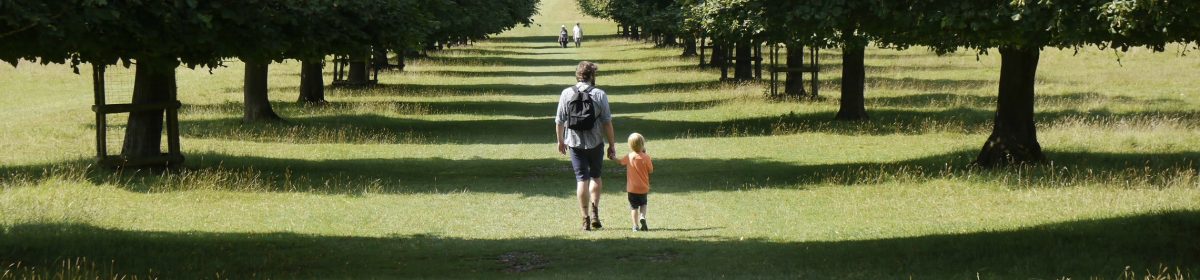
So Madame and I took advantage of the nice weather yesterday and drove over to Dyrham Park for a walk in the fresh air, having been kept indoors for days with the terrible weather. I knew I needed nine new records and got my first one as we left the car park and I realised that I’d never recorded the lovely avenue of trees that I’ve used as a banner for the last ten years. Of course I knew they were Limes but when I photographed them and turned to the books I discovered that they weren’t going to give up their precise identity without a struggle. Yes, they are Limes but no they’re not what I thought at all and turned out with a bit of forensics to be hybrid Limes, confusingly called “Common Lime” because they are – well – common. If you look again at the banner at the top of all these posts you’ll see our youngest son and our oldest grandson walking down the avenue together hand in hand. You’ll also see that the trees have all been given flat bottoms by the herd of grazing deer which were culled when they contracted TB a few years ago and have now returned with the perimeter of the park fortified with enormous fences to keep out any infected cousins. So that was good news and we await the restoration of the unnatural fringes by the deer when the leaves grow again next spring.

So that was one for the record and we wandered on down through the terraces where the National Trust team have done a great deal of forestry work, thinning and planting Yew, Bird Cherry and numerous other plants. The Rhododendrons, I imagine, are for the chop later when the newcomers have established. Most of the affected Ash trees have now been taken out so the park is going to look very different in a few years time. But everywhere we went, we could feel a real sense of direction and purpose in the plantings, it was very pleasing to see, and well done to all the volunteers who do most of the donkey work.

I guess it’s the time of year but of course the evergreens have the stage at the moment, and I always feel they’re a bit funereal. Yews and Laurels; well that’s churchyards and wreaths as far as I’m concerned! Down in the formal gardens you can see how the vision is working out. To be honest I’m not keen on straight rows and tulips but the head gardener has introduced a very subtle subversive note into the plantings and so we relished the long borders of espalier cider apples with all their local names, although we looked in vain for “slack ma girdle” which was the name we gave our quiz team when Madame worked on apple trees at the research station. Better still we found Soft Shield ferns and Black Nightshade growing on the banks and some of the healthiest looking Harts’ -tongue ferns we’d ever seen. A deft hand with the planting scheme has completely swerved any feeling of the Parks Department and created a garden that we’ll return to many times. The pruning of the apples and pears – under the guidance of the Head Gardener – who did some training at Versaille, (he told us), is unusually tight and looks almost daringly tight to the branches.

Then, for the first time ever, we ventured into the house itself – well, actually the servants’ area – because I’d spotted a very pretty Delftware tulip stand through the window in the old kitchen. It’s only the second one we’d ever seen and with the exception of two genuine antique earthenware pots, the kitchen and dairy have been equipped with some very nice freshly thrown scalding pans. There’s a photo below.

So it’s a red letter today. Two resolutions fulfilled and the third, of which this post is a part, is to complete a million words before New Year; just 34,000 to write which is going to be tough. Next year’s resolutions are going to be about boiling down the ten years of the blog to its essentials, and next week I’ll make a start on logging the fungi. Targets are good!

Before your very eyes – Cheshire cat plants are the lost smiles of nature.

If you’re up to speed with the latin names you won’t need me to tell you what they are. I’m using the common English names because they’re the place most of us start our journey as well as expressing the poetry of nature.

Actually (so far) one of these plants – the one at the top left – hasn’t yet joined the ranks of the disappearing but it’s still early days in the crisis of species extinction that’s barrelling down on us. So on the left, top to bottom there are the Small Scabious, The Sheeps-bit, often called Scabious as well, and the Devil’s Bit; ditto. The one on the right is a Common Restharrow – which was the initial impetus to write this post. I’m writing about these plants, and the reason I think you should be interested too is that seeing them is like looking at the prelude to a slow motion car crash.

I wonder if there was a smidgeon of irony in choosing bonfire night to launch the latest Red List – or to give its full name “A new vascular plant red list for Great Britain”. I can hardly imagine the great British public queueing around the block to get a copy before the ink dries, and it is very technical (but over the years I’ve already put in the hard miles); however it’s a duplicitous ten quid’s worth of ebook masquerading as a scientific survey when it’s really a requiem for a disappearing earth. Every paragraph is damp with tears – it’s the saddest list of names you’ll ever find in a book about plants.

Here’s a Google Gemini summary of the findings:

Increased Threat Level: The proportion of species assessed as threatened (Critically Endangered, Endangered, or Vulnerable) has increased 26% (434 species) are now classified as threatened, up from 20% in the previous 2005 list. A further 140 species are listed as Near Threatened, suggesting their conservation status is of concern.Widespread Declines: Many plants that were once common and widespread in the countryside have continued to decline and are now assessed as threatened.

So let’s start with the larger picture at the top of the page, in a way that’s also a defense of English plant names. The name Common Restharrow at least paints a picture. Having driven a little grey Massey Ferguson 35 and towed a chain harrow to aerate and tear out the thatch of dead grass whilst flattening molehills I get the joke. If I’d been doing the same job a century ago and leading a horse-drawn harrow I might have called the plant “rest horse”, because this little plant in a typically tangled mass can stop a harrow in its tracks. I’m thinking of the rain soaked agricultural labourers in Peter Brooks’ film of Ronald Blythe’s book “Akenfield”. Ononis repens defines the plant’s place on the spreadsheet down to ten decimal points, but fails to tell the story. Of course, unlike my Fergie, a giant turbo charged tractor would pass over without noticing – but it wouldn’t need to notice any more because Restharrow is disappearing altogether. It’s been moved up the parade of shame from “least concern” to “vulnerable” under the onslaught of intensive farming. I can still take you to see it, but it’s mostly on the coastal headlands in west Wales and Cornwall at the field edges, beyond the reach of sprays and ploughs.

And that’s where the sadness comes. The loss isn’t just technical – an entry on a spreadsheet – but a loss of memory, of relatedness, of history; it’s personal. Sun, wind and rain; strolling and rolling together with Madame; hours, days and weeks of searching followed by the moment of joy in finding. These are not the simple pleasures of an ice-cream at the end of the day’s plant hunting; they’re the joys of complete focus and engagement; of falling in love. This is a big deal.

In a recent posting I was writing about human grief in a very allusive way (which I hinted at in the title), and in parallel, I can’t stop wondering whether the loss of meaning when we lose someone close to us isn’t just damaging when what’s lost is a part of the physical world in which all our memories are embedded. In Stoke Row on, the edge of the Chilterns, my grandparents had a smallholding. More even than remembering what they looked like I can’t escape from associating them with the Beech trees that surrounded their cottage; from the sight and smell of the paraffin stoves on which granny cooked, and of the rich oily smell of chicken meal. I remember that the first squirrel I saw was a red squirrel, and I remember the line of trees at the back which my Mum would examine and proclaim that there was rain over Granny Perrin’s nest. My Mum’s favourite flower, she would say, was Lady’s Slipper – but which – of about ten alternatives did she mean? The orchid is now extinct so that leaves nine. When she died my sister and I were trying to decide where we could bury her ashes and we did a bit of research to see if we could return her to her childhood home. It was a powerful blow to discover that the Crest smallholding is now covered with an industrial estate. In fact it was even more of a bereavement to discover that I would never see the tarmac road dressed with flint pea-gravel again, nor gather primroses nor help to gather prickly and itchy hay to be stacked in stooks and ricks.

So let’s go back to the three Scabious, only one of which (top right) is really a Scabious. The other two, united by their similar appearance and vibrant pale blue-violet colour, kept me bewildered for several years although, once you know how, they’re worlds apart. I was always dazzled by the name Devil’s-bit. Such a plant must be special, I thought – like Viper’s Bugloss and Deadly Nightshade; it’s the names that draw me in like a moth to a flame. But Devil’s Bit and Sheep’s-bit never seem to grow side by side so the moment of revelation is more likely to happen in front of a decent macro-photograph or, in my case looking at the illustrations in Collins Wild Flower Guide and seeing – actually noticing – for the first time that the stamens on Devil’s-bit are like little mallets and on the sheep’s-bit they’re tiny little trumpets. Oh floods of joy! except what I recall more than anything else is where they grow, and they grow there because they are perfectly suited to their homes; to the weather and climate, to the soil, and to the grazing or cutting regime under which they can thrive. Change any one of those things and they’ll likely dwindle and disappear – not waving you might say – but drowning. One blisteringly hot day in the midst of a drought we shall go back and they won’t be there any more.

Maybe the flowering plants are nature’s way of smiling at us. I used the metaphor of the disappearing Cheshire cat’s smile at the top. Perhaps it’s the canary in the mine; whatever – it’s nature sending us a message that when the flowers go they take the joy with them.

Thrift growing on a clifftop in St David’s Pembrokeshire

Is this a bunch of photos or some kind of electronic reliquary?

Well it’s probably both, but for now I’ll go with the “Caucasian Wingnut” label on the tree. The other photos – in no particular order – are of my lightweight plant recording kit; the view from Dyrham Park in Gloucestershire which I’ve been going to since I was old enough to ride a pushbike and had to climb over a wall to trespass and where I’ve ridden horses, foraged St George’s mushrooms and recorded plants and fungi ever since. It’s also possible, if you walk to the edge of the escarpment, to see nearly all the places I’ve lived in since I was born. There are a pair of “then and now” photos of the cottage we lived in when we were at art school; one picture of our latest allotment; some stored dried and bottled food from it; some pots of tayberry jam and another of Priddy Pool on the Mendip hills and finally a Ragged Robin plant. They’re all extracted from the 20,000 photos I’ve spent 18 months processing down to 1000 botanical records and 500 species – which I’ll finish this week before I start on the fungi.

For the benefit of WordPress and Facebook followers who may be wondering why I’m writing this, I’m trying out a new link to Bluesky since the Facebook algorithm has blocked my posts because their computer has decided that “The Potwell Inn is a business” – no it’s not it’s the title of a comic novel by HG Wells. If the link works properly it should give present and future readers access to the whole nearly 1 million words and associated photos from the past decade. Press that follow button. You know you want to do it!!

@davepole.bsky.social

Somewhere between the recycling depot and the destructor bridge there’s a spirituality of hope – but I can’t find it.

The new Destructor Bridge

Bath is a city divided by the river. Walking west to east along the towpath between Windsor Bridge and Churchill Bridge you follow the northern half of the city which bears the postcode BA1. BA1 is posher than BA2 because it’s got most of the expensive and Georgian parts. Then, at Churchill Bridge – (I’m sensing a bit of a pattern here because you will already have passed beneath Victoria Bridge) – it all takes a bit of a dive on the northern side as you pass the bus station, the railway station and the Southgate shopping Mall and then Royal Mail sorting office before you approach the end of Pulteney bridge where (if you dare) you can pop into the public loos over Waitrose and change back into your Jane Austen inspired Emma costume or pretend you’re Knightly according to taste and preference.

In many cities they demolish the old and build the new on top but in Bath, given that the tourist money has come from the old, for several centuries, they built the heavy industry and the ugly/smelly bits across the river out of sight. The Destructor bridge linked the upper Bristol Road to a giant incinerator which was next door to the gasworks and just along from Stothert and Pitts where they specialized in heavy engineering; cranes; bridges and transport across the British Empire. As industry died, plans were hatched by friends of the developers to “improve” the city by demolishing older buildings in favour of concrete tower blocks. You can read about this in the excellent and angry book “The Sack of Bath” by Adam Fergusson. We bumped into his daughter once in a pub in Hay on Wye and immediately recognised one another as kindred spirits.

Sorghum? where the hell did that come from?

It just so happens that we live near the towpath – just far enough away to avoid the smell of sewage as long as you hurry past a couple of the outflows in the summer. The towpath is my plant hunting ground; the place which never fails to reward me with something new; often a squatter or a vagabond. I reckon I could easily account for 50 species in my records, probably more. On Friday I went for a walk along the path to clear my head. On the opposite bank they’re clearing the old gasworks site in order to build hundreds of new flats – the river view would increase the value of an old air-raid shelter into six figures. The noise was horrendous, with drilling, piling and lorries everywhere. The spirit of the old destructor bridge lives on with a twenty first century sound-track. On my side of the river I passed the recycling centre which is joined by the relatively new version of the destructor bridge which clung to its name but lived up to its reputation when they discovered it was a bit too long or maybe too short when they came to lift it into place and retreated bloody but unbowed for months as the designers licked their pencils and tried to find someone to blame. Fortunately it wasn’t called the Prince Andrew bridge because that would have taken nominative determinism to the level of farce.

But I was there clearing my head because the previous week we had attended the funeral of a young friend, just 40 years old from bowel cancer and I needed to find that kind of safety in numbers that lets me escape into a spreadsheet for a couple of hours. Walking past the destructor bridge and the recycling centre seemed to be hauntingly significant as I recorded and photographed the ordinary, everyday plants that most of us ignore as if they were strangers in the street. Ivy leaved toadflax, cocksfoot grass, alkanet, broad leaved dock, ribwort plantain, blackberry, ivy, herb robert, false oat grass, buddleia, marsh figwort, common ragwort; red valerian, groundsel, bilbao fleabane, gallant soldier, pellitory of the wall, mugwort, tansy, several kinds of dog rose and annual mercury. I fear I’m writing a book of remembrance for the weeds I pass in the street as the climate catastrophe intensifies.

We tend carelessly to describe grief as a kind of temporary and solvable disturbance of the mind. Time, we say, is the great healer. But it’s not, I want to scream. Bereavement. and the grief that explodes in us when it happens, more closely resembles a stroke. It destroys memory, reshapes the world in unfamiliar ways so we can’t recognise the places we once knew. The loss of a limb just as the loss of someone we love, can’t be mitigated by positive thinking and we don’t get over it – ever.

And I feel as if I’m suspended between the grim spirituality of destruction and the optimistic recycling of fading memories. The river becomes the Styx in this uninvited metaphor. The noise, the roar and pollution of the bulldozers and lorries on one bank and on the other the recycling centre where we take the things we no longer want – to be reprocessed into something else. On the one bank letting go completely and on the other, clinging to the hope that something may be retrieved while we rather desperately make records and take photographs, out of which – one day – it might be possible to build a spirituality of hope in a world where God – like Elvis seems to have left the building.

Creeping Thistle – Cirsium arvense

Just give it to me straight, Doc!

Volvopluteus gloiocephalus – the Stubble Rosegill.

I once went to see our GP with a very painful toe joint. He examined my foot thoughtfully and eventually said “you’ve got Hallux rigidus” “Yes, I said, “it’s a stiff toe, but can you do anything?” There are two schools of thought on Latin; one suggests that it’s the way that some professionals want to sound as if they know something that we don’t. The other school takes a more pragmatic view of things and accepts that our native languages are so different – each with its own names for illnesses, plants, fungi and so forth – so the only way to avoid confusion is to use an agreed common language like Latin. The two dispensations only collide when the teaching of Latin is withheld from large numbers of people and then the whole thing becomes a grisly class issue. I never learned Latin at school and so the pronunciation of these unfamiliar words often feels like walking across a minefield.

This rather lovely fungus perfectly displays both sides of the argument. After a bit of toing and froing on the British Mycological Society Facebook page, which I thoroughly recommend, someone came up with a name that fitted the description in the books. I now think it’s Volvopluteus gloiocephalus – the Stubble Rosegill. The English name perfectly describes where it most often grows, and the fact that as it ages the gills turn pink. Unfortunately it’s also known as the big sheath mushroom and the rose-gilled grisette none of which vernacular descriptions fit very well the one that I found in a forest ride which is in the photo. This one was very fresh and the gills were still white. The key feature in mine was the sticky, shiny brown cap.

The AI apps all gave up at first post and so I was stuck with “some kind of Amanita”. My helpful respondent gave me a Latin name which describes a member of the Pluteaceae (family) that has a notable volva (the kind of socket in the ground that it grows from) and a sticky cap. Frankly I think that in this instance the Latin name is a lot more useful and it would still mean the same across the world because this one isn’t rare, it grows pretty well everywhere.

I’d thoroughly recommend getting into something you’ve never done before because every day brings something new and exciting. The experts who’ve spent years studying fungi, for instance, have to go on for more years of Norman normals before finding something new and exciting. But when you’re a beginner you’ve got all those champagne years still to come, and the ordinary, once you’ve started searching, are just as exciting and rewarding as the rarities. Not only that but you’ll never look at the vaulted roof of a gothic cathedral in the same light again once you look closely at some fungi. But quite apart from all that, these life-forms are just so beautiful and strange they fill a gloomy time of the year with ghostly luminosity.

A little death – no not that kind

The gracious muddle that I prefer to write in

It’s not that I wasn’t warned – WordPress has been telling me for ages that something to do with Google apps was about to stop working but, being both lazy and unable to understand most of their technical information I ignored it and put it aside with letters from the bank and HMRC.

I ask this as a kind of rhetorical question: what could cause you most distress? …. a diagnosis of some rare but curable disease or losing your phone? Having been on three fast-track referrals for suspected cancers (none right) in as many months I can tell you that my world ended momentarily when I clicked on WordPress yesterday only to be told that “it” (no amplification) was no longer supported. It took a few minutes of intense meditation and heart-rate control to determine that the bereavement was far more limited than the extinction of ten years of work. The only thing that had happened was that a small shortcut app to the blog has been discontinued following a bit of a theological row between several behemoth sized companies about the number of blogger brains you can arrange on the head of a pin.

The remedy for this temporary extinction event was simple. I just had to search for the Potwell Inn and up popped my site with everything apparently working. However, my insatiable curiosity soon got the better of me and I ended up searching for my blog on Google Gemini, the AI app where I received a full report on the Potwell Inn which described all of my topics of interest in detail and (I thought) rather approvingly. There was a tendency to centre things on my more recent postings which gave the location of the Potwell Inn as Doynton – a small village near here where I once (maybe 50 years ago) did a talk for the young farmers but where we occasionally visit the local pub which I’m happy to give a shout-out to. The Cross House does some good food in a lovely atmosphere but it’s not the Potwell Inn, largely because the Potwell Inn – in the form that I write about – doesn’t exist anywhere except in my imagination and in my memories of HG Wells’ comic novel A History of Mr Polly from school days where it was a set book. The mere mention of the author and title should alert you to the archaeological nature of my affection for a short novel that, as a very shy and bewildered; possibly neuro-diverse teenager, built up as a safe space in my mind.

So the bad news for those of my readers who have wasted time searching for the Potwell Inn (one actually turned up on the allotment one day, and another wrote to me about one of the several imposters that actually exist in bricks and mortar) I’m sorry. The Potwell Inn is just a mental bolt-hole for an undiagnosed neuro-diverse old bloke, tumbling at speed towards his 80th year. On the other hand everything else, everything I’ve ever written about is real. Madame is my real partner of 60 years (we met when she was 15) we really have an allotment and all the plants, fungi, places and adventures are true, the campervan and it’s multiple vicissitudes is real too. So the really amusing fact is that Gemini got everything completely right about the Potwell Inn apart from one very important detail: it doesn’t exist.

Now I always thought that the power to confer existence on a being – and even the word being seems to confer some kind of existential reality – but stepping away from that whirlpool – the power to confer existence is reserved to God, or the Tao or some kind of immortal, invisible, ineffable superpower. If you look for Google Gemini in the scriptures you won’t find it lurking anywhere in the prehistory before Adam and Eve had to get their kit on in a hurry and Cain murdered Abel. I mean, seriously, Google doesn’t figure before sex and death (the subject of the only joke I can remember my lovely psychoanalytic psychotherapist Robin cracking. I’d told him about a dream I’d had of walking down Hotwells road being followed by two elephants. He replied with “I’m a Freudian, they must be sex and death!”)

Anyway, I think I’ve uncovered the Achilles’ heel of the whole AI bubble. It confers existence where it has no right. We avoid UPF’s – Ultra Processed Foods- but they only kill us one at a time. Ultra Processed Facts can kill whole families, cities, cultures; in fact there seems no limit to its potential for harm. Going back to the bible just for a moment (I promise) you might wonder why idolatry gets such a bad press; even making it to Moses’ ten most wicked things in the Guardian. The answer is that what idolatry does is worship the partial instead of the whole incomprehensible but beautiful thing. It takes the easy way around the mountain.

So to get back to the Potwell Inn, you’ll see one category that I never use – it’s the one entitled Uncle Jim. He is the violent drunkard brother of the licensee of the fictional Potwell Inn, known only as the fat lady. Gemini, by the way, can’t bring itself to use the word fat and substitutes plump thereby daring to change the text! Polly accidentally removes Uncle Jim from, well- life I suppose – in a farcically comical fight which accidentally gives him a new identity. I don’t use the Uncle Jim tag because in my version of the Potwell Inn he’s gone forever, vanquished and washed up on a beach wearing the wrong jacket. All other contenders for the Uncle Jim slot are automatically given life-bans from my pub. The little river runs gently by, unpolluted by agricultural runoff and raw sewage. Beavers build their dams upstream and wildlife flourishes on the banks. I just need one place in my head where the darkness has no dominion.

Not the Potwell Inn